
Specs are compiled from manufacturer listings and verified buyer reviews and can change over time — please confirm the key details on the product page before buying.
If your pothos leaves are suddenly sporting brown spots, yellow halos, or a powdery white coating, fungus has moved in. The good news: you can stop it with one of the sprays below, applied at the first sign of trouble. What matters most is picking something that kills the specific disease without burning the delicate foliage your pothos has worked so hard to grow.
I’m Rikta — the founder and writer behind Lawn Gear Lab. This guide is built by comparing the manufacturers’ published specifications and the patterns across verified customer reviews, so you get each pick’s real strengths and trade-offs instead of marketing spin.
This article walks through the top-rated solutions for every pothos scenario, from a gentle neem oil mist for indoor pots to a concentrated copper soap for an outbreak on a prized climbing vine. Read on for the full breakdown of the best fungicide for pothos.
Our Picks at a Glance

How To Choose The Best Fungicide For Pothos
Pothos leaves are broad and tender, which means some fungicides can scorch them if the concentration is too high or the formula is too aggressive. Your first decision is between a copper-based product — the most proven option for fungal diseases like leaf spot, blight, and powdery mildew — and a neem-oil product, which is gentler and doubles as a pest deterrent. The second decision is form: a concentrate (you mix with water) gives you more spray for your money, while a ready-to-use bottle is grab-and-go for a single indoor plant.
Copper vs Neem Oil: Which one for pothos?
Copper-based fungicides (look for copper octanoate or copper soap on the label) kill fungus on contact and leave a protective residue that stops reinfection. They are the strongest choice for an active outbreak. Neem oil is a plant-based oil that smothers fungal spores and also handles soft-bodied pests like aphids and spider mites. It is gentler — ideal for a maintenance spray on your indoor pothos — but may need more frequent reapplication.
Concentrate vs Ready-to-Use
A 16 oz concentrate (like the Bonide Captain Jack Copper Fungicide) makes several gallons of finished spray, which is the smart buy if you have several plants or a garden to treat. A ready-to-use bottle is convenient for a single pothos on a shelf — you just spray and go, no measuring cup needed. For a large pothos infestation, the concentrate pays off quickly.
Reading the label for pothos safety
Every fungicide label lists which plants it is safe for and how often to spray. On pothos, start with the lowest recommended dose, test a single leaf, and wait two days. If the leaf shows no burn, you can treat the whole plant. This step alone prevents the most common mistake beginners make.
Quick Comparison
| Model | Best For | Active Ingredient | Volume | Form | Amazon |
|---|---|---|---|---|---|
| Bonide Captain Jack Copper Fungicide★ Best Overall | Strongest disease control | Copper Octanoate | 16 fl oz (concentrate) | Liquid concentrate | Amazon |
| Smart Grower Neem Oil SprayPremium Pick | Gentle indoor maintenance | Neem Oil + Essential Oils | 8 fl oz (RTU) | Ready-to-use spray | Amazon |
| Neudorff Copper Soap Fungicide | Immediate outbreak response | Copper Soap | 16 fl oz (RTU) | Ready-to-use spray | Amazon |
| Ferti-lome Fungicide 5 | Multi-disease & bacteria control | Oil-based (unspecified) | 32 fl oz (RTU) | Ready-to-use spray | Amazon |
| Bonide Captain Jack Neem Max | Large outdoor coverage | Neem Oil (Cold Pressed) | 16 oz (RTU hose-end) | Ready-to-spray (hose) | Amazon |
In‑Depth Reviews
1. Bonide Captain Jack Copper Fungicide 16 oz Concentrate
Our pick — over 4.5★ from 10,000+ verified ratings; the strongest balance of quality and price.
The heavy hitter for a pothos outbreak — stops blight, black spot, and powdery mildew.
When your pothos has a real fungal problem — leaves spotted, turning yellow, or coated in white powder — you want the strongest proven tool. This Captain Jack concentrate delivers copper octanoate (copper soap), the active ingredient that kills a wide range of diseases on contact. It is USDA listed for organic gardening, and you can use it right up to harvest day, which tells you the safety margin is generous.
You mix an ounce or two with water in a spray bottle. That 16 oz bottle makes a lot of finished spray — easily enough to treat a shelf full of pothos and other houseplants for an entire season. Owners consistently report it knocks back black spot on roses and powdery mildew on squash, and the pothos-specific takeaway is that it handles leaf spot disease without burning the foliage when used at the label rate. One buyer notes it “controlled the powdery mold” on zucchini plants, though not fully eliminated it — a reminder that persistent infections may need a second round. Another reports it works on peach leaf curl and leaf spotting with visible results after one or two applications.
What wins people over
- Effectiveness draws the most praise by far — over 550 owners call it out
- Mixes easily into a spray bottle, making it a 16 oz concentrate that goes a long way
- Approved for organic gardening, so you can use it on indoor edibles and herbs near your pothos
The honest trade-off
- Some fungal infections need multiple treatments — one owner saw improvement but not full elimination
- You have to mix it yourself, which is one extra step compared to a ready-to-use bottle
Reach for this if your pothos has an active fungal outbreak and you want the most widely trusted copper fungicide in a concentrated, economical form.
Think twice if you have only one small pothos and prefer a no-mix spray bottle — the ready-to-use options below may be more convenient for a single plant.
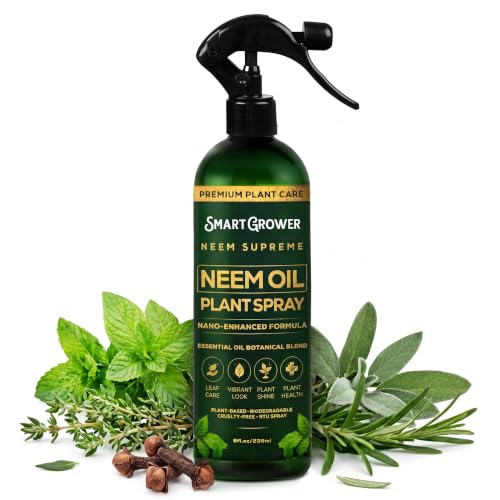
2. Smart Grower Neem Supreme Plant Wash Spray 8 oz
A ready-to-use neem mist that shines as a maintenance spray for indoor pothos.
For a pothos that lives on a shelf or in a bathroom corner, a gentle fungicide you can grab and spray is the difference between consistent prevention and “I will do it tomorrow.” This 8 oz bottle blends cold-pressed neem oil with essential oils (tea tree, clove, sage, thyme, cedarwood, lemongrass, peppermint, garlic, and capsicum). It is ready-to-use — shake, spray on the leaves top and bottom, and walk away. The fine mist leaves leaves shiny and smelling like a blend of herbs rather than the heavy sulfur smell typical of some neem products.
Buyers report it handles fungus gnats and leaves plants looking healthy, though there is a candid note in the reviews: one person found it ineffective for fungus gnats despite using a full bottle and sticky traps, and resorted to rosemary oil instead. That is a reminder that no single product works for every pest, but for general fungal prevention and leaf shine on pothos, the consensus is strong. The natural ingredient list — biodegradable, cruelty-free, and plant-based — is a clear selling point if you want to keep chemicals out of your home.
What owners love
- Effectiveness on fungus and pests is praised by 35 owners; its fragrance is the second-most mentioned positive
- Leaves plants shiny and healthy-looking — one owner says it “smells really good and makes your plants spring back to life”
- No mixing, no measuring, no hose attachment — just spray and wipe for a clean finish
The honest trade-off
- At 8 oz, the bottle is small — you may run through it quickly if you have many plants
- Not as potent as copper for a serious fungal infection; one owner found it ineffective against fungus gnats
Best suited for a pothos owner who wants a natural, pleasant-smelling spray for routine leaf cleaning and light fungal prevention.
skip it if your pothos already has brown or yellow spots from a serious infection — in that case, reach for a copper-based concentrate first.
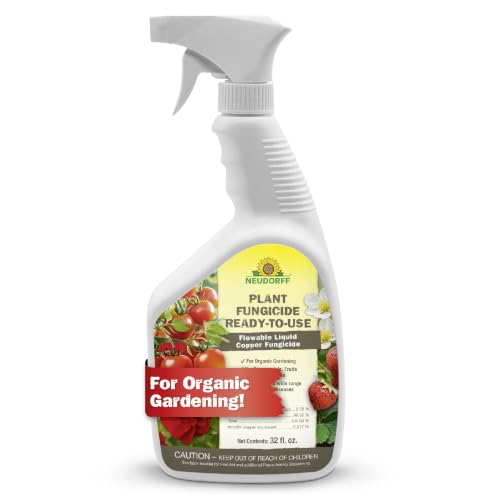
3. Neudorff Copper Soap Fungicide Spray 16 oz (RTU)
A ready-to-use copper spray that saved a decades-old gardenia — and can save your pothos.
If you want copper power without mixing, this Neudorff spray is the answer. It comes ready-to-use at 16 oz, and the active ingredient is copper soap (the same class as the Bonide Captain Jack, but pre-diluted). The label covers a long list: powdery mildew, rusts, black spot, leaf and fruit spot, downy mildew, fruit rot, late blight, and peach leaf curl. That is the full fungal trouble-shooter for a pothos in distress.
The real story comes from an owner who said it “worked great to eliminate a fungus that almost killed our decades old gardenia.” The gardenia got its green back and even flowered — a powerful anecdote for how well this formula can work on a tough fungal infection. Another owner found it effective against fungus and bugs but noted it burned their hostas, so the caution for pothos is real: test one leaf before spraying the whole plant, especially if the pothos is a delicate variety. It is odorless and easy to apply, making it a solid middle-ground pick between the concentrate (above) and the neem oil (below).
What stands out
- Effectiveness is the top praised aspect, mentioned by 45 owners — one says it worked “almost immediately”
- Ready-to-use and odorless, so you can spray indoors without a lingering smell
- Approved for organic gardening and can be used up to day of harvest
The honest trade-off
- One owner reports it burned their hostas — sensitive plants may react, so test on a single leaf first
- At 16 oz, the bottle is smaller than the Captain Jack concentrate but similar to other RTU bottles
Perfect for the pothos owner who wants copper strength in a ready-to-use spray and is comfortable testing a leaf first for sensitivity.
Not for those who prefer a concentrate to boost value — the Captain Jack above gives you more total spray for a similar budget.
4. Ferti-lome Fungicide 5 Ready to Use 32 oz

A full 32 oz of OMRI-listed disease control for pothos and everything around it.
Size matters when you have a collection of plants. The Ferti-lome Fungicide 5 comes in a generous 32 oz ready-to-use bottle, so you can spray your pothos, its neighbors, the herbs on the windowsill, and still have plenty left for next week. It is OMRI listed for organic gardening, meaning it is allowed in certified organic settings, and the label covers blights, molds, rots, spots, specks, mildews, and more — your pothos leaf spot is squarely in its crosshairs.
Owners mention it works on boxwood blight (applied liberally to stems and soil) and replaces other fungicides that fell short on roses. One owner in Louisiana said it replaced an ineffective Fungicide II on roses — they used the max dosage every three days for 3-4 applications and saw major improvement. For pothos, the key is the oil-based formula: you spray leaves and stems until moist, not dripping, and it can be used up to the day of harvest. The 32 oz bottle means fewer trips to the store.
What owners appreciate
- Huge 32 oz bottle gives you a lot of spray — owners say it covers fruit trees and rose bushes with room to spare
- OMRI listed, so it is safe for organic gardens and indoor use around pets and kids
- One owner says it works in 94°F heat, which matters if your pothos lives on a warm patio
The honest trade-off
- Review count is relatively small (84 ratings) compared to the top two picks, so the long-term consensus is less established
- As an oil-based formula, it may leave a slight residue on leaves compared to a copper soap spray
Pick this if you have multiple pothos plants plus other houseplants and want a single large bottle of OMRI-listed fungicide that covers everything.
Look elsewhere if you want the proven track record of the Captain Jack line, which has over 10,000 ratings to back its reputation.
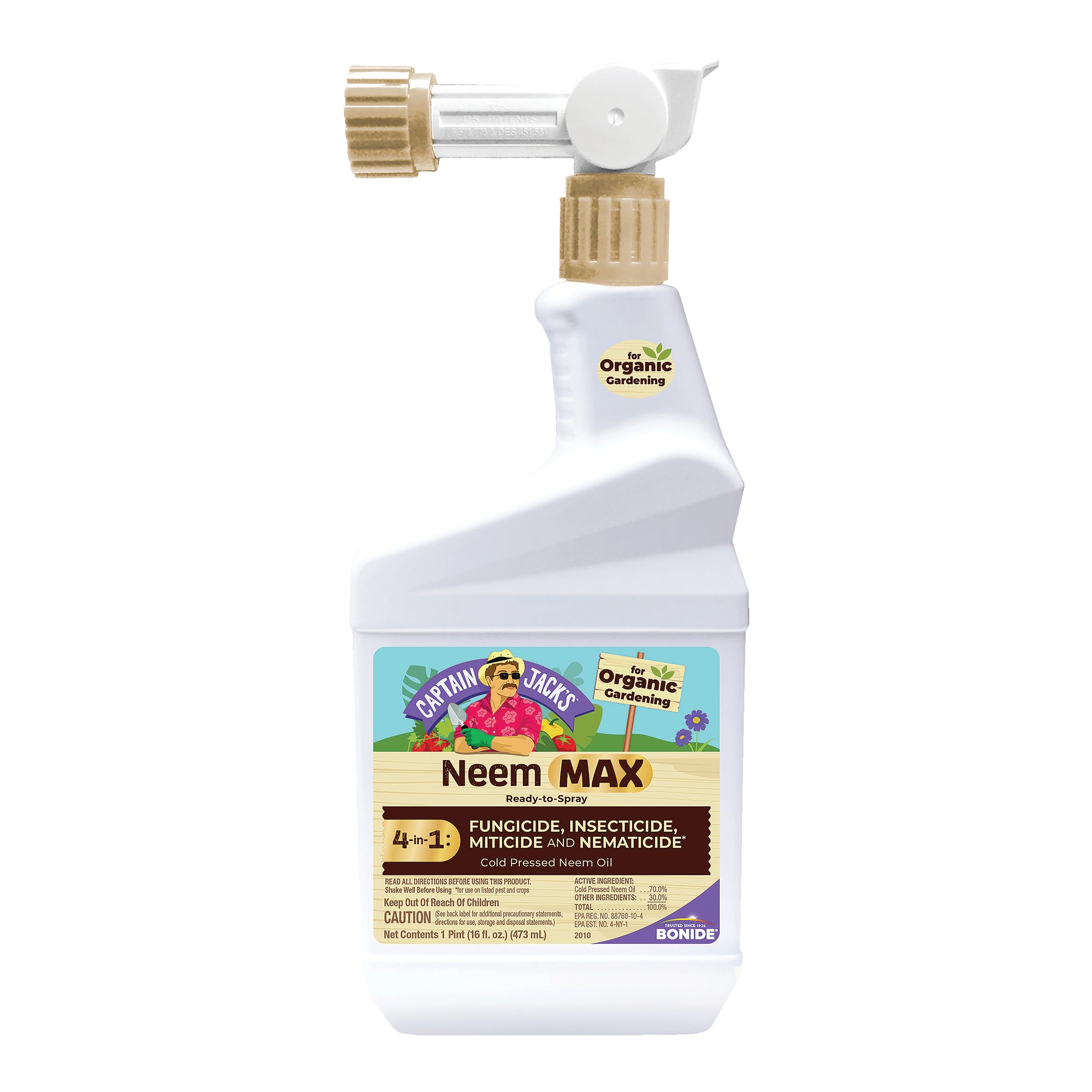
5. Bonide Captain Jack Neem Max 16 oz Ready-to-Spray
Attach it to a hose and blanket your outdoor pothos in neem protection.
If your pothos lives on a covered patio, pergola, or balcony, the Neem Max is the fastest way to cover it. This is a 16 oz bottle of cold-pressed neem oil that attaches to a garden hose — you turn the dial, the water mixes it at the right dilution, and you spray the entire plant (including the underside of leaves) in under a minute. It is a 4-in-1 product: insecticide, fungicide, miticide, and nematicide. For pothos, that means one product handles both fungal issues and the pests (aphids, mites) that often bring fungus along.
The effectiveness is praised by 30 owners, and one buyer says it “revived over half a dead lawn in 2 days after one application” — a surprisingly fast result for a neem product. Another owner used it on a maple tree with black spots and saw perfect results with no strong odor. The honest note: a few customers note the sprayer can be finicky, and the bottle has a mild odor for a day or two after application. For a patio pothos, that faint neem smell fades quickly outdoors.
What owners rave about
- Hose-end sprayer makes application easy — one owner says it is “easy to attach to hose” and “perfect for each plant/bush”
- Works as a 4-in-1, so it pulls double duty against fungus and pests on the same plant
- Cold-pressed neem oil is a plant-based active ingredient approved for organic gardening
The honest trade-off
- Spray performance gets mixed reviews — a few reviewers point out the sprayer does not work perfectly from the start
- The mild neem odor lingers for a day or two, which may be noticeable if your pothos is near an open window
Reach for this if you have a large outdoor or patio pothos and want the fastest, most thorough application method available in a ready-to-spray format.
Think twice if your pothos is indoors — a standard spray bottle (like the Smart Grower or Neudorff options) will be easier to control and less messy than a hose attachment.
Understanding the Specs
Active Ingredient
The main chemical or oil that kills the fungus. Copper-based fungicides (copper octanoate or copper soap) work by disrupting the cell membranes of fungal spores on contact. Neem oil smothers spores and interrupts their life cycle. For a pothos with an active leaf spot or powdery mildew, copper is the stronger choice. For routine prevention on a healthy pothos, neem oil is gentler and doubles as a leaf shine.
Form: Concentrate vs Ready-to-Use vs Hose-End
A concentrate (like the Bonide Captain Jack) requires mixing with water in a spray bottle — you get more total spray for your money, but you have to measure. A ready-to-use (RTU) bottle is pre-mixed and ready to spray immediately — convenient for one or two plants. A hose-end sprayer (like the Neem Max) attaches to your garden hose and is ideal for large outdoor plants but not practical indoors.
FAQ
Can I use a copper fungicide on my pothos indoors?
How often should I spray my pothos with fungicide?
Will neem oil burn my pothos leaves?
What is the difference between copper soap and copper sulfate?
Can I use fungicide on pothos cuttings or new propagations?
Will the Neem Max hose-end sprayer work with a standard garden hose?
How long does a bottle of concentrate last for a single pothos?
Is it safe to use fungicide on a pothos that pets or young children can reach?
Final Thoughts: The Verdict
For the majority of shoppers, the best fungicide for pothos is the Bonide Captain Jack Copper Fungicide Concentrate because it gives you the most proven active ingredient (copper octanoate) in a form that stretches across many plants and many seasons — all with the backing of a 4.6-star crowd favorite. If you want a ready-to-use spray that is gentler and doubles as a leaf cleaner for a single indoor pothos, grab the Smart Grower Neem Supreme Plant Wash. And for a large outdoor pothos that needs fast, thorough coverage, the Bonide Captain Jack Neem Max hose-end spray is the most easy option on this list.
How We Picked
We do not accept paid placement. Every pick is matched to a real buyer and a real use-case; we do not hands-on test units.
Sources & Methodology
Specifications: manufacturer listings and product documentation. Review insights: verified customer reviews, as of July 2026. Pricing: not shown on this page (it changes often); check the current price via the retailer link.
As an Amazon Associate, Lawn Gear Lab earns from qualifying purchases. This does not affect which products we feature.