
Specs are compiled from manufacturer listings and verified buyer reviews and can change over time — please confirm the key details on the product page before buying.
The moment a flower stalk snaps under its own weight or a gust of wind flattens a row of plants you have babied for months is the moment you realize: stems need a friend. Flower support netting does one thing — it lets climbing and tall-stemmed plants grow upright by giving them a grid to lean on, weave through, and hang from. The result is a garden that looks intentional instead of wrecked, with more sunshine hitting every leaf and fewer blossoms rotting on damp soil.
I’m Rikta — the founder and writer behind Lawn Gear Lab. This guide is built by comparing the manufacturers’ published specifications and the patterns across verified customer reviews, so you get each pick’s real strengths and trade-offs instead of marketing spin.
When you lay out your beds this season, the right flower support netting can mean the difference between a heap of tangled vines and a neat vertical trellis that makes harvesting as satisfying as planting.
Our Picks at a Glance


How To Choose The Best Flower Support Netting
Picking netting is not complicated, but a few details separate netting that lasts a weekend from netting that lasts three seasons. Here is what to keep an eye on.
Mesh size: the gap your plant needs to fit through
The two most common mesh sizes you will find are 4-inch and 6-inch squares. A 6-inch mesh gives stems room to grow thick without getting strangled and is roomy enough for your hand to reach through and grab a cucumber or tomato. A 4-inch mesh works better for plants with finer tendrils, like sweet peas or pole beans, because they need smaller footholds early on.
Material: what weather and weight demand
Polyester nets are soft on stems, UV-resistant, and tend to unroll without tangling. Nylon is stronger for heavy fruit loads like melons and winter squash, but it can stretch slightly over time. Polyethylene (HDPE) is the budget workhorse — stiff and weather-resistant — though it can be harder to unroll without fighting knots.
Length and coverage: one roll or several panels
Jumbo rolls (300+ feet) are brilliant for long rows or entire greenhouse walls because you cut exactly what you need and waste nothing. Shorter panels (30 to 100 feet) make more sense for a few raised beds or a small flower garden where storing a giant roll is a nuisance.
Quick Comparison
| Model | Best For | Material | Dimensions | Mesh Size | Amazon |
|---|---|---|---|---|---|
| AlpineReach 5×350 ft★ Best Overall | Large-scale veggie rows | Polyester | 5 x 350 ft | 6 in | Amazon |
| Toolazy 5×350 ft NylonAlso Great | All-season heavy crops | Nylon | 5 x 350 ft | 6 in | Amazon |
| Green Trellis 4×100 ft PEBudget Champion | Budget flower rows | PE | 4 x 100 ft | 5.9 in | Amazon |
| BBF IT 5×30 ft Polyester | Tomato towers & greenhouses | Polyester | 5 x 30 ft | 3.5 in | Amazon |
| PDGROW 6×30 ft Polyester | Heavy vertical veg loads | Nylon/Polyester | 6 x 30 ft | 6 in | Amazon |
| ATICCA 79×328 ft Plastic | Wide-fence trellising | Plastic | 79 in x 328 ft | 6 in | Amazon |
| Toolazy 59×328 ft HDPE | Mid-height greenhouse cover | HDPE | 59 in x 328 ft | 6 in | Amazon |
| HOECMRHP 32.8×6.6 ft Nylon | Small raised-bed gardens | Nylon | 32.8 x 6.6 ft | 4 in | Amazon |
In‑Depth Reviews
1. AlpineReach Trellis Netting 5 x 350 ft Heavy Duty Polyester
Our pick — over 4.5★ from 650+ verified ratings; the strongest balance of quality and price.
A sturdy polyester panel that refuses to tangle if you take it slow.
The defining trait owners praise most is build quality — it feels substantial in the hand, and the 6-inch mesh holds cucumbers, tomatoes, and beans exactly where you aim them. The netting weighs 1.81 kg; the Toolazy nylon roll below weighs 2 pounds. The added heft translates to a fabric that stays taut once you stake it. Several buyers report successful use inside a greenhouse for vertical upward growth, and one noted it held up through an entire summer without sagging.
The honest complaint you see most is the unrolling process: the netting comes tightly wound and can fight back. Patience and a second pair of hands help enormously. Once it is up, though, the consensus flips to satisfaction. The crowd favorite summary calls it good quality, easy to use, and effective at keeping cucumbers off the ground. If you need a 350-foot length in a sturdy polyester weave, this is the one to beat.
Best for: gardeners who want a stiffer polyester sheet that feels tough and holds its shape across a long row.
Budget-friendly option: you have zero patience for stubborn unrolling — this one demands a slow hand at setup time.
2. Toolazy Trellis Netting 5 x 350 ft Heavy Duty Nylon
The jumbo roll that keeps standing season after rain-soaked season.
This is the netting you buy once and stop thinking about. Made from corrosion-resistant nylon fibers, it is strong enough to support melons and winter squash yet soft enough that it will not rub through a delicate tomato stem. The 5 x 350 ft roll is pre-wound on a cardboard reel so you unroll exactly what you need without fighting a bird’s nest of loose string. With a 6-inch mesh, both broad leaves and slender tendrils find a natural foothold.
The feedback from owners is remarkably consistent: this netting holds up to heavy cucumber loads without sagging and handles 30 mph winds without tearing. Durability is the second-most-praised trait, and the sheer 350-foot length means it covers multiple raised-bed rows or an entire greenhouse wall from a single purchase. The only real caveat is that some knots on the mesh feel slightly loose, so a few plants may slip on the first windy day; a couple of zip ties at the top rail solve that in seconds.
At a 2-pound weight, it is manageable to hang solo; the AlpineReach above weighs 1.81 kg. The nylon material also resists UV rays and chemicals, so you are not replacing it every spring.
Durable nylon mesh: Earns one of the highest owner-satisfaction scores of any netting on this list, and almost every review mentions either functionality or long-term durability as the reason.
Reach for this if: you have a big vegetable or flower garden and want netting that lasts years with no fraying.
Best for large gardens: a small number of knots can be loose from the start, so a quick once-over before hanging saves frustration.
3. Green Trellis Netting 4×100 ft Heavy Duty Polypropylene
The budget pick that survived an actual windstorm with zinnias intact.
Weighing 0.37 kg, this netting is easy to carry and hang. Made from high-density polyethylene with a UV absorber, it resists the sun’s damage while staying stiff enough to hold its shape. The 4×100 ft size with 5.9-inch mesh is perfect for a row of flowers or vine vegetables.
The most frequent praise is for functionality and stability: one owner used it to support a fully grown zinnia crop through a bad windstorm and said it worked beautifully. Another noted it keeps dogs out of flower beds after cutting to size. The trade-off is that this same stiffness makes it prone to tangling while you unroll it. Take the advice of owners and unwind it slowly rather than pulling aggressively. The material quality gets mixed marks — it feels like a harder plastic than the polyester options, so treat it as a one-to-two-season tool rather than a keepsake.
Grab this when: you need a lot of coverage for a small budget and are willing to be careful during installation.
Easy to install: tangles drive you crazy — the stiffer polyethylene is harder to tame than a soft nylon roll.
4. BBF IT Plant Trellis Netting 5×30 ft Polyester
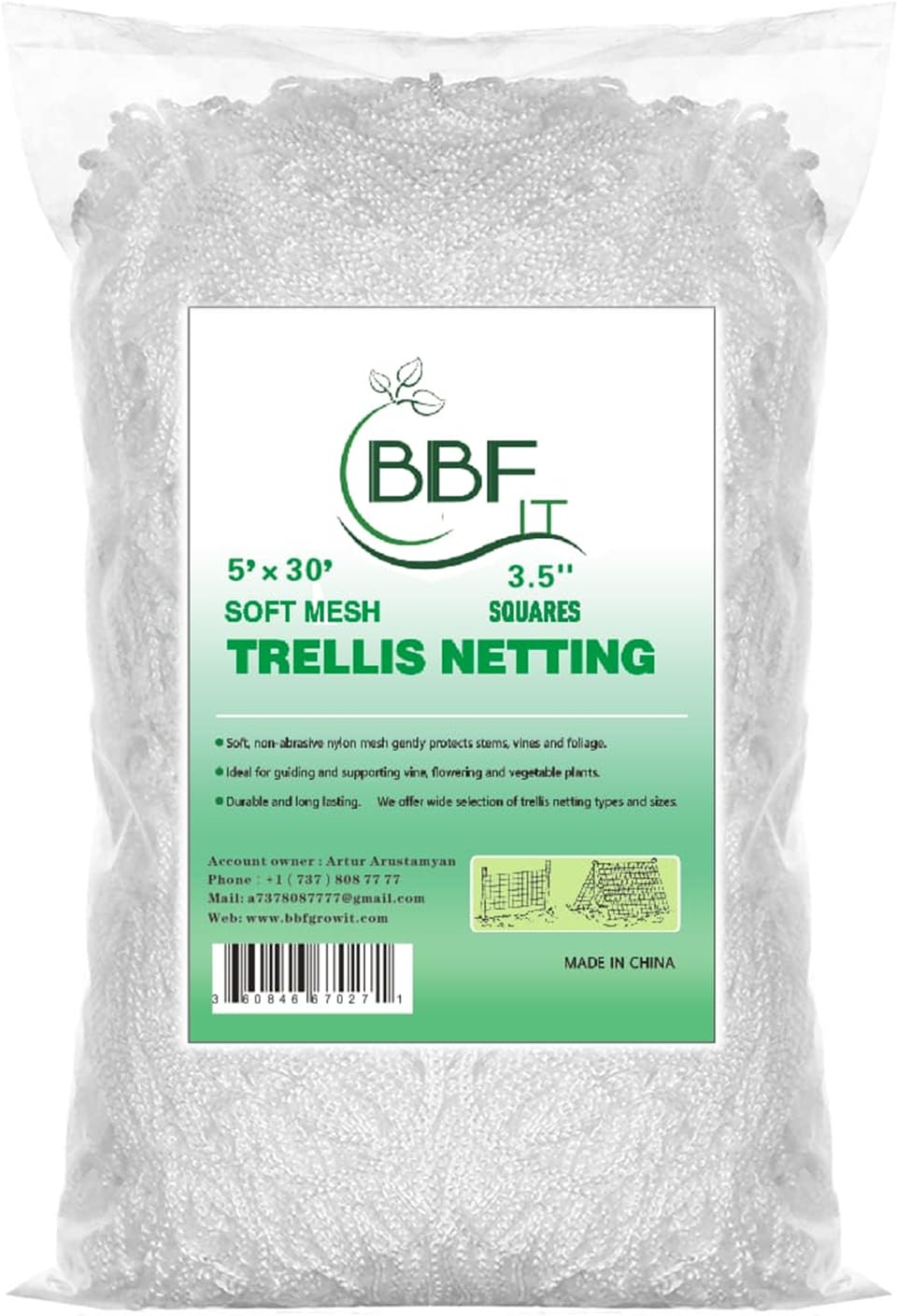
A tight 3.5-inch mesh for plants that need fine footholds early on.
Where most nets settle on a 6-inch opening, this one uses a 3.5 x 3.5-inch square that gives delicate pea tendrils and thin tomato offshoots something small to grab. The polyester material is soft and UV-resistant, and the compact 5×30 ft roll is easy to store. One owner used it in a high tunnel and grew tomatoes to 12 feet high over two seasons without the netting degrading.
The crowning data point is a 4.7-star rating, the highest in this roundup. Functionality and quality are the two aspects owners mention most, with no recurring negative pattern beyond one buyer who noted heavy melons and winter squash can break the strands if you do not double or triple the netting. For average flower support and lightweight vine work, this is a confident buy that takes up almost no storage space.
Perfect for: a dedicated tomato or pea trellis where fine mesh helps young vines climb faster.
Small space solution: it is not intended for pumpkins or large squash without folding the netting over itself for strength.
5. PDGROW Heavy Duty Garden Trellis Netting 6×30 ft
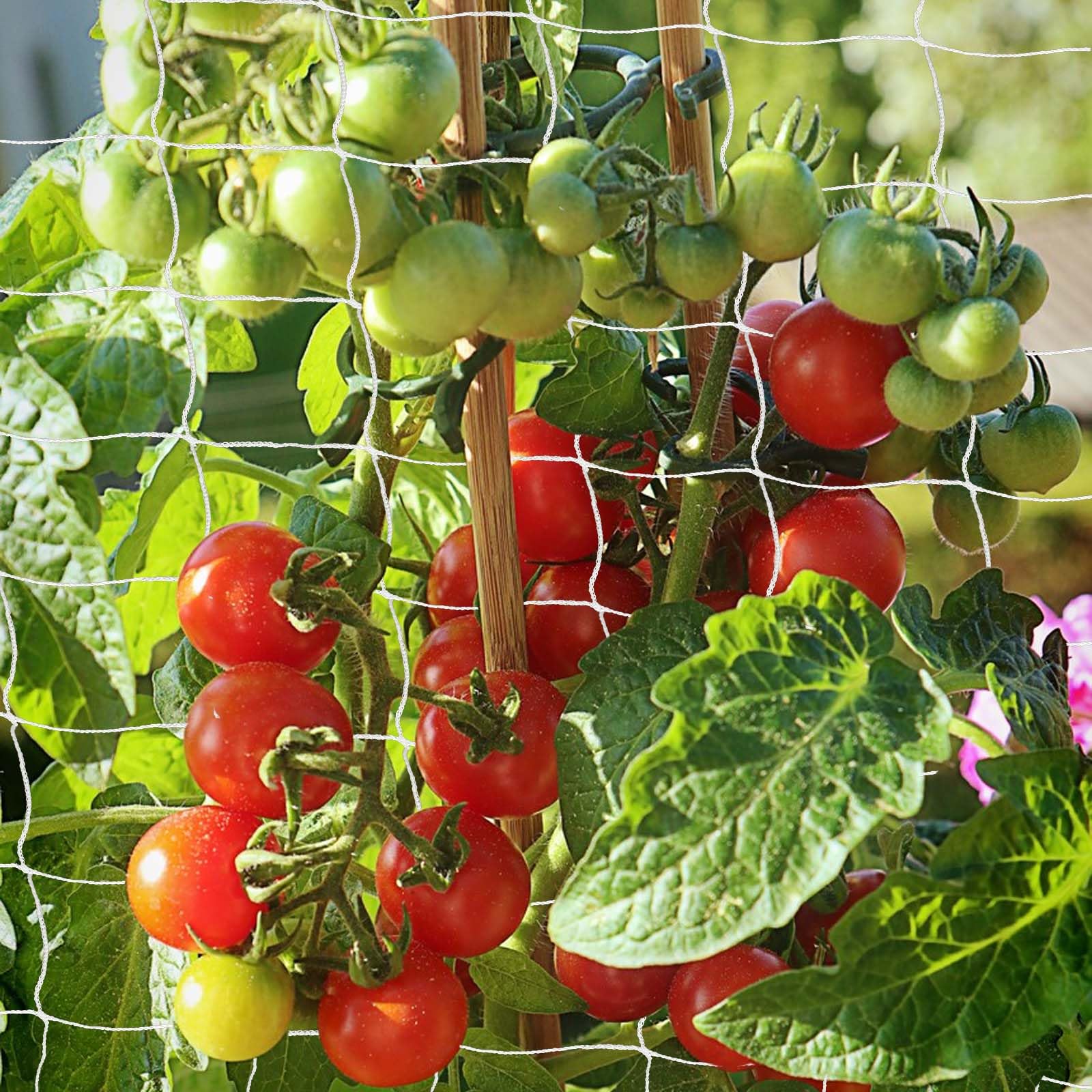
A two-pack of heavy-duty panels that took tomato vines seven feet high.
This set includes two separate 6×30 ft panels made from a blend of nylon and polyester, so you can cover two adjacent beds or one long row without cutting. The 6-inch mesh is ideal for cucumber and tomato vines, and the material is thick enough to hold extremely heavy crop loads. One owner summed it up directly: “It helped my cucumber and tomato plants grow almost 7 feet high!”
Durability is the aspect owners praise most, followed closely by sturdiness. The netting is easy to unravel with no tangle wars out of the package, which is a relief after dealing with some of the stiffer plastic options. The honest criticism is that it lacks a side zipper, so wrapping the netting around an already-established plant requires a bit of finagling. Still, for the price of a two-pack, you are getting a lot of usable coverage.
Choose this if: you want two ready-to-hang panels that are strong, easy to install, and tangle-free from the start.
Wide row support: you need one continuous super-long roll — this comes as separate 30-foot pieces.
6. ATICCA Plastic Trellis Netting 79×328 ft Heavy Duty
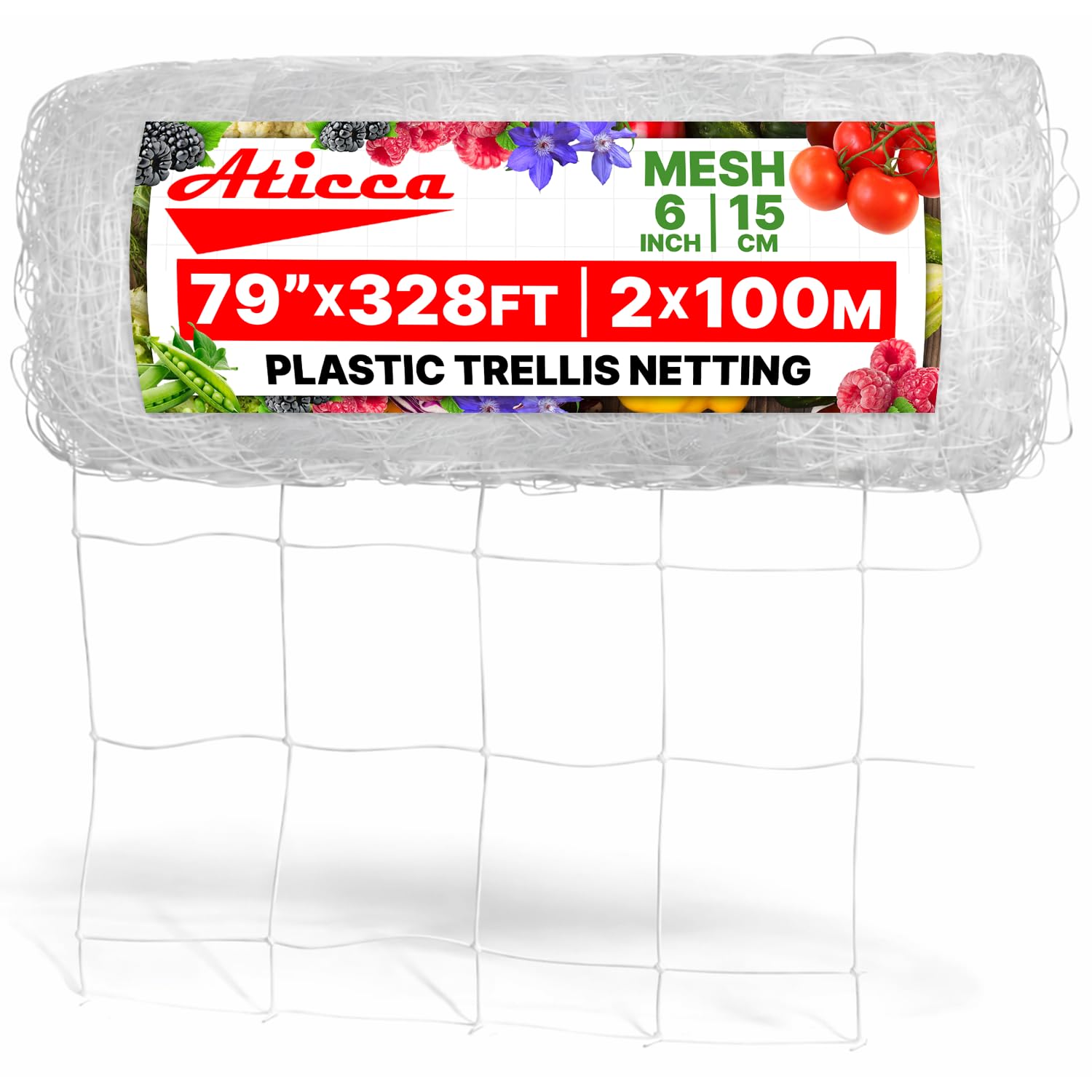
A tall 79-inch netting that doubles as critter defense and flower trellis.
This is the widest netting on the list at 79 inches tall, which means it clears most fence lines and raised beds without needing a second row. The plastic material is durable and sun-resistant, and the 328-foot length gives you a massive 2,129 square feet of coverage. Owners found it strong enough to hold cucumbers, and one buyer rigged it as a cage for strawberry plants and blocked a window A/C unit from birds.
Functionality and sturdiness are the two most-celebrated aspects, with installation ease not far behind. The recurring practical tip from buyers is that it needs a rigid top support (conduit or rebar) to prevent sagging over time. The 1.81 kg weight is manageable but the stiff plastic can be tricky to cut into a perfectly square shape. Still, for the sheer volume of coverage per roll, this is a strong contender for large gardens and multi-purpose fencing.
Ideal for: covering tall fences, wide growing arches, or multi-season use where height matters.
Large area coverage: the plastic requires a solid top rail to stay tight — otherwise the netting droops under a full crop.
7. Toolazy Trellis Netting 59×328 ft HDPE

A 328-foot HDPE roll that held up two full years without a sign of wear.
At 59 inches wide and 328 feet long, this is a mid-height jumbo roll that fits standard raised beds and medium grow tents perfectly. The high-density polyethylene material is known for withstanding heat and cold, and multiple owners mention it stayed outdoors in all weather for two full years with no issues. The roll-wound packaging means it comes from the start without tangling, which saves serious weekend time over cheaper alternatives.
Value for money gets positive marks across the board, and the functionality for cucumbers and green beans is well documented. The sturdiness does get mixed pushback — a few buyers mention the material feels thinner than they expected. The practical fix is to double-layer it for heavy crops or use it as a single layer for flowers and lightweight vines. It is also disposable-affordable enough that you can treat it as a single-season tool.
Grab this for: a budget-conscious season on a large plot where easy setup matters more than ultra-heavy load capacity.
Long-term use: sturdiness is 50-50 in the reviews — light vines are fine; melons need a double layer.
8. HOECMRHP Trellis Netting 32×6.6 ft Nylon
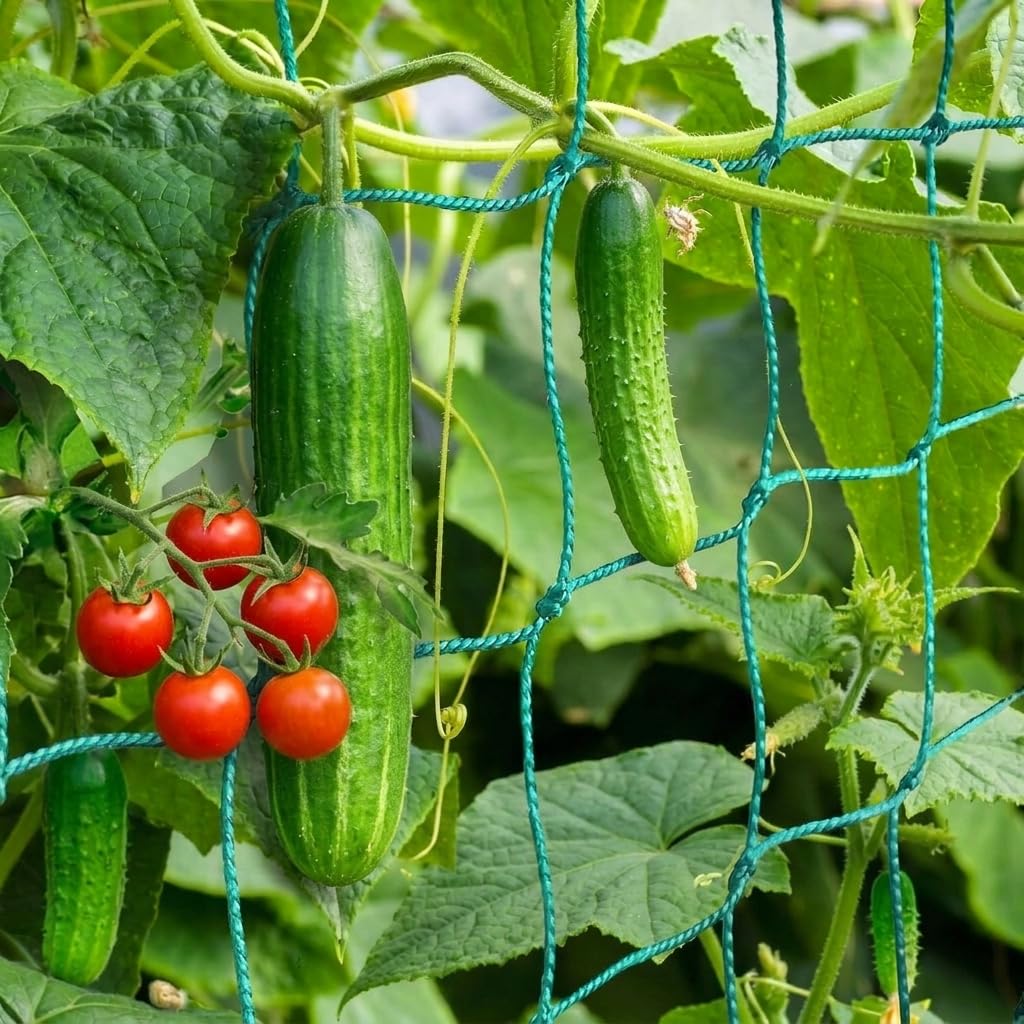
A tangle-free nylon panel ideal for a single raised bed or pea fence.
At 32.8 feet long and 6.6 feet tall, this panel covers exactly one generous raised bed or a row of pole beans without leftover bulk. The 4-inch square mesh is tighter than most on this list, which helps smaller tendrils like blackberries and morning glories latch on quickly. The nylon cord is UV-stabilized and reusable season after season, and owners consistently call it durable and easy to work with.
The standout feature is that it comes out of the package completely tangle-free with edging and ties at each corner, so installation is genuinely quick. The honest concern is that the initial feel is quite flimsy; several first-time buyers worried until the cucumbers started clinging and the netting tightened up. Once weighted, it holds strong. It is also the most compact option for storage.
Best for: a 4×8 foot raised bed vertical trellis where a quick, tangle-free setup matters more than heavy load capacity.
Trellis for pots: the netting feels a bit flimsy when empty, so give it a few days for plants to grab on before judging strength.
Understanding the Specs
Mesh Size (Inches)
This measures the space between the strands. A 6-inch mesh is the most common choice for medium to large vine plants like cucumbers, tomatoes, and pole beans, because it gives stems room to grow thick and makes it easy to reach through and pick fruit. A 4-inch or 3.5-inch mesh is better for sweet peas, blackberries, and other plants with slender tendrils that need smaller openings to grab hold of early in the season.
Material (Polyester vs Nylon vs HDPE)
Polyester is soft on stems, resists UV light well, and unrolls with minimal tangling. Nylon is stronger for heavy fruit loads and often lasts multiple seasons, though it can have slightly loose knots from the start. High-density polyethylene (HDPE) is stiff and budget-friendly, but it is harder to unroll without fighting tangles and it feels less gentle on delicate plant stems.
FAQ
How do I keep flower support netting from sagging under heavy plants?
Can I cut flower support netting to a custom size without it unraveling?
Will this netting damage delicate flower stems like sweet peas or zinnias?
How many seasons can I expect a typical netting roll to last?
Which mesh hole size works best for cucumbers and tomatoes?
Is flower support netting reusable, or is it single-season only?
Can I use a single roll for both flowers and vegetables in the same garden?
How do I untangle netting that came out of the package knotted?
Does the color of the netting matter for plant growth?
Final Thoughts: The Verdict
For most gardeners, the best flower support netting is the Toolazy Trellis Netting 5 x 350 ft Nylon because it blends long-lasting nylon material, a generous 350-foot roll, and the highest owner satisfaction for real-world durability. If you prefer a stiffer weave that feels tough in the hand, the AlpineReach Polyester Netting is a close runner-up with a stronger first impression. And for a tight budget that still demands serious coverage, the Green Trellis Polypropylene Netting is the lightest to carry and proved itself in an actual windstorm.
How We Picked
We do not accept paid placement. Every pick is matched to a real buyer and a real use-case; we do not hands-on test units.
Sources & Methodology
Specifications: manufacturer listings and product documentation. Review insights: verified customer reviews, as of July 2026. Pricing: not shown on this page (it changes often); check the current price via the retailer link.
As an Amazon Associate, Lawn Gear Lab earns from qualifying purchases. This does not affect which products we feature.