
Specs are compiled from manufacturer listings and verified buyer reviews and can change over time — please confirm the key details on the product page before buying.
You stand in the garden center aisle staring at bags labeled “potting mix,” “topsoil,” and “compost.” You just need something that won’t turn your petunias yellow or drown your daisies. The difference between a plant that survives and one that explodes with blooms often depends on what you put in the pot. This guide compares the real contenders side by side, so you grab one bag that matches your exact flowers.
I’m Rikta, the founder behind Lawn Gear Lab. This guide uses the manufacturers’ published specs and patterns across verified customer reviews. Each pick shows its real strengths and trade-offs without marketing spin.
For a balcony rose or a dozen patio containers, you need good soil for flowers that balances drainage, nutrients, and texture. This lineup has a match for every bloom you own.
Our Picks at a Glance
How To Choose The Best Good Soil For Flowers
The most common mistake is grabbing “garden soil” for a container. That soil is too heavy for pots — it compacts, suffocates roots, and holds water until rot sets in. You want a potting mix, which stays light, drains quickly, and keeps air pockets around roots. Three specs matter most for flowers: texture, nutrient profile, and pH (a scale from acidic to alkaline).
Texture and Drainage
Flowers hate soggy feet. A good mix uses perlite (a white volcanic rock that improves drainage), vermiculite (a mineral that holds moisture and nutrients), or coco coir (a peat alternative from coconut husks) to create space for water to flow through and air to reach roots. If the bag feels dense and heavy, it will likely turn your petunias into mush after a week of rain.
Nutrient Content
Your flowers burn through energy to produce buds and petals. Some mixes contain built-in fertilizer that feeds for several months. Others are organic and rely on compost, worm castings, or kelp meal to release nutrients slowly. If you want to control your own feeding, a plain organic base gives you that flexibility.
pH Balance
Most flowers prefer a slightly acidic to neutral pH, roughly 6.0 to 7.0. Some premium mixes include dolomitic limestone (a rock that stabilizes pH) to buffer it naturally. If your flowers turn yellow despite proper watering, the pH might be off. A balanced mix solves that before you open the bag.
Quick Comparison
| Model | Best For | Volume | Feeding Duration | Key Ingredient | Amazon |
|---|---|---|---|---|---|
| Miracle-Gro Indoor Potting Mix★ Best Overall | Houseplant Flowers | 6 qt (2-Pack) | Up to 6 months | Sphagnum peat moss, coir, perlite | Amazon |
| Back to the Roots All-PurposeBest Value | Eco-Friendly Value | 6 Quarts | — | Worm castings, yucca extract | Amazon |
| Lambert Potting MixTop Performer | Reviving Weak Plants | 8 Quarts | — | Peat moss & perlite blend | Amazon |
| Coast of Maine Tomato & Veggie | Edible Garden Flowers | 20 Quarts | — | Composted manure, peat moss | Amazon |
| Midwest Hearth Premium | Seed Starting | 8 Dry Quarts | — | Peat moss, vermiculite, perlite | Amazon |
| Coast of Maine Bar Harbor Blend | Premium Container Mix | 16 Quarts | Slow-release nitrogen | Lobster & crab shell meal, kelp | Amazon |
| Wonder Soil | Compact Storage | 72 Quarts (expands) | Up to 4 months | Compressed coco coir, worm castings | Amazon |
| FoxFarm Ocean Forest | Performance Flowering | 1.5 cu ft | — | Aged forest products, fish emulsion | Amazon |
| Miracle-Gro Potting Mix (3-Pack) | Budget Multi-Bag | 8 qt (3-Pack) | Up to 6 months | Fertilizer-blended potting mix | Amazon |
In‑Depth Reviews
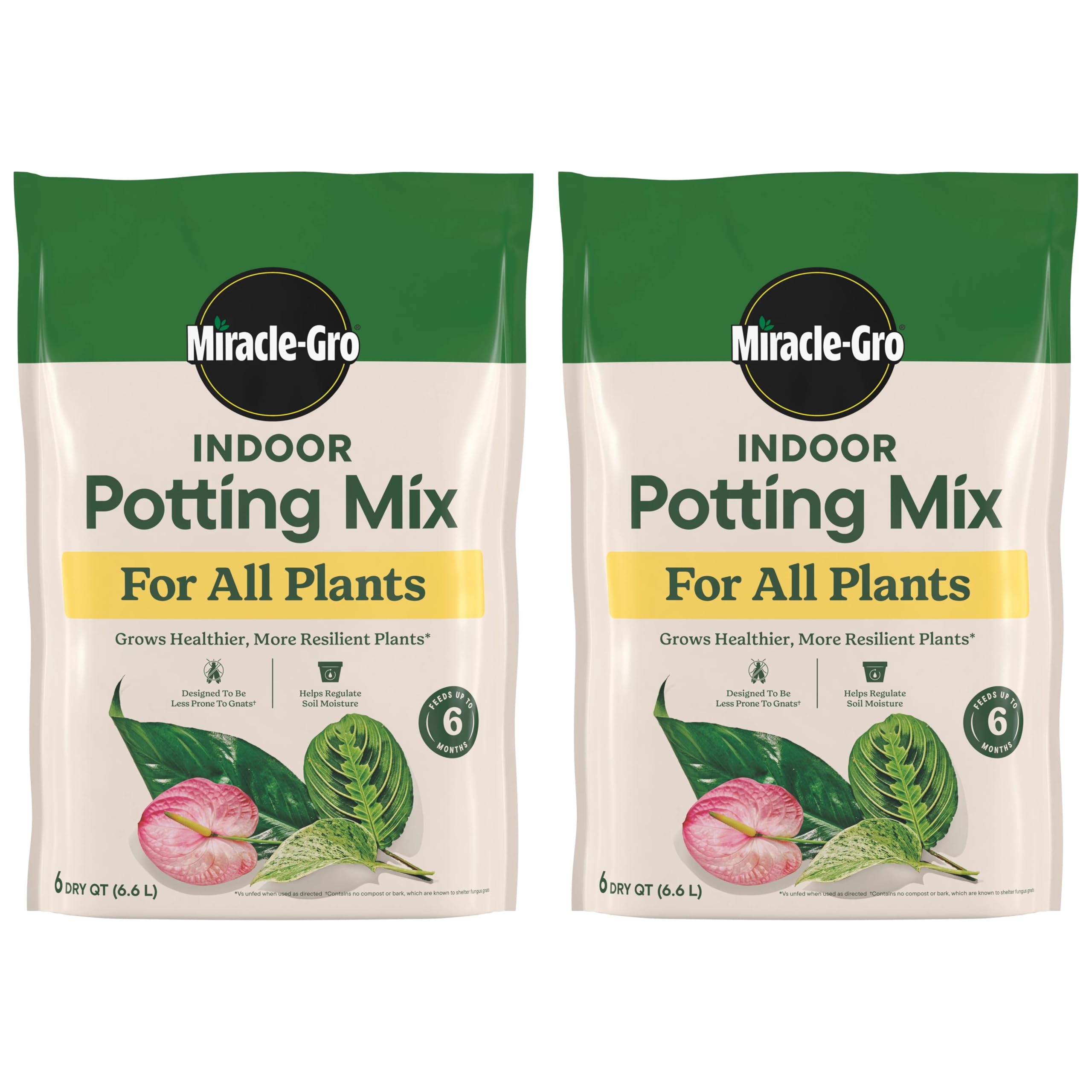
1. Miracle-Gro Indoor Potting Mix for All Plants, 6 qt., 2-Pack
Our pick — over 4.5★ from 23,000+ verified ratings; the strongest balance of quality and price.
The indoor flower ace that feeds itself for six months while you forget you even own a watering can.
This mix uses sphagnum peat moss, coconut coir, and perlite to hold just enough water without drowning roots. It skips compost and bark, so it attracts far fewer fungus gnats (tiny flying pests that thrive in damp soil). The texture stays light and fluffy, never clumpy. Buyers report “excellent drainage and moisture retention; feeds plants for up to 6 months” across 23,000-plus ratings that average 4.7 stars. One bag fills about four 6-inch containers.
The built-in slow-release fertilizer means you get healthy plants without mixing or measuring anything. It is ready straight from the bag. The main caveat: succulents and cacti may find it too moisture-retentive without extra sand or perlite mixed in. The 2-pack gives you 12 quarts total — a solid start for a window sill garden.
What Wins People Over
- Light, airy texture drains well without staying soggy
- Built-in nutrients feed plants for up to 6 months
- No compost or bark — far fewer fungus gnats
The Honest Caveat
- Too moisture-retentive for succulents and cacti without amendment
- Each 6-qt bag is modest — plan for multiple pots
Reach for this if: you have indoor houseplants, herbs, or flowering potted plants and want a mix that feeds itself for months.
Look elsewhere if: you are planting succulents, cacti, or outdoor containers — this is strictly an indoor formula.
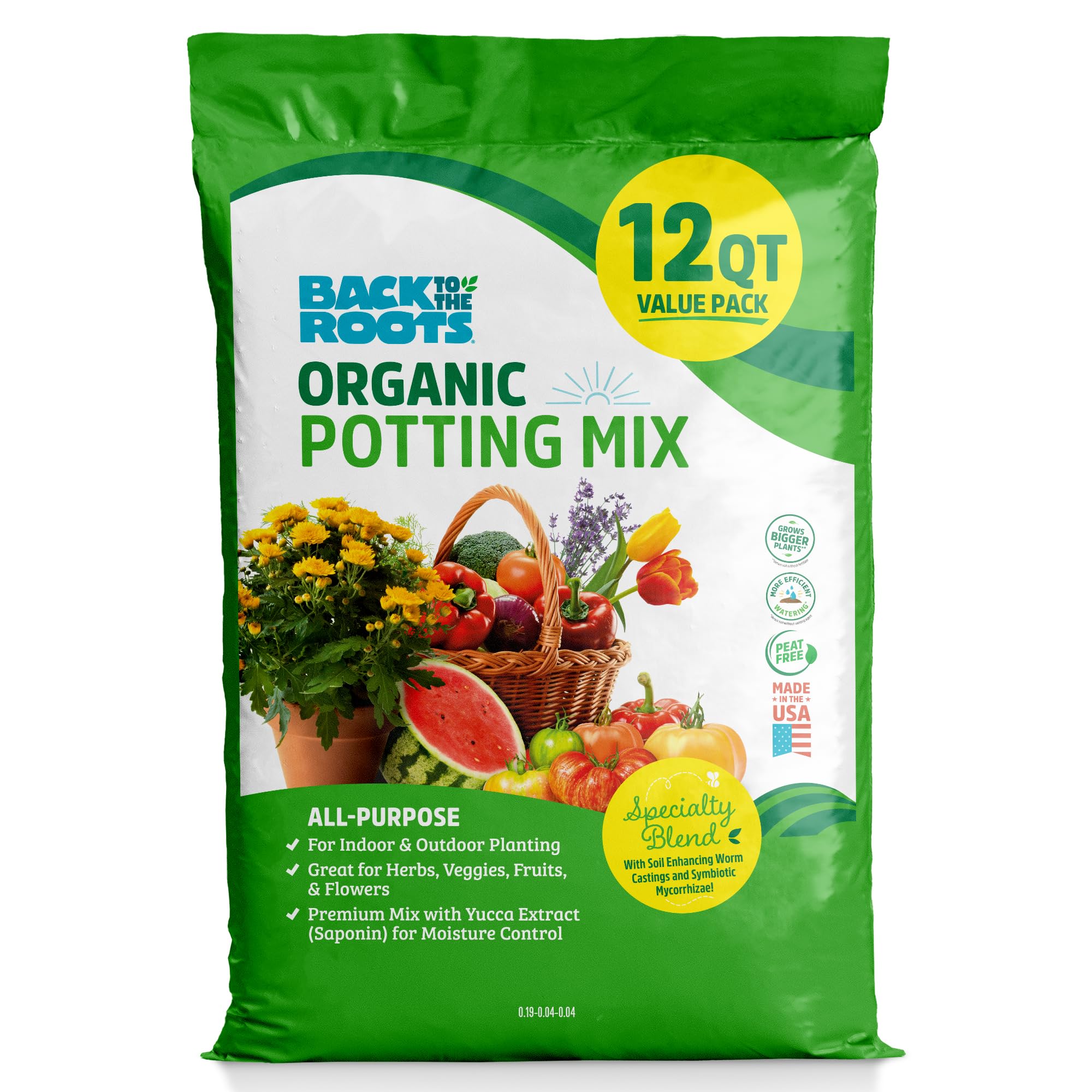
2. Back to the Roots All-Purpose Potting Mix 6 Quarts, 2 Packs
The peat-free organic blend that punches way above its weight class for price-conscious flower lovers.
Back to the Roots replaces peat with coconut coir and yucca extract to manage moisture without the environmental toll of mined peatlands (extracting peat releases stored carbon dioxide). It also packs mycorrhizae (beneficial fungi that help roots absorb water and nutrients) and pH-balancing dolomitic limestone. Regular buyers call it a “great value and just what I need for 24 pots.” At 4.4 pounds per 2-pack, it is noticeably lighter than traditional mixes.
The texture includes natural “mulch” particles from organic ingredients. That makes it unsuitable for tiny seedlings — the bark chunks are too large for a fine seed bed — but for transplanting larger flowers and vegetables, it stays aerated and drains beautifully. The brand claims it is 100% guaranteed to grow or they send a replacement.
Eco-friendly edge: No peat means you are avoiding the CO₂ emissions linked to peat mining, and the bag is 100% guaranteed to grow or they send a replacement.
Best for: the gardener who wants organic, peat-free ingredients at a friendly price and doesn’t need a fine seed-starting texture.
skip it if: you are starting tiny seeds indoors — the large bark particles make it a poor seed bed.
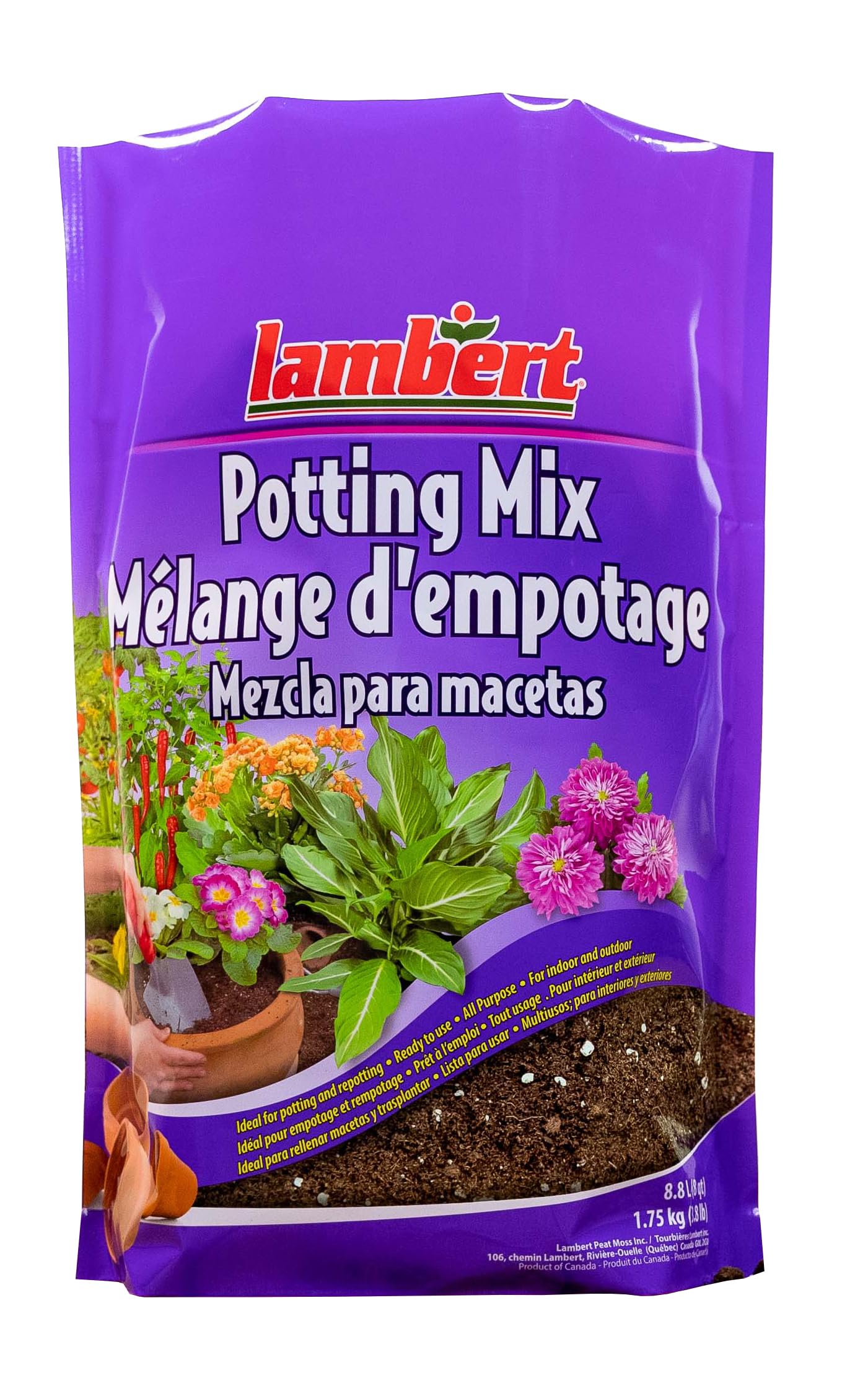
3. Lambert Potting Mix – Potting Soil Mix for Flowers, Vegetables, Shrubs – 8 Quarts
The professional-grade mix that brought lifeless houseplants back from the brink in a single weekend.
Lambert is a ready-to-use all-purpose mix that visibly looks and feels different from commodity soils. Buyers describe it as “superior quality vs. other soils — visibly different, mixed like a professional grower line.” The texture is clean and consistent with no cheap fillers. It handles both indoor and outdoor flowers, hanging baskets, foliage, and cuttings. One owner reports repotting weak, hanging houseplants before a New Year’s weekend and returning to find them thriving.
At 8 quarts, this bag is a modest size, but the quality per quart earns its keep. It uses a standard peat moss and perlite base. For long-term growth in large containers you will want to add compost or a slow-release fertilizer. For seed starting, owners mention it may need sifting for tiny seeds like microgreens. The overall consensus hits 4.7 stars from 175 ratings, with owners praising how their plants “always respond well to it.”
One-sentence review: “Wonderful potting mix. Clean and consistent with no cheap fillers. My plants always respond well to it.”
Ideal for: houseplant owners who want a clean, filler-free mix that revives weak or lifeless plants quickly.
Consider if: you plan to seed-start — you may need to sift out larger particles for tiny seeds.
4. Coast of Maine Organic & Natural Planting Soil for Vegetables & Tomatoes – 20 Qt

The big-bag organic powerhouse that turns tomato flowers into fruit machines with composted manure.
Coast of Maine blends organic compost with sphagnum peat moss to create a lightweight mix that balances moisture and drainage for veggies and flowers in both in-ground beds and containers. It is OMRI-listed (Organic Materials Review Institute — it meets organic farming standards). At 20 quarts, it holds 3.3 times more than smaller 6-quart bags. That gives you real coverage for a raised bed or a collection of large pots without buying multiple bags.
Buyers consistently call it the “best they’ve ever used.” Plants visibly perk up, and germination rates improve. The honest trade-off: some bags arrive with undecomposed twigs that need removal for fine-soil crops like carrots, and a minority of customers note fungus gnats or mold. For flowers and tomatoes in 5-gallon pots, this is lightweight, nutrient-rich, and worth the premium price.
Why Gardeners Love It
- Lightweight texture with excellent moisture retention and drainage
- OMRI-listed for certified organic gardening
- Large 20-qt bag covers raised beds and multiple containers
Watch For
- Occasional undecomposed twigs and debris in the mix
- Some bags may harbor fungus gnats — inspect before use
Reach for this if: you are planting vegetables, tomatoes, or flowers in larger containers or raised beds and want an organic compost-rich base.
Think twice if: you need a fine, screened soil for tiny seeds — you may need to pick out twigs first.
5. Premium Potting Soil Mix with Peat Moss, Vermiculite, Perlite (Made in USA) – 8 Dry Quarts

The precision blend of peat, vermiculite, and perlite that germinated petunias like a greenhouse pro.
Midwest Hearth uses the same formulation as professional growers: peat moss for moisture, perlite for aeration, and vermiculite for nutrient holding. The result is a light, fluffy texture that prevents soil from hardening around roots — a common killer of young flowers. It has pH-controlled levels (stabilized acidity) for a broad spectrum of plants, so you do not need to test before planting. One buyer reports germinating petunias with great success, calling it “well worth the price.”
The 8-dry-quart bag is modest, and some owners wish it were larger, but a resealable opening keeps unused mix fresh. Daylilies, herbs, and flowers all show strong root development and faster growth compared to denser soils. It is made in the USA and arrives free of weeds and bugs.
What it does best: Promotes strong root growth and fast germination in a pH-balanced, weed-free environment.
Best for: seed starting, cuttings, and small container flowers where a precise, light mix gives young roots the best start.
Consider the size: at 8 quarts, it is ideal for a few pots or trays — not a large raised bed.
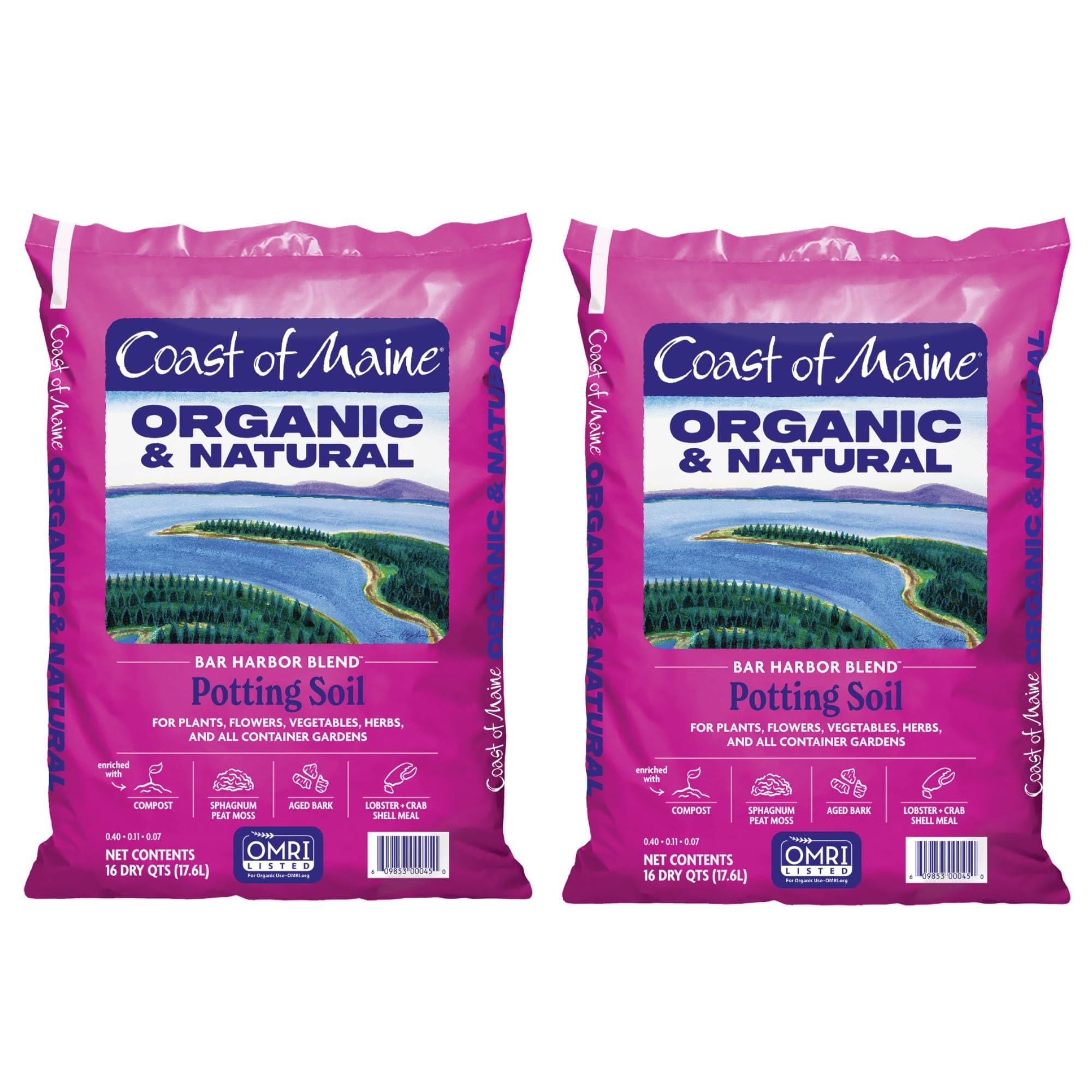
6. Coast of Maine Organic & Natural Bar Harbor Blend Potting Soil – 16 QT
The ocean-fed organic blend with lobster shell meal that made tomatoes “never look so good.”
Bar Harbor Blend reads like a chef’s recipe: sphagnum peat moss, compost, perlite, lobster and crab shell meal, and kelp meal. The shellfish and kelp provide natural slow-release nitrogen that keeps feeding flowers and vegetables over time without burning roots. Reviewers point out their “tomatoes never looked so good” and that the soil is “rich and not full of sticks like some others.” Compared to the Coast of Maine Tomato & Veggie mix, this one includes seafood meals for richer nutrition.
At 16 quarts in a 2-pack format, you get enough volume for a serious container garden. One buyer used two bags to mound up 8 potato plants and still had extra for two more planters. The darker color signals high compost content and low peat moss, which means richer initial nutrition. Pests are a mixed topic — some owners had no issues, while a minority reported unexpected problems. The 4.8-star rating across 550 ratings makes it the top-scoring product in this lineup.
The Star Ingredients
- Lobster, crab, and kelp meal supply natural slow-release nitrogen
- Excellent perlite and compost balance for drainage and nutrition
- Raised bed, pot, and indoor use — one bag does it all
The Trade-Off
- Pest resistance is mixed — some bags may come with unwanted visitors
- Premium price per quart compared to standard mixes
Best for: container gardeners who want a nutrient-dense, organic mix with natural slow-release feeding — especially for flowers and vegetables.
pass on it if: you are on a tight budget or need a guaranteed pest-free bag every time.
7. WONDER SOIL | (72 Quarts) The Only Ready to Plant Compressed Coco Coir
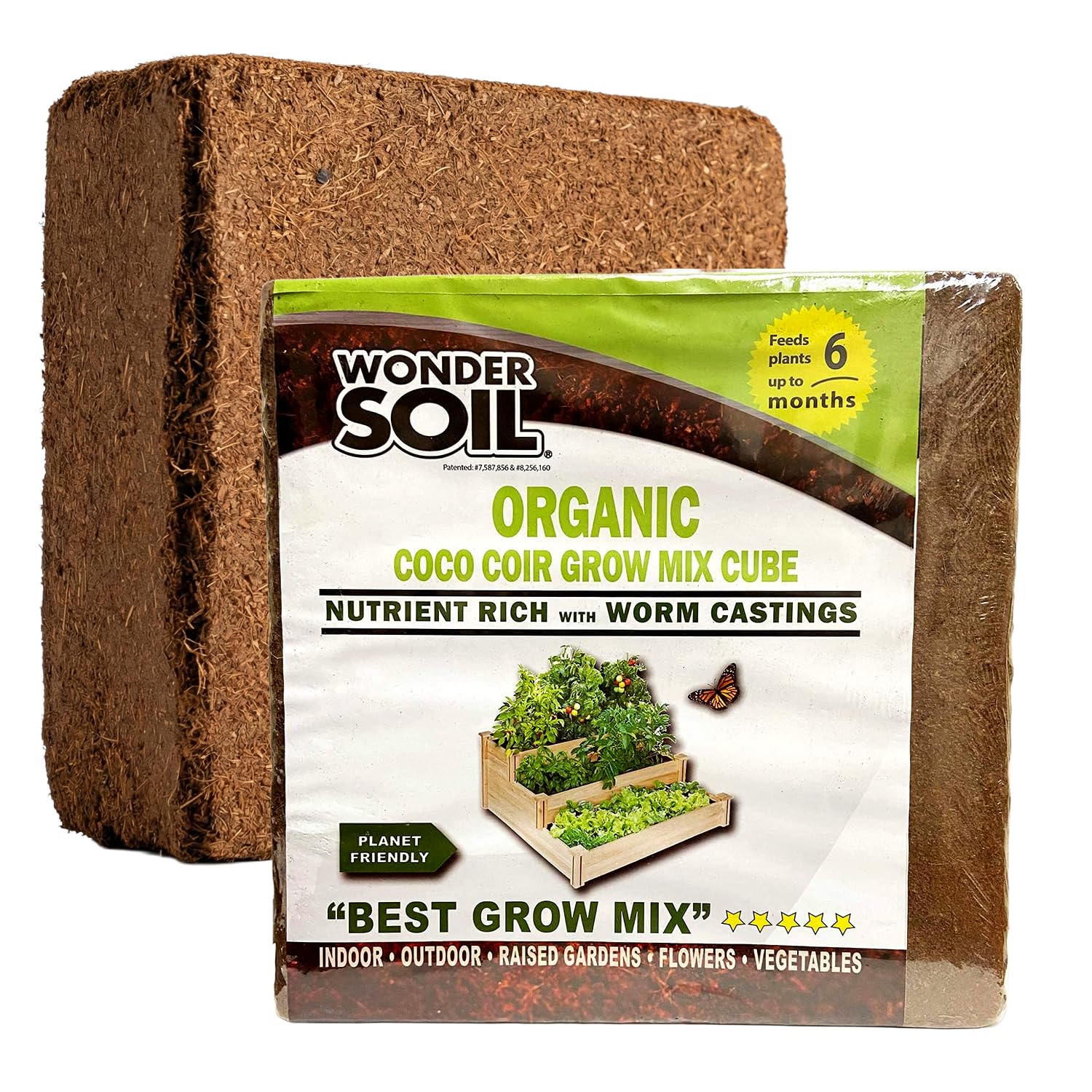
The compressed brick that explodes into 72 quarts of nutrient-loaded coco coir with just water.
Wonder Soil is a 10-pound dry compressed block of organic coconut coir that expands up to 7 times its original size when you add water. It comes pre-loaded with worm castings, mycorrhizae, and kelp to feed plants for up to 4 months. This makes it perfect for gardeners who want to store a large volume of soil in a small space. Shoppers say “what a lot of soil you get for the price” and use it for everything from seed starting to indoor houseplants.
It is fast-draining and promotes aeration in the root zone. A single block filled three 14-inch pots with soil to spare. The main caution: some bricks have arrived infested with spider mites, and one owner reported losing 25% of their plants overnight. If you buy this, inspect it carefully before mixing. The expansion rate also means you need a large container to hydrate it — a 72-quart block becomes a lot of wet soil very quickly.
Why It Stands Out
- Massive 72-quart yield from a compact, shelf-friendly block
- Pre-loaded with nutrients including worm castings and kelp
- Feeds plants for up to 4 months with no additional fertilizer
The Risk
- Occasional spider mite infestations reported — inspect before use
- Needs a very large container for hydration and expansion
Reach for this if: you want a huge volume of organic soil that stores flat until you need it — perfect for bulk container planting.
Be cautious if: you have had bad experiences with pest-infested coco coir; inspect the block thoroughly.
8. FoxFarm Ocean Forest Potting Soil with 2 Plant Tags, 1.5 cu ft
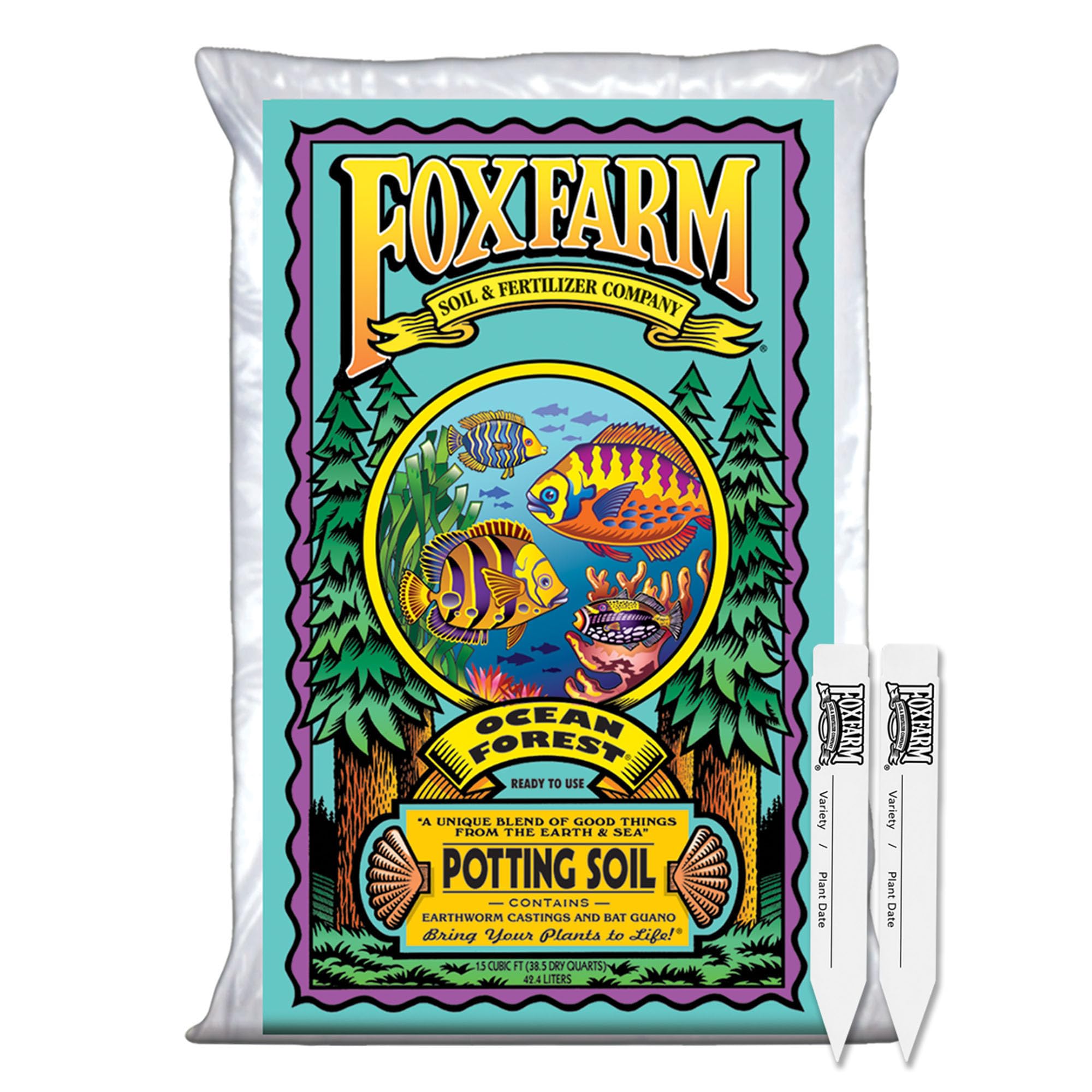
The legendary potting soil that outperformed a competitor’s mix in a side-by-side tomato shootout.
FoxFarm Ocean Forest is a name serious gardeners know. This 1.5-cubic-foot bag contains 50-60% aged forest products, sphagnum peat moss, perlite, sandy loam, and a fertilizer blend from fish emulsion, crab meal, shrimp meal, earthworm castings, kelp meal, and oyster shell. It is ready for immediate use. One buyer conducted an experiment with identical tomato seeds and watering, and the FoxFarm plants beat the competitor’s hands down — though this is a single buyer’s report, not a controlled test.
The texture is light and aerated, so water absorbs immediately without pooling. It works for container gardens, houseplants, trees, shrubs, roses, and seedlings. The 34-pound bag gives you 1.5 cubic feet of coverage — a lot for the price. Some owners find it expensive, and bug resistance is a noted negative (63 mentions). With 4.7 stars and over 10,000 ratings, it is among the most trusted soils for flowers that need to pop.
Where It Excels
- Rich, pre-mixed nutrient content from fish, crab, and kelp
- Light, aerated texture prevents root rot and soggy soil
- Versatile for indoor and outdoor containers, roses, and shrubs
The Catch
- Premium price — not the cheapest option per bag
- Bug resistance is a mixed-to-negative point among owners
Best for: serious flower gardeners who want a proven, nutrient-dense mix that delivers visible results — especially for tomatoes and roses.
Consider the cost: if you are on a strict budget, the price per bag may sting, but the results often justify it.
9. Miracle-Gro Potting Mix – For Container Plants, Flowers, Vegetables – 8 qt. (3-Pack)

The classic outdoor potting mix in a multi-pack that grows flowers twice as big with built-in feeding.
This is the outdoor counterpart to the indoor Miracle-Gro mix. It is formulated for containers on patios, decks, and gardens. It feeds all types of potted plants — flowers, vegetables, shrubs, annuals, and perennials — for up to 6 months. The brand claims it “Grows Plants Twice As Big” compared to unfed plants. Each 8-quart bag fills two 8-inch containers, and the 3-pack gives you enough to tackle a full container garden in one go.
Buyers praise the quality (32 positive mentions) and report thriving plants. It drains well and does not pack down hard, so water reaches roots easily. The smaller bags are a bonus if you do not want to haul giant 50-pound sacks. The trade-off: at 8 quarts each, you pay for convenience rather than bulk volume. Opinions on value are divided, with some calling it decent and others pricey for the total volume.
Bottom line: A reliable, feeding outdoor mix in a manageable 3-pack size that grows flowers twice as big — but watch the per-quart cost.
Ideal for: urban gardeners and balcony planters who want smaller, easy-to-carry bags of a proven outdoor potting mix.
Consider the value: if you need bulk volume for a large garden, a single big bag of another brand will cost less per quart.
Understanding the Specs
Potting Mix vs. Garden Soil
Potting mix is a soil-less blend of peat moss, perlite, vermiculite, and compost designed for containers. It is lighter, drains faster, and stays aerated. Garden soil is heavy, compacts in pots, and suffocates roots. Always choose a labeled “potting mix” for flowers in containers.
Built-in Fertilizer (Feeding Duration)
A bag that “feeds for up to 6 months” means the mix contains a slow-release fertilizer that supplies nutrients gradually. You do not need to add plant food for that period. Organic mixes rely on compost and meals for natural feeding — they are gentler but may need supplementation for heavy-blooming flowers.
Aeration Ingredients: Perlite, Vermiculite, Coco Coir
Perlite is the white popcorn-like rock that improves drainage and aeration. Vermiculite holds moisture and nutrients. Coco coir is a peat alternative from coconut husks that retains water and stays fluffy. A good flower mix should have at least one of these to prevent compacted, waterlogged roots.
Organic vs. Synthetic
Organic mixes use natural sources like compost, worm castings, kelp, and bone meal for nutrition. They build soil health over time. Synthetic mixes use manufactured fertilizers for immediate feeding. Both work for flowers — the choice depends on if you want to manage your own feeding schedule or let the bag do it.
FAQ
Can I use garden soil instead of potting mix for my flowers?
How much soil do I need for a standard 10-inch flower pot?
What does “feeds for up to 6 months” actually mean?
Is organic potting soil better for flowers than synthetic?
Why do some potting mixes have white specks in them?
Can I mix different potting soils together?
How do I know if my soil is causing yellow leaves?
What is the difference between potting mix and potting soil?
Final Thoughts: The Verdict
For most people, the good soil for flowers winner is the Miracle-Gro Indoor Potting Mix because it combines a lightweight, gnat-resistant texture with 6 months of built-in feeding, proven by 23,000+ happy owners. If you want an organic, peat-free option that is gentle on the planet and your wallet, grab the Back to the Roots All-Purpose Potting Mix. And for the serious flower gardener who wants the absolute best performance in containers, the Coast of Maine Bar Harbor Blend with its lobster-shell and kelp nutrition is the one to reach for.
How We Picked
We do not accept paid placement. Every pick is matched to a real buyer and a real use-case; we do not hands-on test units.
Sources & Methodology
Specifications: manufacturer listings and product documentation. Review insights: verified customer reviews, as of July 2026. Pricing: not shown on this page (it changes often); check the current price via the retailer link.
As an Amazon Associate, Lawn Gear Lab earns from qualifying purchases. This does not affect which products we feature.