
Specs are compiled from manufacturer listings and verified buyer reviews and can change over time — please confirm the key details on the product page before buying.
You spot the first speckled leaf, then a few sticky clusters under the foliage. Before you grab any spray, the real question is which one knocks out the infestation without setting your plant back weeks. Insecticidal soaps work by breaking down the pest’s outer shell on contact, but the difference between a fast recovery and a scorched leaf depends on the formula’s strength and how you apply it.
I’m Rikta — the founder and writer behind Lawn Gear Lab. This guide is built by comparing the manufacturers’ published specifications and the patterns across verified customer reviews, so you get each pick’s real strengths and trade-offs instead of marketing spin.
These nine options vary from ready-to-use bottles to high-strength concentrates, each matched to a different garden scale and pest pressure. Here is exactly what separates the winners from the also-rans in the best insecticidal soap for plants lineup.
Our Picks at a Glance

How To Choose The Best Insecticidal Soap For Plants
The wrong soap can either leave pests thriving or turn your leaves brown. You need to match the formula to the pest, the plant, and the stage of the infestation.
Ready-to-Use versus Concentrate
A ready-to-use bottle is what you reach for when you spot a few aphids on a houseplant and want to spray immediately with no measuring. A concentrate gives you many more gallons of spray per dollar, but you have to mix it yourself and calibrate the dilution so it kills pests without harming delicate foliage.
Active Ingredient Strength
Almost all true insecticidal soaps use potassium salts of fatty acids as the active ingredient. The percentage in the bottle matters — a 1% ready-to-use formula is gentler on plants than a concentrate you dilute yourself to a stronger ratio. Higher concentration means faster kill, but also a higher risk of leaf burn if applied in direct sun or high heat.
Pest Spectrum and Plant Safety
Soft-bodied insects like aphids, spider mites, whiteflies, and mealybugs are the primary targets. Tougher pests with hard shells resist soap. Most of these products are labeled as organic or OMRI Listed, meaning they can be used on edible crops up to the day of harvest. Still, always test a small area first because some plants — particularly ferns, succulents, and delicate annuals — can react badly.
Quick Comparison
| Model | Best For | Volume | Formula Type | Active Ingredient | Amazon |
|---|---|---|---|---|---|
| Athena IPM 32oz★ Best Overall | Dual pest + mildew control | 32 fl oz | Ready-to-Use | Natural Oils | Amazon |
| Safer Insect Killing Soap ConcentrateBest Value | Budget organic concentrate | 16 fl oz | Concentrate | Potassium Salts of Fatty Acids | Amazon |
| NATRIA Insecticidal SoapBest Ready-to-Use | Ready-to-use two-pack value | 48 fl oz (2×24) | Ready-to-Use | Potassium salts of fatty acids 1% | Amazon |
| Safer Insect Killing Soap w/ Seaweed Extract | Gentle leaf cleaner + pest spray | 32 fl oz | Ready-to-Use | Potassium Salts of Fatty Acids | Amazon |
| VPG Fertilome Natural Guard | Small-space garden spray | 8 fl oz | Ready-to-Use | Potassium Salts of Fatty Acids | Amazon |
| ARBER Organic Insecticide | Fungus gnat + spider mite focus | 16 fl oz | Concentrate | Organic biologicals | Amazon |
| Arber Organic Insecticide & Fungicide | 2-in-1 pest + disease control | 16 fl oz | Concentrate | Bio-based concentrate | Amazon |
| Ecoworm Horticultural Soap Concentrate | Heavy-duty leaf cleaning | 34 fl oz | Concentrate | Potassium soap | Amazon |
| Trifecta Crop Control | Commercial-scale, all-natural | 128 fl oz | Concentrate | Essential oils | Amazon |
In‑Depth Reviews
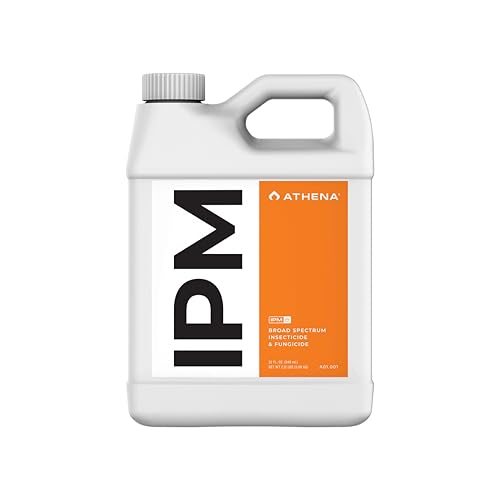
1. Athena IPM 32oz Broad Spectrum Fungicide & Insecticide
Our pick — over 4.5★ from 250+ verified ratings; the strongest balance of quality and price.
The dual-threat that zaps both spider mites and powdery mildew in a single pass.
This is not just an insecticidal soap — it is a broad-spectrum fungicide and insecticide combined. Instead of spraying one product for aphids and a separate one for powdery mildew, you grab the Athena IPM bottle and cover both at once. The formula uses natural oils as the active ingredient, and it carries an EPA 25(b) minimum-risk label, meaning it is made with ingredients the EPA considers safe enough to skip full registration. Buyers report it zaps mites and other critters on contact while also smelling pleasant — not like a chemical lab. One gardener living in a rural area with heavy bug pressure said it works great and feels safe enough to use around their animals.
At 32 fluid ounces, it is a mid-sized ready-to-use bottle. There is no mixing, no measuring — just point and spray. The 4.7-star rating across a solid base of 279 ratings backs up the confidence you hear in the reviews. What wins people over is effectiveness, mentioned by 29 owners as the standout trait. You get consistent results on houseplants, vegetable gardens, herb gardens, flower beds, fruit trees, and even hydroponic systems.
The catch is that you pay a premium for that dual-action capability compared to a basic soap concentrate. If your problem is strictly soft-bodied insects and you never fight powdery mildew, you might overspend on a feature you do not need.
Why It Wins
- Fights insects and fungal diseases in one spray — no second product needed
- Made with natural oils under an EPA 25(b) exemption, so it feels gentle around pets
- Ready-to-use bottle saves you the guesswork of mixing ratios
The Trade-Off
- Costs more per ounce than a basic concentrate you dilute yourself
- If you only have aphids, you pay for the fungicide half you may never use
Reach for this if: your plants battle both pests and powdery mildew, and you want one reliable bottle that handles both without mixing.
Think twice if: you only need a basic aphid killer and want to stretch every dollar with a concentrate.
2. Safer 5118-6 Insect Killing Soap Concentrate
The crowd-favorite concentrate that turned a severe aphid invasion into a three-day memory.
This is the bottle that tens of thousands of gardeners reach for when the aphids get serious. The key difference between this and the smaller ready-to-use bottles is that the 16 fluid ounces of concentrate make several gallons of finished spray once you dilute it with water. Owners mention that a severe aphid infestation was 90% dead by day one and completely gone by day three — with no chemical burns on the plants. The active ingredient is potassium salts of fatty acids, which weaken the insect’s outer shell and dehydrate it on contact.
The product is OMRI Listed, meaning it is compliant for certified organic gardening, and you can spray it up until the day of harvest. It targets aphids, mealybugs, whiteflies, leafhoppers, spider mites, and more without killing beneficial insects when used as directed. The common mistakes owners point out are over-applying or mixing it too strong, which can burn leaves. The instructions matter here: spray in cool, indirect sunlight and use it sparingly, no more than six times per season.
The single recurring complaint is the strong smell right after spraying, though it dissipates quickly. A few units arrived solidified in cold weather, but the concentrate melts back to liquid after sitting in the sun for about 30 minutes.
Why It Wins
- One bottle makes multiple gallons of spray, offering a very low cost per treatment
- OMRI Listed for organic gardening, so you can use it on edibles up to harvest day
- Backed by over 6,000 ratings with a proven track record on aphids, whiteflies, and spider mites
The Trade-Off
- The concentrate has a noticeable odor when mixed that some find unpleasant
- Incorrect dilution or spraying in direct sun can burn tender leaves
Best for: gardeners who want the lowest cost per treatment and do not mind mixing their own spray.
skip it if: you prefer the grab-and-go convenience of a ready-to-use bottle and dislike measuring concentrates.
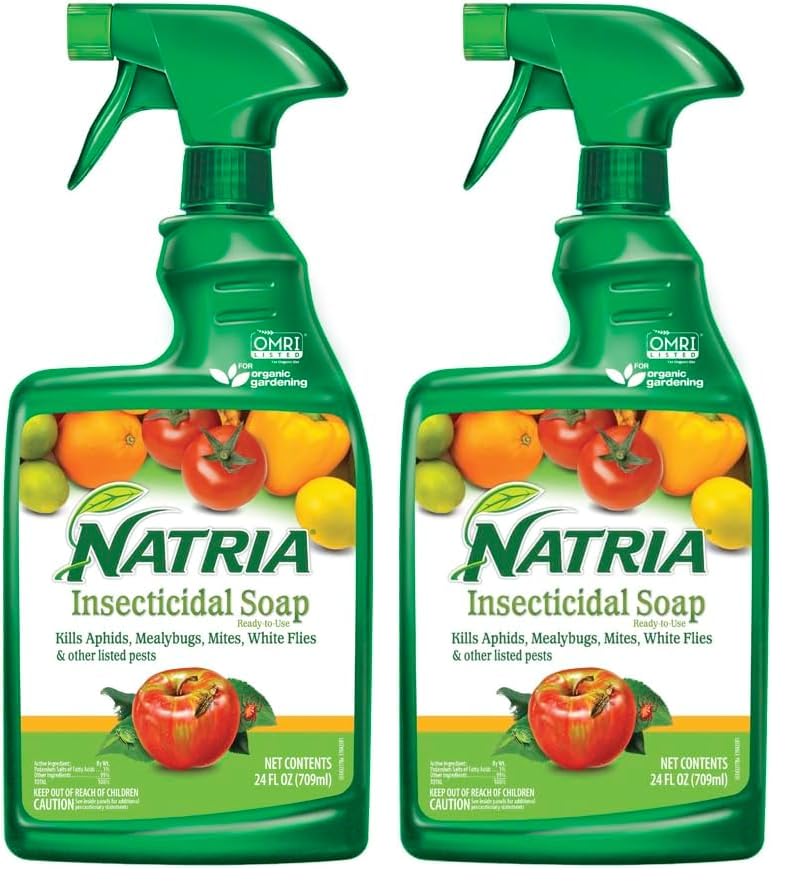
3. NATRIA Insecticidal Soap, Ready-to-Use Garden Bug Treatment (Pack of 2)
The two-pack that finally stopped a mealybug siege when nothing else worked.
When you need to spray immediately without mixing a thing, this is the set to grab. The NATRIA comes as a two-pack of 24-ounce ready-to-use bottles, giving you 48 fluid ounces total — exactly three times the volume of the Safer concentrate bottle, though the Safer makes more total spray once diluted. The active ingredient is 1% potassium salts of fatty acids, a gentle but effective concentration that kills aphids, mealybugs, mites, and whiteflies on contact. Customers note it works on severe mealybug infestations that other products failed to touch, with visible results after two weeks of every-other-day spraying and full elimination by six weeks.
It is labeled for organic gardening and can be used up to the day of harvest on roses, flowers, fruits, vegetables, and houseplants. The formula has no harsh smell, which is a big plus for indoor use. One long-term user found it effective against tiny black bugs on lemon and lime trees, though they dropped a star because the sprayer bottle became unreliable when the container was still half full.
The sprayer quality is the most consistent complaint — several owners had to transfer the liquid to a different bottle mid-use. At 4.2 stars across nearly 9,000 ratings, the consensus is that the soap inside works well, but the hardware it comes in can frustrate.
Why It Works
- Two ready-to-use bottles give you 48 fluid ounces total for immediate spraying
- No unpleasant chemical smell, making it comfortable to use indoors
- Proven effective on stubborn mealybugs that resisted other treatments
The Catch
- The included sprayer tends to fail halfway through the bottle
- Slightly lower star rating than the Safer concentrate due to hardware issues
Grab this if: you want a no-mix, no-smell solution that comes as a two-pack so you have a backup ready.
Look elsewhere if: you need a reliable sprayer that lasts the whole bottle, or you want a concentrate for the lowest cost per gallon.
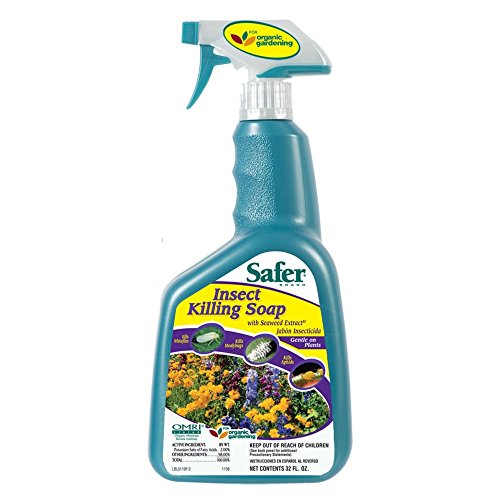
4. Safer Insect Killing Soap With Seaweed Extract (32 oz)
The ready-to-use soap that conditions leaves while it cleans them of pests.
This is the same trusted Safer brand as the best-value concentrate, but in a ready-to-use 32-ounce bottle with an added bonus: seaweed extract. The seaweed does not kill bugs — it feeds the plant, improving leaf greenness and helping foliage bounce back faster after an infestation. Reviewers point out no plant burn at all, and some noticed that their plants looked greener after treatment than before the bugs arrived. It eliminated whiteflies, gnats, and mites after just two applications spaced a few days apart.
Because it is a ready-to-use formula, there is no mixing, no measuring, no risk of burning your plants with an overdose. Just spray directly on the infested leaves and stems. It works on houseplants, vegetables, and ornamentals both indoors and out. One owner fighting grasshoppers in a particularly bad year found it did a good job of control, though no spray can fully eradicate a heavy grasshopper infestation. The bottle measures 11.35 inches high, so it stores easily on a shelf.
The main limitation is you get exactly 32 ounces of spray and no more — once it is gone, you buy another bottle. For a large garden with multiple plants, that can get expensive compared to a concentrate that gives you gallons of spray from one purchase.
Standout feature: The seaweed extract makes this a two-in-one — pest control plus a gentle leaf conditioner — which is unique among the ready-to-use picks here.
Ideal for: indoor gardeners who want a gentle, burn-free spray that also makes their plants look fuller and greener.
Not for: large outdoor gardens where a concentrate would stretch much further for the money.
5. VPG Fertilome Natural Guard (40704) Insecticidal Soap

The tiny bottle that packs a punch on lace bugs and spider mites.
At just 8 fluid ounces, this is the smallest bottle in the lineup, but it earns its place with a 4.5-star score from 132 ratings. The formula targets lace bugs, spiders, mites, aphids, leafhoppers, and earwigs while staying gentle enough for fruit trees, vegetables, nut trees, ornamentals, shrubs, berries, flowers, and citrus. It is a contact spray that kills on contact and is considered environmentally-friendly for both indoor and outdoor use.
Some owners combine it with neem oil for a stronger punch against stubborn pests, and they report excellent results. A small number of owners also reported leaf damage even at half the recommended dosage, particularly on tender crops like spinach. This is one to test on a single leaf before spraying your whole plant.
Honest note: The small volume means this is best as a spot-treatment bottle for a few plants, not your main garden spray.
Best for: the indoor gardener with a few precious plants who wants a compact, high-rated backup spray.
Look elsewhere if: you have a large outdoor garden or a heavy infestation that needs volume.
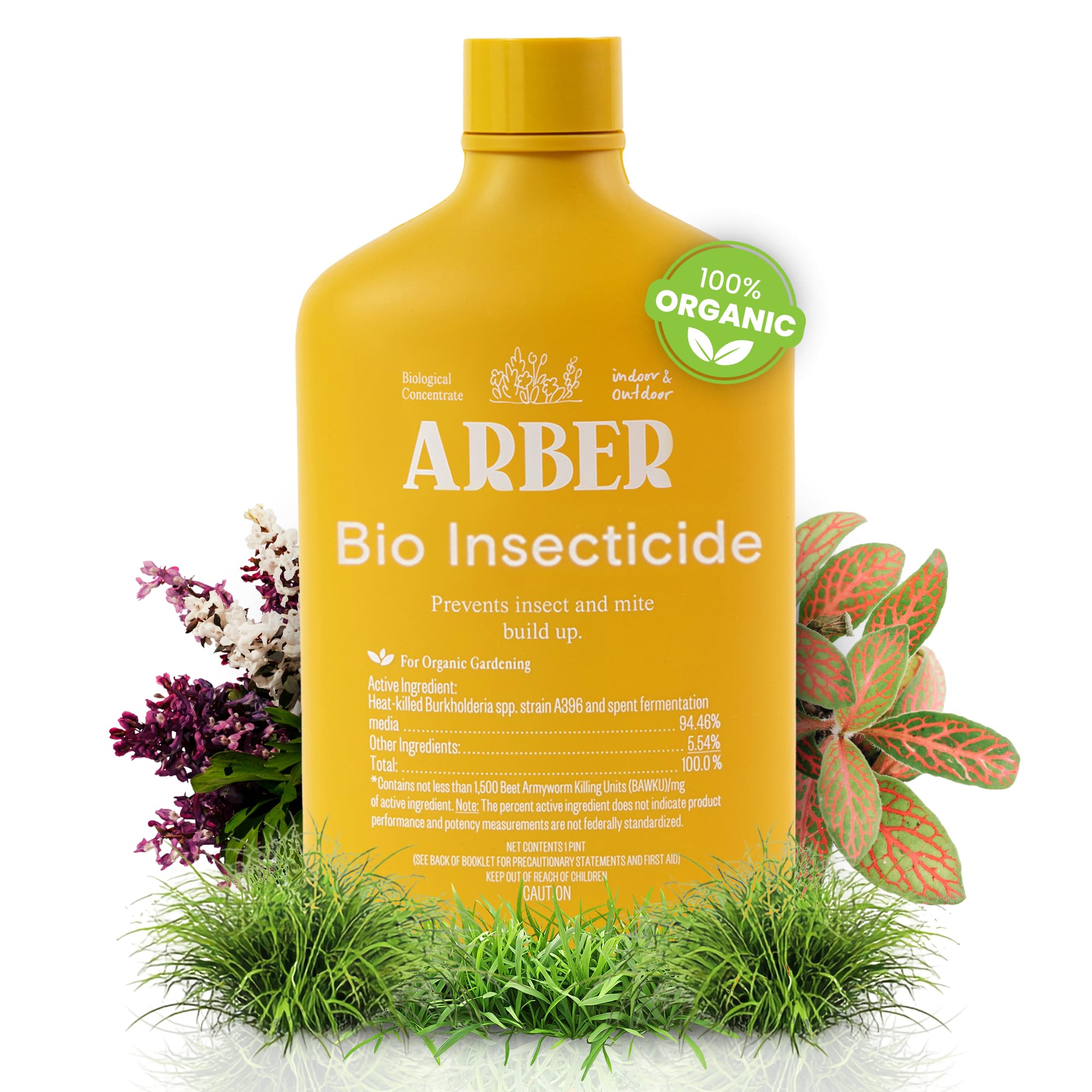
6. ARBER Organic Insecticide for Plants – Fungus Gnat Killer
The bio-based concentrate designed to disrupt pest life cycles without harsh synthetic smells.
ARBER takes a different approach than the potassium-salt soaps. This is a liquid concentrate powered by organic biologicals — it penetrates foliage and soil to disrupt pest life cycles while supporting the soil’s natural microbiome. It targets fungus gnats, aphids, whiteflies, mealybugs, and spider mites. You dilute it yourself: a lighter mix for weekly maintenance, a stronger ratio when you see a flare-up. Owners who paired it with the companion fungicide reported that a spray-and-water routine every five days killed both fungus gnat larvae and adults after three applications.
The low-odor, dye-free formula is designed to be gentle on people, pets, and pollinators when used as directed. It works indoors or outdoors on pots, raised beds, edible gardens, and greenhouse collections. The 4.0-star rating across 389 ratings reflects mixed feedback: some owners found it highly effective on spider mites, while others reported it was not strong enough against established fungus gnat populations and that the spray mixture grew mold or scum in the bottle after a week, clogging sprayers.
Know before you buy: The biological formula is gentler than traditional soaps, but some owners found it less effective on heavy fungus gnat infestations and had issues with the mixture clogging equipment.
Great for: organic gardeners who want a biological approach that supports root health while controlling pests.
pass on it if: you need a fast, aggressive knockdown of a severe infestation and cannot risk a mild response.
7. Arber Organic Insecticide & Fungicide for Plants (16 oz)

The dual-concentrate pack that knocks out both bugs and blight in one mixing session.
This is a two-bottle set: one insecticide concentrate and one fungicide concentrate. The insecticide kills aphids, caterpillars, gnats, spider mites, whiteflies, thrips, and fungus gnats. The fungicide tackles powdery mildew and other fungal issues. Shoppers say that 10 drops of the insecticide in 32 ounces of water killed bugs on contact within 5-10 seconds. A nightly routine eliminated aphids and caterpillars, and the fungicide improved leaf lushness and greenness noticeably. The insecticide is diluted at 2 tablespoons per gallon — that gives you about 8 gallons of spray per bottle. The fungicide is 1 tablespoon per gallon for another 8 gallons.
The formula is odorless, and owners appreciated that it caused no leaf burn on sensitive plants. It works indoors and outdoors on tomatoes, herbs, ornamentals, fruiting shrubs, and cool-season lawns. It protects pollinators when used as directed. The only insect it does not seem to touch is Japanese beetles, according to the reviews.
Editor’s note: If the Athena IPM is the all-in-one ready-to-use option, this Arber set is the concentrate version of the same idea — you get more total spray for your money but you do the mixing yourself.
Perfect for: gardeners who want separate control over insecticide and fungicide doses and prefer an odorless concentrate that yields 16 gallons total.
Not for: anyone who wants a single bottle to grab and spray without mixing two separate concentrates.
8. Ecoworm Horticultural Soap Concentrate for Plants (34 fl oz)
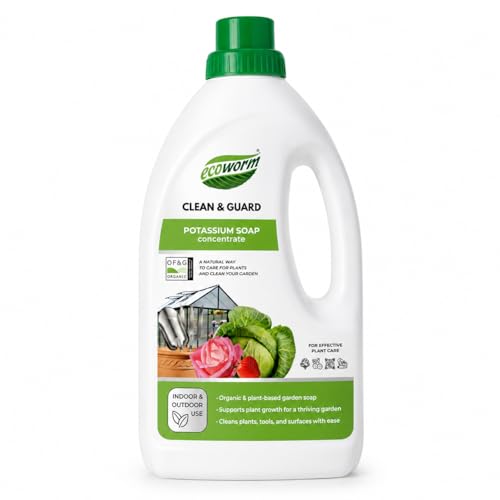
The high-strength soap concentrate that doubles as a leaf cleaner and a pest spray.
This one is positioned as a horticultural soap first and an insecticide second. The 34 fluid ounces of concentrate mix with water at a ratio of 200-600 milliliters of soap per 10 liters of water, giving you a huge volume of finished spray. The potassium soap formula washes away dust, residue, and sticky deposits from leaves while also controlling soft-bodied pests. Buyers report that pests disappear within 24 hours of application. It is biodegradable and suitable for indoor plants, vegetables, herbs, flowers, and greenhouse use.
The 4.5-star rating from 54 ratings is excellent but based on a small sample size, so the verdict is less proven than the big-name brands. Some owners wished for a larger bottle, noting the 34-ounce size is not enough for very large gardens. Because it is a high-strength concentrate, you need to be careful with dilution to avoid leaf burn.
The angle: This is a solid choice if your goal is regular leaf maintenance with pest control as a bonus — not the other way around.
Use it for: regular leaf cleaning that also keeps low-level pest populations in check, especially on houseplants.
Consider a different pick if: you need a proven, large-scale aphid killer with thousands of reviews confirming its effectiveness.
9. Trifecta Crop Control Insecticidal Soap (128 fl oz)
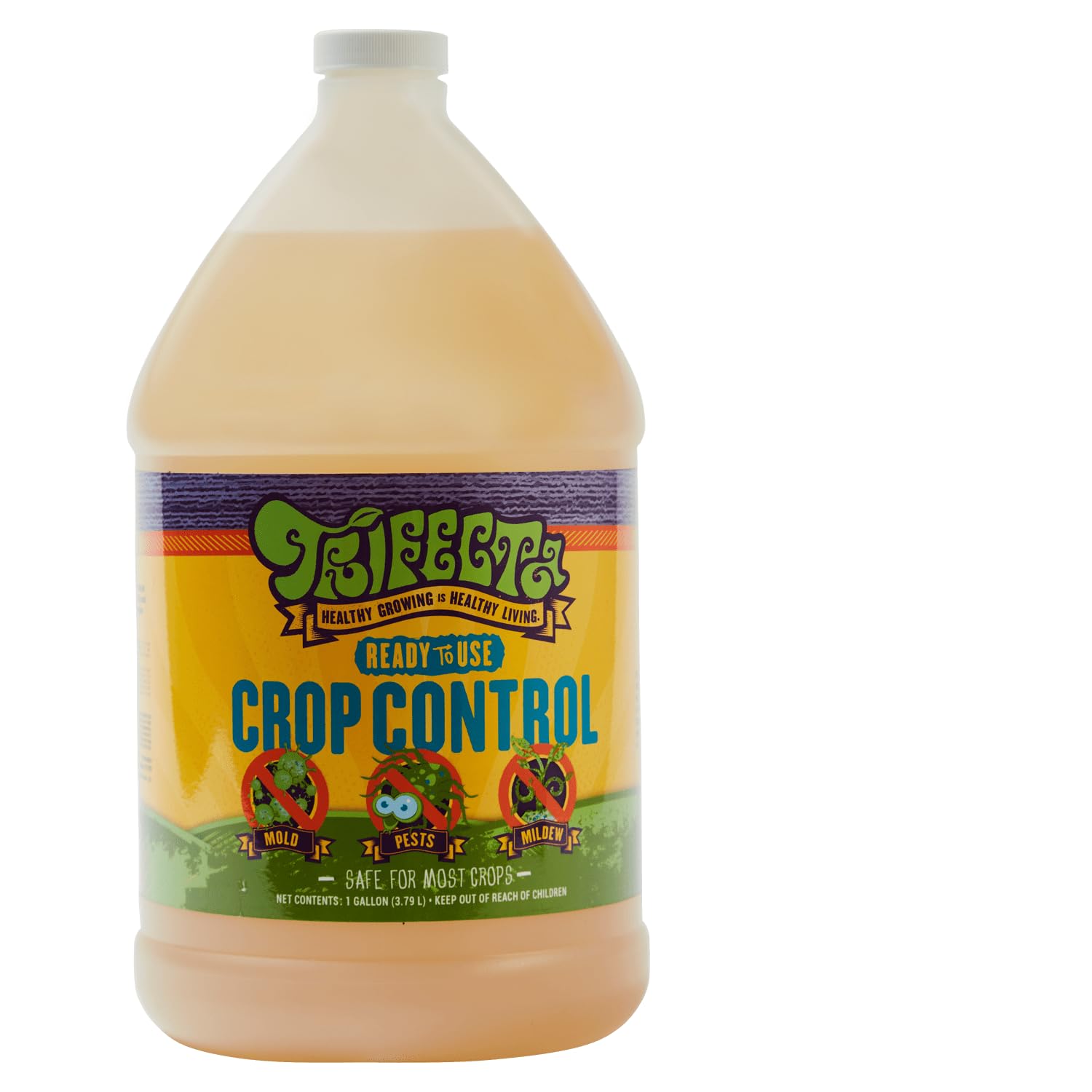
The gallon-sized essential-oil concentrate trusted by commercial growers and cannabis gardeners alike.
This is the biggest bottle by volume — 128 fluid ounces of concentrate — and it targets the serious gardener with multiple plants or a full grow room. The formula uses natural essential oils rather than potassium salts of fatty acids, which is a different mechanism. It suffocates and dehydrates soft-bodied pests including spider mites, aphids, whiteflies, and fungus gnats. It also works as a fungicide against powdery mildew. The fast-drying formula leaves no residue and no lingering odor, which owners love for indoor use. One reviewer called it “the gold standard” in their grow room, noting it cleans dust and grime, dries quickly, and prevents mold.
The 4.2-star score across over 7,500 ratings shows strong overall satisfaction, but there are two consistent criticisms. First, the price is the highest in the lineup. Some owners found the 4-ounce bottle insufficient for a full treatment course when used at the recommended 2-4 ounces per gallon.
Why It Stands Out
- Gallon-size concentrate yields a huge volume of spray for large gardens or grow rooms
- Essential-oil formula dries fast with no sticky residue, keeping leaves clean
- Highly recommended by the cannabis-growing community for organic gardens
Where It Falls Short
- Kills adult spider mites but spares eggs, so you must spray daily for over a week
- High price per bottle becomes very expensive when treating multiple plants repeatedly
This is your pick if: you run a large home garden or grow room and want a natural, essential-oil formula that commercial growers trust.
You might prefer the Safer concentrate if: you are on a budget or need a simpler potassium-salt solution that kills on contact without the egg-lifecycle issue.
Understanding the Specs
Potassium Salts of Fatty Acids
This is the active ingredient in most true insecticidal soaps. It works by penetrating the soft outer shell of insects like aphids, spider mites, and whiteflies and causing their cells to collapse through dehydration. It breaks down quickly in the environment and leaves no toxic residue on edible plants, which is why it is allowed in organic gardening. The percentage in the bottle tells you how concentrated the soap is — a 1% ready-to-use spray is gentler on plants than a concentrate you mix yourself to 2% or higher.
Ready-to-Use vs Concentrate
A ready-to-use bottle comes pre-diluted at the correct strength for immediate spraying. You pay for the water in the bottle, but you never risk burning a plant by mixing the ratio wrong. A concentrate costs less per ounce of actual soap and can make many gallons of finished spray, but you have to measure and mix it yourself. Concentrates are more economical for large gardens. Ready-to-use bottles are the better choice for a few houseplants or when you want to grab and spray without thinking.
FAQ
Will insecticidal soap burn my plants?
Can I use insecticidal soap on edible vegetables and herbs?
How often should I spray insecticidal soap?
Does insecticidal soap kill beneficial insects like bees and ladybugs?
What is the difference between insecticidal soap and neem oil?
Why does my insecticidal soap smell bad?
Can I make my own insecticidal soap at home?
How do I apply insecticidal soap to the underside of leaves?
Is a higher concentration of insecticidal soap more effective?
Can I mix insecticidal soap with other treatments?
Final Thoughts: The Verdict
Across the board, the best insecticidal soap for plants winner is the Athena IPM because it tackles both pests and powdery mildew in one ready-to-use bottle with a near-perfect owner satisfaction score. If you want the most spray for your dollar and do not mind mixing a concentrate, grab the Safer 5118-6 Concentrate — it is OMRI Listed and backed by over 6,000 ratings with a proven track record on aphids. And for the largest gardens or grow rooms needing a natural essential-oil formula, the {“@context”: “https://schema.org”, “@graph”: [{“@type”: “ItemList”, “name”: “9 Best Insecticidal Soap For Plants”, “url”: “https://lawngearlab.com/best-insecticidal-soap-for-plants/”, “numberOfItems”: 9, “itemListElement”: [{“@type”: “ListItem”, “position”: 1, “name”: “Athena IPM 32oz Broad Spectrum Fungicide & Insecticide”, “url”: “https://lawngearlab.com/best-insecticidal-soap-for-plants/#product-1”}, {“@type”: “ListItem”, “position”: 2, “name”: “Safer 5118-6 Insect Killing Soap Concentrate”, “url”: “https://lawngearlab.com/best-insecticidal-soap-for-plants/#product-2”}, {“@type”: “ListItem”, “position”: 3, “name”: “NATRIA Insecticidal Soap, Ready-to-Use Garden Bug Treatment (Pack of 2)”, “url”: “https://lawngearlab.com/best-insecticidal-soap-for-plants/#product-3”}, {“@type”: “ListItem”, “position”: 4, “name”: “Safer Insect Killing Soap With Seaweed Extract (32 oz)”, “url”: “https://lawngearlab.com/best-insecticidal-soap-for-plants/#product-4”}, {“@type”: “ListItem”, “position”: 5, “name”: “VPG Fertilome Natural Guard (40704) Insecticidal Soap”, “url”: “https://lawngearlab.com/best-insecticidal-soap-for-plants/#product-5”}, {“@type”: “ListItem”, “position”: 6, “name”: “ARBER Organic Insecticide for Plants – Fungus Gnat Killer”, “url”: “https://lawngearlab.com/best-insecticidal-soap-for-plants/#product-6”}, {“@type”: “ListItem”, “position”: 7, “name”: “Arber Organic Insecticide & Fungicide for Plants (16 oz)”, “url”: “https://lawngearlab.com/best-insecticidal-soap-for-plants/#product-7”}, {“@type”: “ListItem”, “position”: 8, “name”: “Ecoworm Horticultural Soap Concentrate for Plants (34 fl oz)”, “url”: “https://lawngearlab.com/best-insecticidal-soap-for-plants/#product-8”}, {“@type”: “ListItem”, “position”: 9, “name”: “Trifecta Crop Control Insecticidal Soap (128 fl oz)”, “url”: “https://lawngearlab.com/best-insecticidal-soap-for-plants/#product-9”}]}, {“@type”: “Product”, “position”: 1, “name”: “Athena IPM 32oz Broad Spectrum Fungicide & Insecticide”, “image”: “https://m.media-amazon.com/images/I/31TtFIond1L.jpg”, “brand”: {“@type”: “Brand”, “name”: “Athena”}, “url”: “https://www.amazon.com/dp/B09KP4N9Q1/”, “offers”: {“@type”: “Offer”, “url”: “https://www.amazon.com/dp/B09KP4N9Q1/”}}, {“@type”: “Product”, “position”: 2, “name”: “Safer 5118-6 Insect Killing Soap Concentrate”, “image”: “https://m.media-amazon.com/images/I/8139Ysmw+NL.jpg”, “brand”: {“@type”: “Brand”, “name”: “Safer”}, “url”: “https://www.amazon.com/dp/B00192AO90/”, “offers”: {“@type”: “Offer”, “url”: “https://www.amazon.com/dp/B00192AO90/”}}, {“@type”: “Product”, “position”: 3, “name”: “NATRIA Insecticidal Soap, Ready-to-Use Garden Bug Treatment (Pack of 2)”, “image”: “https://m.media-amazon.com/images/I/61doWfLRFOL.jpg”, “brand”: {“@type”: “Brand”, “name”: “NATRIA”}, “url”: “https://www.amazon.com/dp/B0DC7JHQR4/”, “offers”: {“@type”: “Offer”, “url”: “https://www.amazon.com/dp/B0DC7JHQR4/”}}, {“@type”: “Product”, “position”: 4, “name”: “Safer Insect Killing Soap With Seaweed Extract (32 oz)”, “image”: “https://m.media-amazon.com/images/I/513FiDk11nL.jpg”, “brand”: {“@type”: “Brand”, “name”: “Safer”}, “url”: “https://www.amazon.com/dp/B00HXQT2E4/”, “offers”: {“@type”: “Offer”, “url”: “https://www.amazon.com/dp/B00HXQT2E4/”}}, {“@type”: “Product”, “position”: 5, “name”: “VPG Fertilome Natural Guard (40704) Insecticidal Soap”, “image”: “https://m.media-amazon.com/images/I/61l6HeXqOgL.jpg”, “brand”: {“@type”: “Brand”, “name”: “VPG”}, “url”: “https://www.amazon.com/dp/B01LWPZXG7/”, “offers”: {“@type”: “Offer”, “url”: “https://www.amazon.com/dp/B01LWPZXG7/”}}, {“@type”: “Product”, “position”: 6, “name”: “ARBER Organic Insecticide for Plants – Fungus Gnat Killer”, “image”: “https://m.media-amazon.com/images/I/81rqVgMLEnL.jpg”, “brand”: {“@type”: “Brand”, “name”: “ARBER”}, “url”: “https://www.amazon.com/dp/B0924ZGWBL/”, “offers”: {“@type”: “Offer”, “url”: “https://www.amazon.com/dp/B0924ZGWBL/”}}, {“@type”: “Product”, “position”: 7, “name”: “Arber Organic Insecticide & Fungicide for Plants (16 oz)”, “image”: “https://m.media-amazon.com/images/I/719iSm4LJTL.jpg”, “brand”: {“@type”: “Brand”, “name”: “Arber”}, “url”: “https://www.amazon.com/dp/B0BWL5C16W/”, “offers”: {“@type”: “Offer”, “url”: “https://www.amazon.com/dp/B0BWL5C16W/”}}, {“@type”: “Product”, “position”: 8, “name”: “Ecoworm Horticultural Soap Concentrate for Plants (34 fl oz)”, “image”: “https://m.media-amazon.com/images/I/31v27FQ920L.jpg”, “brand”: {“@type”: “Brand”, “name”: “Ecoworm”}, “url”: “https://www.amazon.com/dp/B0BGQMVQGS/”, “offers”: {“@type”: “Offer”, “url”: “https://www.amazon.com/dp/B0BGQMVQGS/”}}, {“@type”: “Product”, “position”: 9, “name”: “Trifecta Crop Control Insecticidal Soap (128 fl oz)”, “image”: “https://m.media-amazon.com/images/I/61ky4cOGOCL.jpg”, “brand”: {“@type”: “Brand”, “name”: “Trifecta”}, “url”: “https://www.amazon.com/dp/B07YNX3NZY/”, “offers”: {“@type”: “Offer”, “url”: “https://www.amazon.com/dp/B07YNX3NZY/”}}, {“@type”: “FAQPage”, “mainEntity”: [{“@type”: “Question”, “name”: “Will insecticidal soap burn my plants?”, “acceptedAnswer”: {“@type”: “Answer”, “text”: “It can, especially if you spray in direct sunlight, high heat, or on stressed plants. Always test a small area first and wait 24 hours. Ready-to-use formulas with a 1% concentration are gentler than home-mixed concentrates. Over-application or mixing the concentrate too strong is the most common cause of leaf burn according to owners.”}}, {“@type”: “Question”, “name”: “Can I use insecticidal soap on edible vegetables and herbs?”, “acceptedAnswer”: {“@type”: “Answer”, “text”: “Yes, as long as the product is labeled for edible crops. Options like the Safer concentrate and the NATRIA spray are labeled for use up to the day of harvest and are OMRI Listed for organic gardening. Wash your produce thoroughly before eating it.”}}, {“@type”: “Question”, “name”: “How often should I spray insecticidal soap?”, “acceptedAnswer”: {“@type”: “Answer”, “text”: “Spray at the first sign of pests and repeat every 5-7 days while insects are present. For heavy infestations like spider mites, you may need to spray every 2-3 days to catch newly hatched offspring. Always read the specific product’s label — some concentrates recommend using a maximum of 6 times per season.”}}, {“@type”: “Question”, “name”: “Does insecticidal soap kill beneficial insects like bees and ladybugs?”, “acceptedAnswer”: {“@type”: “Answer”, “text”: “Yes, it can kill beneficial insects on contact because the soap does not distinguish between good and bad soft-bodied bugs. To protect pollinators, spray in the early morning or late evening when bees are less active, and avoid spraying open flowers directly. The soap dries and becomes inactive quickly, so once it is dry it poses minimal risk.”}}, {“@type”: “Question”, “name”: “What is the difference between insecticidal soap and neem oil?”, “acceptedAnswer”: {“@type”: “Answer”, “text”: “Insecticidal soap kills on contact by breaking down the pest’s outer shell — it only works when it directly hits the bug. Neem oil works as a repellent and growth regulator that pests ingest when they feed on treated leaves. Many gardeners use them together for a stronger effect, but neem oil can also burn leaves in direct sun, so mix with care.”}}, {“@type”: “Question”, “name”: “Why does my insecticidal soap smell bad?”, “acceptedAnswer”: {“@type”: “Answer”, “text”: “The smell comes from the potassium salts of fatty acids breaking down. Some products like the Safer concentrate have a noticeable odor that dissipates after the spray dries. Options like the NATRIA spray and the Arber bio-based formula are specifically formulated to have very low or no odor, making them better for indoor use.”}}, {“@type”: “Question”, “name”: “Can I make my own insecticidal soap at home?”, “acceptedAnswer”: {“@type”: “Answer”, “text”: “You can mix a mild solution of pure liquid soap (not detergent) and water, but homemade mixes lack the precise fatty-acid concentration that commercial soaps have. Homemade soap can be less effective and more likely to burn leaves. Commercial products like the Safer concentrate are already tested for the correct strength and plant safety.”}}, {“@type”: “Question”, “name”: “How do I apply insecticidal soap to the underside of leaves?”, “acceptedAnswer”: {“@type”: “Answer”, “text”: “Turn the spray nozzle to a stream setting rather than a wide mist. Hold the bottle upside-down if needed to aim the spray upward under the leaves. This is critical because pests like spider mites and aphids congregate on the undersides, and the soap only kills on contact — if you miss the underside, you miss the pests.”}}, {“@type”: “Question”, “name”: “Is a higher concentration of insecticidal soap more effective?”, “acceptedAnswer”: {“@type”: “Answer”, “text”: “Up to a point, yes — a stronger mix kills faster. But going too high risks burning your plants, especially on tender new growth or in hot weather. The Safer concentrate recommends 2-4 tablespoons per gallon of water. Never exceed the label’s maximum rate. A gentler, more frequent application is safer than a single strong dose that damages leaves.”}}, {“@type”: “Question”, “name”: “Can I mix insecticidal soap with other treatments?”, “acceptedAnswer”: {“@type”: “Answer”, “text”: “Some gardeners mix insecticidal soap with neem oil or fungicides for a combined treatment, but you should always check the product’s label first. The Arber Organic Insecticide & Fungicide set is specifically designed to be mixed together safely. Mixing incompatible products can cause chemical reactions that burn plants or reduce effectiveness.”}}]}]}