
Specs are compiled from manufacturer listings and verified buyer reviews and can change over time — please confirm the key details on the product page before buying.
You spent weeks nursing those tomato starts, and the first heavy rain or a single day of fruit set turns your garden into a tangled mess on the ground. The right plant cage is the difference between a harvest you can actually eat and a frustrating season of broken stems and rotten fruit — but the market is flooded with flimsy cones that buckle under the first real wind.
I’m Rikta — the founder and writer behind Lawn Gear Lab. This guide is built by comparing the manufacturers’ published specifications and the patterns across verified customer reviews, so you get each pick’s real strengths and trade-offs instead of marketing spin.
This guide cuts through the noise to find the best garden plant cages that actually hold up to heavy vines, harsh weather, and full-season growth — from economical multi-packs to heirloom-quality steel frames built to last a decade.
Our Picks at a Glance
How To Choose The Best Garden Plant Cages
Not all plant cages are created equal. A support ring that works brilliantly for a peony bush will be laughably undersized for a full-grown indeterminate tomato plant. The first thing to nail down is what you are growing and at what stage it needs help.
Sturdiness Starts With the Steel
The single biggest predictor of a cage’s lifespan is the thickness of the metal. Look for a gauge number — the lower the gauge, the thicker the wire. A 6-gauge leg paired with 9-gauge cross members is vastly more rigid than the flimsy 11-gauge or 14-gauge wire you find in budget cages. A plastic or powder coating adds rust protection and helps the cage blend into foliage, but it is the steel core underneath that does the actual work.
Height and Width: Match the Plant’s Mature Size
Short supports (around 16 inches) work for peonies, hydrangeas, and bush tomatoes. For indeterminate tomatoes, pole beans, and cucumbers that grow six feet or more, you need a cage that stands at least 48 to 55 inches tall. A cage that is too short forces the plant to flop over the top, defeating the purpose. Diameter matters too — a wider ring (12 to 14 inches) gives heavy fruit-laden branches room to breathe.
Assembly and Storage: The Daily-Use Factor
Some cages arrive fully formed and simply push into the ground. Others require snapping arms together, connecting rings, or threading posts — this takes time at the start of the season but can offer more adjustability. The flip side is off-season storage. Foldable, collapsible, or flat-stacking designs take up a fraction of the space in a shed or garage compared to rigid cone cages that nest poorly.
Quick Comparison
| Model | Best For | Height | Shape | Weight | Amazon |
|---|---|---|---|---|---|
| Cedar Ridge Square Foldable★ Best Overall | Heavy indeterminate tomatoes | 56 in | Square | 7.26 kg | Amazon |
| Gardener’s Supply Company LifetimePremium Pick | All-around, multi-season use | 39 in | Square | 12 lb | Amazon |
| LKSSZS 30-inch Plant StakesBest for Blooms | Peonies and heavy-bloom perennials | 30 in | Half-Round | 1.6 kg | Amazon |
| SORANGEUN 63-Inch | Extra-tall indeterminate vines | 63 in | Triangular | — | Amazon |
| AUTOHAOL 6-Pack | Budget-friendly vegetable support | 48 in | Rectangular | — | Amazon |
| joyhalo 12-Pack | High-volume flower gardens | 16 in | Half-Round | 0.99 kg | Amazon |
| Moitsunt 4-Pack | Customizable trellis shapes | 50.2 in | Triangular | 1.33 kg | Amazon |
| LOMNYIY Round 55-Inch | Adjustable single-plant support | 55.1 in | Round | 0.87 kg | Amazon |
| FEED GARDEN Peony Supports | Bushy flowers and indoor pots | 16 in | Half-Round | 0.54 kg | Amazon |
In‑Depth Reviews
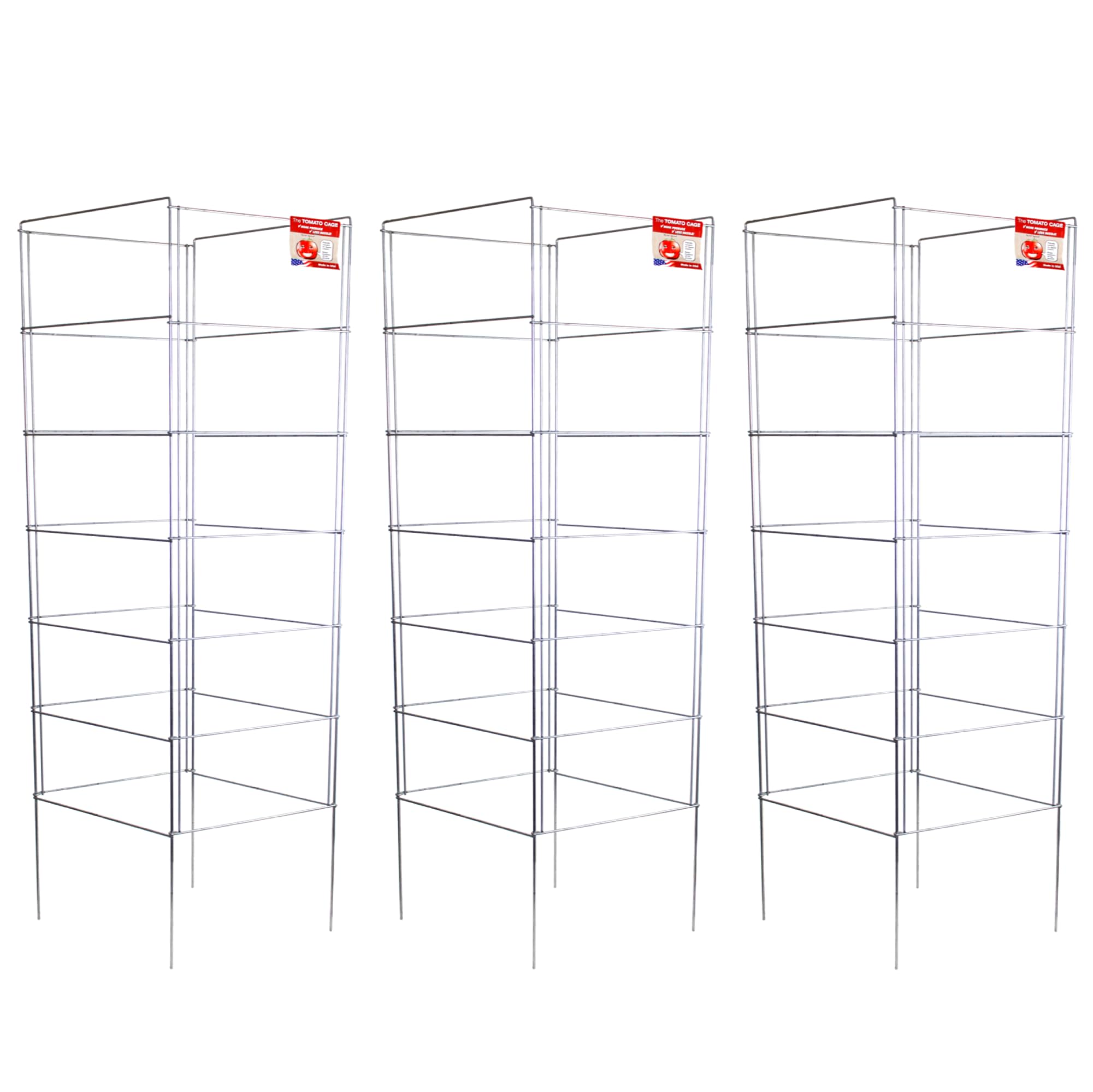
1. Cedar Ridge Square Foldable Tomato Cages (3-Pack)
Our pick — over 4.5★ from 300+ verified ratings; the strongest balance of quality and price.
The gorilla of tomato cages — built from steel so thick you feel the difference the moment you pick it up.
This is the cage you buy when you are tired of replacing bent wire every season. The square design stands 56 inches tall with a 13-inch width, giving indeterminate tomatoes room to climb without tipping. Each cage uses 6-gauge (4.1mm) legs and 9-gauge (2.9mm) cross members, both made from galvanized steel. The Cedar Ridge pack weighs 7.26 kilograms, while the FEED GARDEN set weighs 0.54 kilograms. The result is a structure that buyers report “holds up very well to large, heavy tomato plants and weather” without rusting.
The foldable design collapses flat for storage, meaning a 3-pack takes up less shed space than a single conventional cone. No assembly is required — these arrive ready to push into the ground. The most-discussed trait among owners is sturdiness, mentioned by 96 positive reviews. A small group flags the price as a mixed point (60 mentions), reflecting that this is an investment, not an impulse buy.
What wins owners over
- Galvanized steel construction with 6-gauge legs handles the heaviest vine loads without bending
- Folds completely flat for winter storage in a fraction of the space
- No-tool, no-assembly setup — push into soil and you are done
The honest trade-off
- Premium pricing means this is a long-term buy rather than a budget season solution
- At 7.26 kg per pack, you feel the weight during transport and placement
Grab these if: you grow indeterminate tomatoes, want a single-purchase solution for the next decade, and value absolute rigidity over price.
Think twice if: your garden is all bush flowers and peppers — the height and heft are overkill for plants that stay under 2 feet.
2. Gardener’s Supply Company Lifetime Tomato Cages (Set of 4)
Pops open in seconds, stacks flat for winter, and laughs at the flimsy cones from the big-box store.
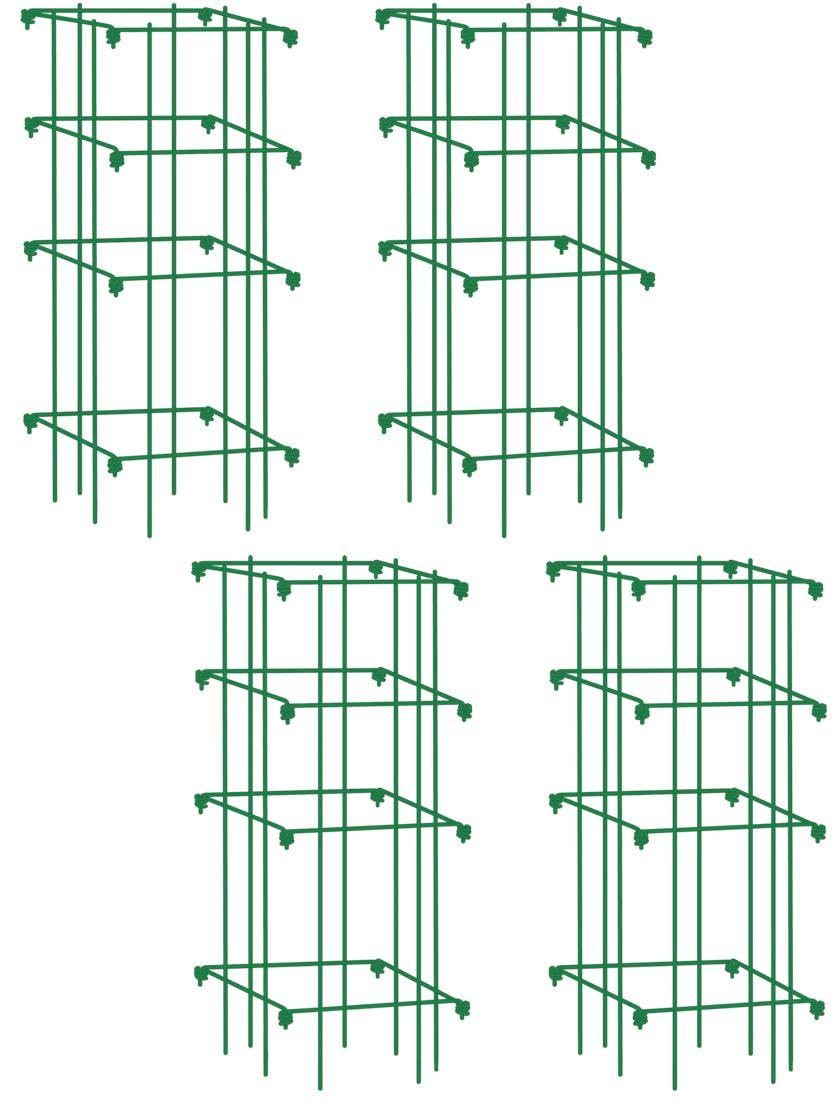
These cages are the crowd favorite for a reason — they hit the balance between brute strength and everyday convenience. The powder-coated steel frame measures 14-3/8 inches square and stands 39 inches tall overall, with 7-inch legs that push into the soil and an installed height of 32 inches. The 8-inch square openings give you plenty of room to reach in for harvesting without fighting tangled branches. Sturdiness is the undisputed champion here, with a staggering 209 positive mentions from owners — the highest single-aspect count across every cage in this guide.
The hinged panels snap open without any tools or assembly, and they fold flat just as quickly for compact off-season storage. Owners mention these are “stronger than home store cages” and that “they will last season after season.” The main caveat from a few owners is that the 7-inch legs can feel a bit short for very loose, sandy soil — some add extra stakes or pins for ground stability. At 12 pounds per set of four, these are lighter to move around than the Cedar Ridge pack, even though both serve the heavy-duty market.
I get the sense that every gardener who buys these eventually buys another set — and that is the highest praise a cage can earn.
Why owners love it
- Instant pop-open design — no tools, no fiddling, no lost parts
- 209 owners single out sturdiness as the top trait, more than any other cage here
- Powder-coated steel resists rust through multiple seasons outdoors
The catch to know
- Short legs may need extra anchoring in raised beds or loose soil
- Initial unfolding can be stiff, and a few owners had tabs pop loose — fixable with pliers
Best for: the gardener who wants one set of cages that works for tomatoes, peppers, and heavy squash without any assembly fuss.
Look elsewhere if: you need height beyond 39 inches for 6-foot indeterminate vines — the Cedar Ridge or SORANGEUN cages go taller.
3. LKSSZS 30-Inch Plant Support Stakes (6-Pack)
The peony’s best friend — tall enough for established clumps, discreet enough to disappear into the border.
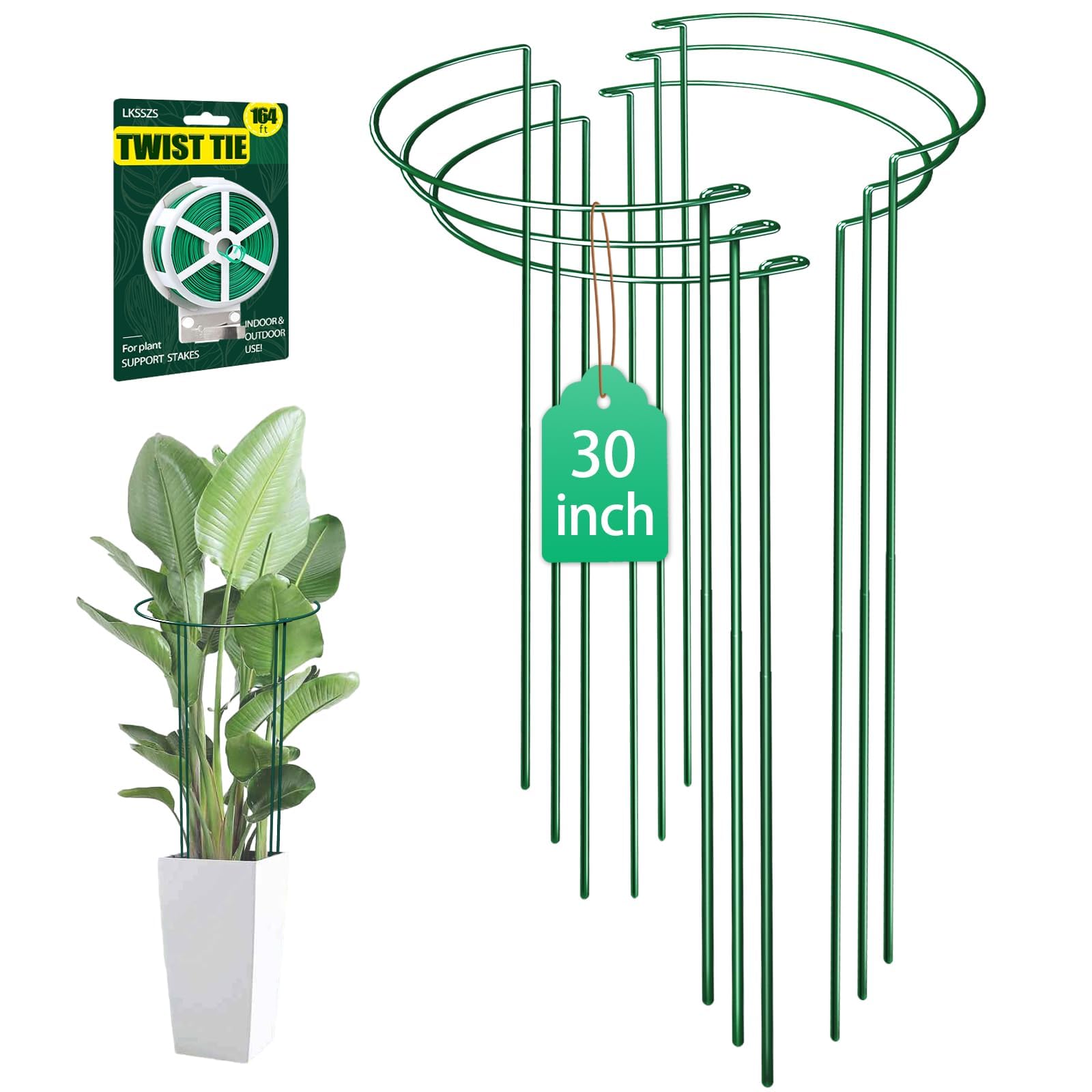
This set solves a specific problem: heavy, mature perennials that flop under their own flower weight. Each stake measures 30 inches high by 12.5 inches wide, made from 5mm-diameter iron wire with a green powder coating that blends into leaves. The clever part is the two-piece construction — you get six 15-inch half-round stakes plus 12 stainless steel extension tubes that screw together to reach the full 30-inch height. Assembly takes a minute per stake, and the half-round shape lets you place them around an established plant without forcing a ring over the crown.
Sturdiness (47 positive mentions) and functionality (40 mentions) are the top talking points among owners, who find these work great for peonies, dahlias, and hydrangeas — one review notes “they are very sturdy and work great” for heavy yarrow. The kit also includes 164 feet of garden twist ties, so you have everything you need in one box. The most common buyer note is that the screw joint is the weakest link, so push the bottom leg into the ground rather than the top to avoid stressing the connection point.
Who it fits: anyone with established peony clumps, hydrangeas, or tall perennials that collapse after a rain — the 30-inch final height gives you the reach standard 16-inch rings lack.
Heads up: the screw-on extensions add a step compared to one-piece stakes, and some owners wish the legs were a single solid piece for total confidence.
Reach for this if: your garden is heavy on bushy flowering plants that need discreet, adjustable height support.
skip it if: you prefer a single-piece, no-assembly stake — the screw joint requires a tiny bit of care during installation.
4. SORANGEUN 63-Inch Heavy Duty Tomato Cages (4-Pack)
Fifteen inches taller than standard cages — built for the indeterminate monsters that keep producing until frost.
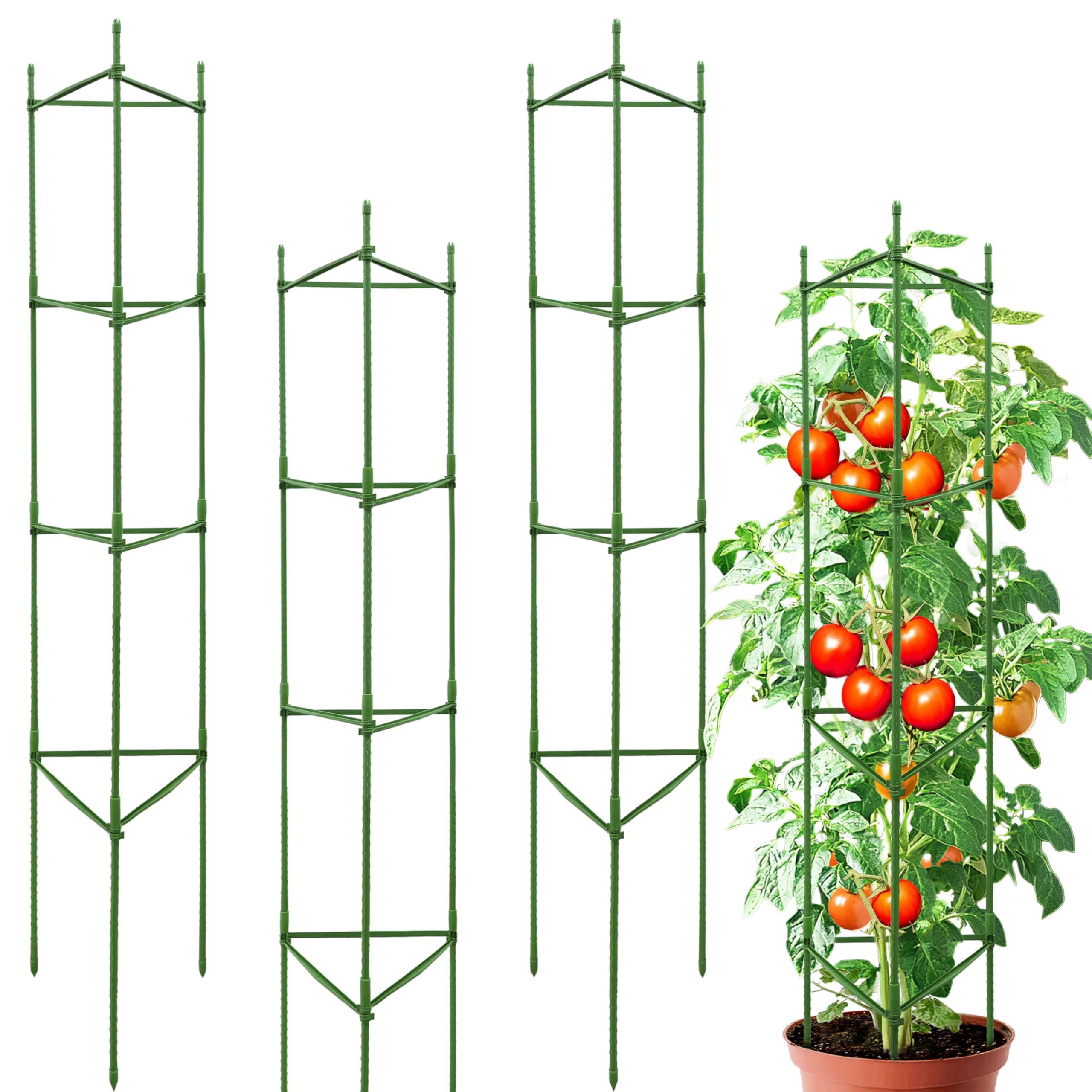
If you grow the kind of tomatoes that climb 7 feet or more, standard 48-inch cages force the plant to fold over the top, creating a mess of broken stems. This triangular steel-tube cage gives you 63 inches of vertical support, which is 15 inches more than typical tall cages. The steel core is wrapped in a green rust-proof plastic coating that resists sun and moisture season after season. The three-sided frame offers 360-degree support around the plant and holds steady during wind storms — owners confirm these held up while lighter cages toppled.
Functionality leads the customer feedback with 52 positive mentions, and assembly is the second most-discussed trait (45 mentions) — buyers find the snap-together design straightforward. The adjustable crossbars let you customize the width as the plant grows, and you can connect two cages to form a rectangle for sprawling plants like vining squash. The occasional note from a buyer is that a connector clip can be missing, though the brand’s customer service responds quickly to replace it.
For the price of a dinner out, you get four tall towers that a reviewer called “a must have” for above-ground garden beds.
The strong points
- 63-inch height accommodates full-season indeterminate tomatoes without topping out
- Rust-proof plastic-coated steel holds up to rain and sun without corrosion
- Adjustable crossbars and joinable frames offer flexible configurations
One thing to watch
- Assembly requires a few minutes per cage — not as instant as the pop-open Gardener’s Supply design
- An occasional connector clip arrives damaged, though replacements are easy to get
Best for: gardeners growing tall indeterminate tomatoes, pole beans, or cucumbers who refuse to settle for cages the plants outgrow by July.
Not the pick if: your garden is all compact determinate varieties — the full height is wasted on 3-foot plants.
5. AUTOHAOL 6-Pack 48-Inch Tomato Cages
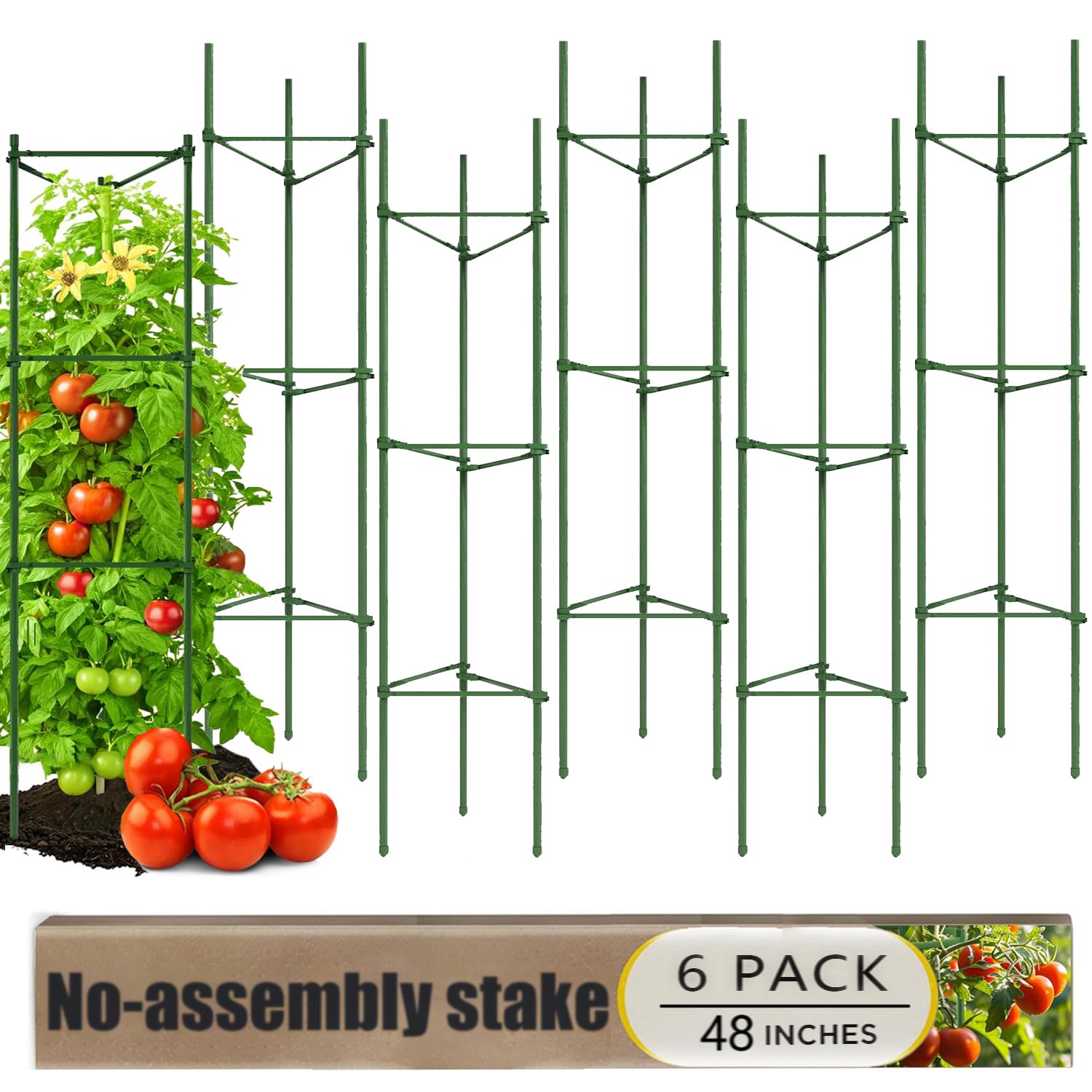
A six-pack that costs less than a single premium cage — and actually holds up to real garden use.
You get 18 steel stakes at 48 inches each, plus 54 snap-on arms, giving you enough material to build six full cages or a custom trellis system across multiple beds. The raw steel core is wrapped in plastic and has sealed, pointed tips that push into soil smoothly. The rectangular design lets you create triangular or square setups depending on your plant spacing. Owners describe these as “sturdy, very durable, easy to adjust and function beautifully” — one buyer even repurposed them as a shade cloth support frame on 4×4 raised beds.
The value equation is tough to top: six complete cages in one box at a price that undercuts most single-cage premium options. The trade-off, noted by some owners, is that the metal is softer than the heavy-gauge steel of the Cedar Ridge or Gardener’s Supply cages — it works great for standard plants like peppers, bush tomatoes, and peas, but may not stand up to the sheer mass of a 7-foot indeterminate tomato loaded with fruit. The instructions recommend gentle handling during assembly and using a pilot hole in very dense or dry soil.
Perfect for: the gardener with a large row of medium-height vegetables who needs a lot of support without spending a lot of money — the 48-inch height covers most determinate tomatoes, peppers, cucumbers, and climbing flowers.
Keep in mind: not the right choice for heavy-duty indeterminate tomatoes or sprawling squash plants that put enormous weight on the structure.
Best for: budget-conscious gardeners covering a lot of ground with moderate-weight plants like bush tomatoes, peppers, and peas.
Look elsewhere if: you need to support the heaviest indeterminate tomatoes through a storm season — the steel here is lighter gauge than the premium options.
6. joyhalo 12-Pack 16-Inch Metal Plant Support Stakes
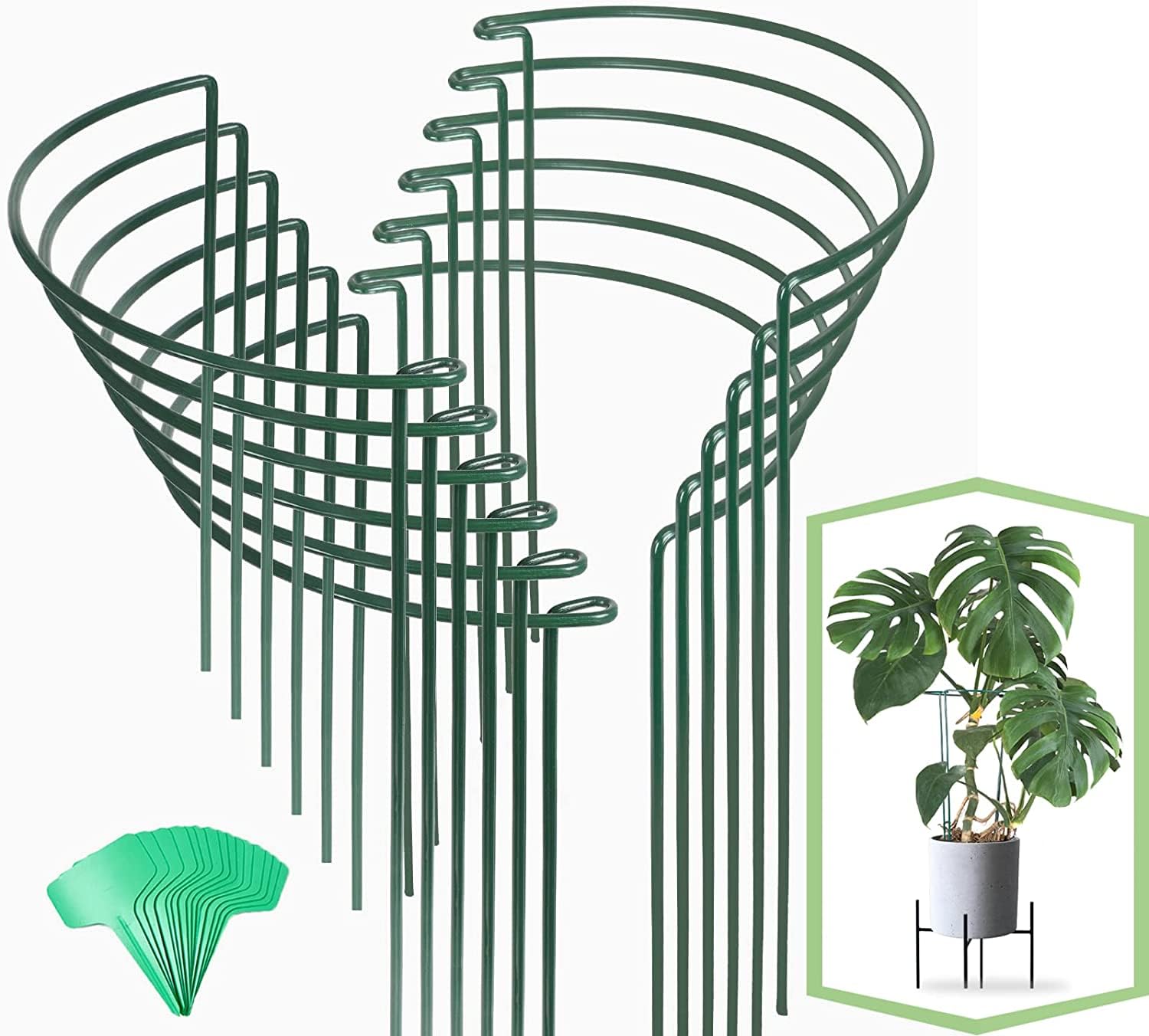
Twelve stakes for less than a single fancy cage — ideal for the flower border that needs support everywhere at once.
If you have a long row of peonies, zinnias, or dahlias, you need volume, not individual over-engineering. This set delivers 12 half-round stakes made from alloy steel with a green anti-rust coating, standing 16 inches high. You also get 15 twist ties to secure stems. Each stake pushes into the ground as a single half or links with others to form circles, rows, or even cloverleaf shapes around clumping plants. Functionality is the top praise from owners (49 mentions), followed closely by sturdiness (44 mentions), which is impressive for stakes at this price point.
Customers note that these work particularly well for roses, peonies, and tall flowers, with one saying they “worked great to help support my peonies, and also used for other tall flowers. Even ordered more!” The split two-sided design wraps around stems without damaging them. The main point of mixed feedback (21 mentions) is the height — some find 16 inches perfect for bushy flowers, while others with very tall perennials wish the 24-inch option had been available. The included “twist ties” are actually plant markers according to some buyers, so you may want to have your own soft ties ready.
What stands out
- 12 stakes in one box cover a large flower border or vegetable row affordably
- Anti-rust green coating blends into foliage and resists weathering
- Detachable and stackable design stores compactly for the off-season
The honest reality
- 16-inch height is perfect for bush flowers but too short for tall indeterminate tomatoes or rangy perennials
- The included “twist ties” are plant markers, not functional ties — bring your own
Best for: flower gardeners who need dozens of support points across peonies, roses, dahlias, and other medium-height perennials.
Not for: vining vegetables — these are too short and too light for climbing plants that reach 4 feet or more.
7. Moitsunt 4-Pack 50.2-Inch Tomato Cage System
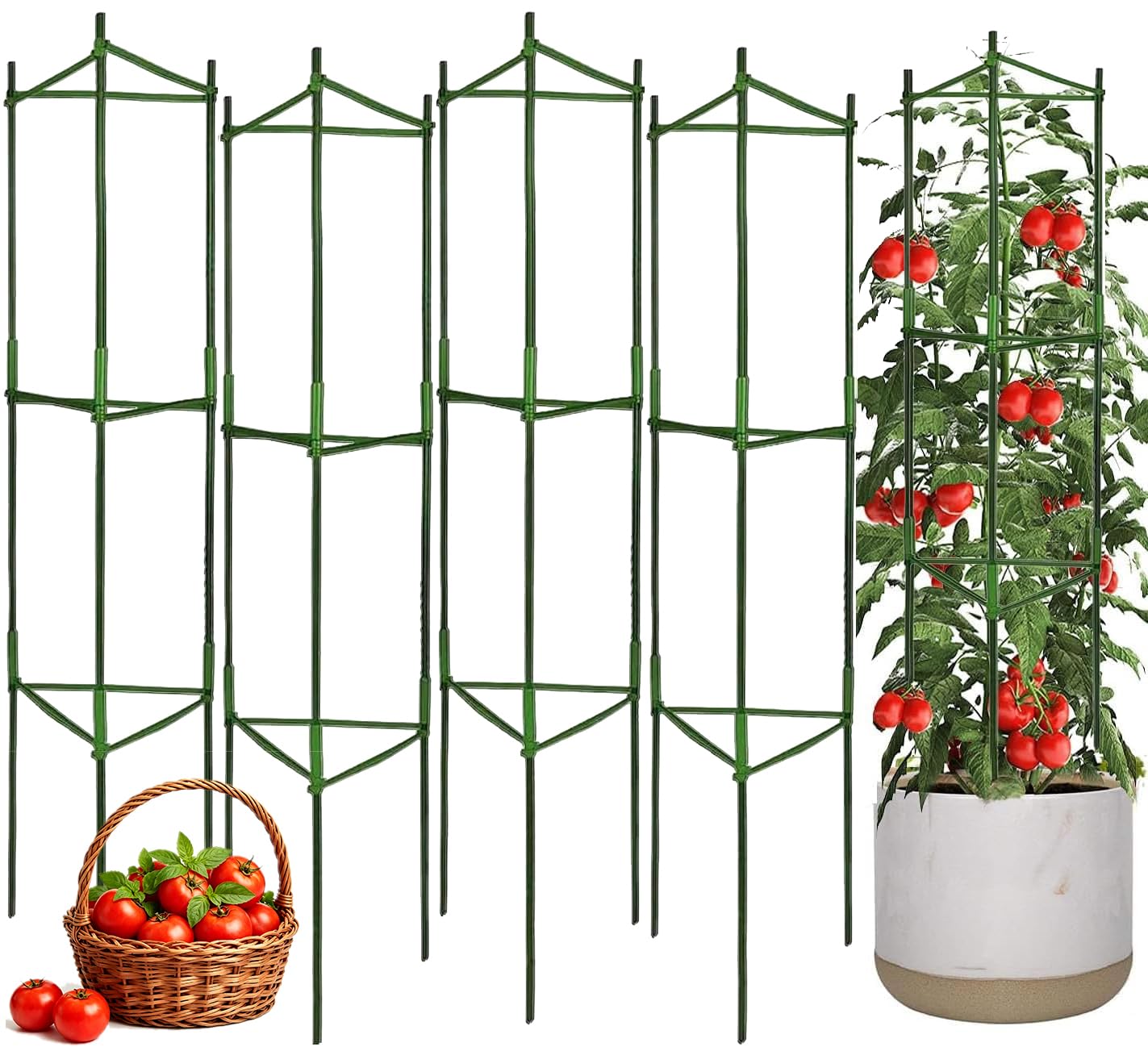
A giant box of building blocks for your garden — build triangles, squares, hexagons, or a custom trellis on the fly.
This is the most modular system in the guide. The kit includes 36 plant stakes, 36 snap-on arms, and 24 connecting pipes — 96 pieces total — that let you construct four 50.2-inch triangular cages or reconfigure them into squares, hexagons, or a continuous trellis row. Each stake is 11mm in diameter with a green plastic coating over a metal core, and the pointed ends make insertion easy. Versatility is the standout feature here, with 63 owners praising it — the highest versatility score of any product in this group.
The adjustability gives you room to change shape as plants grow, and the entire system disassembles to store flat in a small space. Owners consistently call these “easy to use” and highlight the ability to “change their sizes very easily.” The recurring mixed point, with 51 mentions, is sturdiness — some owners find the snap-on connectors solid, while others note the structure can shift after heavy rain and needs occasional re-tightening. This is a system that rewards a tinkerer who enjoys adjusting and reconfiguring supports throughout the season.
Perfect for: the gardener who enjoys experimentation — build different shapes for different crops, adjust height as plants grow, and pack it all flat in a drawer at the end of the season.
Heads up: not as rigid as a welded or one-piece cage; expect to check connections after storms and tighten snap-on arms as needed.
Best for: creative gardeners who want one system that can be a tomato cage today and a pea trellis tomorrow.
pass on it if: you want a low-maintenance cage — the modular connections need occasional attention to stay tight.
8. LOMNYIY Round 55-Inch Tomato Cage (1-Pack)

An affordable tall cage with a clever snap-together design — just be gentle with the plastic rings.
At 55.1 inches tall and 11.8 inches wide, this single cage delivers the height you need for indeterminate tomatoes at a price that does not hurt. The design uses a metal core wrapped entirely in plastic, with a double-layer tube interface at the connections to keep sections tight. The middle shelf uses a circular ring with a card-slot connection to the support rods — it looks neat and prevents the ring from sliding down. Four posts (instead of the typical three) give you more attachment points for tying up branches.
Buyers appreciate how the cage “grows with the plant” — you can start at a shorter height and add sections as the plant gets taller. Assembly is straightforward, though a few owners caution to push only on the poles, not on the rings, because the hinge clips can snap if you force them. One review notes using pliers on the clips makes assembly easier. The lightweight construction (0.87 kilograms) means it is easy to move around the garden, but it also means this cage is best for moderate-sized gardens rather than exposed, high-wind sites.
Who it fits: the gardener who needs tall support for a few tomato plants but does not want to invest in heavy-duty welded cages for a small bed.
Keep in mind: the plastic rings and snap connectors are not indestructible — handle the clips with care during assembly to avoid breakage.
Best for: budget-conscious growers with a few tall tomato plants who want height without the premium price tag.
Not the pick if: you have a large, exposed garden with heavy wind loads — the lighter plastic construction is less stable than all-steel alternatives.
9. FEED GARDEN Peony Cages and Supports (6-Pack)
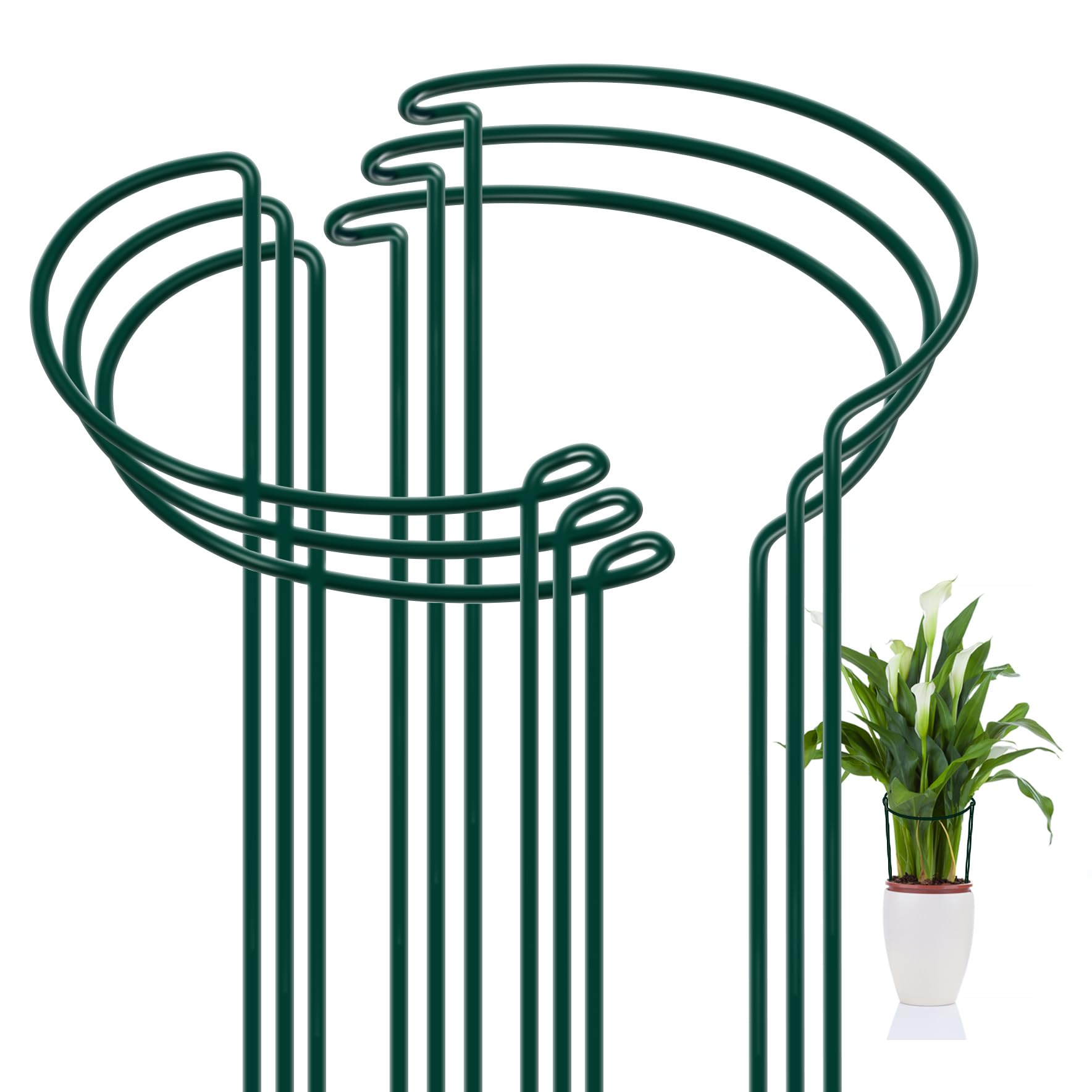
Six supports for the price of one premium cage — a no-brainer for peony lovers on a budget.
This set gives you six half-round stakes measuring 16 inches tall by 10 inches wide, made from iron with a weather-resistant dark green coating. They are designed specifically for bushy flowering plants like peonies, hydrangeas, roses, and dahlias — plants that tend to splay open under the weight of their own blooms. The half-round shape connects in pairs to form full circles around a plant, or you can use them as individual supports against a border edge. Sturdiness is the most-praised feature (49 mentions), and functionality runs a close second (38 mentions).
Owners find these easy to install — push the stakes into the soil and snap the halves together — and appreciate that the dark green finish “blends smoothly into stems and foliage” so the support practically disappears. The main point of confusion, flagged in the product description itself, is that six items means three full circle setups, not six independent rings. Some buyers expected six complete circles. The 16-inch height works well for medium perennials, but the feedback is clear that taller plants need something in the 24- to 30-inch range.
Perfect for: peony growers and flower gardeners who need a lot of support points without spending much — the 6-pack covers a whole border for pocket change.
Know before you buy: the pack makes three full-circle setups (two halves per circle), not six separate rings. The 16-inch height is ideal for bushy flowers but too short for tall indeterminate tomatoes or rangy climbing plants.
Best for: the flower-focused gardener who wants affordable, effective support for peonies, hydrangeas, and roses across a large bed.
Not for: vining vegetables, tall perennials over 2 feet, or anyone who needs six individual circle supports — the package makes three circles.
Understanding the Specs
Steel Gauge — The Thickness Rule
Gauge is the measurement system for metal wire thickness, and it is counterintuitive — a lower number means a thicker, stronger wire. A 6-gauge leg (roughly 4.1mm thick) is dramatically more rigid than a 14-gauge wire you find on the cheapest cone cages. For heavy indeterminate tomatoes that can reach 20 pounds of fruit per plant, look for 6-gauge or 9-gauge wire at minimum. For lighter flowers and bush plants, 11-gauge is usually enough.
Height + Diameter — The Space Equation
A cage needs to be tall enough for the plant’s mature height and wide enough for the canopy. Indeterminate tomatoes often reach 6 to 8 feet — a cage shorter than 48 inches means the plant will fold over the top, breaking stems. For these, 55 to 63 inches is ideal. For peonies and hydrangeas, 16 to 30 inches is plenty. The diameter (10 to 14 inches) should give you room to reach in for harvesting without crushing fruit against the wire.
Shape and Stability
Square and triangular cages offer more inherent stability than round cones because the flat sides resist twisting in wind. Square cages also stack and store more compactly. Round cages are traditional and easier to slide over an already-growing plant, but they often have only three legs for ground contact. Look for a design with at least four ground-contact points or a wide base for windy gardens.
Finish and Rust Protection
Bare steel rusts within a season. The best finishes are galvanized (a zinc coating bonded to the steel) or powder-coated plastic that encases the metal core. Plastic-coated cages feel smooth and are comfortable to handle, but if the coating chips, rust can start underneath. Galvanized steel is more forgiving — it can scratch and still resist corrosion. For coastal gardens or frequently wet climates, this is a critical durability factor.
FAQ
Do I need a different cage for tomatoes versus peonies?
What does “6-gauge” mean and why does it matter?
Should I choose round or square cages?
How do I install a plant cage without damaging roots?
Can I leave plant cages in the ground over winter?
What is the best height for indeterminate tomato cages?
How many plant cages do I need for a standard vegetable garden?
Are plastic-coated cages better than bare metal?
What does “half-round” mean in plant support stakes?
Can I use tomato cages for cucumbers and pole beans?
Final Thoughts: The Verdict
For most gardeners, the best garden plant cages winner is the Cedar Ridge Square Foldable 3-Pack because the 6-gauge galvanized steel construction delivers class-leading durability for heavy indeterminate vines, and the fold-flat design solves the storage problem that plagues rigid cages season after season. If you want instant pop-open convenience with proven multi-season longevity, grab the Gardener’s Supply Company Lifetime Tomato Cage Set — 209 owners single out its sturdiness, the highest praise of any product here. And for gardeners on a budget covering a lot of ground, the AUTOHAOL 6-Pack delivers 48-inch support at a price that makes it easy to protect an entire vegetable bed without compromise.
How We Picked
We do not accept paid placement. Every pick is matched to a real buyer and a real use-case; we do not hands-on test units.
Sources & Methodology
Specifications: manufacturer listings and product documentation. Review insights: verified customer reviews, as of July 2026. Pricing: not shown on this page (it changes often); check the current price via the retailer link.
As an Amazon Associate, Lawn Gear Lab earns from qualifying purchases. This does not affect which products we feature.