
Specs are compiled from manufacturer listings and verified buyer reviews and can change over time — please confirm the key details on the product page before buying.
You spot a cluster of tiny green bugs on your roses, tomatoes, or hibiscus. Your first instinct might be to reach for a heavy chemical spray, but the best approach for your garden, your family, and your harvest is often gentler than you think. A good horticultural soap smothers aphids by breaking down their protective outer layer, killing them on contact without leaving harsh, lasting residues that worry you around pets and kids.
I’m Rikta — the founder and writer behind Lawn Gear Lab. This guide is built by comparing the manufacturers’ published specifications and the patterns across verified customer reviews, so you get each pick’s real strengths and trade-offs instead of marketing spin.
This article covers the top-rated insecticidal soaps and oils available now, from budget-friendly concentrates to premium ready-to-use sprays. Whether you are fighting a small outbreak on a houseplant or a full siege on your vegetable patch, you will find the right best horticultural soap for aphids here.
Our Picks at a Glance


How To Choose The Best Horticultural Soap For Aphids
Not all soaps are the same. The right choice depends on the size of your garden, the severity of the infestation, and how much effort you want to put into mixing and applying the product.
Ready-to-Use vs. Concentrate
Ready-to-use (RTU) sprays come in a bottle with a trigger sprayer. You just point and spray. This is the easiest option for houseplants or a small rose bush. Concentrates require you to mix a measured amount with water in a pump sprayer. They are more economical for large gardens, but you have to dilute them correctly to avoid burning your plants.
Active Ingredient: Soap vs. Oil
Most insecticidal soaps use potassium salts of fatty acids. These are gentle on plants and break down quickly. Horticultural oils, such as mineral oil or soybean oil, also smother insects but are thicker and more effective on hardier pests like scale or mites. Soaps are usually the first choice for aphids because they are softer on beneficial insects like ladybugs when dry.
OMRI Listing for Organic Gardening
An OMRI Listed (Organic Materials Review Institute) product means it has been reviewed and approved for use in certified organic production. If avoiding synthetic chemicals matters to you, look for this seal.
Concentration and Dilution Rate
Concentrates are measured in fluid ounces, and the label will tell you exactly how much to mix per gallon of water. Getting this ratio wrong can damage your leaves. A standard rate is 2 to 4 tablespoons per gallon, but always check the bottle.
Quick Comparison
| Model | Best For | Active Ingredient | Volume | Form | Amazon |
|---|---|---|---|---|---|
| Bonide All Seasons Oil★ Best Overall | Year-Round Prevention | Mineral Oil | 32 oz | RTU Hose-End | Amazon |
| Safer Insect Killing SoapBest Value | Large Garden Value | Potassium Salts | 16 oz | Concentrate | Amazon |
| Dr. Killigan’s Doom & BloomIndoor Champion | Indoor Houseplants | Soybean Oil | 16 oz | RTU Spray | Amazon |
| Monterey Horticultural Oil | Dormant & Growing Season | Mineral Oil | 16 oz | Concentrate | Amazon |
| NATRIA Insecticidal Soap | Fast Kill on Contact | Potassium Salts 1% | 48 oz (2 pack) | RTU Spray | Amazon |
| Ferti-lome Spinosad Soap | Chewing Insects & Caterpillars | Spinosad + Soap | 32 oz | RTU Spray | Amazon |
| Eco-Safe Protection Plus | Non-Toxic Soil Drench | Citric Acid | 8 oz | Concentrate | Amazon |
| Bonide Insecticidal Soap Pack | Scent-Free Protection | Potassium Salts | 64 oz (2 pack) | RTU Spray | Amazon |
| Trifecta Crop Control | Commercial Grade Power | Essential Oils | 128 oz | Concentrate | Amazon |
In‑Depth Reviews
1. Bonide All Seasons Horticultural & Dormant Spray Oil, 32 oz Ready-to-Spray
Our pick — 4.5★ from 750+ verified ratings; the strongest balance of quality and price.
The three-season solution that smothers aphids before you spot them.
Best for year-round yard protection.. The active ingredient is mineral oil, which works by coating and suffocating soft-bodied insects like aphids. It also tackles mites, scale, and powdery mildew. You can use it during the dormant season on bare branches, at the green tip stage in early spring, and right through the growing season. It is approved for organic gardening and leaves no toxic residues around people or pets.
Owners confirm that it works fast. One report describes it perfectly: “Took care of the black cherry aphids overnight.” The same buyer noted that it requires soaking the plant well before application for the best absorption, and they mentioned the complete absence of harsh chemical odors. The hose-end sprayer makes covering tall shrubs and fruit trees simple, though some owners find that sprayer empties quickly and prefer to use a dedicated pump sprayer for more control.
What wins people over is its effectiveness — the product has a strong 4.5-star rating from hundreds of owners, and the most common praise centers on how well it controls insects and diseases. The leaf health aspect receives some mixed feedback, meaning over-application can cause damage, so follow the label instructions carefully. For the home orchardist or the rose enthusiast who values prevention over reaction, this oil is the reliable, one-bottle answer.
Why it stands out
- Three-season protection: dormant, green tip, and growing season
- Approved for organic gardening; no toxic residues
- Also controls powdery mildew and rust
One watch-out
- The hose-end sprayer can be imprecise; a pump sprayer gives better control
Reach for this if: you want a single product for year-round disease and insect prevention on fruit trees, ornamentals, and shrubs.
Consider another if: the hose-end application seems wasteful; you prefer a concentrate you can dilute yourself.
2. Safer 5118-6 Insect Killing Soap Concentrate
The concentrate that makes a little bottle go a very long way.
Best for large vegetable plots.. It is a concentrate, meaning a single 16-ounce bottle mixes into multiple gallons of spray. The active ingredient is potassium salts of fatty acids, which works by breaking down the insect’s outer shell. It kills aphids, whiteflies, thrips, spider mites, and mealybugs on contact. It is OMRI Listed for organic use and can be sprayed up until the day of harvest.
The most impressive buyer report describes a severe aphid infestation on squash — 90% of the bugs were dead by day one, and all were gone by day three. The same owners note that the smell is strong initially, and the product can solidify in cold weather, but it melts and works fine once warm. The key to avoiding leaf burn is to spray in the evening or during cooler weather and to mix at the proper dilution rate (the typical rate is 2 to 4 tablespoons per gallon of water).
The Safer soap has a massive following — it is a crowd favorite with over 6,300 ratings. The most common praise is its effectiveness against soft-bodied pests. Because it is a concentrate, it is more economical than any ready-to-use spray, giving you far more treatments per bottle. This is the workhorse for anyone serious about protecting a food garden without synthetic chemicals.
The economy winner: A small bottle treats dozens of plants, making it the best value for anything larger than a few pots.
A note on mixing: If you spray in direct sun or mix it too strong, you will see leaf burn. Stick to the label and spray at dusk.
Reach for this if: you have a large vegetable garden, fruit trees, or many flower beds and need an economical, organic solution.
Consider another if: you prefer a ready-to-use spray bottle for quick spot-treating houseplants.
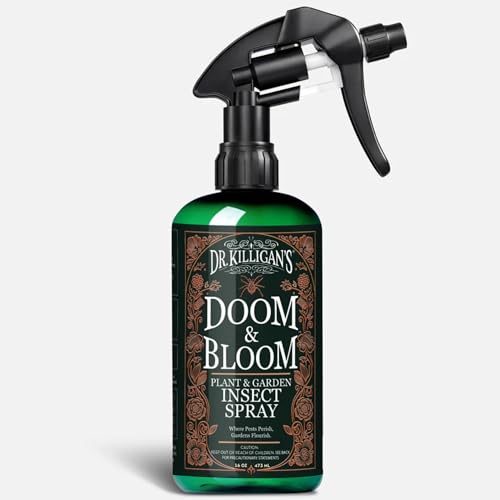
3. Dr. Killigan’s Doom & Bloom House Plant Pest Spray
The plant-based spray that smells better than any pesticide should.
Best for indoor plant owners seeking a pleasant, effective spray.. It uses soybean oil as the active ingredient, which suffocates small-bodied pests like aphids, thrips, and spider mites. The bottle comes with an adjustable trigger sprayer that lets you switch from a fine mist for broad coverage to a stream for direct hits on bugs. It is designed for both indoor and outdoor use.
What owners praise most is the scent — this is not a harsh chemical spray. One owner with over 65 houseplants reported that it eliminated a fungus gnat problem by 98% with repeated use. Another reviewer used it on a severe thrips infestation on a wishlist plant, spraying both leaf sides once or twice daily for a week or two, and the thrips were gone. The product is not a permanent fix on its own; the reviews sum it up clearly — it works on contact, but you need a consistent treatment plan to break the insect life cycle.
The main trade-off is that effectiveness is mixed. Some owners found it did nothing against fungus gnats or spiders, while others swear by it. Because it is non-toxic and gentle on plants, it is the safest first-line defense for your most sensitive houseplants. Use it as part of a regular treatment plan, spraying every three days during an active infestation.
What people love
- Pleasant, soft scent that fades quickly
- Non-toxic formula safe around people and pets
- Adjustable nozzle for mist or stream
Know before you buy
- Effectiveness varies by pest; best for small-bodied insects
- Not a permanent solution — requires repeat applications
Best for: houseplant lovers who want a safe, pleasant-smelling spray for spot-treating aphids and thrips indoors.
Think twice if: you need a fast, one-time knockdown for a severe outdoor infestation.
4. Monterey Horticultural Oil, Pint Concentrate
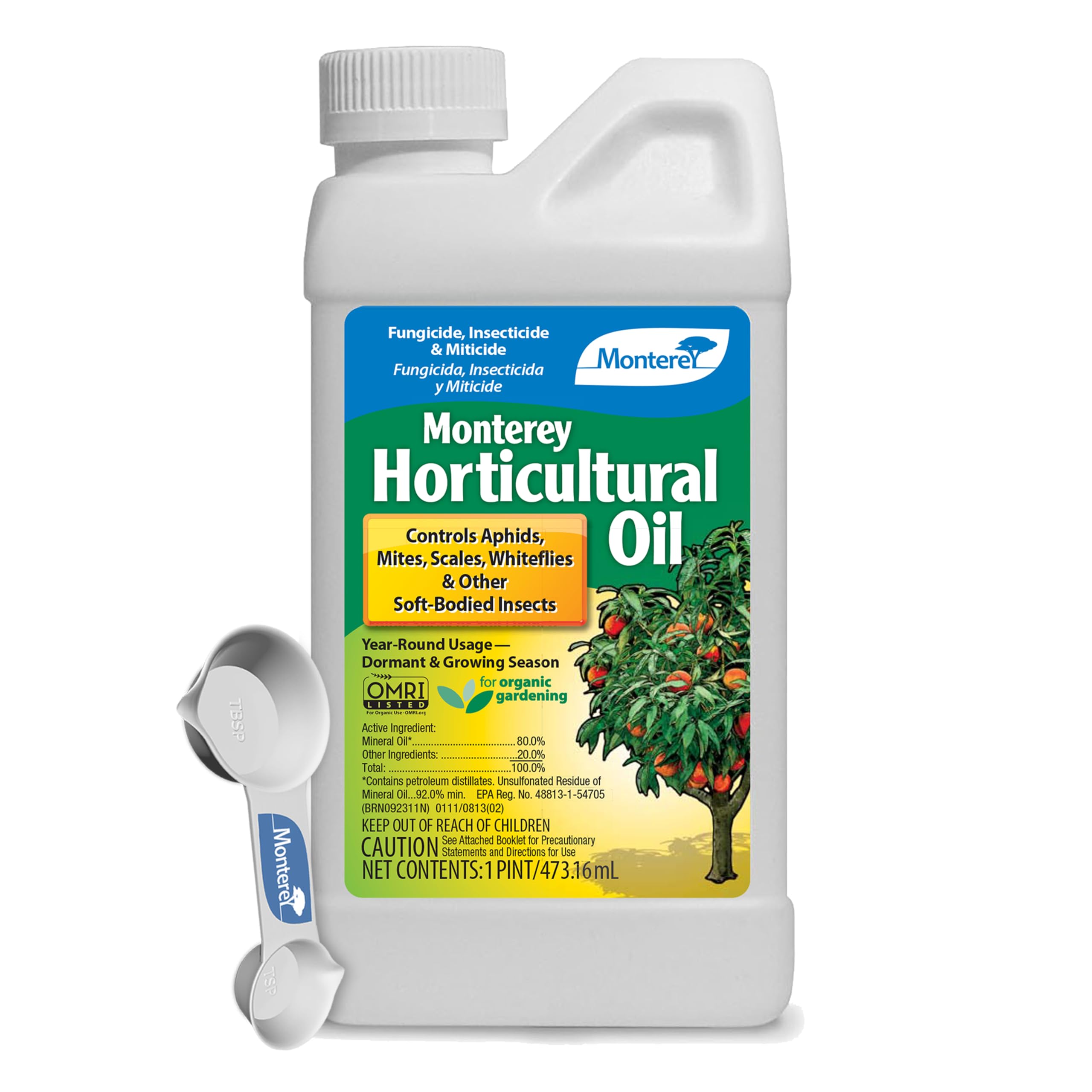
The nursery-recommended oil that passes the organic test.
Best for growers who trust nursery recommendations.. The Monterey Horticultural Oil is a mineral-oil-based concentrate that works well during both the dormant and growing seasons. It targets aphids, leaf miners, thrips, spider mites, and scales. It is OMRI Listed for organic use and can be mixed with a biological agent for a combined approach: instant kill plus systemic protection.
A Master Gardener in Ohio gave this product high marks for its effectiveness against mealybugs and aphids, noting that it is a safe organic option. Another owner who trusted their nursery’s recommendation used it with the Liqui-Cop fungicide on peach trees, spraying three times at Thanksgiving, New Year’s, and Valentine’s Day. They reported no disease and a good peach crop the following year. The oil gives poor control for caterpillars and worms, but it does kill the eggs of all insects, which interrupts the life cycle.
What makes this product stand out is its flexibility. Because it is a concentrate, you can adjust the strength and apply it with a pump or trigger sprayer. The label advises you to spray until the leaf canopy is completely wet without runoff. It is a smaller bottle (1 pint) that packs a punch, making it ideal for a well-curated garden rather than a sprawling landscape.
The dormancy specialist: This oil shines when used as a dormant spray on fruit trees, smothering overwintering eggs before spring.
The limitation: It has a relatively low rating count (20 reviews) compared to other products, but its 4.8-star average indicates, so early adopters are thrilled.
Perfect for: the home orchardist who wants a trusted, organic dormant spray and is willing to follow a seasonal spraying schedule.
Not ideal if: you need to control caterpillars or worms — look for a product with Spinosad for those.
5. NATRIA Insecticidal Soap, Ready-to-Use, 24 oz (Pack of 2)
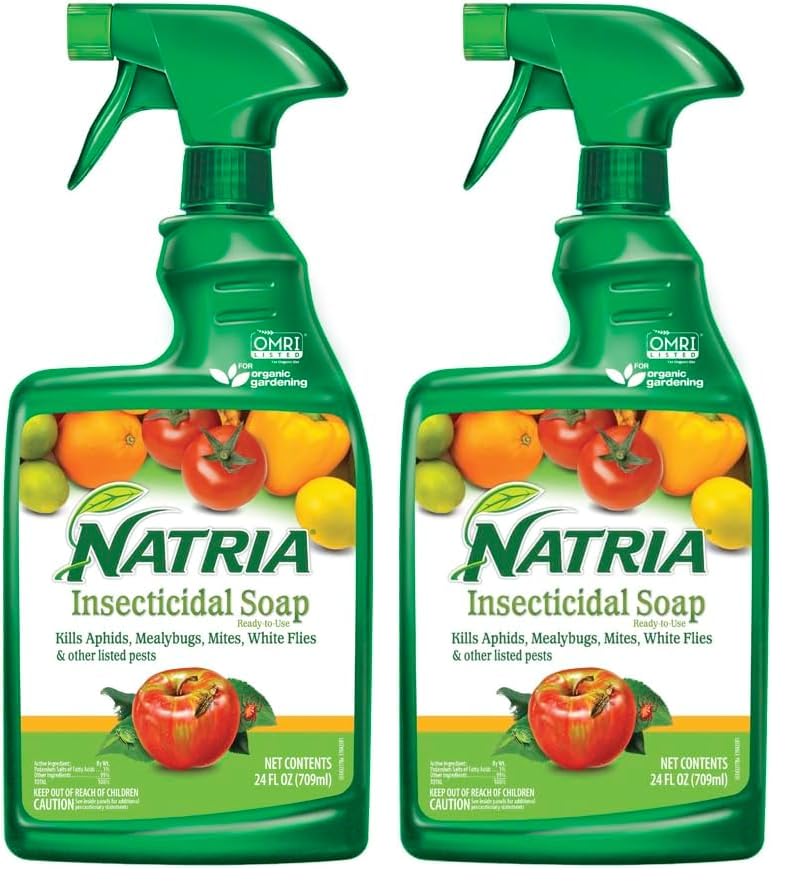
The ready-to-use soap that claims minutes, not days.
Best for gardeners wanting instant results.. NATRIA Insecticidal Soap is a ready-to-use formula that you simply spray on affected plants. It kills aphids, mealybugs, mites, and whiteflies on contact within minutes. It is approved for organic gardening and can be used up to and including the day of harvest, making it a safe choice for your vegetable garden. The pack comes with two 24-ounce bottles, giving you a total of 48 fluid ounces of product.
One owner used this on a severe mealybug infestation that other products could not touch. They sprayed the plant and soil every other day, and the visible bugs were gone in about two weeks. The plants recovered fully over a few months. However, many buyers report a design flaw: the trigger sprayer on the bottle has a poor reputation. Several owners had to transfer the liquid to a different spray bottle when the original was still half full because the mechanism failed.
The most-discussed trade-off is the sprayer. The product itself works well, and it is safe around pets and has no harsh smell. But if you get a bottle with a bad sprayer, it can be frustrating. This is a strong candidate if you stock up on a few extra spray bottles or plan to use it on a small scale where the trigger is less likely to be an issue.
What owners love
- Kills listed insects in minutes on contact
- Approved for organic use; safe up to harvest day
- No harsh smell, pet-safe when dry
The common complaint
- The included spray bottle is unreliable — have a backup sprayer ready
Reach for this if: you want a simple, ready-to-use spray for quick spot-treating of aphids on a few plants.
Consider another if: the unreliable sprayer bothers you, or you plan to treat a large area where a failing nozzle will waste time.
6. Fertilome Spinosad Soap Insecticide, Ready to Use (32 oz)
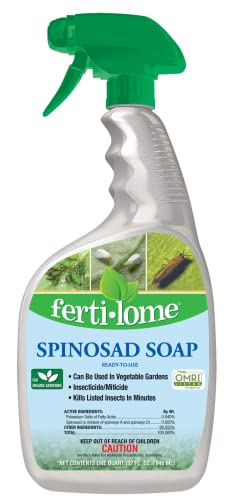
The dual-action spray that kills aphids and caterpillars in one pass.
Best for gardeners battling aphids plus chewing pests.. It is a ready-to-use spray that combines spinosad (0.005%) with potassium salts of fatty acids (0.940%). Spinosad is a naturally occurring substance that targets chewing insects like caterpillars, bagworms, and tent caterpillars, while the soap smothers soft-bodied aphids. This combination makes it a powerful tool for the home orchard and vegetable garden.
One owner used this to save their Cleveland Pear tree from caterpillars and beetles, applying it twice a week apart on four trees and several plants. Another said it was the only thing that eliminated caterpillars eating their Oleander leaves. The reviews emphasize that it works on contact, but the maker recommends alternating with an oil-based spray to prevent insect resistance from building up.
For the gardener who battles both aphids and chewing insects, this is the most efficient single-spray solution. It is OMRI Listed for organic gardening. The main downside is that it is designed for outdoor use only, so for indoor houseplant pests, you will want a product without spinosad. The bottle is 32 fluid ounces, which is sufficient for a few applications on a small to medium garden.
The dual threat: This is the only product on this list that combines a contact killer (soap) with a stomach poison (Spinosad) for chewing insects.
The strategy: Alternate with a straight horticultural oil to avoid pests developing resistance to the Spinosad.
Best for: the gardener who needs one product for aphids, caterpillars, beetles, and leaf miners on outdoor ornamentals and vegetables.
skip it if: you only need an indoor houseplant spray — this is for outdoor use.
7. Eco-Safe Plant Protection Plus, 8 oz Concentrate
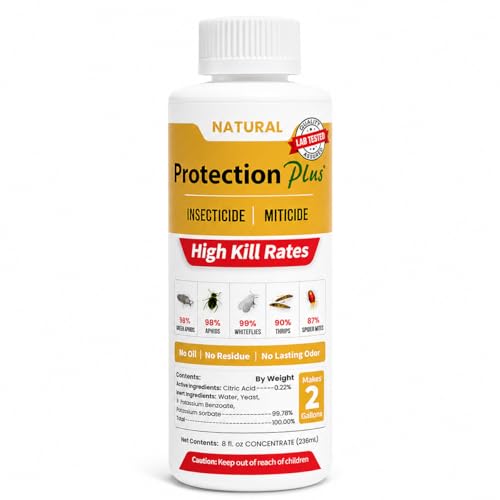
The food-grade acid that leaves no oils, odors, or residues.
This is the pick for the indoor growers and hydroponic gardeners who need a completely clean approach. The active ingredient is citric acid, which kills aphids, spider mites, whiteflies, and fungus on contact by dissolving the insect’s outer skin. It is a concentrate — mix 4 ounces per gallon of water, and the 8-ounce bottle makes 2 gallons of spray. Use it as a foliar spray, a soil drench, or a dip. It leaves no residue, no odor, and no toxicity concerns.
One owner successfully used a single contact application to kill aphids on kale, spiders, and whiteflies on a fiddle leaf fig. They noted that there was no smell and no visible residue on the leaves. Another report says it stopped a beetle infestation on bean plants. However, one buyer in Miami who tried it for tiny mosquitoes on lemon and chili trees reported that it did nothing at all, emphasizing that the spray must make direct contact with the insect to work.
The main advantage is its simplicity and safety. Because it is a non-oil-based formula, you can use it on plants that are sensitive to oil buildup, and it will not clog the stomata on leaves. The trade-off is that it must be used within 30 days of mixing, so you need to plan your applications carefully. The small bottle size is concentrated, but if you have a large garden, the cost-per-gallon is higher than traditional soap concentrates.
The clean factor
- No oils, no residue, no lasting odor
- Safe for food crops up to day of harvest
- Works as a foliar spray, soil drench, or dip
The catch
- Mixed spray must be used within 30 days
- Must make direct contact with the insect
Ideal for: hydroponic growers, kitchen herb gardeners, and anyone who hates oily residue on their leaves.
Not for: large outdoor gardens where the cost per gallon and short shelf life of mixed product become a problem.
8. Bonide Insecticidal Super Soap, 32 oz Ready-to-Use (Pack of 2)
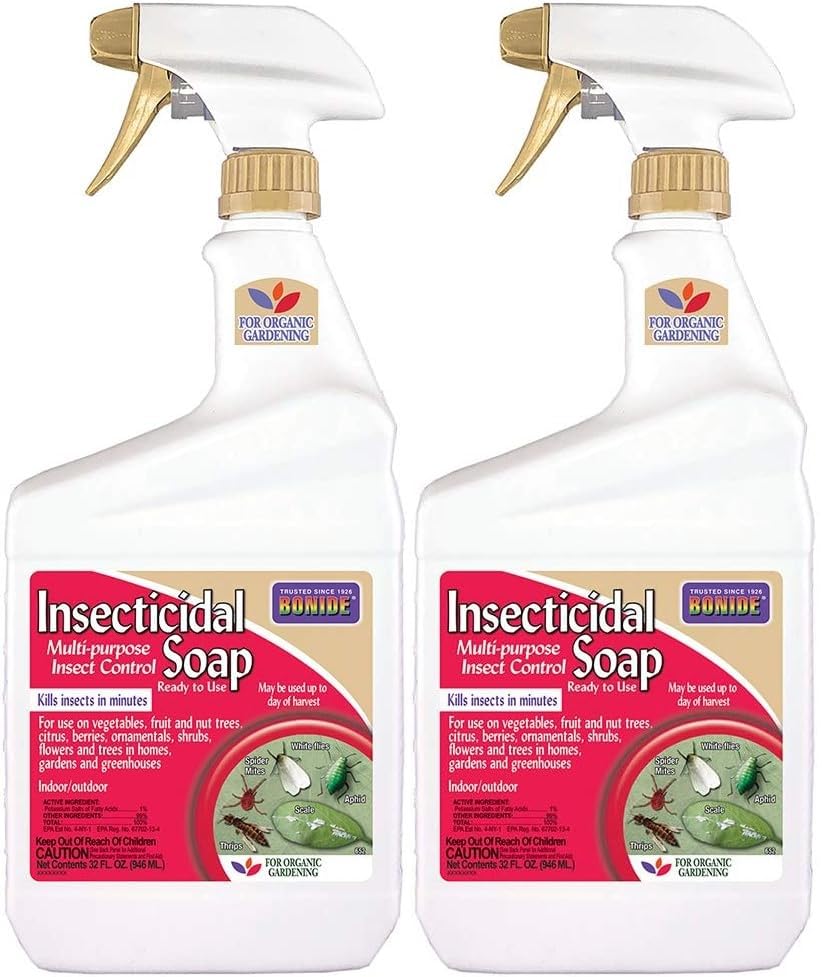
The scent-free, drama-free soap that earned a Consumer Reports nod.
This is the pick for the gardener who wants a scent-free option. It is a ready-to-use spray (pack of two 32-ounce bottles) that works through direct contact and ingestion. Insects like aphids are killed when sprayed directly, while leaf-feeding insects like caterpillars are killed when they eat the treated surface. It is approved for organic gardening and can be used on a wide range of edibles, including artichoke, cabbage, berries, basil, mint, and fruit trees.
One owner called it “Plant Parent Approved: Zero Smell, Zero Drama, All Results.” They noted that it effectively kills pests without damaging leaves and is safe around pets. Another buyer who battled aphids and white moths in their garden said that after using this soap, their mint and basil were finally able to produce un-eaten leaves. That same buyer mentioned that they bought it after it was endorsed by Consumer Reports, which is a strong third-party validation.
The most common approach is to use it as part of a consistent routine. Owners treat every few days during active infestations. The pack gives you a generous amount of product (64 total fluid ounces) for the price, making it a budget-friendly choice for the mid-sized garden. The only real downside is that it has relatively few reviews (16 ratings) despite a perfect 4.8-star score, so it is an excellent product that is still building its reputation.
The clean sweep: Zero smell, non-toxic formula, and a Consumer Reports endorsement — this is the quiet workhorse for the family garden.
The caveat: With only a handful of reviews currently, the long-term durability report is thin, but early owners are unanimous in their praise.
Perfect for: gardeners who are sensitive to smells or who have young children and pets playing near the garden.
Consider another if: you prefer a concentrate to save money or need a larger quantity for many acres.
9. Trifecta Crop Control Insecticidal Soap, 1 Gallon Concentrate
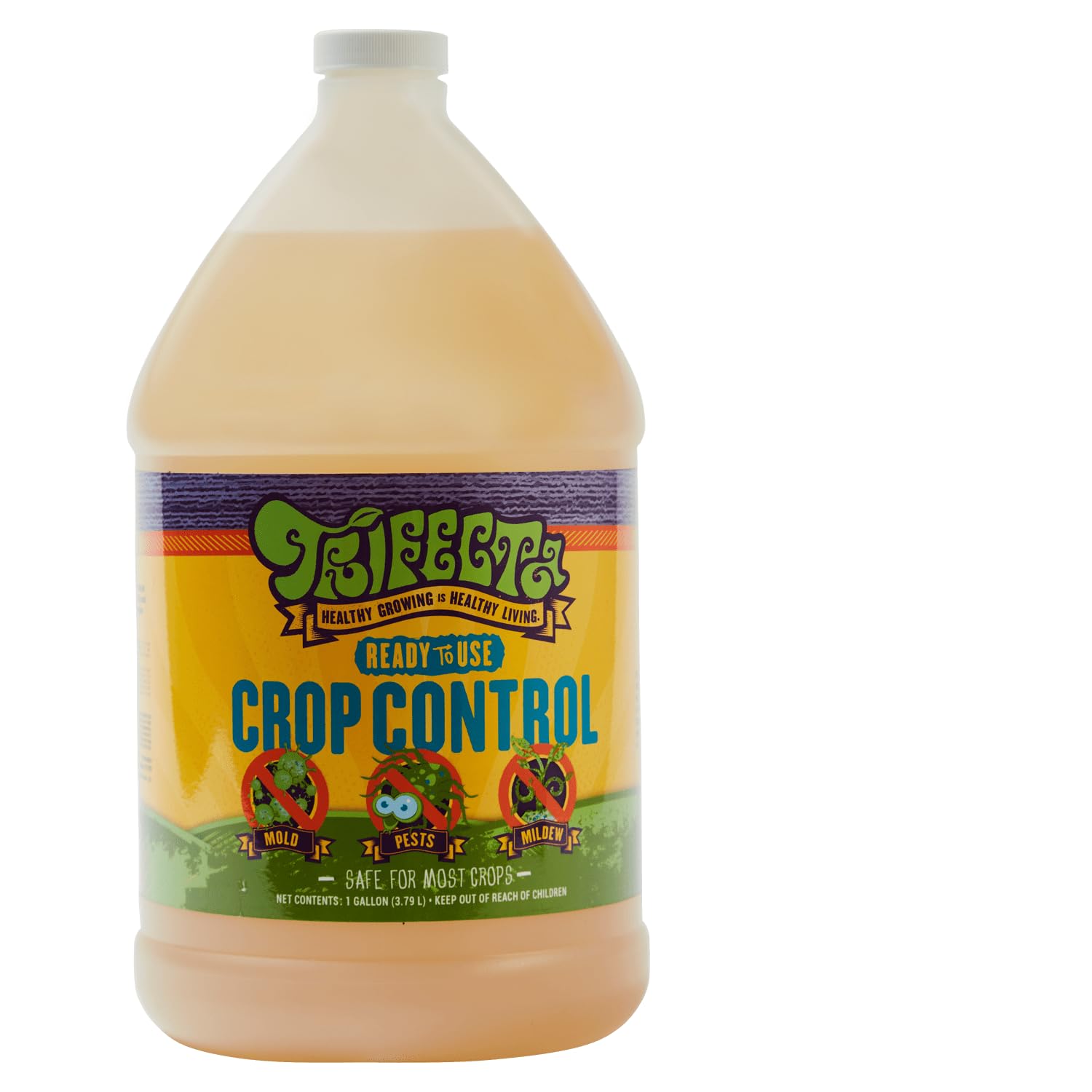
The gallon jug that serious growers use as their go-to.
This is the pick for the commercial grower or the dedicated hobbyist with a large operation. Trifecta Crop Control is a concentrated formula that makes 32 gallons of spray. It uses a blend of natural essential oils to suffocate and dehydrate soft-bodied pests like aphids, spider mites, and whiteflies. It also acts as a fungicide against powdery mildew. The fast-drying formula leaves no residue and is safe for use on edible crops.
This product is widely discussed among indoor growers. One owner described it as “The Gold Standard in My Grow Room,” noting that it cleans sticky leaves, removes grime, and leaves plants visibly healthier. Another report says it effectively stopped bug infestations on butterfly bushes and sunflowers. The main complaint is the cost — at this price point, it is the most expensive product on this list, and one reviewer noted that a single bottle did not last long enough for a week of treatments if you are using the recommended 2 to 4 ounces per gallon.
The product kills eggs and adult pests, so consistent spraying is essential to break the spider mite life cycle, which can use up the bottle quickly. For indoor grow setups or small hydroponic gardens where quality and safety are essential, this is a top-tier choice. For the casual home gardener with a few tomato plants, the upfront cost and fast consumption rate make it a less practical pick.
Grower approved
- Natural essential oil formula with no lasting odor
- Acts as both insecticide and fungicide
- Fast-drying, residue-free finish
The big trade-off
- High price per bottle and concentrates quickly if treating daily
- Does not kill eggs, requiring very frequent spraying
Ideal for: indoor grow rooms, greenhouses, and serious gardeners who need a residue-free commercial-grade product for high-value crops.
Not for: the budget-conscious home gardener with just a few outdoor plants — there are cheaper concentrates that do the same job.
Understanding the Specs
Potassium Salts of Fatty Acids
This is the most common active ingredient in insecticidal soap. It works by breaking down the waxy outer shell (cuticle) of soft-bodied insects like aphids. Once the shell is compromised, the insect dries out and dies. These salts are biodegradable and do not leave toxic residue on plants or in the soil. They are generally safe for beneficial insects like ladybugs once the spray dries on the leaf surface.
OMRI Listed
The Organic Materials Review Institute (OMRI) evaluates products to see if they are suitable for certified organic production. An OMRI Listed seal means the product meets the strict standards of the USDA National Organic Program. If you are growing food and want to follow organic practices, this is your green light. Products without this seal may still be organic in formulation, but they have not gone through the formal review process.
Contact Killer vs. Systemic
Insecticidal soaps and oils are contact killers — they must physically hit the insect to work. There is no residual protection on the leaves. This means you need thorough coverage, including the undersides of leaves where aphids hide. Systemic products are absorbed by the plant and poison the insect when it eats the leaf. Most horticultural soaps are strictly contact killers, so repeat applications every few days are often necessary to catch newly hatched bugs.
Ready-to-Use vs. Concentrate
A ready-to-use (RTU) spray is pre-mixed and comes in a spray bottle. It is convenient for small jobs and quick spot treatments. A concentrate requires you to measure and mix the product with water. Concentrates are more cost-effective for large gardens and give you control over the strength of the mix. However, you must follow the dilution ratio precisely, or you risk burning your plants.
FAQ
Can I use dish soap instead of horticultural soap?
How often should I spray insecticidal soap for aphids?
Will horticultural soap hurt bees or ladybugs?
Can I use insecticidal soap on all plants?
What is the difference between a soap and a horticultural oil?
Does insecticidal soap work on fungus gnats?
How long does mixed concentrate stay good?
Can I use horticultural soap on edibles up to harvest day?
Final Thoughts: The Verdict
For most people, the best horticultural soap for aphids winner is the Bonide All Seasons Spray Oil because it combines three-season protection, organic approval, and a gentle mineral oil formula that smothers aphids overnight. If you want a concentrate that treats a whole vegetable garden while staying affordable, grab the Safer Insect Killing Soap Concentrate. And for the indoor plant lover who needs a scent-free, non-toxic spray for a few houseplants, the Dr. Killigan’s Doom & Bloom is the one to reach for.
How We Picked
We do not accept paid placement. Every pick is matched to a real buyer and a real use-case; we do not hands-on test units.
Sources & Methodology
Specifications: manufacturer listings and product documentation. Review insights: verified customer reviews, as of July 2026. Pricing: not shown on this page (it changes often); check the current price via the retailer link.
As an Amazon Associate, Lawn Gear Lab earns from qualifying purchases. This does not affect which products we feature.