
Specs are compiled from manufacturer listings and verified buyer reviews and can change over time — please confirm the key details on the product page before buying.
Picking the right wood preservative used to mean choosing between a strong chemical smell or watching your deck rot. Those days are over. The best options today soak deep into the grain, shrug off rain and UV rays, and do it all without loading your yard with toxins. Whether you are protecting a veggie raised bed, a log cabin, or a teak dining set, the right eco-friendly formula keeps the wood looking great and the environment cleaner.
I’m Rikta — the founder and writer behind Lawn Gear Lab. This guide is built by comparing the manufacturers’ published specifications and the patterns across verified customer reviews, so you get each pick’s real strengths and trade-offs instead of marketing spin.
This list focuses on formulas that put protection first and harsh chemistry last. Below you will find the best eco wood preservative options for decks, fences, garden beds, and log homes, each chosen for real-world performance and a non-toxic profile.
Our Picks at a Glance


How To Choose The Best Eco Wood Preservative
The first rule is simple: you want a formula that penetrates the wood fibers, not one that sits on top like paint. Penetrating oils and water-based treatments work from the inside out, preventing rot without peeling or flaking. Look for a product that is explicitly labeled non-toxic, food-safe (if it touches soil or food), and low in volatile organic compounds (VOCs — the chemicals that create strong fumes).
Oil-Based vs. Water-Based
Oil-based preservatives, like pure tung oil, penetrate deep into the wood and create a flexible, waterproof barrier that moves with the wood as it expands and contracts. They are the gold standard for durability but take longer to dry. Water-based options often dry faster, clean up with soap and water, and produce almost no odor, but may not penetrate as deeply on dense hardwoods. For garden beds and food-contact surfaces, a food-safe oil is the safer bet.
Coverage and Reapplication Cycle
Coverage rates vary widely — some products cover 350 square feet per gallon, while others stretch past 400. A higher coverage number saves you money on larger projects. More important is the reapplication schedule. Some preservatives claim longevity of two to three years between coats, while others need a refresh more frequently. Look for real-world owner reports on longevity; the data shows some premium oils hold their water beading for a full year on exposed surfaces.
What It Touches Matters
If you are sealing a raised garden bed, a wooden cutting board, or a butcher block countertop, the preservative must be food-grade and non-toxic. For decks and fences that don’t contact soil, a broader range of low-VOC stains and oils work wonderfully. Always check the label for direct-soil contact approval before using a preservative on garden beds.
Quick Comparison
| Model | Best For | Type | Coverage | Dry Time | Amazon |
|---|---|---|---|---|---|
| Outlast Q8 Log Oil★ Best Overall | Log Homes & Decks | Oil-Based | High | Varies | Amazon |
| Garifon 100% Pure Tung OilBest Value | Food Contact Surfaces | Pure Oil | Varies | 24-48 hrs | Amazon |
| Valhalla Lifetime Wood Treatment | Fences & Garden Beds | Water-Based | Varies | Minutes | Amazon |
| Tricopolymer Garden-Seal | Raised Garden Beds | Tricopolymer | Varies | 1 Hour | Amazon |
| TWP 1501 Cedartone Stain | Decks & Siding | Low-VOC Stain | 350 sq ft/gal | 48 hrs | Amazon |
| Penofin Verde Wood Finish | Furniture & Saunas | Oil-Based | 175-300 sq ft/gal | 4 hrs to touch | Amazon |
| WOCA Exterior Wood Oil | Exotic Hardwoods | Water-Based | 325-400 sq ft/2.5L | 24-48 hrs | Amazon |
In‑Depth Reviews
1. Outlast Q8 Log Oil Wood Preservative
Our pick — over 4.5★ from 300+ verified ratings; the strongest balance of quality and price.
The deep-penetrating oil that log home builders recommend for a reason.
This is the crowd favorite for a reason — a 4.7-star average from hundreds of owners confirms its reputation. The Outlast Q8 is not a film; it is an oil-based penetrating wood preservative designed to soak into the wood cellulose until the lumber is completely saturated. Buyers report that water beads off the surface even after a full season of lake-exposed weather, which matches the claim that it works as a waterproof alternative treatment. The formula is self-leveling, meaning drips blend away during application and lap marks vanish, so you get a uniform finish without extra sanding.
The appearance wins people over most — over 50 owners praise how it makes redwood decks look new again. Application is straightforward: it sprays on easily with a pump sprayer, and one owner applied it to a 14-year-old log home after pressure washing and sanding, noting the wood “absorbed oil quickly.” The finish reportedly lasts three years between reapplications for some, though the manufacturer notes that a second coat after six months is recommended, then every two years. It is also compatible with additives for mold and insect prevention. The one honest caveat: a small number of units arrive with lid issues, causing leakage during shipping.
What Wins People Over
- Deep penetration saturates wood fibers for lasting protection
- Water beading holds up for a full season on exposed docks
- Self-leveling formula eliminates lap marks
- Compatible with bug and mold additives
The Recurring Gripes
- Shipping packaging sometimes leaks at the lid
- Premium price point reflects the high-grade oil formula
Reach for this if: you own a log home, a large deck, or cedar dock and want a preservative that penetrates deep and keeps water out for years.
Look elsewhere if: you need a food-safe finish for kitchen cutting boards or a product that dries in under an hour.
2. Garifon 100% Pure Tung Oil
The food-safe oil that turns cutting boards and butcher blocks into heirlooms.
This is the purest option on the list — 100% tung oil from seed crops in East Asia, with no additives or thinners. Owners rave about the grain coverage above all; the oil brings out the natural depth of the wood while leaving a flexible, non-oily solid finish that becomes part of the wood itself. One owner applied it to butcher block countertops: a brush-on first coat, wiped excess after 30 minutes, then a two-day dry before subsequent rag-applied coats. Five coats on the top surface, three on the underside. The result? A beautiful warm finish that is safe for direct food contact.
The ingredient composition is a standout — food-safe after drying, as the data confirms, making it suitable for cutting boards, utensils, dining tables, and even outdoor furniture. The 32-ounce bottle goes a long way, but keep in mind that tung oil dries slowly. The odor is initially present (one owner described it as a “slight initial smell”), but it disappears once the oil is fully cured. The value argument is strong here because pure tung oil is often sold at a much higher price point; this Garifon bottle delivers food-grade results without the boutique markup.
Best for: butchers blocks, cutting boards, wooden utensils, and any food-contact surface where you want a natural, food-safe, waterproof finish that enhances the grain.
The trade-off: dry time is slow — plan for two days between coats — and the 32-ounce size goes fast on large projects like a dining table.
3. Valhalla Lifetime Wood Treatment
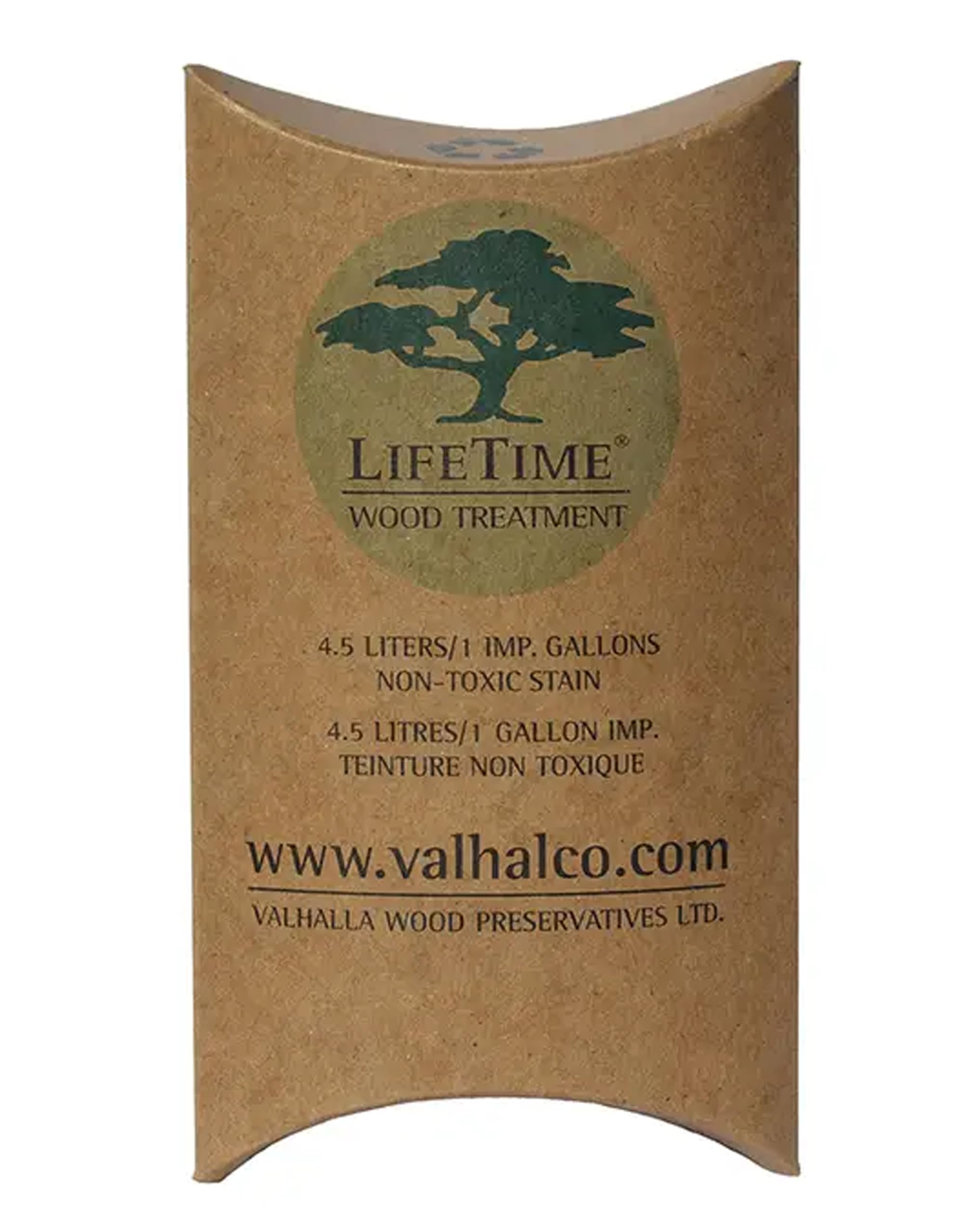
The spray-and-go preservative that turns new wood into an aged masterpiece.
Valhalla’s formula is water-based and completely non-toxic — safe enough for direct contact with garden soil and vegetables. Owners consistently praise the quick color change: the product works in minutes, rapidly oxidizing the wood to a beautiful aged brown/grey/olive tone. One owner applied two coats inside and out to Douglas Fir raised beds, reporting a “beautiful uniform” look. The wood grain remains visible and stunning, which gives fences and garden beds a natural, weathered appearance without waiting years for the elements to do their work.
The one-gallon pouch is the most space-efficient packaging here, and the coverage is substantial — the listed volume is 3.79 liters, which is a full standard gallon. Note that the dye particles can clog a sprayer, so straining the liquid before use is a smart move. Longevity is still being tested by owners, but early reports show it holds color well and seems waterproof after several months. It won’t stop a determined leak from a damaged container, but for general use on raised beds, fences, and bee hives, it performs reliably.
Why Owners Love It
- Non-toxic formula safe for vegetable gardens and soil contact
- Creates a beautiful aged look in minutes
- Easy to apply with a sprayer (strain first)
- Wood grain stays visible for a natural finish
What to Watch
- Dye particles can clog sprayer nozzles
- Long-term durability data still emerging from early adopters
Reach for this if: you want a non-toxic, instant-aging finish for raised beds, bee hives, or fences where safety and aesthetics both matter.
Look elsewhere if: you need a food-safe finish for cutting boards or a preservative that comes in a traditional can.
4. Tricopolymer Garden-Seal

The clear sealer that works like a rubber glove for your garden beds.
This is a unique entry: a tricopolymer-based sealer that dries into a flexible, rubber-like film rather than soaking into the wood. It is non-toxic with no harsh smells during or after application, making it ideal for projects where you want a strong barrier between the wood and damp soil. One owner sealed a 12-foot by 3-foot raised bed with just half a gallon, applying it like milk (it goes on milky white) and watching it dry clear with a light satin sheen. The initial hardening time is just one hour, which is fast for a water-based sealant.
What wins owners over is the combination of easy application and effective protection: the sealer is plant-safe, resists salt damage, and works on both wood and metal surfaces. Owners mention it goes a long way — one buyer did four large beds and still had some left. The clear finish preserves the natural look of the wood while adding a subtle depth. The trade-off is that it is a film-forming sealant, not a penetrating oil, so it will not alter the wood’s grain appearance as much as an oil would. If you prefer a wood treatment that changes the color or preserves the raw wood feel, this may not be your first choice.
Best for: raised garden beds, trellises, clay pots, and any project where you want a clear, non-toxic moisture barrier that dries quickly and goes on without strong odor.
One honest caveat: because it forms a film on the surface, it will not deepen the wood color or enhance grain like an oil-based preservative would.
5. TWP 1501 Cedartone Low VOC Stain

The EPA-registered stain that brings decades of proven performance.
This is a heritage product — one owner reapplied TWP 1501 to their North Florida log home after 32 years, using the same product they originally used. The stain is EPA registered (number 51578-1) to prevent structural damage and wood decay, and it is formulated with low VOCs for compliance in strict states. Owners consistently rate the quality first: the stain goes on smoothly, dries fast, and provides a vibrant, long-lasting color that makes wood look new again. Coverage is a solid 350 square feet per gallon.
The appearance is a clear strong point, with the Cedartone color receiving high marks for its rich, natural look. Application is easy with a paint sprayer or a floor staining pad — one owner called it “easy, faster and cleaner than a pump sprayer.” A few owners note that the Cedartone shade comes out darker than expected and has a strong odor that lasts over a week. It also stays slick when wet until fully cured, which takes about four days. For the results, these are minor hurdles. If you are staining a large deck or log home and want a product with a proven track record, this is a strong contender.
Standout Strengths
- EPA-registered protection against wood decay
- Low VOC formula suitable for strict environmental regulations
- Excellent coverage at 350 sq ft per gallon
- Proven 30+ year track record from real owners
What to Know
- Strong odor persists for over a week after application
- Remains slick when wet for about four days
- Cedartone color is darker than it appears on the label
Best for: large decks, log homes, and siding where you want a durable, low-VOC stain with a proven history of UV and moisture resistance.
Best for someone else if: you are sensitive to strong chemical smells or need a food-safe finish.
6. Penofin Verde Sustainable Wood Finish

The Brazilian rosewood oil that makes light wood glow golden.
Penofin Verde uses Brazilian Rosewood oil as its base — a sustainable ingredient that delivers a semi-transparent, deep-penetrating finish. The result is a warm, natural tone that brings out the wood grain beautifully. One owner applied it to a new spruce sauna and described the finish as “beautiful,” noting it repels rain effectively. The formula is non-hazardous, non-film forming, and safe to use around children and animals. It dries to the touch in just four hours and is serviceable after 12, making it one of the faster options on this list.
The coverage range (175-300 square feet per gallon) is honest, and the 95% UV protection claim is strong for an oil-based finish. Owners praise the easy application and the fact that it has no odor — “not super smelly” is a common sentiment. One negative report deserves attention: a deck owner reported that the finish turned black on redwood after a few months, and after 18 months the wood began to soften. This appears to be an outlier given the overall rating, but it is note if you are treating a large, high-exposure deck. For smaller projects like furniture, barrels, and saunas, the feedback is overwhelmingly positive.
Best for: outdoor furniture, wine barrel planters, saunas, and any project where you want a low-odor, non-toxic, UV-blocking oil that enhances grain.
The honest trade-off: a small number of owners on large decks experienced blackening over time, and the 116-owner sample is smaller than most competitors.
7. WOCA Denmark Exterior Wood Oil

The Danish water-based oil that seals from the inside out without a film.
WOCA’s formula is a deep-penetrating, water-based oil made from plant-based components. It is water-dilutable, low VOC, and environmentally friendly. The big selling point is that it works on both exotic hardwoods (Ipe, Mahogany, Teak, Cumaru) and domestic species (Redwood, Pine, Cedar, Cypress). One owner applied it to a six-year-old wooden cottage in Louisiana and reported the finish still looked great half a decade later, requiring only a light refresh to restore luster. Coverage is generous at 325-400 square feet per 2.5-liter container.
The fast curing time (24 to 48 hours) is a real advantage for a water-based oil. Owners say it penetrates “nice and deep,” unlike many outdoor stains that sit on the surface like thin paint. A teak table owner exposed to extreme summer heat and winter weather reported the color was still holding up after nine months, expecting about two years between coats. The one catch is the price point — it is a premium product, and the 2.5-liter container is slightly smaller than a standard gallon, so factor the metric sizing into your project planning. For the quality of protection on high-end wood, the investment pays off.
Why It Stands Out
- Penetrates deep without forming a surface film, so no peeling or chipping
- Works equally well on exotic and domestic wood species
- Plant-based, water-dilutable formula is environmentally friendly
- Covers a wide 325-400 sq ft per 2.5L container
The Premium Trade-Offs
- Higher price per ounce than most competitors
- Metric sizing (2.5L) is less than a standard US gallon
Reach for this if: you have exotic hardwoods or a valuable deck and want a plant-based, film-free penetrating oil that holds up for years.
Think twice if: you are on a tight budget or need a finish that dries faster than 24 hours.
Understanding the Specs
Penetrating Oil vs. Surface Film
A penetrating oil soaks into the wood fibers and becomes part of the wood itself. It flexes with temperature changes and never peels or chips. A surface film sits on top, provides a hard shell, but eventually cracks and flakes. For outdoor wood exposed to rain and sun, penetrating oils provide longer, less maintenance-intensive protection.
VOCs and the Smell Factor
Volatile organic compounds (VOCs) are the chemicals that create that strong paint-thinner smell. Low VOC formulas (like TWP’s 1501 or WOCA’s plant-based oil) produce far fewer fumes, making them safer for the applicator and more pleasant to work with. Food-safe oils like pure tung oil are among the lowest in VOCs after curing.
Coverage Rates and Real-World Use
Coverage per gallon tells you how much area you can treat. A higher number (like 350-400 sq ft) means fewer gallons needed for a large deck. But rough-sawn or very dry wood absorbs more oil, reducing coverage. Always plan for at least two coats on porous wood and buy an extra can if you are covering end-grain cuts on logs.
UV Protection
Sunlight breaks down wood fibers and turns them gray. A preservative with UV-blocking ingredients slows this process significantly. Oils with natural UV inhibitors, like Penofin Verde’s 95% UV protection rating, extend the life of the wood’s color and structural integrity. Without UV protection, even the best water repellent leaves wood vulnerable to sun damage.
FAQ
Can I use an eco wood preservative on a cutting board or butcher block?
How long does an eco wood preservative last before I need to reapply?
Is water-based or oil-based better for outdoor wood?
Will an eco wood preservative change the color of my wood?
Can I spray on an eco wood preservative, or do I need a brush?
Is it safe to use eco wood preservative on raised vegetable beds?
What is the difference between a wood preservative and a wood stain?
Can I use an eco wood preservative on pressure-treated lumber?
Final Thoughts: The Verdict
For most owners, the eco wood preservative winner is the Outlast Q8 Log Oil because it penetrates deep, stays put for years, and is the top-rated pick by a wide margin. If you need a food-safe finish for your cutting board or butcher block, grab the Garifon 100% Pure Tung Oil. And for a budget-friendly, instant-aging treatment for garden beds and fences, the Valhalla Lifetime Wood Treatment is the one to reach for.
How We Picked
We do not accept paid placement. Every pick is matched to a real buyer and a real use-case; we do not hands-on test units.
Sources & Methodology
Specifications: manufacturer listings and product documentation. Review insights: verified customer reviews, as of July 2026. Pricing: not shown on this page (it changes often); check the current price via the retailer link.
As an Amazon Associate, Lawn Gear Lab earns from qualifying purchases. This does not affect which products we feature.