
Specs are compiled from manufacturer listings and verified buyer reviews and can change over time — please confirm the key details on the product page before buying.
Moving beyond tiny pots means a 50-gallon bag gives your tomatoes, peppers, or even a small fruit tree the root run they actually need to thrive. The real question is whether the fabric is thick enough to last a full season without tearing, and whether the handles can take the weight when you need to shift the whole setup mid-summer.
I’m Rikta — the founder and writer behind Lawn Gear Lab. This guide is built by comparing the manufacturers’ published specifications and the patterns across verified customer reviews, so you get each pick’s real strengths and trade-offs instead of marketing spin.
Whether you are setting up a patio vegetable garden or giving a tree sapling room to stretch, picking the right 50 gallon grow bags depends on fabric density, handle strength, and how well the material handles sun and rain across multiple seasons.
Our Picks at a Glance

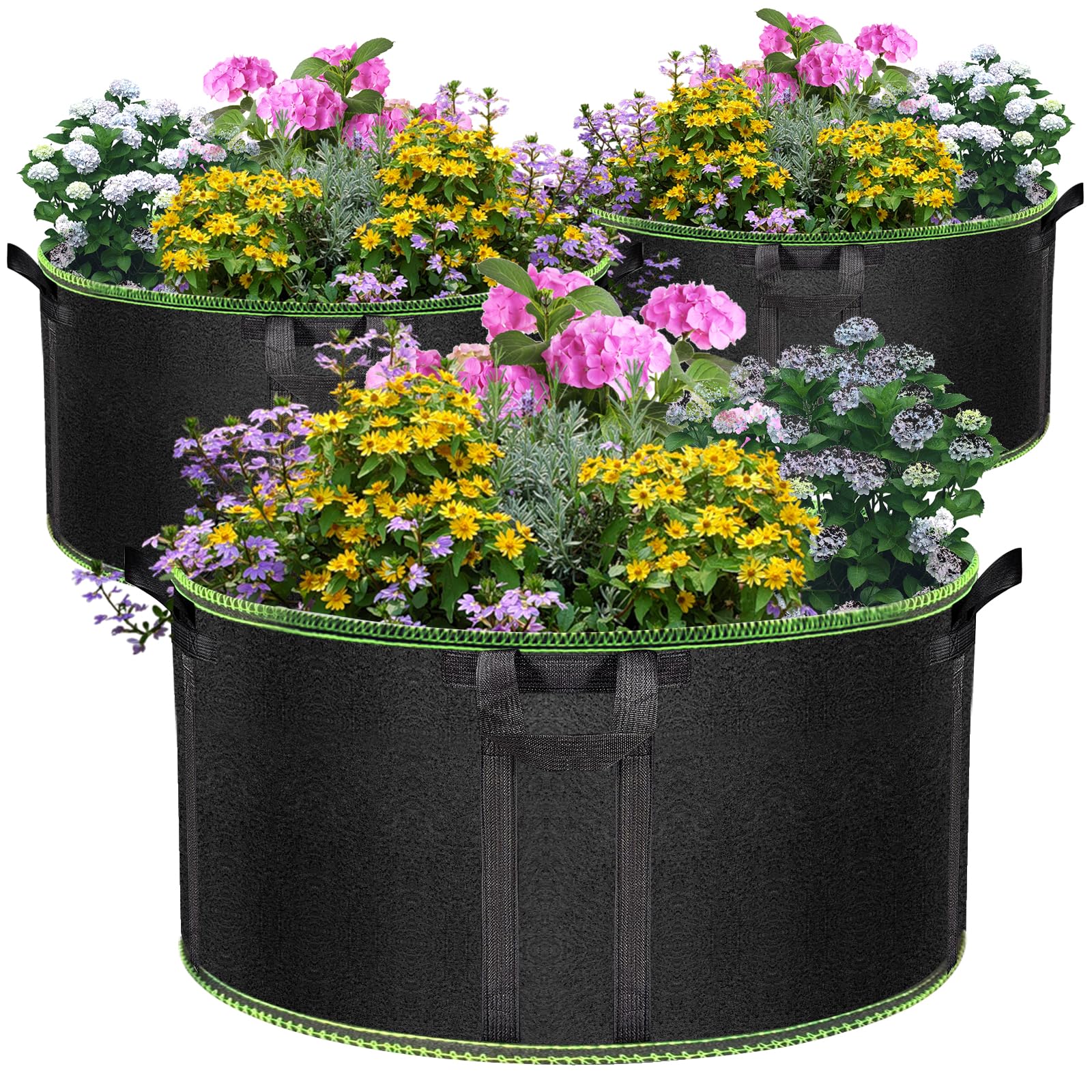
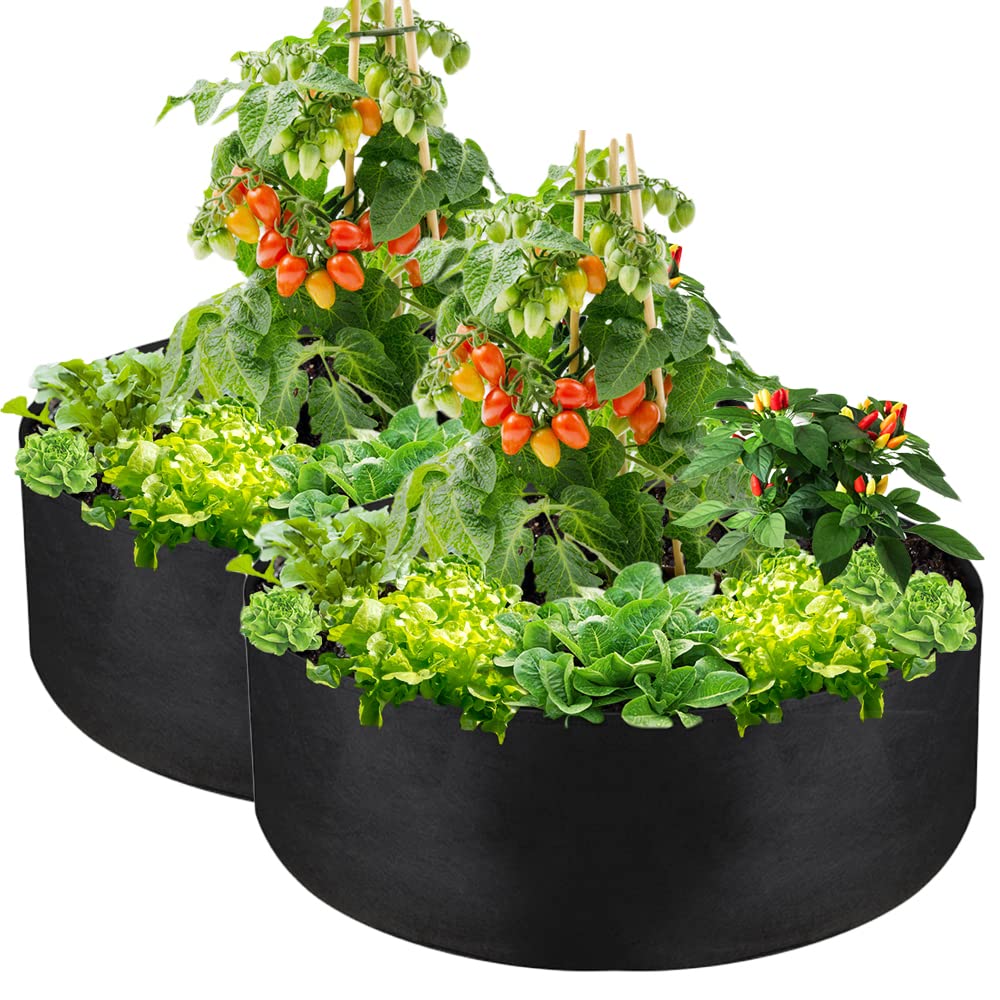
How To Choose The Best 50 Gallon Grow Bags
Fifty gallons is a serious volume of soil — over 400 pounds when wet — so the bag’s construction has to be built for that load, not just the shape. The first thing to check is the fabric thickness, usually described in grams per square meter (GSM). A bag under 200 GSM often flops and may tear by mid-season, while thicker felt (300 GSM and up) holds its shape and survives repeated handling. The second check is the handle stitching: a bag loaded with wet soil gets carried by those straps, and single-stitch handles can pull loose. Double-stitched or reinforced handles are the mark of a bag designed for real use. Finally, look at the height versus diameter ratio — a 36-inch diameter bag that is only 12 inches tall gives you a wide, shallow bed, ideal for leafy greens and flowers, while a bag closer to 16 inches tall gives deeper soil for root vegetables like potatoes and carrots.
Fabric Type and Breathability
Most 50-gallon bags use either non-woven polypropylene or felt fabric. Non-woven fabric is lighter and drains fast, which is good for heavy rain climates but means you will water more often in dry spells. Felt fabric holds a bit more moisture and feels sturdier, but both types do the main job: they let air reach the roots, which prevents the root circling that happens in plastic pots. The review data shows that owners consistently favor bags with “premium felt material” or “thickened nonwoven fabric” — the keywords that signal the bag is built to last rather than a single-season throwaway.
Handle Strength and Bag Portability
A 50-gallon bag filled with soil is not something you casually pick up and move. Handles are the difference between a bag that you can drag a few feet to follow the sun and one that stays put until you empty it by hand. The strongest reviews praise “double side extension sturdy handles” — straps that run down the side of the bag and are sewn into the bottom seam, distributing the load across the whole side rather than ripping a single stitch at the rim. If you plan to move your bags even once a season, handle quality is the spec to obsess over.
Dimensions and Planting Depth
Not all 50-gallon bags are the same shape. A typical 36-inch diameter by 12-inch tall bag is like a wide, shallow raised bed — great for squash, cucumbers, and flowers that spread horizontally. A bag with a 30-inch diameter and a 16-inch height gives you deeper soil, which matters for root vegetables like potatoes, carrots, and parsnips. The review data shows that new growers often miss the dimensions entirely and are surprised when a bag is much shallower or taller than expected. Check the exact height in inches, not just the gallon number.
Quick Comparison
| Model | Best For | Fabric Type | Dimensions (D x H) | Handles | Amazon |
|---|---|---|---|---|---|
| magarz 2-Pack★ Best Overall | Overall Best Value | Nonwoven Fabric | — | Two solid handles | Amazon |
| MEKOLIFE 3-PackPremium Pick | Best Handles | Fabric | — | Reinforced double side | Amazon |
| IWNTWY 2-PackBest Value | Multi-Season Durability | Felt Fabric | 36″ x 12″ | No handles | Amazon |
| IWNTWY 50 Gallon | Shallow Raised Bed | Felt Fabric | 36″ x 12″ | No handles | Amazon |
| FVOTNW 2-Pack | Tallest Bag Option | Fabric | 29.5″ x 21.65″ | Yes | Amazon |
| LBTING 2-Pack | Budget Entry-Level | Non-Woven Fabric | 35″ x 12″ | No handles | Amazon |
| Pannow 50 Gallon | Patio Gardening | Fabric | 36.2″ x 11.8″ | No handles | Amazon |
| Tespher 3-Pack | Deep Planting | Nonwoven Fabric | 30″ x 16″ | 2 Nylon handles | Amazon |
In‑Depth Reviews
1. magarz 2-Pack 50 Gallon Fabric Flower Pots
Our pick — over 4.5★ from 850+ verified ratings; the strongest balance of quality and price.
The two-pack that earned its reputation across hundreds of gardens, not just a single season.
What wins people over here is the balance of toughness and practicality. The non-woven fabric is thick enough that buyers report bags still holding up after two years outside, yet the material still lets water pass through freely — one owner even managed to slide a fully loaded bag through a tornado aftermath without the handles ripping. At just 1 pound per bag, these are the lightest in this lineup when empty, which makes setting them up far easier than wrestling with heavier felt alternatives.
The crowd favorite — 4.7 stars across 800+ ratings — puts these at the top for good reason. Buyers specifically point out that the bags stand up when filled with dirt, which is rare for large fabric pots that usually sag. The capacity accommodates everything from mango trees to blueberries to tomatoes with room to spare. A few owners mention that the price is slightly higher than single-ply options, but the overwhelming consensus is that the durability justifies the cost. The handle stitches hold firm where other bags pull loose.
What Owners Rave About
- Thick fabric holds shape year after year — customers note surviving tornado-force winds without tearing.
- Two solid handles on each bag let you drag a full load of soil without the straps snapping.
- Ventilation design keeps roots cooler in summer and warmer in winter, reducing transplant shock.
The Honest Trade-Off
- 200 gallons for the four-bag set is genuinely massive — a few owners were caught off guard by the sheer volume of soil required.
- The color is basic black, which absorbs heat in direct afternoon sun.
Grab these if: you want a proven two-pack with handles that survive real abuse — the fabric density and stitch quality make this the safest bet for multi-year use.
Think twice if: you need a single bag to save money up front; the two-pack commitment might be more than a small patio can handle.
2. MEKOLIFE 50 Gallon Large Grow Bags 3-Pack
The triple-pack built for growers who move their garden around to chase the sun.
The defining feature here is the double seam bottom stitching and the double side extension handles — this is the bag that solves the portability problem better than anything else in the list. The handles run down the side of the bag and are reinforced, which means you can actually grab and drag a fully loaded 50-gallon bag without the fabric tearing away from the rim. The 320G (grams per square meter) thickened fabric is noticeably denser than standard bags, which owners confirm helps the bag hold its round shape even when filled with dense soil.
Quality is the most-discussed aspect by a wide margin — 57 owners single it out as a clear positive. The breathable double-layer non-woven fabric prevents root rot while still draining water effectively, and the bags wash clean and fold flat for storage. A few owners note that the size feels smaller than a standard 5-gallon bucket, which means you should check the dimensions against your space rather than assuming the gallon label tells the full story. The three-pack is a solid value for anyone setting up a serious container garden with multiple large plants.
Best for mobile gardens: the reinforced handles and dense fabric make this the pick for anyone who needs to rotate plants or move bags seasonally without emptying them first. The trade-off is that a few owners expected a taller bag — these are wide rather than deep, so root vegetables that need depth may be better served by a bag with a 16-inch height.
Reach for this if: you plan to shift your 50-gallon bags around your yard or patio — the double side handles are genuinely load-bearing and change the portability equation completely.
Look elsewhere if: you need maximum depth for potatoes or carrots; the short profile of this bag favors spreading plants over deep-rooting ones.
3. IWNTWY 2-Pack 50 Gallon Grow Bag
Two bags that prove premium felt fabric does not need a premium price tag.
This pair from IWNTWY delivers the same felt material used in higher-priced bags but at a mid-range cost that makes expanding your container garden less painful. The 36-inch diameter and 12-inch height give you the classic shallow raised-bed shape, and the felt fabric provides excellent wicking action — one owner grew five tomato plants that reached 8 to 10 feet each in a single bag, alongside a second bag filled with eight thriving pepper plants. The quality is the top aspect owners praise, with 13 people calling it out specifically.
At 1 pound per bag, these are light when empty, though once filled with soil the lack of handles becomes a real limitation. Unlike the magarz bag above, these have no carrying straps, so you need to plan placement carefully before filling. The bags drain well and have held their shape over two years of use according to multiple owners. A buyer noted that 30 bulbs of garlic produced reliably year after year between the two bags, which speaks to the durability of the felt material across multiple growing seasons.
The standout move: you get the breathable, root-pruning benefits of high-end felt fabric at a price that undercuts most two-packs. The catch is the lack of handles — once these are filled, they are staying put until you empty them, so choose your spot carefully before you start shoveling.
Choose these for: a stationary garden where the bags will not need to move — the felt fabric and large diameter provide excellent growing conditions for tomatoes, peppers, and garlic at a cost that leaves budget for soil.
Skip them if: you need to shift your bags around the yard during the season; without handles, relocation means shoveling soil out first.
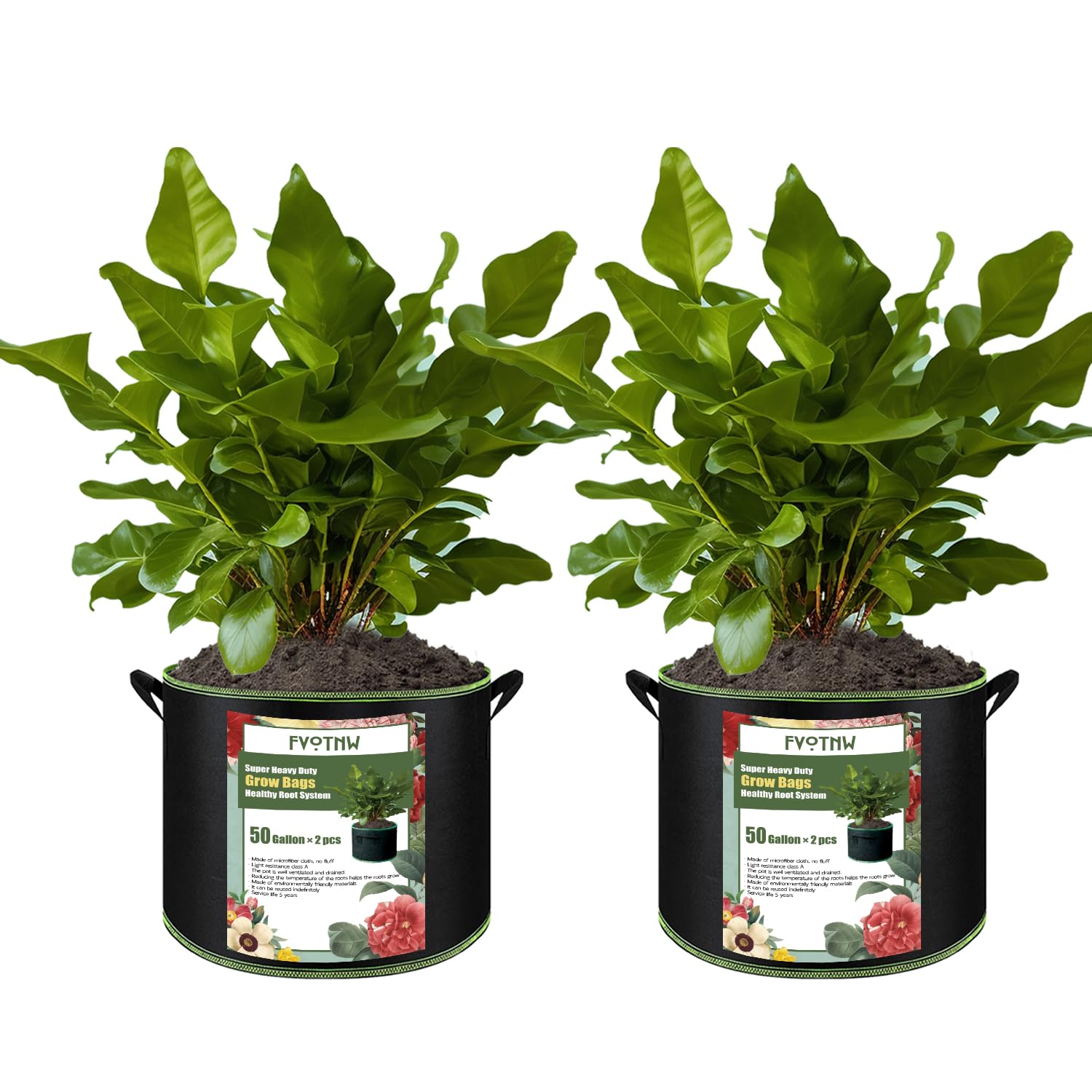
4. FVOTNW 2-Pack 50 Gallon Plant Grow Bags
The deepest bag in the lineup, built for growers who need vertical root room.
At 29.53 inches in diameter and 21.65 inches tall, this is the tallest 50-gallon bag you will find — at 21.65 inches tall versus the 12-inch height common in many other 50-gallon bags. That extra depth is crucial for root vegetables, deep-rooted flowers, and anyone who wants to layer potatoes or carrots without hitting the bottom fabric too soon. The fabric is BPA-free, which matters for edible crops, and the handles are present and functional, though a few owners express concern about long-term handle durability. At 1 pound again for the pair, they are light to set up.
Quality and durability are the most-praised aspects (27 and 20 mentions respectively), and buyers confirm that the bags handle significant weight without splitting. One owner set these on casters with wheels for easy movement, a clever hack that solves the portability issue. The material provides excellent drainage while keeping soil inside — tomato and jalapeño plants thrived on a balcony setup. Where this bag really separates itself is the height: it is the only one in this list that offers nearly 22 inches of soil depth, which changes what you can grow.
Why Height Matters
- 21.65 inches of depth accommodates deep-rooting vegetables like potatoes, carrots, and parsnips that struggle in shallower bags.
- BPA-free fabric adds confidence for growing edible crops on patios or balconies.
- The wide base (29.5 inches) prevents tipping even with tall plants like tomatoes or sunflowers.
The Fine Print
- A few owners question whether the handles will hold up over multiple seasons of heavy use.
- The taller profile requires more soil to fill completely, which adds to the upfront cost and weight.
Best for root vegetable growers: if you are planting potatoes, carrots, or any crop that needs soil depth, this bag’s 21.65-inch height is the standout spec in the entire list — no other bag here comes close.
Not the best for: shallow-rooted greens or flowers where the extra height is wasted and the higher soil volume is unnecessary.
5. IWNTWY 50 Gallon Large Grow Bag (Single)

A single oversized grow bag that doubles as a rent-friendly raised bed alternative.
This bag takes the same 36-inch by 12-inch felt design but sells it as a single unit, making it the entry point for someone who wants to test a 50-gallon bag before committing to a multi-pack. The material quality is strong — 20 owners praise it specifically — and the fabric holds up in harsh conditions, including Florida’s hot sun, with no rips or tears reported. A buyer even repurposed one by turning a vintage bird cage into a flower pot using this bag, which shows the fabric is flexible enough for creative projects. At 1.1 pounds, it is a fraction heavier than the two-pack version above.
The most common note from owners is that this bag is “very very big” and needs a lot of soil — a reality check for anyone who underestimates the volume. The 12-inch height is shallow relative to its 36-inch diameter, so it functions more like a wide raised bed than a deep pot. Renters appreciate that it gives them a productive garden without altering the property. A few buyers mention that the soil capacity feels tighter than expected, likely because the felt fabric can bulge slightly when filled to the brim. It drains well and the unfinished fabric lets roots prune naturally.
Perfect for trial runs: a single bag lets you test 50-gallon growing without investing in a multi-pack. The felt fabric is a proven performer across seasons, but the shallow height means this is best for lettuce, flowers, and spreading plants rather than deep-root crops.
Ideal for: renters or first-time large-bag buyers who want one bag to experiment with before scaling up.
skip it if: you already know you want multiple bags — the two-pack version of the same bag gives you better per-unit value and the same fabric.
6. LBTING 2Pcs 50 Gallon Plant Grow Bags

A two-pack that keeps the cost low by omitting handles — a trade-off worth understanding.
These are the most affordable two-pack in the lineup, and the savings come from a simple design choice: no side handles. The bags are made from heavy-duty non-woven fabric that owners confirm is sturdy and holds its shape well, with the 35-inch diameter providing ample spread for lettuce gardens or up to five strawberry plants. The size is the most-praised aspect, with 14 owners calling it out, and several note the bags are “much larger than expected.” At roughly 12 inches tall, this is a classic wide, shallow bed shape.
The absence of handles is the recurring limitation. Owners who filled these bags quickly realized they are “hell to move” without straps, and the advice from experienced buyers is consistent: plan the location before filling. The fabric itself is breathable and the price per bag is tough to top for someone on a tight budget. A few buyers noted that these worked well as a bed for wildflower seeds or low-growing blooms, where the lack of handles was less of a concern. If you are setting up a permanent garden spot and have help filling the bags on site, these deliver solid value.
The budget move: these bags cost less than most single 50-gallon bags while giving you two. The fabric quality is genuine, but the lack of handles means you must be absolutely sure about placement before you pour in the soil.
Best for fixed garden spots: if you know exactly where the bags will sit for the whole season and you do not need to move them, the savings here are real and the fabric holds up.
Not for you if: you anticipate moving your bags even once — shifting these when full without handles is impractical and risks tearing the fabric.
7. Pannow 50 Gallon Plant Grow Bag

The bag that turns a deck or balcony into a raised bed without the weight of wood.
This single bag from Pannow uses a proprietary UV-resistant non-woven fabric that is designed to handle full sun exposure without breaking down. The 36.2-inch diameter and 11.8-inch height keep it low and stable, which is ideal for deck and balcony gardens where wind can be an issue. Owners describe it as “perfect for deck garden” use, noting that it is sturdy and holds a good amount of soil. The low profile also means less stooping when tending plants, which buyers with back issues specifically appreciate.
The fabric quality gets mixed feedback — 6 owners mention quality, but the split is evenly balanced between great and disappointing experiences. Some find the sides flimsy and note that the bag does not hold its shape well when underfilled, allowing a gap that bugs can hide in. One owner grew three tomatoes, a cucumber, and green beans in a single bag, with the cherry tomato plant outperforming one in a regular pot. The lack of handles means moving it is difficult, though the bag is sturdy enough to survive winter reuse. Drainage is adequate, though a few wish for more bottom holes.
Patio-friendly design: the UV resistance and low height make this a practical choice for outdoor living spaces. The mixed reviews on fabric quality mean it is worth inspecting the stitching on arrival, but at this price point it competes well for casual gardeners.
Good for: deck gardeners who want a single large bag that stays put and resists sun damage throughout the season.
Less ideal for: heavy-use scenarios where the bag will be moved, or for growers who need the fabric to hold a precise shape without soil support.
8. Tespher 3-Pack 50 Gallon Thickened Plant Grow Bags

Three deep bags with 16-inch walls and a pair of gloves thrown in for good measure.
This three-pack from Tespher stands apart with its 30-inch diameter and 16-inch height — one of the deeper options in the list, though it is less wide than the 36-inch bags. The 300g/m² thickened non-woven fabric is reinforced with 2 nylon handles per bag, making these sturdy without being overly heavy (3 pounds total for the three-pack). The included gardening gloves are a nice touch for setup. Quality is the top aspect owners mention, and the bags work well for sunflowers, gladiolus, dahlias, potatoes, and cabbage — versatile enough for both ornamentals and vegetables.
The larger bags tend to fold at the sides when first filled, requiring you to build up soil layers before they hold their shape. Owners who grow potatoes find that the depth makes harvesting easier than in-ground planting, comparing the bags favorably to raised beds. A few reviewers point out that the bags are larger than expected, which is a common theme across 50-gallon containers. The sturdiness gets mixed feedback, with some finding them solid and others wanting thicker walls, but the overall quality consensus is positive. The nylon handles are functional for dragging, though fully loaded bags still require planning.
Depth plus quantity: three bags with a 16-inch height give you more total growing volume than any other pack in this list. The included gloves are a practical bonus, and the nylon handles handle the weight better than basic fabric loops.
Ideal for: growers who want a three-pack of deeper bags for potatoes, root vegetables, or large flowering plants — the 16-inch height is a genuine advantage over the 12-inch standard.
Not the best if: you need maximum width for spreading crops; the 30-inch diameter is narrower than the 36-inch bags, so plants like squash may feel cramped.
Understanding the Specs
Fabric Weight (GSM)
Grams per square meter tells you how dense the fabric is. A bag rated at 300 GSM or higher will hold its shape, resist tearing from handle stress, and survive multiple seasons of sun and rain. Bags below 200 GSM are lighter to ship and cheaper upfront, but they tend to sag, wrinkle at the edges, and may tear by the end of the first growing season. For a 50-gallon bag holding hundreds of pounds of wet soil, fabric weight is the single best predictor of longevity.
Height vs. Diameter
A 36-inch diameter with a 12-inch height creates a wide, shallow bed that is great for spreading plants like squash, cucumbers, and flowers. A 30-inch diameter with a 16-inch height (or the FVOTNW bag at 21.65 inches) gives you deeper soil for root vegetables. The gallon number stays the same, but the shape changes what you can grow. Always check the dimensions in inches rather than trusting the “50 gallon” label alone, because two bags with the same capacity can have completely different planting profiles.
FAQ
How much soil does a 50-gallon grow bag actually need?
Can I move a 50-gallon bag once it is filled with soil?
Are 50-gallon bags good for growing tomatoes?
How long do fabric grow bags last outside?
Do grow bags need drainage holes?
What is the difference between non-woven fabric and felt fabric?
Can I use a 50-gallon bag indoors?
Will a 50-gallon bag fit in a standard car?
Do grow bags keep plants cooler in summer?
How do I clean and store grow bags at the end of the season?
Final Thoughts: The Verdict
Across the board, the 50 gallon grow bags winner is the magarz 2-Pack because it combines proven fabric durability with handles that survive real abuse, backed by the strongest owner satisfaction in this category. If you want the deepest bag for root vegetables and vertical root room, grab the FVOTNW 2-Pack — its 21.65-inch height is class-leading in this list. And for a three-pack with reinforced handles and premium fabric density at a competitive price, the MEKOLIFE 3-Pack is the one to reach for.
How We Picked
We do not accept paid placement. Every pick is matched to a real buyer and a real use-case; we do not hands-on test units.
Sources & Methodology
Specifications: manufacturer listings and product documentation. Review insights: verified customer reviews, as of July 2026. Pricing: not shown on this page (it changes often); check the current price via the retailer link.
As an Amazon Associate, Lawn Gear Lab earns from qualifying purchases. This does not affect which products we feature.