8 Best Juniper Bonsai Soil | 2.5 Gallons That Rescued a Redwood

Specs are compiled from manufacturer listings and verified buyer reviews and can change over time — please confirm the key details on the product page before buying.

You can water and prune your juniper bonsai perfectly, but if the soil is wrong none of that matters. A juniper’s roots need coarse, sharp, draining material that lets air reach every root tip. Smother it in regular potting mix (which holds water in dense clumps), and you invite root rot, yellow needles, and a slow decline no pruning schedule can fix. The difference between a tree that thrives and one that merely survives is exactly what you fill the pot with.

I’m Rikta — the founder and writer behind Lawn Gear Lab. This guide is built by comparing the manufacturers’ published specifications and the patterns across verified customer reviews, so you get each pick’s real strengths and trade-offs instead of marketing spin.

Eight of the most trusted juniper bonsai soil mixes — from pure akadama (a fired Japanese clay that holds moisture internally) to ready-to-use conifer blends — are compared here on drainage, aeration, ingredient quality, and real owner experiences to help you find the best juniper bonsai soil for your tree’s long-term health.
Our Picks at a Glance

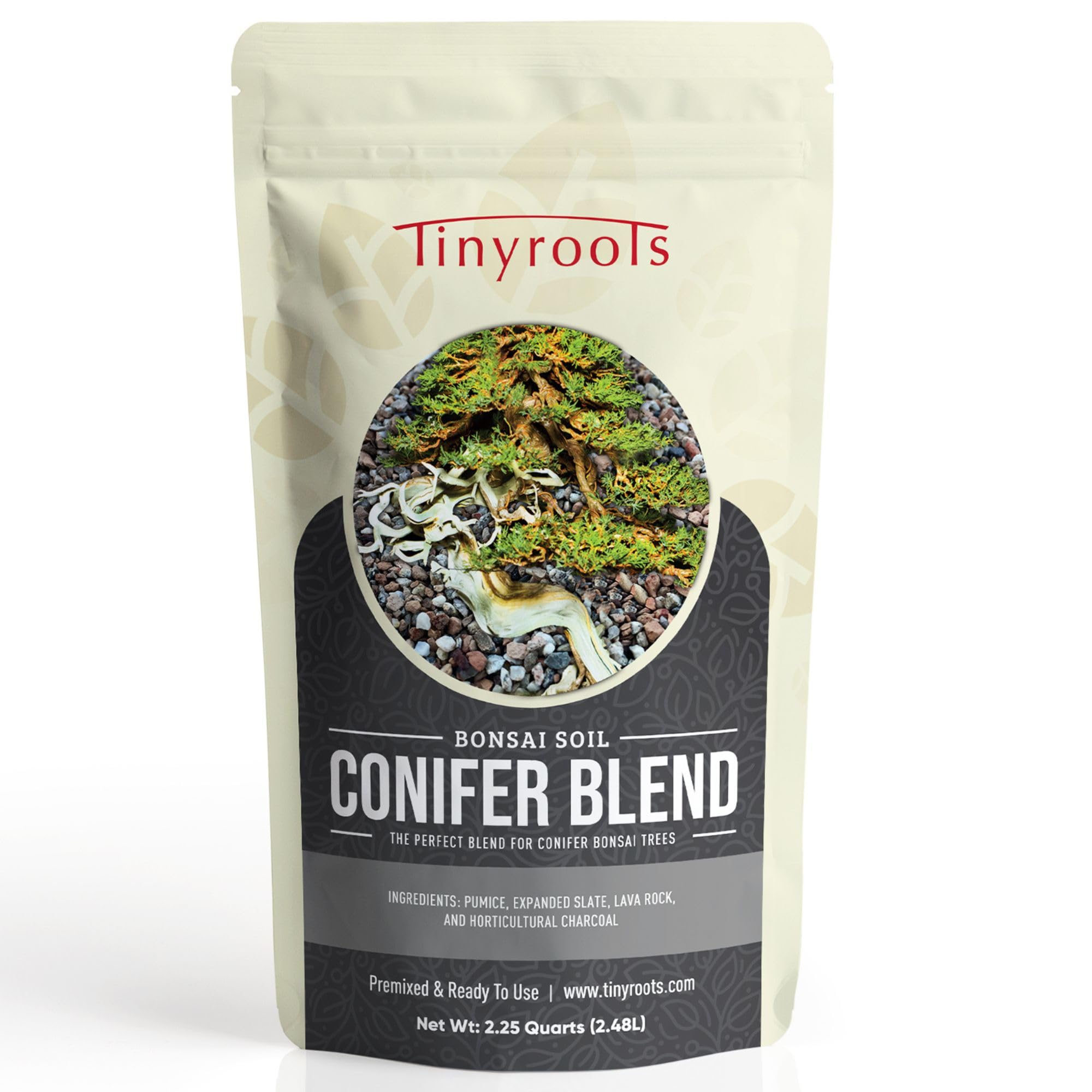
Tinyroots Conifer Bonsai Soil Blend – 2.5 Gallons
Best OverallTinyroots Conifer Bonsai Soil Blend – 2.5 Gallons4.7★644 ratingsThe crowd-winning bag of pumice, slate, lava rock, and charcoal that does not compact.Check Price on Amazon
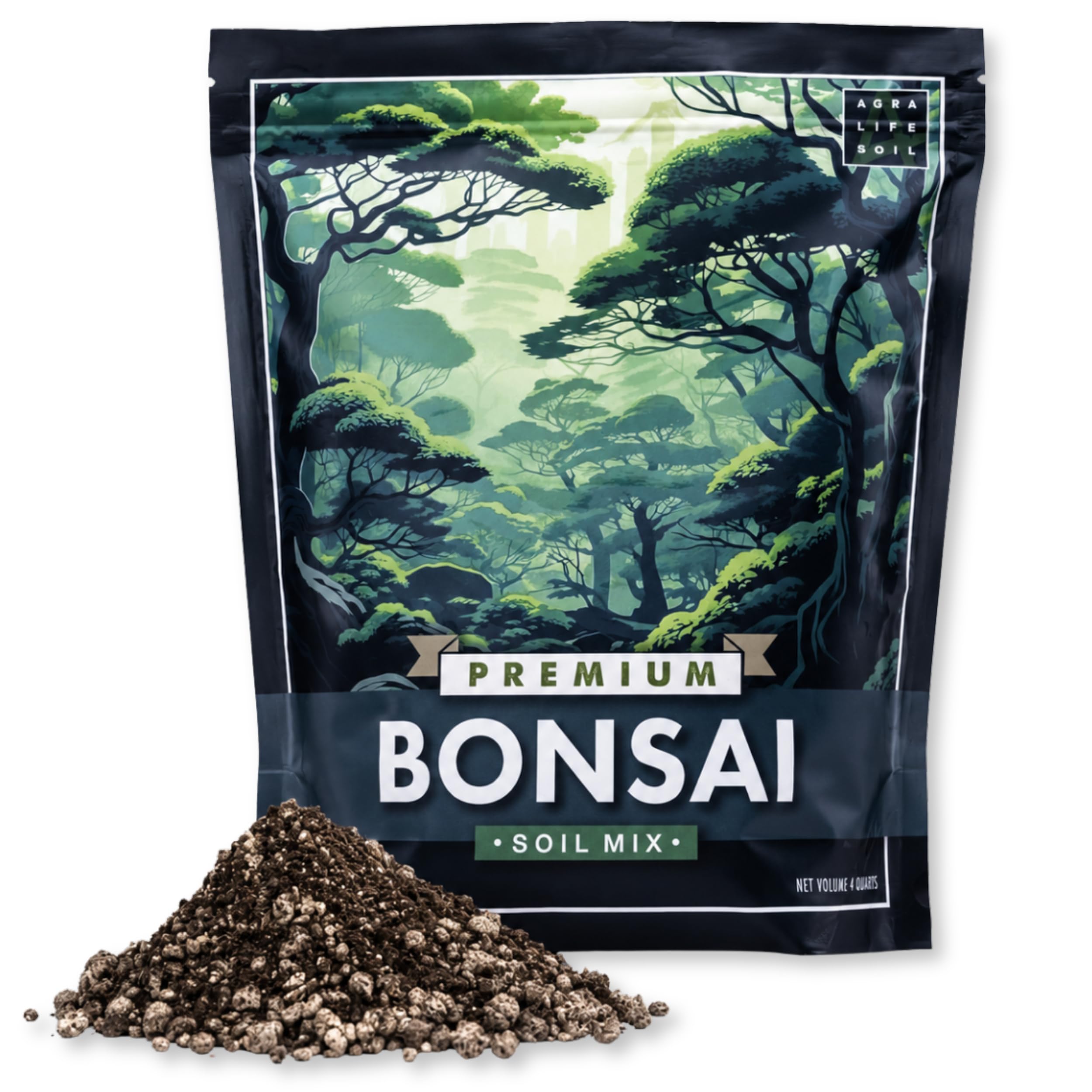
Agralife Soil for Bonsai 4 Quarts Premium Organic Mix
Premium PickAgralife Soil for Bonsai 4 Quarts Premium Organic Mix4.6★306 ratingsAn organic 4-quart bag that revived an eight-year-old Ikea ficus in two weeks. Agralife’s mix delivers on moisture retention — owners mention it stays damp longer than other bonsai soils, which can be a double-edged sword.Check Price on Amazon
Harris Bonsai Soil, All Purpose Premium Blend, 2qt
Best ValueHarris Bonsai Soil, All Purpose Premium Blend, 2qt4.6★763 ratingsThe mix a 15-year home-brewer admitted was worth buying off the shelf.Check Price on Amazon

How To Choose The Best Juniper Bonsai Soil

Choosing the right mix depends on three factors: the physical ingredients, how much dust or fine powder the bag contains, and how the soil behaves when you water it. A juniper’s roots cannot tolerate soggy soil — they need a blend where water runs straight through while a little moisture clings to the particles. Here is what to look for.

Ingredient List — The Core of the Mix

The best juniper soils include a mix of pumice, lava rock, akadama (a fired Japanese clay), and sometimes pine bark fines for a touch of organic matter. Each component plays a role: pumice and lava rock create air pockets for oxygen flow, akadama holds moisture internally without getting soggy, and the bark fines add a small amount of nutrients. Avoid mixes heavy on peat moss or coco coir — those hold too much water for a juniper’s needs.

Particle Size and Dust Content

Consistent particle size (roughly 1/8 to 1/4 inch) ensures water flows through evenly and roots can spread freely. Too much fine dust or powder in a bag will clog the drainage layer and turn your soil into sludge. Many experienced owners sift their bonsai soil before use, especially with so-called “pre-sifted” products where dust can still be present after the firing process.

Bag Volume and Value

Volume varies widely — you will see bags from 2 quarts for small single-tree repots all the way to 2.5 gallons for serious collectors with multiple trees. Buying a larger bag is usually more economical per quart, but only if the quality holds up. A premium blend at a higher price per quart can easily outperform a value bag that is poorly graded or full of fines.

Quick Comparison

Model Best For Volume Key Ingredients Particle Size Amazon
Tinyroots Conifer Blend★ Best Overall Best Overall 2.5 Gallons Pumice, Slate, Lava Rock, Charcoal Consistent Amazon
Agralife Organic MixPremium Pick Premium Organic 4 Quarts Organic Ingredients Multi-Species Amazon
Harris Bonsai SoilBest Value Cuttings & Seedlings 2 Quarts Humus, Pumice, Calcined Clay, Basalt Dust All-Purpose Amazon
Novaterra Indoor Mix Indoor Beginners 2.4 Quarts Calcined Clay, Pine Bark, Lava Rock Premixed Amazon
Brussel’s Bonsai Blend All-Purpose Starter 2 Quarts Organic All-Natural Blend Multi-Species Amazon
Tinyroots Premium (Akadama Mix) Water Retention 2 Quarts Akadama, Red Lava Rock, Pumice Pre-sifted Amazon
The Soil Sage Mix Airy Structure 2.5 Quarts Pumice, Lava Rock, Akadama, Pine Bark Fines Varied Amazon
Three-Line Hard Akadama Pure Akadama 14 Liters 100% Hard Akadama 2-3mm Amazon

In‑Depth Reviews

★ Best Overall

1. Tinyroots Conifer Bonsai Soil Blend – 2.5 Gallons

Our pick — over 4.5★ from 600+ verified ratings; the strongest balance of quality and price.

Conifer Blend2.5 Gal

The crowd-winning bag of pumice, slate, lava rock, and charcoal that does not compact.

This 2.5-gallon blend is the most-loved bag in the lineup — owners of junipers, Japanese black pines, and cedars praise it for staying loose and never clumping. The recipe (pumice, expanded slate, lava rock, and horticultural charcoal) drains fast enough that water runs right through, yet holds enough moisture for healthy root growth. Buyers report their “baby redwood” bounced back to life after a repot, and the resealable bag keeps the rest fresh for future use.

The thing everyone raves about is the quality — 44 owners single it out. Tree health comes next, with 16 owners seeing faster growth and stronger color after switching. The only recurring note is value; a few find it pricey for a bag of rock, though the cost per gallon works out well compared to smaller premium mixes.

What wins owners over

  • Drains instantly — water passes right through with no puddling.
  • Stays loose and airy; roots can spread freely without compaction.
  • Enough volume (2.5 gallons) for several repots or a medium collection.

The fair trade-off

  • Not a standalone mix for every species — some owners add organic material.
  • Premium price per bag compared to smaller entry-level soils.

Grab it for: A large conifer collection where consistent, fast-draining soil is non-negotiable.

Think twice if: You want an all-in-one mix with fertilizer built in — this provides structure only.

Premium Pick

2. Agralife Soil for Bonsai 4 Quarts Premium Organic Mix

Organic4 Quarts

An organic 4-quart bag that revived an eight-year-old Ikea ficus in two weeks.

Agralife’s mix delivers on moisture retention — owners mention it stays damp longer than other bonsai soils, which can be a double-edged sword. For junipers, that means you water less often, but you must watch for over-sogginess. The organic ingredient list is free from harmful chemicals, and buyers rate it top-tier for multiple species: a Fukien tea, Chinese elm, juniper, jade, and ficus all thrive in it.

What wins people over is the soil quality — 33 owners call it premium. Plant growth gets the next biggest mention (10 owners), with one repotting an 8-year-old Ikea ficus that showed new leaves within two weeks. The honest caveat is that the high moisture-holding nature means it is not ideal for succulents or anyone who tends to overwater.

Best for active growers: The organic formula and moisture balance make it a great choice for indoor bonsai collections where you want sustained dampness between waterings.

Reach for it if: You keep several different bonsai species and want an organic all-rounder.

Look elsewhere if: Your juniper is in a very humid environment — this mix holds moisture well, so you must adjust your watering schedule.

Best Value

3. Harris Bonsai Soil, All Purpose Premium Blend, 2qt

Forest Humus2 Quarts

The mix a 15-year home-brewer admitted was worth buying off the shelf.

Harris combines forest humus, pumice, calcined clay (a fired product that mimics akadama’s drainage), organic amendments, basalt rock dust, and lime into a single 2-quart bag. That blend provides a complete foundation — you do not need to add anything for most junipers and pines. Owners love it for cuttings and seedlings, noting it holds moisture well in winter (needing only a weekly watering) without turning into mud.

Quality is the standout here, with 34 owners praising the product. The crowd buzzes about how well it works for bonsai cuttings and for starting seeds — three of four seeds sprouted in one owner’s test. The main downside reported is the price, as some find it expensive for the 2-quart volume compared to mixing their own components.

What impresses

  • All-purpose recipe that fits junipers, pines, ficus, fir, and even succulents.
  • Holds moisture through winter without daily watering — great for busy owners.
  • Easy to pour and fill containers; minimal mess during repotting.

The honest catch

  • At 2 dry quarts, the volume is small — you may need multiple bags.
  • A few owners found tree health inconsistent, depending on species.

The right fit: Beginners and anyone repotting 1-2 trees who wants a complete, open-and-use blend without mixing.

Skip if: You have a larger collection — the per-quart cost is higher than a 2.5-gallon bag.

Top Performer

4. Bonsai Outlet Premium Bonsai Soil – Tinyroots 2.25 Quart (Akadama Mix)

Akadama2 Qt

A triple blend of genuine akadama, red lava rock, and pumice — and the sifting debate.

This 2-quart bag is built from 100% double-sifted akadama (fired Japanese clay), red lava rock, and pumice, formulated by the Kaikou School of Bonsai. It holds moisture well while helping roots spread, and customers note healthier, less-stressed trees after repotting. One owner repotted a Fukien tea tree with zero leaf drop and saw flowers after two months.

Quality leads the praise (26 owners), followed by plant health (10). The biggest talking point, however, is that “pre-sifted” can leave fine powder in the bag — reviewers point out the sifting happens before firing, so you may still need to sift it yourself before use. The grain size also gets mixed feedback, with some calling it perfect and others finding it too varied.

Know before you buy: Expect to give it a quick home sift. If you are okay with that step, the quality of the akadama and lava rock is excellent for water retention without compaction.

Choose this for: A ficus or tropical bonsai that benefits from the moisture-holding akadama base.

Not ideal for: Anyone wanting a zero-prep, pour-and-go soil — a sifting step is almost mandatory.

Budget Champion

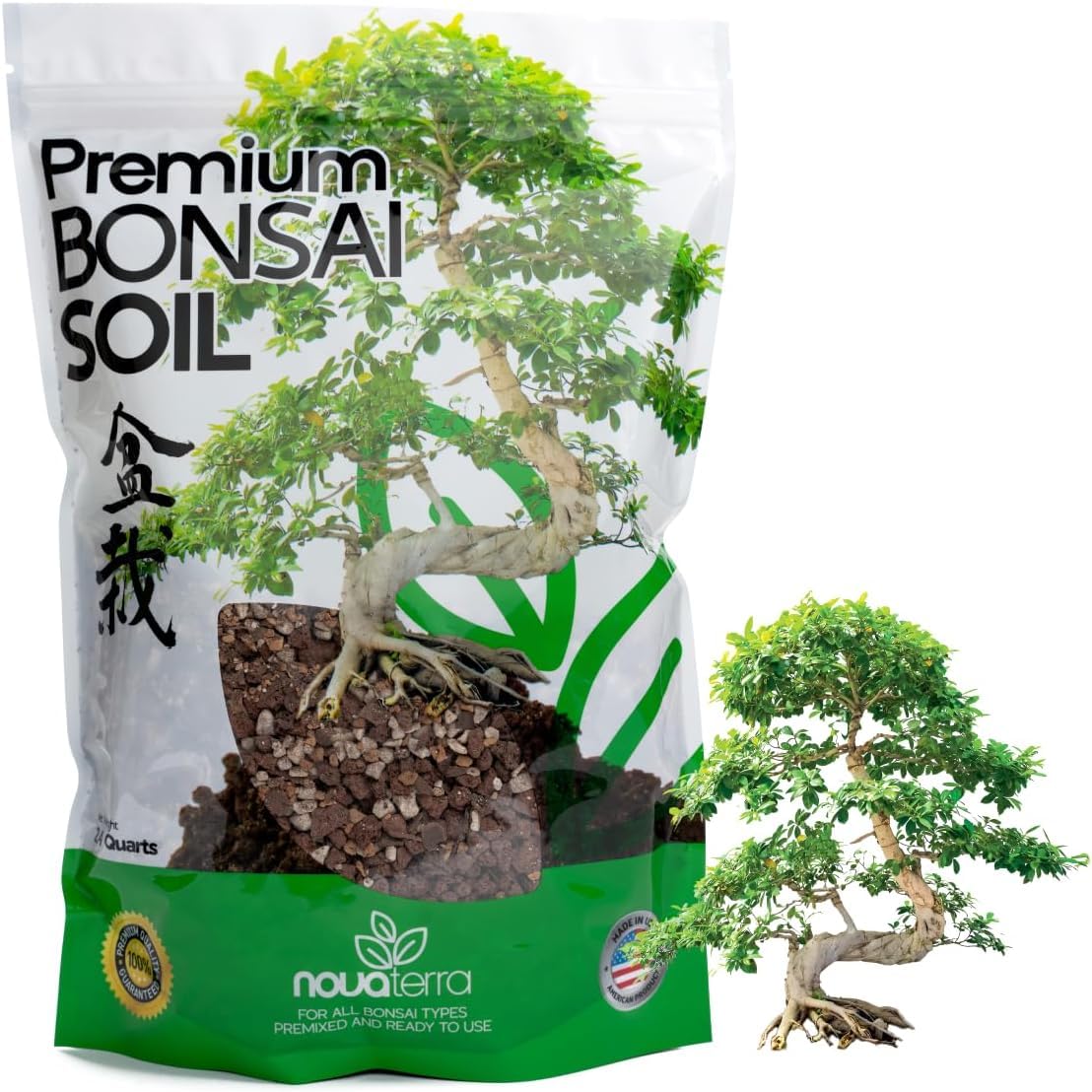
5. Novaterra Bonsai Potting Soil Mix for Indoor Bonsai Trees, 2.4 Quarts

Indoor Blend2.4 Qt

The premixed 2.4-quart bag that sparked new leaf growth after years of struggle.

Novaterra blends calcined clay (working like akadama), pine bark, and red lava rock into a ready-to-use indoor mix. It is designed to remove the guesswork — no extra mixing or amendments. That is a big win for beginners who just want to repot a struggling tree and see a difference. Shoppers say root rot stays away and the soil has a classic, clean look when it is in the pot.

The most notable feedback is a buyer whose bonsai “had been struggling to grow for years” — after the switch, the tree produced new leaf growth for the first time. The soil holds enough moisture to prevent rot while keeping roots aerated. The only minor complaint is the volume: some owners expected a bigger bag for the money, though 2.4 quarts is standard for single-tree repots.

Why beginners love it

  • Premixed and ready — perfect for anyone new to bonsai who wants to avoid soil-mixing mistakes.
  • Calcined clay mimics akadama’s drainage without the premium price.
  • The resealable bag stores neatly between uses.

The honest catch

  • At 2.4 quarts, it only covers one or two small repots.
  • Mixed for indoor trees; outdoor junipers in heavy rain may need faster drainage.

Best choice for: A first-time bonsai owner repotting a single indoor tree.

Consider a larger bag if: You have more than two trees or plan to keep extras for future repots.

Compact Pick

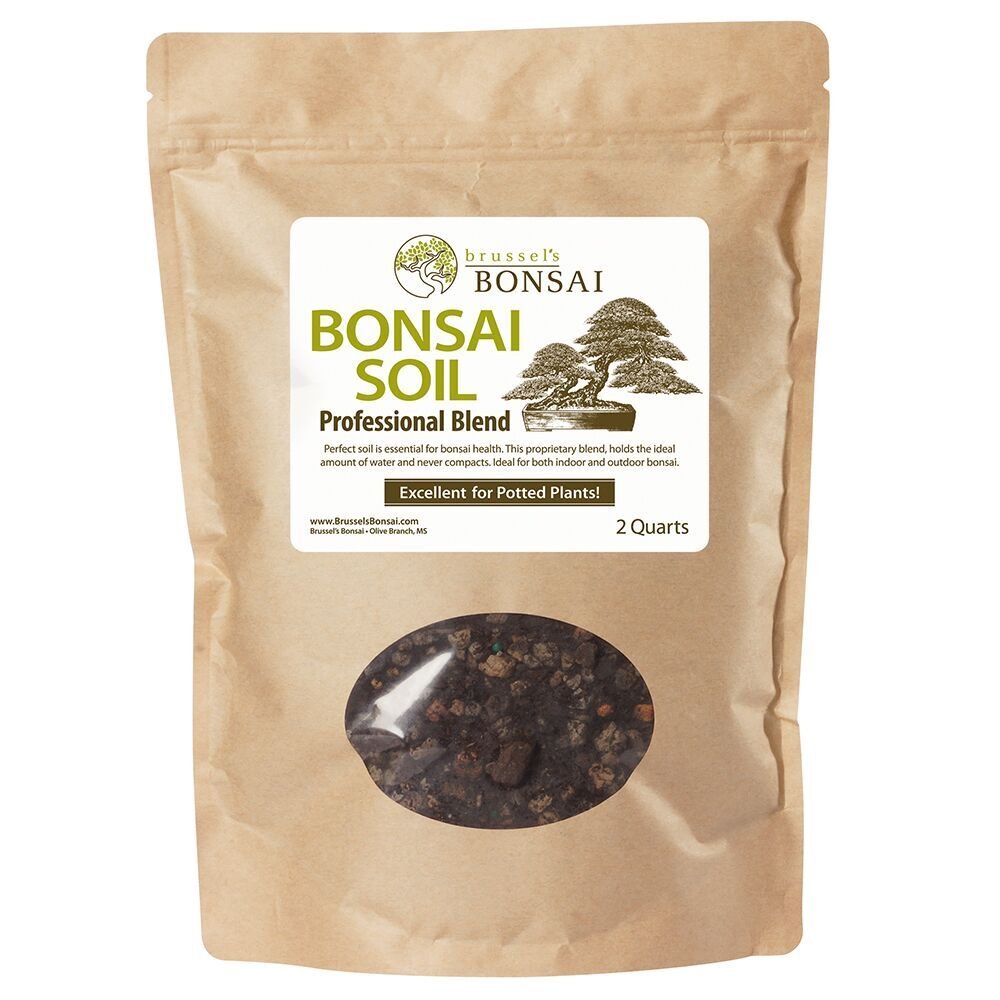
6. Brussel’s Bonsai – Professional Bonsai Potting Soil, 2 Qt

All-Natural2 Qt

A 100% organic all-purpose blend that kept a three-year-old bonsai thriving.

Brussel’s Bonsai offers a simple, all-natural 2-quart mix formulated for ficus, Chinese elms, jades, junipers, and other common species. The blend provides the plant support, moisture, and drainage a typical bonsai needs — no complicated sourcing, no single-ingredient focus. Buyers report their 3-year-old trees are “thriving” on this soil, and the azalea arrivals arrive well-packaged and healthy.

The strength here is simplicity: one bag that works for most beginner-to-intermediate trees. One buyer notes it is “better than others I’ve tried,” pointing to steady growth and no root issues. A single review flagged a packaging error (receiving a small tray of rocks instead of the bag), which is an occasional fulfillment problem rather than a soil-quality issue.

One-bag simplicity: If you want to repot a juniper without researching ingredient ratios, this all-purpose blend is a reliable, no-fuss start.

Reach for it if: You have a small collection (1-3 trees) and want one soil that covers indoor and outdoor species.

skip it if: You are an advanced grower who wants specific particle sizes or a conifer-only recipe.

Most Versatile

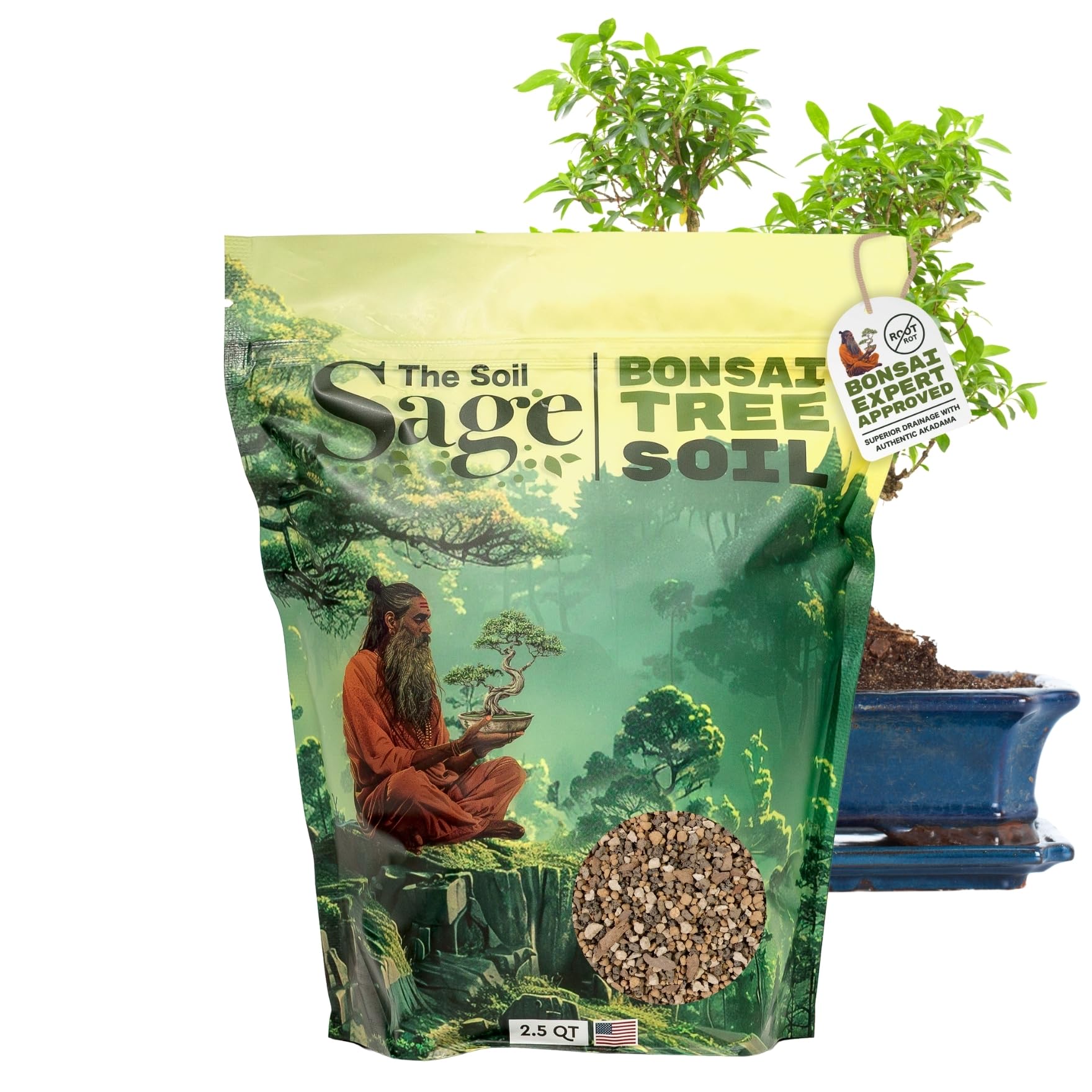
7. The Soil Sage 2.5 Qt Premium Bonsai Mix with Akadama

Akadama Blend2.5 Qt

A 2.5-quart bag of pumice, lava rock, akadama, and pine bark that buyers bought five more of.

The Soil Sage’s mix uses four components (pumice, lava rock, akadama, pine bark fines) to balance drainage, aeration, and moisture retention. Owners describe it as “very airy and easy to use” — one buyer tried a single bag and immediately ordered five more. The bag even includes bonsai mesh nets for potting, a small bonus that saves a trip to the garden store.

Soil quality is the top praise (22 owners), and the ingredient transparency gets the next biggest mention (11 owners). The most common note is that the pine bark chunks can be larger than expected in some bags — batch consistency varies. A few bags arrived with less akadama and bigger bark particles, affecting water retention. Owners recommend sifting if you notice oversized pieces.

What stands out

  • Four-ingredient blend gives junipers excellent airflow and root space.
  • Bonsai mesh nets included — a thoughtful addition for potting day.
  • Strong value for the volume; many owners buy multiple bags after one try.

What to watch for

  • Pine bark particle size can be inconsistent from bag to bag.
  • Includes no fertilizer — you will need to add slow-release pellets for long-term nutrition.

Ideal for: A grower with several junipers or maples who wants a light, airy mix that encourages root spread.

Not for: Someone wanting a uniform, dust-free bag every time — occasional sifting may be needed.

Pure Akadama

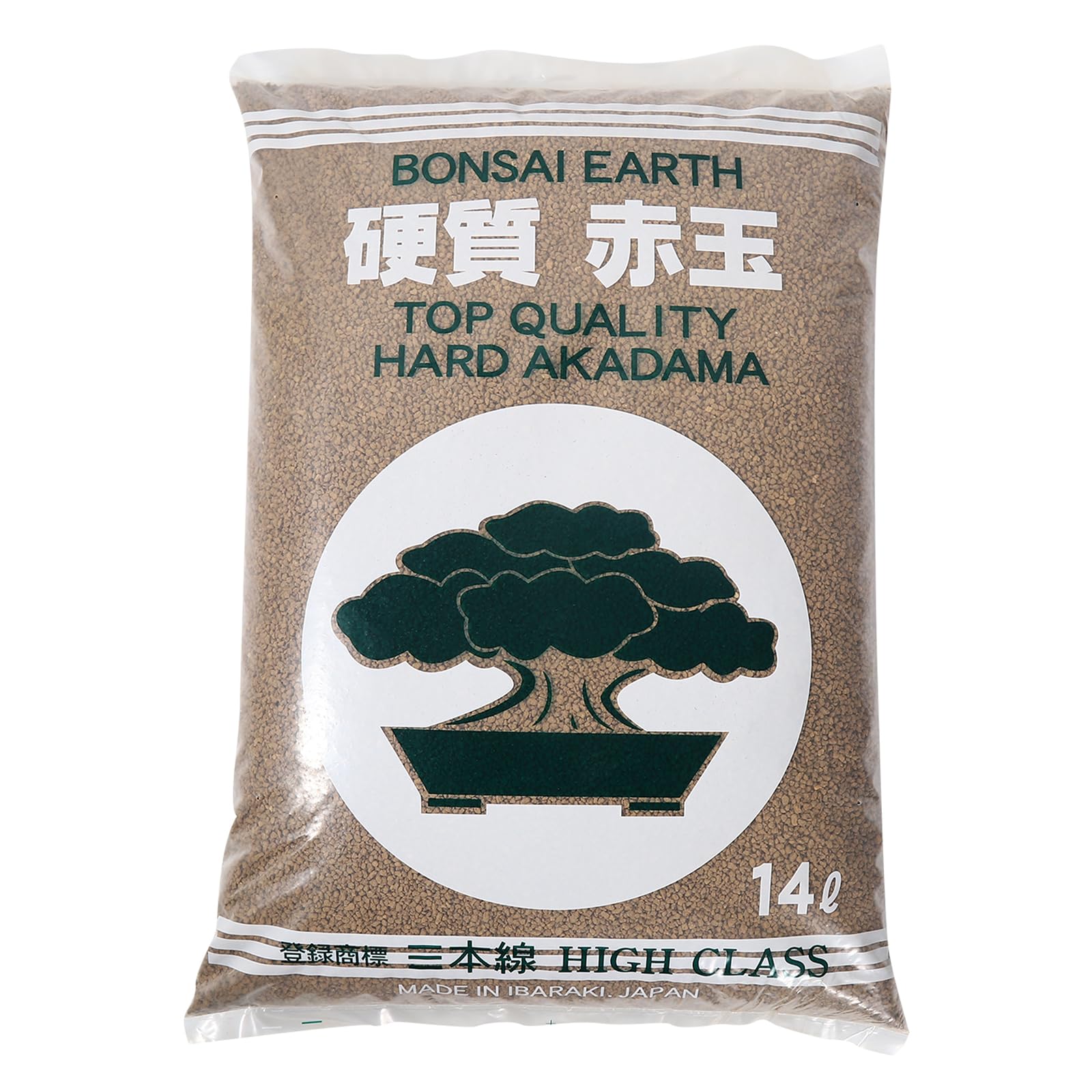
8. Three‑Line Hard Akadama (Extra Small Grain 2-3mm, 22 lb / 14L)

Japanese Akadama14 Liters

A 14-liter bag of pure Ibaraki akadama that does not crumble under watering cycles.

This is the specialist’s choice — nothing but natural red clay from Ibaraki Prefecture, Japan, slow-dried in greenhouses for superior hardness. The 2-3mm grain size is perfect for small seedlings, top dressing, and fine-rooted bonsai. Owners confirm it stays super hard and does not fall apart, with very little dust compared to many akadama brands.

Quality and plant suitability lead the praise (15 and 12 owners respectively), and the hardness is a recurring highlight — 8 owners note it resists deformation under repeated watering. That makes it ideal for trees that stay in the same container for years without frequent repotting. The natural drying method means hardness can vary slightly by season; experienced growers sun-dry it 2-3 extra days for maximum durability. The main caution is price: at 14 liters, it is a premium investment, and some find the cost steep for a single-ingredient soil.

Know your technique: This pure akadama works best when mixed with pumice or lava rock for junipers. On its own, it retains more moisture than a conifer blend.

Choose this for: Creating your own custom blend with precise particle control, or for top-dressing finished bonsai.

pass on it if: You want a ready-to-use mix — this is a component, not a complete soil.

Understanding the Specs

Aeration vs. Water Retention

Bonsai soil is a constant tug-of-war between letting air reach the roots and holding enough water to keep the tree hydrated. Pumice and lava rock excel at creating open pore spaces for oxygen — that is what prevents root rot in a shallow pot. Akadama and bark fines, on the other hand, hold moisture inside their porous structure. A blend that leans too far toward retention will drown a juniper; one that swings too dry will leave a ficus wilted. The best mixes balance both, letting you water deeply without the pot staying soggy.

Particle Size and Grading

Particle size determines how fast water flows through the pot and how easily roots can push between grains. For junipers, the balance is roughly 1/8 to 1/4 inch (about 2-6 mm). Smaller particles create capillary action that holds water — great for moisture lovers — while larger particles speed up drainage. Dust, often called “fines,” clogs those gaps and turns soil into mud. Reputable brands sift out the dust, but homeowners who want a consistent grade often screen their soil through a 1/8-inch mesh before potting. Good grading also means the soil structure lasts longer; sharp, unsorted edges can break down over time and fill in the air pockets.

FAQ

Can I use regular potting soil for my juniper bonsai?
Not for long. Regular potting soil is heavy on peat moss and organic matter that stay wet too long in a shallow bonsai pot. A juniper’s roots need coarse, gritty material that drains quickly — standard potting mix often leads to root rot and yellow needles within a few weeks.
How often should I repot my juniper with fresh bonsai soil?
Most junipers need repotting every 2-3 years, depending on how fast they grow and how compacted the soil becomes. When water pools on the surface instead of draining straight through, or when roots circle the bottom of the pot, it is time for fresh soil.
Do I need to sift my bonsai soil before using it?
With many brands, yes — even soils labeled “pre-sifted” can contain fine dust from the manufacturing process. Running the mix through a 1/8-inch mesh screen removes the fines that clog drainage. Some premium blends arrive clean, but sifting is a cheap habit that protects root health.
What is the difference between akadama and calcined clay?
Akadama is a naturally occurring Japanese clay that is fired and graded for bonsai. It holds moisture internally while allowing drainage around the particles. Calcined clay is a similar fired product (often used in baseball infields) that behaves like akadama at a lower cost. Many beginner-friendly mixes use calcined clay as a budget substitute, but purists prefer real akadama for its consistent structure and slower breakdown.
Can I mix two different bonsai soils together?
Yes — in fact, many advanced growers build custom blends by mixing a pure akadama (for moisture) with pumice and lava rock (for aeration). If a bag is too water-retentive for your juniper, adding extra pumice or lava rock at a 1:1 ratio can fix the balance. Just keep the particle sizes similar so the mix does not separate when watered.
Does bonsai soil contain fertilizer?
Most standard bonsai soils are inert — they provide structure, not nutrients. Your tree will need regular feeding with a balanced bonsai fertilizer throughout the growing season. A few organic blends include slow-release amendments, but you should still supplement during active growth periods.
How much soil do I need for a single juniper repot?
A small 5-inch pot holds about 1 quart; a medium 8-inch pot takes closer to 2 quarts. If you are repotting a single tree, a 2-quart bag is usually enough. For multiple trees or a larger collection, a 2.5-gallon bag gives you plenty of leftover for future repots and top-dressing.
Is pure akadama better than a mixed blend for junipers?
Not by itself. Pure akadama retains more water than a juniper needs long-term. Most growers mix it 50:50 or 40:60 with pumice and lava rock to create the fast drainage junipers require. A conifer-specific blend that already includes those ingredients is usually more beginner-friendly than building your own from pure akadama.
Why does my bonsai soil smell bad after watering?
A sour or swampy smell means the soil is staying too wet and anaerobic bacteria are taking over. This is a classic sign that the mix does not drain well enough for your tree. The fix is to repot into a coarser soil with larger particles and better airflow, and to check that the pot has adequate drainage holes.
Can I reuse old bonsai soil?
It is not recommended. Used soil breaks down over time, losing its structure and filling with fine root debris that holds too much water. The old mix can also harbor pathogens from the previous tree. Fresh soil every 2-3 years is a small investment in your juniper’s health.

Final Thoughts: The Verdict

For most owners, the best juniper bonsai soil is the Tinyroots Conifer Blend — it is the crowd favorite for a reason, with a 2.5-gallon bag of pumice, slate, and lava rock that drains instantly and never compacts. If you want an organic all-rounder for several different species, the Agralife Organic Mix brings premium moisture retention and revived an eight-year-old tree in two weeks. For those on a budget or repotting a single indoor tree, the Novaterra Indoor Mix is a premixed, beginner-friendly option that saved a struggling bonsai with new leaf growth. Each of these picks gives your juniper the gritty, free-draining foundation it needs to stay healthy for years.

How We Picked

We do not accept paid placement. Every pick is matched to a real buyer and a real use-case; we do not hands-on test units.

Sources & Methodology

Specifications: manufacturer listings and product documentation. Review insights: verified customer reviews, as of July 2026. Pricing: not shown on this page (it changes often); check the current price via the retailer link.

As an Amazon Associate, Lawn Gear Lab earns from qualifying purchases. This does not affect which products we feature.

Related Guides

Please use a real email you check. If it's fake or mistyped, your message won't reach us and we can't reply — wrong addresses are rejected automatically.

Leave a Comment

Your email address will not be published. Required fields are marked *