
Specs are compiled from manufacturer listings and verified buyer reviews and can change over time — please confirm the key details on the product page before buying.
Walking past a neighbor’s garden that explodes with color while yours looks a little tired is the nudge that sends most of us searching for a bloom booster. The secret is not just any fertilizer — it is getting the phosphorus levels right without burning your plants or overpaying for fancy packaging. This guide cuts through the shelf confusion and gives you the exact choices that actually deliver more flowers.
I’m Rikta — the founder and writer behind Lawn Gear Lab. This guide is built by comparing the manufacturers’ published specifications and the patterns across verified customer reviews, so you get each pick’s real strengths and trade-offs instead of marketing spin.
You want more flowers, not just more leaves. These nine bloom booster fertilizer picks each suit a different garden type, style, and budget — based on real owner experiences and the numbers behind them.
Our Picks at a Glance


How To Choose The Best Bloom Booster Fertilizer
A bloom booster is basically a targeted meal for your plants during their flowering stage. Regular all-purpose fertilizers lean heavy on nitrogen for green leaves, but bloom boosters flip the formula to favor phosphorus and potassium — the two nutrients that trigger bud formation, flower size, and color intensity. Before you buy one, these three factors will guide your decision.
The N-P-K Ratio: Phosphorus Is The Star
Every fertilizer package shows three numbers separated by dashes, like 10-54-10 or 0-45-0. The middle number is phosphorus, and for a bloom booster, it should be the highest of the three. That tells you the product is designed to push flower development rather than foliage. A ratio like 10-30-20 (Jack’s Classic) or 10-54-10 (Schultz) means the plant gets a strong phosphorus dose with enough potassium to support overall bloom health and root strength.
Liquid, Granular, Or Water-Soluble: Your Routine Decides
Liquid fertilizers like the Great Big Roses formula get into the root zone within hours — great for a quick mid-season boost. Granular options such as the Espoma Triple Phosphate or FoxFarm Happy Frog are slower-release; you sprinkle them on the soil and water them in, and they feed for weeks. Water-soluble powders (Schultz Bloom Plus, Jack’s Classic) fall in between — you mix them with water each time you irrigate, which gives you precise control over strength and frequency.
Synthetic Vs. Organic: Speed Versus Sustainability
Synthetic bloom boosters (like the liquid Miracle-Gro LiquaFeed) work fast because the nutrients are already in a form plants can grab immediately. Organic choices such as Dr. Earth Flower Girl or the Miracle-Gro Performance Organics granules rely on naturally occurring minerals and microbial activity to break down nutrients over time. Organics are gentler on soil life and safer for pets around the garden, but they typically take a week or two longer to show visible results. Both can produce spectacular flowers — the right choice depends on if you want instant action or long-term soil health.
Quick Comparison
| Model | Best For | Form | N-P-K Ratio | Size | Amazon |
|---|---|---|---|---|---|
| Miracle-Gro LiquaFeed★ Best Overall | Immediate liquid feeding | Liquid | — | 16 fl oz (2‑pack) | Amazon |
| Schultz Bloom PlusBudget Champion | All-purpose water‑soluble feeding | Powder | 10‑54‑10 | 1.5 lb | Amazon |
| Jack’s Classic Blossom BoosterTop Performer | Foliar or root feeding | Powder | 10‑30‑20 | 8 oz | Amazon |
| Miracle-Gro Performance Organics | Organic granular feeding | Granules | 5‑7‑10 | 2.5 lb | Amazon |
| Dr. Earth Flower Girl | Organic & pet‑safe gardens | Granules | 4‑10‑7 | 4 lb | Amazon |
| FoxFarm Happy Frog | Fruit & flower gardens | Granules | — | 4 lb | Amazon |
| Espoma Triple Phosphate | Pure phosphorus for root & bloom | Granules | 0‑45‑0 | 6.5 lb | Amazon |
| Great Big Roses & Flowers | Specialized rose & shrub blooms | Liquid | — | 32 fl oz | Amazon |
| Cz Garden TSP 0-46-0 | High‑phosphorus custom mixing | Granules | 0‑46‑0 | 10 lb | Amazon |
In‑Depth Reviews
1. Miracle-Gro 100404 LiquaFeed Bloom Booster Flower Food
Our pick — over 4.5★ from 700+ verified ratings; the strongest balance of quality and price.
The crowd-pleasing liquid that turns a garden into a neighborhood showpiece.
This is the set-and-forget solution for anyone who wants bigger, more colorful blooms without measuring powders or mixing gallons. The LiquaFeed system attaches to your hose, and you simply spray — feeding happens automatically every time you water. The two-pack of 16-fluid-ounce refills covers a solid portion of a flower bed or a whole season of container plants. Quality is the single most-praised feature among owners, with bloom results running a close second.
What wins people over is how fast the results show. Buyers report feeding their flowers two to three times a week and watching the plants produce “many colorful blooms throughout the summer.” The formula is designed exclusively for flower growth, so it pushes blossoms rather than leaves. A few owners feel the value is a touch high for what is in the bottle, but the convenience — no mixing, no mess, just spray — tends to win that argument for most.
If you are the kind of gardener who wants to spend time admiring your flowers rather than measuring scoops, this is your formula. The only real catch is that you need the LiquaFeed feeder head (sold separately), but the refill pack itself delivers two full bottles that keep your garden fed through the season.
What keeps gardens blooming
- Hose-end sprayer makes feeding easy — no mixing required
- Proven to produce “many colorful blooms” with regular use
- Two‑pack gives you enough liquid for extended flower-bed coverage
The honest trade‑off
- Requires the separate LiquaFeed feeder head to use
- A few owners consider it slightly overpriced for liquid concentrate
Grab it for: easy, hose-end feeding that produces consistent flower color all season long — especially if you have a large bed of annuals or container flowers.
Think twice if: you prefer granular slow-release feeding or you do not already own the LiquaFeed sprayer.
2. Schultz Bloom Plus Water Soluble Plant Food 10-54-10
The old‑school water‑soluble that makes neighbors ask what you are feeding your plants.
Schultz has been around long enough that experienced gardeners reach for it without hesitation. The 10-54-10 ratio is a classic bloom formula — high phosphorus to drive flower development, with enough nitrogen and potassium to keep the plant healthy. Effectiveness is the thing owners praise most, and the numbers back that up: the bag contains a concentrated powder that mixes with water to feed flowers, vegetables, and houseplants. One long-time user summed it up simply: “Have used this product for years and my flowers always look fabulous. Envy of the neighborhood.”
The formula “feeds like nature” — the makers claim it dissolves nutrients evenly every time it rains or you water. That means you do not get hot spots of fertilizer that can burn roots. It also works across a wide range of plants, from Christmas cacti indoors to full flower beds outdoors. Keep it away from bushes, trees, and cacti, as the reviews note those plants do better with a different profile. At this price point, it offers more feeding power per dollar than almost anything else on this list.
Some delivery reports mention tracking issues, but the product itself earns high marks across the board. For the gardener who wants a simple, affordable powder that produces “spectacular color displays,” this is the one to grab.
Best for budget bloomers: Schultz delivers a powerful phosphorus punch at a price that lets you feed the whole garden without thinking twice. skip it if you want a liquid hose-end system or need a slow-release granular.
Reach for this if: you want a time-tested, water-soluble powder that works on flowers, vegetables, and houseplants without breaking your budget.
Look elsewhere if: you prefer granular slow-release feed or you need something specifically for trees and shrubs.
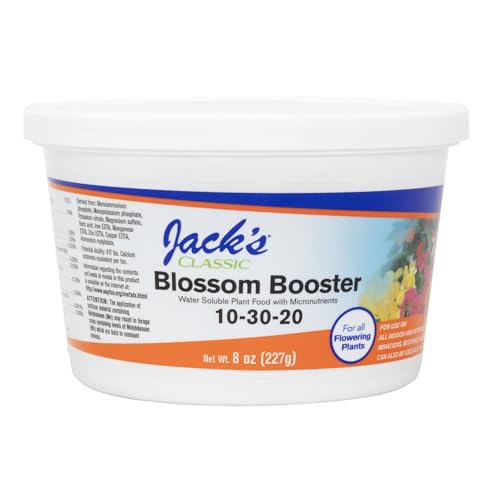
3. Jack’s Classic 10-30-20 Blossom Booster
The precise powder that gives orchids, hydrangeas, and lilacs a serious bloom boost.
Jack’s Classic earns its spot because its 10-30-20 analysis (10% nitrogen, 30% phosphorus, 20% potassium) delivers a balanced potassium level that supports flower size and stem strength alongside the phosphorus push. What really separates it is the inclusion of micronutrients (trace elements like iron and zinc), so you do not need to supplement with additional feeding. The water-soluble powder can be used as a foliar spray (applied directly to the leaves) or as a root drench, giving you flexibility that liquid-only boosters like Miracle-Gro LiquaFeed lack.
Effectiveness is the top-rated aspect, and owners mention seeing results “within days” — especially on orchids. The formula is non-irritating and does not burn plants even when used regularly. One reviewer noted the 8-ounce container is essentially a sample size; for a large outdoor flower bed, it gets used up fast. The included measuring spoon makes mixing straightforward, and the powder concentrate goes further than an equivalent liquid since you mix it yourself.
For anyone who grows a mix of indoor flowering plants and outdoor beds, this is a versatile all-star. The only honest knock is that the small tub runs out quickly if you have a big garden, so consider the larger sizes for heavy use.
Versatile performer: Jack’s Classic blends foliar and root feeding into one tub with added micronutrients — perfect for the indoor/outdoor gardener who wants fast, gentle results. The 8-ounce size goes fast on big beds, so plan ahead.
Choose this for: affordable powdered feeding with micronutrients that works as a foliar spray or root drench — excellent for orchids and mixed gardens.
pass on it if: you need a large volume for extensive outdoor beds without wanting to reorder frequently.
4. Miracle-Gro Performance Organics Blooms Plant Nutrition Granules
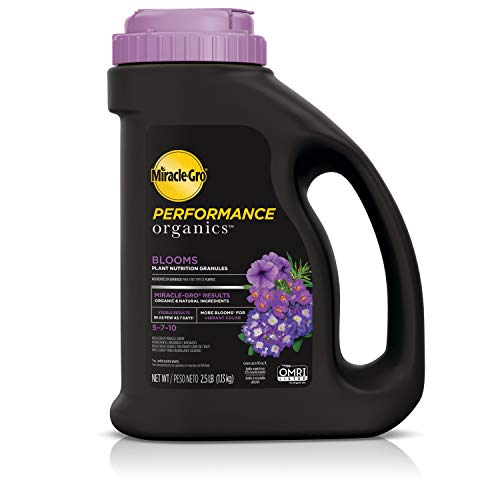
The OMRI-listed granule that proves organic feeding can produce big, colorful blooms.
If you want to go organic without leaving the Miracle-Gro ecosystem, this is the bag to buy. It is OMRI-listed (approved for organic gardening) and uses natural and organic ingredients to promote “more blooms vs unfed potted plants,” according to the brand. The 5-7-10 ratio (5% nitrogen, 7% phosphorus, 10% potassium) is gentler than synthetic boosters like Jack’s Classic, which makes it ideal for containers and flower beds where you do not want to risk burning tender roots.
Effectiveness and bloom growth are the two top-rated aspects, and owners consistently report visible results within a week or two. One grower noted a “ginormous blooms” effect on a butterfly bush. The granules are easy to apply — just sprinkle around the base and water in. Reapply every four to six weeks for best results, and the 2.5-pound bag covers up to 165 square feet, which is enough for a solid-sized flower bed or several large containers.
The biggest difference from a synthetic booster is patience: organic granules take a week or two to show results, while a liquid synthetic might show color in days. But for gardeners who value natural ingredients and long-term soil health, that short wait is a small price.
Gentle organic feeding: Performance Organics delivers reliable flower color through natural ingredients with a simple sprinkle-and-water routine. The four-to-six-week reapply schedule means less frequent feeding than liquid options.
Ideal for: organic gardeners who want the trusted Miracle-Gro brand in an OMRI-listed formula with easy granular application.
Not for you if: you need instant results — organics take a week or two to kick in.
5. Dr. Earth Flower Girl Bud & Bloom Booster 4-10-7

The organic blend trusted by dahlia growers that is also safe for pets and people.
Dr. Earth Flower Girl is a 100% organic and natural handcrafted blend with a 4-10-7 ratio. It is designed for vegetables, flowers, bedding plants, potted plants, trees, shrubs, annuals, and perennials — just about everything in your garden. The formula is Non-GMO Project Verified and Certified Organic, and it contains no GMOs, chicken manure, or sewage sludge (bio-solids). That clean ingredient list is a major draw for home gardeners who have pets and children running through the yard.
Plant benefits are the most-praised aspect, and the reviews contain some impressive numbers: one owner reported dragon fruit blooming went from 3 blooms to 25 blooms after switching to Dr. Earth. Experienced dahlia gardeners specifically recommend this blend, which speaks to its credibility in the serious flower-growing community. The main trade-off is the odor — some owners note it attracts flies, which is common with organic fertilizers that contain natural proteins. Value for money is considered good by most, and a few call it “worth the price.”
This is the pick for gardeners who care deeply about what goes into their soil and want a single bag that can handle their entire landscape. The pet-safe claim is a real selling point, but the smell is a fair warning for container gardeners on a patio.
Conscientious choice: Dr. Earth Flower Girl combines organic certification, Non-GMO verification, and a plant-benefit rating that owners love. The smell and potential for flies is the honest trade-off with natural organic blends.
Best for: pet-owning gardeners who want certified organic, Non-GMO nutrition for everything from flowers to fruit trees.
Pass if: you are sensitive to strong organic fertilizer odors or garden in enclosed patio spaces.
6. FoxFarm Happy Frog Fruit & Flower Fertilizer

The rich granular blend that feeds blooms and roots with mycorrhizal fungi.
FoxFarm has been making premium fertilizers since 1984, and the Happy Frog Fruit & Flower formula brings that experience into a single bag. It is a granular fertilizer designed to support abundant flowering and fruiting, with a rich phosphorus content that drives vibrant blooms. What makes it different from a standard bloom booster is the inclusion of mycorrhizal fungi — beneficial microbes that colonize the root system and help the plant absorb water and nutrients more efficiently.
Quality is the top-rated aspect, and owners consistently praise the results. The granules are simple to apply — no complicated mixing required — and work across containers, in-ground beds, and rows. One buyer mentioned that it revived struggling banana trees after a cold winter, producing healthy leaves with no strong odor. Another noted it made organic gardening “easier and more enjoyable.” The formula is OMRI-listed, so it is approved for organic use.
Opinions on the smell are mixed — some customers note a noticeable odor, while others say there is no strong smell. Value for money also splits opinions; a few find it expensive for what you get, while most feel the quality justifies the cost. For the gardener who wants a single, simple granular that supports both fruit and flowers with the added benefit of root-boosting fungi, this is the bag to reach for.
Rich and versatile: FoxFarm combines phosphorus-heavy nutrition with mycorrhizal fungi for root health, all in an easy-sprinkle granule. The quality ratings are strong, though the odor and price point have mixed owner feedback.
Choose this for: organic gardens that want root-building mycorrhizae alongside bloom support — great for fruit trees, flowers, and tropical plants.
Think twice if: you are price-sensitive or sensitive to organic fertilizer smells.
7. Espoma Triple Phosphate Fertilizer 0-45-0

The pure phosphorus granule that makes stubborn bushes finally bloom.
If you have plants that simply refuse to flower, Espoma Triple Phosphate is the straight-line answer. With a 0-45-0 analysis, this is not a balanced fertilizer — it is pure phosphorus, period. The bag contains 100% triple phosphate with no fillers or sludges, and it is made in the USA by the Espoma Company. Use it on flowers, vegetables, trees, and shrubs to promote root growth and blooming without adding extra nitrogen or potassium.
Effectiveness is the most-praised aspect, and the reviews tell a clear story: “If you have plants that don’t bloom you need this stuff!” One owner described results as “magical,” watching bushes produce dramatic flowers after a simple sprinkle around the drip line. The granules require no mixing — you just shake them onto the soil and water in. It is particularly good for newly planted plants that need a root-development boost. it’s not for you if you want fast results in under a week; organic granules like this take longer than synthetic powders.
The limitation is exactly what you would expect: this is a single-nutrient product. It works best as a supplement to a balanced feeding program, not as a standalone all-purpose fertilizer. An occasional bag arrives with a split seam, but the product itself consistently earns high marks for its targeted phosphorus delivery. For the gardener who knows their soil already has enough nitrogen and just needs to flip the switch to flowering mode, Espoma is the go-to.
Straight phosphorus: Espoma Triple Phosphate delivers a massive phosphorus dose (0-45-0) without any fillers. Perfect for target-feeding stubborn bloomers or correcting phosphorus-deficient soil. The bag is heavy at 6.5 pounds and goes a long way.
Use it when: your plants have plenty of green leaves but refuse to flower — this is the phosphorus-only booster that triggers blooming.
Not a standalone feed: you still need a balanced fertilizer for overall plant health.
8. Great Big Roses and Flowers Liquid Fertilizer Booster
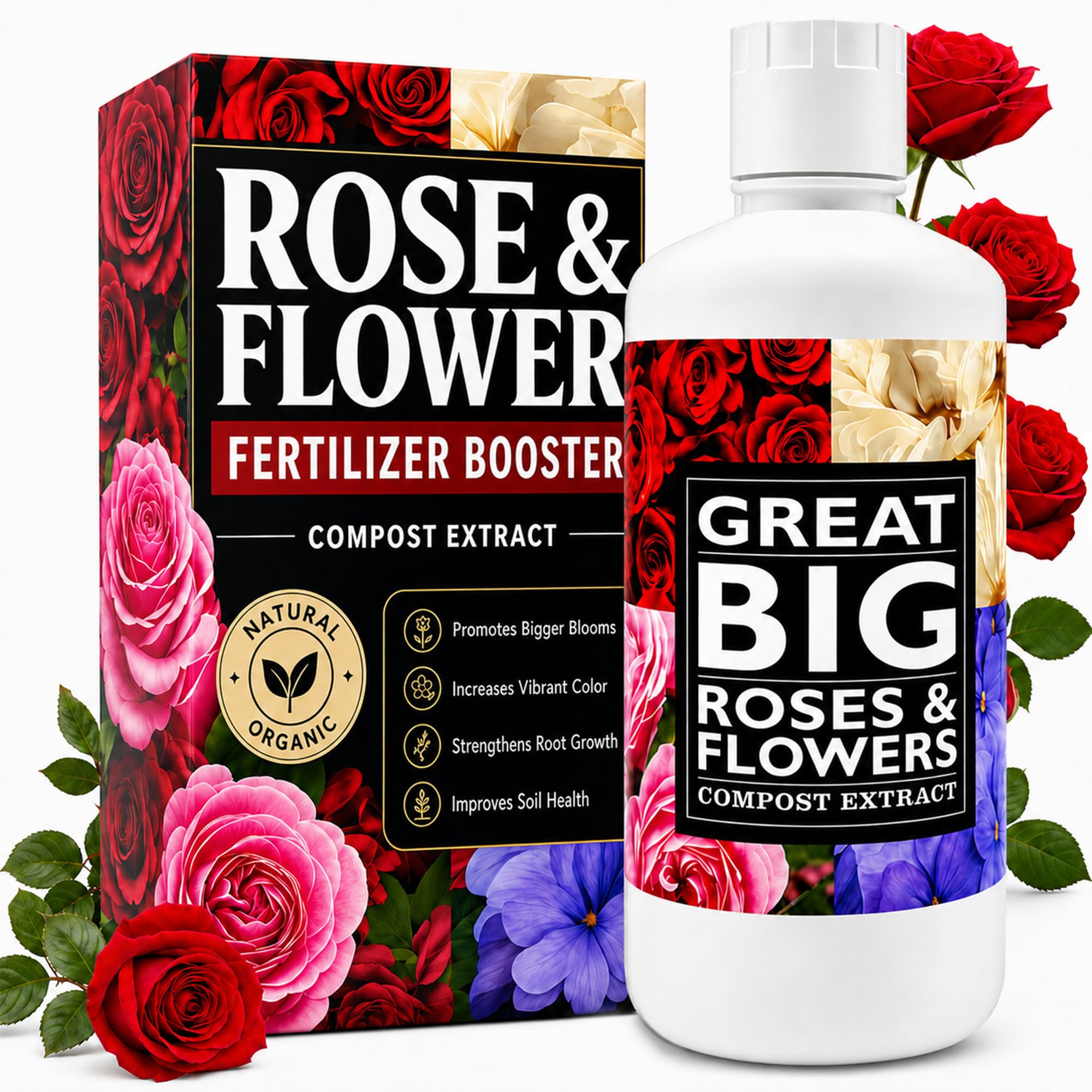
The liquid booster that woke up rose bushes that had not bloomed in years.
Great Big Roses is a specialized liquid fertilizer booster that delivers humic acids, seaweed, and over 70 chelated trace minerals straight to the root zone. It is formulated specifically for rose bushes, but it works across hydrangeas, citrus, fruit trees, hibiscus, succulents, and perennials. The concentrated liquid makes over 30 gallons of feed — you mix 4 ounces with 1 gallon of water and apply around the base of each plant.
The customer reports are striking: rose bushes that had not bloomed “in years” produced big flowers within weeks of the first application. Owners consistently praise the effectiveness — blooms are described as abundant, colors as vibrant, and foliage as deep green. One three-year user in Pennsylvania reported that after a harsh winter, their bushes were “covered in blooms” by early June. The formula also amplifies existing fertilizers, so you can use it alongside your regular organic feeding program.
The honest conversation here is about cost. This is the most expensive option per application on this list, and the value-for-money ratings reflect that — a number of owners find it pricey. But for the dedicated rose gardener or anyone with stubborn ornamental shrubs, the results tend to silence the price complaints. One owner put it plainly: it is “expensive but effective, outperforming other brands.”
Rose rescue: Great Big Roses combines humic acid, seaweed, and 70 trace minerals into a potent liquid that can revive years-dormant bloomers. The cost is high, but owners with “impossible” roses swear by it.
Reach for this if: you grow roses, hydrangeas, or citrus and want a powerful liquid that shows results in weeks — even on plants that have not bloomed in years.
Watch out for: the price per bottle is steep compared to standard bloom boosters.
9. Cz Garden Triple Super Phosphate 0-46-0 Fertilizer
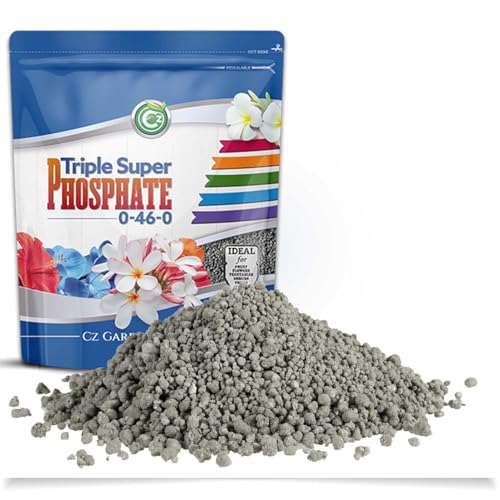
The 10‑pound phosphorus powerhouse for gardeners who like to custom-blend their own nutrients.
Cz Garden Triple Super Phosphate delivers 0-46-0 — the purest phosphorus option on this list — in a heavy-duty, resealable pouch. Made in the USA from high-quality ingredients, this is not a balanced fertilizer; it is a raw nutrient component designed for gardeners who want to mix their own custom N-P-K ratios. The 10-pound bag provides the most phosphorus per dollar of any product here.
Effectiveness and quality are the top-rated aspects. Owners use it for everything from tomatoes and peppers to fruit trees, coffee plants, and orchids. One grower reported that orchids bloom “twice as fast” and the flowers are noticeably beautiful after using this super phosphate. The resealable pouch is a practical touch — you pour what you need and store the rest without worrying about moisture or spills.
This is not a grab-and-go solution for the casual gardener. You need to know your soil composition and how to balance it with nitrogen and potassium sources. Some buyers found the labeling confusing (one noted it mentions “source of potassium” on a product that is purely phosphorus, calling it a misprint). For the serious home grower who custom-tailors nutrients to each crop, this is an excellent phosphorus component. For someone who just wants to sprinkle something on their petunias, it is overkill.
Pure phosphorus component: Cz Garden TSP gives you 0-46-0 in a huge 10-pound pouch at a strong value. Best for experienced gardeners who custom-blend their own complete fertilizers. The resealable packaging keeps it fresh between uses.
Best for: advanced gardeners who want maximum phosphorus per dollar and like to mix their own custom N-P-K ratios for different crops.
Not for: beginners or anyone who wants a ready-to-use balanced bloom booster.
Understanding the Specs
N-P-K Ratio: The Three Numbers
Every fertilizer package shows three numbers separated by dashes — nitrogen (N), phosphorus (P), and potassium (K). For a bloom booster, the middle number (phosphorus) should be the largest. That is the nutrient that drives flower formation, root development, and fruit production. The first number (nitrogen) should be lower to avoid pushing leafy growth at the expense of blooms. A ratio like 10-54-10 tells you the plant gets a massive phosphorus dose with just enough nitrogen and potassium to stay healthy.
Liquid vs. Water-Soluble vs. Granular
The form of the fertilizer affects how fast it works and how often you need to apply it. Liquids (like the Great Big Roses formula) are absorbed immediately through the roots — you see results in days, but you have to reapply every week or two. Water-soluble powders (like Schultz and Jack’s Classic) mix with water and act almost as fast as liquids. Granular fertilizers (like Espoma Triple Phosphate or Dr. Earth) release nutrients slowly over weeks or months as they break down in moist soil. Granular is lower-maintenance but takes longer to show results.
FAQ
What does a bloom booster actually do?
Can I use a bloom booster on vegetables?
How often should I apply a bloom booster?
Is higher phosphorus always better for blooms?
Can I use a bloom booster on indoor plants?
What is the difference between organic and synthetic bloom boosters?
Will a bloom booster burn my plants if I use too much?
Can I mix a bloom booster with my regular fertilizer?
How long does a bloom booster take to work?
Final Thoughts: The Verdict
For most people, the bloom booster fertilizer winner is the Miracle-Gro LiquaFeed because it removes all the guesswork — you attach it to a hose and feed consistently without measuring or mixing. If you want the biggest phosphorus punch for your dollar across flowers and vegetables, grab the Schultz Bloom Plus. And for the organic gardener who wants a single bag for the whole landscape with pet-safe credentials, the Dr. Earth Flower Girl is the one to reach for.
How We Picked
We do not accept paid placement. Every pick is matched to a real buyer and a real use-case; we do not hands-on test units.
Sources & Methodology
Specifications: manufacturer listings and product documentation. Review insights: verified customer reviews, as of July 2026. Pricing: not shown on this page (it changes often); check the current price via the retailer link.
As an Amazon Associate, Lawn Gear Lab earns from qualifying purchases. This does not affect which products we feature.