
Specs are compiled from manufacturer listings and verified buyer reviews and can change over time — please confirm the key details on the product page before buying.
Setting up a sprinkler system for garden beds is the one task that separates hours of hand-watering from a self-sufficient garden. But most kits fail in the same ways—clogged emitters, uneven coverage, or plastic fittings that crack mid-season. The right system delivers water to every plant’s roots without waste or weekend repair sessions. This guide cuts through the noise to the nine setups worth your time.
I’m Rikta — the founder and writer behind Lawn Gear Lab. This guide is built by comparing the manufacturers’ published specifications and the patterns across verified customer reviews, so you get each pick’s real strengths and trade-offs instead of marketing spin.
Whether you are outfitting a single raised bed or a full vegetable patch, the goal is a sprinkler system for garden beds that waters evenly, handles daily pressure, and survives the seasons without constant tinkering.
Our Picks at a Glance

How To Choose The Best Sprinkler System For Garden Beds
The most common mistake is picking a system built for a lawn and trying to force it into a garden bed. You want targeted root watering, not a giant spray that wets foliage and invites disease.
Tubing Diameter
Skinnier 1/4-inch tubing is fine for short runs or a few pots. For anything longer, 5/16-inch or 1/2-inch mainline keeps pressure strong at the far end. A wider tube means the last plant in the row gets as much water as the first—no more dry spots.
Emitter Type
You have three basic choices: drip emitters that release water one drop at a time, sprayers that mist a wider area, and soaker hoses that sweat along their entire length. Drip is best for deep root watering on tomatoes or peppers. Sprayers work for densely planted beds. Soaker hoses are the simplest—just snake and turn on.
Connection Method
Old-school barbed fittings require heating the tubing or using a lot of elbow grease. Modern quick-connect fittings push in and lock. They are easier to install and far less prone to leaking. If you are not a fan of wrestling with tiny parts, quick-connect is the way to go.
Quick Comparison
| Model | Best For | Hose Length | Emitter Type | Connection Type | Amazon |
|---|---|---|---|---|---|
| Thiswing 200FT Kit★ Best Overall | Adjustable coverage with brass nozzles | 200 ft | 360° adjustable spray | Quick-connect | Amazon |
| Garden Grid 3×6Also Great | Pre-assembled raised bed watering | 66 in | 16 streams/sq ft | Hose connect | Amazon |
| Rain Bird LNDDRIPKITBest Starter Kit | Complete starter kit with multiple emitter types | 50 ft | Drip + micro-bubbler + micro-spray | Barbed | Amazon |
| Maotong 240FT Kit | Large area coverage with two sprayer types | 240 ft | Drip + vortex spray | Quick-connect | Amazon |
| Bonviee 230FT Kit | Quick-setup with push-to-connect fittings | 230 ft | Adjustable stake sprayers | Push-to-connect | Amazon |
| MAMIZO Soaker Hose 100ft | Durable rubber soaker with brass connectors | 100 ft | Seep/soak | Threaded (brass) | Amazon |
| Secbulk Flat Soaker 100ft | Eco-friendly flat soaker for tight spaces | 100 ft | Seep/soak (fabric) | Threaded | Amazon |
| Holldoor Soaker Hose 50ft | Budget-friendly soaker for small beds | 50 ft | Seep/soak | Threaded | Amazon |
| Abakuku 230FT Kit | Entry-level kit with multiple emitter options | 230 ft | Drip + spray + vortex | Quick-connect | Amazon |
In‑Depth Reviews
1. Thiswing 360° Adjustable Drip Irrigation System – 200 FT
Our pick — over 4.5★ from 750+ verified ratings; the strongest balance of quality and price.
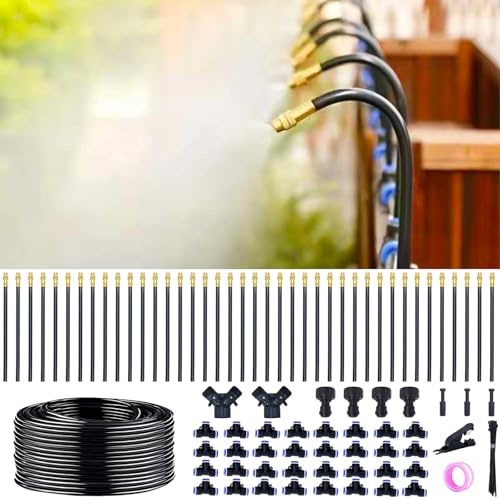
Solid copper nozzles you can bend into any 360° angle.
Most kits use plastic nozzles that crack if you look at them wrong. This one uses solid copper instead, and each nozzle has a built-in metal tube you can bend and fix at any angle. You point the spray exactly where you need it—under a tomato leaf, around a basil plant, or straight up for a mist effect. The 5/16-inch tubing has a larger inner diameter than typical 1/4-inch lines, meaning stronger flow reaches the end of a 200-foot run.
It comes with 40 adjustable nozzles, 40 tees, two faucet connectors, and even a pipe cutter and cable ties. Buyers report it is “ridiculously easy to install” and that the quick-connect fittings rarely leak. A common setup mentioned: a 50ft x 3ft bed with misters spaced 2ft apart provides adequate watering. The only frequent complaint is the hose bib connection—some find it too shallow and report it can leak. The kit’s 200 feet of tubing offers you 15% more length than the Abakuku 230FT’s primary 1/4-inch line, but that extra diameter helps maintain pressure better across that distance.
Flexible coverage: dense, adjustable coverage from copper nozzles that do not degrade in the sun. For a mid-sized vegetable garden or flower bed, this hits a balance of coverage and customization — you can tweak each nozzle to water a 4-foot by 4-foot area or a narrower 2-foot row, so leafy greens and tomatoes each get the right amount without waste.
custom layouts: gardeners who want to dial in spray direction per plant without buying extra nozzles.
quick setup: you need a true soaker (no spray) for super delicate seedlings—this system mists and sprays, it does not drip.
2. Garden Grid Watering System, 3×6
The two-minute setup that waters every square foot, not just a narrow line.
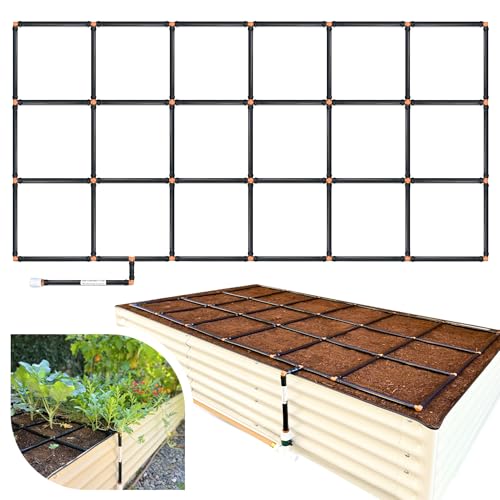
If you have a standard raised bed, this is the single best time-saver in the category. It arrives in pre-assembled sections and connects straight to a garden hose—no cutting tubing, no installing emitters. Once connected, it delivers 16 gentle streams of water per square right at soil level. A 50-ft soaker hose cannot do that; it only wets a thin path. This grid surrounds every plant in your 3×6 bed evenly.
Built from UV-resistant materials in the USA, original units from 2013 are reported to still be in use. That outlasts most soaker hoses by several seasons. The built-in fine mesh filter screen keeps debris out, so you are not unclogging emitters every month. It also works with a hose timer for automatic watering. The recurring feedback across owners is that the grid layout simplifies plant spacing and water reaches the base of plants perfectly. The honest caveat: at, it is the most expensive option here, and some owners mention the price feels steep compared to a basic kit.
Grid simplicity
- Sets up in about two minutes with zero tools
- Waters every square foot of the bed, not just the edges
- UV-resistant materials built to last seasons
Limited coverage
- Highest upfront cost of any system here
- Fits specific bed sizes—slight gap in non-standard corners
raised beds: you have a standard raised bed and want the fastest, most simple to use setup money can buy. The grid design also doubles as a plant spacing guide for square foot gardening (a method that divides beds into 1-foot squares for dense planting).
large gardens: you need to water irregular-shaped beds or a large in-ground garden where a flexible tubing kit will snake easier.
3. Rain Bird LNDDRIPKIT Drip Irrigation Kit
A 108-piece kit that teaches you drip irrigation in one afternoon.
Rain Bird is a trusted name in irrigation, and this kit is designed exactly for beginners. It includes drip emitters, micro-bubblers, and micro-sprays, letting you experiment with three different watering styles to see what your garden prefers. The pressure-compensating technology ensures every emitter delivers the same flow rate—so a plant at the far end of a 50-foot hose gets identical water to the one nearest the faucet.
Owners consistently highlight how “clear the instructions” are and that you can set it up in a few hours. The clog-resistant emitters mean zero maintenance once installed. It is a smaller kit intended for average landscape areas, with a 50-inch main hose (note: 50 inches, not 50 feet—it is meant for a compact garden or a few large pots). The main trade-off is the barbed connection method, which takes more effort than quick-connect systems. A few owners note that some emitters arrived non-functional, though most consider it a good deal even with a couple of spares.
small patios: someone new to drip irrigation who wants a low-risk way to learn the system. It is also a strong pick for watering a collection of large pots or a small flower bed.
big lawns: large gardens—the 50-inch mainline is too short to cover multiple raised beds without buying extra tubing.
4. Maotong 240FT Drip Irrigation System Kit

A 270-piece kit that covered four raised beds with leftovers to spare.
This kit packs serious length: 40 feet of 1/2-inch mainline plus 200 feet of 1/4-inch distribution tubing. That is enough to irrigate four separate beds—one owner mentions covering beds sized 22×2, 8×4, 6×3, and 8×4 with materials left over. You get 15 drip emitters and 15 vortex sprayers, allowing you to customize the flow from a gentle drip to a wider spray pattern.
The quick-connect design means no heating or softening tubing—just push and plug. Owners love the “excellent value” compared to buying parts individually, and report zero leakage even at full water pressure. Upgraded main tubing withstands higher pressure than many competitors. The kit claims up to 80% water savings, and consistent feedback confirms it does not leak and is easy to adjust. The only real downside is that the vortex sprayers are not adjustable for direction, only flow type.
long rows: a medium-to-large vegetable garden with multiple separate beds. The sheer number of parts reduces stress about running short.
complex patterns: the sprayers are fixed in direction—if you need to aim around obstacles, you will need to relocate the tube.
5. Bonviee 230FT Drip Irrigation System

Push-to-connect fittings that click together in seconds, no tools needed.
The Bonviee kit is built around frustration-free assembly. Its quick-connect fittings use a push-and-lock mechanism that creates a tight seal without tools. You get 33 feet of 5/16-inch mainline and 197 feet of 1/4-inch tubing—a combined 230 feet. There are three types of adjustable stake sprayers (mini sprinkler heads that can cover up to a 6.5-foot circle), so you can switch between a gentle drip and a full spray depending on the plant.
One owner reports it “covered four large garden beds” with good pressure. The system is also compatible with a hose timer for automatic watering. However, the feedback is more mixed than other picks. Some owners mention that only the nearest sprinklers worked while the farthest barely sprayed, and a few note that the main pipe can burst on hot days, especially at higher water pressure. The “drip” term is also a point of contention—these are sprayers, not true drip emitters, which matters for vegetables that prefer root-level watering.
Complete kit: a fast-installing kit ideal for in-ground gardens with good water pressure, but less reliable for precise drip watering of individual pots.
first timers: you want a system up and running in under an hour and are okay with spray coverage over drip precision.
cold climates: your water pressure is low or you specifically need a true drip system for vegetables like tomatoes and peppers.
6. MAMIZO Soaker Hose 100 ft
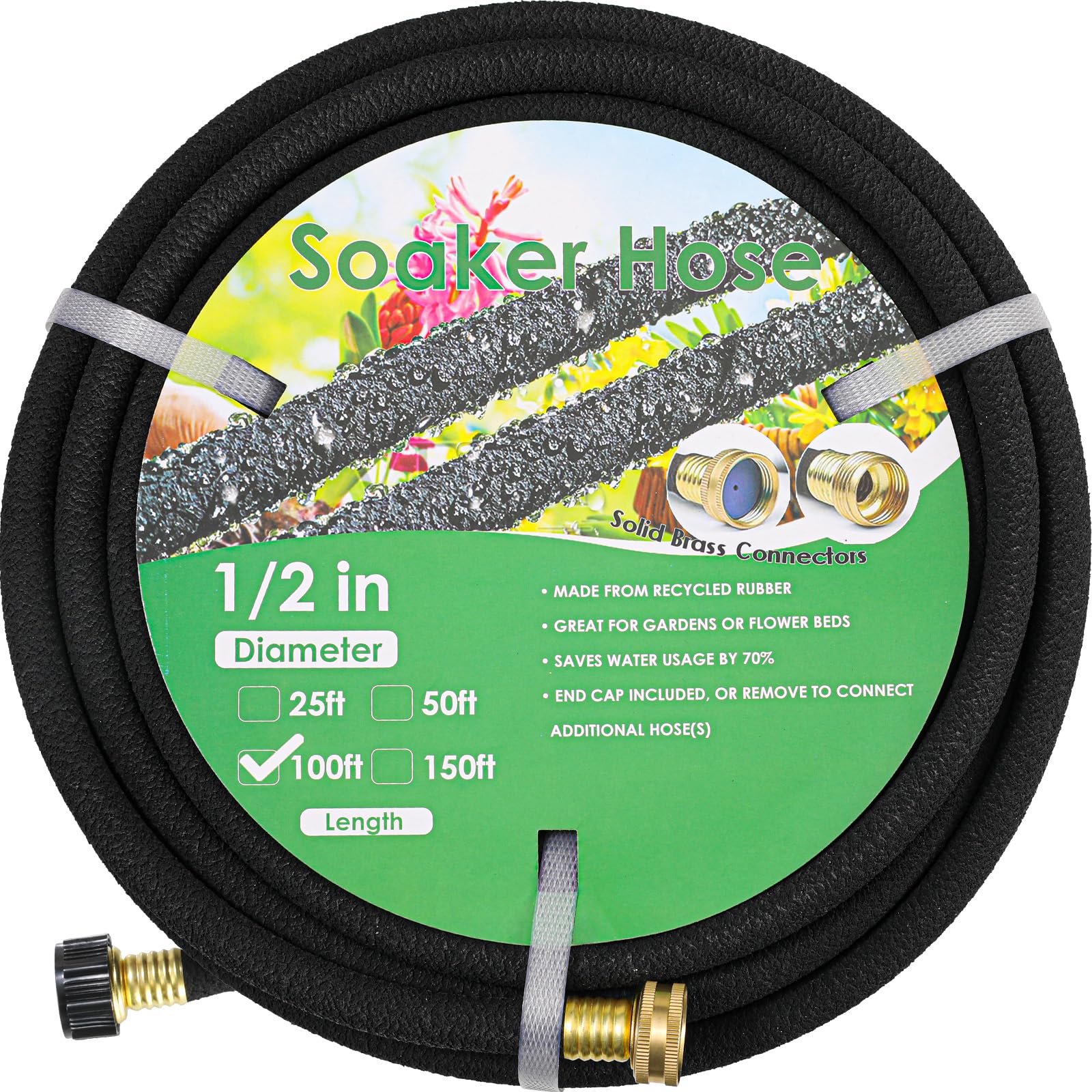
Recycled rubber with heavy-duty brass connectors that do not crack.
If you prefer soaker hoses over emitter systems, this is the most durable option. It is made from high-quality recycled rubber with a solid 3/4-inch threaded brass connector on each end. That brass connector is a big upgrade over the plastic fittings that snap on cheaper soaker hoses. The micro-hole design prevents negative pressure when you shut the water off, reducing the chance of clogs. At 50 PSI, it delivers about 2 to 2.65 gallons per minute (8-10 liters per minute) across its 100-foot length.
Owners say it saves “so much time and money” and that plants thrive with a slow, steady watering for about an hour every other day. The water distribution gets consistent positive mentions. However, durability receives mixed feedback, with several owners reporting the hose breaks down within two months of summer use. The blue gasket inside the connector can also restrict flow too much; some owners remove it entirely. The hose is very long at 100 feet, so water seepage at the far end will be reduced if your water pressure is low—you may need to cut it to a shorter length.
flower beds: you value the brass connector and rubber build over plastic alternatives, and need a 100-foot soaker for a large in-ground bed.
thirsty veggies: you have low water pressure (the far end may not seep) or you need a soaker guaranteed to last multiple seasons without replacing.
7. Secbulk Flat Soaker Hose 100 ft

A flat fabric soaker that snakes under existing plants without kinking.
The flat design is the key feature here—it lies flat against the soil, making it much easier to weave around mature plants than a round hose. It is made from 100% environmentally-friendly recycled vinyl and passes the CA65 test, meaning the water is safe for vegetables and herbs. The double-layer design uses PVC covered with extra-strength fabric to protect against sun damage, so it lasts longer than a basic rubber weeping hose.
You get 100 feet total (two 50-foot lengths that link together), plus rust-resistant end caps and stakes for securing the hose. Owners say it works well for raised beds and coiled around tree root balls. The hose needs 40-90 PSI for best results. The main complaint: some units leak excessively at one end, preventing the rest of the hose from watering. It is a “slow soaker” according to feedback, so you need to leave it on long enough to be effective. The fabric cover is also reported to be clog-resistant, which is a plus for beds with heavy mulch.
narrow strips: gardeners who want an eco-friendly soaker that fits into tight spaces between established plants.
uneven ground: you need a high-output soaker—this is a slow seep, not a fast drip, so it requires longer watering sessions.
8. Holldoor Soaker Hose 50 ft

The entry-level soaker that works, as long as you watch the pressure.
For small garden beds on a tight budget, this does the job. It is a 50-foot soaker hose made from polyurethane (PU) that sits on the ground and seeps water along its entire length. The key spec: it needs about 10 PSI to drip slowly. If your house pressure is higher, it turns into a sprinkle rather than a soaker. You can use it on the soil surface or bury it under up to 3 inches of mulch to keep the garden looking clean.
Owners are generally positive about the “generous water dribble” and say it beats big box store products. The 10-foot length sections allow you to size it exactly to your bed. However, durability is the main concern—multiple customers note the hose breaking after about 35 days of use, and the plastic connectors can snap if overtightened. The material is thinner than premium soakers like the MAMIZO, and one reviewer noted they had to buy separate metal connectors. It works best on plants that like moist soil, like hostas, but is not built for heavy-duty, season-long use.
small pots: a small, low-stakes garden where you can replace the hose seasonally without a big hit to the wallet.
large areas: year-round heavy use or gardeners who want a “set and forget” solution. The plastic connectors and thin material are the weak points.
9. Abakuku Drip Irrigation System 230FT Quick-Connect Kit
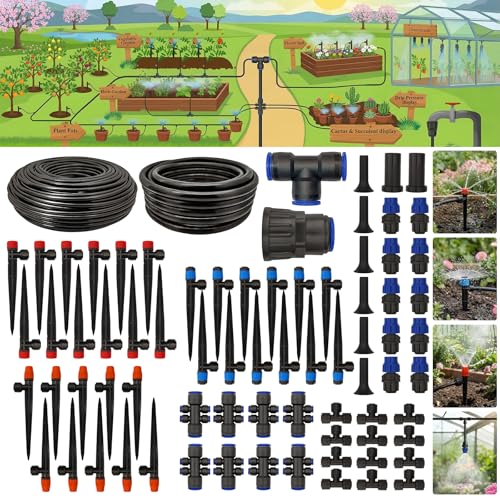
A 239-piece kit that proves you do not need big money to get started.
For under, this is the most feature-packed budget kit around. It includes 197 feet of 1/4-inch irrigation pipe, 33 feet of 1/2-inch pipe, and four different emitter types: drip emitters, vortex emitters, blue mist nozzles, and quick-connect tees. That gives you drip, spray, and mist options all in one box. The quick-connect design means no heating or softening—just plug the 1/4-inch pipe into the fittings.
Owners say it is a “practical, well-designed kit” with fast installation and even water distribution. One buyer sums it up: “Super easy top put together and install. Worked perfectly the first time which never happens for me and home improvement projects.” The kit is ideal for small gardens and raised boxes. However, the 1/2-inch hose uses non-standard fittings that may not integrate with existing hosing, and some reviewers point out the sprinkler heads can pop off at high pressure. The durability score on reviews is the lowest among all nine picks, with several reports of the plastic fittings failing.
temporary setups: you are on a tight budget and want the most emitters for your dollar. It is also a great way to learn what type of watering (drip, mist, or spray) you prefer before investing in a premium system.
permanent installs: you need a system that lasts longer than a single growing season without replacing parts. The plastic fittings are the first thing to fail.
Understanding the Specs
Tubing Diameter (1/4″ vs 5/16″ vs 1/2″)
This is the single biggest factor in water pressure consistency. A 1/4-inch tube works for short runs of a few feet. For anything longer than 20 feet, step up to 5/16-inch or 1/2-inch mainline. A wider tube reduces friction loss, meaning the last emitter in the line gets nearly the same flow as the first—no more hand-watering the plants at the far end.
Quick-Connect vs Barbed Fittings
Barbed fittings require you to heat the tubing in hot water or use brute force to push it on. Quick-connect fittings use a push-and-lock system that clicks together. If you are running a system across multiple beds, quick-connect saves hours of assembly time and creates a more reliable seal. The majority of modern kits now ship with quick-connect for a reason.
FAQ
What is the difference between a drip irrigation system and a soaker hose?
How long should I run a drip irrigation system for garden beds?
Will a drip irrigation system work with low water pressure?
Can I connect a drip irrigation kit to a hose timer?
How do I prevent my drip emitters from clogging?
Is a Garden Grid worth the higher price over a traditional drip kit?
Can I use a drip irrigation system in a greenhouse?
How do I winterize my garden bed sprinkler system?
Final Thoughts: The Verdict
If you want one dependable pick, the sprinkler system for garden beds winner is the Garden Grid 3×6 because it removes every ounce of hassle—no assembly, no emitter decisions, just even water across the entire bed. If you want a flexible tubing system with adjustable copper nozzles that you can bend to any angle, grab the Thiswing 200FT Kit. And for a budget-friendly entry point that teaches you the ropes, the Rain Bird LNDDRIPKIT is the one to reach for.
How We Picked
We do not accept paid placement. Every pick is matched to a real buyer and a real use-case; we do not hands-on test units.
Sources & Methodology
Specifications: manufacturer listings and product documentation. Review insights: verified customer reviews, as of July 2026. Pricing: not shown on this page (it changes often); check the current price via the retailer link.
As an Amazon Associate, Lawn Gear Lab earns from qualifying purchases. This does not affect which products we feature.