
Specs are compiled from manufacturer listings and verified buyer reviews and can change over time — please confirm the key details on the product page before buying.
Picking the wrong winter cover can turn your greenhouse into a frozen failure. A flimsy sheet splits under snow, leaks warmth overnight, and kills your seedlings. The real difference depends on thickness, UV resistance, and heat-trapping ability when temperatures drop. This guide walks you through the specs that separate a cover that survives February from one that barely makes it to December.
I’m Rikta — the writer behind Lawn Gear Lab. This guide is built from manufacturer specs and patterns in verified customer reviews, so you see each pick’s real strengths and trade-offs without marketing spin.
To choose the right greenhouse cover for winter, you need to understand mil thickness, UV inhibitors, and grommet placement — and know which matters most when the forecast says single digits.
Our Picks at a Glance
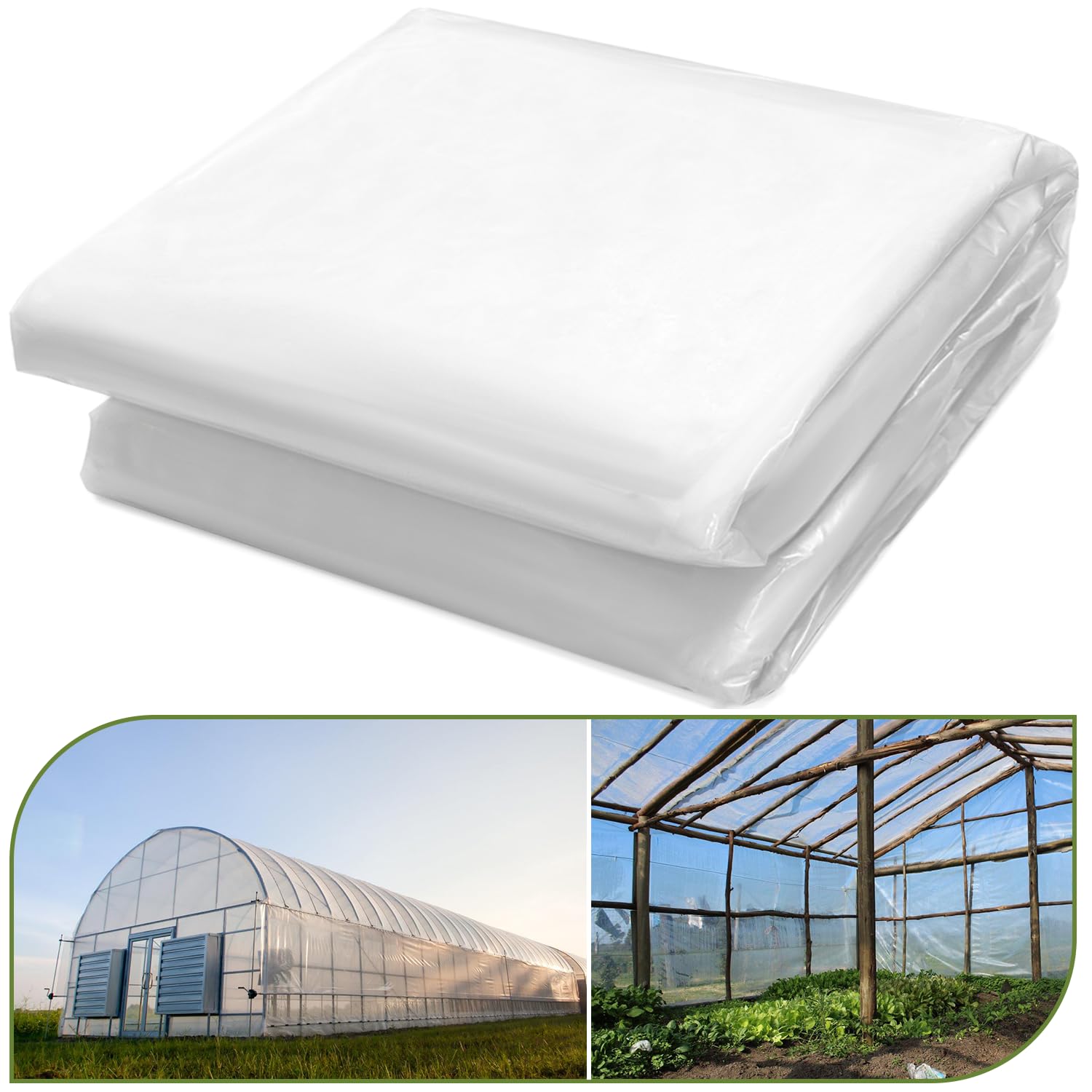
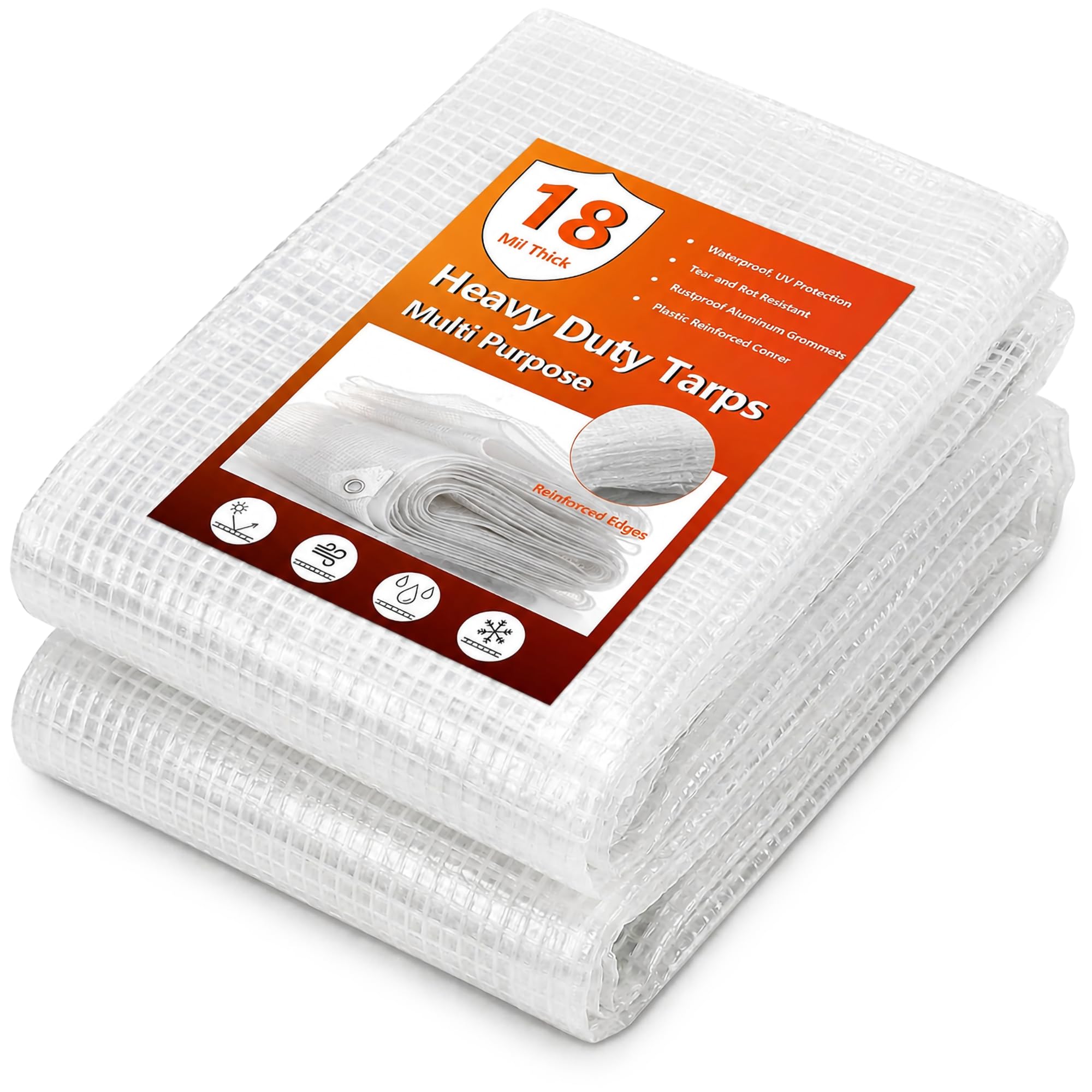
How To Choose The Best Greenhouse Cover For Winter
A winter greenhouse cover has three jobs: block the wind, keep heat inside, and let enough sunlight through for your plants to grow. If any one of those fails, your plants suffer. The trick is knowing which spec does which job.
Mil Thickness Is Not Optional
A 6 mil cover works for summer or light frost at best. For real winter — snow, ice, and sustained sub-freezing winds — you need 14 mil or higher. The covers in this guide range from 6 mil up to 18 mil. The difference is the gap between a cover that tears in a gust and one that still looks new after a blizzard.
UV Stabilizers Prevent Brittle Plastic
Sunlight breaks down polyethylene over time. Without UV inhibitors, your cover gets stiff, then cracks, and the first cold snap finishes it off. A cover labeled “UV resistant” has chemical additives mixed into the plastic that slow that breakdown, giving you multiple seasons instead of one.
Grommets vs. Wiggle-Wire
How you attach the cover matters as much as the cover itself. Reinforced grommets every 18 to 24 inches let you tie the sheet down with rope or bungee cords. Some greenhouse frames use a “wiggle-wire” channel system that works best with plain film you stretch tight. Know your frame before you buy.
Quick Comparison
| Model | Best For | Thickness | Dimensions | Grommets | Amazon |
|---|---|---|---|---|---|
| Chicarry 6 mil★ Best Overall | Budget-Friendly Coverage | 6 Mil | 24 x 25 ft | No | Amazon |
| TENTOPMIC 18 MilAlso Great | Maximum Winter Durability | 18 Mil | 14 x 18 ft | Yes, every 19 in | Amazon |
| ZSLTLDU 18 Mil | High-Wind Zones | 18 Mil | 10 x 18 ft | Yes, rust-resistant | Amazon |
| Blubbel 14 Mil | Long-Term Multi-Season Use | 14 Mil | 7.5 x 29.5 ft | Yes, every 18-36 in | Amazon |
| Ansgery 16 Mil | Value + Performance Balance | 16 Mil | 16 x 20 ft | Yes, every 18 in | Amazon |
| Farm Plastic Supply 8 Mil | Professional Film for Fixed Frames | 8 Mil | 16 x 25 ft | No | Amazon |
| THOOUM 16 Mil | Large-Scale Structures | 16 Mil | 20 x 30 ft | Yes, every 23 in | Amazon |
In‑Depth Reviews
1. Chicarry 6 Mil Greenhouse Plastic Sheeting
Our pick — over 4.5★ from 500+ verified ratings; the strongest balance of quality and price.
A thin, budget-friendly film that punches above its weight for mild winters — not for deep snow, but smart for light frost.
At 6 mil, this Chicarry sheet is the thinnest cover in the guide. That means it is not the choice for mountain snow loads. But within its weight class, it delivers surprising performance. Made from a five-layer co-extruded polyethylene, it has UV resistance and a special anti-drip coating — a hydrophobic layer that prevents water droplets from forming. That matters because droplets on the film can act like tiny magnifying glasses and burn leaves when sunlight hits them.
Customers note it has held up through fall and winter, including surviving a few inches of snow and ice for several days. The material is described as thick and stretchy when installed on a warm day. Owners note it blocks wind effectively and creates a noticeably warmer environment inside, though not in the leagues of the 16 mil Ansgery or 18 mil TENTOPMIC. The biggest difference from those heavier options is simple: this cover will not take the same abuse. A single heavy snow load or a tree branch could puncture it.
The anti-drip coating gives the film a slightly hazy appearance — that is the trade-off for burn protection. For a mild-climate winter cover or as a second insulating layer, this is a smart, proven choice.
Why owners like it
- Five-layer co-extrusion gives it better tear resistance than standard 6 mil film
- Anti-drip coating prevents water droplets that can burn plants
- Stretchy and flexible when installed on a warm day
- Blocked wind in negative temps and created a noticeably warmer environment
Where it falls short
- 6 mil is too thin for heavy snow loads or high-winter abuse
- Anti-drip haze means the film is not perfectly transparent
Best used as: a light-winter cover for mild climates, a second layer over an existing structure, or a budget-friendly option for a small greenhouse.
Not for: deep-snow regions or exposed sites where the cover takes direct abuse from wind and debris.
2. TENTOPMIC 18 Mil Greenhouse Plastic Sheeting
This is the thickest cover on the list, built to handle snow loads and freezing winds that destroy thinner films.
At 18 mil — three times thicker than a basic 6 mil sheet — the TENTOPMIC cover gives you maximum winter protection. It uses a double-layer woven polyethylene construction that resists punctures and tears far better than a standard film. Natural sunlight passes through evenly, so your plants keep growing even with the cover on full-time.
Reinforced edges with rope hems and rust-proof grommets every 19 inches make installation secure. Those grommets are the difference between a cover that stays put in January wind and one that flaps loose and rips. Buyers report that when the ends are closed, it traps warmth and protects plants even when temps drop to around 40°F.
The trade-off: the manufacturer warns that grommets can pull out if improperly fastened in extreme winds. That is not a defect — it is physics. Use proper tie-downs with broad washers or batten strips, and this cover performs. If you need verified winter-grade protection right out of the package, this is the strongest total package, notably more durable than the 16 mil Ansgery or THOOUM options.
What wins people over
- 18 mil thickness is the highest on this list — serious snow and wind protection
- Embedded mesh strands add structural strength that plain film lacks
- Grommets every 19 inches with double-reinforced corners for secure fastening
- High light transmission keeps plants active under cover
The honest caveat
- Improper fastening in extreme wind risks grommet pull-out
- Clear sections between mesh can feel thinner than expected in spots
Reach for this if: you face real winter — snow loads, sustained wind, and freezing temps — and want a cover that owners have verified handles it.
Look elsewhere if: your frame uses a wiggle-wire channel that expects a smooth, unfettered polyethylene film instead of a woven tarp.
3. THOOUM 16 Mil Clear Greenhouse Plastic Covering
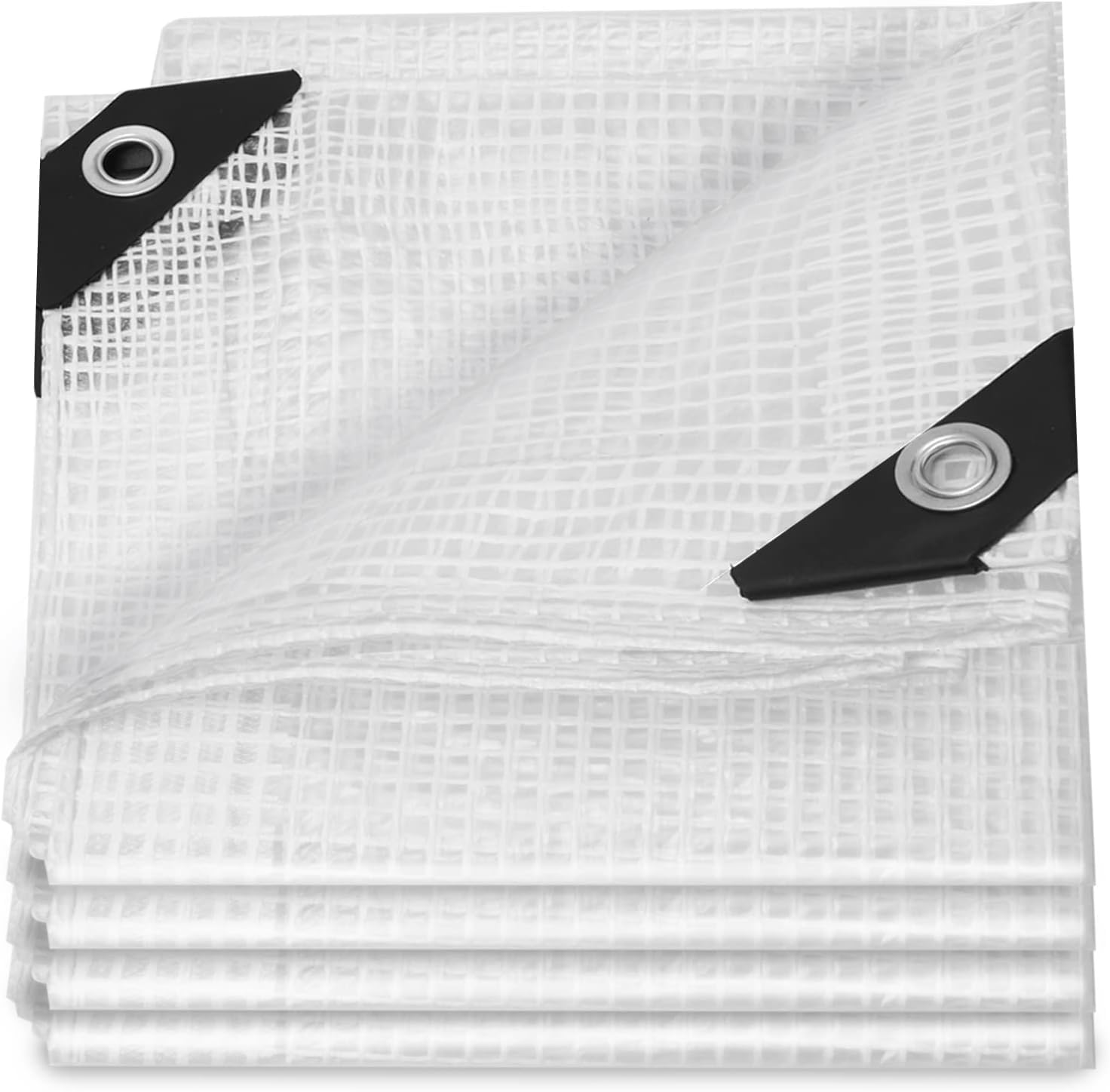
A massive 20 x 30 ft sheet with PVC construction built for large-scale winter protection.
This THOOUM cover is the biggest single piece on the list at 20 by 30 feet, making it the right choice for larger greenhouse structures, cattle-arch frames, or long hoop houses. It is 16 mil thick — solidly in winter-grade territory — and made from polyvinyl chloride (PVC) rather than standard polyethylene. That material gives it a heavier, slightly more rigid feel, with reinforced nylon strands running through the plastic for extra tear resistance.
Grommets spaced every 23 inches provide plenty of anchor points across a long span. The cover is waterproof, and owners say it does a solid job insulating a porch or greenhouse through freezing months. Reviewers describe the overall quality as excellent, with a well-sewn hem and thick material that feels built to last multiple winters, unlike the 6 mil Chicarry which is best for lighter use.
One thing to note: this is not a solid single-ply film. The reinforced strings inside are visible and give the plastic a subtle texture. That is a strength for durability, but matters if you prefer a perfectly smooth surface for light transmission. A few owners mention sizing can be tight if your frame is on the larger end — measure generously.
Best for big builds: If your greenhouse runs longer than 20 feet, this is the only single-sheet option here that covers that span without needing a seam. The PVC-with-nylon construction feels genuinely heavy-duty. Just measure twice and leave a few extra inches on each side.
Who this fits: owners of larger walk-in greenhouses, cattle-panel arches, or anyone who wants a thick PVC cover with integrated reinforcement.
Who should pass: anyone with a small 6×8 frame who would waste half the sheet — the 14×18 TENTOPMIC or 16×20 Ansgery will fit much better.
4. Ansgery 16 Mil Clear Plastic Tarps
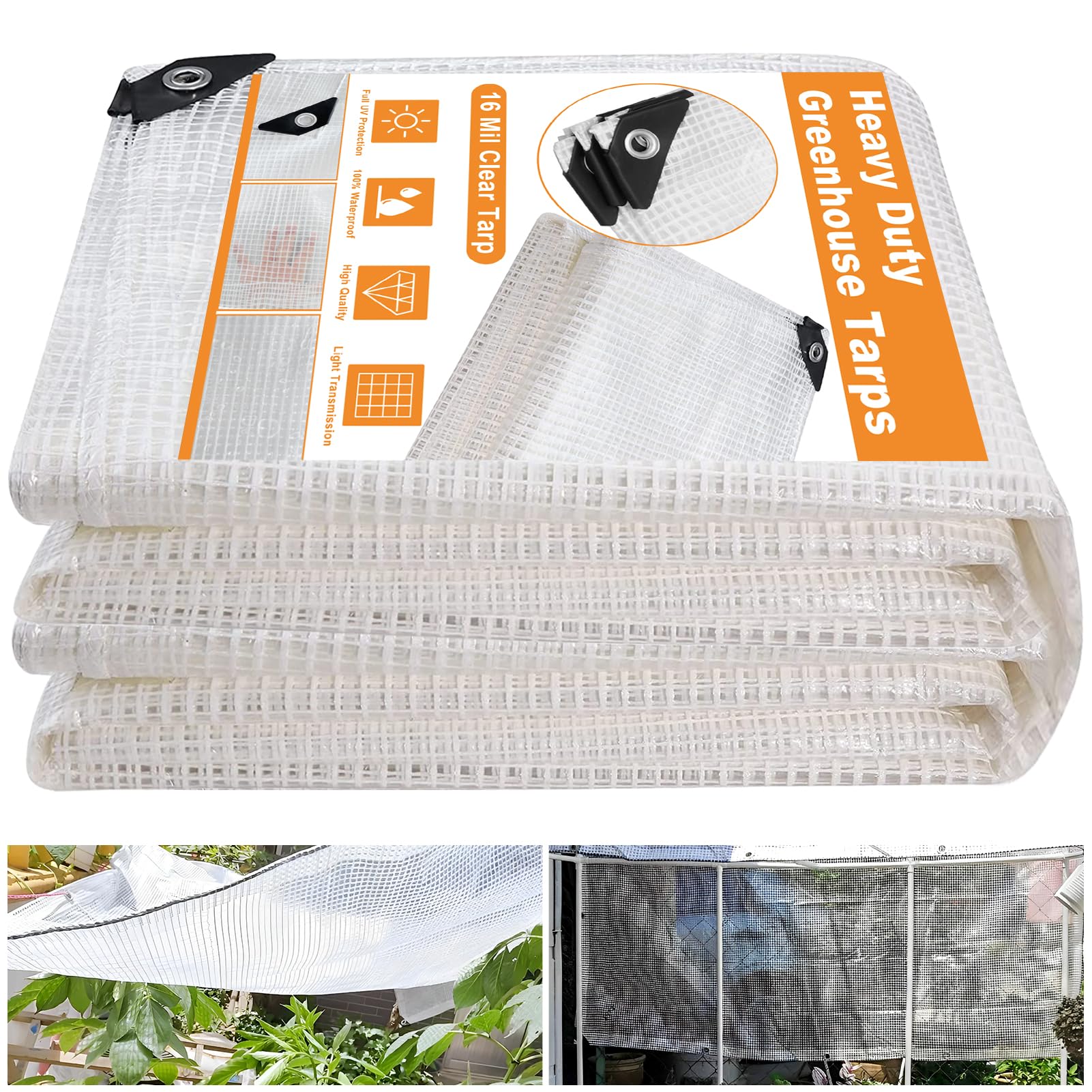
16 mil woven poly with grommets every 18 inches — denser spacing than most tarps, which owners say delivers proven storm protection.
The Ansgery 16 mil tarp hits a balance between thickness and manageability. It is made from a woven and double-coated three-layer polyethylene that is UV resistant, waterproof, and clear enough to pass natural daylight through for even temperature distribution. At 16 by 20 feet, it covers a medium greenhouse or long chicken run without needing a second panel.
The grommet pattern stands out — placed every 18 inches, which is denser than many competing tarps. That means more tie-down points, less flapping, and less stress on any single grommet. Owners mention this cover survives extreme storms. One confirmed it made it through an 85 mph wind event. Another used it to cover a chicken tractor that sits outside year-round and says after a full year there is no dry rot or tearing. With 70 buyers highlighting durability as the top quality, this cover has real field credibility.
The clear woven material lets light through well, though the weave texture means it is not perfectly transparent like a smooth film. That is a fair trade for extra tear strength, though the 18 mil TENTOPMIC offers even more thickness for about the same footprint. Just use proper tie-downs in heavy wind, not a single bungee per corner.
The standout stat: durability is the top praise from owners, with 70 people highlighting it as the defining quality. When a tarp survives an 85 mph storm and still looks good a year later, that is material engineering at work.
Pick this if: you need a mid-sized clear woven tarp that has been proven in severe weather and dense grommet placement gives you confidence in the install.
skip it if: you need a perfectly smooth film surface for a wiggle-wire frame — this weave has a visible texture.
5. Farm Plastic Supply 8 Mil Clear Greenhouse Plastic Sheeting

This smooth polyethylene film is engineered for wiggle-wire frames with UV stabilizers designed for four years of service.
This Farm Plastic Supply film is a different product from the woven tarps above. It is a smooth, roll-out polyethylene sheeting designed specifically for greenhouse frames that use wiggle-wire channels or batten strips to lock the film tight. At 8 mil, it is thicker than a standard 6 mil sheet but still flexible enough to pull drum-tight over a hoop house. The 16 by 25 foot size covers a substantial area, and the UV stabilizers are formulated for four years of outdoor life.
Owners have put this film through serious conditions — hail, storms, extreme heat, and even a small tornado — and it held up. One used it as an indoor pool cover to reduce humidity, and another left it on a pergola garden through winter and called it “very strong” and “thick.” The durability has a mixed edge, though. Some owners experienced tearing, and the film can become cloudy over time as the UV inhibitors do their job. That clouding reduces light transmission but does not affect structural integrity, unlike the 18 mil TENTOPMIC which has no such clouding reports.
For permanent greenhouse structures rather than temporary tarps, this is the right tool. It just requires a compatible fastening system — wiggle-wire or lath strips — sold separately.
The right use: this is the pick for a dedicated greenhouse with a fixed frame and channel system. If you are building a hoop house and want a roll of film you can tension evenly, this is your product. It is not a tarp — no grommets or ropes.
Best for: permanent or semi-permanent greenhouse structures that use wiggle-wire or batten-channel fastening systems.
Not ideal for: temporary setups, cages, or frames that require grommets for bungee-cord attachment.
6. Blubbel 14 Mil Clear Heavy Duty Poly Tarp
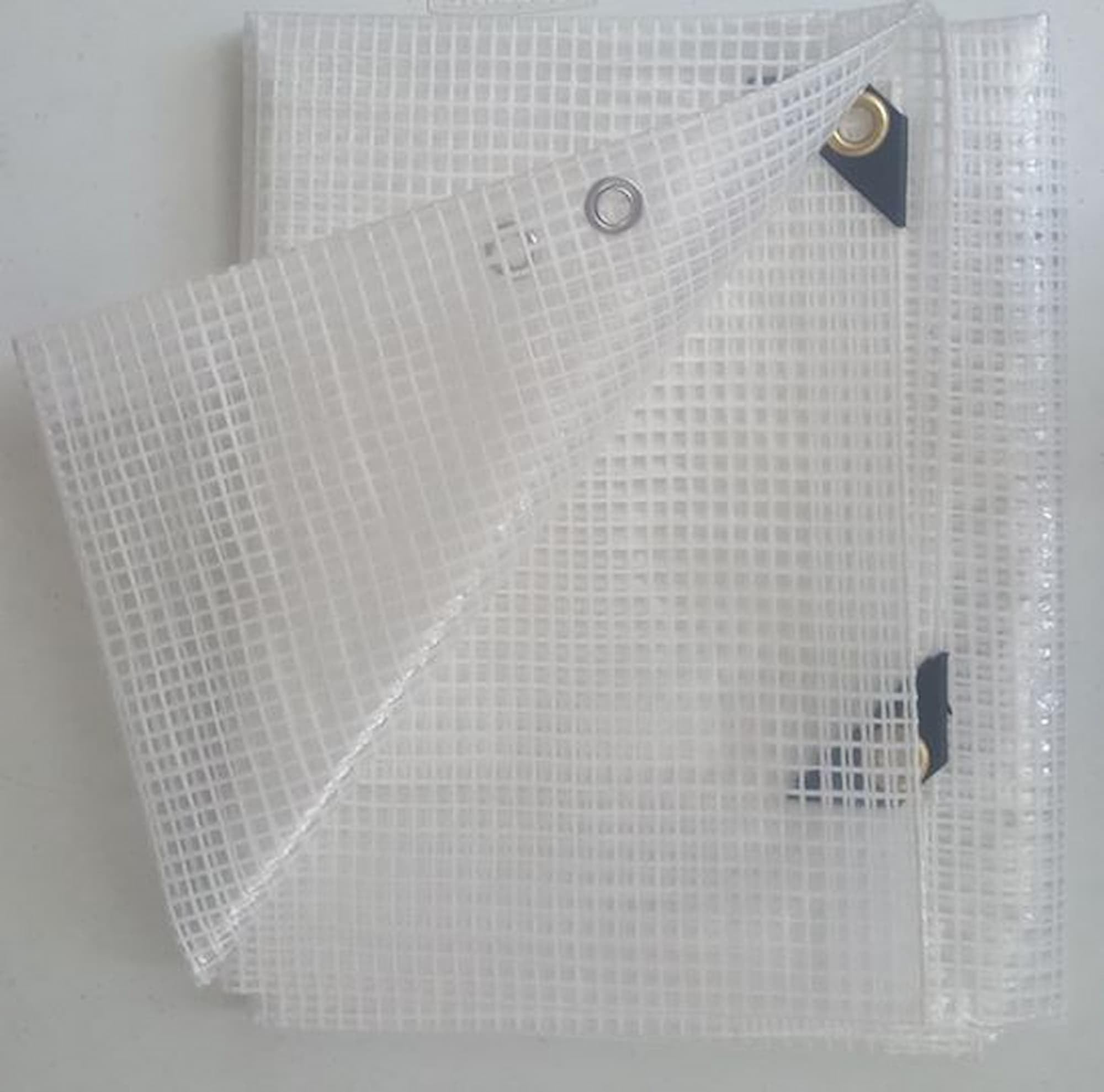
This fiber-reinforced poly tarp has been trusted by owners through four Upstate New York winters — a real endurance test.
The Blubbel 14 mil tarp is a proven performer. It is made from fiber-reinforced polyethylene, with mesh strands embedded throughout the entire sheet. This is not a thin film with a plastic coating — it is a woven composite. The 14 mil thickness places it solidly in the mid-range for winter protection, but the fiber reinforcement gives it tear resistance that rivals thicker woven tarps. It is 100 percent waterproof with full UV protection and comes with what the maker calls “Arctic Flexibility” — designed to stay pliable in extreme cold rather than turning stiff and cracking.
The real story is in owner experiences. One buyer wrapped their porch with it in Upstate New York and it survived wind storms for four consecutive winters. Another used it to enclose a cook shack in Florida and appreciated that you can actually see through it clearly, unlike white tarps. The grommets are placed 18 to 36 inches apart on all four sides, with reinforced corners, giving you plenty of fastening options. The finished size is 7 feet 6 inches by 29 feet 6 inches, about 3 to 6 inches smaller than the listed cut size — standard industry practice.
The long-view choice: A four-year porch wrap in Upstate NY winters is about as honest a durability test as you can find. The fiber reinforcement and Arctic Flexibility rating mean this tarp handles cold better than most poly sheets. The trade-off is the narrower width at 7.5 feet — best for long, narrow structures rather than wide hoop houses.
Best for: long greenhouse rows, porch enclosures, or any application where a narrow but very long cover saves you from having to seam two pieces together.
Consider something else if: your greenhouse is wider than 7 feet — you will need to overlap or buy multiple widths.
7. ZSLTLDU 18 Mil Greenhouse Cover
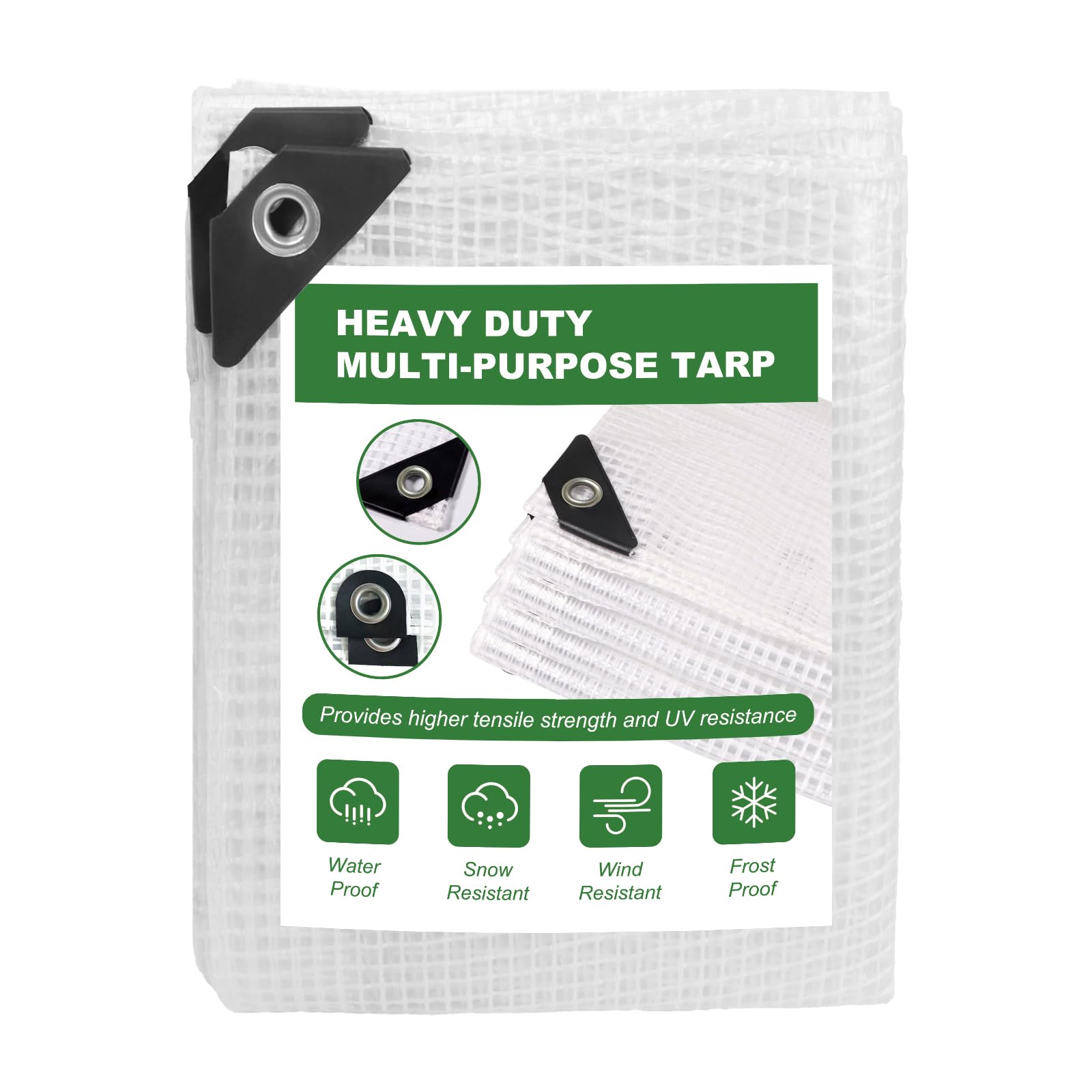
This cover has the most dramatic real-world proof on the list — owners in Hawaii confirm it survived 65 mph winds and volcanic debris.
If you live somewhere the weather gets genuinely violent, this ZSLTLDU 18 mil cover has the toughest field testing of any option here. Owners in Hawaii report it survived 60+ mph winds plus falling volcanic tephra (sharp, jagged rock fragments) without failing. Another owner in a mainland wind event reported that 65 mph gusts left it intact, with only two metal rivets pulling — not the cover material itself giving way. That is a level of abuse most covers would not survive for an hour, surpassing even the 18 mil TENTOPMIC in extreme-wind anecdotes.
It is made from double-layer woven polyethylene, 18 mil thick, with UV inhibitors and reinforced rope hems. The rust-resistant grommets and strengthened edges provide the extra stability that makes this kind of wind performance possible. An owner used it as an extra layer over an existing greenhouse to close gaps that show up in high winds, and every single plant survived winter hibernation. The material quality gets consistent praise, though some owners found the side grommets tore out under stress.
The windproof option: If your greenhouse sits on an exposed hillside or you have seen previous covers turn into plastic ribbons after one storm, this is the cover proven in extreme conditions. Just be meticulous with grommet fastening — use large washers or a batten strip to spread the load.
Reach for this if: your setup faces high winds, flying debris, or snow loads that have destroyed weaker covers before.
Consider alternatives if: your climate is mild and you do not need the 18 mil thickness — you will be carrying extra weight without the benefit.
Understanding the Specs
Mil Thickness
One mil equals one-thousandth of an inch. A 6 mil cover is roughly the thickness of a heavy-duty trash bag. It works for mild frost and light wind but will tear under snow or debris. A 14-18 mil cover is like industrial tarp material — it resists punctures, holds up to wind, and blocks cold far more effectively. For genuine winter use, 14 mil is the floor.
UV Resistance
Plain polyethylene breaks down in sunlight within one season. It gets brittle, cracks, and lets cold air pour in. UV-resistant covers have chemical stabilizers mixed into the plastic that slow that degradation, often rated for 2 to 4 years. If you want a cover to last multiple winters, UV resistance is non-negotiable.
FAQ
What does “mil” mean for a greenhouse cover?
Can I use a 6 mil greenhouse cover in winter?
What is the difference between a greenhouse film and a clear tarp?
How do I attach a greenhouse cover without grommets?
Will a clear tarp keep my greenhouse warm at night?
How long does a UV-resistant greenhouse cover last?
Can I put a second layer of plastic over my existing greenhouse cover?
What is anti-drip coating and do I need it?
Will greenhouse plastic yellow or cloud over time?
What is the best way to store a greenhouse cover in the off-season?
Final Thoughts: The Verdict
For most buyers, the greenhouse cover for winter winner is the TENTOPMIC 18 Mil because it combines the thickest material on this list with reinforced mesh construction and grommets that make installation straightforward. If you prefer a smooth film for a permanent wiggle-wire frame, the Farm Plastic Supply 8 Mil is the professional choice. And for the largest structures at 20 by 30 feet, the THOOUM 16 Mil is the one to reach for.
How We Picked
We do not accept paid placement. Every pick is matched to a real buyer and a real use-case; we do not hands-on test units.
Sources & Methodology
Specifications: manufacturer listings and product documentation. Review insights: verified customer reviews, as of July 2026. Pricing: not shown on this page (it changes often); check the current price via the retailer link.
As an Amazon Associate, Lawn Gear Lab earns from qualifying purchases. This does not affect which products we feature.