
Specs are compiled from manufacturer listings and verified buyer reviews and can change over time — please confirm the key details on the product page before buying.
Your tomato vines are all leaves and no fruit, your lawn looks pale heading into winter, or your pepper plants just will not set. That is when you reach for a high potassium fertilizer for plants. After nitrogen fuels leafy growth and phosphorus builds roots, potassium — the K in your N-P-K ratio (the three-number label on the bag) — pushes a plant into its final act: fruit, flowers, and stress resistance. The catch is that not all potassium sources work the same way. Muriate of potash (potassium chloride), sulfate of potash (potassium sulfate), and monopotassium phosphate (MKP) each behave differently in the soil and on the plant. This guide breaks down six proven options so you match the right chemistry to the crop you care about most.
I’m Rikta — the founder and writer behind Lawn Gear Lab. This guide is built by comparing the manufacturers’ published specifications and the patterns across verified customer reviews, so you get each pick’s real strengths and trade-offs instead of marketing spin.
Choosing the right source matters whether you are feeding a single container tomato or amending a depleted vegetable bed. Here is everything you need to settle on the right high potassium fertilizer without second-guessing yourself.
Our Picks at a Glance

How To Choose The Best High Potassium Fertilizer
Three factors separate a smart potassium purchase from a wasted season. Here is how to think through each one before you buy.
Know Your Potassium Source
The most common mistake is grabbing any bag with a high third number without checking the chemical form. Muriate of potash (0-0-60) is potassium chloride — it works fine for most lawns, trees, and non-sensitive crops, but it carries chlorine. Sulfate of potash (0-0-50) supplies both potassium and sulfur with very low chlorine, making it the better choice for sensitive crops like blueberries, beans, and potatoes. Monopotassium phosphate (0-52-34) delivers phosphorus alongside potassium and dissolves fully, which makes it ideal for foliar feeding (spraying onto leaves) and hydroponics (growing plants in water without soil).
Granular vs. Water-Soluble Delivery
Granular products — the familiar little crystals — need soil moisture and time to break down. They are perfect for pre-season soil amendment and feeding established trees where a slow release is desirable. Water-soluble powders and liquid concentrates work faster and let you apply through a hose-end sprayer, drip line, or watering can. If your goal is a quick rescue of a potassium-deficient plant mid-season, a soluble product will get results in days rather than weeks.
Application Rate and Coverage
Concentrated products like a 0-0-60 go a very long way — a five-pound bag can cover thousands of square feet if you follow the label. Pay attention to the recommended rate: a teaspoon per plant vs. a half-pound per 1,000 square feet makes a massive difference in both cost and safety. Over-application of muriate of potash in particular can leave enough chlorine in the soil to stunt sensitive plants.
Quick Comparison
| Model | Best For | N-P-K Ratio | Form | Weight | Amazon |
|---|---|---|---|---|---|
| Cz Garden Muriate of Potash 0-0-60★ Best Overall | General garden & fruit tree booster | 0-0-60 | Granules | 80 oz (5 lb) | Amazon |
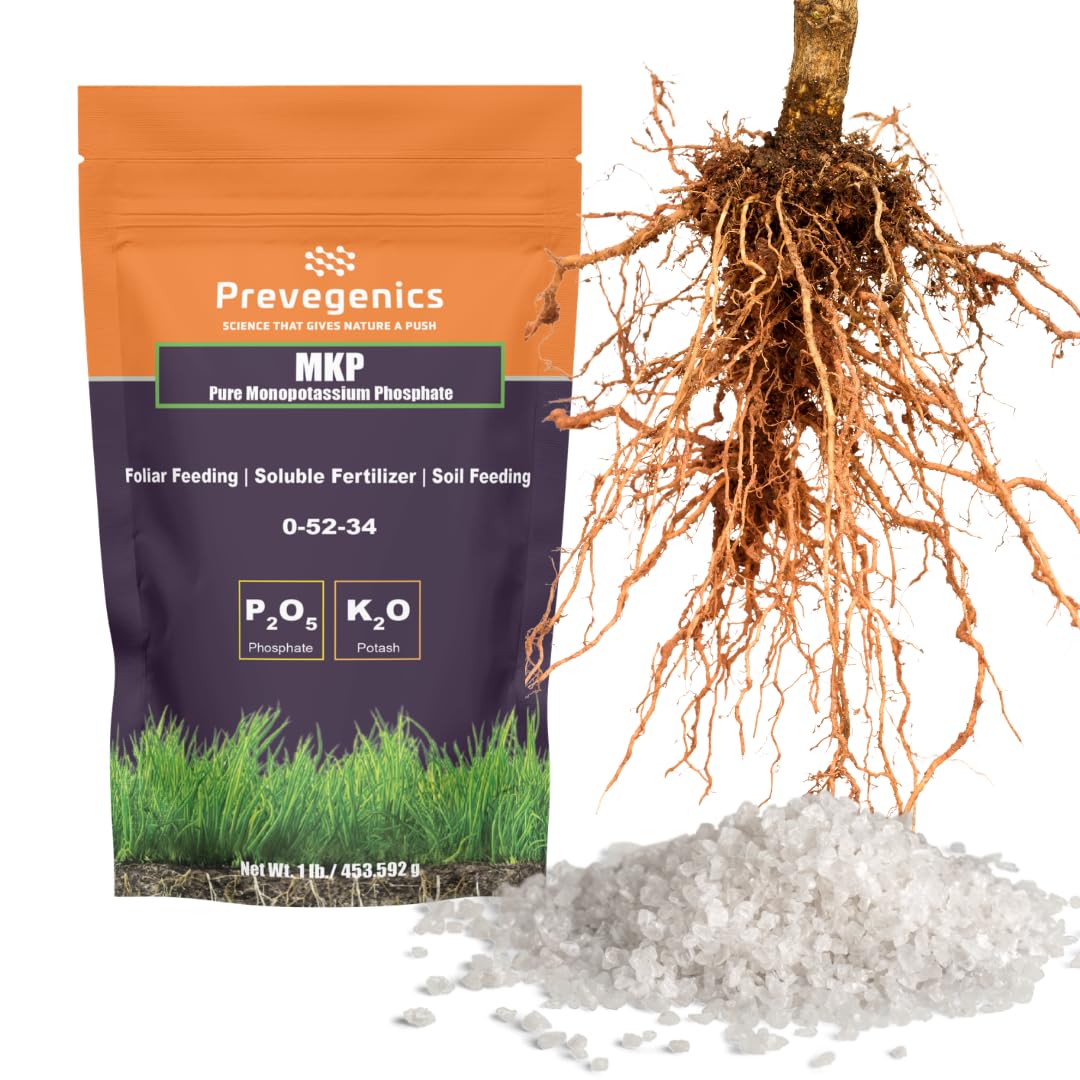
| Prevegenics Monopotassium Phosphate 0-52-34Foliar Power | Foliar feeding & hydroponics | 0-52-34 | Powder | 16 oz (1 lb) | Amazon |
| The Grow Co Muriate of Potash 0-0-60 | Soil amendment & strong fruiting | 0-0-60 | Granules | 80 oz (5 lb) | Amazon |
| Espoma Potash 0-0-60 | General flowering & fruiting | 0-0-60 | Granules | 6 lb | Amazon |
| Simple Lawn Solutions 0-0-25 Liquid | Lawn potassium boost (large areas) | 0-0-25 | Liquid | 32 fl oz | Amazon |
| Cz Garden Sulfate of Potash 0-0-50 | Organic gardens & sensitive crops | 0-0-50 | Powder | 3 lb | Amazon |
In‑Depth Reviews
1. Cz Garden Muriate of Potash 0-0-60
Our pick — over 4.5★ from 900+ verified ratings; the strongest balance of quality and price.
This 0-0-60 workhorse is what fruit-tree owners keep repurchasing for a reason.
You get the most concentrated straight-potassium product on this list: 60 percent potash (the water-soluble form of potassium) as dry granules, with no nitrogen or phosphorus. The Cz Garden Muriate of Potash 0-0-60 is a pure 0-0-60 ratio, so you can feed potassium alone without disrupting your soil’s balance. The 80-ounce bag (5 pounds) supplies a full season of amendment for a medium garden or a small orchard.
Buyers report strong results. One grower on a diverse farm with lychee, pineapple, and coffee calls it essential for fruit set (the process where flowers turn into fruit). Another owner, frustrated with stubborn fruit trees, says “finally I had fruit using this fertilizer!” The resealable pouch makes it easy to measure out just a teaspoon or a cupful without transferring it to another container.
A few owners mention that because this is muriate of potash (potassium chloride), the chlorine can build up in sandy or heavily fertilized soil. The advice from experienced users: apply at the labeled rate and rotate with a sulfate source if you grow chlorine-sensitive crops like beans or potatoes.
Why it wins
- Highest straight potassium concentration (0-0-60) per bag
- Made in the USA with consistent granule quality
- Resealable pouch for easy storage and portioning
- Proven on fruit trees, tomatoes, and tropical plants
Know before you buy
- Muriate form carries chlorine — not ideal for sensitive crops at high rates
- Granular release is slower than a soluble product for mid-season rescue
Reach for it when: you need a no-nonsense, high-concentration potassium source for trees, shrubs, and general garden beds and are comfortable with a granular product.
Think twice if: you grow chlorine-sensitive vegetables (beans, potatoes, blueberries) at scale — the Cz Garden Sulfate of Potash (product #6) is a safer choice.
2. Prevegenics Monopotassium Phosphate 0-52-34
This powder lets you push phosphorus and potassium straight into the leaf within hours.
Monopotassium phosphate (MKP) — a fully water-soluble salt of phosphorus and potassium — fills a specific role. At a 0-52-34 ratio, it delivers a huge phosphorus hit alongside substantial potassium, which helps right before bloom or during early fruit set. Because it dissolves completely, you can apply it as a foliar spray (a fine mist onto leaves) or through a drip system and see results in hours rather than days. One grower reports their tomatoes triple-blossomed within 24 hours of an application. Another owner says even a 1:1000 dilution works well for indoor plants like monstera.
The trade-off is that this is not a standalone feed. With zero nitrogen, you will need to alternate with a balanced fertilizer to avoid a nutrient gap. The one-pound bag is small relative to the product photo — the image shows a five-pound bag, so check the unit count before ordering. The powder itself earns consistent praise for its high purity and white color.
Best role: a targeted bloom booster or potassium-phosphorus rescue spray rather than a general soil amendment.
Honest limit: the 16-ounce bag is concentrated but runs out fast if you are feeding a large garden — budget for multiple units or a larger format.
Right for: serious growers who are comfortable measuring and mixing soluble fertilizers, especially for flowering and fruiting crops like strawberries, tomatoes, and peppers.
Not the best fit if: you want a simple “spoon it on the soil” product — the measuring and mixing demands more attention than a granular option like the Cz Garden Muriate of Potash 0-0-60.
3. The Grow Co Muriate of Potash 0-0-60
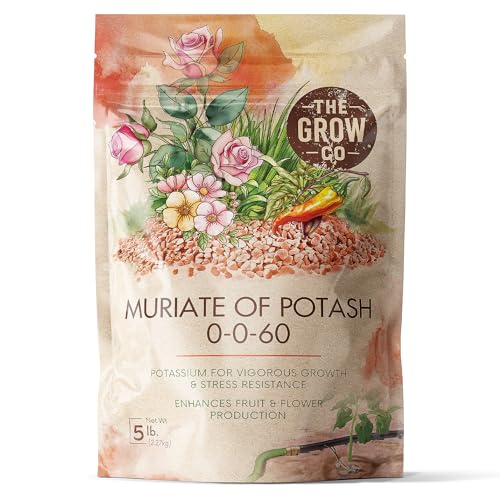
Tomato growers reach for this granular 0-0-60 after a heavy season to rebuild tired soil.
When your soil is tapped out from last year’s heavy feeding, this is the potash you scatter before the next planting cycle. The Grow Co Muriate of Potash 0-0-60 uses the same high-potassium chemistry as the Cz Garden product above — both are 0-0-60 potassium chloride — but it emphasizes drought and stress protection through thickened cell walls (the plant’s structural support system). The label rate is a measured half-pound per 1,000 square feet or one teaspoon per plant, so one 5-pound bag covers a lot of ground.
One buyer says “this product really helped me with soil amendment for my tomato beds that were depleted from last year’s crop.” Used alongside a seaweed extract, it has also helped mango and avocado trees stop fruit drop (when fruit falls off before it ripens) and hold fruit through the ripening stage. The granular form is simple to broadcast, and the clear rates keep you from over-applying.
A few experienced gardeners caution that the 0-0-60 strength demands restraint: one review notes it “should be used sparingly to provide an immediate boost as overuse may result in a buildup of chlorine in your soil.” That is the same muriate-of-potash limitation — manageable if you follow the label, but worth knowing before you double-dose.
What stands out
- Clear application rates on the bag (half-pound per 1,000 sq ft)
- Feedback consistently ties it to better fruit-set and fruit retention
- Concentrated enough that one bag lasts most home gardens a full season
What to note
- Same chlorine caveat as all muriate products — rotate with sulfate for sensitive beds
- Granules require soil moisture to break down; not a quick fix for a deficiency spotted mid-season
Grab this if: you are rebuilding soil after a heavy harvest and want a straightforward, proven granular potash that reviewers have validated on tomatoes, peppers, and fruit trees.
Pass on it for: hydroponic use or any situation where you need potassium immediately available to the plant — a soluble product like Prevegenics Monopotassium Phosphate works much faster.
4. Espoma Potash 0-0-60

Espoma has been in the soil business for nearly a century, and this 0-0-60 granular potash is pure and simple.
No mixing needed — just sprinkle the Espoma Potash 0-0-60 granules around the drip line (the area under the outer edge of a plant’s branches) of your plants and water it in. The 6-pound bag is at 6 lb versus the 5 lb from other brands, giving you a little extra coverage. With 0-0-60, it delivers 60 percent potash with no fillers.
Customers note the effectiveness stands out above all else. One owner noticed their slow-growing gourds looking “healthier and more vibrant within a few days.” Another says it is great for flowering bushes and blueberries. The product appears to work in both dry heat and humid conditions, according to the review consensus.
There is an occasional complaint that the granules have a noticeable fish-like odor (a trait of some natural potash sources) and that the results are subtle rather than dramatic. But with over 460 ratings averaging to very strong satisfaction, the product works for the vast majority of buyers.
Why people pick it: brand familiarity, a resealable bag that actually holds 6 pounds, and the simplicity of a granular product that requires no mixing.
The trade-off: it is still a muriate source, so chlorine-sensitive crops should be fed sparingly. Also, the smell is a real thing for some buyers when first opening the bag.
Ideal for: a flower or vegetable gardener who wants a reliable, no-fuss potash from a brand with decades of reputation, especially for tomatoes, peppers, and flowering shrubs.
Less ideal for: anyone growing certified organic produce — this product is not OMRI listed (certified for organic use), unlike the sulfate of potash options.
5. Simple Lawn Solutions High Potassium 0-0-25 Liquid
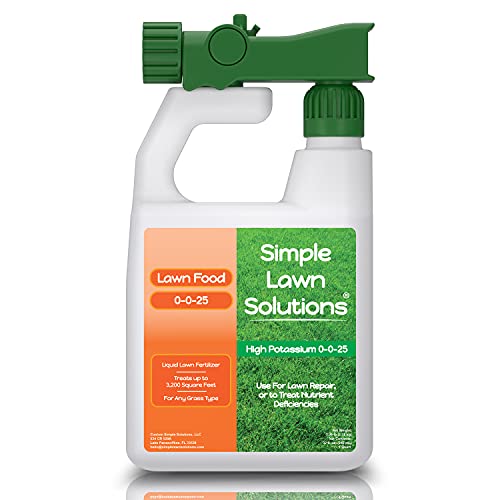
This hose-end liquid makes giving your lawn a potassium boost feel easy, covering up to 3,200 square feet per bottle.
Simple Lawn Solutions High Potassium 0-0-25 Liquid is the only liquid product here, and it serves a different purpose than the granular options. At a 0-0-25 ratio, it delivers a quarter-strength potassium dose through a ready-to-use hose-end sprayer. The concentration is lower because liquid feeding is made for frequent, light applications — a spot treatment for a lawn heading into summer heat or the fall hardening period (when grass preps for winter dormancy).
Lawn owners say the main benefit is root growth and winter hardiness. One owner reports their “lawn is stronger than ever,” praising the high potassium ratio and the ability to feed through a backpack sprayer. The ease of use is the second most-discussed positive, especially for covering large areas where broadcasting granules would take an hour. A few owners note they did not see an immediate greening — potassium’s effect is more structural (stronger cell walls, better stress tolerance) than cosmetic.
A minority of buyers feel the price per bottle is high for the concentration. Some also received a defective sprayer on the first unit. The company responded quickly with replacements in those cases, which buyers mention as a positive experience, but it is something to check on delivery.
What sells it
- Hose-end sprayer means zero measuring — just attach and spray
- Covers up to 3,200 square feet per 32-ounce bottle
- Effective for summer stress prep and fall root strengthening
- Works on any grass type: Bermuda, St. Augustine, fescue, zoysia, and more
The catch
- Potassium concentration (0-0-25) is lower than granular options — for a major deficiency you would need repeated applications
- Some buyers find it pricey for a liquid concentrate
Choose this when: your lawn is the priority and you want a low-effort potassium boost before summer or winter stress without breaking out a spreader.
skip it if: you need targeted, high-concentration potassium for individual plants or vegetable beds — a granular 0-0-60 like the Cz Garden Muriate of Potash is far more efficient for those jobs.
6. Cz Garden Organic Sulfate of Potash 0-0-50
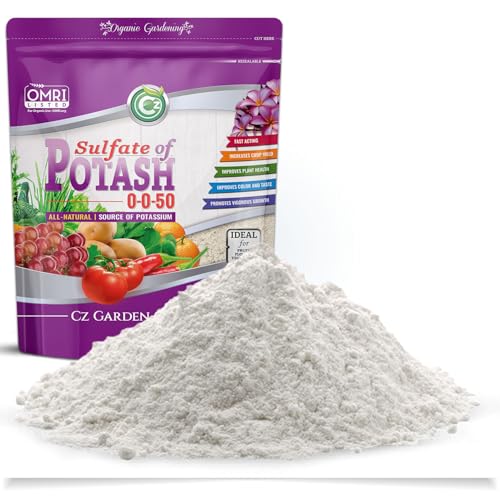
This OMRI-listed powder treats sensitive crops and organic beds right, with chlorine content under 0.5 percent.
When your garden is certified organic or you simply want to avoid the chlorine in muriate of potash, sulfate of potash (SOP) is the standard. The Cz Garden Organic Sulfate of Potash 0-0-50 sits at a 0-0-50 ratio with less than half a percent chlorine — low enough for sensitive crops like blueberries, beans, and potatoes. It is OMRI listed (certified for use in organic production under USDA rules).
As a fine powder that dissolves completely, it works in hydroponic reservoirs, drip irrigation, and foliar sprays just as well as it works sprinkled into the soil. Growers report using it on carrots, potatoes, tomatoes, and peppers with great harvests. One owner notes that foliage deepened and densified after application. The resealable 3-pound pouch is at 3 lb versus the 5 lb muriate options, but the product is more specialized — organic certification, low chlorine, and water solubility.
A few buyers mention it is pricey compared to standard muriate potash and that the 3-pound bag goes fast for a large garden. But for those who need it — organic growers, blueberry enthusiasts, and anyone worried about salt buildup — the cost premium is worth the confidence.
The standout detail: the low chlorine content (under 0.5%) makes this one of the safest potassium sources for repeated application on sensitive crops.
The honest trade-off: the 3-pound bag is at 3 lb versus the typical 5-6 lb muriate bags, and the cost per pound is higher — you pay for the purity and the organic certification.
Turn to this if: you grow certified organic, have chlorine-sensitive plants, or use hydroponic/drip systems where solubility matters most.
Pass if: you have a huge lawn or a large orchard where cost per pound is the driving factor — the muriate options like Cz Garden Muriate of Potash 0-0-60 will cover more ground for the same money.
Understanding the Specs
N-P-K Ratio — The Third Number
The three-number sequence on a fertilizer bag tells you the percentage of nitrogen (N), phosphorus (P), and potassium (K) by weight. A 0-0-60 product contains 60 percent potash and zero of the other two. For a high-potassium product, that third number is the only one that matters — you are buying K specifically, not a balanced meal.
Muriate vs. Sulfate of Potash
Muriate of potash (MOP) is potassium chloride — cheaper and higher in K (typically 0-0-60), but it carries chlorine. Sulfate of potash (SOP) is potassium sulfate, running around 0-0-50, with added sulfur and very low chlorine. SOP is the gentler choice for sensitive crops and organic gardens; MOP is fine for lawns, trees, and most vegetables used at label rates.
Water Solubility
A product that says “water soluble” or “powder” dissolves fully in water, letting you apply it through a sprayer or irrigation line. A granular product stays in the soil and breaks down slowly with moisture. Soluble products work faster; granular products last longer in the soil, requiring fewer applications.
Application Rate
This tells you how much product to use per plant or per area. A typical granular 0-0-60 rate is about half a pound per 1,000 square feet or one teaspoon per shrub. Exceeding the label rate is the most common mistake — more potassium does not equal more growth, and with muriate products, excess chlorine can harm the soil biology.
FAQ
What does a high potassium fertilizer actually do for my plants?
Can I use a 0-0-60 fertilizer on my vegetable garden?
Is muriate of potash the same as sulfate of potash?
How often should I apply a high potassium fertilizer?
What is the difference between a granular and a liquid potassium fertilizer?
Can high potassium fertilizer burn my plants?
Which crops need the most potassium?
Will high potassium fertilizer make my lawn greener?
How do I know if my soil is low in potassium?
Can I mix a potassium fertilizer with other products?
Final Thoughts: The Verdict
For most people, the high potassium fertilizer for plants that balances value, power, and versatility is the Cz Garden Muriate of Potash 0-0-60 — concentrated enough to correct a deficiency with a small handful, proven on everything from apples to lychees, and backed by the strongest satisfaction ratings in the lineup. If you garden organically or grow chlorine-sensitive crops, grab the Cz Garden Sulfate of Potash 0-0-50 instead; the OMRI listing and low chlorine make it the safe pick for certified beds. And for a lawn that needs a potassium boost without the spreader, the Simple Lawn Solutions 0-0-25 Liquid wins on pure convenience — attach the hose and cover 3,200 square feet in minutes.
How We Picked
We do not accept paid placement. Every pick is matched to a real buyer and a real use-case; we do not hands-on test units.
Sources & Methodology
Specifications: manufacturer listings and product documentation. Review insights: verified customer reviews, as of July 2026. Pricing: not shown on this page (it changes often); check the current price via the retailer link.
As an Amazon Associate, Lawn Gear Lab earns from qualifying purchases. This does not affect which products we feature.