
Specs are compiled from manufacturer listings and verified buyer reviews and can change over time — please confirm the key details on the product page before buying.
If you’ve ever tried to grow a fruit tree in a pot and watched it struggle through a surprise frost, you already know the problem. A standard pop-up greenhouse or a cold frame won’t cut it when that tree needs headroom to stretch and stable temperatures to set fruit. You need a walk-in greenhouse that is tall enough for a 6-foot tree, tough enough to handle snow and wind, and smart enough to keep the air moving so blossoms don’t rot before they can pollinate.
I’m Rikta — the founder and writer behind Lawn Gear Lab. This guide is built by comparing the manufacturers’ published specifications and the patterns across verified customer reviews, so you get each pick’s real strengths and trade-offs instead of marketing spin.
Here is the focused, no-hype breakdown of what matters for a greenhouse for fruit trees, along with the nine best options that are actually tall enough and sturdy enough to deliver year after year of good harvests.
Our Picks at a Glance

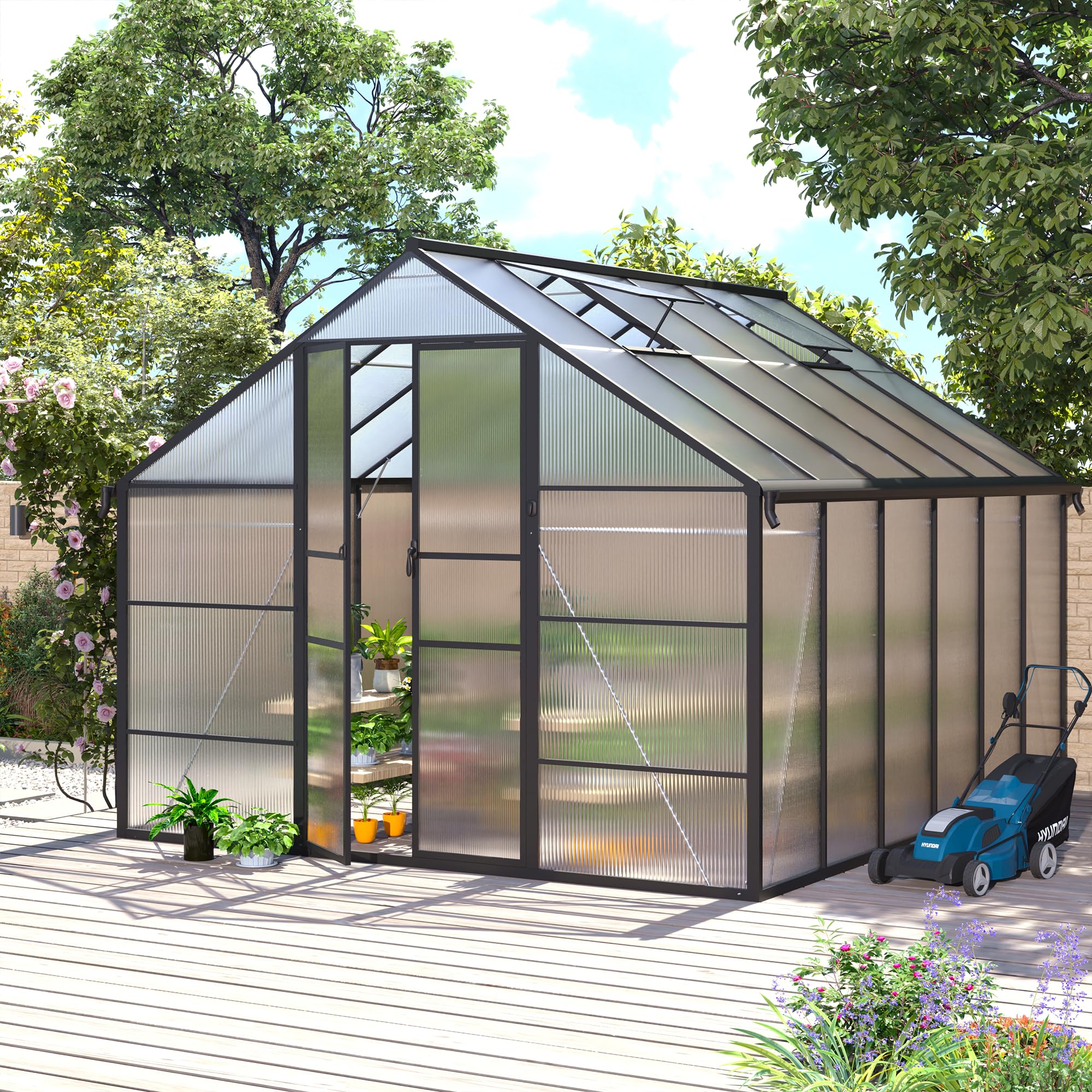
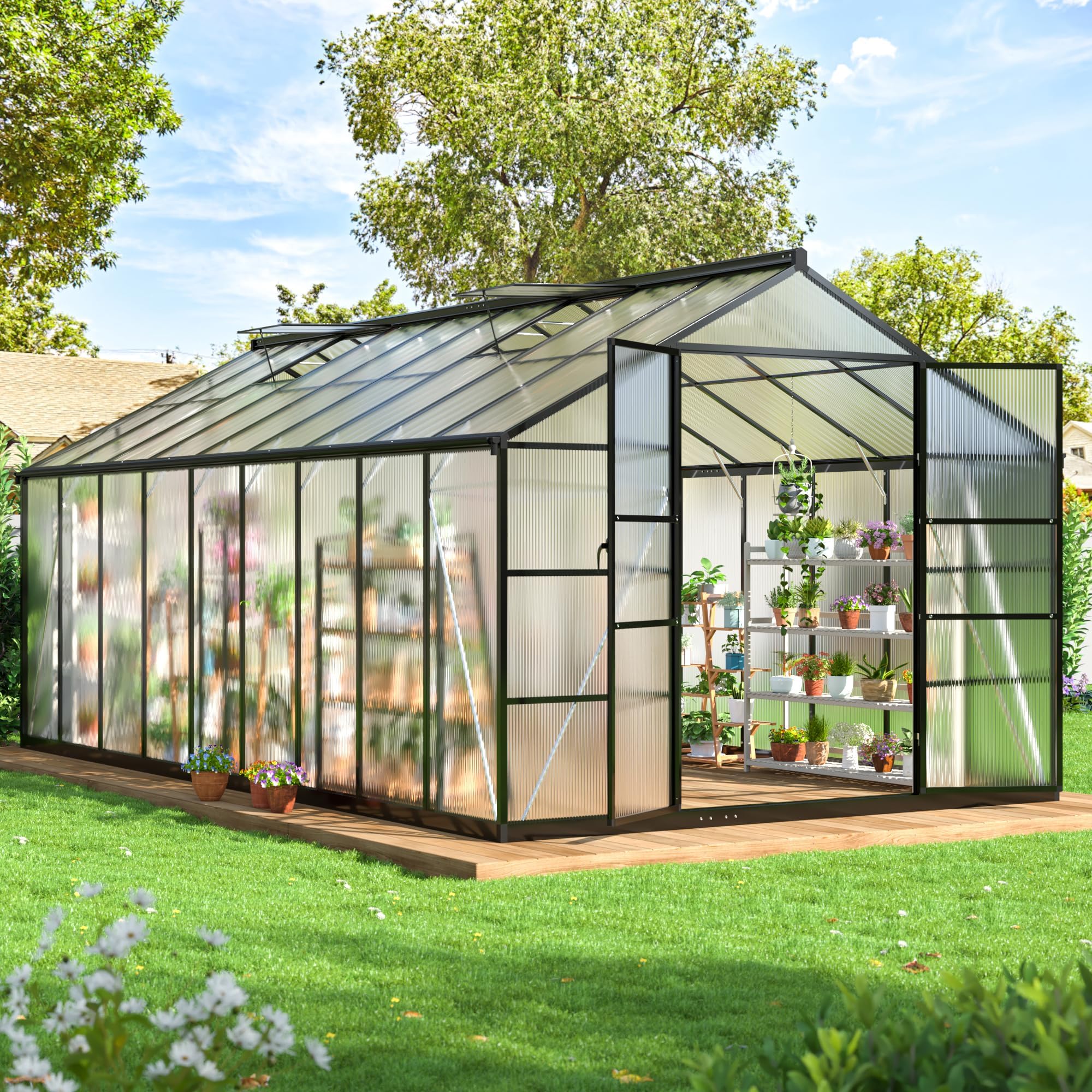
How To Choose The Best Greenhouse For Fruit Trees
Fruit trees are not tomato plants. They need vertical clearance, consistent temperatures during bloom, and sturdy support for a heavy branch structure. Here is what to look at first.
Interior Height (The 7-Foot Rule)
A dwarf or semi-dwarf fruit tree in a large pot can easily reach 5 to 6 feet tall. Add the height of the pot and the space needed for a hanging grow light or a heater, and you need a greenhouse with at least 7 feet of interior height. The product’s listed “Item Height” is a good starting point, but factor in the roof pitch — a flat roof wastes headroom.
Frame Material and Snow Load
Aluminum frames resist rust and hold up for decades, but not all aluminum is the same thickness. Look for a listed snow load rating (measured in psf — pounds per square foot). A rating of 15 psf or higher will handle most northern US winters without collapsing. Cedar frames are beautiful and naturally rot-resistant, but they require sealing and weigh more to anchor.
Ventilation That Moves Air, Not Just Exchanges It
Fruit blossoms need airflow for pollination and to shed moisture after rain. A single roof vent is rarely enough on a still summer day. A greenhouse with a temperature-activated exhaust fan or at least two adjustable roof vents (along with a door you can prop open) gives you control over both heat and humidity.
Polycarbonate Panel Quality
The thickness is measured in millimeters, but the real difference is between twin-wall (two layers with an insulating air gap) and single-wall. Twin-wall panels like the 4mm or 6mm versions hold heat better and diffuse light to prevent leaf scorch. Single-wall panels let in more light but lose heat fast at night — a real risk for a fig tree in a 28°F spring night.
Quick Comparison
| Model | Best For | Interior Height | Frame Material | No. of Vents | Amazon |
|---|---|---|---|---|---|
| Backyard Discovery Willow★ Best Overall | Heavy snow zones | 94 inches (7.8 ft) | Cedar Wood | 1 + fan | Amazon |
| Esimote 10×12 FTTallest Interior | Maximum headroom | 98 inches (8.2 ft) | Aluminum | 1 (5-level) | Amazon |
| WKM 10×18 FTBiggest Footprint | Large-scale growing | 98 inches (8.2 ft) | Aluminum | 1 (5-level) | Amazon |
| HOWE 8x10x7.5 FT | 6mm panel insulation | 89 inches (7.4 ft) | Aluminum | 2 | Amazon |
| Sylviera 12×12 FT T-Shape | Square footprint | 84 inches (7.0 ft) | Aluminum | 2 | Amazon |
| Palram Canopia Hybrid | Brand reliability | 82 inches (6.8 ft) | Aluminum | 1 | Amazon |
| YITAHOME 12x6FT | Narrow backyard spaces | 77 inches (6.4 ft) | Aluminum | 2 | Amazon |
| Jiliusure 8×10 FT | Budget for tall trees | 77 inches (6.4 ft) | Aluminum | 2 | Amazon |
| WUKHG 8X10FT Enhanced | Temp monitoring | 80.6 inches (6.7 ft) | Aluminum | 2 | Amazon |
In‑Depth Reviews
1. Backyard Discovery Willow 9′ x 6′ Cedar Wood and Polycarbonate Walk-in Greenhouse Kit
Our pick — over 4.5★ from 100+ verified ratings; the strongest balance of quality and price.
The cedar fortress that shrugged off a 100 mph wind.
When snow load is your biggest worry, this one answers it directly — the frame is Pro-Tect tested to withstand up to 2,800 pounds or 30 inches of snow load, plus winds up to 100 mph. Those are the numbers that matter for a fruit tree greenhouse in a real winter. The cedar wood frame is naturally rot-resistant and looks like a proper garden structure, not a silver tent. Buyers report that the “first heavy storm and wind came through and it stood solid,” which is exactly the story you want to read before planting three dwarf apple trees inside.
The 94-inch interior height gives fruit trees the headroom they need, and the integrated ventilation is smarter than most kits this size. A temperature-activated exhaust fan runs automatically when heat builds up, and there is also one manual window for natural air movement. The 54 square feet of interior space includes 13 linear feet of fixed staging shelves, a built-in workstation, and both exterior and interior hose hook-ups so you do not have to drag a watering can through the snow. The patented PowerPort adds 3 electrical outlets and 3 USB ports for heaters, fans, or grow lights.
The catch is the assembly — it takes significant time. Pre-cut, pre-drilled, and pre-stained parts help, and the interactive BILT app walks you through each step, but most owners mention spending at least a weekend on it. The commercial-grade 4-wall polycarbonate roof and panels improve heat retention by 30% compared to standard double-wall panels, which makes a real difference when that February frost hits the blossoms.
Snow-beast with a heart: This is the pick for anyone in a serious winter climate who wants a greenhouse that doubles as a garden workstation. The cedar and the power integration make it feel like a permanent room, not a seasonal tent.
Who it fits: Northern growers who measure snow in feet and want a greenhouse that anchors into the ground and stays put for a decade.
The honest trade-off: Assembly is a multi-day project, and the 107 total owner experiences are fewer than some cheaper alternatives — but the quality consensus is overwhelming.
2. Esimote 10×12 FT Greenhouse for Outdoors
The only greenhouse here tall enough for a full-size lemon tree.
At 98 inches high (over 8 feet), this is the single tallest greenhouse on this list, and that makes it the only choice if you want to grow semi-dwarf or standard fruit trees rather than just tiny patio varieties. The door is 78.3 inches tall, so you can walk in with a full watering can and not hit the header. It measures 120.1 inches wide by 142.7 inches deep — that is roughly 10 by 12 feet of floor space — which gives you room for four or five dwarf trees on the ground plus staging for seedlings.
The reinforced aluminum frame and built-in drainage channels handle the basics well. The adjustable roof vent has 5 levels for airflow, and the lockable door adds security. Customers note that with a heat lamp, the interior stays around 40°F when the outside temperature drops to 9°F, which is exactly the kind of thermal performance a citrus or fig tree needs during a cold snap.
The assembly feedback is mixed — some owners describe it as “like a big erector set” and report a two-hour setup, while others find the side windows flimsy and struggle with the instructions. The door is also notably short at 23.2 inches wide, so moving a large tree pot through the entrance takes some maneuvering.
Standout Feature
- 98-inch peak height — the only pick that clears 8 feet
- Reinforced sidewalls and base strengthen wind and snow resistance
- Built-in drainage channels connect to pipes for rain collection
Know Before You Buy
- Some reviewers point out cheap side window plastic
- Door is only 23.2 inches wide — carry trees in sideways
Reach for it if: height is your absolute top priority — you want a full-size tree under cover and you are comfortable with some DIY problem-solving.
Look elsewhere if: you want a simple to use instruction booklet and instant assembly. This one rewards patience.
3. WKM 10×18 FT Greenhouse for Outdoors
A 10×18 interior that still clears 8 feet at the peak.
This is the largest greenhouse by floor area on the list — 213.6 inches long by 120.1 inches wide — which translates to roughly 10 by 18 feet of growing space. The peak height matches the Esimote above at 98 inches, so even a standard fruit tree variety has clearance at the center. The real story here is the “quick setup” claim: a slide-in panel assembly system that, according to WKM, boosts installation speed by 30% and improves stability by 15%. That is a concrete design detail, not marketing fluff.
The adjustable roof vent has 5 settings for airflow, and the base safety cover adds an extra layer of protection for the frame. The polycarbonate panels have an anti-UV coating that blocks harmful rays while letting beneficial light through, which is important for fruit trees that need full sun to ripen. The frame is reinforced aluminum with a lockable metal door handle.
The assembly story is the main complication here. Buyers with construction experience report a sturdy final result that withstands storms, but the instructions are vague and parts can arrive bent. One owner captured the trade-off perfectly: “it’s a pain to set up if there is even the slightest breeze,” and they strongly recommend two people for assembly. The panels are also described as fragile — so you need to handle them carefully during the build.
Monarch of square footage: If you need to fit a dozen dwarf trees plus walking room, this is the only one that delivers that much floor space at this height. Just budget extra time for assembly and do not assume it goes together on day one.
Perfect for: growers with a large backyard who want to plant an orchard in microcosm — multiple trees, plus benches for propagation.
skip it if: you are not comfortable with ambiguous instructions or you expect everything to arrive perfectly flat.
4. HOWE 8x10x7.5 FT Polycarbonate Greenhouse

6mm walls that hold heat like a thermos for your trees.
Most greenhouses in this price range use 4mm polycarbonate panels. The HOWE uses 6mm panels, which is a significant upgrade for two reasons: better insulation (the air gap between the walls is 50% larger) and more resistance to hail and falling branches. The nominal wall thickness is 6 mm, and the frame itself weighs 156.5 pounds — that is a heavy, rigid structure that feels planted once assembled.
The interior height is 89 inches, and the double swing doors let you roll a heavy tree pot straight in without angling it. Two roof vents provide passive airflow, and the 4-corner drainage system includes attached pipes that can connect to a rain barrel. The frame uses 1.5mm aluminum with 4 corner posts and 2 middle posts, which can be buried in soil or concrete for extra stability. The snow load is rated at 18 psf, and the wind rating is 60 mph.
Assembly is the main friction point — owners consistently say the instructions are lacking in step-by-step detail, and the roof windows can leak or fly off in high wind if not sealed with silicone. The manufacturer recommends 3 DIY enthusiasts for a 10-hour build. That is a realistic, not optimistic, estimate.
What Wins People Over
- 6mm twin-wall panels — the thickest on this list, best cold-weather insulation
- 89-inch height clears most dwarf fruit trees
- Double swing door (no sliding track to jam)
The Assembly Reality
- Instructions are bare-bones — rely on the build video
- Roof windows may leak without silicone sealant
- 10-hour build time is realistic with 3 people
Best for: cold-climate growers who prioritize insulation above everything else. A heated 6mm greenhouse at 18 psf snow load will keep a potted fig alive through a zone-5 winter.
Not for: anyone who expects included instructions to be comprehensive. You will need to problem-solve.
5. Sylviera 12×12 FT T-Shape Greenhouse
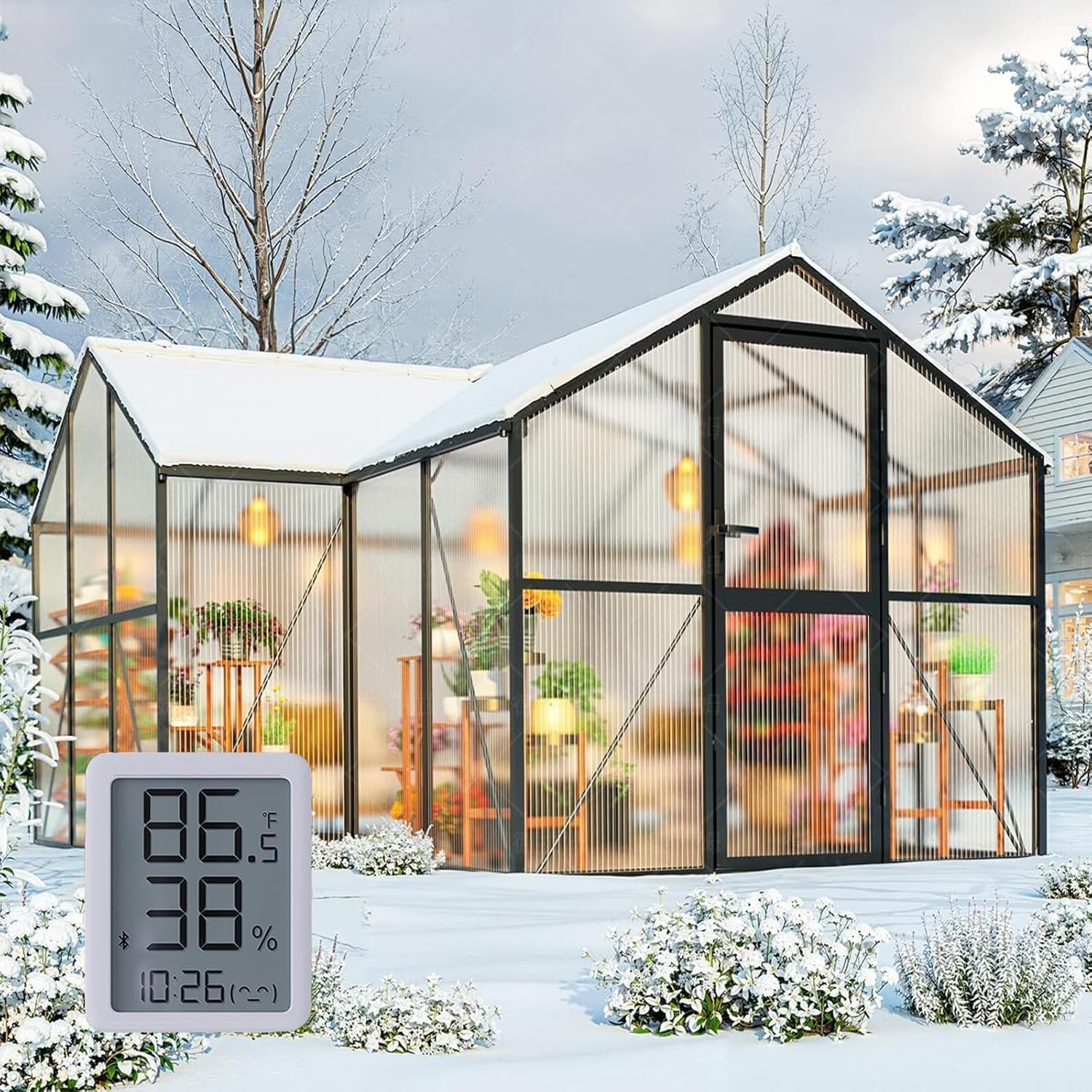
A 12×12 square layout that boost growing area per dollar.
A square greenhouse wastes less corner space than a rectangle, and at 143 inches by 143 inches (12 by 12 feet), this Sylviera model gives you 144 square feet of floor area. The height is 84 inches, which is right at the 7-foot mark for fruit trees — a semi-dwarf tree in a pot will fit, but the tip may touch the ceiling. The 6mm, 1100-gram double-wall polycarbonate panels are heavier than standard panels, which means they are less likely to buckle under snow.
The aluminum frame is reinforced with strengthened corners, and the design includes 2 adjustable roof vents. The lockable door and UV-resistant panels round out the protection package. Owners consistently praise the sturdiness and the way it holds up against wind and rain. The included hygrometer is a useful bonus for tracking humidity levels that matter during fruit blossom season.
The recurring pain point is panel assembly. The instructions do not always mention removing the protective film from both sides of the polycarbonate sheets, which causes confusion and poor fit. Some owners also note that the roof vents need rubber bands to stay open in a breeze — a small but annoying limitation.
Square-footage specialist: This is the most efficient use of a 12×12 backyard corner. The panel weight suggests durability, but read the instructions carefully and plan for a tweak or two with the vents.
Pick it if: you have a square footprint to fill and you want a greenhouse that feels solid once assembled.
Consider the alternative if: you need the tallest possible peak for full-size fruit trees — 84 inches is adequate for dwarfs, not standards.
6. Palram Canopia Hybrid 6′ x 10′ Polycarbonate Aluminum Greenhouse

Chosen as Best Overall Greenhouse Kit of 2024 by Better Homes and Gardens.
The Palram Canopia Hybrid is the most-reviewed greenhouse on this list by a massive margin, and that track record carries weight. It is 73 inches wide by 120 inches long, with an 82-inch height. That is just under 7 feet inside, so it fits dwarf fruit trees — think columnar apples, patio peaches, or dwarf citrus — but a 6-foot standard variety will brush the roof. The two panel types are the smart part: twin-wall polycarbonate on the roof for UV and temperature control, and crisp polycarbonate walls that provide over 90% light transmission.
The powder-coated aluminum frame and galvanized steel base give it a lifetime-oriented build, and the magnetic door catch is a thoughtful detail for keeping the door open on breezy days. The pre-drilled holes in the base are designed for anchoring (anchors not supplied), and an adjustable vent window provides airflow.
The top praise from owners is appearance and functionality — the greenhouse genuinely looks good and works well for overwintering plants. However, assembly is the most-discussed aspect by far, and Amazon flags it as “Mixed,” not positive. Many owners find the instructions picture-only and hard to follow. A significant number also report difficulty with sturdiness unless the unit is anchored perfectly. One owner noted that after a season, “the roof panel came half off in 30+ mph wind,” though that was fixed with a steel cable net and caulk.
Why Owners Stick With It
- 849 reviews is the largest owner base — you can find solutions for every problem
- crisp walls provide excellent light for fruit tree leaves
- Galvanized steel base adds structural stability
The Assembly Hurdle
- Picture-only instructions are criticized by 119 owners as insufficient
- Anchoring is not optional — the greenhouse feels flimsy until bolted down
- 82-inch height is fine for dwarfs but tight for larger trees
A good match for: those who value a known brand, want to research assembly tips online beforehand, and are growing compact fruit varieties.
Not ideal for: anyone who wants a quick weekend assembly without supplementary bracing.
7. YITAHOME 12x6FT Polycarbonate Greenhouse
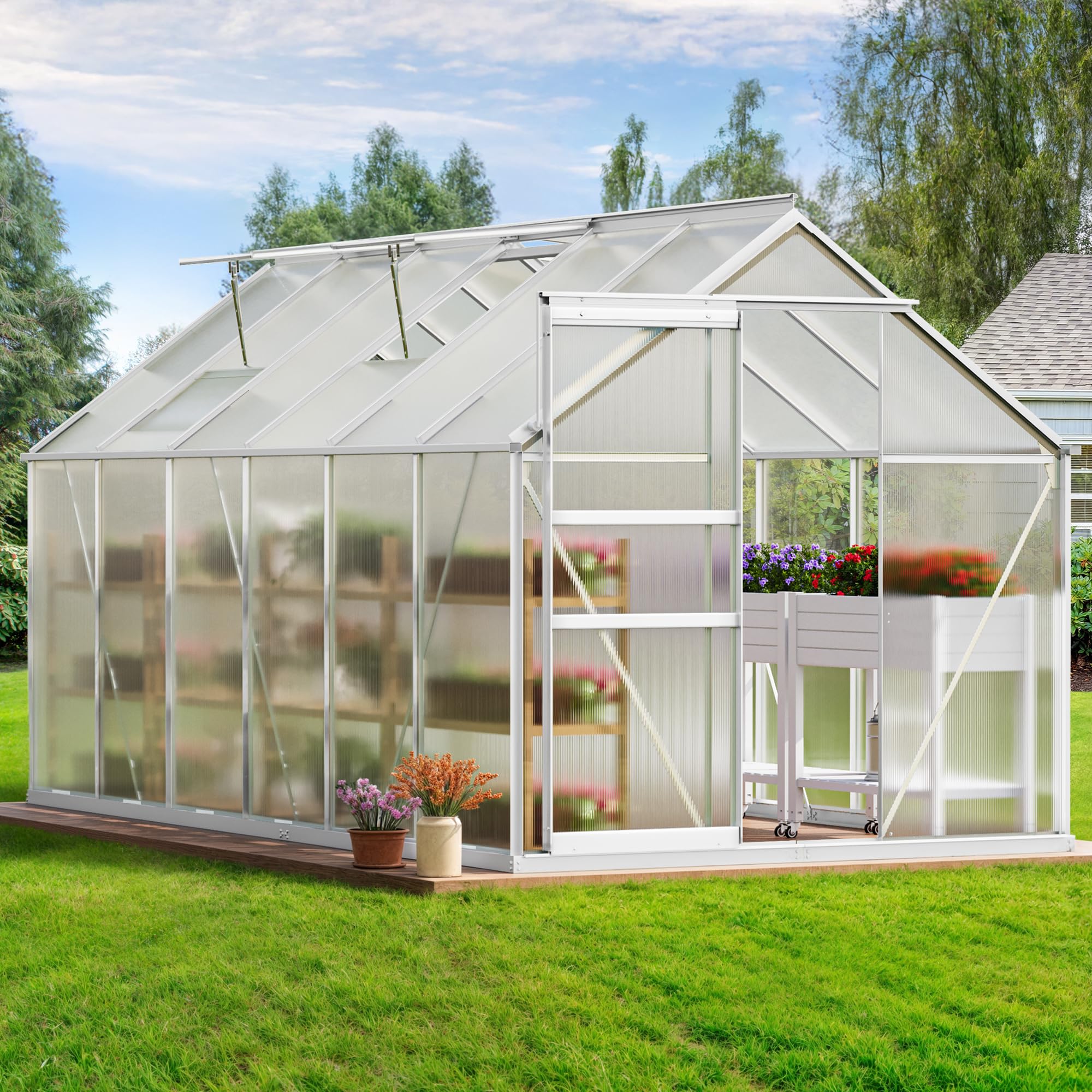
A 12-foot-long rectangle that fits against a fence or narrow side yard.
At 144 inches long by 72 inches wide, this YITAHOME greenhouse is designed for a tight backyard spot where width is limited. The silver aluminum frame has reinforced rods on the sides and diagonal rod fixation, which adds load-bearing capacity. The double-wall 4mm polycarbonate blocks 99% of UV radiation, which is important for preventing leaf scorch on sensitive fruit tree foliage during hot summers.
Two adjustable skylights provide air circulation, and the innovative sliding door saves space — no swinging door that hits a fence or garden bed. The top tilt angle of the roof is designed to improve both wind resistance and water drainage. The floor plan is 12×6 feet, so you can line up several dwarf trees in a row along the length and still have room for a potting bench at the end.
The honest feedback from owners is that this is a functional greenhouse that requires some modification. Several pieces have off-center holes that needed duct tape to make the frame work correctly. Some shoppers say the structure feels solid once assembled, but others describe the directions as terrible and the build as flimsy without a wood floor or added bracing. It is best treated as a project that benefits from some DIY experience.
Narrow-lot workhorse: If your space is long and thin, this 12×6 footprint is your best option. Plan to add a wood floor and seal the panel gaps for best results.
Ideal for: the grower with a side-yard strip who needs a long, narrow greenhouse that a 6-foot-wide opening can accommodate.
Think twice if: you expect a “tighten the screws and it is done” experience — some holes need finesse.
8. Jiliusure 8 x 10 FT Outdoor Polycarbonate Greenhouse
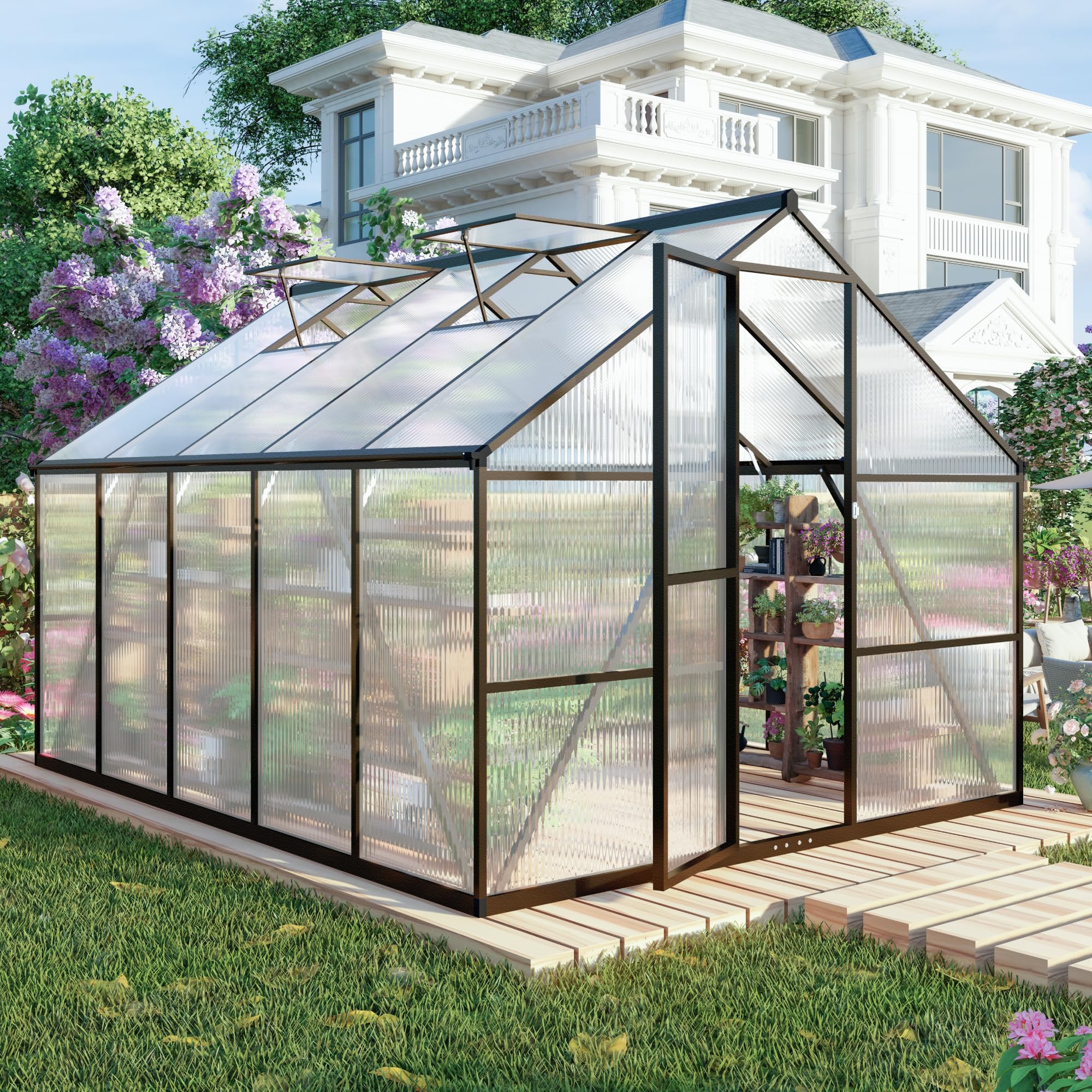
Two DIY enthusiasts can assemble this in 3 hours the manufacturer says.
The Jiliusure greenhouse measures 119 inches by 97 inches by 77 inches high. The 77-inch height is about 6.4 feet — enough for a dwarf fruit tree in a low-profile pot, but a tall 5-gallon nursery pot with a semi-dwarf will be tight. The dark gray aluminum frame is a matte finish that shifts subtly in sunlight, and the patented plastic components and rain gutter system are a real engineering detail, not just stamped sheet metal.
The twin-wall polycarbonate is 0.157 inches thick, and the manufacturer claims the panels transmit over 90% of natural light while blocking harmful UV rays. The temperature range is rated from -4°F to 140°F, so it is built for both freezing nights and summer afternoons. The two roof vents provide decent passive airflow. Assembly is claimed at 3 hours for two DIY enthusiasts, and owners generally agree the setup is straightforward compared to more complex kits — though a few note that the instructions are picture-only and not always clear.
Some owners found that the true dimensions are slightly smaller than advertised (roughly 5.5 feet wide instead of 6 feet), which is worth measuring for if you have a specific footprint. Quality complaints are rare, but one experienced builder reported that a panel broke under light hand pressure.
Straightforward Build
- 3-hour assembly claim is more realistic than most
- Matte dark gray finish blends into a backyard landscape
- Good light transmission (over 90%) for sun-loving fruit trees
The Fine Print
- 77-inch height is acceptable for dwarfs but not taller trees
- Actual dimensions may run smaller than listed
A solid pick for: a first-time greenhouse buyer who wants a manageable build and is focused on dwarf citrus or patio fruit trees that stay under 5 feet.
Not the one for: anyone with a 6-foot tree already in a pot — you need the HOWE or the Esimote.
9. WUKHG 8X10FT Enhanced Aluminum Walk-in Greenhouse
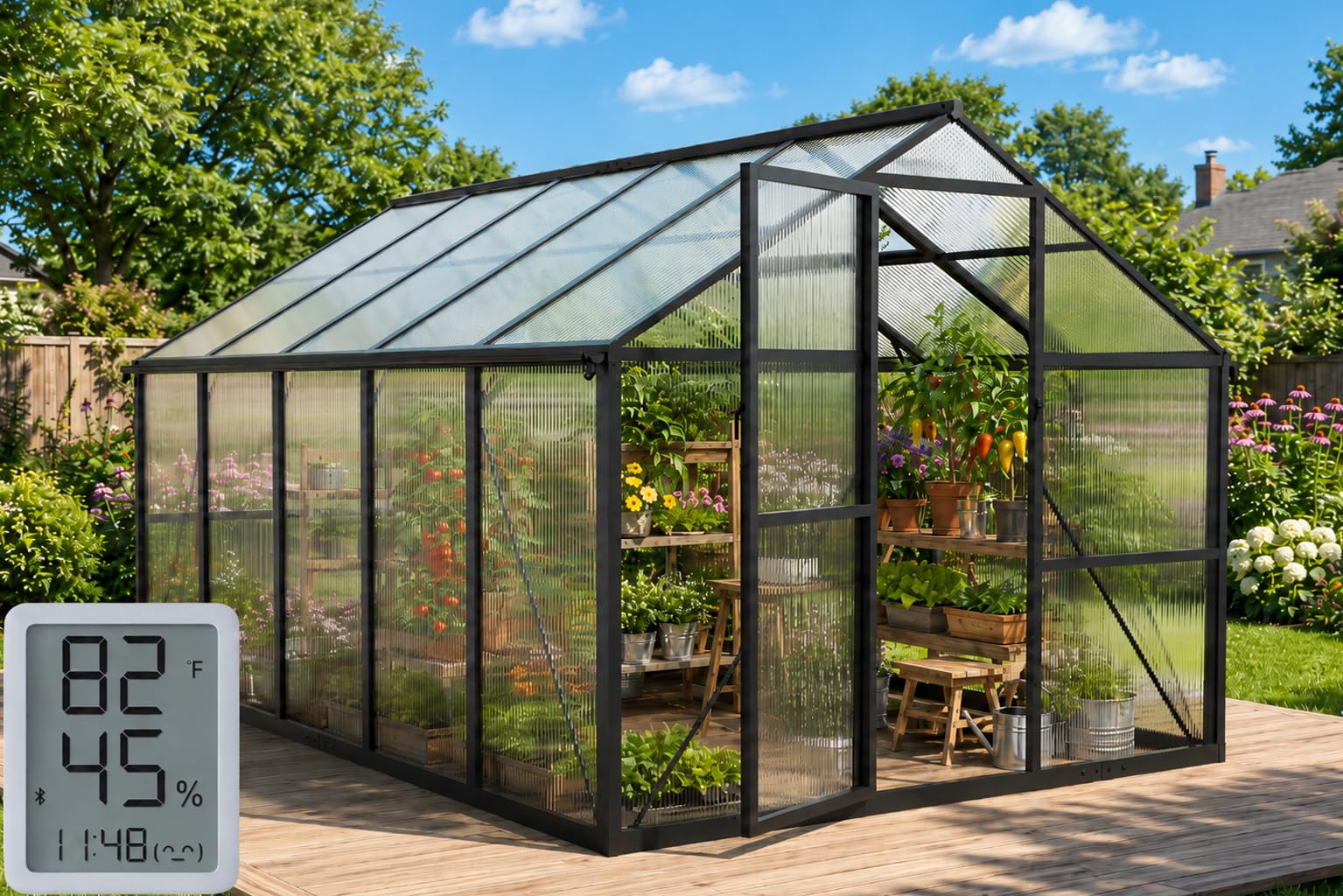
An included smart thermometer that tracks temperature and humidity on your phone.
The WUKHG greenhouse comes with a thermometer hygrometer that pairs with an app to monitor real-time conditions remotely. The sensor has a temperature accuracy of ±0.54°F and ±0.3°C, refreshing every 2 seconds, and gives you access to 14-day data graphs with half-year data export. For anyone growing fruit trees where blossom drop can be triggered by a single night of wrong temperature, this is a genuinely useful safety net.
The frame is high-quality aluminum alloy with heavy-duty 4mm twin-wall polycarbonate panels that weigh 720 grams each. The roof has twin-wall panels for heat retention, and the walls are designed to let in light while blocking UV rays. The lockable sliding door and adjustable ventilation windows handle basic airflow. The built-in gutter system directs rainwater to collection points.
Size is 119.2 inches by 97.2 inches by 80.6 inches high. The 80.6-inch height is right around 6.7 feet — functional for most dwarf trees, though you will feel the roof on a 6-foot tree. The assembly story includes a real caution: one owner reported the “roof window blew out first night,” and others note that the panels can feel thin if you are used to commercial-grade greenhouses. The frame is sturdy, but the panels need careful installation.
Temperature-aware design: The included smart hygrometer is a feature no other greenhouse in this price range offers. If you want data on your phone without buying a separate sensor, this is the one.
A good choice for: a tech-savvy gardener who wants remote monitoring and is comfortable reinforcing the window latches during assembly.
pass on it if: you live in a very windy area without shelter — the roof vent needs extra securing.
Understanding the Specs
Snow Load Rating (psf)
This number tells you how much weight the roof can hold before collapsing. It is measured in pounds per square foot (psf). A greenhouse with an 18 psf rating can handle roughly 18 pounds of snow per square foot of roof — that is about two feet of heavy, wet snow. For reference, most building codes require roofs to handle 30 to 50 psf, so anything above 15 psf is comfortable for most residential winters. If the product does not list a snow load rating, assume it is designed for mild snow zones or seasonal use only.
Polycarbonate Thickness (mm)
The most common greenhouse panels are 4mm or 6mm thick. A 4mm twin-wall panel has two layers of plastic with an air gap in between, which provides basic insulation and light diffusion. A 6mm panel has a larger air gap and significantly better heat retention — it can make a 5°F to 8°F difference on a cold night. The 720-gram or 1100-gram panel weights listed in the specs tell you the density: heavier panels are more rigid and less likely to buckle under snow or hail.
FAQ
What size greenhouse do I need for a dwarf fruit tree?
Can I grow a full-size apple tree in a walk-in greenhouse?
Do I need to heat a greenhouse for fruit trees in winter?
How do I anchor a greenhouse so it does not blow away?
What does “twin-wall polycarbonate” actually do for my fruit trees?
Is cedar or aluminum better for a greenhouse frame?
How many fruit trees fit in an 8×10 greenhouse?
Do I need a fan inside the greenhouse during fruit bloom?
What is the best way to seal polycarbonate panel gaps?
Will a greenhouse with a 60 mph wind rating survive a severe storm?
Final Thoughts: The Verdict
Across the board, the greenhouse for fruit trees winner is the Backyard Discovery Willow because it combines the highest tested snow load on the list (2,800 pounds) with a cedar frame that will not rot, a temperature-activated fan, and built-in power outlets — all in a package that sits at 94 inches tall for real tree clearance. If you want the tallest possible peak for a full-size potted tree, grab the Esimote 10×12 FT at 98 inches. And for the best raw value in a well-insulated, heavy-paneled structure that handles a cold climate, the HOWE 8x10x7.5 FT with its 6mm panels and 18 psf snow load is the one to reach for.
How We Picked
We do not accept paid placement. Every pick is matched to a real buyer and a real use-case; we do not hands-on test units.
Sources & Methodology
Specifications: manufacturer listings and product documentation. Review insights: verified customer reviews, as of July 2026. Pricing: not shown on this page (it changes often); check the current price via the retailer link.
As an Amazon Associate, Lawn Gear Lab earns from qualifying purchases. This does not affect which products we feature.