
Specs are compiled from manufacturer listings and verified buyer reviews and can change over time — please confirm the key details on the product page before buying.
Your koi and goldfish need oxygen to survive winter, but once ice seals the surface, toxic gases build up underneath and cut off their air supply. You need a heater strong enough to punch through sub-zero ice yet efficient enough to keep your electric bill reasonable. That balance is what every pick here is built on.
The choice depends on how much ice you fight, what size pond you own, and how much wattage (the measure of electric power turned into heat) your circuit can handle. After looking at the published specs and patterns across verified customer reviews, here is what matters most.
Our Picks at a Glance

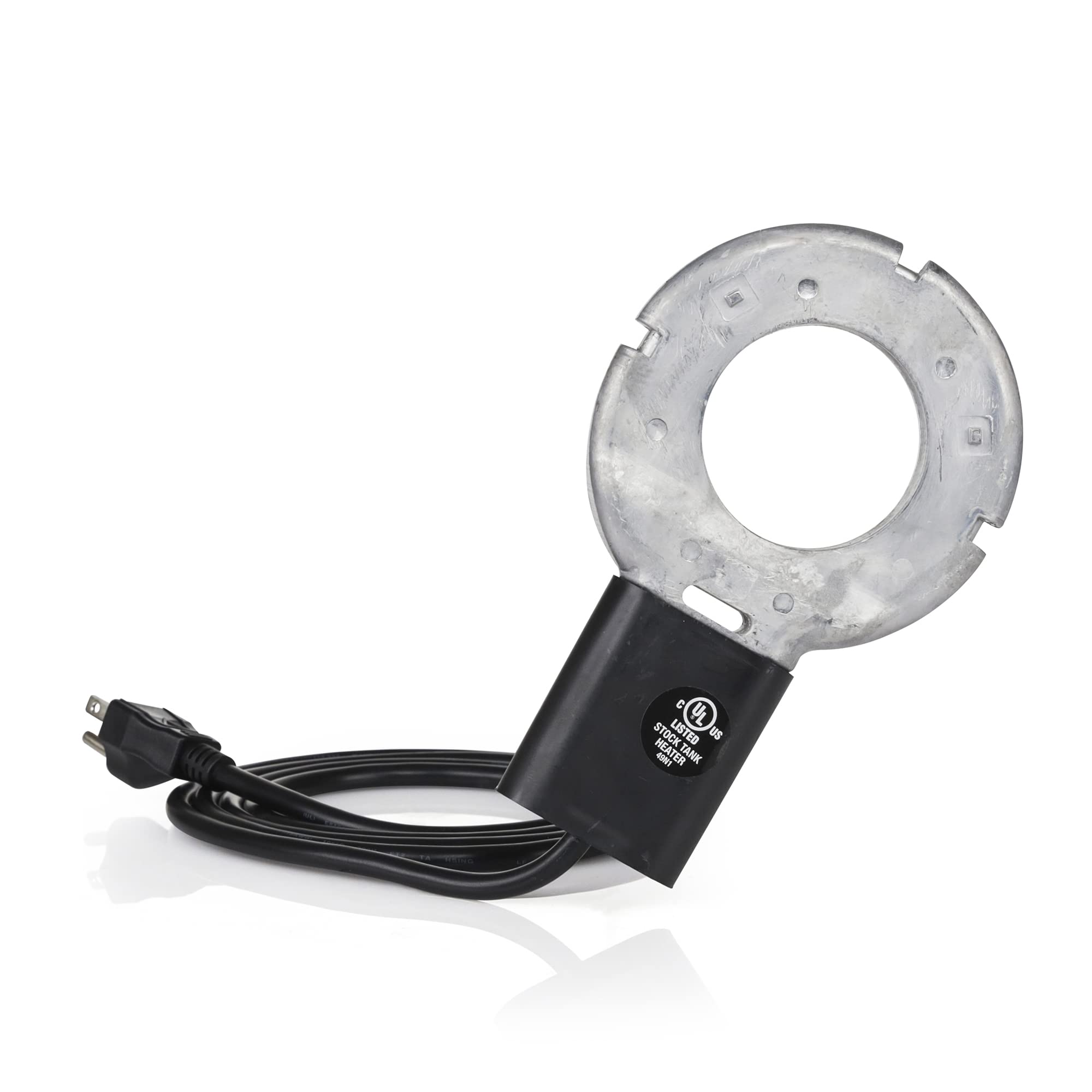
How To Choose The Best Pond Heaters
Choosing a pond heater depends on three things: how cold it gets where you live, how many gallons your pond holds, and whether you have fish. Pick the wrong wattage (the electrical power the heater converts to heat) and you either waste money running a space heater in your pond or watch the ice win anyway. Here is what to look for.
Match the Wattage to Your Water Volume
A 120-watt heater is perfect for small ponds up to 250 gallons and uses very little electricity. For ponds between 500 and 1000 gallons you typically need 400 to 500 watts to keep an ice-free patch open. Big ponds over 1500 gallons or brutal northern climates call for 1000 to 1500 watts. The right wattage means the heater only runs often enough to keep a hole open, not to heat the entire pond.
Floating vs. Submersible: It Matters for Your Liner
Floating heaters sit on the surface and keep a hole open for gas exchange (allowing harmful gases to escape and oxygen to enter). They are safer for flexible pond liners because the heat does not concentrate against the plastic. Submersible models sit on the bottom and can heat a wider area, but some must be used with a guard cage (a metal or plastic shield) if you have a rubber or plastic pond to prevent melting the liner. Always check the product details for liner compatibility before buying.
Thermostatic Control Saves Real Money
A thermostatically controlled heater (a built-in thermometer that turns the unit on and off) only turns on when the water temperature drops near freezing, then shuts off when the water warms up again. This cycling saves electricity compared to heaters that run constantly. Look for a fixed or adjustable thermostat as a feature — it makes a noticeable difference on your winter electric bill.
Quick Comparison
| Model | Best For | Wattage | Pond Size | Weight | Amazon |
|---|---|---|---|---|---|
| Allied Precision 7621★ Best Overall | Deep Freeze Large Ponds | 1000-Watt | 700–1000 gallons | 16 oz | Amazon |
| Farm Innovators C-500Best Value | Livestock Tanks & Troughs | 500 Watts | 50 gallons | 1.73 lb | Amazon |
| 500W Cast Aluminum De-Icer | Medium Koi Ponds | 500 Watt | 5–50 gallons | 2.1 lb | Amazon |
| TURBRO PD400A | Fish Pond Safety | 400 Watts | Medium ponds | 4.95 lb | Amazon |
| Danner Pondmaster 02175 | Small Energy-Saving Ponds | 120 Watts | Up to 250 gallons | 3 lb | Amazon |
| Laguna PowerHeat PT1642 | Consistent Freeze Protection | 315 Watts | 500–600 gallons | 3.9 lb | Amazon |
| 1500W Submersible DTS15 | Extreme Sub-Zero Tanks | 1500 Watt | 300+ gallons | 2.72 lb | Amazon |
In‑Depth Reviews
1. Allied Precision 7621 1000-Watt Floating De-Icer
Our pick — 4.5★ from 550+ verified ratings; the strongest balance of quality and price.
The brute-force solution for ponds that freeze solid in single-digit weather.
This floating de-icer delivers 1000 Watts of heat — 1000W versus 500W — and that power keeps a 700-to-1000-gallon pond ice-free even when temperatures drop into single digits. The floating design means it sits on the surface, keeping a breathing hole open so toxic gases escape and oxygen gets in. It weighs just 16 ounces, so it floats easily and won’t strain the cord.
The catch: you need a separate guard cage (a protective shield) if you have a plastic or rubber pond liner, because the description does not mention one. That adds cost and a step some buyers don’t expect. It also lacks an auto-shutoff if it runs dry, so you must maintain proper water levels to avoid overheating. Buyers report it works well keeping 700-1000 gallon pond ice-free in single-digit temps and it is safe for fish. The plastic construction is simple but functional, though some wish the cord were longer for reaching distant outlets. At 1000 Watts versus 1500 Watts of the Submersible DTS15, this unit is a better fit for large ponds that don’t face extreme -20°F conditions.
Why It Wins for Big Ponds
- 1000-Watt heating is enough for ponds up to 1000 gallons in deep freezes
- Floating design keeps a gas-exchange hole open at the surface
- Light at 16 ounces, easy to place and retrieve
The Trade-Offs You Should Know
- Needs a separate cage guard for plastic or rubber pond liners
- No auto shutoff if water level drops too low
- Cord length can be short for some setups
Reach for it if: you have a large pond (700-1000 gallons) in a climate that hits single-digit temperatures and you need reliable ice-free water for fish.
Think twice if: your pond has a plastic or flexible liner — you will need to buy a separate guard cage before installation.
2. Farm Innovators C-500 Submergible Cast Aluminum Utility Water De-Icer
The farm-proven workhorse that switches easily from stock tank to fish pond.
This submersible de-icer (a heater that sits on the bottom of the tank) delivers 500 Watts of heating power in a cast aluminum body that is safe for plastic containers — a rare combination. The thermostatic control (a built-in thermostat that activates only near freezing) means it only runs when needed, and experienced owners mention that pairing it with a 250W unit for seasonal wattage switching saves half the electricity compared to running a single 1500W heater. It is designed for containers up to 50 gallons, making it a natural fit for horse troughs, chicken waterers, and medium ponds.
What owners praise most is reliability: it keeps 5-gallon duck water ice-free even when temperatures dip below 20°F, and at higher elevations down to 10°F it still keeps a large duck pool open. With annual maintenance like a Corrosion X coating (a protective spray against rust), some owners get three-plus years of service. At 1.73 pounds and 2 x 8 x 7.5 inches, it sits low in the water and stays put. It weighs 1.73 lb, while the 500W Cast Aluminum De-Icer weighs 2.1 lb, though it is lighter than many floating units. The cast aluminum dissipates heat efficiently and stands up to livestock tank abuse without rusting.
What Wins People Over
- Safe for plastic containers, unlike many metal heaters
- Thermostat-controlled to save electricity when water is above freezing
- Cast aluminum body holds up to continuous winter use
What to Watch For
- Some units fail within the first year without careful maintenance
- 50-gallon capacity means it is not for large ponds alone
- Opinions on value for money are mixed among longer-term owners
Best for: anyone with a stock tank, trough, or small pond who wants a durable thermostatic heater that plays nice with plastic.
Look elsewhere if: you need to heat a pond larger than 50 gallons without pairing multiple units.
3. 500W Pond Heater Submergible De-icer Cast Aluminum Chicken Water Heater
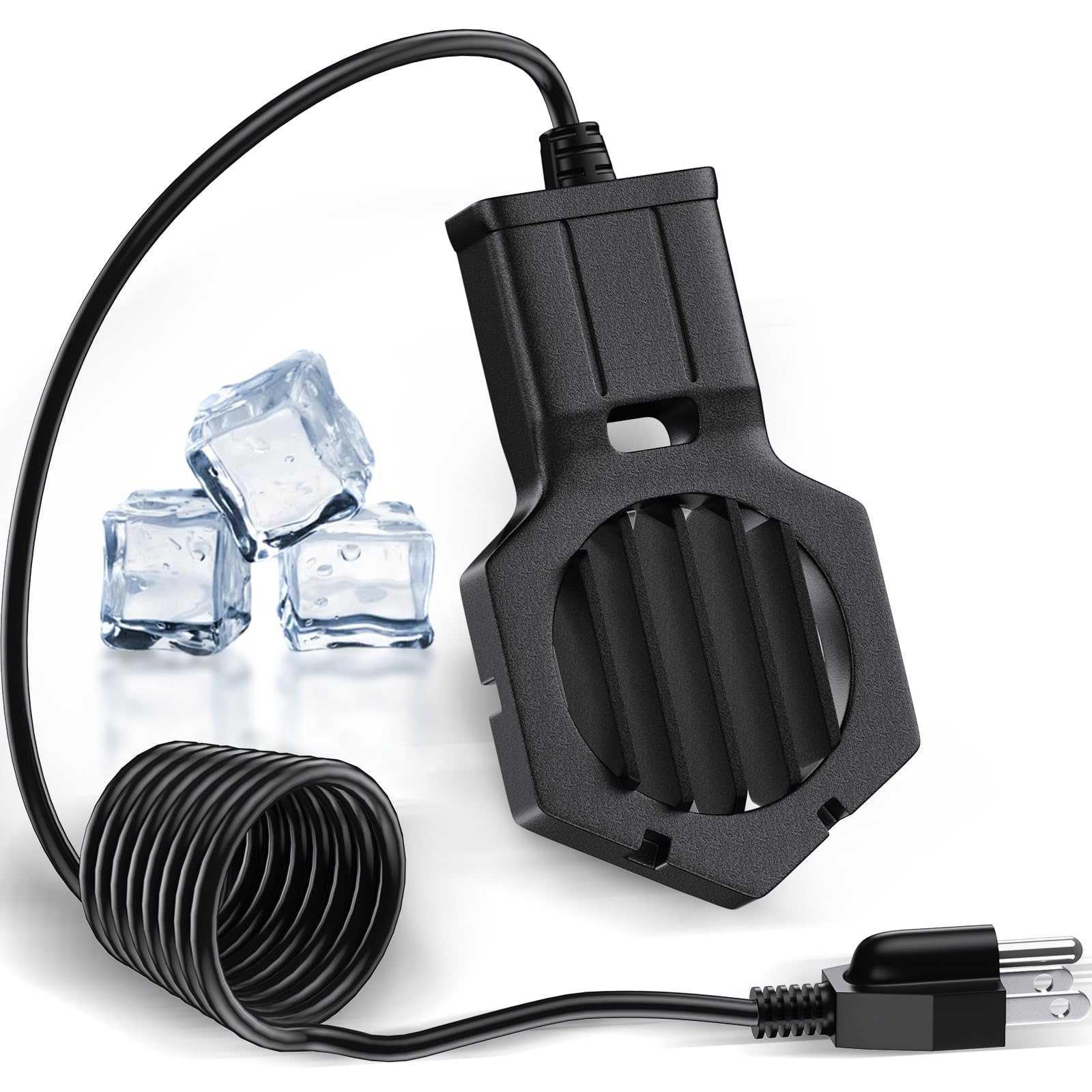
Fish gather around it — that is the kind of heat a koi pond needs.
This submersible 500-Watt de-icer has a cast aluminum body that measures 7.6 x 4.5 x 1 inches, making it larger and heavier than the Farm Innovators C-500 — it weighs 2.1 pounds compared to 1.73 pounds. That heft translates to durability: customers note zero rust even after exposure to cattle sludge in Wisconsin winters. It can handle containers from 5 to 50 gallons, but its real strength shows in medium koi ponds.
The defining real-world story comes from a 3ft x 18ft pond that was frozen 5 inches deep. This heater melted a large radius of ice, and the koi and goldfish swam right up to the warm water and gathered around it. The thermostat activates only when water temperature nears freezing and shuts off once the water is warm enough, saving power during milder nights. The 10-foot cord is made of cold-resistant material and is thick and waterproof for stable operation. The instruction clarity is the weak point — the heater turns on below 60°F and off above 90°F, which is important to know so you do not panic when it cycles on during a chilly fall day.
What Owners Love Most
- Heavy-duty cast aluminum resists rust through harsh winters
- Thermostat-controlled with temperature control cycles that save energy
- Melts a large radius of ice, even on ponds frozen 5 inches deep
The Honest Downside
- Instructions are unclear about the temperature thresholds
- Heating elements get very hot when not submerged
- Limited to 50-gallon container size per unit
Who it is for: koi and goldfish pond owners who need a heater that melts a wide area and survives a full winter season without rusting.
Who it is not for: anyone who needs to heat a pond larger than 50 gallons without using multiple units.
4. TURBRO Pond De-icer, Floating Pond Heater with 32.8 ft. UL Approved Cord (PD400A)

Stainless steel build with a cord long enough to reach the far side of almost any pond.
This floating pond heater delivers 400 Watts of heating power (compared to 500 Watts of the Farm Innovators C-500) — but the TURBRO makes up for it with design intelligence. The entire casing is anti-rust and anti-corrosive stainless steel, not cast aluminum or plastic, so it stands up to constant moisture and harsh weather without degrading. It floats on the surface, keeping a hole open for gas exchange, and weighs 4.95 pounds — heavy enough to stay put but light enough to float properly.
The strongest selling point is the 32.8 ft. UL approved power cord, which is dramatically longer than any other cord in this comparison — far exceeding the Danner Pondmaster 02175’s 18-foot cord. That extra reach means you can place the heater exactly where you need it without daisy-chaining extension cords. The integrated GFCI (Ground Fault Circuit Interrupter — a safety device that cuts power if it detects a leak) leakage protection plug adds a genuine safety layer for fish ponds. The LED status light changes color — red means actively heating, green means paused — so you always know what the heater is doing. Owners consistently praise how it creates a huge melt spot and keeps a 40-gallon pond flowing all winter. The SCR (Silicon Controlled Rectifier) technology inside offers a faster response time. A small number of units arrive with water leaking inside, causing a tripped breaker defect, but given the build quality and strong owner feedback, these appear to be rare.
Why It Stands Out
- Full stainless steel casing is anti-rust and anti-corrosive
- 32.8 ft cord is the longest in this guide, giving flexible placement
- GFCI leakage protection plug adds electrical safety for fish ponds
The Risk to Know
- Occasional defective unit with water leaking inside the seal
- 400 Watts is less power than some competitors at similar price
- Support experience can be difficult if a defect occurs in freezing weather
Reach for this if: you want the longest cord, a stainless steel body, and GFCI safety in a floating heater for a medium fish pond.
Look elsewhere if: you need maximum wattage for deep freezes — the 1000-Watt Allied Precision is a better fit for extreme cold.
5. Danner Manufacturing Pondmaster Pond De-icer (02175)

The energy-sipping de-icer that keeps a breathing hole open without a huge electric bill.
At just 120 Watts of heating power, this floating de-icer is the most energy-efficient option in the lineup. It is designed specifically for ponds up to 250 gallons and uses a fixed thermostatic control (a preset thermostat) to reduce heating time and save electricity. The internal electronics are epoxy sealed (covered in a waterproof resin) for watertight protection, and the rugged high-impact ABS plastic (a strong, durable type of plastic) body means it will not harm flexible liners or pre-formed ponds — no guard cage needed.
It keeps fish alive through winter by maintaining a small opening in the ice so harmful gases escape. Reviewers point out it works well in 3°F temperatures, melting a hole through ice even after a pond has frozen over completely — you just lay it on the ice and it melts a hole in about 24 hours, then you drop an aerator (a device that adds oxygen to the water) underneath. The 18-foot power cord with a 2-prong polarized plug is reasonable, though shorter than the TURBRO’s 32.8 feet. The honest truth: there is disagreement among buyers about whether it keeps the pond from freezing completely or just maintains a small hole. In very cold climates the pond may freeze over entirely, but the heater will melt an opening if placed on top. Many owners buy these year after year because they work and cost almost nothing to run. The 1-year limited warranty covers the basics.
The Energy Advantage
- 120-Watt draw is the lowest in this comparison, saving significant electricity
- Safe for flexible liners and pre-formed ponds right from the start
- Epoxy-sealed electronics keep water out for long-term reliability
The Limitation
- Only rated for ponds up to 250 gallons
- Will not keep a large pond fully ice-free in deep freezes
- Mixed reviews on whether it prevents complete freezing versus maintaining just a hole
Who it fits: owners of small ponds (under 250 gallons) who want to maintain an ice hole for gas exchange without a high energy bill.
Who it does not fit: anyone with a pond larger than 250 gallons or who lives in extreme sub-zero climates where only a small hole is insufficient.
6. Laguna PowerHeat 315-Watt Floating Pond Heater (PT1642)

The 315-watt floater that keeps a 1000-gallon pond ice-free for three winters running.
This floating heater runs at 315 Watts — right between the 120W Pondmaster and the 400W TURBRO — making it a sensible middle ground for medium ponds. It is designed for ponds where temperatures drop to about 20 degrees Fahrenheit, with an integrated thermostat (a temperature sensor) that shuts the unit off if it overheats, protecting the internal components. The 22-foot cord with a grounded plug gives a good reach for most backyards.
What stands out here is the real-world evidence: shoppers say keeping a 6×10 foot pond of roughly 1000 gallons completely ice-free for three years straight, including sub-zero temperatures. The heater melts snow in about 24 hours and allows you to leave a waterfall running without ice dams building up. The highly-visible LED pilot light (a small indicator light) shows when the heater is on, so you can see from the house that it is working. Some owners even report that warming the water with this heater actually reduces string algae by allowing beneficial bacteria to stay active longer into the winter. However, in single-digit temperatures, a small number of units fail and blow the GFCI (Ground Fault Circuit Interrupter) circuit, causing the pond to freeze over. Given that thousands of these are sold and most buyers report years of trouble-free service, this appears to be a batch defect rather than a design flaw. If you live somewhere that regularly hits below 10°F, pairing this with a backup is a sensible precaution. It measures 7.5 x 7.5 x 5.2 inches and weighs 3.9 pounds.
The Proven Strengths
- Proven effective on ponds up to 1000 gallons in sub-zero temperatures
- Red LED indicator light lets you confirm it is working from a distance
- Integrated thermostat protection prevents overheating damage
What Gives Us Pause
- Occasional units fail in single-digit temperatures, tripping GFCI
- At 315 Watts, may not be strong enough for very large ponds in extreme cold
- Non-returnable if defective after installation
Best for: pond owners in moderate to cold climates (down to 20°F) who want a proven floater with a visible indicator light.
Think twice if: you live where it hits below 10°F regularly — consider the 1000-Watt Allied Precision or a two-unit setup instead.
7. 1500 Watt Submersible De-Icer (DTS15)

The tank-melting monster that laughs at minus 25 degrees Fahrenheit.
When nothing else keeps water liquid, this 1500-Watt submersible de-icer (a heater that sits on the bottom of the tank) steps in. It is the most powerful unit in this guide by a wide margin — delivering 1500 Watts versus 1000 Watts of the Allied Precision unit — and it is designed to keep an entire tank ice-free without overheating. It is not subtle. It is the heater you bring out when your pond or livestock tank freezes solid and you need it thawed yesterday. The dimensions are 7 x 7 x 2.75 inches, and it weighs 2.72 pounds, making it compact relative to its power output.
The owner reports speak for themselves: it keeps a 320-gallon water tote insulated with Styrofoam at a steady 45 to 50°F even when the outside temperature hits -21°F. In northern Wisconsin, two of these units in a 300-gallon outdoor shubunkin pond kept all ice off and fish alive through the harsh winter. One owner in an area where 30-below is common calls it reliable and says they would buy it again. For extreme cold environments (temperatures below -20°F), this is the heater that works when others pack up and go home. The honest trade-off: at 1500 Watts, running this unit adds up on your utility bill, and for moderate climates it is overkill (more power than you need). Some units have been reported to fail after limited use, though the majority of owners mention years of dependable service. It is built by the same Miller Manufacturing company that makes the Allied Precision unit, so the build quality lineage is consistent.
What It Does Best
- 1500-Watt output keeps entire tanks ice-free even at -25°F
- Keeps 300+ gallon ponds completely ice-free through harsh winters
- Compact build for the power it delivers
The Real Cost
- High electricity draw at 1500 Watts — not for budget-conscious operation
- Overkill for moderate climates or small ponds
- Mixed feedback on long-term durability with some failing after limited use
Who needs this: owners of large stock tanks or ponds in extreme northern climates where temperatures regularly drop below -20°F.
Who should skip it: anyone with a pond under 300 gallons or in a climate where winter lows stay above 10°F — you will spend more on electricity than the heater is worth.
Understanding the Specs
Wattage: The Heat Output You Need
Wattage is the measure of electric power the heater converts into heat. More watts means more heat, but also more electricity consumed. For small ponds under 250 gallons, 120 to 315 watts is usually enough to maintain an ice-free hole. Medium ponds in moderate climates need 400 to 500 watts. Big ponds or extreme cold environments often require 1000 to 1500 watts. A thermostatic control (a built-in thermostat) cycles the heater on and off so it only runs when water is near freezing, which keeps your electric bill reasonable even with higher wattage.
Floating vs. Submersible: Where the Heat Goes
A floating heater sits on the surface and melts a breathing hole for gas exchange (allowing toxic gases to escape and oxygen to enter). It keeps fish alive by allowing those gases to escape through the opening. A submersible heater (a heater that sits on the bottom) distributes heat through a wider water column. Submersible heaters tend to heat a larger area but must be compatible with your pond liner (the flexible material that holds water) — some metal-bodied units require a guard cage (a protective shield) for plastic or rubber ponds to prevent melting. Floating heaters are generally safer for all liner types.
Thermostatic Control: The Electricity Saver
A thermostatically controlled heater (a heater with a built-in sensor that turns it on and off based on temperature) only activates when the water temperature drops near freezing (typically below 40°F) and shuts off once the water warms up to a safe level above freezing. This cycling reduces runtime dramatically compared to a heater that runs constantly. Look for units that advertise “thermostatically controlled” or “fixed thermostatic control” as a feature. It can cut your winter electricity usage by half or more compared to running a non-thermostatic heater at full power all winter.
Material: Cast Aluminum vs. Stainless Steel vs. Plastic
Cast aluminum is heavy and durable but can react with minerals in hard water over time. Stainless steel is anti-rust and anti-corrosive, making it ideal for constant submersion — it costs more but lasts longer. High-impact ABS plastic (a strong, durable type of plastic) is safe for all pond liners and is lighter but less thermally conductive, so it takes longer to transfer heat into the water. Plastic is fine for small ponds but larger ponds benefit from metal-bodied units that transfer heat faster.
FAQ
Will a pond heater kill my fish?
Can I use a livestock tank heater in a koi pond?
How many watts do I need for a 500-gallon pond?
Do pond heaters have to run all winter?
Can I use an extension cord with a pond heater?
How long do pond heaters typically last?
What is the difference between a pond heater and a de-icer?
Will a pond heater work if the pond is already completely frozen over?
Is it safe to leave a pond heater plugged in when not in use?
What happens if the power goes out during a blizzard and my pond heater stops working?
Final Thoughts: The Verdict
The big-pond winner is the Allied Precision 7621. Its 1000-watt output handles ponds up to 1000 gallons in single-digit weather without breaking a sweat, which is why it earns the top spot for most users. For livestock tanks and smaller ponds, the Farm Innovators C-500 is the value champion — its 500 Watts and thermostatic control save electricity while keeping water ice-free. And for extreme sub-zero environments where only brute force will do, the 1500W Submersible De-Icer DTS15 is the one to reach for, keeping 300+ gallon tanks ice-free even at -25°F.
How We Picked
We do not accept paid placement. Every pick is matched to a real buyer and a real use-case; we do not hands-on test units.
Sources & Methodology
Specifications: manufacturer listings and product documentation. Review insights: verified customer reviews, as of July 2026. Pricing: not shown on this page (it changes often); check the current price via the retailer link.
As an Amazon Associate, Lawn Gear Lab earns from qualifying purchases. This does not affect which products we feature.