
Specs are compiled from manufacturer listings and verified buyer reviews and can change over time — please confirm the key details on the product page before buying.
A greenhouse potting shed transforms gardening into a year-round activity with a dedicated, weatherproof workspace. The real challenge is finding a structure that survives the elements, holds up to daily use, and doesn’t become a weekend-long assembly nightmare. You need something that keeps your seedlings warm through a frost, gives you a dedicated workspace for repotting, and won’t blow apart in the first spring storm.
I’m Rikta — the founder and writer behind Lawn Gear Lab. This guide is built by comparing the manufacturers’ published specifications and the patterns across verified customer reviews, so you get each pick’s real strengths and trade-offs instead of marketing spin.
After poring over the specs and hundreds of owner experiences, this guide has narrowed the field down to the five greenhouse and potting shed kits that actually deliver. Here are the top contenders for the best greenhouse potting shed you can buy right now.
Our Picks at a Glance
How To Choose The Best Greenhouse Potting Shed
The best greenhouse potting shed matches your yard size, local weather, and tolerance for DIY assembly. A few key specs separate the structures that last from the ones that frustrate you every spring.
Frame Material: The Backbone of Your Structure
This is the single biggest durability decision. Cedar wood offers natural decay resistance and a classic look, but it is heavy and requires the most assembly time. Aluminum is lightweight, rust-proof, and easier to put together, though it can feel less premium under high wind loads. The weight difference is enormous — the top cedar pick tips the scales at over 798 pounds, while a similar-sized aluminum frame weighs around 150 pounds.
Glazing: Polycarbonate Thickness and Layers
Look for twin-wall polycarbonate panels. The air pocket between the walls acts as insulation, keeping heat inside during cold months. Thicker panels — 6mm or 4mm — are stronger and hold up better against hail and debris than thinner ones. The best kits use multi-wall panels that block over 99.9% of UV rays while still letting through plenty of the light spectrum plants need.
Ventilation and Power
Without ventilation, a greenhouse can overheat rapidly on sunny days. Look for at least two vents — ideally roof vents that let hot air rise and escape. A temperature-activated exhaust fan is even better, automating the process so you do not have to rush out midday. If you plan to use grow lights, heat mats, or a fan, make sure the shed has built-in electrical outlets or a power port.
Quick Comparison
| Model | Best For | Frame Material | Size (L x W x H) | Number of Vents | Amazon |
|---|---|---|---|---|---|
| Backyard Discovery Bellerose★ Best Overall | Year-Round Serious Growers | White Cedar Wood | 159″ x 82.25″ x 112.25″ | 2 + Fan | Amazon |
| HOWE 8x8x7.5 FTBest Value | Budget-Conscious Hobbyists | Aluminum | 96″ x 96″ x 90″ | 2 | Amazon |
| Aoxun 6×8 FT Wooden | Compact Cedar on a Budget | Cedar Wood | 71″ x 83.3″ x 144″ | 1 | Amazon |
| CDCASA 10x16x10 FT | Large-Scale Aluminum Builds | Thicker Aluminum | 122″W x 119.4″H | 3 | Amazon |
| WELYAS 16x10x10 FT | Maximum Footprint on a Slab | Aluminum | 192″L x 118″W x 122″H | 3 | Amazon |
In‑Depth Reviews
1. Backyard Discovery Bellerose 9′ x 6′ White Cedar Wood and Polycarbonate Walk-in Greenhouse Kit
Our pick — over 4.5★ from 70+ verified ratings; the strongest balance of quality and price.
A cedar fortress that survived a North Idaho winter with greens still growing inside.
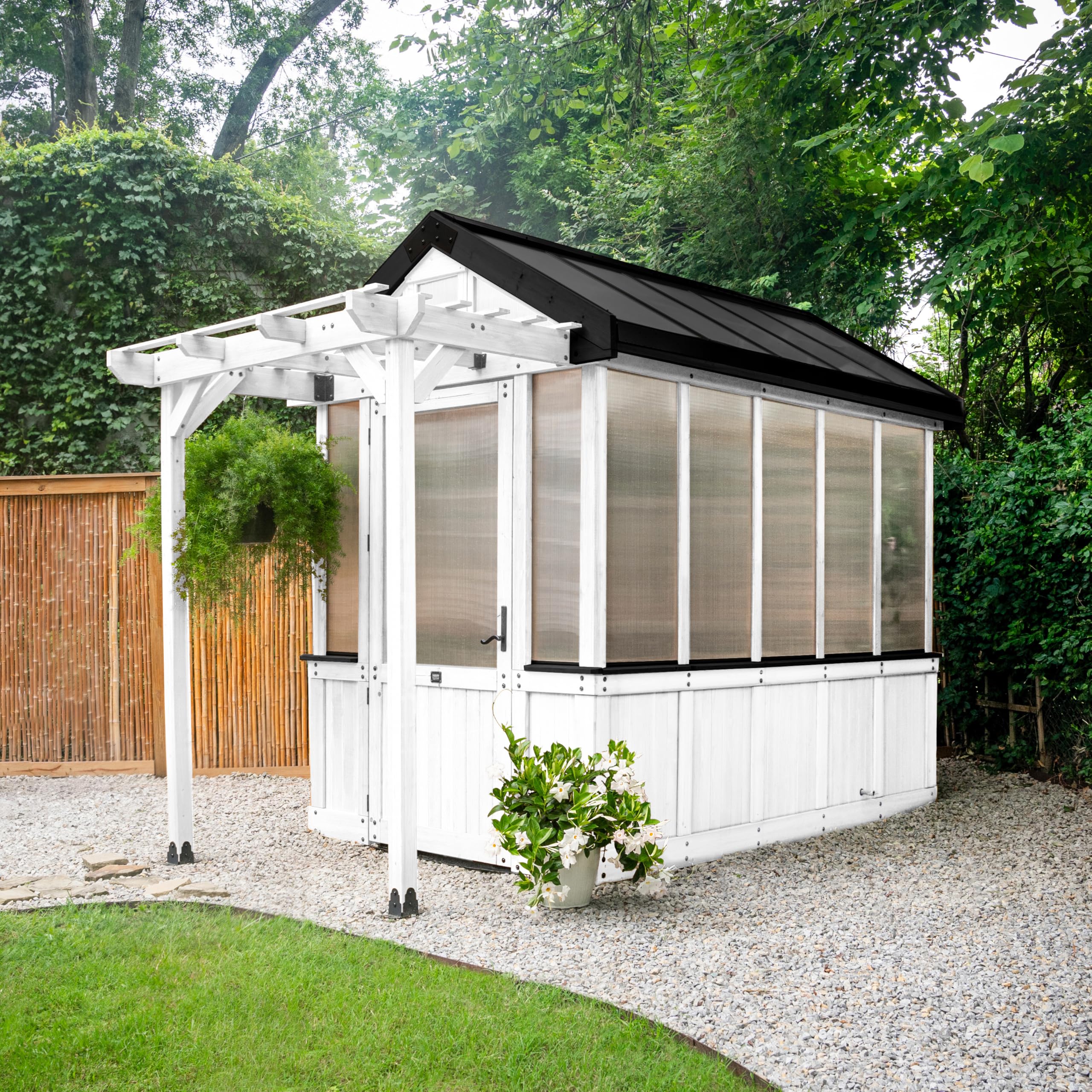
This kit sets a new standard for backyard greenhouse potting sheds. The frame is 100% white cedar — naturally rot-resistant, pre-stained in a clean white finish, and carried by a pergola-topped design that looks like a proper garden building rather than a tent. At 798 pounds, this is the heavyweight of the group, and it shows in the specs: a 3,700-pound snow load rating and certified wind resistance up to 100 mph. That is a 79% higher wind rating than the aluminum-framed HOWE, and the reason owners in severe Colorado weather call it “absolutely stunning and solid.” The commercial-grade 4-wall polycarbonate panels improve heat retention by 30% over standard double-wall panels, which lines up exactly with what buyers report: a fill from a 7 a.m. watering is still warm enough that greens overwintered without issue.
Its integrated ventilation system outperforms competing models. It comes with a temperature-activated exhaust fan, a manual window, and a total of 2 vents — the fan alone automates climate control in a way that the passive vents on the other models cannot match. The patented PowerPort adds 3 electrical outlets and 3 USB ports, and the exterior and interior hose hook-ups mean you are not dragging a watering can across the yard. The interior is 54 square feet of working space, with 13 feet of lower staging shelves, 6 feet of upper shelves, and 4 plant hooks. The interactive BILT app provides step-by-step instructions for the pre-cut, pre-drilled pieces. Build time runs about two weeks for two people, and an occasional board arrives with a slight warp — but the overwhelming owner consensus is that the precision engineering and included hardware (roughly 50 pounds of it, with over 1,000 pilot holes) make the effort worthwhile. The 5-year warranty covers it all.
A small percentage of owners mention that the cedar is soft enough to strip screw threads if overdriven, and the 10 shipping boxes are very heavy — delivery service has been a pain point for a few. But the reviews pages sum it up: “It’s been through a winter here in N Idaho and it stayed warm enough we had greens all winter.” Real-world owner reports confirm its winter performance.
class-leading Build Quality
- 100 mph wind rating and 3,700-pound snow load.
- Built-in exhaust fan plus 2 vents for automated climate control.
- PowerPort with 3 outlets and 3 USB ports, plus interior/exterior hose hook-ups.
- Commercial-grade 4-wall polycarbonate panels boost heat retention by 30%.
Assembly & Delivery Considerations
- Extremely heavy: weighs 798 pounds across 10 boxes.
- Assembly is a two-week project for two people.
- Soft cedar wood can strip screws if you are not careful.
Your year-round grow station: If you want the most durable, best-equipped greenhouse that will keep plants alive through a hard winter and look stunning doing it, this is the one to buy.
Reach for a different kit if: You need a weekend-only project or you cannot manage the weight of the delivery boxes. This is a serious build for a serious structure.
2. HOWE 8x8x7.5 FT Aluminum Greenhouses for Outdoors
A budget-friendly aluminum frame that goes up in a day and a half.
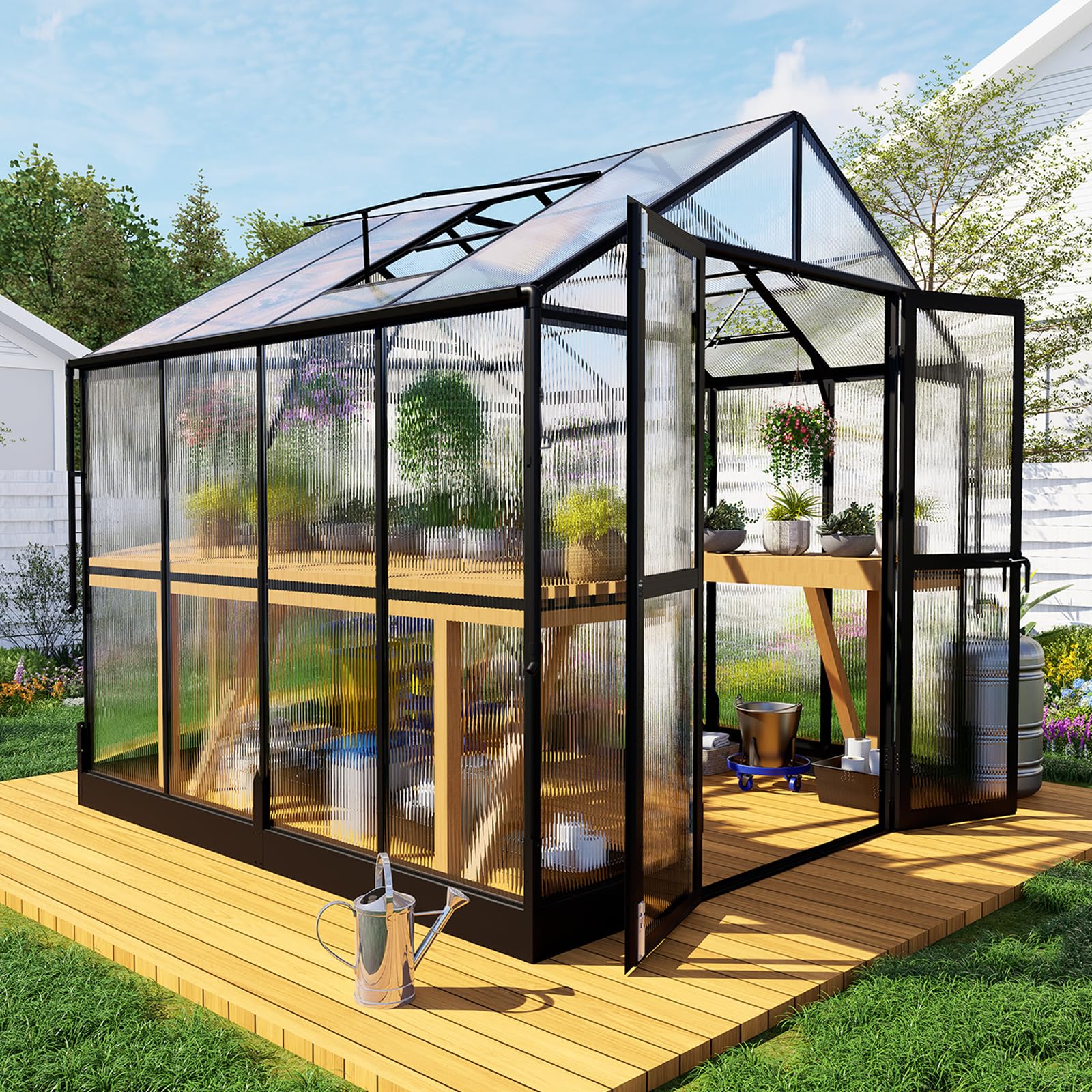
The HOWE offers an affordable entry point into serious greenhouse gardening. Its aluminum frame weighs just 150 pounds — that is a 5.3x weight advantage over the Backyard Discovery cedar model, making it far easier to move around the yard and position on a foundation. The 6mm twin-wall polycarbonate panels block 99.99% of UV rays, and the 8x8x7.5-foot footprint provides a generous 64 square feet of growing space. Buyers praise its strong price-to-value ratio.: buyers call it “well-designed and sturdy,” noting it withstood several storms and snow right out of the gate.
It comes with 2 vents and a lockable swing door, plus a built-in gutter system on both sides for rainwater collection — a practical touch the pricier Aoxun lacks. The wind rating is 56 mph with a snow load capacity of 15.4 psf, which is solid for hobby use in moderate climates, though it falls well short of the Backyard Discovery’s 100-mph rating. The assembly story is the defining trade-off here. Some owners found it straightforward, reporting that they built it alone in 1.5 days (the instructions recommend 2 adults and 2 days). Others found the instructions difficult to follow, and a few noted that the roof windows can fly off in strong wind unless you add extra weight. The recurring advice from experienced builders is to use breathable edge tape on the bottom of the polycarbonate panels, foil tape on the top, and silicone sealant on the roof.
An occasional unit arrives with a missing small part, and after-warranty customer service is a known weak spot. But for the money, the frame is solid, the panels are thick, and the size works well for a backyard hobbyist who is ready to spend a weekend on the foundation and assembly.
Best for budget-minded gardeners: You get a sturdy aluminum frame and real polycarbonate panels at a price that leaves room for shelving, a heater, and plants. The trade-off is a lower wind rating and instructions that test your patience.
Grab this if: You want a real greenhouse without the premium price tag and you are comfortable with a challenging but doable weekend build.
Look elsewhere for: High-wind zones (56 mph max) or if you want a turnkey assembly experience with crisp instructions.
3. Aoxun 6×8 FT Wooden Greenhouse for Outdoors, 6MM Thick Polycarbonate Panel
Real cedar construction in a smaller, more affordable package.
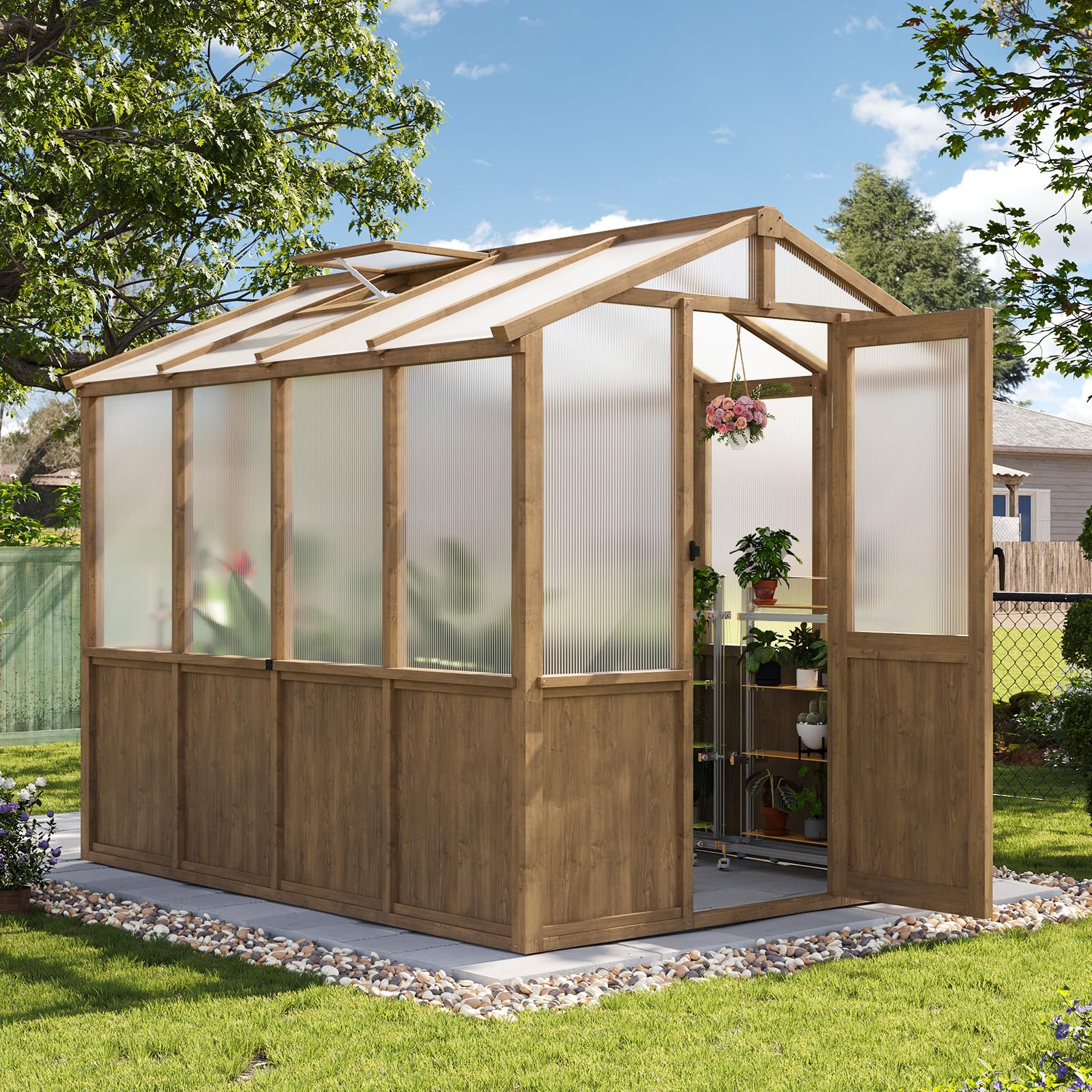
If the Backyard Discovery is a mansion, the Aoxun is a cozy cottage — and for many gardeners, that is exactly the right size. At 6×8 feet, it offers 48 square feet of interior space, which is smaller than the Backyard Discovery’s 54 square feet but still enough for a serious collection of plants plus a small potting bench. The cedar wood frame gives it the same natural rot resistance as the top pick, and the heavy base makes it feel more stable than a plastic or metal frame. Owners who moved from flimsy plastic greenhouses say this one is a huge upgrade, noting it is sturdier and resists wind well. The adjustable roof vent can open up to 45 degrees, which helps with temperature regulation, and the heavy-duty hooks each support up to 55 pounds — useful for hanging lights or trailing plants.
The wind rating is listed at 60-70 mph, which actually beats the aluminum HOWE model, and the snow load is 6 inches. However, this model only has 1 vent — half the number on the HOWE — which could be a limitation on hot, still days without a fan. The cedar is soft, and owners mention that the assembly instructions are poor, with small, unclear photos that require strong logic skills to decipher. Build time runs about 10 hours with two people, and a rubber hammer is helpful for aligning the pre-cut pieces. Quality is the most consistently praised aspect, though a minority of owners received shipments with missing parts or warped wood, and the seller’s customer support for replacements has been uneven.
A fair trade for cedar on a budget: You get genuine cedar and good wind resistance, but you trade away assembly clarity and any real ventilation beyond a single roof vent.
Choose this for: A smaller yard and a desire for natural wood construction without spending cedar-mansion money.
Think twice if: You need more than one vent, or you are not ready for a moderately frustrating assembly experience.
4. CDCASA 10x16x10 FT Greenhouse for Outdoors, Large Thicker Aluminum Polycarbonate Greenhouses
A massive 10×16 foot aluminum structure that assembles with a quick-connect T-lock system.
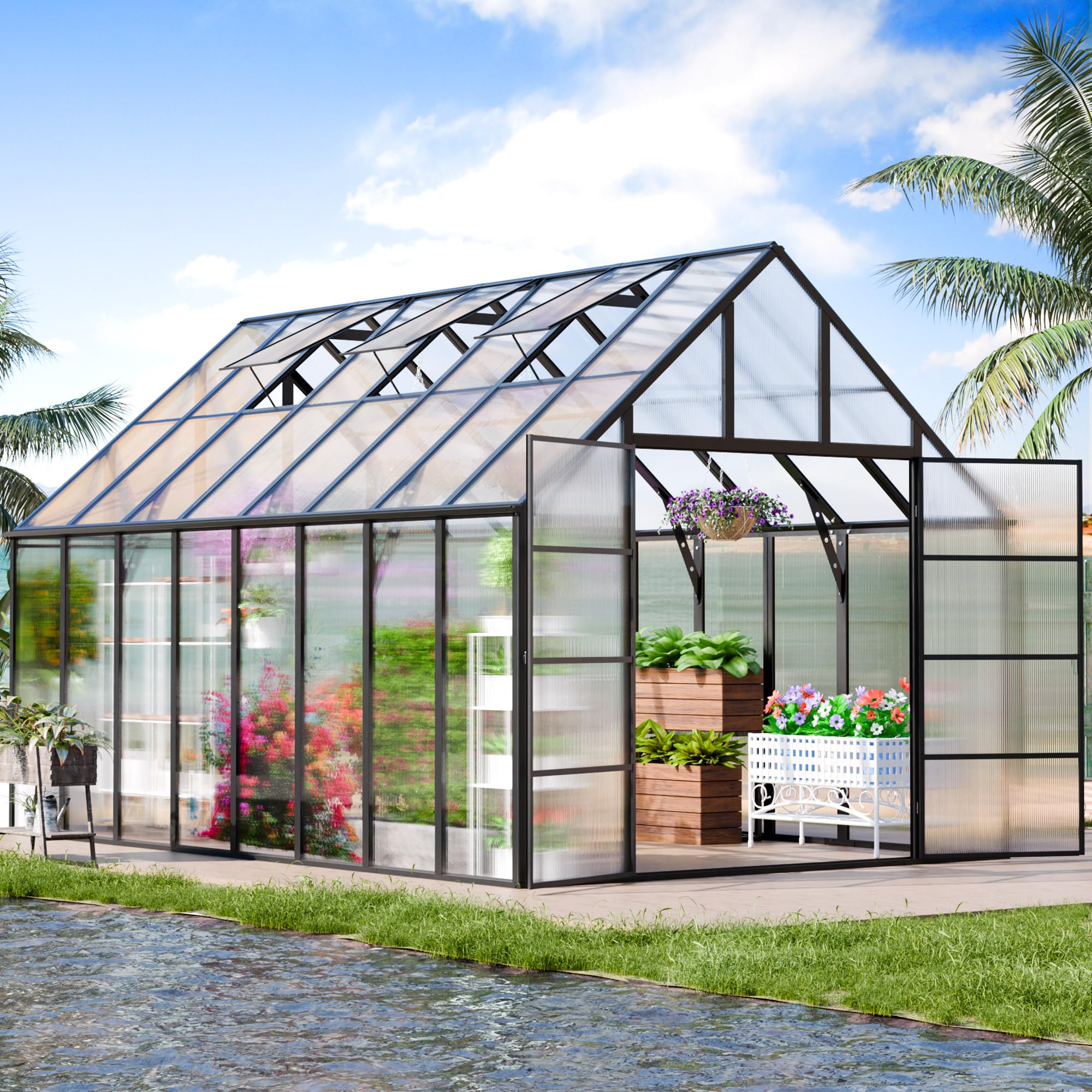
The CDCASA is built for the gardener who wants the largest footprint without the weight and cost of a cedar frame. At 10×16 feet, it dwarfs every other model here — nearly double the floor space of the Howe 8×8 and triple the size of the Aoxun 6×8. The frame uses a thicker aluminum profile than standard kits, and the patented Quick Connect T-joints are designed to save roughly 50% of assembly time compared to traditional bolt-together systems. The manufacturer claims two skilled enthusiasts can complete the build in 4-6 hours, though real-world reviews suggest a full weekend is more realistic. The 4mm twin-wall polycarbonate panels allow 70% light transmission and block over 99.9% of UV rays. It handles snow loads up to 20 PSF and survived 20-mph winds without issue in one owner’s test.
This model includes 3 roof vents, the most of any greenhouse here — each with 5 adjustable angles — plus a rain gutter system on both sides. The swing door includes snap-on handles, though some customers note the door does not close flush without adjustment. Instructions are consistently described as vague and poor, with a few owners needing to disassemble their first wall after realizing the hardware orientation was wrong. The polycarbonate is on the thinner side at roughly 1/4 inch, and the roof latch and vent hardware feel light. Still, for the sheer square footage and the price, it is tough to top. With 3 heat lamps inside, one owner maintained an interior temperature of 44°F when it was 36°F outside, which confirms the twin-wall panels are doing their insulating job.
Massive growing space for the dollar: The CDCASA delivers the biggest usable area of any pick here, but the thin panels and confusing instructions mean you earn every square foot.
Ideal if: You have a large yard and want the most greenhouse for your budget, with enough room for rows of raised beds and tool storage.
skip it if: You want a quick, frustration-free assembly or you live in a very high-wind area without reinforcing the frame yourself.
5. WELYAS 16x10x10 FT Large Greenhouse for Outdoor, Easy Assembly Aluminum Frame Heavy Duty Green House
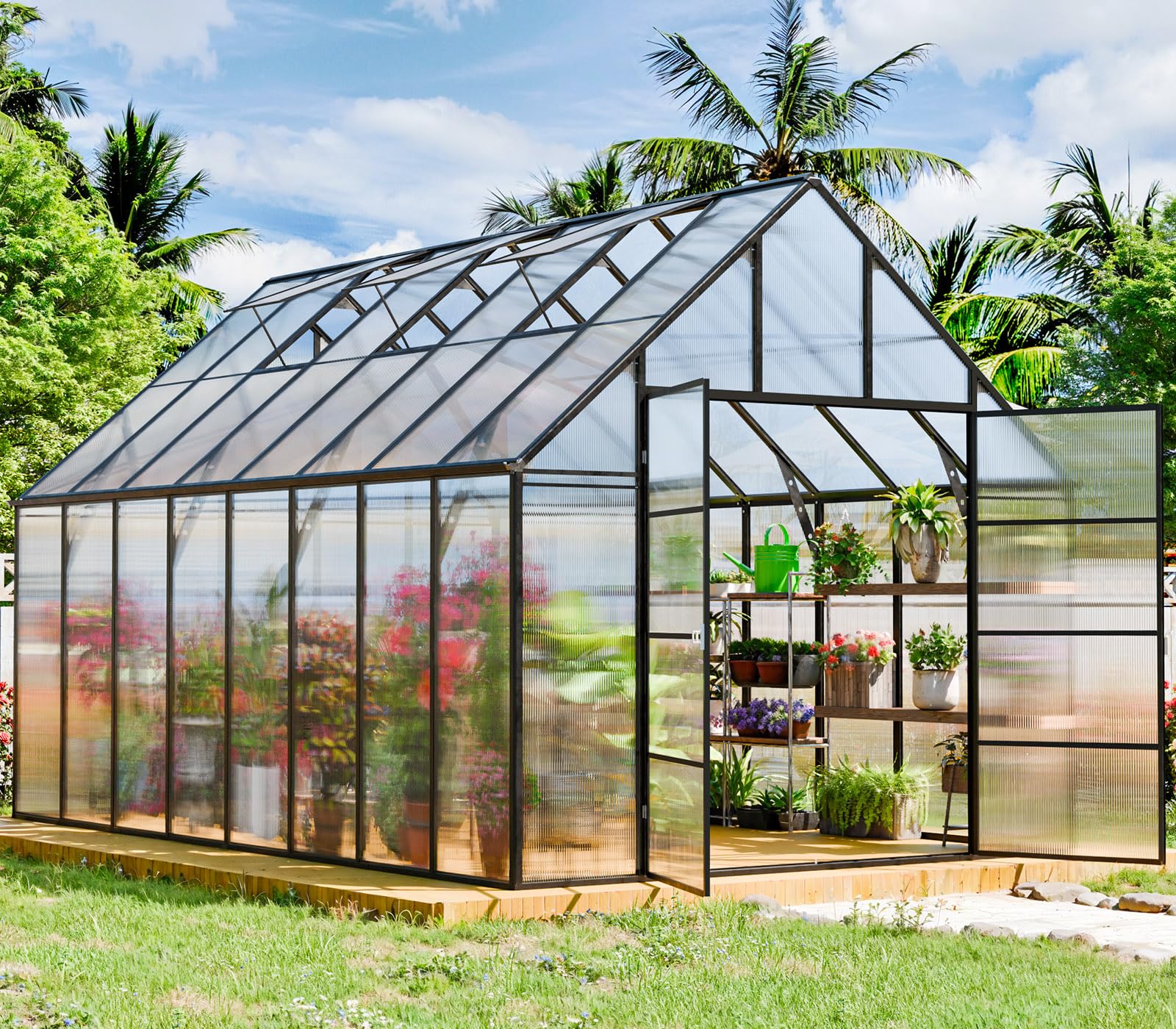
The longest footprint on the list — 16 feet of uninterrupted growing potential.
The WELYAS shares the same massive 160-square-foot footprint as the CDCASA but stretches it to 16 feet in length, which is 6 feet longer than the HOWE model. The transparent polycarbonate roof panels let in maximum sunlight, and the 3 roof vents each have 5 adjustable levels for fine-tuned airflow. The reinforced aluminum frame includes anti-rust coating and comes with mounted ground screws. It handles snow loads up to 1,000 pounds and is rated for wind resistance up to 50 mph. The swing door is a generous 6.5 x 6 feet, wide enough to wheel in a garden cart or move large pots without scraping the frame. The modular design aims for quick installation, with the kit shipping in two boxes totaling roughly 100 pounds.
Durability gets mixed feedback here — some owners find it sturdy and report it withstood heavy wind and rain, while others describe parts as flimsy. The door spring locks are noted as non-functional by several buyers, and the instructions can be unclear or missing entirely (the manual is available via an Amazon email link after purchase). Build time can stretch to four days with two people, and owners stress that patience is key. The manufacturer is straightforward about limits: the listing advises reinforcing the base and frame in harsh climates and explicitly states they do not cover hurricane or tornado damage. For a slab-mounted greenhouse in a moderate climate with a patient builder, the sheer length makes this a compelling choice for serious row cropping.
The long-house of budget greenhouse kits: You get the most linear growing space and a wide door for easy access, but you are trading up to a build that tests your resolve and door hardware that needs work.
Best for: Gardeners who need maximum length for multiple raised beds or long rows and have a concrete slab ready to bolt it to.
Not for: Anyone who wants a frustration-free assembly or lives in a region with extreme weather beyond 50 mph winds.
Understanding the Specs
Snow Load & Wind Rating
These two numbers tell you whether the greenhouse will survive a winter or a storm. Snow load is measured in pounds per square foot (psf) or as a total weight the roof can hold — the Backyard Discovery handles 3,700 pounds of snow. Wind rating is in mph. A 100-mph rating means it can withstand a strong hurricane-force gust. Always match these numbers to your local climate; if you live in a snow belt, do not buy a model rated under 15 psf.
Polycarbonate Panel Thickness
Measured in millimeters, this is the thickness of the plastic panels that form the walls and roof. Thicker panels (6mm) provide better insulation and impact resistance than thinner ones (4mm). Twin-wall panels have two layers with an air gap between them — that trapped air is what keeps the greenhouse warmer in winter. The Backyard Discovery uses commercial-grade 4-wall panels, which add an extra layer of insulation on top of that.
FAQ
Can I use a greenhouse potting shed in the winter?
How long does it take to assemble one of these kits?
Which frame material is better for a greenhouse — cedar or aluminum?
Do I need a foundation for a greenhouse potting shed?
How many vents do I need for proper airflow?
Can I power grow lights and a heater inside these greenhouses?
What does “4-wall polycarbonate” mean compared to “twin-wall”?
How do I keep the greenhouse from blowing away in a storm?
Is a bigger greenhouse always better?
What is the difference between a greenhouse and a potting shed?
Final Thoughts: The Verdict
For most gardeners, the best greenhouse potting shed is the Backyard Discovery Bellerose because it is the only model that combines a 100-mph wind rating, a 3,700-pound snow load, integrated power and water, and a temperature-activated exhaust fan — all in a stunning cedar frame that owners call a showpiece. If you need a budget-friendly aluminum entry, the HOWE 8x8x7.5 gives you a real greenhouse for less than half the price, as long as you are ready for a tricky build and moderate wind limits. And for maximum space at a mid-range price, the CDCASA 10×16 offers the largest footprint and most vents, though you will trade your patience for assembly clarity and thin panel durability.
How We Picked
We do not accept paid placement. Every pick is matched to a real buyer and a real use-case; we do not hands-on test units.
Sources & Methodology
Specifications: manufacturer listings and product documentation. Review insights: verified customer reviews, as of July 2026. Pricing: not shown on this page (it changes often); check the current price via the retailer link.
As an Amazon Associate, Lawn Gear Lab earns from qualifying purchases. This does not affect which products we feature.