
Specs are compiled from manufacturer listings and verified buyer reviews and can change over time — please confirm the key details on the product page before buying.
Every plant parent knows the disappointment of a fern that won’t unfurl or a pothos that just sits there. You water it, you give it light, but something is missing. The right green plant food bridges that gap — it delivers the precise nitrogen, phosphorus, and potassium your indoor jungle craves, turning stubborn leaves into a cascade of new growth. The decision depends on a few key choices: liquid vs. granular, synthetic vs. organic, and how much concentrate you actually get for your money.
I’m Rikta — the founder and writer behind Lawn Gear Lab. This guide is built by comparing the manufacturers’ published specifications and the patterns across verified customer reviews, so you get each pick’s real strengths and trade-offs instead of marketing spin.
Whether you are nurturing a fiddle leaf fig or a shelf of succulents, finding the best green plant food means matching the right NPK ratio (nitrogen-phosphorus-potassium ratio) and form factor to your specific plants and routine.
Our Picks at a Glance

How To Choose The Best Green Plant Food
Buying fertilizer used to be simple — you grabbed a blue powder and hoped for the best. Today you have concentrated liquids, organic granules, and pump-spray bottles. The right choice depends on how much time you have, what plants you own, and if you want an instant green-up or a slow, steady feed.
NPK Ratio: What Those Numbers Actually Mean
The three numbers on the front — like 9-3-6 or 6-2-4 — stand for Nitrogen (leaf growth), Phosphorus (root and flower development), and Potassium (overall health and stress resistance). A ratio like 3:1:2 (found in many balanced houseplant feeds) leans toward lush foliage, which is exactly what you want for leafy tropicals. Higher middle numbers are better for flowering plants, while a balanced 20-20-20 is a generalist that works across the board.
Liquid vs. Granular vs. Powder
Liquid concentrates are the fastest-acting option — you mix them with water and the roots absorb the nutrients immediately. Granular and powder fertilizers need to break down in the soil, which takes longer but provides a steadier release. If you are forgetful or want to feed weekly, a liquid concentrate like the 32-oz Dyna-Gro bottle is tough to top. If you prefer a low-maintenance approach, organic granules like Back to the Roots sprinkle over the soil surface and release over weeks.
Concentration and Value
Not all 16-oz bottles are equal. A highly concentrated formula might make 87+ gallons of fertilizer from one bottle, while a less concentrated one might only make 30 gallons. Look at how much water a single bottle dilutes to — that is the true measure of value, not just the initial price.
Quick Comparison
| Model | Best For | NPK Ratio | Form | Bottle Size | Amazon |
|---|---|---|---|---|---|
| Dyna-Gro Foliage Pro★ Best Overall | Serious Growth | 3:1:2 | Liquid Concentrate | 32 oz | Amazon |
| HiThrive All PurposeBudget Champion | Budget-Friendly Feeding | 6-2-4 | Liquid Concentrate | 16 oz | Amazon |
| NilocG Lush | Gentle Weekly Feed | — | Liquid Concentrate | 16.9 oz | Amazon |
| Back to The Roots Organic | Organic Gardens | — | Powder / Granular | 5 lb | Amazon |
| True Organic All Purpose | Vegetable Gardens | 5-4-5 | Granules | 4 lb | Amazon |
| Peter’s Professional 20-20-20 | Power Feeding | 20-20-20 | Powder | 2 lb | Amazon |
| Dr. Earth Pump & Grow | No-Mixing Convenience | — | Liquid (Pump) | 16 oz | Amazon |
In‑Depth Reviews
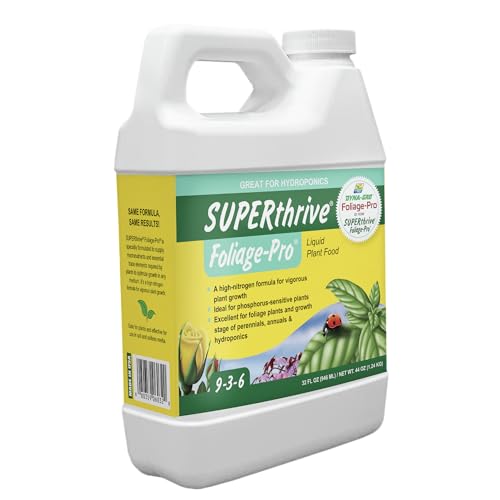
1. Dyna-Gro Foliage Pro 32oz
Our pick — over 4.5★ from 900+ verified ratings; the strongest balance of quality and price.
The concentrate that turns a sad pothos into a full cascade in a matter of days.
This is the bottle that professional growers reach for, and for good reason. The 3:1:2 NPK ratio — a near-perfect 3:1:2 mix — is engineered for foliage. It pushes lush leaf development and strong stems without encouraging weak, leggy growth. At 32 fluid ounces, this 2-pound bottle is larger than standard 16-oz offerings, so you are refilling far less often. The formula works in both soil and hydroponic systems (a water-based growing method without soil), which makes it unusually versatile if you run an indoor setup that mixes methods.
What wins people over is the sheer speed of the response. Buyers consistently report “fast, abundant new growth within days” after their first feeding — a far quicker result than many granular fertilizers deliver. The bottle is heavy, yes, but only a tiny amount is needed per gallon, so it stretches for months even with a large collection. Against the HiThrive below, the Dyna-Gro holds a stronger concentration and a broader reputation among serious growers, though both produce noticeable results.
What Gets Results
- Professional-grade 3:1:2 formula (3:1:2 ratio) built for lush foliage.
- Massive 32-oz bottle provides months of weekly feeding.
- Works in soil and hydroponic setups — rare versatility.
The Fine Print
- Some units arrive with leakage around the seal — check on delivery.
- Not organic-certified; built for performance over natural sourcing.
Grab it if: You want the fastest leaf growth possible from a concentrated liquid that a pro would use.
skip it if: You insist on certified organic ingredients; this is a synthetic formulation.
2. HiThrive 16oz All Purpose Indoor Plant Food
The bottle that makes 87 gallons of fertilizer and costs the same as a takeout meal.
HiThrive packs a 6-2-4 NPK ratio into a 16-ounce bottle that is labeled as “2X concentrated.” That concentration claim holds up: the mixing ratio is just 1 teaspoon (half a capful) per gallon of water, which yields over 85 gallons of ready-to-use feed. By volume of output, this is the strongest value in the lineup — you are paying for the concentrate, not for water. The formula is built for general houseplant use, covering everything from fiddle leaf figs to pothos to bonsai.
The crowd favorite feature here is the ease of use. Buyers report that their plants perk up after a single application, and the 6-2-4 ratio provides the nitrogen boost that green leaves crave without an overpowering phosphorus load. Against the Dyna-Gro at 32 oz, the HiThrive is lighter (1.2 pounds vs. 2 pounds) and cheaper per upfront bottle, but you will run through the concentrate faster if you have a large collection. It also works as a foliar spray (a mist applied directly to leaves), which is a nice bonus if you like misting your leaves.
Why It Wins on Value
- Makes 85+ gallons from one 16-oz bottle — best output-per-bottle here.
- 6-2-4 NPK is ideal for general leaf growth and root strength.
- Odorless and easy to mix; no strong fertilizer smell indoors.
The Trade-Off
- Less concentrated than Dyna-Gro; you need more frequent refills for large collections.
- Not formulated for hydroponic systems like the Dyna-Gro is.
Best for: The new plant owner on a budget who wants a simple, effective liquid feed that stretches.
Who should skip: Heavier feeders or hydroponic growers who need a more potent, system-ready formula.
3. NilocG Aquatics Lush Houseplant Fertilizer

A biodegradable formula that sparks visible new growth by the next morning.
NilocG pitches itself as eco-conscious, and the specs back that up — biodegradable ingredients that protect soil health without harsh synthetic additives. The formula is pH-balanced (adjusted to a neutral acidity level) and designed for gentle weekly use without the risk of leaf burn or nutrient buildup. One bottle (16.9 fluid ounces, 550 grams) delivers over 87 gallons of fertilizer at a 1:128 mixing ratio, putting it in the same value league as the HiThrive above. It targets common houseplants like monstera, pothos, and fiddle leaf figs.
What stands out in the feedback is the immediacy of the results. Owners mention that their “plants responded vibrantly following day after being fed” — that kind of overnight response is rare compared to slower-acting organic granulars. Several long-term users note that a single bottle lasts through 50+ refills of a gallon jug, which makes the subscription model sensible if you want to set and forget the supply. The formula is also free from the heavy odor that dogs some organic liquid fertilizers, so it is a good choice for indoor use in living spaces.
Why Owners Love It
- Biodegradable and pH-balanced — gentle enough for weekly use without burning roots.
- Immediate visual results; many see new growth within 24 hours.
- Massive output — one bottle makes 87+ gallons at 1 tsp per gallon.
A Note
- Fewer total reviews than the top-tier picks; the feedback set is smaller.
- Not formulated for outdoor vegetable gardens or heavy-fruiting plants.
Reach for this if: You want a clean, eco-friendly feed that shows fast, visible results without a chemical smell.
Look elsewhere if: You need a high-phosphorus formula for heavy blooming or fruiting plants.
4. Back to The Roots Organic All-Purpose Plant Food (5 lb)

A vegan, organic powder that feeds your garden without a whiff of animal byproducts.
Back to The Roots takes a different approach. Instead of a synthetic liquid, this is a 5-pound bag of organic powder made from kelp, alfalfa meal, mycorrhizae (beneficial fungi that help roots absorb nutrients), and rock phosphate minerals. The formula is 100% plant and mineral based — no animal waste, no GMO-infested chicken manure. You simply sprinkle it over the soil surface and water it in. It is the only pick here that includes mycorrhizal fungi, which colonize the root system and help the plant absorb nutrients more efficiently over the long term.
It also supports roots, stems, leaves, fruits, and flowers with a well-balanced blend. The feedback highlights the ease of use and the fact that the formula never burns crops, even for those new to organic gardening. One owner who switched to this for transplanting flowers and vegetables notes it “doesn’t burn, and seems to provide enough juice to seedlings.” The trade-off is slower release — granular organics take more time to break down than a liquid concentrate, so you won’t see the overnight green-up you get from the Dyna-Gro or NilocG.
Standout Strengths
- Vegan-friendly 100% plant and mineral formula — no animal byproducts.
- Includes mycorrhizae and rock phosphate for deep root support over time.
- Large 5-pound bag covers a lot of garden ground for the money.
One Consideration
- Slower release than liquids — results take a week or more to show.
- Some owners note the packaging isn’t recyclable.
Ideal for: Organic gardeners who want a sustainable, no-burn granular feed for vegetables, herbs, and outdoor raised beds.
Not ideal for: Indoor-only growers who lack outdoor space for the larger bag and prefer instant liquid results.
5. True Organic All Purpose Plant Food (4lb)

A granular feed built from seabird guano and shrimp shells for serious garden soil.
True Organic takes a different route than Back to The Roots. This 4-pound bag uses an exclusive blend of seabird guano, shrimp and crab shell meal, soybean meal, and fish bone meal to deliver a 5-4-5 NPK ratio. It also contains 4% calcium and 1% sulfur, which helps prevent soil depletion and strengthens cell walls. The formulation is granular, designed for monthly application during the growing season for both in-ground and container plants.
The 5-4-5 ratio leans balanced toward both leaf and fruit production, making it a strong choice for vegetable gardeners and flower beds. One 4lb bag covers 87 sq. ft., and larger sizes are available if you have a bigger plot. The smell does get mentioned as a sticking point — the fish and crab meal gives off a noticeable odor when applied, especially in warm weather. It is not a problem for outdoor use, but you will not want to feed your indoor plants with this one in the living room. The feedback overwhelmingly calls it effective, with many gardeners noting their vegetables and flowers “growing so nicely” after switching to it.
What Makes It Work
- Rich, organic blend with guano, shell meal, and fish bone for broad-spectrum nutrition.
- 5-4-5 NPK plus calcium and sulfur for balanced growth and soil health.
- Scales up — larger bags available up to 25 lb for serious gardeners.
The Reality
- Strong smell from the fish and crab meal — avoid indoor use.
- Granular formulation requires time to break down; not an instant feed.
Go for it if: You want an organic granular fertilizer that feeds vegetables and flowers outdoors and is available in bulk sizes.
Skip if: You need an odorless, instant liquid feed for your indoor houseplant collection.
6. Peter’s Professional 20-20-20 (2lb)

A balanced 20-20-20 powder that has kept African violets blooming for decades.
Peter’s Professional is a classic in the plant world. The 20-20-20 ratio is equally weighted across nitrogen, phosphorus, and potassium, which makes it a true generalist — it supports foliage, roots, and blooms all at once. The powder is water-soluble and mixes at 1/2 tablespoon per gallon for most houseplants, though the reviews show long-term users dialing it in for specific crops (1 tablespoon per gallon for cannabis in veg, for example). The 2-pound bag packs a concentrated punch that lasts many months.
The feedback here runs deep, with owners who have used it for decades. One loyal user writes: “My African violets bloom continuously, my succulents grow and propagate profusely, and my green house plants grow lushly and flourish.” The consensus is that this fertilizer outperforms Miracle-Gro at a lower effective cost, and the inclusion of micronutrients prevents deficiencies that cause yellowing leaves. The trade-off is that it is synthetic, so it won’t appeal to the organic crowd. It is also a powder, which means you need a measuring spoon and a watering can — slightly more effort than a liquid pump.
Why It Endures
- Balanced 20-20-20 ratio with micronutrients — supports all growth stages.
- Decades of loyal users report continuous blooming and lush foliage.
- Highly concentrated; a 2lb bag provides many months of weekly feeding.
The Catch
- Not organic; built for performance with synthetic ingredients.
- Requires measuring and mixing; no pump or spray nozzle included.
Perfect for: The experienced indoor gardener who wants a reliable, time-tested powder feed that works on everything from violets to vegetables.
Skip if: You prefer organic-only products or want a ready-to-use liquid that requires zero mixing.
7. Dr. Earth Pump & Grow 16 oz

A pump-and-go organic feed made from human-grade whole foods — no measuring cup required.
Dr. Earth’s Pump & Grow is the easiest option here. It comes in a ready-to-use pump bottle — you squeeze the trigger twice per application, and your plants are fed for two weeks. No mixing, no measuring spoons, no mess. The formula is derived from natural whole foods, including seafoods, raw meats, fruits, and vegetables, and it is certified through OMRI (Organic Materials Review Institute), CCOF (California Certified Organic Farmers), and the National Organic Program. It is also free from synthetic chemicals and GMO infested chicken manure.
The feedback is enthusiastic, with buyers reporting that their “plants are thriving” and that the formula produces “dramatic results” even with rose bushes. One owner notes that “my plants and flowers never looked better” after switching to it. The big caveat is the odor — the organic whole-food base produces a strong smell that owners recommend using outdoors or in a well-ventilated area. There are also occasional reports of the pump leaking after the first use. If you want the convenience of a no-mix feed and can tolerate the scent, this is a solid organic choice.
What Works
- No mixing required — 2 pumps feed a plant for two weeks straight.
- Certified organic with OMRI, CCOF, and NOP certification.
- Human-grade whole-food ingredients; no synthetic chemicals.
What to Know
- Strong odor is a recurring point among owners — best used outdoors.
- Pump mechanism can leak after first use; store upright and wipe the nozzle.
Ideal for: The busy plant owner who wants organic feeding with zero measuring, especially for outdoor potted plants.
Think twice if: You are sensitive to smells or plan to feed a large indoor collection where the odor would linger.
Understanding the Specs
NPK Ratio
This stands for Nitrogen, Phosphorus, and Potassium — the three primary nutrients. The first number (N) drives leaf and stem growth. The second (P) supports root development and blooms. The third (K) boosts overall health and disease resistance. A ratio like 9-3-6 is high in nitrogen, perfect for leafy houseplants. A balanced 20-20-20 works across the board but may produce too much foliage at the expense of flowers for some plants.
Concentrated vs. Ready-to-Use
A concentrated liquid like the Dyna-Gro or the HiThrive requires you to mix a small amount with water — typically 1 teaspoon per gallon. This gives you far more feed per bottle than a ready-to-use spray. A pump bottle like the Dr. Earth skips the mixing step but delivers less total feed per purchase. Check the “makes X gallons” spec to see what you are actually getting for your money.
FAQ
Can I use green plant food on succulents and cacti?
How often should I feed my indoor plants with liquid fertilizer?
What is the difference between liquid and granular plant food?
Will these fertilizers work for hydroponic systems?
What does “makes 87+ gallons” actually mean?
Can I mix organic and synthetic fertilizers together?
How do I avoid burning my plants with liquid fertilizer?
Is it safe to use these plant foods around pets and children?
Final Thoughts: The Verdict
For most people, the best green plant food winner is the Dyna-Gro Foliage Pro because it combines a professional-grade 3:1:2 ratio with a massive 32-ounce bottle that works in both soil and hydroponics. If you want the best value per gallon of feed, grab the HiThrive All Purpose — 16 ounces yields 85+ gallons and costs a fraction of what you would pay per refill. And for organic gardeners who prefer a vegan, granular feed, the Back to The Roots 5lb bag is the one to reach for.
How We Picked
We do not accept paid placement. Every pick is matched to a real buyer and a real use-case; we do not hands-on test units.
Sources & Methodology
Specifications: manufacturer listings and product documentation. Review insights: verified customer reviews, as of July 2026. Pricing: not shown on this page (it changes often); check the current price via the retailer link.
As an Amazon Associate, Lawn Gear Lab earns from qualifying purchases. This does not affect which products we feature.