
Specs are compiled from manufacturer listings and verified buyer reviews and can change over time — please confirm the key details on the product page before buying.
Standing over a sprawling yard, staring down hundreds of dandelions and thistles, you need a tool that pulls the whole root without breaking your back. A long-handled weeder turns a kneeling, hours-long chore into a quick, upright walk across the lawn, grabbing each weed at the root so it stays gone for good.
I’m Rikta — the founder and writer behind Lawn Gear Lab. This guide is built by comparing the manufacturers’ published specifications and the patterns across verified customer reviews, so you get each pick’s real strengths and trade-offs instead of marketing spin.
The right tool makes the difference between fighting the same weeds all season and clearing them permanently. Here is the breakdown of the best tool to remove weeds from large area features that actually matter for covering ground fast without the strain.
Our Picks at a Glance


How To Choose The Best Tool To Remove Weeds From Large Area
Picking the right weeder for a large lawn is about matching the tool to your soil, the weed type, and how much you want to bend. The wrong choice wastes time or leaves roots behind, so let’s cut through the noise.
Handle length and your back
A handle around 45 to 60 inches lets you stand fully upright while the head reaches the ground. Shorter handles force you to hunch, which adds up fast over a half-acre. The longest handles (around 60 inches) give you the most leverage, making it easier to pop deep taproots.
Claw design vs. blade action
Stand-up pullers use 4 metal claws that close around the root when you tilt the handle. These work best when the ground is damp. Scuffle hoes, on the other hand, slice weeds just below the soil line with a back-and-forth motion — great for clearing beds or gravel but less effective on deep-rooted dandelions. For a large area with mixed weed types, you may want one of each.
Weight and durability
Heavier all-metal tools handle tough soil without flexing, but they tire your arms after a hundred weeds. Lighter aluminum or fiberglass models are easier to swing but may bend in compacted clay. Look at the head material: stainless steel claws resist rust and stay sharp longer than painted steel.
Quick Comparison
| Model | Best For | Handle Length | Weight | Head Type | Amazon |
|---|---|---|---|---|---|
| Fiskars Stand-Up Weed Puller★ Best Overall | Best overall balance | 39 in | 2.5 lbs | 4 serrated claws | Amazon |
| SOMOLUX 52” Weed PullerBudget Champion | Budget-friendly reach | 52 in | — | 4 serrated claws | Amazon |
| Allsetool Weed Puller with Eject | Convenient weed disposal | 43.7 in | 3.61 lbs | 4 claws + eject | Amazon |
| BUIGNDG 45” Weed Puller | All-metal durability | 45 in | — | 4 claws | Amazon |
| ATFVERDEX 60” Hoe & Rake | Multi-tool versatility | 60 in | — | 7-tine rake + hoe | Amazon |
| Xtreme Weeder Scuffle Hoe | Fast slicing on loose soil | 54 in | 1.8 lbs | V-shaped blade | Amazon |
| CobraHead Long Handle Weeder | Premium precision digging | 54 in | 2.38 lbs | Forged steel curved blade | Amazon |
In‑Depth Reviews
1. Fiskars Stand-Up Weed Puller Tool, 4 Serrated Stainless Steel Claws
Our pick — over 4★ from 30,000+ verified ratings; the strongest balance of quality and price.
The lightweight, 39-inch claw puller that balances speed and leverage for the average lawn.
This Fiskars weeder uses four serrated stainless steel claws that grip the root for permanent removal, meaning you are less likely to leave a taproot fragment that regrows. The offset handle reduces wrist strain, and the built-in viewing window lets you see the weed while the claws penetrate — so you do not miss the center. At 2.5 pounds, it is noticeably lighter than the 3.61-pound Allsetool, which makes a real difference when you are pulling weeds across a large yard for thirty minutes.
Buyers report it works best in soft to moderately firm soil. For hard clay, the manufacturer recommends watering the area 30 to 60 minutes beforehand. The 39-inch handle keeps you upright, but it is shorter than the 60-inch ATFVERDEX, so you get slightly less leverage on deep roots. Still, the overall package — 4.4 stars from over 30,000 ratings — speaks to consistent performance across many different lawns.
The aluminum handle resists rust, and the 4 stainless steel claws stay sharp through heavy use. Fiskars backs it with a lifetime warranty, which is rare at this price point.
What stands out
- Lifetime warranty backs the stainless steel claws
- Viewing window helps you center each weed accurately
- Offset handle design cuts down on wrist fatigue
The trade-offs
- 39-inch handle is shorter than some competitors, reducing leverage
- Requires damp soil for best root extraction
Reach for this if: you want the proven gold-standard weeder that balances weight, durability, and ease of use for a large lawn with standard soil.
Look elsewhere if: you have extremely compacted clay and need more handle leverage, or you want a tool that also works as a hoe.
2. SOMOLUX 52” Weed Puller Stand-up Weeder
A 52-inch reach and serrated claws for under thirty dollars — no bending required.
The SOMOLUX weeder gives you a longer handle than the Fiskars (52 inches vs 39 inches) at a lower cost, so you get more leverage and less hunching for the money. Its four 3-inch heavy-duty stainless steel claws use serrated teeth designed to grip dandelions, crabgrass, chickweed, and thistle. The three-step process is simple: step, tilt, lift — no complicated mechanics.
Owners mention it works well in moderately moist soil, and the 52-inch length makes it a solid gift for older gardeners who struggle with bending. The dark gray finish is water-resistant, but the included components list “aluminum allow” (likely a typo for aluminum alloy), so the shaft is lightweight. It does not have an eject mechanism, meaning you will need to manually tap or pull the weed off the claws after each extraction — a small slowdown on very large areas.
The combined 826 ratings at 4.2 stars show general satisfaction, though a few owners mention the claws can struggle in very hard, dry ground. For the price, it is a strong entry-level stand-up weeder.
Why it works
- 52-inch handle gives excellent leverage and keeps you fully upright
- Serrated stainless steel claws grip a wide variety of weed types
- Very budget-friendly for a long-handled stand-up weeder
Watch out for
- No weed eject feature — requires manual removal after each pull
- Claws may struggle in hard, dry clay without pre-watering
Best for: the budget-minded buyer who wants the longest possible handle at the lowest price and does not mind tapping weeds off the claws.
skip it if: you want an eject mechanism or need a tool heavy enough to punch through very compacted soil.
3. Allsetool Weed Puller Tool with 2 Weed Eject Feature, 43.7in
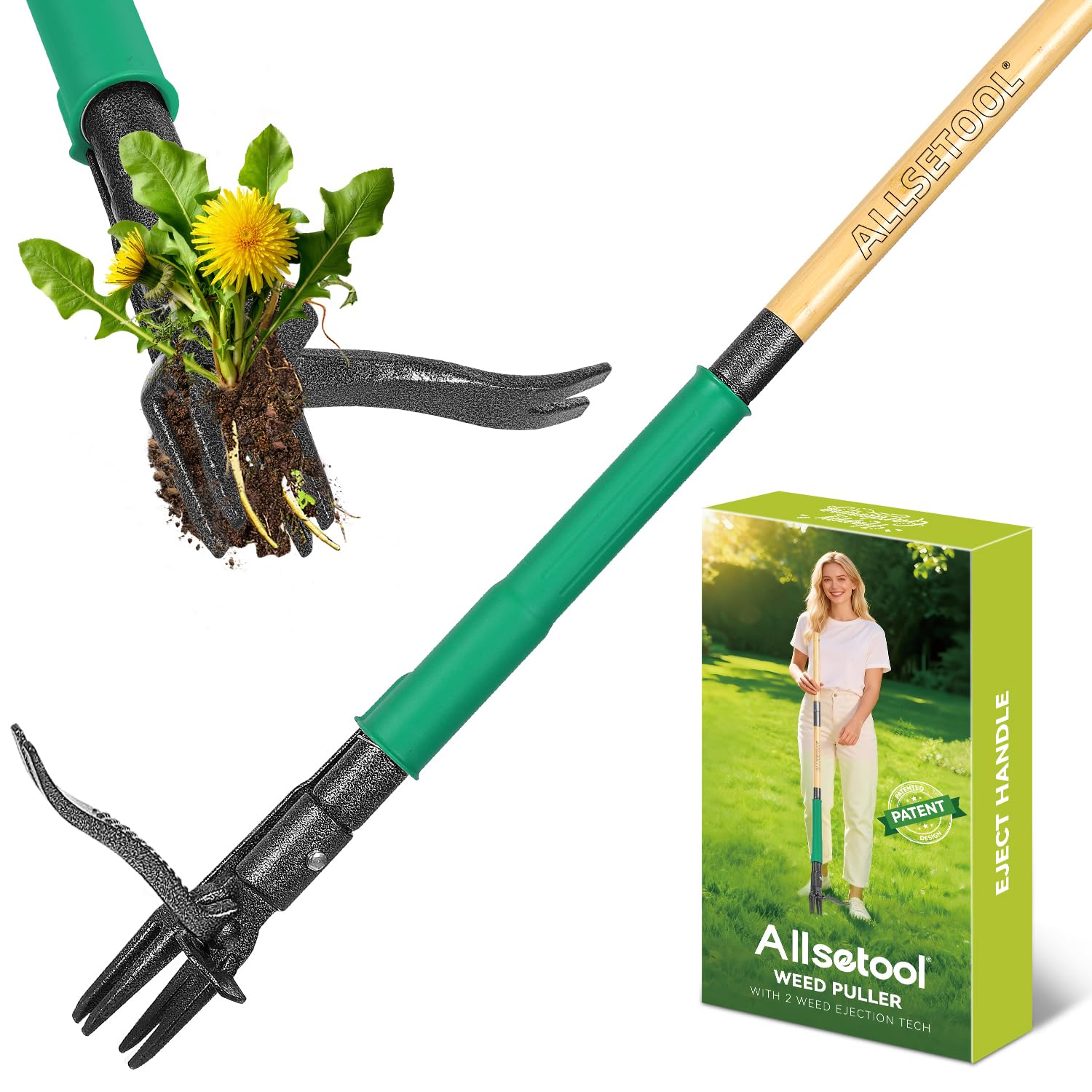
The heaviest claw puller here, but its dual eject system saves time on every weed.
At 3.61 pounds, the Allsetool is nearly 1.1 pounds heavier than the Fiskars, which you feel on the hundredth weed. The payoff is a unique dual eject feature: a hand-operated eject handle slides the weed off the claws, or you can use a foot pedal to push it out without bending. This cuts down the stop-and-shake motion that slows down pullers without ejectors, making it a legit speed advantage on very large lawns.
The 43.7-inch real bamboo handle is longer than the Fiskars’ 39 inches, giving improved leverage. The 4 pointed metal claws work best when the ground is damp after rain. Customers note the heavy-duty metal foot pedal (non-slip textured) holds up better than plastic pedals found on cheaper models, and the colorful box makes it a nice gift option for elderly gardeners.
The ratings sit at 4.4 stars from 559 reviews — solid, but a handful of owners note that the eject mechanism can occasionally jam with very fibrous roots. Weight is the main trade-off: you trade arm fatigue for time savings on the eject.
Speed features
- Two eject methods (hand lever and foot pedal) speed up the process
- Real bamboo handle is comfortable and reduces vibration
- Non-slip metal foot pedal outlasts plastic alternatives
Slowing factors
- At 3.61 lbs, it is the heaviest weeder here, tiring arms faster
- Eject mechanism can occasionally jam with thick, fibrous roots
Grab this for: large areas where you pull hundreds of weeds per session and the eject time savings justify the extra weight.
Pass if: you prioritize a lightweight tool or have very fibrous weeds that might jam the eject mechanism.
4. BUIGNDG 45” Weed Puller Tool – All-Metal Heavy Duty Hand Tool
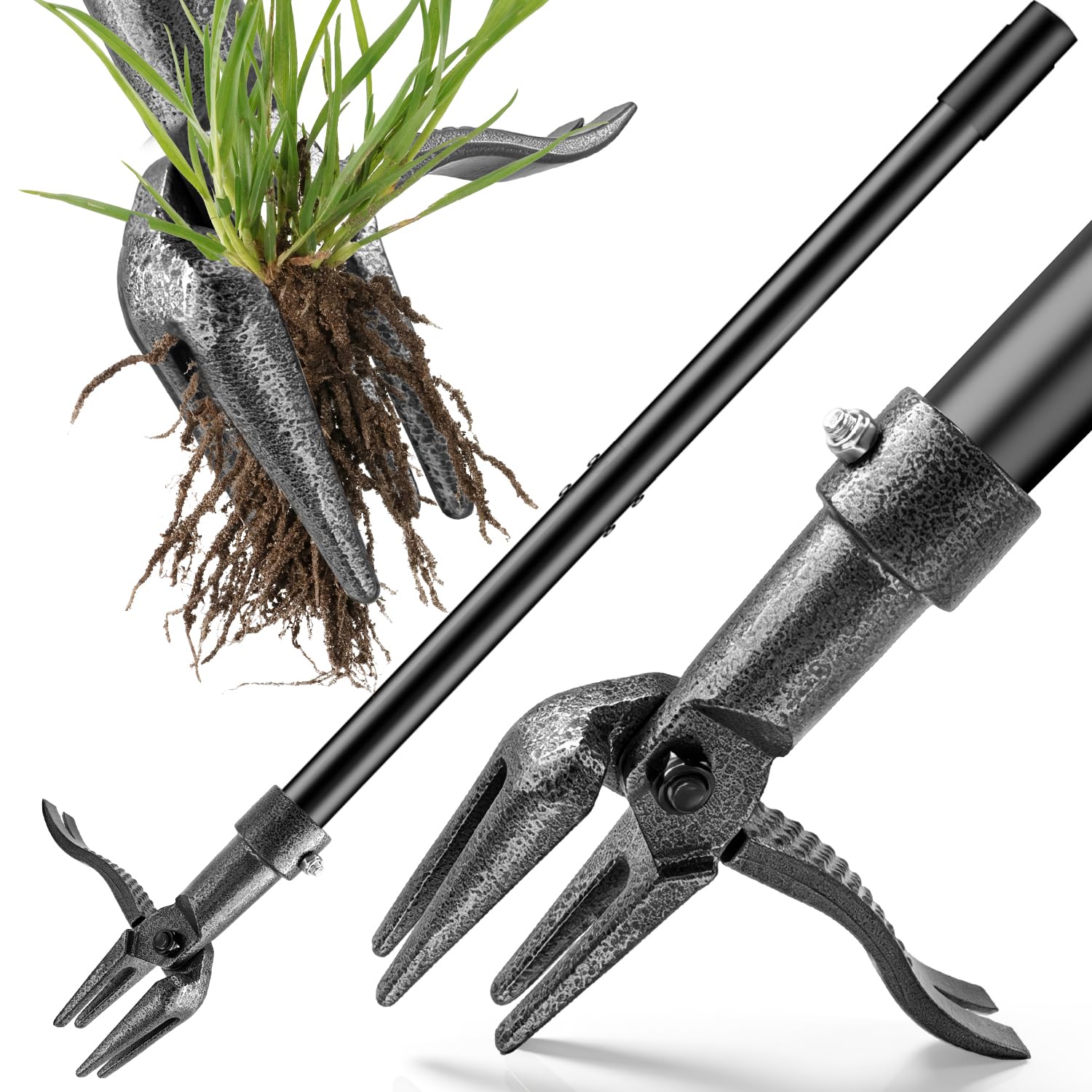
A 45-inch all-metal tool that trades weight for durability in compacted soil.
The BUIGNDG weeder is built from rugged stainless steel and high-strength steel in a 45-inch length that aims at heavy-duty use. The 4 claw head penetrates compact soil and grips thick-rooted weeds like dandelions and invasive species. There is no plastic in the shaft or foot pedal, which means it will not crack under repeated stomping — a common failure point on budget weeders.
The operation is the standard step, tilt, and remove motion. It is a manual weeder, not electric, so you are providing all the force. Buyers appreciate the chemical-free weed control aspect, which keeps the lawn safe for kids and pets. A handful of owners mention that the all-metal construction makes it heavier than similarly sized aluminum-handled tools, though the exact weight is not listed in the data. The 4.5-star average from 271 ratings is the highest of any claw-style puller here, suggesting solid build consistency.
One trade-off: the dimensions listed (17.3″D x 7.8″W) seem to be packaging size, not the tool’s working profile — the actual handle length is 45 inches. The head is all steel, so rust resistance is good but not at the stainless steel level of the Fiskars.
Built to last
- All-metal construction — no plastic parts to break over time
- 45-inch handle gives good leverage without being unwieldy
- Rated 4.5 stars from 271 reviews, reflecting strong buyer satisfaction
Consider this
- Steel body is likely heavier than aluminum-framed competitors
- No eject feature means manual weed removal after each pull
Ideal for: gardeners who break plastic foot pedals regularly and want a tool that can take a beating in tough, compacted soil.
Hold back if: you want the lightest possible tool for a very large area, or you rely on a weed eject mechanism for speed.
5. ATFVERDEX 60″ Wooden Handle 2 in 1 Uprooting Tool, 7-Tine Garden Hoe for Weeding
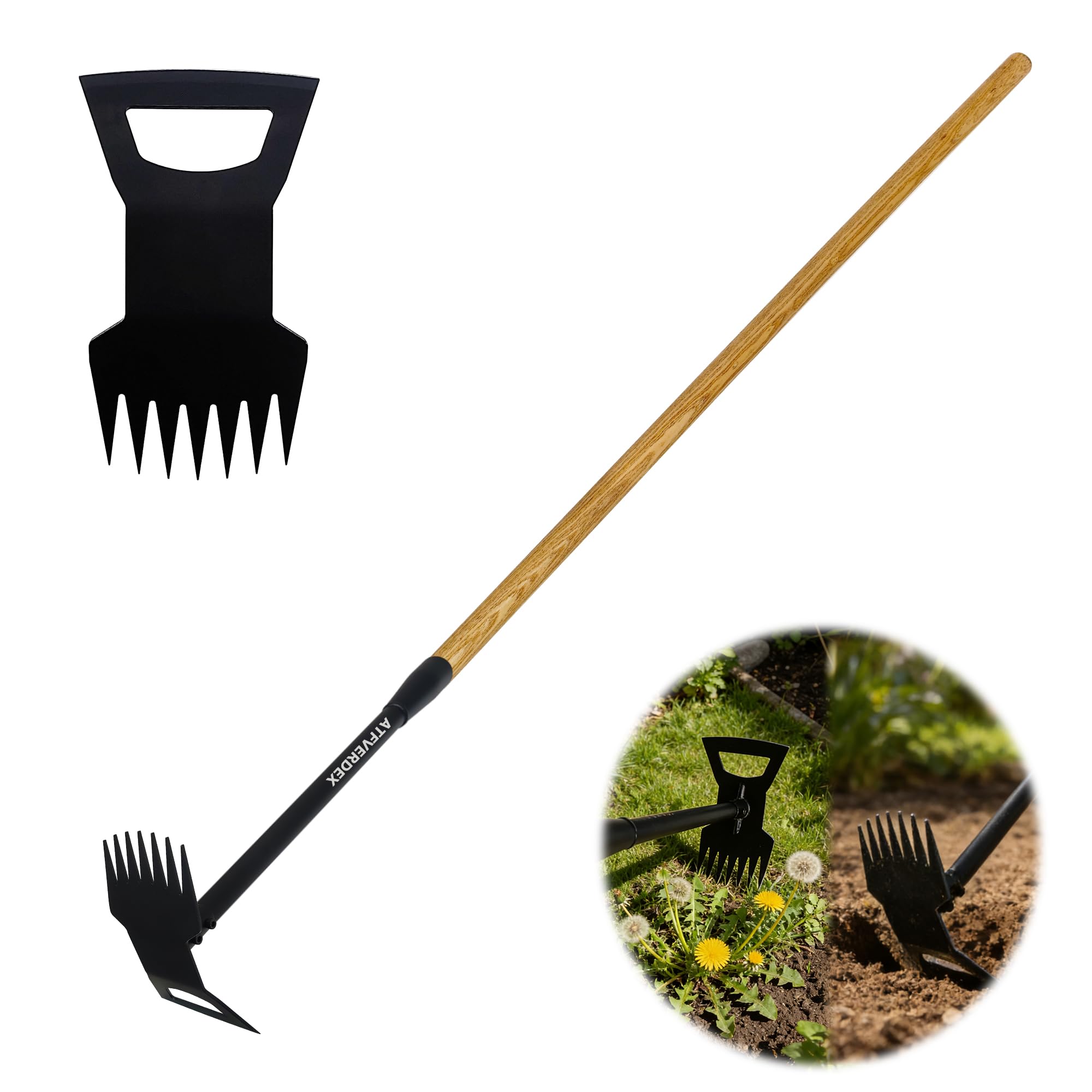
A 60-inch wooden-handled two-in-one that uproots with a rake and clears with a hoe.
The ATFVERDEX is a different animal: a 2-in-1 tool with a 7-tine rake on one end and a cast iron hoe blade on the other, both mounted on a 60-inch wooden handle. The rake head uses forged manganese steel (stronger than standard carbon steel) with teeth that are 1.77 inches long. The hoe blade is 4.7 inches wide — a full 80% wider than comparable products, according to the manufacturer. This width lets you clear large soil areas in fewer passes.
Unlike the claw-style pullers above, this tool works by raking out weeds and then using the hoe blade to slice and level. It is better suited for clearing beds, driveways, and sidewalk cracks than spot-pulling dandelions from turf. The 60-inch handle is the longest in the lineup, meaning you bend the least. The weight is not listed, but wooden handles are generally heavier than aluminum or fiberglass — a trade-off for durability. The 4.7 inches width at the head means it is also the widest tool here, covering more ground per sweep.
Reviewers point out it excels at clearing large patches of crabgrass and field weeds. The 4.7-star rating from 57 reviews is excellent, though the sample size is smaller than the Fiskars or SOMOLUX. Assembly is required.
Versatility wins
- Two tools in one — rake uproots weeds, hoe clears and levels soil
- 60-inch handle is the longest here for maximum no-bend leverage
- 4.7-inch wide hoe blade covers ground quickly
Know before you buy
- Not a spot-puller for individual dandelions in turf
- Wooden handle is heavier and requires assembly
Reach for this if: you have large garden beds, gravel paths, or driveways to clear — areas where a hoe and rake together do the job faster than a claw puller.
Stick with a claw puller if: your main task is removing individual taproot weeds from a grassy lawn without damaging the turf.
6. Xtreme Weeder Garden Scuffle Hoe Cultivator, 54-Inch Fiberglass Handle
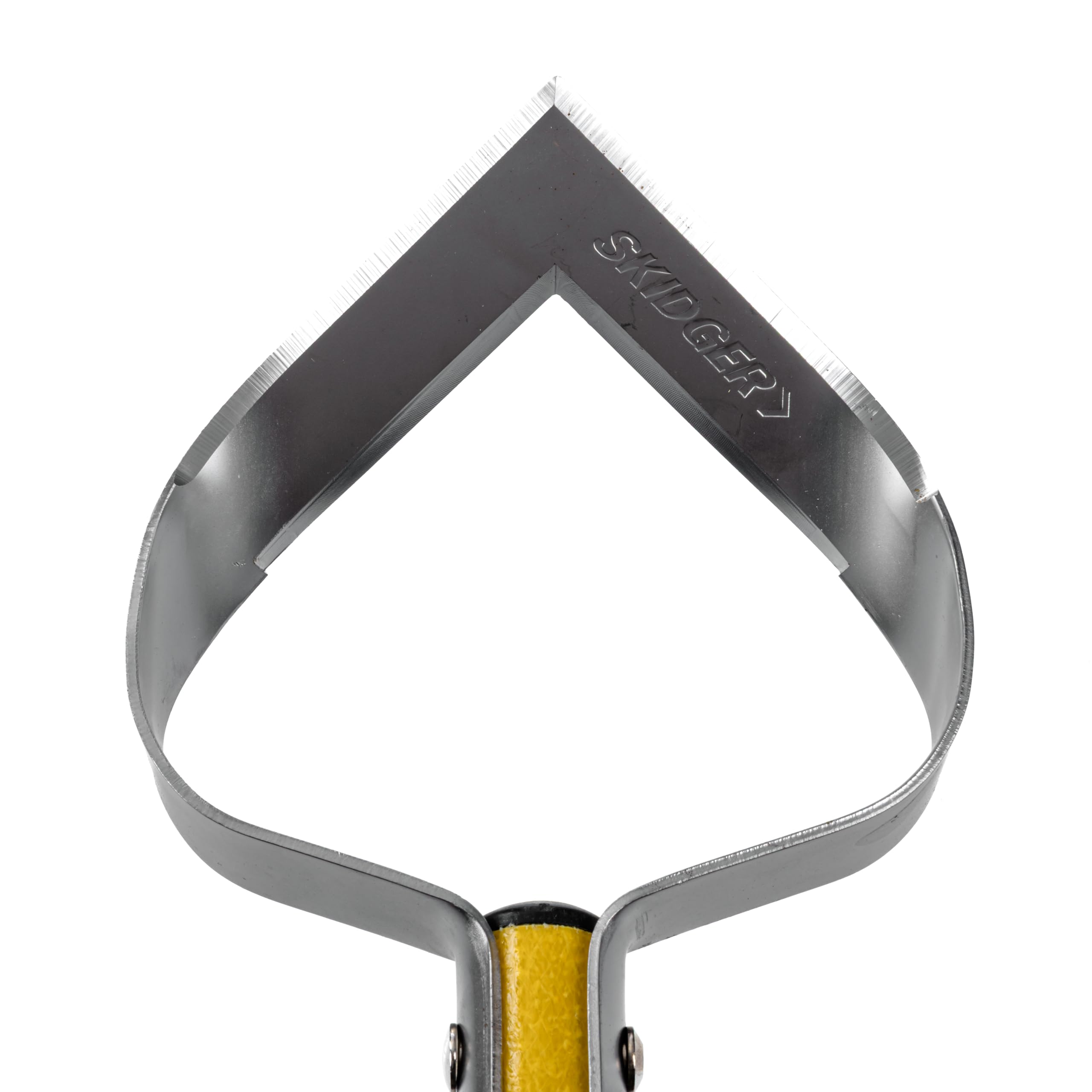
At 1.8 pounds with a 54-inch handle, this is the lightest, fastest slicer for loose soil.
The Xtreme Weeder is a completely different approach: instead of grabbing and pulling, its precision V-shaped blade slices weeds just below the surface when you push and pull it back and forth (a scuffle hoe action). The open blade design means it does not clog in soil, gravel, mulch, or bark. At only 1.8 pounds, it is the lightest tool in this list — significantly lighter than the 3.61-pound Allsetool — which lets you cover a huge area without tiring.
The 54-inch fiberglass handle with grips keeps you standing and reduces vibration. The curved blade gives you a clear view of the cutting path, so you can work around plants, hoses, or drip irrigation without accidentally chopping them. The precision pointed tip reaches into tight spots between garden borders. Shoppers say it excels at fast maintenance: you walk down a bed in minutes, slicing off hundreds of small weeds.
The catch is that it cuts the top of the weed, not the deep taproot — so dandelions and thistles will regrow from the root. It is best for annual weeds or as a quick touch-up between deeper weeding sessions. The manufacturer warranty covers 90 days from purchase, which is shorter than the lifetime warranty on the Fiskars.
Speed and lightness
- At 1.8 lbs, it is the lightest tool here for all-day use
- 54-inch fiberglass handle reduces fatigue and vibration
- V-blade slices through many soil types without clogging
Its limitation
- Only cuts weeds at the surface — deep taproots will regrow
- 90-day warranty is much shorter than the Fiskars’ lifetime coverage
Pick this for: regular maintenance weeding in beds, gravel, or mulch where you want to quickly knock down surface weeds without bending.
pass on it if: you need permanent removal of deep-rooted dandelions or thistles from your lawn — you need a claw puller for that job.
7. CobraHead Long Handle Weeder & Cultivator Garden Tool, 54-Inch Hardwood Handle

A forged steel curved blade on a 54-inch ash handle — the heirloom-quality pick for serious gardeners.
The CobraHead is not a claw puller or a hoe — it uses a single, forged steel curved blade that plows through soil to dig out deep roots, cut through tough clay, and edge along garden borders. The blade is made from tempered steel and the 54-inch handle is crafted from North Carolina ash, giving it a traditional feel that modern aluminum tools lack. At 2.38 pounds, it is heavier than the plastic-handled Fiskars but lighter than the all-metal Allsetool, striking a middle ground in heft.
If you compare its curved design to the Xtreme Weeder’s V-blade, the CobraHead is more of a digger — you use a pulling motion to slice through roots underground rather than just scuffing the surface. Buyers report it is excellent for edging, digging out entrenched weeds, and cultivating soil around established plants. It is made in the USA, in Cambridge, Wisconsin, which appeals to buyers who prioritize domestic manufacturing.
The curved head takes some practice to use effectively — it is not as intuitive as stepping on a claw puller. A few owners mention the wooden handle can split if left out in the rain, so storing it indoors extends its life. The 4.6-star rating from 549 reviews is strong, but the price is the highest in this lineup by a clear margin. For the occasional weeder, the Fiskars is more straightforward; for the dedicated gardener who wants a single tool that does it all, this is the one.
Premium features
- Forged and tempered steel blade cuts through tough roots and clay
- 54-inch North Carolina ash handle is comfortable in either hand
- Made in the USA with a dedicated gardening following
Before you buy
- Wooden handle needs indoor storage to avoid splitting
- Curved blade technique takes practice versus a simple step-puller
This is for: the gardener who wants one beautifully made, versatile tool for digging, edging, and deep weeding — and is willing to invest in a tool made in the USA.
Pass if: you want a quick, no-technique claw puller for spot-treating dandelions across a large lawn at the lowest cost.
Understanding the Specs
Handle Length & Material
Handle length determines how much you have to bend. Standard weeder handles run 39 to 60 inches. At 60 inches, you stand fully upright. At 39 inches, you may still hunch a bit. Material matters too: aluminum handles keep weight low (around 2.5 pounds), while wooden or steel handles last longer but add weight. Fiberglass sits in between, offering good vibration dampening.
Claw vs. Blade Head
Claw heads (usually 4 prongs) close around the root when you tilt the handle. They are best for pulling up entire taproots like dandelions and thistles. Blade heads (scuffle hoes, curved diggers) slice through the stem or dig out roots. A blade is faster for clearing large areas of shallow-rooted weeds, but it may not remove deep taproots permanently. For a large lawn with mixed weeds, you may need both types.
Weed Eject System
After a claw pulls a weed, you have to remove it before the next pull. Basic tools require manual tapping or shaking. Advanced models have an eject mechanism — a lever or foot pedal that pushes the weed out. This saves time when you are pulling hundreds of weeds, but adds weight and complexity. If you are covering a very large area, the eject feature can make the difference between a 2-hour job and a 3-hour job.
Weight and Durability
Heavier tools (above 3 pounds) can punch through hard soil without flexing, but they tire your arms over a long session. Lighter tools (under 2 pounds) are easier to swing but may bend or break in compacted clay. Stainless steel heads resist rust better than painted steel or cast iron. For a large area, a tool around 2.5 to 3 pounds is a good trade-off between durability and fatigue.
FAQ
Will a stand-up weeder work in my clay soil?
How long should the handle be for weeding without bending?
Which tool removes deep taproots like dandelions permanently?
What is the difference between a scuffle hoe and a claw puller?
Is a heavier weeder always better?
Can I use a weed puller on gravel or mulch?
How do I maintain a wooden-handled weed puller?
What is a weed eject mechanism and do I need one?
How do I choose between a 4-claw and a 7-tine rake weeder?
Is a weed puller safe for my pets and kids?
Final Thoughts: The Verdict
For most people, the tool to remove weeds from large area winner is the Fiskars Stand-Up Weed Puller because it gives you the best balance of light weight, durable stainless steel claws, and a trusted lifetime warranty at a reasonable price. If you want a longer handle and an eject mechanism for speed across a very large lawn, grab the Allsetool Weed Puller with Eject. And for clearing beds and paths with a single multi-functional tool, the standout is the ATFVERDEX 60-inch Hoe and Rake.
How We Picked
We do not accept paid placement. Every pick is matched to a real buyer and a real use-case; we do not hands-on test units.
Sources & Methodology
Specifications: manufacturer listings and product documentation. Review insights: verified customer reviews, as of July 2026. Pricing: not shown on this page (it changes often); check the current price via the retailer link.
As an Amazon Associate, Lawn Gear Lab earns from qualifying purchases. This does not affect which products we feature.