
Specs are compiled from manufacturer listings and verified buyer reviews and can change over time — please confirm the key details on the product page before buying.
If you have ever watched grass rhizomes silently invade a flower bed you just weeded, you already know the real job of landscape edging: it is a below-ground blockade, not a decoration. The best bender board does one thing above all — it sinks deep enough to intercept roots while staying flexible enough to follow a curving bed line without cracking in a cold snap. This guide compares six coiled plastic borders by the specs that actually stop invasion: height, thickness, material quality, and whether the included stakes can hold a curve on uneven ground.
I’m Rikta — the founder and writer behind Lawn Gear Lab. This guide is built by comparing the manufacturers’ published specifications and the patterns across verified customer reviews, so you get each pick’s real strengths and trade-offs instead of marketing spin.
You want a border that stops grass from creeping into your flower beds or driveway — and you do not want to dig the same trench again next year. The right bender board landscape edging does that by blocking roots below ground, so you install it once and forget it.
How To Choose The Best Bender Board Landscape Edging
Bender board is a coiled strip of flexible plastic that you bury partly in a trench so the top edge defines a garden border while the bottom edge blocks roots and grass from crossing into your beds. Three numbers matter most: height, thickness, and stake count.
Depth — The single best predictor of root blockage
A 2-inch board sits mostly on top of the soil and stops almost nothing underground. A 5-inch board buried 1.5 inches deep leaves 3.5 inches below grade — enough to slow shallow-rooted grass. A 10-inch board can sink nearly 9 inches deep, which is the only height that really stops aggressive runners like quackgrass or bamboo rhizomes. If you are edging purely for visual separation and don’t have invasive weeds, a 4-inch board works fine. If you are fighting creeping grass, go deeper.
Material — HDPE versus generic plastic
HDPE (high-density polyethylene) is the gold standard for yard edging. It stays flexible in cold weather instead of shattering, resists UV fading for years rather than one season, and does not rot or peel like wood. Generic polyethylene or recycled mixed plastics can become brittle after two winters in freeze-thaw cycles — check the product data for the exact material name, not just “plastic.”
Stake count and spacing
Stakes hold your border in place on curves and slopes. A general rule is one stake every 2 to 3 feet. A 40-foot coil needs at least 13 to 16 stakes for a solid hold on straight runs and more on tight curves. If a kit ships only 10 stakes for a 40-foot board, plan to buy extra stakes separately or your border may heave after heavy rain.
Quick Comparison
| Model | Best For | Height | Total Length | Stakes Included | Amazon |
|---|---|---|---|---|---|
| VEVOR 10 in. x 40 ft | Deep-root weed blockade | 10 in. | 40 ft | — | Amazon |
| TABOR TOOLS 5 in. x 60 ft | Long continuous borders | 5 in. | 60 ft | No stakes | Amazon |
| AGTEK 4 in. x 60 ft | High-value coil with stakes | 4 in. | 60 ft | 18 | Amazon |
| Master Mark 4 in. x 40 ft (Brown) | Wood-grain aesthetics | 4 in. | 40 ft | 10 | Amazon |
| Master Mark 5 in. x 40 ft (Black) | Trusted USA-made value | 5 in. | 40 ft | 10 | Amazon |
| JERIA 2 in. x 33 ft | Quick no-dig visual line | 2 in. | 33 ft | 45 | Amazon |
In‑Depth Reviews
1. VEVOR Landscape Edging, 10 inch Depth 40 ft, Black

The only coiled border tall enough to really stop deep-running roots before they reach your beds.
This board stands 10 inches tall — at 10 inches versus the JERIA 2-inch kit’s 2 inches that matters when you are up against aggressive quackgrass or rhizome-spreading bamboo. The 0.1-inch wall thickness provides 200 pounds of puncture resistance force, meaning it can withstand a hard rake or a shovel nick without splitting. At 8.03 Kilograms (17.7 lb), it weighs versus the MASTER MARK 5-inch black coil’s 3.59 kg, a trade-off you accept for that extra depth.
Made from HDPE (high-density polyethylene), the material resists rust, UV fade, and frost cracking better than metal or thin polyethylene alternatives. Buyers report the 10-inch height is difficult to install in hard clay without first watering the trench, but once set, it stops grass runners that thinner boards let through, as noted in reviews of similar tall borders. You will need to supply your own stakes — the kit does not include them. Plan on buying at least 14 landscape staples separately for the full 40-foot run.
The 0.1-inch thickness makes it rigid enough to hold a straight line on a driveway border yet flexible enough to bend around a tight tree ring when you warm it in the sun. This is the pick for anyone whose primary battle is below-ground invasion, not just surface tidiness.
Deep-stop specialist: The tallest coiled HDPE board in this lineup at 10 inches, delivering 200 pounds of puncture resistance. Best for serious weed-fighters.
Bring your own stakes: No stakes included — factor an extra – for a 20-pack of metal landscape staples.
Reach for this if: you are laying border against invasive grass species, want a true root barrier, and will stake it yourself.
Look elsewhere if: you need a simple above-ground trim line on already-established beds and don’t face underground encroachment.
2. TABOR TOOLS Landscape Edging, 60 Ft Coiled Bender Board, 5 Inch Tall
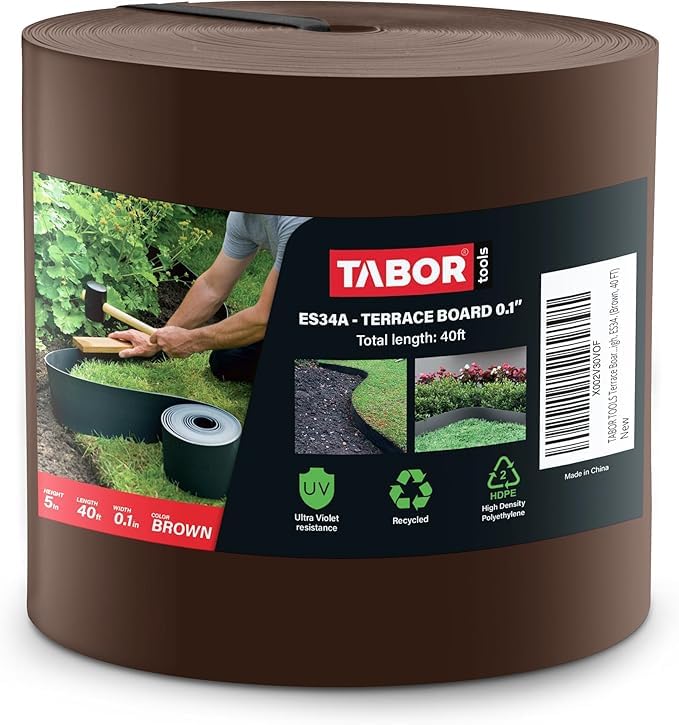
One continuous 60-foot coil that eliminates the joint gap where roots sneak through.
At 60 feet, this board delivers 60 feet of length (compared to the JERIA’s 33 feet), letting you border an entire yard without a seam. Made from HDPE at 1/10-inch thick, it won’t crack or peel like thinner plastics. The 5-inch height provides a dual function: above ground it retains mulch and gravel, while below ground it blocks shallow grass runners — enough for most decorative beds but not the deep defense of the VEVOR 10-inch board.
Unlike the AGTEK 4-inch coil which includes 18 stakes, TABOR TOOLS ships zero stakes. The manufacturer states “no stakes required to follow the shapes you want,” but owners mention the board can heave in loose soil or after heavy rain without anchoring. You will likely want to purchase stakes separately, especially on curves. At 5.89 Kilograms (13 lb), it is noticeably heavier than the MASTER MARK 4-inch brown coil (7 Pounds), reflecting the extra HDPE material in the longer run.
Customers note that its flexibility is a real advantage around tight circles and flower-bed corners where stiffer boards kink. Cutting it to custom lengths with standard garden shears is straightforward. For large uninterrupted borders, this coil saves you the headache of linking multiple shorter sections.
Why the long run wins
- 60 continuous feet — the longest single coil in this group.
- HDPE withstands freeze-thaw cycles without cracking.
- Included flexibility for tight-radius curves.
One missing piece
- No stakes included at all — budget extra for anchoring.
- 5-inch height is moderate for rooting control.
Best for large runs: You get one continuous border around a big yard, driveway, or multiple beds with no splice joints. It handles gentle curves well.
Not ideal if: you have hard clay soil that needs deep penetration or want a ready-to-install kit with stakes in the box.
3. AGTEK 60FT Plastic Landscape Edging Coil Kit, 4 Inch Tall, with 18 Stakes
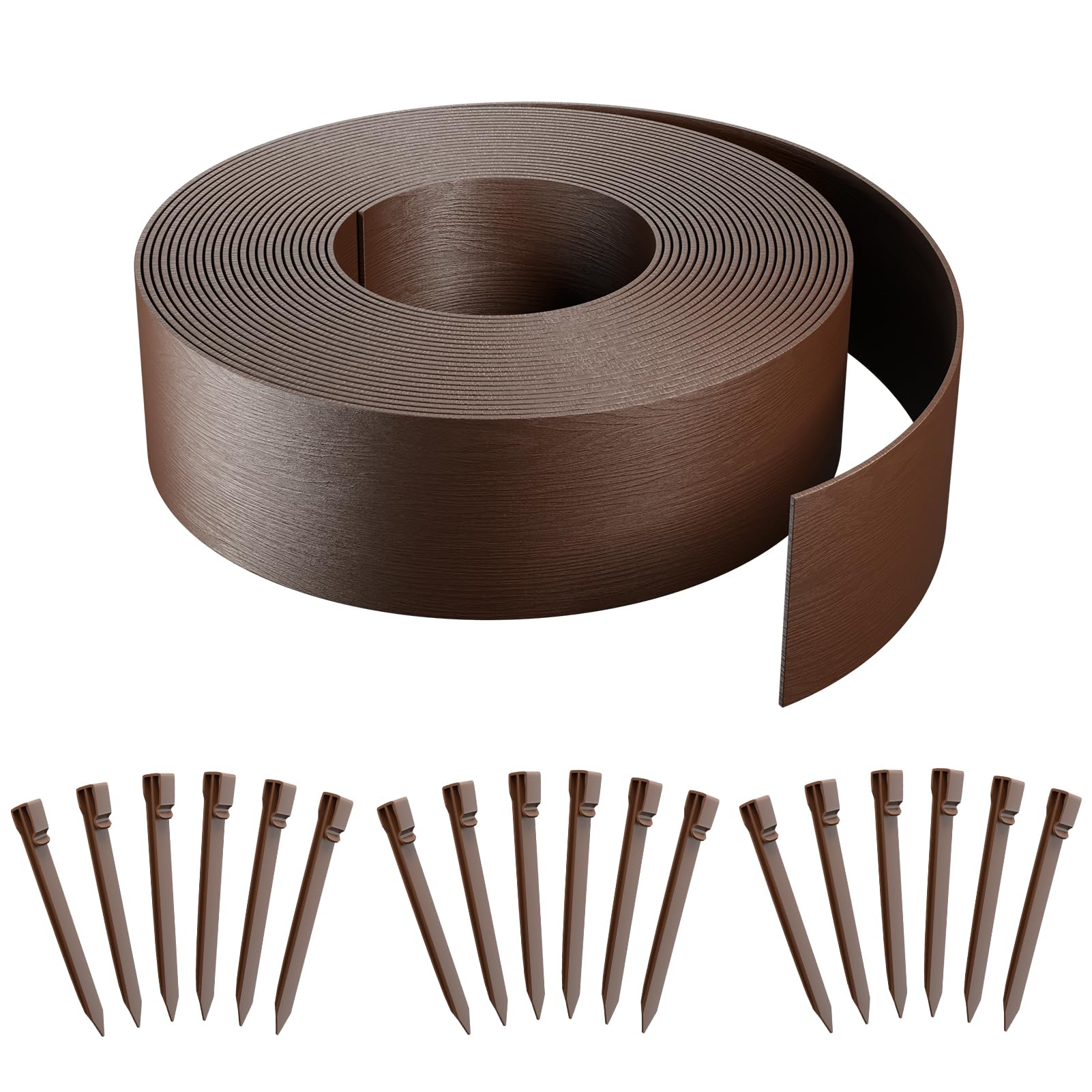
Generous 60-foot coil plus the highest stake count, ready to install straight from the start.
This kit delivers 60 feet of 4-inch tall edging with 18 stakes — 18 stakes, compared to the MASTER MARK 4-inch brown coil’s 10 stakes for a shorter 40-foot run. That stake density (one every 3.3 feet) is enough to hold a gentle curve on decent soil, though you may want to space them closer for tight turns. The PE (polyethylene) material is durable enough for straight lines and moderate curves, though it is not the premium HDPE used by VEVOR or TABOR TOOLS.
At 4.67 Kilograms (10.3 lb), it is lighter than the VEVOR’s beefy 8.03 Kilograms. This makes it easier to transport from the car to the backyard. The brown color blends into soil and mulch better than black, reviewers point out, though the wood-grain texture is less pronounced than the MASTER MARK brown board’s textured finish. For hard ground, watering the trench ahead of time helps the stakes penetrate without bending.
The 4-inch height sits about 2.5 inches below grade after burying 1.5 inches — enough for surface-rooting weeds but not deep grass runners. This is a solid mid-range option for anyone who wants a complete kit with no separate stake purchase and values length over extreme depth.
Kit convenience: 60 feet of edging plus 18 stakes, all in one box. No separate shopping needed.
Depth trade-off: At 4 inches, this is a surface-level root blocker — not a deep invasion barrier.
Ideal for quick projects: landscaping new flower beds, tree rings, or mulch borders where root pressure is light. Good first-time buy.
Skip if: aggressive grass species are your main enemy or you want the premium feel of HDPE.
4. Master Mark Landscape Edging Coil, 40 ft x 4 in. Tall, Brown Wood-Grain
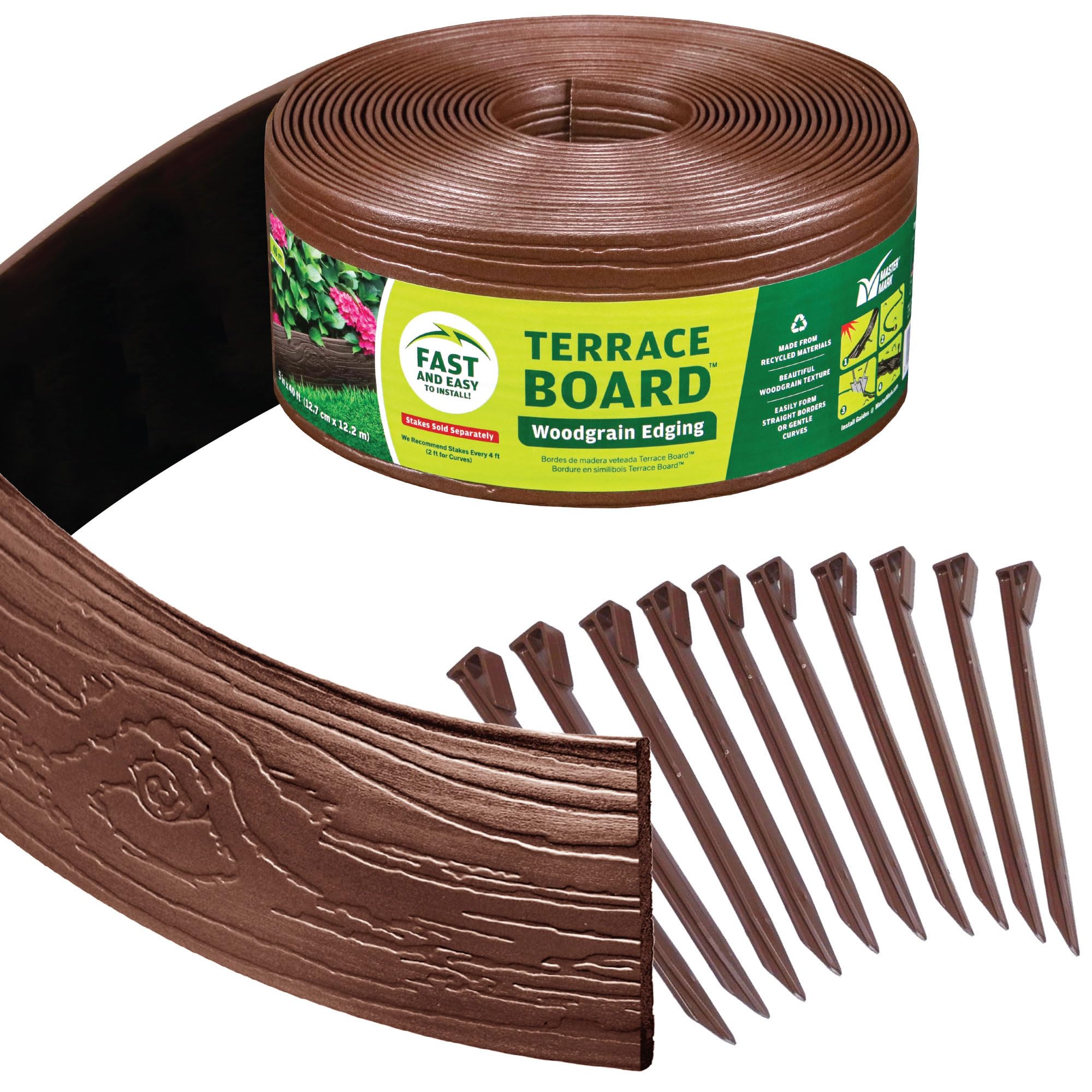
A textured wood-grain finish that looks like natural timber without the rot or splintering.
This 40-foot coil from Master Mark comes in a brown finish with a wood-like texture that blends into garden beds and tree rings more naturally than solid black or plain green plastic. The 4-inch tall board is made from HDPE (high-density polyethylene) — the same durable material used by VEVOR but in a shorter height. It weighs 7 Pounds, which is heavier than the JERIA 2-inch kit’s 4 Pounds, giving it a more substantial feel during installation.
The kit includes 10 stakes for the 40-foot run, which translates to one stake every 4 feet. That spacing is wider than the 2-3 foot ideal for curves, so plan to purchase 6-10 extra stakes if your border has tight bends or slopes. Master Mark has been manufacturing HDPE plastics since 1966 and this board is made in the USA from recycled plastic — a detail that matters for eco-conscious buyers.
Buyers mention the wood grain fools the eye at a few feet distance, though up close the texture is clearly plastic. It resists fading better than painted wood edging. For rustic, cottage-style or woodland gardens where visual harmony with natural materials matters, this is the most convincing non-wood option in the lineup. Unlike the TABOR TOOLS board, this one comes with stakes sufficient for a straight run, saving you from a completely bare box.
Look and feel win
- Textured wood-grain brown finish blends naturally.
- HDPE construction resists weather, rot, and UV for years.
- Made in USA from recycled plastic.
Stake count shortfall
- Only 10 stakes for 40 feet — thin spacing for tight curves.
- 4-inch height stops surface weeds but not deep roots.
Best for looks-first projects: visible garden borders, tree rings, and mulched beds where the top edge shows. Pairs well with natural stone or wood chip pathways.
Not for: heavy root-fighting scenarios or long runs where you need more than 40 feet.
5. Master Mark Terrace Board, 5 in. x 40 ft, Black, with 10 Stakes

A 5-inch-tall HDPE board with a wood-grain texture, backed by a maker with over 50 years in the plastic game.
This Master Mark board uses the same HDPE (high-density polyethylene, a tough plastic that resists rot) as its brown sibling and comes in the same 40-foot length, but it stands 5 inches tall — a full inch taller. When you bury it 1.5 inches deep, roughly 3.5 inches stays below grade, which gives you better root-blocking than the 4-inch brown version. However, the VEVOR 10-inch board buries about 8.5 inches below grade (versus 3.5 inches), so it stops more aggressive grass species. At 3.59 Kilograms (7.9 lb), this Master Mark is much lighter than the VEVOR’s 8.03 Kilograms, so you can carry and install it more easily.
The kit ships with 10 stakes, which leaves wide gaps on curves. Master Mark claims the HDPE holds up against the toughest outdoor elements without chipping, fading, rotting or peeling for many years. Reviews note that on hot sunny days the board softens enough to bend easily, while in cold weather it remains flexible without snapping — a trait of proper HDPE versus recycled mixed plastic.
For a balanced middle-ground between the budget-friendly AGTEK kit and the extreme-depth VEVOR, this board offers trusted brand history and made-in-USA quality at a moderate height. It is the pick for someone who wants quality without overspending or over-investing in deep root barriers they may not need.
Balanced performer: The 5-inch height gives you decent root coverage, the HDPE material will not rot, and it is made in the USA.
Typical Master Mark quirk: 10 stakes for 40 feet means you will probably order an extra 8-pack for curves.
Solid all-rounder for: medium-sized flower beds, vegetable garden borders, and lawn separation where moderate root invasion is the main issue.
Not the top choice if: you need 60-foot continuous runs or the deepest possible weed blockade.
6. JERIA 2 Inch Tall 33 FT Garden Edging Kit with 45pcs Spikes
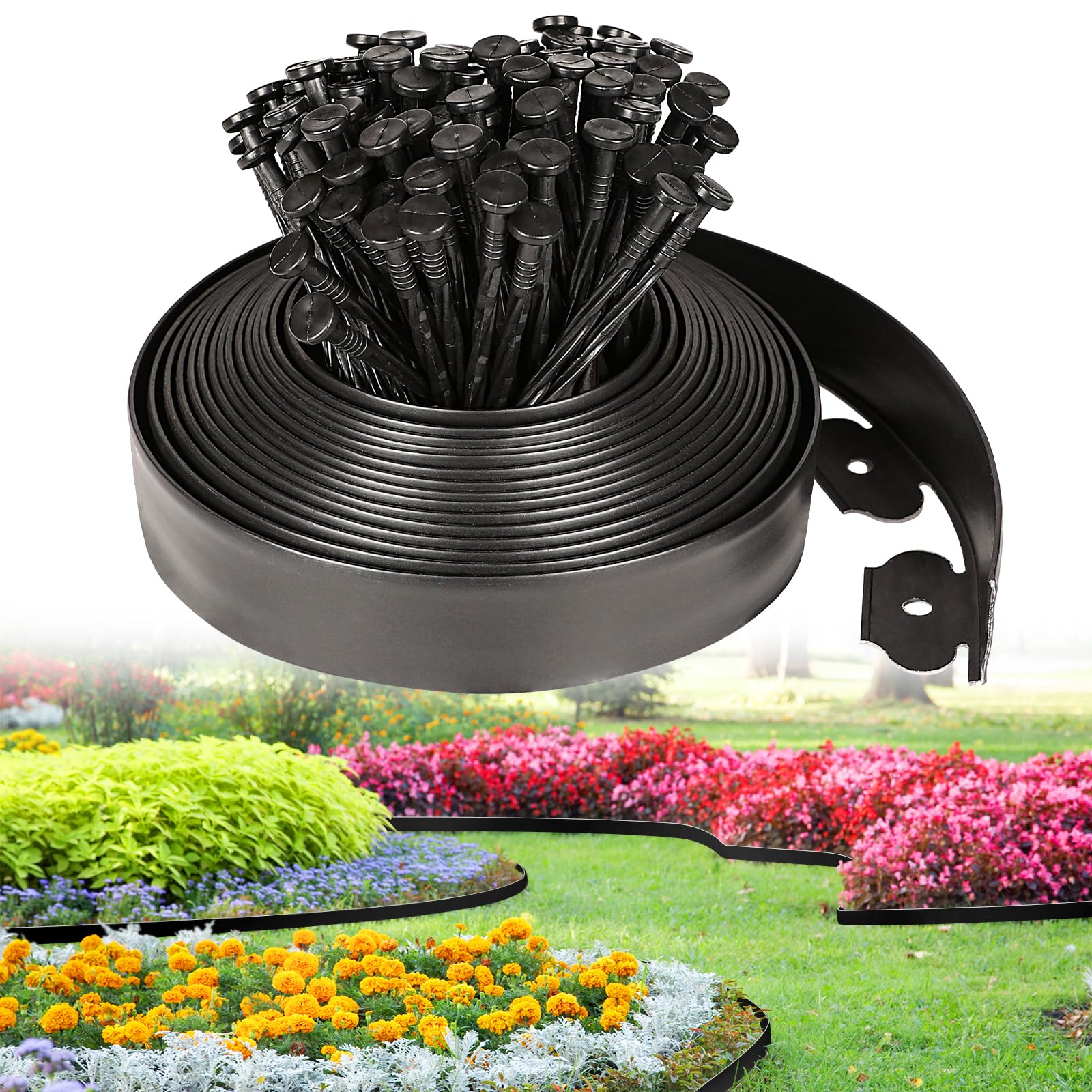
No digging required — just spike it into the lawn for a quick visual separation line.
At 2 inches tall, this JERIA kit is the lowest-profile option here and the only one sold as “no-dig.” You push the included 45 spikes through the plastic into the ground to create a shallow border that sits mostly above the surface. It is 33 feet long — versus the TABOR TOOLS 60-foot coil — so it fits one small bed or a short pathway segment. At 4 Pounds, it is the lightest board in this lineup, compared to the MASTER MARK 4-inch brown coil’s 7 Pounds.
The 45 spikes are generous relative to the 33-foot length — spaced roughly every 9 inches — so the border holds well in soft soil. But the 2-inch height means it stops almost nothing below ground. If you are edging just for visual tidiness around a manicured flower bed with no weed pressure, this is fast and easy. If you have creeping grass, it will simply grow under the board. Made from plastic (not HDPE), the material is flexible enough to form tight shapes like hearts or circles as the manufacturer notes, though it may become brittle after repeated freeze-thaw exposure.
Buyers who want a quick weekend project with no trench-digging report loving the speed. Those fighting invasive Bermuda grass or crabgrass find themselves re-buying a taller product later. Treat this as a decorative line, not a defense system.
Speed and convenience
- No trench digging required — spikes go straight into soil.
- 45 spikes included, enough for tight spacing across the whole run.
- Can form tight arcs and custom shapes.
Where it falls short
- 2-inch height offers minimal below-ground root barrier.
- Not HDPE — less durable in freeze-thaw climates.
Perfect for: renters or temporary garden borders where you want a clean look without permanent modification. Ideal for decorative edging around annual beds.
Avoid if: you are fighting invasive grasses, need a permanent multi-year solution, or the ground freezes deeper than a few inches in winter.
Understanding the Specs
Height (inches)
The total vertical measurement of the coiled board. When you bury 1.5 inches of this in a trench, the below-grade portion is what blocks root travel. A 4-inch board leaves 2.5 inches underground — enough for annual weed roots but not for perennial grass rhizomes that can travel 6 inches deep. A 10-inch board like the VEVOR puts 8.5 inches below grade, intercepting nearly all running roots.
Material — HDPE vs PE
High-density polyethylene (HDPE) is a dense, semi-crystalline plastic that resists impact, UV light, and cold cracking better than standard polyethylene (PE). The Master Mark and VEVOR boards are HDPE. The AGTEK and JERIA use PE or unspecified plastic — fine for mild climates but more likely to become brittle after 2-3 winters in areas that freeze consistently.
Stake count and spacing
Stakes are the anchors that stop your border from popping out of the ground when soil swells from rain or frost heaves. Spacing guidelines: one stake every 2 feet for tight curves, every 3 feet for straight runs. A 40-foot board needs 13-20 stakes depending on the shape. If your kit supplies fewer, you must buy extras separately or risk the border lifting.
Thickness (inches)
The wall thickness of the board determines rigidity and puncture resistance. A 0.1-inch thickness — the standard for HDPE bender boards — provides enough stiffness to hold a straight line yet still bend around curves when warm. Thinner boards (0.05-0.07 inches) flex more easily but can tear on rocky soil or buckle under the weight of thick mulch.
FAQ
How deep should I bury my bender board landscape edging?
Can I install bender board without digging a trench?
Will HDPE bender board crack in cold weather?
How many stakes do I need for a 40-foot border?
Can I cut bender board to custom length?
Will bender board work on a steep slope?
Does the color of my edging actually matter for root blocking?
Can I use bender board as a mowing strip?
Why do some bender boards have a wood-grain texture?
Will landscape edging keep weeds out of my flower bed permanently?
Final Thoughts: The Verdict
Across the board, the bender board landscape edging winner is the VEVOR 10 inch because its 10-inch height and HDPE material create the deepest below-ground root barrier in this lineup — stopping aggressive grass species that shorter boards cannot block. If you want a long smooth border without any splice joint, choose the TABOR TOOLS 60-foot coil. And for the most stakes included and the best all-in-one kit ready to install right from the start, the AGTEK 60-foot with 18 stakes is the smart choice.
How We Picked
We do not accept paid placement. Every pick is matched to a real buyer and a real use-case; we do not hands-on test units.
Sources & Methodology
Specifications: manufacturer listings and product documentation. Review insights: verified customer reviews, as of July 2026. Pricing: not shown on this page (it changes often); check the current price via the retailer link.
As an Amazon Associate, Lawn Gear Lab earns from qualifying purchases. This does not affect which products we feature.