
Specs are compiled from manufacturer listings and verified buyer reviews and can change over time — please confirm the key details on the product page before buying.
Plumeria in pots live or die by one thing: how fast water runs through the soil. A standard bagged mix holds too much moisture, and that is a one-way ticket to root rot for a plant that craves heat and dryness between drinks. The four mixes here are all built to drain fast, but they take different approaches on what goes into the bag — from gritty lava rock to nutrient-loaded coffee compost.
I’m Rikta — the founder and writer behind Lawn Gear Lab. This guide is built by comparing the manufacturers’ published specifications and the patterns across verified customer reviews, so you get each pick’s real strengths and trade-offs instead of marketing spin.
If you are tired of losing plumeria to yellow leaves and mushy stems, the right growing medium is your single most effective fix. This review puts four specially formulated options head-to-head to help you find the best soil for plumeria in pots that matches your plant’s needs.
Our Picks at a Glance

How To Choose The Best Soil For Plumeria In Pots
The wrong soil turns a plumeria pot into a swamp. Here are the three decisions that separate a thriving plant from a root-bound mess.
Drainage speed and particle size
Plumeria roots cannot sit in wet soil. Look for a mix that uses chunky aggregates like pumice, lava rock, or perlite. These create large air pockets that let water flow through fast, so the roots get oxygen between waterings. A mix that feels light and gritty in your hand is a good sign — heavy, smooth soil is a red flag.
Nutrient source and longevity
Some gritty mixes contain zero nutrients and rely on you to add fertilizer from day one. Others include compost, manure, or controlled-release plant food built in. For a hands-off approach, a mix with natural boosters like chicken manure or kelp meal feeds the plant for months. If you prefer to control the feeding schedule yourself, a neutral base mix works better.
pH level and plumeria preferences
Plumeria does best in soil that is slightly acidic, with a pH in the 6.0 to 6.7 range. A mix that is too alkaline can block nutrient uptake and cause leaf yellowing. Some brands state their pH on the bag; if they don’t, the presence of coffee compost or peat moss is a clue the mix leans toward the acidic side that plumeria likes.
Quick Comparison
| Model | Best For | Volume | Item Weight | Key Additives | Amazon |
|---|---|---|---|---|---|
| Miracle-Gro Succulent Potting Mix★ Best Overall | Budget-friendly starting point | 4 qt. | 0.79 kg | Miracle-Gro Plant Food | Amazon |
| LGM Premium Cactus & Succulent Mix | Long-term feeding with minimal effort | 0.5 Cu Ft | — | Volcanic Ash, Chicken Manure, Kelp Meal | Amazon |
| The Soil Sage Cactus & Succulent Mix | Gritty, soilless texture for root health | 5 Dry Qt | 3.19 kg | Lava Rock, Pumice, Mycorrhizae | Amazon |
| Spike & Bloom High Drainage Soil | pH precision with coffee compost | 4 Dry Quarts | — | Coffee Compost, Mycorrhizae | Amazon |
In‑Depth Reviews
1. Miracle-Gro Succulent Potting Mix, 4 qt.
Our pick — over 4.5★ from 13,500+ verified ratings; the strongest balance of quality and price.
The accessible, peat-based option that works if you add plenty of extra perlite or pumice.
Miracle-Gro’s Succulent Potting Mix is the most widely available choice here, and it is sold specifically for indoor succulents including aloe vera, cacti, echeverias, and more. It is a blend of sphagnum peat moss, processed forest products, and Miracle-Gro plant food for basic nutrition. The maker says one 4 qt. bag fills one 8-inch container. At 0.79 Kilograms, it is lighter than The Soil Sage’s bag (3.19 Kilograms for 5 qt), showing just how much lighter peat-based mixes are compared to mineral-heavy blends. That weight gap tells you the Miracle-Gro mix is mostly organic matter, not coarse aggregates.
The catch for plumeria is that peat moss retains moisture longer than lava rock or pumice. While it works as-is for small indoor succulents, a potted plumeria in a warm outdoor spot will likely need you to mix in extra perlite, pumice, or coarse sand to get drainage fast enough. The built-in plant food is a nice head start for the first few weeks, but all that feeding is front-loaded — you will still need to add plumeria-specific fertilizer later in the season.
Buyers praise the price and the brand’s consistency. The 4 qt. bag (148.0 Ounce) is a fraction of the size of the LGM bag (475.0 Ounce), so it is a less economical buy for larger pots. It is also the lightest option here, so shipping costs are lower, which may matter if you are ordering online. The instructions are straightforward: fill a pot with a drain hole one-third full, place the plant, cover, press lightly, and water.
Why beginners pick it
- Widely available and consistent quality from a trusted brand
- Includes Miracle-Gro Plant Food for early nutrition
- Lightweight bag (0.79 kg) is easy to handle and ship
- Simple, clear instructions printed on the bag
Plumeria-specific limits
- Peat-based texture holds more moisture than plumeria prefers — needs amendment for best results
- Smaller bag (4 qt.) covers only one 8-inch pot, unlike the LGM bag’s larger volume (475.0 Ounce vs 148.0 Ounce)
Good for starting out: This mix is a decent starting point if you have a single small plumeria and plan to add perlite or sand to increase the drainage.
Limit to skip: If you have multiple pots or want a ready-to-use mix with zero need to amend, the LGM or Soil Sage options are more reliable picks.
2. LGM Premium Cactus & Succulent Soil Mix (0.5 Cu Ft)
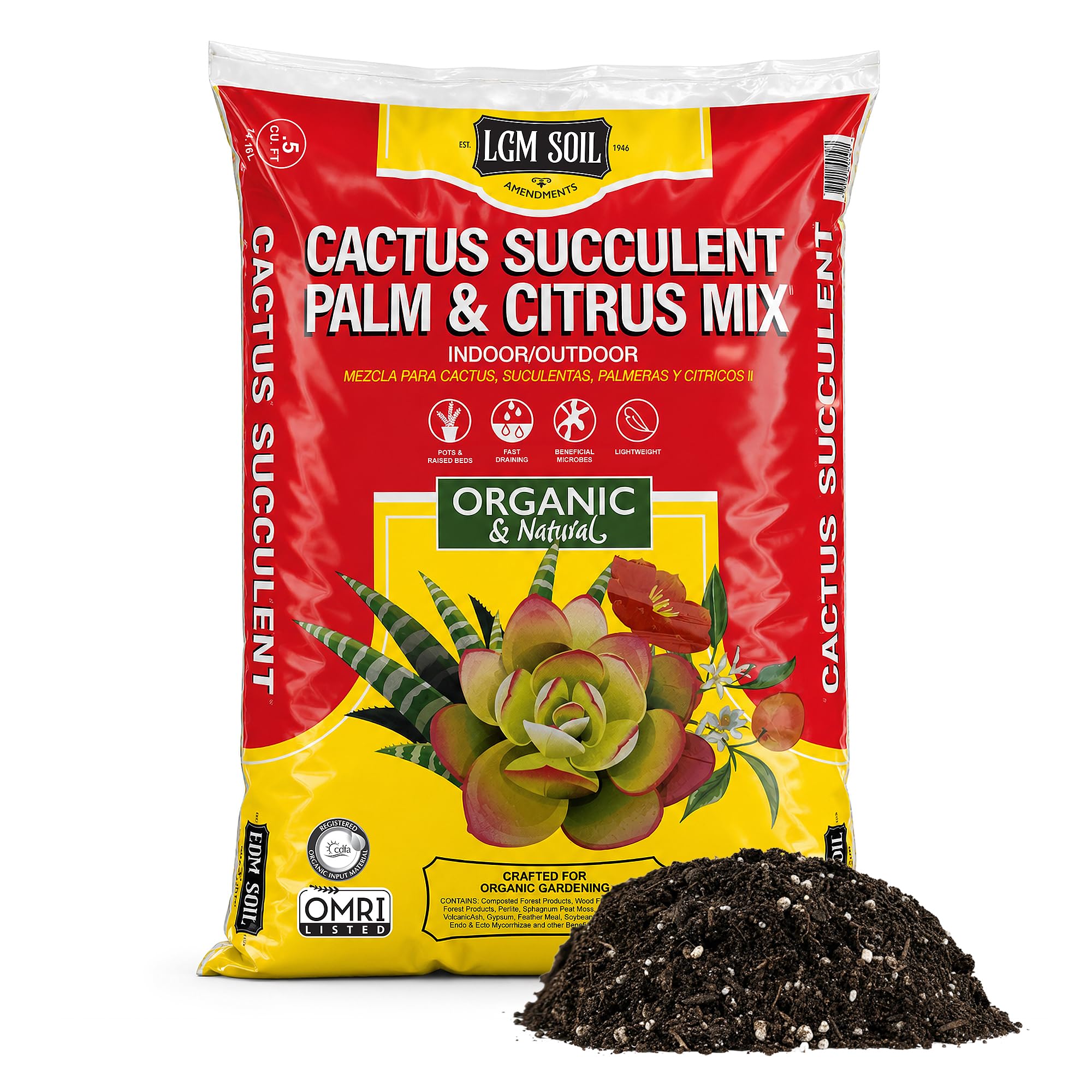
The feeding-heavy mix that keeps your plumeria fed for months without extra fertilizer.
This mix saves you from remembering a feeding schedule because it already contains Chicken Manure, Kelp Meal, and Iron Sulfate — natural nutrients that feed your plumeria without a separate fertilizer bottle. It uses Volcanic Ash and porous Perlite to create fast drainage, which the maker says stops root rot before it starts, while holding just enough moisture for the plant to drink. The maker also says the pH-balanced formula works for finicky plants like Plumeria that drop leaves in standard potting soil, unlike many gritty mixes that have zero nutrients.
The bag is a family-owned California formulation that has been running since 1946, and they specifically avoid municipal “green waste” compost. Buyers report that the texture stays loose over time, so you don’t get that compacted cement-like layer that smothers roots. At 0.5 Cu Ft — compared to the Miracle-Gro 4 qt. bag (148.0 Ounce vs 475.0 Ounce) — you get enough soil to fill several pots in one go, making it a better value than smaller bags that run out after one container.
Unlike The Soil Sage, which is a soilless gritty mix relying on lava rock and pumice without added nutrients, this LGM bag comes pre-loaded with slow-release organics. That makes it a better fit if you tend to forget the fertilizer schedule. The bag is heavy when full, but you are buying soil volume, not packaging.
Why it works for plumeria
- Volcanic Ash and Perlite ensure instant drainage for root rot protection
- Chicken Manure and Kelp Meal provide sustained nutrition for months
- pH-balanced formula suited for Plumeria, Citrus, and Palms
- Large 0.5 Cu Ft bag covers multiple pots at once
One thing to know
- Much heavier to carry than a 4 qt. bag like Miracle-Gro, which weighs 0.79 kg while this bag holds 0.5 Cu Ft
Best for busy growers: If you want one bag that handles both drainage and feeding for several plumeria plants without mixing in extras, start here.
Keep in mind: The bag is bigger and heavier than standard succulent mixes, so you need storage space and a strong arm to move it.
3. The Soil Sage 5 Dry Qt Cactus & Succulent Potting Soil Mix
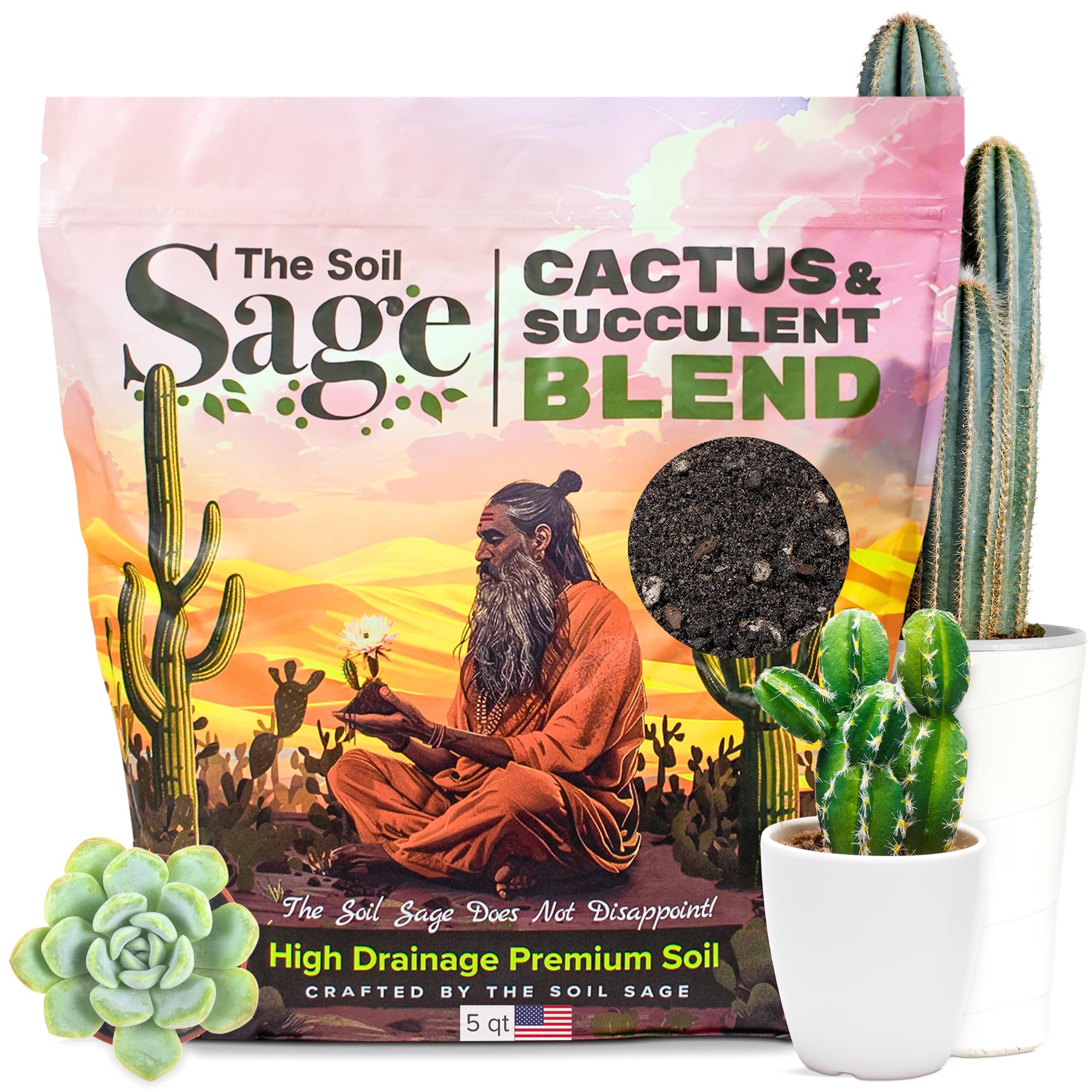
The chunky, soilless blend that gives plumeria roots the air pockets they crave.
This mix is all about texture. It is made with lava rock, pumice, compost, bark, sand, biochar, and mycorrhizae fungi — no peat moss, no dense soil. That creates a chunky, gritty structure where water runs straight through, which is exactly what a potted plumeria needs to avoid root rot. The maker says it is fast-draining to prevent overwatering issues, which matters when you are growing a tropical plant in a container where water can easily pool at the bottom.
Bag weight tells you what is inside: The Soil Sage weighs 3.19 Kilograms for 5 dry quarts, while the Miracle-Gro Succulent Potting Mix weighs only 0.79 Kilograms for 4 quarts. That extra weight comes from heavy mineral aggregates (lava rock, pumice, sand) that create the drainage channels. The mix also includes mycorrhizal fungi, which helps roots take up more water and nutrients.
Owners mention that the bag also includes four 4-inch round mesh pot screens to stop soil from washing out the drainage holes. Unlike the LGM mix, which comes packed with chicken manure and kelp meal, this is a soilless mix with limited built-in nutrition from compost alone — you will want to add your own plumeria fertilizer regularly. It is hand-blended in the USA, and the maker highlights there are no fillers, just premium compost.
Why the texture wins
- Lava rock and pumice create fast drainage and large air pockets
- Mycorrhizae fungi support stronger root growth
- Peat-free formula resists compaction longer than peat-based mixes
- Includes mesh pot screens to keep drainage holes clear
Feeding required
- Lacks sustained-release fertilizer — you need to supplement with plumeria food regularly
- Heavier bag per quart than standard potting soil (3.19 kg for 5 qt)
Grit-focused growers: Choose this if you want the most open, airy texture available and prefer to control your own feeding regimen.
Consider your effort: Be ready to add fertilizer yourself, since this mix does not have the built-in feeding power of the LGM blend.
4. Spike & Bloom High Drainage Succulent Soil Potting Mix

The slightly acidic mix that dials in the pH precisely where plumeria roots perform best.
This bag from Spike & Bloom takes a scientific approach. It is formulated with a custom blend of clays, aggregates, and coffee compost to prevent water-logging, and the maker states the pH is around 6.7 — the slightly acidic range that succulents prefer. For plumeria, this is important because a pH that drifts too alkaline can lock out nutrients and cause yellow leaves. The coffee compost is a standout ingredient: the maker explains they tamed raw coffee waste (which is far too acidic and nitrogen-rich for plants) into a stable, renewable compost that provides both water-soluble nutrients and beneficial bacteria.
Like The Soil Sage, this mix includes mycorrhizal fungi to extend the root network for better water and nutrient uptake. But unlike The Soil Sage’s purely soilless formula, this one integrates clays and coffee compost, giving it a slightly different texture — less chunky, more balanced between drainage and moisture retention. The bag is 4 dry quarts, which is the same nominal volume as the Miracle-Gro bag (4 qt.), but the composition is much denser and more structured.
Customers note the coffee compost gives the soil a distinctive dark color and a mild natural scent. The maker says this mix is “death to root rot” through its custom blend. The trade-off: the volume is smaller (4 quarts vs the LGM’s 0.5 Cu Ft), so you will need multiple bags for larger pots or multiple plants.
Precision points
- pH balanced to ~6.7 for optimal plumeria nutrient uptake
- Includes mycorrhizae and specially treated coffee compost for feeding
- High drainage formulation targets root rot prevention
- Beneficial bacteria from coffee compost support soil health
Size and cost
- 4 dry quarts is a smaller volume than the LGM bag — less economical for large pots
- Premium ingredient costs more per quart than standard succulent mixes
Best for pH-conscious growers: Go with Spike & Bloom if you want a mix where the acidity is dialed in and you like the idea of coffee compost feeding your plant.
Think about pot size: If you are filling a large 10-inch or bigger pot, you will need two bags to get enough depth.
Understanding the Specs
Particle Size & Aeration
The physical size of the particles in the soil determines how much air reaches the roots. Chunky aggregates like pumice, lava rock, and perlite create large pores that let water drain fast and air circulate. A mix that feels coarse and sharp in your hand is better for plumeria than one that feels like fine dust or smooth sand. The goal is a texture where water runs through in seconds, not minutes.
Soilless vs. Soil-Based
A “soilless” mix contains no actual dirt — it is made of ingredients like bark, pumice, and compost. These mixes are lighter, drain faster, and resist compaction over time. Traditional soil-based mixes use topsoil or peat moss, which hold more moisture. For plumeria in pots, a soilless or mineral-heavy blend is usually safer because it is harder to overwater. Reading the ingredient list is the fastest way to tell which type you are buying.
FAQ
Can I use regular potting soil for plumeria in pots?
How often should I water plumeria in fast-draining soil?
Is Miracle-Gro Succulent Mix good enough for plumeria?
What does mycorrhizae do for plumeria in pots?
Does the pH of the soil matter for plumeria?
How much soil do I need for one plumeria in a pot?
Can I mix cactus soil with perlite for better drainage?
What is the difference between gritty and organic cactus mixes?
Does the Soil Sage mix need fertilizer right away?
How long does a bag of premium cactus soil last in storage?
Final Thoughts: The Verdict
For the majority of shoppers, the best soil for plumeria in pots is the LGM Premium Cactus & Succulent Soil Mix because it balances fast drainage with months of built-in nutrition from chicken manure and kelp meal, saving you from constant fertilizing. If you want the most open, airy texture and prefer to control your own feeding, grab The Soil Sage 5 Dry Qt Mix. And for a scientifically precise pH (~6.7) with coffee compost and mycorrhizae, the Spike & Bloom High Drainage Soil is the pick for growers who want a precise pH and natural root boosters.
How We Picked
We do not accept paid placement. Every pick is matched to a real buyer and a real use-case; we do not hands-on test units.
Sources & Methodology
Specifications: manufacturer listings and product documentation. Review insights: verified customer reviews, as of July 2026. Pricing: not shown on this page (it changes often); check the current price via the retailer link.
As an Amazon Associate, Lawn Gear Lab earns from qualifying purchases. This does not affect which products we feature.