
Specs are compiled from manufacturer listings and verified buyer reviews and can change over time — please confirm the key details on the product page before buying.
Michigan’s mix of cold winters, wet springs, and varied habitats means the birds at your feeder change with the seasons. You need a seed blend that attracts year-round residents like chickadees and cardinals, plus seasonal visitors like juncos and finches, without leaving a mess of sprouting hulls in your yard. The right mix saves you money and keeps your feeder busy no matter the weather.
I’m Rikta — the founder and writer behind Lawn Gear Lab. This guide is built by comparing the manufacturers’ published specifications and the patterns across verified customer reviews, so you get each pick’s real strengths and trade-offs instead of marketing spin.
After comparing shell-free blends, nutrient-packed mixes, and spicy formulas, you’ll know exactly which option fits your feeder and your yard. This is your complete guide to finding the best bird seed for michigan this season.
Our Picks at a Glance

How To Choose The Best Bird Seed For Michigan
Michigan bird feeding has its own rules. The state’s cold winters mean birds need high-fat, high-energy food to stay warm. Wet springs and summers can make seed spoil in feeders. A blend that works in Arizona won’t work here. Focus on these three factors to pick a mix that keeps your feeder full and your yard clean.
Focus on high-energy ingredients for winter survival
Black oil sunflower seeds are the top choice for Michigan birds. They have thin shells that small birds like chickadees and nuthatches can crack open easily. The high fat content gives birds the energy they need to survive below-freezing nights. Look for blends where black oil sunflower is the first or second ingredient. Nyjer seed is another excellent winter option, especially for goldfinches and juncos that stay in Michigan through the cold months.
Consider no-mess blends for wet Michigan yards
Shells and hulls left on wet ground can sprout weeds or mold. Michigan’s frequent rain and snow make this a real problem. Seed blends labeled “no mess” or “shell-free” use sunflower hearts and hulled seeds that birds eat entirely. Nothing is left behind to germinate under your feeder. This keeps your patio, flowerbeds, and lawn clean all year.
Match the blend to your feeder type
Tube, hopper, and platform feeders all work with most blends, but some seeds are better suited to certain feeders. Nyjer seed needs a tube feeder with small ports. Large mixes with corn and milo work best in hopper or platform feeders where bigger birds like blue jays and mourning doves can perch comfortably. Check the blend’s recommended feeder type before you buy.
Quick Comparison
| Model | Best For | Capacity | Key Ingredient | Mess Level | Amazon |
|---|---|---|---|---|---|
| Audubon Park Sunflower Hearts★ Best Overall | Clean feeding year-round | 15 Pounds | 100% Sunflower Kernels | Shell-Free | Amazon |
| Pennington Ultra Double NutTop Performer | High-energy winter feeding | 10 Pounds | Nuts, Fruits & Seeds | Moderate | Amazon |
| Cool Birds All Birds Blend | Attracting maximum species | 10 Pounds | Multiple Seeds & Grains | Low | Amazon |
| Kaytee No Mess Finch Blend | Goldfinches & chickadees | 8 Pounds | Nyjer & Finch Seed | No Mess | Amazon |
| Nature Anywhere Bird Banquet | No-filler feeding | 5 Pounds | Variety Blend | Clean | Amazon |
| Armstrong All Season Blend | Large volume feeding | 40 Pounds | Corn, Millet, Sunflower | Moderate | Amazon |
| Cole’s Blazing Hot Blend | Squirrel deterrence | 10 Pounds | Spicy Habanero Mix | Low | Amazon |
In‑Depth Reviews
1. Audubon Park Sunflower Hearts Wild Bird Seed
Our pick — over 4.5★ from 700+ verified ratings; the strongest balance of quality and price.
Zero shells, zero sprouts, and a magnet for chickadees and cardinals.
This bag is pure sunflower kernels with the shells already removed. That means every single ounce is edible — no waste, no hulls piling up under your feeder, and nothing that can sprout in your flowerbeds after a Michigan rain. At 15 pounds, it’s a generous size that keeps your feeder running for weeks without needing a refill. Birds get a dense source of healthy fat, which is exactly what they need during Michigan’s cold months to maintain their body temperature.
Your feeder type does not matter much here. The kernels fit tube, hopper, and platform feeders equally well. Buyers report that finches, nuthatches, sparrows, juncos, and chickadees all visit regularly, making this among the most versatile single-ingredient options you can buy. Owners mention that the lack of shells means less time sweeping the patio and more time watching birds.
Unlike the Armstrong blend below, which includes corn and millet that some birds push aside, this bag offers nothing but what birds actually eat. It costs more per pound than a mixed blend, but you lose zero volume to inedible hulls or filler grains. For anyone tired of sweeping up seed debris, this is the cleanest solution.
Why it wins: 100% consumable sunflower hearts attract a wide range of Michigan songbirds while eliminating all mess and sprouting under the feeder.
Best for: Birders who want the highest possible feed-to-waste ratio and are willing to pay a bit more for a shell-free experience.
Consider another if: You have a very large flock of ground-feeding birds like doves that prefer mixed grains and cracked corn over straight sunflower hearts.
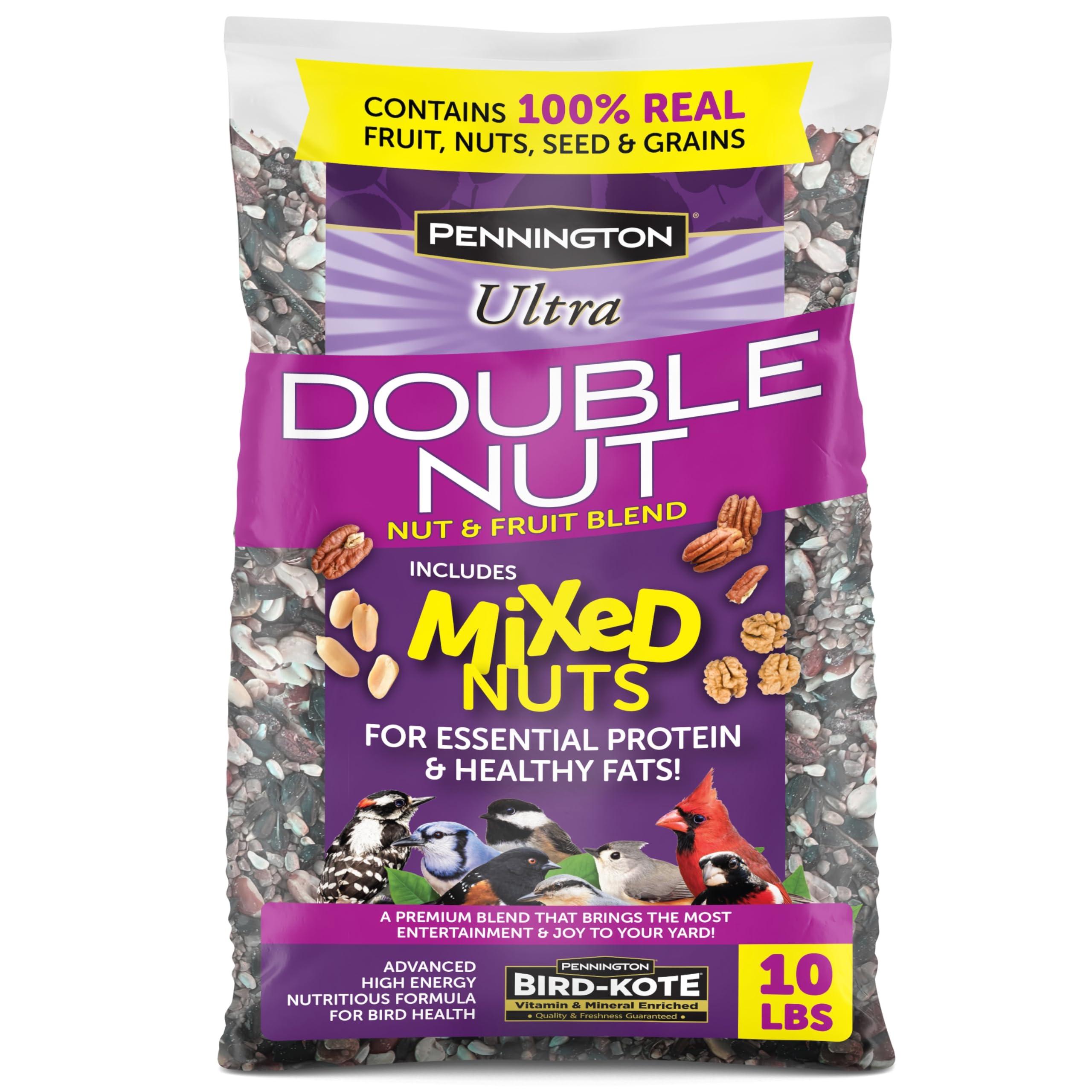
2. Pennington Ultra Double Nut, Nut & Fruit Blend
High-energy nuts and real fruit that woodpeckers and cardinals cannot resist.
This 10-pound bag blends mixed nuts, 100% real fruits, seeds, and grains into a single high-energy mix. The standout feature here is Bird Kote technology — Pennington adds extra vitamins and minerals directly to the seeds. That means each bite delivers more than just calories. In Michigan, where birds burn massive energy staying warm, this nutritional boost matters.
The blend attracts cardinals, chickadees, nuthatches, woodpeckers, and towhees. It works in gazebo, hopper, platform, and tube feeders, so you don’t need a special setup. Customers note that the fruit pieces are especially popular with orioles and robins during spring migration, making this a good option if you want to see a wider variety of species than a straight sunflower blend would bring.
A 4.7-star rating from over 700 reviews backs up the claims. Reviewers consistently mention that this blend produces less waste than cheaper filler-heavy mixes. Unlike the Kaytee finch blend which focuses on small-beaked birds, this mix caters to the full size range of Michigan backyard birds, from tiny chickadees to larger blue jays.
Energy-packed: Mixed nuts and real fruit provide the high calorie density Michigan birds need, reinforced by added vitamins and minerals through Bird Kote technology.
Reach for this if: You want to attract woodpeckers and orioles alongside the usual feeder birds, and you value added nutritional fortification for winter.
Look elsewhere if: You need a completely no-mess seed — the fruit and nut pieces can leave some scraps that ground-feeding birds will clean up but that may need occasional sweeping.
3. Cool Birds All Birds Wild Bird Seed
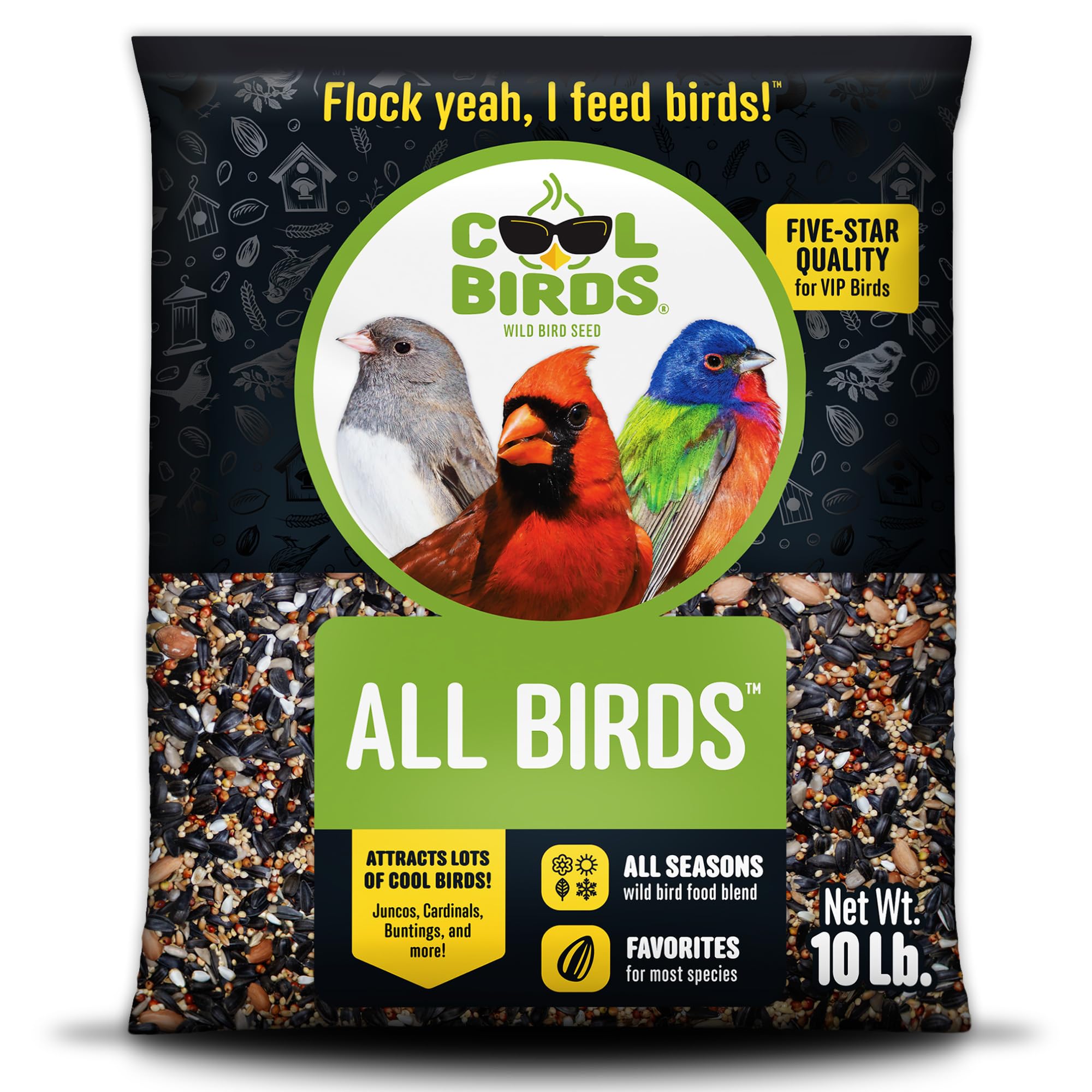
A diverse five-ingredient mix that attracts doves, jays, and sparrows on a budget.
This blend packs black oil sunflower seeds, white millet, safflower seeds, peanuts, and sunflower hearts into a single 10-pound bag. The variety is the key advantage here. Black oil sunflower attracts most Michigan songbirds, while white millet brings in ground-feeding doves and sparrows. Safflower is a smart addition because cardinals love it but squirrels and grackles tend to avoid it.
The formula is billed as energy and protein-packed, supporting year-round feeding. It works with tray, tube, hopper, platform, and smart camera feeders, giving you flexibility if you have multiple feeder types. The brand claims each bag fills a standard feeder up to 10 times, which is a helpful reference for planning your refill schedule during Michigan’s long winter stretches.
At a 4.7-star average from over 700 ratings, buyers agree this mix brings a wide variety of birds. Unlike the Nature Anywhere blend which comes in a smaller 5-pound bag, this 10-pound option offers better value per pound for households with multiple feeders or a hungry flock.
What stands out
- Five-ingredient mix attracts both perching and ground-feeding birds
- Safflower seeds deter squirrels without bothering cardinals
- Protein and energy formula supports winter feeding
One trade-off
- Contains hulls and filler grains that can accumulate under the feeder in wet weather
Perfect for: Budget-conscious birders who want the widest possible species variety without spending premium prices.
skip it if: You absolutely need a no-mess, no-sprout blend for a patio or deck where seed debris is unacceptable.
4. Nature Anywhere Bird Seed Bird Banquet
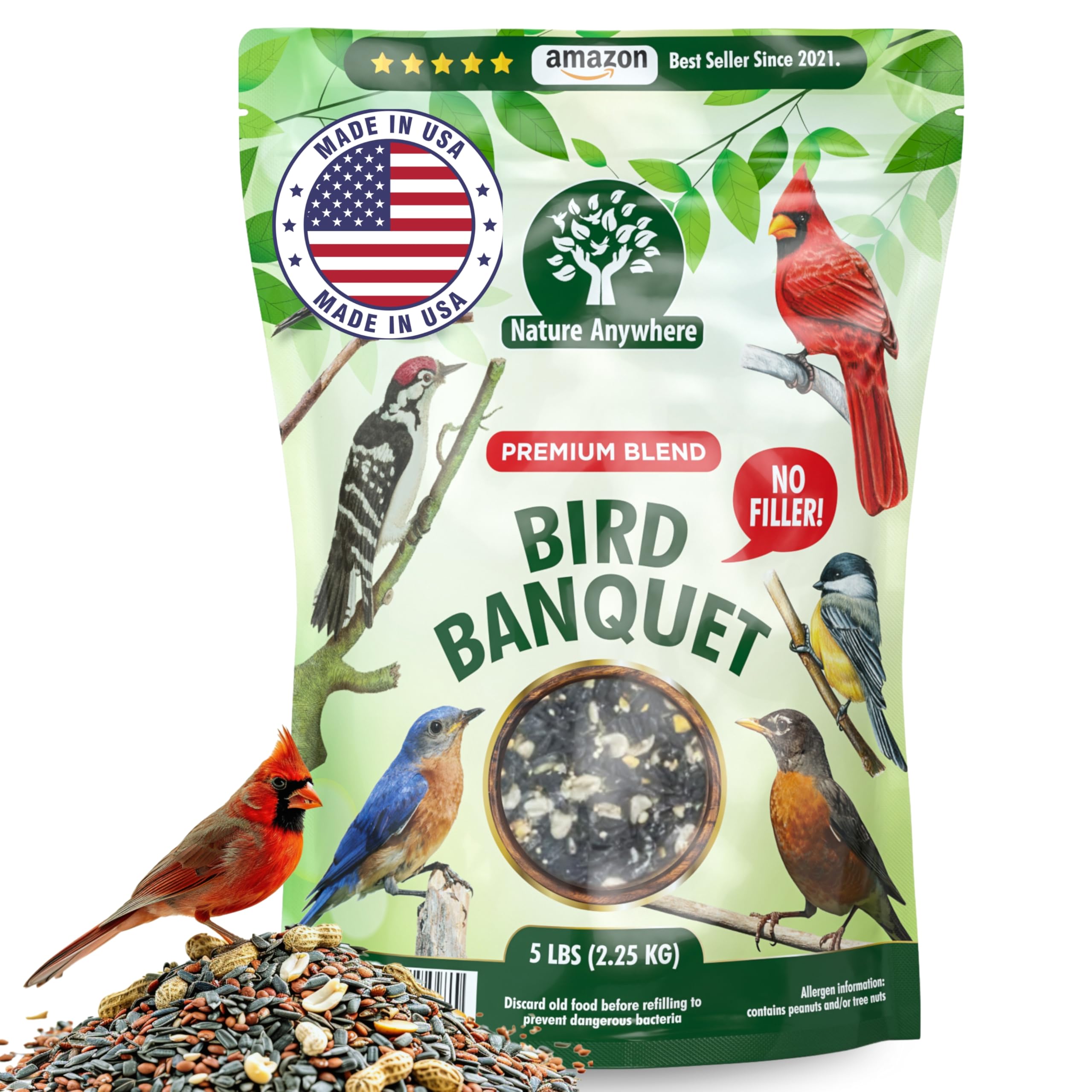
No cheap filler grains means every pour goes further for your birds.
This 5-pound bag is intentionally smaller than most blends, but the selling point is what is not inside. There are no filler grains like milo or wheat that birds typically ignore. You get a concentrated mix of seeds that birds actually eat. The manufacturer guarantees that if your feeder does not become the busiest in the neighborhood, they will refund you. That is a confident promise for a brand to make.
For comparison, the Armstrong blend below holds 40 pounds and costs less per pound, but it contains cut corn and wheat that some birds push aside. The Nature Anywhere blend’s no-filler approach means less waste under your feeder. Reviewers point out that cardinals and finches visit regularly, and the blend works well as a cardinal and finch food for outdoor feeders. It is made in the USA with domestically grown ingredients.
The compact 5-pound size makes this a good option if you have a single small feeder or want to test a new blend before committing to a bulk bag. One reviewer noted that the blend attracted birds within hours of filling the feeder, which is a strong sign of its appeal.
Smart design: No filler grains and a money-back guarantee make this a low-risk, high-quality choice for picky Michigan flocks.
Ideal for: Birders with a single feeder who want a premium, no-waste blend and are willing to pay more per pound for quality ingredients.
Not for: Large properties with multiple feeders — the 5-pound bag runs out quickly, and you will need to reorder often.
5. Kaytee No Mess Finch Seed and Nyjer Blend

The ultimate finch blend that leaves zero mess under your feeder.
This 8-pound bag is aimed squarely at finch lovers. It blends Nyjer seed with other fine finch seeds, and every single bit is consumable. There are no hulls, no shells, and nothing that can germinate. That means you can hang a tube feeder over a patio or deck without worrying about sprouts coming up through the cracks. The seeds can’t grow without hulls, so weeds are not a problem.
Goldfinches, chickadees, and juncos are the primary visitors. These are year-round Michigan residents, so this blend works in every season. The Nyjer seed is especially attractive to goldfinches, which stay in Michigan through winter and need high-fat seeds to survive. Unlike the Audubon Park sunflower hearts which attract a broader range of birds, this blend is specialized for smaller-beaked species that prefer tiny seeds.
Shoppers say that the blend attracts finches within hours of filling the feeder, and the no-mess claim holds true. A 4.6-star average from over 600 reviews confirms consistent satisfaction. The only catch is that Nyjer seed requires a tube feeder with small ports — large-port feeders will let the tiny seeds fall straight through.
Best features
- 100% consumable with zero leftover hulls or shells
- Seeds cannot germinate, eliminating weeds under the feeder
- Highly attractive to goldfinches and chickadees
Requirement
- Needs a tube feeder with very small ports to prevent seed waste
Best for: Finches and chickadees only — if your goal is to attract goldfinches, this blend is class-leading. It is the cleanest finch option on this list.
Skip if: You want to attract larger birds like blue jays, woodpeckers, or cardinals, which need bigger seeds and nuts.
6. Armstrong Wild Bird Food All Season Bird Seed Blend, 40 Pounds
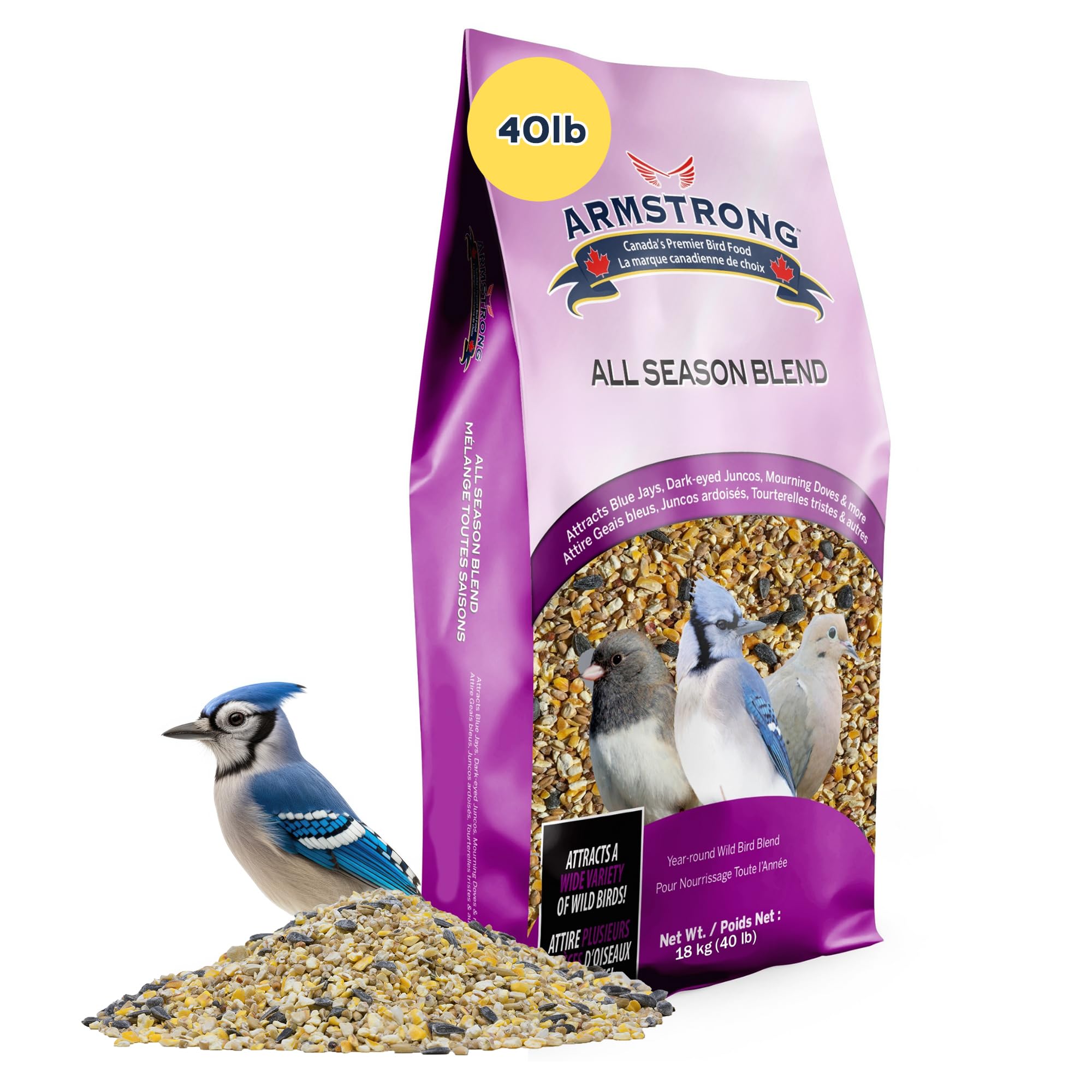
An enormous 40-pound bag built for heavy feeders and big Michigan flocks.
This 40-pound bag is designed for serious birders with multiple feeders or a very hungry local flock. The blend includes cut corn, wheat, red milo, white millet, and black oil sunflower seeds. It attracts blue jays, mourning doves, dark-eyed juncos, black-capped chickadees, northern cardinals, house sparrows, American tree sparrows, and Steller’s jays. That is a wide range of species, making this a versatile choice for year-round feeding.
The bag uses barrier packaging sealed airtight and CO2 flushed to preserve freshness. That matters because a 40-pound bag can take weeks to finish, and stale seed is less attractive to birds. Recommended feeder types include large port tube feeders, hopper feeders, and platform feeders.
Buyers report that the blend keeps well in the barrier bag, and the birds in their yards visit consistently. The 4.1-star rating is solid but slightly lower than premium blends, likely because some birds may pick around the corn and milo in favor of the sunflower seeds. This is a general feeding blend, not a specialized one.
Bulk advantage: At 40 pounds, this bag offers the lowest cost per pound for feeding large flocks through Michigan’s long winter season.
Great for: Large properties with multiple feeders and a high volume of daily bird visitors — the bulk size minimizes reorder frequency.
Not ideal if: You want a no-waste blend, since some birds will discard corn and milo in favor of sunflower seeds, leaving scraps under the feeder.
7. Cole’s BH10 Blazing Hot Blend Bird Seed

Spicy habanero seeds that birds love but squirrels and raccoons avoid.
This 10-pound bag uses a traditional bird seed mix with a twist — it includes habanero chilies. Birds can’t taste capsaicin, so they eat the seeds happily. Squirrels and other mammals can taste the heat and typically stay away. This is a practical solution if you have a persistent squirrel problem and are tired of them emptying your feeders.
The ingredient list is 100% all-natural and chemical-free. It attracts woodpeckers, grosbeaks, buntings, cardinals, chickadees, bluebirds, and goldfinches. The mix works in all feeder types, including Cole’s own Terrific Tube, Mighty Mesh, and Bountiful Bowl designs. Reviewers report that the spicy coating does not deter birds at all, and many see an increase in bird visits because squirrels are no longer bullying the feeders.
At a 4.4-star average from over 920 ratings, this is among the most-reviewed bird seed products available. Buyers consistently note that it works as advertised — squirrels take one bite and leave. Unlike the Kaytee finch blend which is specialized for small birds, this mix attracts the full spectrum of Michigan backyard species while keeping mammal pests at bay.
Why it works
- Habanero chili deters squirrels without affecting birds
- 100% all-natural ingredients with no chemicals
- Attracts a very wide range of species including woodpeckers and bluebirds
Consider this
- Spicy dust can transfer to your hands when refilling feeders — wearing gloves is recommended
Best for: Birders battling squirrel invasions who still want to attract the full variety of Michigan songbirds, including woodpeckers and grosbeaks.
Look elsewhere if: You have no squirrel problems and prefer a simpler, non-spicy blend — the habanero adds cost you do not need.
Understanding the Specs
Black Oil Sunflower Seeds
This is the single most popular bird seed ingredient in Michigan. Black oil sunflower seeds have thin, easy-to-crack shells and a high fat content (roughly 40% fat). Small birds like chickadees, nuthatches, and goldfinches can open them quickly. The high fat gives birds the calories they need to maintain body heat during Michigan winters. Any blend where this is the first ingredient is a strong choice.
No Mess and Shell-Free Blends
Blends labeled “no mess” or “shell-free” use hulled seeds, meaning the outer shell has been removed before packaging. Birds eat every bit, so nothing falls to the ground to rot or sprout. This is especially useful in Michigan where frequent rain and snow turn seed hulls into a muddy mess. Shell-free blends cost more per pound but produce zero waste, making them the best choice for patio, deck, or manicured lawn feeders.
FAQ
What is the best bird seed for Michigan winters?
Will Nyjer seed grow weeds under my feeder?
How do I keep squirrels out of my bird feeder in Michigan?
Is it okay to feed birds year-round in Michigan?
What is the difference between black oil sunflower and striped sunflower seeds?
How much bird seed should I expect to go through in a Michigan winter?
Can I mix different bird seed blends together?
What feeder type works best for Michigan weather?
Final Thoughts: The Verdict
For most Michigan birders, the bird seed for michigan winner is the Audubon Park Sunflower Hearts because it offers 100% consumable, shell-free sunflower hearts that attract a wide range of species while leaving no mess under your feeder. If you want a high-energy winter blend with added nutrition, grab the Pennington Ultra Double Nut. And for birders battling squirrels, the standout is the Cole’s Blazing Hot Blend.
How We Picked
We do not accept paid placement. Every pick is matched to a real buyer and a real use-case; we do not hands-on test units.
Sources & Methodology
Specifications: manufacturer listings and product documentation. Review insights: verified customer reviews, as of July 2026. Pricing: not shown on this page (it changes often); check the current price via the retailer link.
As an Amazon Associate, Lawn Gear Lab earns from qualifying purchases. This does not affect which products we feature.