
Specs are compiled from manufacturer listings and verified buyer reviews and can change over time — please confirm the key details on the product page before buying.
Stink bugs don’t just wander in — they stage an invasion. One finds a gap, and soon you’ve got a trail across your curtains and a stale smell in every room. The right spray stops that cold, but different formulas attack the problem in very different ways: some kill on contact, others wipe out a whole colony, and a few just nudge them away. This guide cuts through the shelf clutter and shows you which type actually works for your specific situation — and why the wrong choice can leave you spraying all season.
I’m Rikta — the founder and writer behind Lawn Gear Lab. This guide is built by comparing the manufacturers’ published specifications and the patterns across verified customer reviews, so you get each pick’s real strengths and trade-offs instead of marketing spin.
if you need a quick-kill barrier for your home perimeter or a natural formula safe for garden vegetables, the right bug spray for stink bugs depends on where and how you plan to use it — and how much residual protection you expect from a single application.
Our Picks at a Glance

How To Choose The Best Bug Spray For Stink Bugs
Stink bugs are stubborn. They wedge into tiny cracks, survive a surprising amount of punishment, and release a messy odor the second they feel threatened. The best spray for you depends on whether you’re fighting an active indoor infestation, laying down a seasonal barrier outside your home, or protecting garden plants from leaf damage. Here are the three key factors that separate a one-and-done treatment from a frustrating repeat purchase.
Active Ingredient: Synthetic vs. Natural vs. Repellent
The ingredient is everything. Synthetic options like Fipronil (a slow-acting non-repellent) let bugs walk through the treated area and carry the poison back to their colony, wiping out the problem at the source. Contact sprays with pyrethroids or essential oils (like lemongrass, clove, or peppermint) kill bugs you hit directly but leave no long-term trail back to the nest. Repellent-only essential-oil sprays simply keep bugs away from a treated spot — useful near doors and windows, but useless against bugs already inside your walls.
Residual Duration: How Long It Works After You Spray
Not all formulas last the same amount of time on a surface. A non-repellent concentrate like Fipronil Plus-C can remain active for 30–90 days indoors and outdoors, even in direct sunlight, because a patented cellulose encapsulation protects it from UV breakdown. By contrast, an essential-oil-based spray might only deter stink bugs for up to a week before it needs reapplication. If you want to spray once and stop thinking about stink bugs for a month, a long-residual formula is your real answer.
Usage Location: Indoor, Outdoor, or On Garden Plants
The label matters. A product designed for perimeter use around a home foundation might damage or stain garden vegetables. Something “gentle on plants” — like the Safer Brand Garden Spray — is safe on roses, tomatoes, and ornamentals but may not be strong enough for heavy indoor perimeter use. Check that the target species list includes “stink bugs” on the label, and match the spray strength to the location: concentrate for large outdoor perimeters, ready-to-use aerosol for quick indoor spot-kills, and natural-oil formulas for edible gardens and pet-sensitive areas.
Quick Comparison
| Model | Best For | Type | Liquid Volume | Residual Duration | Amazon |
|---|---|---|---|---|---|
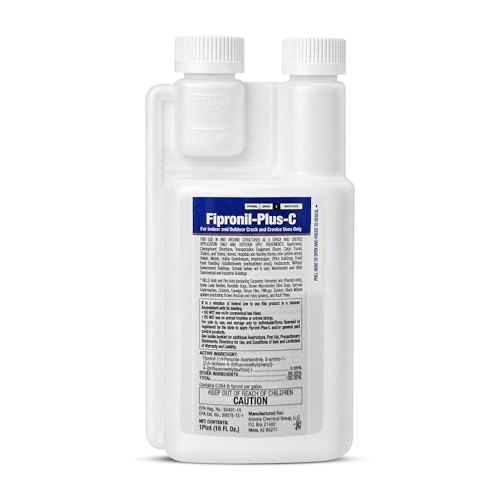
| Fipronil Plus-C★ Best Overall | Whole-colony elimination | Concentrate | 16 fl oz | 30–90 days | Amazon |
| Ortho Home Defense MAXLongest Protection | Indoor barrier & perimeter | Ready-to-Use | 24 fl oz | Up to 12 months (on nonporous surfaces) | Amazon |
| EcoPest Stink Bug Spray | Indoor spot-treatment, pet-safe | Ready-to-Use | 22 fl oz | Contact kill only | Amazon |
| Wondercide Ant & Roach Aerosol | Quick-kill aerosol in kitchen | Aerosol | 10 oz (2-pack) | Contact kill only | Amazon |
| Safer Brand Garden Spray | Garden & vegetable plants | Ready-to-Use | 24 fl oz | Reapply every 5–7 days | Amazon |
| Donaldson Farms Stink Bug Killer | Nature-derived barrier | Ready-to-Use | 16 fl oz | Long-lasting (nature-derived) | Amazon |
| Stink Bug Repellent Spray (Colton’s Naturals) | Essential-oil repellent | Ready-to-Use | 16 fl oz | Up to 1 week | Amazon |
In‑Depth Reviews
1. Fipronil Plus-C Insecticide Concentrate
Our pick — 4.5★ from 750+ verified ratings; the strongest balance of quality and price.
The professional-grade secret weapon that makes stink bugs dig their own grave.
This is the only option on the list built on a non-repellent (a formula invisible to insects so they walk right through it) principle. Stink bugs pick up the active ingredient Fipronil on their bodies and carry it back to their hiding spots, spreading it to others. That 24–36 hour delay before death is actually the feature, not a bug — it gives the colony time to self-destruct. One 16-ounce bottle mixes up to 21 gallons of spray, giving you three dilution rates to match your infestation level: 0.25 oz per gallon for maintenance, 0.75 oz per gallon for initial treatments, and 1.5 oz per gallon for severe cases.
The residual protection lasts 30–90 days per application, which buyers report seeing real results from for weeks on end even outdoors, where the patented Cellulose Entrapment Technology shields the formula from UV breakdown. It kills 11+ pest types (German cockroaches, ants, fire ants, spiders, Asian lady beetles, and stink bugs, among others) and is EPA-labeled for homes, restaurants, hospitals, and food-handling facilities. The catch: this is a concentrate, so you have to mix it yourself with a sprayer — not a grab-and-go bottle — and expect to see some pest activity for the first few days as the non-repellent system does its work.
Why it wins
- One 16-oz bottle makes up to 21 gallons of treatment-ready spray — far more coverage per dollar than any ready-to-use option
- Non-repellent action targets the entire colony, not just the few bugs you see
- Residual protection lasts 30–90 days, even outdoors in direct sunlight
- EPA-labeled for use in sensitive facilities like hospitals and restaurants
Before you buy
- Requires a separate garden or pump sprayer — no trigger bottle included
- Slow-acting formula means you won’t see instant knockdown; activity continues for 24–36 hours after treatment
- Overkill for a single-room spot treatment or a quick fix in the kitchen
Who needs this: Anyone tired of spraying individual bugs and ready for a treatment that tackles the whole hidden population — ideal for a full home perimeter and yard defense.
Not for you if: You just want to kill one stink bug you saw on the curtain and move on with your day; this is a strategic weapon, not a spot-treatment spray.
2. Ortho 0196410 Home Defense MAX Insect Killer Spray
Spray once around your baseboards and stop thinking about bugs for most of the year.
Ortho’s Home Defense MAX delivers a huge promise: it controls listed insects — including ants, roaches, spiders, and stink bugs — for up to 12 months on nonporous surfaces indoors. That covers your baseboards, window sills, and door frames, creating a bug barrier you barely notice. The formula dries odor-free and non-staining, so you are not living with a chemical smell just to keep stink bugs out. At 24 fluid ounces in this two-pack, you get enough coverage for a full indoor perimeter treatment and a few spot applications to follow.
Reviewers report good success using it around windows, where stink bugs tend to congregate, though some note that heavy infestations near the foundation might need an outdoor perimeter spray as well. This ready-to-use spray is a great middle ground between the grab-and-go simplicity of an aerosol and the deep residual power of the Fipronil concentrate above — no mixing required, but long-term protection on the surfaces that matter most. The trade-off is that the 12-month claim applies only to nonporous surfaces; on wood, drywall, or textured concrete, the residual period is shorter.
Biggest strengths
- Controls listed insects for up to 12 months on nonporous surfaces like tile, baseboards, and window frames
- Odor-free and non-staining — you won’t smell it after it dries
- Ready-to-use trigger spray; no mixing, measuring, or special equipment needed
Limitations
- 12-month residual is only on nonporous indoor surfaces — expect less duration on wood or concrete
- Not labeled for outdoor perimeter use in the same way a concentrate is; primary focus is indoor home defense
- Requires thorough application to create an unbroken bug barrier; a quick mist won’t cut it
The smart play: Reach for this if you want a set-and-forget indoor barrier around door frames, baseboards, and windows — the easiest long-term protection on our list that doesn’t require a pump sprayer.
Skip it: If you need a treatment for garden plants or a quick aerosol to kill a visible bug in seconds; this is a perimeter spray, not a spot killer.
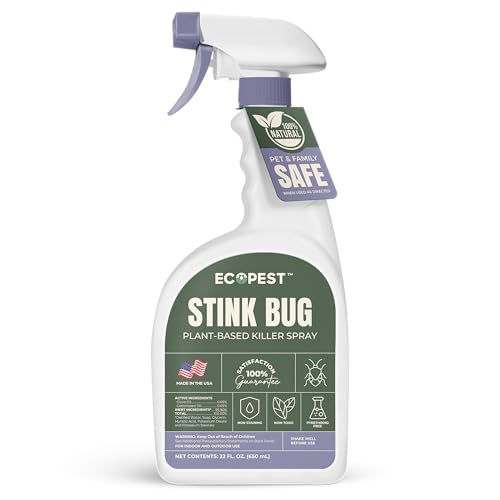
3. EcoPest Stink Bug Spray
A natural contact killer that hits hard without the chemical baggage.
EcoPest uses clove oil and cottonseed oil (both natural essential oils) as its active ingredients, and it has been lab-tested to kill stink bugs quickly on contact. This is a direct-spray solution: hold the bottle 8-12 inches from the bug, spray until it’s wet, and the formula works fast — no messy cleanup, no staining on counters, floors, bedding, or furniture. It is free of synthetic pyrethroids (a common class of synthetic insecticides that can affect the nervous system) and made without added dyes or fragrances, which buyers with kids and pets in the home appreciate.
The spray also handles a broad list of other household pests, including ants, cockroaches, earwigs, spiders, fleas, and wasps. At 22 fluid ounces and with an ergonomic handle, the bottle is comfortable to hold during longer treatment sessions around windows, door frames, vents, and even garden beds. The honest caveat: as a true contact killer with no residual repellent layer, this is ideal for dealing with bugs you can see, but it won’t prevent new ones from entering the same spot tomorrow. That makes it best paired with a barrier spray like the Ortho above for comprehensive protection.
What stands out
- Made with natural clove oil and cottonseed oil — no synthetic pyrethroids
- Non-staining and leaves no residue; safe on counters, floors, furniture, and fabrics
- Kills a wide range of insects including ants, roaches, fleas, and wasps on contact
- 100% satisfaction guarantee from the manufacturer
What it lacks
- Contact kill only — no residual barrier, so new bugs can return to the same spot
- Not intended for heavy outdoor perimeter treatment; best for indoor spot use
- Some buyers mention the spray pattern can be narrow compared to broader aerosol cans
Reach for this when: You want a natural formula you can spray on kitchen counters, pet beds, or near kids’ play areas without worrying about lingering chemicals — and you just need to kill the bugs you actually see.
Look elsewhere: If you need a product that keeps stink bugs out of a room for weeks without reapplying; it is a spot killer, not a barrier.
4. Wondercide Ant & Roach Aerosol Spray

Point, spray, and wipe — the fastest knockdown aerosol for a bug you just found.
Wondercide is built for speed. This aerosol uses natural essential oils of lemongrass and geraniol (a plant-based compound derived from geranium and citronella oils) to kill on contact, and owners mention seeing results in seconds. The two-pack gives you two 10-ounce cans designed for targeted use in the kitchen, around cabinets, baseboards, window frames, and near water pipes and appliances where stink bugs and other pests hide. Once the bug is dead, you just wipe it away — no lingering smell or sticky residue.
The formula is lab-proven against over 20 common household bugs, including spiders, fleas, carpet beetles, earwigs, silverfish, and stink bugs. It is cruelty-free and safe around pets and family when used as directed, which matters if you are spraying near food prep areas or pet bowls. The honest limitation: as an aerosol, the coverage area is smaller than a trigger-spray or concentrate, so it is not the right tool for treating large surfaces or creating a perimeter — but for those moments when you see a stink bug crawling up the wall and need it gone now, this is the fastest option on our list.
Best features
- Fast knockdown — kills bugs on contact in seconds with plant-based active ingredients
- No artificial colors or fragrances; leaves no messy residue after wiping
- Safe around pets and family when used as directed
- Proven against 20+ household pests, including stink bugs
Trade-offs
- Small 10-oz cans run out quickly if you are treating a larger area or several rooms
- No residual protection — it kills what it hits, but offers no future repellent barrier
- Aerosol propellant means you cannot use it in a continuous stream for long surfaces
Best for the moment: When you spot a stink bug crawling up the kitchen wall and just want it dead and gone without a production — this aerosol is the fastest, cleanest tool for the job.
Not for preventive work: If your goal is a lasting perimeter defense to keep bugs out for weeks, skip the aerosol and choose the Fipronil concentrate or Ortho barrier spray above.
5. Safer Brand Garden Insect Control and Killer Spray

The garden crowd-saver that keeps your vegetables edible and your stink bugs gone.
Stink bugs on your tomatoes and roses need a different solution than stink bugs on your baseboard. Safer Brand’s SG5110 formula is made with natural oils that are effective against garden insects like aphids, beetles, caterpillars, earwigs, spider mites, and stink bugs, yet gentle enough to use on roses, flowers, houseplants, fruits, vegetables, trees, shrubs, and ornamentals. It is safe for use around children and pets when used as directed, and it has no unpleasant odor — a big plus when you are spraying around edible crops. The 24-ounce ready-to-use bottle makes it simple to apply at the first sign of insect damage.
The recommended application schedule is every 5–7 days while insects are present, which means you need to stay on top of the treatment calendar. The good news: it can be used right up until the day of harvest, so you never have to choose between pest protection and eating your own produce. The trade-off is that this is not strong enough for heavy indoor stink bug infestations or for use on a home foundation — it is strictly a plant-focused spray. If you need both a garden spray and an indoor barrier, plan to keep this alongside a secondary product for your house perimeter.
Why it belongs in your shed
- Gentle on plants — safe for vegetables, fruits, herbs, flowers, and ornamentals
- Made with natural oils; no unpleasant odor and safe around kids and pets when used as directed
- Can be used up to the day of harvest, so your produce stays edible
- 24-ounce bottle ready to spray — no mixing or dilution needed
Where it falls short
- Needs reapplication every 5–7 days — not a set-and-forget product
- Not designed for home perimeter or indoor wall treatment; strictly for garden use
- May need to be combined with a stronger formula for heavy stink bug infestations
Pick this for your garden: If you grow vegetables or have ornamentals that stink bugs are damaging, this is the safest option for your plants and your dinner plate — just commit to the weekly re-application routine.
Not for indoors: For stink bugs in the living room or crawling across the ceiling, reach for a contact aerosol or perimeter barrier spray instead.
6. Donaldson Farms Stink Bug Killer Spray

A gentle, unscented formula that locks stink bugs out without locking you into an odor.
Donaldson Farms takes a nature-derived approach, using plant- and mineral-based ingredients to create a barrier that targets stink bugs on contact and also works as a long-lasting defense around entry points. The formula forms a durable barrier on surfaces — making it a good choice for perimeter application around windows, doors, and foundations where stink bugs try to push in. The 16-ounce bottle is ready to use and needs no mixing, so you can spray it straight onto stink bugs you see or on surfaces where they are likely to land.
One practical detail buyers mention is the short, compact bottle design — its package dimensions measure 8.98 x 4.72 x 3.15 inches, which is 5% larger than the Stink Bug Repellent from Colton’s Naturals — making it easy to grip and maneuver into tight corners. The unscented formula is a plus if you are sensitive to strong essential-oil smells. The honest reality check: with a 3.6 rating across 156 reviews, the user experience is more mixed than the higher-scoring picks above. Some customers note solid results on mild infestations, while others find it insufficient for a heavy stink bug invasion. Treat this as a good first line of defense for light preventive treatment rather than a heavy-duty colony eradicator.
What works
- Nature-derived formula with plant- and mineral-based ingredients — no harsh synthetics
- Unscented, so you are not stuck with a smell after spraying your door frames
- Creates a durable barrier around entry points for ongoing protection
- Ready-to-use 16-ounce bottle with a compact, easy-to-grip design
Considerations
- Mixed customer reviews — some buyers found it less effective against heavy infestations
- Smaller 16-ounce bottle covers less area than the 24-ounce options in this guide
- Not a concentrate; at 16 oz, you pay a premium per ounce compared to mixing your own
A good call if: You want a gentle, unscented nature-derived spray for light stink bug activity and you prefer a grab-and-go bottle over mixing a concentrate.
Think twice if: You are dealing with a heavy or recurring infestation — you may need the colony-killing power of the Fipronil concentrate or a longer-residual barrier.
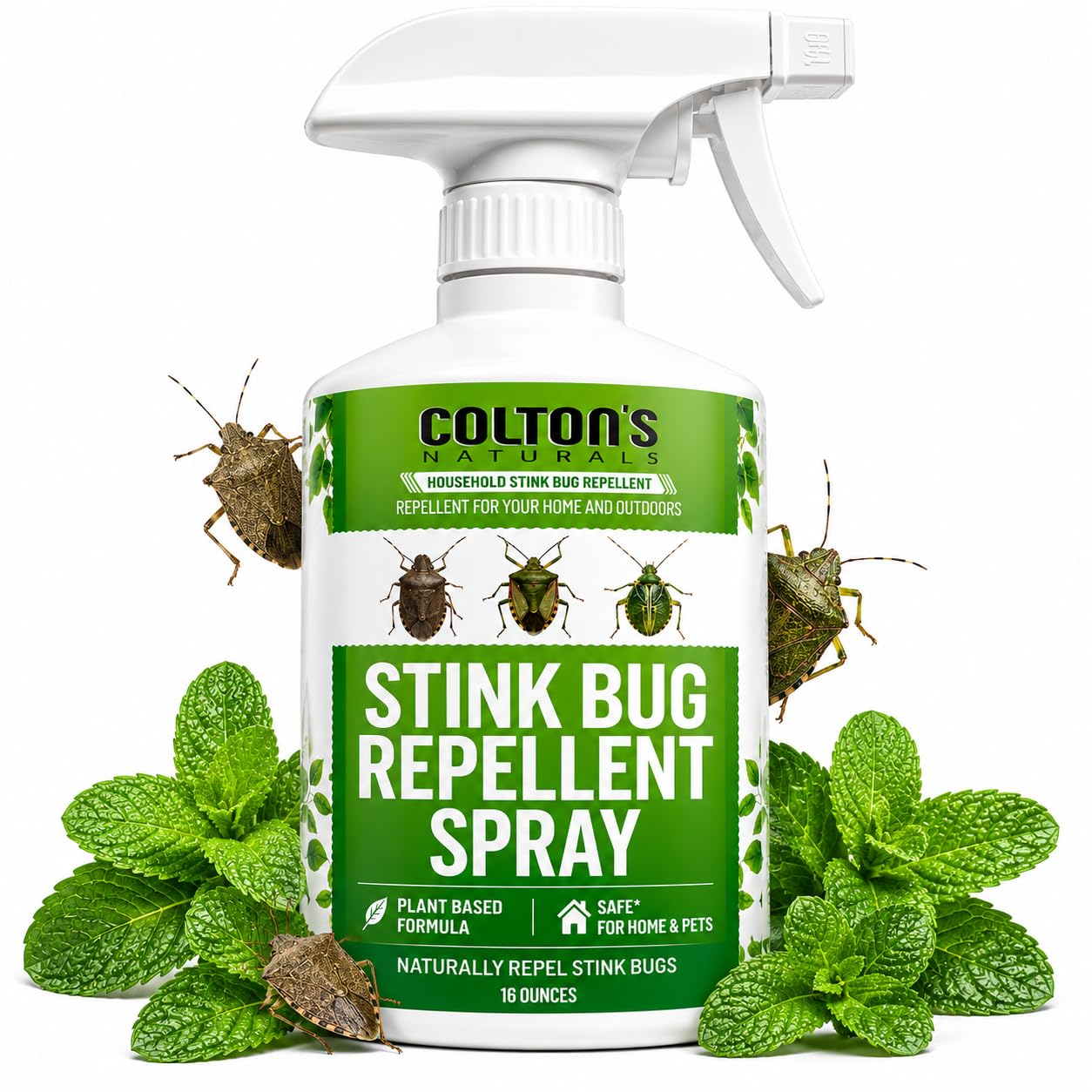
7. Stink Bug Repellent Spray (Colton’s Naturals)
The gentle-giant approach: drive stink bugs away with plant smells, not poison.
Colton’s Naturals takes a purely repellent strategy. Powered by a blend of plant-based essential oils including clove, lemongrass, and peppermint oils, this spray helps keep stink bugs away from windows, doors, basements, porches, and other entry points without using harsh chemicals. It falls under the EPA’s minimum-risk pesticide exemption (FIFRA 25(b) — a regulatory category for pesticides made with ingredients that are already approved for other uses and pose a minimal risk to humans and the environment), which means you are essentially using a combination of familiar essential oils and sodium lauryl sulfate rather than a synthetic neurotoxin. The fresh, zesty scent is pleasant to people but helps keep stink bugs at a distance.
One application helps deter new infestations for up to a week, according to the brand, so you need to reapply regularly if you want a continuous barrier. The 16-ounce bottle is ready to use and requires no mixing. The honest limitation: as a repellent-only product, it does not kill stink bugs — it just encourages them to go somewhere else. If you have stink bugs already inside your home, this spray will not eliminate them. It works best as a preventive measure during peak entry seasons, sprayed around common entry points before the bugs arrive. Buyers with a low tolerance for strong chemical smells tend to appreciate this approach, but those expecting a killing solution should look to the contact-kill or concentrate picks above.
What we like
- Plant-based essential oils (clove, lemongrass, peppermint) — no harsh chemical odors
- EPA minimum-risk classification gives confidence for regular use around the home
- Pleasant zesty scent that is easy to live with compared to synthetic insecticide sprays
- Simple regular reapplication helps maintain a bug-free zone around entry points
What to know
- Repellent only — it does not kill stink bugs; you are just sending them elsewhere
- Needs reapplication every week to stay effective; not a long-term solution
- Less effective once stink bugs have already entered the house — better as a preventive measure
Ideal as a preventive: Use this around windows, door frames, and vents before stink bug season peaks — it keeps them from wanting to enter in the first place, without any toxic chemical residue.
Stop here if: You already have stink bugs crawling on your walls; this will not solve an active indoor infestation — you need a contact killer for that.
Understanding the Specs
Non-Repellent vs. Contact Kill vs. Repellent
This is the single most important difference in the stink bug spray aisle. A non-repellent formula (like Fipronil Plus-C) is invisible to the bug, so it walks through the treated area, picks up the active ingredient, and carries it back to its hiding spot — spreading the poison to other bugs that never touched the spray. This is how you hit the colony, not just the individual bug. A contact kill spray (EcoPest, Wondercide) kills only the bugs you directly hit; anything that walks through the treated area after it dries is safe. A repellent (Colton’s Naturals) just sends bugs in another direction — useful for keeping them out of a specific room, but useless against bugs already inside your home.
Residual Duration and UV Protection
Residual duration is how long a treated surface stays deadly or repellent after the spray dries. The Fipronil Plus-C concentrate lasts 30–90 days because a patented Cellulose Entrapment Technology protects the ingredient from UV breakdown (ultraviolet light from the sun that degrades most insecticides fast) and microbial degradation. Compare that to Ortho’s 12-month claim, which applies only on nonporous indoor surfaces like tile and glass — on wood, drywall, or concrete outdoors, that duration drops significantly. Essential-oil sprays like Colton’s Naturals last only about a week because the oils evaporate quickly. When choosing, match the residual length to where you plan to spray: a long-residual non-repellent for the perimeter, a medium barrier for indoor baseboards, and a short-lived contact killer for spot use.
FAQ
Will any bug spray for stink bugs work on them, or do they need a special formula?
Can I use a garden insect spray indoors to treat a stink bug problem?
Why does the Fipronil concentrate take 24–36 hours to kill stink bugs?
How do I prevent stink bugs from coming back after I spray?
Is there a bug spray for stink bugs that is safe for pets and children?
What is “brown marmorated stink bug” and do all sprays work on it?
How much area does a 16-ounce concentrate like Fipronil Plus-C cover compared to a ready-to-use spray?
What does “non-staining” mean on a stink bug spray label?
Can I use a stink bug spray on my fruit trees and vegetable plants?
How quickly do stink bugs die after being sprayed with a contact killer vs. a non-repellent?
Final Thoughts: The Verdict
Across the board, the best bug spray for stink bugs is the Fipronil Plus-C Concentrate because its non-repellent, colony-killing action and 30–90 day residual coverage provide the most thorough long-term protection for the money — especially if you are fighting a recurring or large-scale infestation. If you prefer a grab-and-go indoor barrier without mixing a concentrate, grab the Ortho Home Defense MAX. And for quick spot treatments in the kitchen or near pets and kids, the standout is the Wondercide Aerosol for fast knockdown and easy cleanup.
How We Picked
We do not accept paid placement. Every pick is matched to a real buyer and a real use-case; we do not hands-on test units.
Sources & Methodology
Specifications: manufacturer listings and product documentation. Review insights: verified customer reviews, as of July 2026. Pricing: not shown on this page (it changes often); check the current price via the retailer link.
As an Amazon Associate, Lawn Gear Lab earns from qualifying purchases. This does not affect which products we feature.