
Specs are compiled from manufacturer listings and verified buyer reviews and can change over time — please confirm the key details on the product page before buying.
Choosing the right gauge (thickness) and purity of copper wire for your garden determines whether your coil holds its shape around a wooden stake or tangles into a knot the second you wrap it. Not all copper wire works for outdoor soil contact — some is polished for jewelry makers, and some is dead-soft (very easy to bend) for crafters, which matters a lot when you want an antenna or a spiral that stays put.
I’m Rikta — the founder and writer behind Lawn Gear Lab. This guide is built by comparing the manufacturers’ published specifications and the patterns across verified customer reviews, so you get each pick’s real strengths and trade-offs instead of marketing spin.
Whether you are setting up electroculture antennas in a raised bed or simply need a sturdy coil for plant supports, these picks break down the gauge, length, and purity that actually matter. This review covers the best copper wire for gardening available right now, with a focus on what real soil contact demands from a wire.
Our Picks at a Glance

How To Choose The Best Copper Wire For Gardening
A thicker 16-gauge wire (1.3mm diameter) holds its shape around a stake without drooping, so your antenna stays in place. A thinner 24-gauge wire (0.5mm) is better for delicate vine ties, because it bends easily without damaging stems. 99.9% pure copper resists corrosion in wet soil, and an anti-oxidation coating (a thin protective layer) can extend that lifespan even further. Length matters simply because running an antenna from a plant bed back to a central stake takes around 65 feet, so measure your garden area before you pick a spool.
Gauge and Durability in Soil
You get the stiffness to push the wire into soil or wrap it around a bamboo stake without collapsing when you pick 16-gauge wire (1.3mm thick). That is the standard for electroculture antennas. The 24-gauge wire (0.5mm) is more flexible and works well for tying branches or securing lightweight plants. Check the spec sheet for the exact millimeters — a 1.3mm thickness versus 0.5mm, which is a huge difference in how much force it can take before bending permanently.
Purity and Corrosion Resistance
Most gardeners prefer 99.9% solid bare copper because it oxidizes slowly (forms a protective surface layer over time) and keeps working for years. Some wires come with a tarnish-resistant coating that prevents the dark patina (surface discoloration) from forming, which some buyers like for appearance. If you plan to leave the wire in the ground season after season, look for a spec that says “rust and corrosion resistant” or “anti-oxidation coating” in the data.
Quick Comparison
| Model | Best For | Gauge | Length | Item Diameter | Amazon |
|---|---|---|---|---|---|
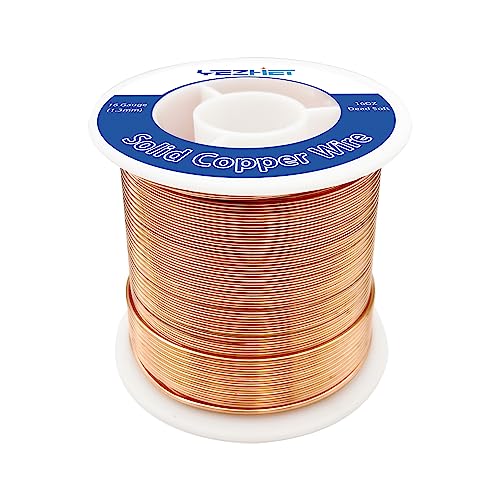
| YEZHET 99.9% Solid Bare Copper★ Best Overall | Heavy-duty garden stakes & wrapping | 16 | 130 Ft | 1.3 mm | Amazon |
| Wonderway 99.9% Solid Bare CopperAlso Great | Large-scale electroculture gardens | 16 | 122 Ft | 1.3 mm | Amazon |
| TOYMIS Electroculture Copper Antenna | Pure budget antenna for raised beds | 16 | 65 Ft | 1.3 mm | Amazon |
| Craftwire USA Solid Bare Copper | Multi-gauge project versatility | 18, 20, 22, 24 | 25 Ft | 0.51 mm | Amazon |
| CREATZONE Tarnish Resistant Copper | Long-lasting garden ties & craft | 24 | 328 Ft | 0.5 mm | Amazon |
| Hobbyworker 24 Gauge Bare Copper | Flexible vine ties on a budget | 24 | 273 Ft | 0.51 mm | Amazon |
In‑Depth Reviews
1. YEZHET 99.9% Solid Bare Copper Wire
Our pick — over 4.5★ from 950+ verified ratings; the strongest balance of quality and price.
A crowd-favorite heavy spool with a 4.8 rating and 130 feet of dead-soft 16-gauge wire.
This is one of the longest pure copper runs you can get for around mid-range money. The grade rating listed as “Aerospace” (a claim from the manufacturer) suggests high purity, and the wire is described as dead soft, which means it bends easily by hand but still holds its shape when wrapped around a stick used as a garden support.
Owners mention that the 16-ounce weight feels substantial and that the wire remains shiny longer than typical craft copper. Because it is 16 gauge — compared to the 24-gauge Hobbyworker wire — it works well for both electroculture antennas and heavier craft wrapping. The trade-off is that at 1.3mm, it is less forgiving for small-bend jewelry-style work, but for garden stakes and spirals, that stiffness is exactly what you want.
Why Gardeners Pick It
- 130-foot length covers large garden beds without a second purchase
- Dead-soft temper makes it easy to shape around a stake
- Lead-free and nickel-free for soil safety
The Catch
- Lacks the explicit anti-oxidation coating that the Wonderway wire includes
- Heavier weight (16oz) can be overkill for a single planter
Reach for this if: You need a long, thick run of pure copper for multiple garden antennas and want the best length-to-weight value.
skip it if: You prioritize built-in corrosion protection, in which case the Wonderway model with its anti-oxidation coating is a smarter choice.
2. Wonderway 99.9% Solid Bare Copper Wire
The premium spool that pairs 99.9% purity with a full 122 feet for serious garden installations.
You get 16-gauge (1.3mm thick) wire, which gives you the stiffness to wrap around a bamboo stake or shape into a spiral antenna (a multi-loop coil placed above soil in electroculture) that stays put in the wind. Unlike thinner 24-gauge wires, this one holds its shape without kinking, making it ideal for electroculture setups where you want a fixed coil above the soil. At 122 feet per spool, you get roughly twice the length of the TOYMIS 65-foot option, so you can run multiple antennas across a medium-sized garden without ordering a second roll.
The 99.9% pure copper includes an anti-oxidation coating, and buyers report that it resists the dark patina that forms on uncoated copper, keeping it working in damp soil for seasons. That coating plus the 1.3mm thickness makes it a strong choice if you want a wire that you can bury, shape, and rely on for years — whereas a thin 24-gauge wire like the CREATZONE is better for lightweight ties but not for soil-contact antennas.
Garden-Ready Specs
- Thick 1.3mm diameter provides shape retention around stakes
- Rust and corrosion resistant with an anti-oxidation layer
- 16 ounces of wire — plenty for multiple raised beds
The Honest Trade-Off
- More expensive than smaller spools, so budget buyers may prefer the TOYMIS 65-foot option
- At 1.3mm, it is too stiff for delicate vine tying — a 24-gauge wire bends easier
Best for the long garden: If you are running electroculture antennas across a sizable plot and want a wire that does not oxidize fast, this is the one to buy.
Look elsewhere if: You only need a short 25-foot length for small indoor pots, where the multi-gauge Craftwire USA option may suit you better.
3. TOYMIS Electroculture Gardening Antenna 65 Feet

The entry-level 16-gauge antenna spool that gets you started without overspending.
At 65 feet of 1.3mm copper wire, the TOYMIS spool is exactly half the length of the YEZHET 130-foot option, but it costs less. That makes it a trial size if you are not sure whether electroculture gardening will become a long-term hobby. The wire is 99.9% pure copper and is listed as soft but tough, so you can bend it into a spiral or a pyramid shape without needing pliers to get the initial curve started.
The 16-gauge thickness is the same as the premium picks above (1.3mm), so it holds shape just as well around a wooden stake. The catch is the shorter length — 65 feet covers one large raised bed antenna or two small ones, but if you have four beds to wire, you will need a second spool. Reviewers mention the copper arrives clean and bright, and the 20,000 PSI (pounds per square inch, a measure of tensile strength) tensile strength spec means it resists snapping when you pull it taut between stakes.
What It Does Well
- Same thick diameter as premium options for a lower entry price
- Lightweight 0.55 lb spool is easy to handle and cut
- Rated tensile strength of 20,000 PSI suggests good durability
Limitation
- No anti-oxidation coating, so patina (surface discoloration from oxidation) forms faster in wet soil
- Half the length of the Wonderway spool — plan for multiple orders on larger plots
A solid starter: If you want 16-gauge thickness without paying for extra length you do not need, this spool delivers.
Not ideal for: Big gardens where 65 feet forces you to splice wires; the 130-foot YEZHET or 122-foot Wonderway would save you the hassle.
4. Craftwire USA Solid Bare Copper Wire 25 Feet
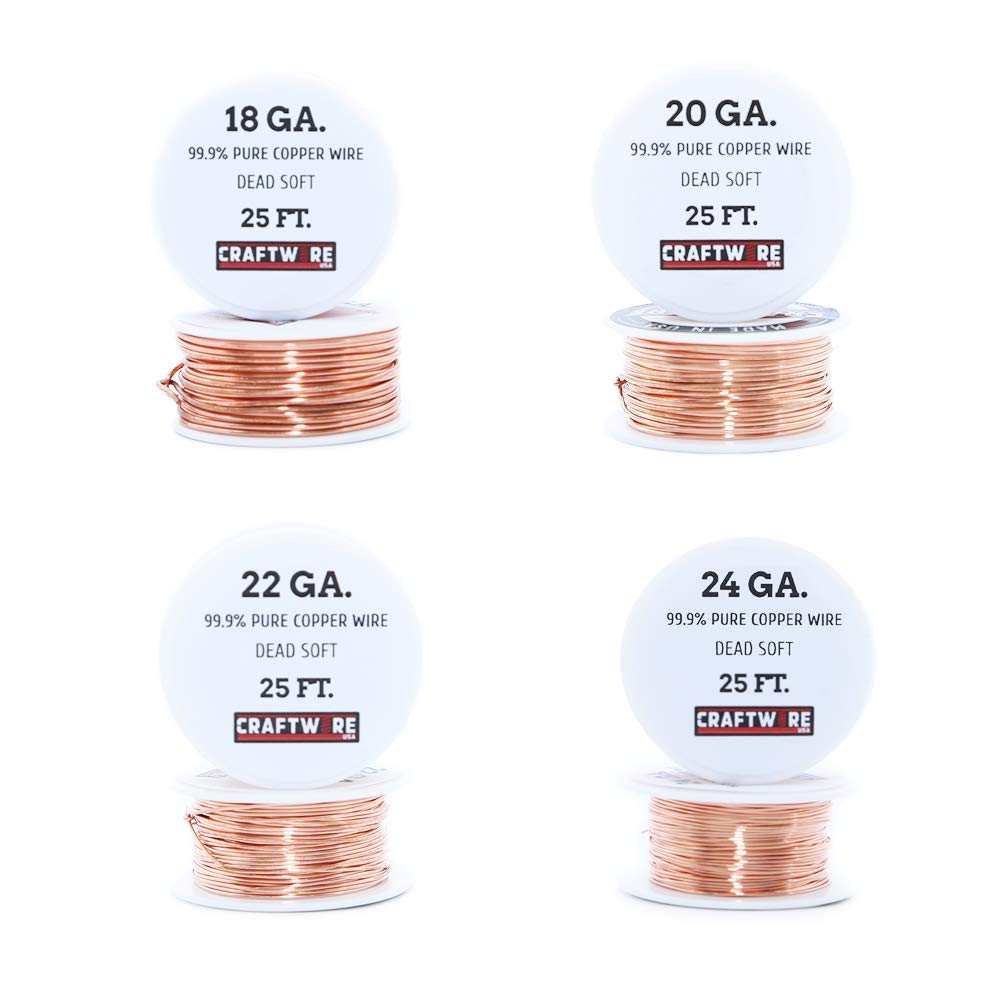
A sampler pack of four gauges — 18, 20, 22, and 24 — perfect for mixed project types.
Unlike the single-gauge spools above, the Craftwire USA set gives you 25 feet of wire split across four different thicknesses. That means you can use the 24-gauge for tying tomato vines, the 18-gauge for a sturdy antenna base, and the 20- and 22- gauge for in-between work — all from one order. The wire is dead soft (pure copper CDA #110, a copper alloy standard used in electrical applications) which makes it extremely easy to bend with just your fingers, even at the thicker 18-gauge size.
The catch is the total length — at 25 feet, it is far shorter than the 328-foot CREATZONE spool or the 273-foot Hobbyworker spool. For one small raised bed or a container garden on a balcony, 25 feet of mixed gauges is enough. But for a full in-ground garden, you will run out fast. Because the wire is dead soft rather than half-hard, it holds shape but can lose that shape if you bump it while working nearby. Customers note the wire feels authentic and works well for craft, but several mention wishing the spool was twice as long.
Flexibility Per Foot
- Four gauges in one spool cover everything from vine ties to antenna coils
- 99.9% pure solid copper with a dead-soft temper
- Compact 25-foot roll is easy to store in a toolbox
Where It Falls Short
- At 25 feet total, you get only about 6 feet per gauge — very limited for a garden
- Not 16-gauge, so it lacks the stiffness needed for tall, unsupported antennas
Best for mixed-craft gardeners: If you need different thicknesses for different plants and you work small spaces, this is the convenient choice.
Skip it for: Dedicated electroculture installs where you need a single 130-foot run of 16-gauge — pick the YEZHET spool instead.
5. CREATZONE 328 Feet Tarnish Resistant Copper Wire

The longest spool in the list with a tarnish-resistant coating, but at a delicate 24-gauge thickness.
At 328 feet, the CREATZONE spool is the most generous length here — versus the 25-foot Craftwire USA spool. The wire is 24 gauge (0.5mm), which is thin and flexible, perfect for weaving through a trellis or tying delicate vegetable vines without damaging stems. The tarnish-resistant coating (a thin layer that slows surface discoloration) means it will stay bright for longer than uncoated bare copper, and the coating is designed not to peel or chip during bending and coiling.
However, 24-gauge wire is 0.5mm vs 1.3mm in diameter. That makes it too thin to hold its shape as a self-supporting antenna above soil. You will need to wrap it tightly around a stake or stick for it to hold its form. Reviewers point out the wire is soft and easy to work with, but some gardeners who expected a stiffer antenna material were surprised by how easily it bends. If your project involves heavy-duty soil contact, the 16-gauge Wonderway or YEZHET options will be more reliable.
Why It Stands Out
- Massive 328-foot roll — enough for trellises, ties, and craft across several seasons
- Tarnish-resistant coating protects against corrosion and patina
- Thin 0.5mm diameter is gentle on plant stems
The Trade-Off
- Too thin for a self-supporting electroculture antenna without a stake
- Coating may wear off if scraped repeatedly against rough wood
Ideal for the big trellis: If you need hundreds of feet of flexible vine tie that resists tarnish, this spool delivers incredible length per dollar.
Not for: Rigid garden antennas that need to stand upright — go with a 16-gauge option like the TOYMIS spool for that job.
6. Hobbyworker 24 Gauge Bare Copper Wire 273 Feet
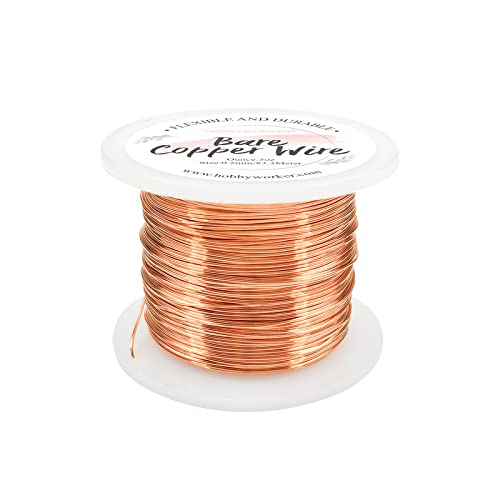
An affordable 273-foot spool of 24-gauge bare copper for light garden ties and craft.
The Hobbyworker spool gives you 273 feet of 24-gauge (0.5mm) uncoated copper wire, making it 55 feet shorter than the CREATZONE spool but at a lower price point. The wire is natural bare copper with no coating, which means it will develop a darker patina over time — the maker explicitly notes this in the product description as normal behavior. If you prefer the natural aging look of copper in your garden, this is a plus rather than a flaw.
Because the wire is 24-gauge and uncoated, it is extremely flexible and easy to cut with standard scissors. It works well for tying climbing beans, securing tomato cages, or stringing up lightweight cucumber vines. The length difference with the CREATZONE spool is notable — at 273 feet versus 328 feet, the Hobbyworker spool versus the 122-foot Wonderway spool, but for lightweight tasks only. Buyers with craft experience mention the wire works well for jewelry and light garden use, but caution that it kinks if you over-bend it in the same spot.
What You Get
- 273-foot spool at a low entry price — great for covering a lot of ground on a budget
- Uncoated natural copper develops a vintage patina over time
- Thin 0.5mm wire is gentle on plant stems and easy to cut
The Downside
- No tarnish resistance — patina develops much faster than the CREATZONE coated wire
- Too thin for sturdy electroculture antennas that need to stand on their own
A solid budget tie: If you need hundreds of feet for simple garden ties and do not mind the copper darkening over time, this is the cheapest way to get that much wire.
Look elsewhere for: Any garden use that requires stiffness or shape retention — the 16-gauge options above are better choices for antennas.
Understanding the Specs
Gauge and Diameter
The gauge number tells you the wire’s thickness — lower numbers mean thicker wire. 16-gauge wire measures 1.3mm in diameter, compared to 24-gauge wire at 0.5mm. For garden antennas that need to hold their shape around a stake, 16-gauge is the go-to because it resists bending. For tying vines and lightweight trellis work, 24-gauge is flexible enough to wrap without damaging stems.
Purity and Coating
99.9% solid bare copper is the standard for garden use because pure copper resists corrosion better than alloys (mixtures of metals). Some wires add a tarnish-resistant coating that keeps the wire bright and slows oxidation (the chemical reaction that darkens copper) in damp soil. Uncoated wire develops a dark patina over time, which is harmless but can stain surfaces. For long-term soil contact, either choice works, but coated wires stay shiny longer.
Length and Weight
Spools range from 25 feet to 328 feet. For a single electroculture antenna in a small raised bed, 65 feet is enough. For a full garden with multiple beds, look for 122 to 130 feet per spool. Weight matters for handling — a 16-ounce spool (about 1 pound) feels substantial and holds up to repeated bending, while a 0.3-pound spool is easier to handle for fine craft work.
Temper (Dead Soft vs Half Hard)
Dead-soft wire bends easily by hand and stays where you put it, which is great for wrapping around a stake or shaping spirals. Half-hard wire is stiffer and springs back slightly after bending, which can make it trickier to shape but gives it more resilience. Most garden wire sold for electroculture is dead-soft, because you want it to hold its shape without needing tools to force it.
FAQ
What gauge copper wire is best for gardening?
Can I use regular craft copper wire in my garden?
Does copper wire really help plants grow in electroculture gardening?
How long does copper wire last when buried in soil?
Do I need 99.9% pure copper or is lower purity fine?
How much copper wire do I need for a standard garden bed?
Can I combine different copper wire gauges in one antenna?
Is copper wire safe for vegetable gardens and edible plants?
Why does my copper wire turn black after a few weeks outside?
Final Thoughts: The Verdict
For the majority of shoppers, the copper wire for gardening winner is the Wonderway 99.9% Solid Bare Copper Wire because it pairs 16-gauge thickness with an anti-oxidation coating and a full 122-foot run, hitting the balance between durability and length. If you want the longest 16-gauge spool on a tighter budget, grab the YEZHET 130-foot option. And for lightweight trellis tying across a large garden, the standout is the sheer 328-foot length of the CREATZONE tarnish-resistant wire.
How We Picked
We do not accept paid placement. Every pick is matched to a real buyer and a real use-case; we do not hands-on test units.
Sources & Methodology
Specifications: manufacturer listings and product documentation. Review insights: verified customer reviews, as of July 2026. Pricing: not shown on this page (it changes often); check the current price via the retailer link.
As an Amazon Associate, Lawn Gear Lab earns from qualifying purchases. This does not affect which products we feature.