
Specs are compiled from manufacturer listings and verified buyer reviews and can change over time — please confirm the key details on the product page before buying.
A Ficus bonsai sitting in regular potting soil is a sad sight — water pools at the bottom, roots suffocate, and that vibrant green you brought home fades to yellow. The fix is simpler than you think: a fast-draining mix that lets the roots breathe between waterings while holding just enough moisture for a tropical tree in full sun. That specific balance is what makes one bag a lifesaver and another a slow death sentence.
I’m Rikta — the founder and writer behind Lawn Gear Lab. This guide is built by comparing the manufacturers’ published specifications and the patterns across verified customer reviews, so you get each pick’s real strengths and trade-offs instead of marketing spin.
This article walks through the seven most reliable bags available, each one chosen because it solves a specific problem Ficus owners actually face, from beginner-proof drainage to premium aeration that mimics a forest floor. Here is your complete look at the best bonsai ficus soil options on the market right now.
Our Picks at a Glance

How To Choose The Best Bonsai Ficus Soil
Buying the wrong bag is the single fastest way to stunt your Ficus. The right soil does two things at once: it drains fast enough to prevent root rot, and it holds enough moisture so you are not watering twice a day. Here are the three things to check before you add to cart.
Particle Size and Structure
Ficus roots need air pockets, not a mud bath. Look for a mix with individual particles you can see — small chunks of pumice, lava rock, or akadama. A gritty texture means water flows through instead of pooling. Pre-sifted mixes save you the step of screening out dust that turns into sludge.
Ingredient List — What Matters and What is Filler
A good Ficus soil contains calcined clay, pumice, lava rock, or akadama for drainage. Pine bark fines add a slight acidity Ficus roots enjoy and hold a small amount of moisture. Avoid bags that list peat moss or composted forest products as the first ingredient — those hold too much water and break down quickly.
Bag Size Relative to Your Pot
A 2-quart bag fills roughly one 8-inch pot. If you have multiple trees, jump to a 4-quart bag so you have enough for a full repot without scrambling for a second bag halfway through. Resealable bags are a genuine bonus — leftover soil stays dry and ready for next season.
Quick Comparison
| Model | Best For | Volume | Key Ingredients | Drainage | Amazon |
|---|---|---|---|---|---|
| Bonsai Jack #221★ Best Overall | Universal use | 2 Quarts | Bark, Pine Fines | Very Fast | Amazon |
| Tinyroots TropicalTropical Specialist | Tropical Bonsai | 2.25 Quarts | Calcined Clay, Pumice, Lava Rock | Very Fast | Amazon |
| Harris All Purpose | Beginners | 2 Quarts | Forest Humus, Pumice, Calcined Clay | Fast | Amazon |
| Hoffman 10708 | Evergreens | 2 Quarts | Pre-mixed formula | Fast | Amazon |
| rePotme Imperial Mix | Ficus & Figs | 2 Quarts | Bark, Peat, Organic Matter | Moderate | Amazon |
| Agra Life Bonsai | All varieties | 4 Quarts | Organic blend | Fast | Amazon |
| The Soil Sage Premium | Advanced users | 2.5 Quarts | Akadama, Pumice, Lava Rock, Pine Bark | Very Fast | Amazon |
In‑Depth Reviews
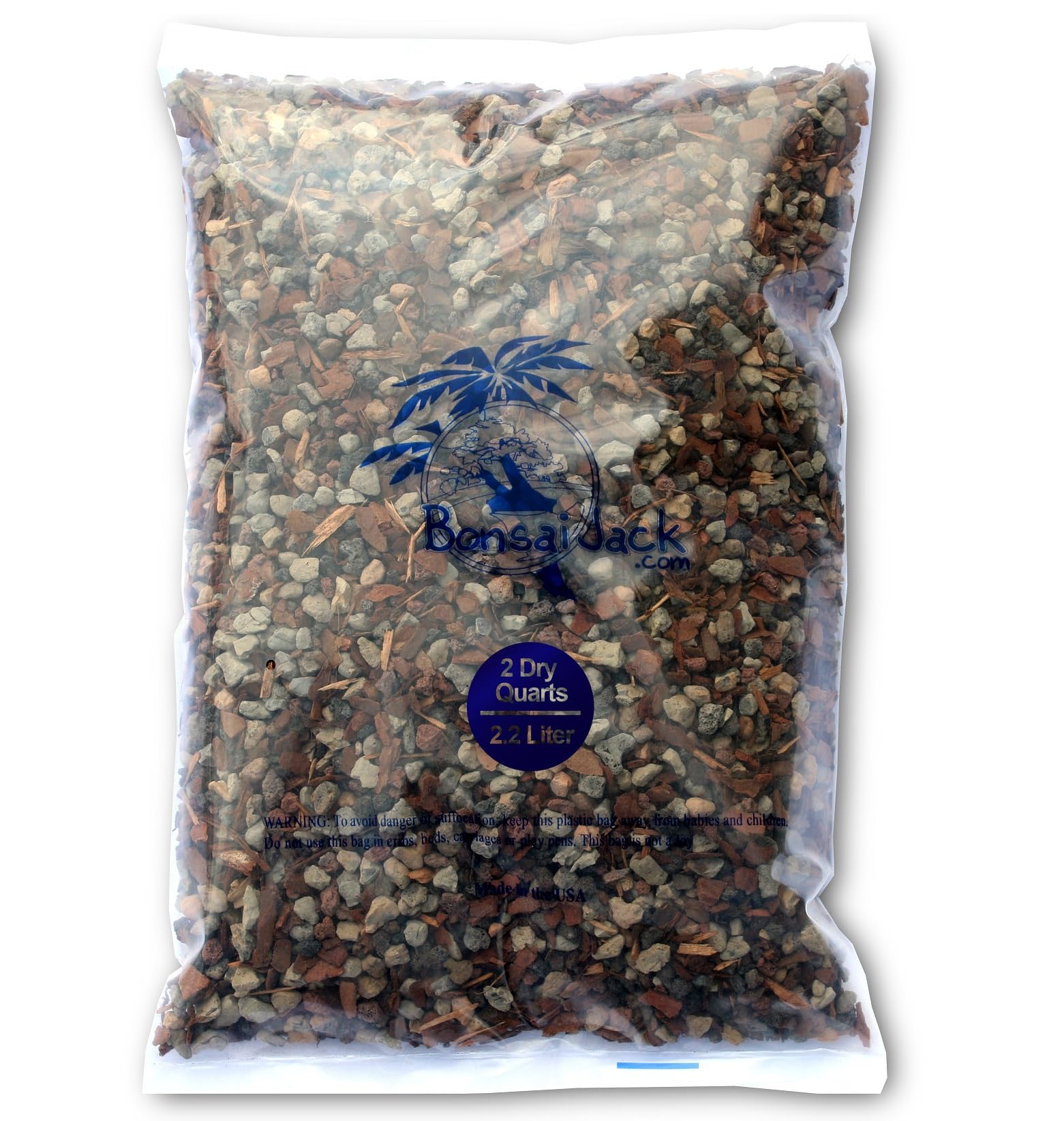
1. Bonsai Jack 2 Quarts Universal Organic Bonsai Soil Mix #221
Our pick — over 4.5★ from 750+ verified ratings; the strongest balance of quality and price.
The bag that over 100,000 customers have trusted with their tropical trees.
You can pour this soil straight into the pot with zero prep because it comes pre-washed and pre-screened — no sifting out dust. The pH is locked at 6.4 (the acidity level most Ficus trees prefer for taking in nutrients), and the particle size is designed for water absorption and evaporation. Buyers report it holds enough water for a healthy tree in full sun while draining fast enough to prevent soggy roots, and many note it is cheaper and easier to find than quality akadama (a traditional Japanese clay soil).
One 2-quart bag fills a standard 8-inch pot. If you have multiple trees, Bonsai Jack sells sizes all the way up to 28 gallons, so you can stock up without switching brands. A few long-term users mention this mix is not ideal for mature trees in refinement — root development and ramification (fine branch and root branching) are slightly less than what akadama provides — but for the vast majority of Ficus owners, that trade-off never matters.
What keeps it in the pot
- Pre-washed and pre-screened — zero prep work.
- Optimal pH of 6.4 for Ficus health.
- Available in sizes from 2 quarts to 28 gallons.
- Phone support included with each order.
Minor caveats
- Less suited for mature trees in refinement.
- One reviewer noted bark fines can float to surface over time.
Grab this if: You want a fuss-free, pre-screened mix that works for literally any Ficus and comes with real customer support behind it.
Look elsewhere if: You are a serious collector pushing for show-tree ramification and need akadama-based soil.
2. Bonsai Outlet Tropical Bonsai Soil — Tinyroots Ready to Use Mix
Formulated at a real bonsai nursery for tropical species like Ficus.
This mix comes from Bonsai Outlet — an actual nursery that grows bonsai and uses this soil on its own trees. The ingredient list is straightforward: calcined clay, pine bark fines, pumice, and lava rock. That combination means water runs through so fast that you need to water over a sink until you see it pour out the bottom, but the roots stay perfectly aerated. One buyer specifically noted “this worked perfectly when repotting my Ficus bonsai” and called the drainage excellent.
At 2.25 quarts it gives you slightly more volume than most 2-quart bags — enough to fill an 8-inch pot with a little left over. Bonsai Outlet repotted a new blend that replaced coarse river sand with lava rock and pumice, and multiple owners mention the new version is even better. The bag is resealable, so leftover mix stays usable for next season.
What stands out
- Formulated and used on trees at a real bonsai nursery.
- Blend of calcined clay, pumice, and lava rock for fast drainage.
- Resealable bag keeps leftover soil dry.
- Slightly larger volume than standard 2-quart bags.
What to watch
- Drains very fast — you must water more frequently.
- Fertilizer needed monthly since the mix itself is low in nutrients.
Perfect for: Ficus owners who want a species-specific mix from a nursery that grows the same trees and knows exactly what drains well.
Not ideal if: You tend to underwater — this mix dries out fast and needs consistent attention.
3. Harris Bonsai Soil, All Purpose Premium Blend, 2qt

A budget-friendly blend that punches above its weight for beginners.
Harris blends forest humus (decomposed plant matter), pumice (a lightweight volcanic rock), calcined clay (heat-treated clay for drainage), organic amendments, basalt rock dust, and lime — a combination that covers drainage and pH balance in one bag. The lime is important for Ficus trees because it helps neutralize acidity over time. One buyer mentioned that after repotting, “plant showed booming new growth and no stress.” Another buyer said they “only have to wet it once a week” during winter, which tells you the moisture retention is generous for those who do not want to water daily.
At 2 dry quarts, one bag is enough for a single Ficus tree or several small containers. The weight is roughly 1.2 kilograms. — so the bag is easy to handle and pour. Harris manufactures this in the USA, and the resealable bag keeps the leftover mix from spilling in storage.
Why it works for Ficus
- Includes lime for pH balance Ficus roots appreciate.
- Holds moisture well — good for winter when watering is less frequent.
- Light 1.2 kg bag is easy to lift and pour.
- Made in the USA by a performance soil specialist.
A small catch
- Forest humus can break down faster than purely mineral blends.
- Best suited for younger trees or recent transplants rather than mature specimens.
Pick this if: You are new to bonsai and want a forgiving mix that holds moisture long enough that occasional forgetfulness does not kill the tree.
Skip it for: An advanced collector who wants pure mineral soil with zero organic breakdown over years.
4. Hoffman 10708 Bonsai Soil Mix, 2 Quarts

A dark, ready-to-use mix that beginners can trust without second-guessing.
Hoffman has been making soil mixes for decades, and this 2-quart bag reflects that experience. It is a pre-mixed, ready-to-use formula designed for evergreens and other bonsai — including Ficus. One owner reported their “plant thriving after 6 weeks” of repotting, and multiple buyers mention the fast drainage as a major relief compared to generic potting soil. The bag itself is resealable, which is a genuine convenience if you live in an apartment and do not want soil dust spilling in a cabinet.
A few buyers recommend screening the mix before use because it can contain small fines that settle at the bottom of the pot. That is a quick step — shake it through a mesh strainer — and it fixes the issue entirely. The 4-pound bag gives you enough to fill one or two small pots, and the dark brown color looks natural in a ceramic bonsai container.
What we like
- Resealable bag keeps the mix dry and tidy.
- Fast-draining formula suitable for evergreens and Ficus alike.
- Proven track record — customers note thriving trees after weeks.
- Low price point for a reputable brand.
One extra step
- Should be screened before use to remove dust particles.
- Some users recommend adding extra drainage rocks for denser containers.
Reach for this if: You want a straightforward, affordable mix from a brand that has been making soil for decades and you are okay taking 30 seconds to screen it.
Look elsewhere if: You require a pre-screened, zero-prep bag like Bonsai Jack.
5. rePotme Fiddle Leaf Fig & Ficus Potting Soil — Imperial Houseplant Mix
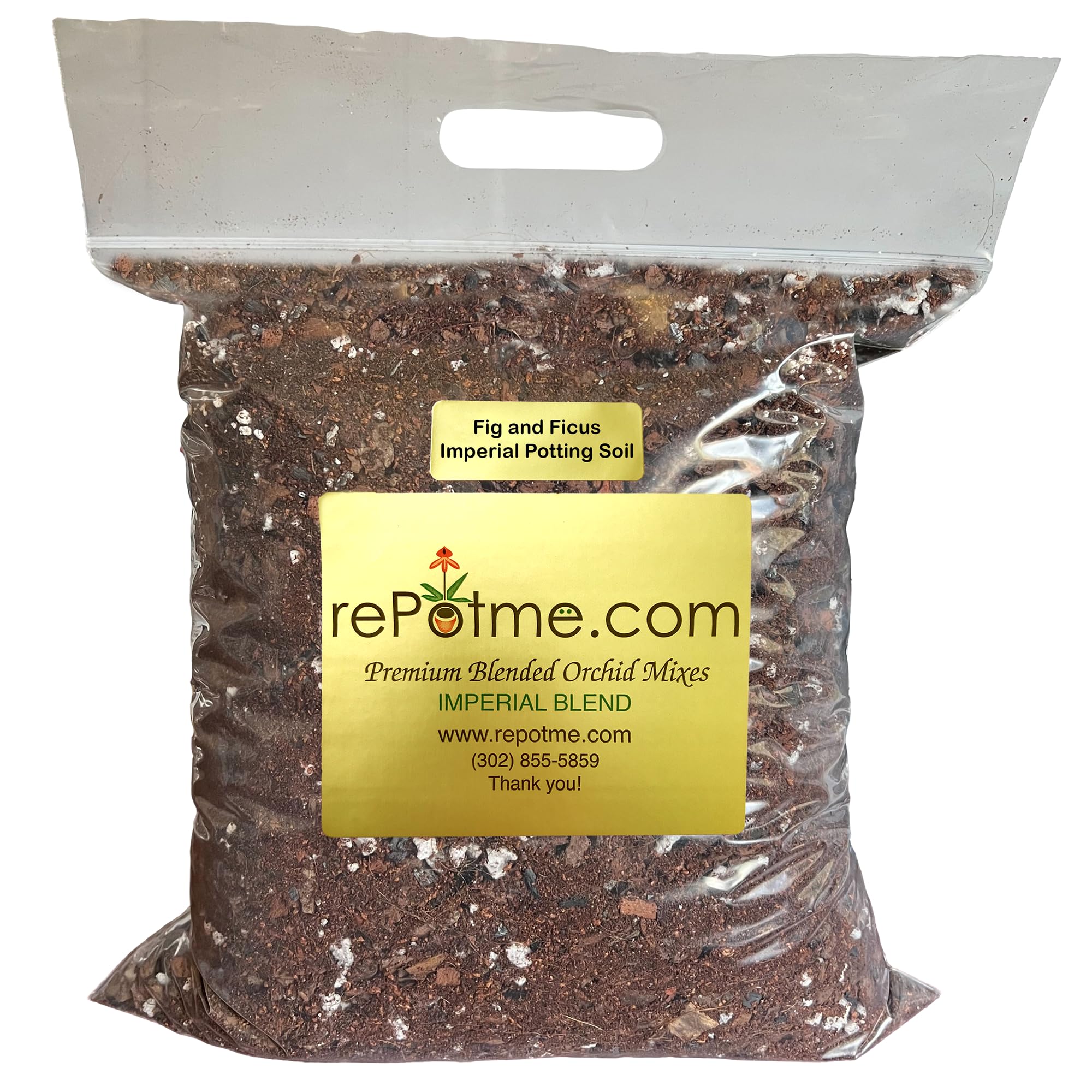
Small-batch soil used by botanical gardens — for serious plant parents.
rePotme makes its mixes fresh every day in small batches using ingredients sourced from around the world. This particular blend targets Ficus and fiddle leaf fig specifically, with a free-draining structure that is ready to use straight out of the bag. The mix includes bark chips, roots, peat, and good organic soil, giving it a moderate drainage speed — slightly slower than fully mineral mixes. One long-term buyer said “I have been using it for a couple years now with various snake plants and never had a problem,” which speaks to the consistency.
The 2-quart mini bag comes in a fully sealed package that is perfect for apartment dwellers who do not want moisture or bugs in storage. rePotme also includes a cute plant tag and a small butterfly clip with each order — a small touch that buyers genuinely appreciate. The trade-off is that this mix is pricier per quart than standard bonsai soil, and it is not specifically formulated for the extreme drainage that outdoor Ficus in full sun might need.
Why it stands apart
- Handcrafted in small fresh batches daily.
- Used by large conservatories and botanic gardens.
- Fully sealed bag prevents leaks and pests.
- Free-draining but holds moderate moisture for indoor trees.
The real cost
- Higher cost per quart than most competitors.
- Not ideal for outdoor Ficus in intense heat — drains slower than mineral-only mixes.
Choose this for: A single prized indoor Ficus where you want a premium, garden-grade mix and appreciate the small-batch quality assurance.
Avoid if: You need purely mineral drainage for a tree sitting in direct afternoon sun outdoors.
6. Agralife Soil for Bonsai 4 Quarts Premium Organic Mix
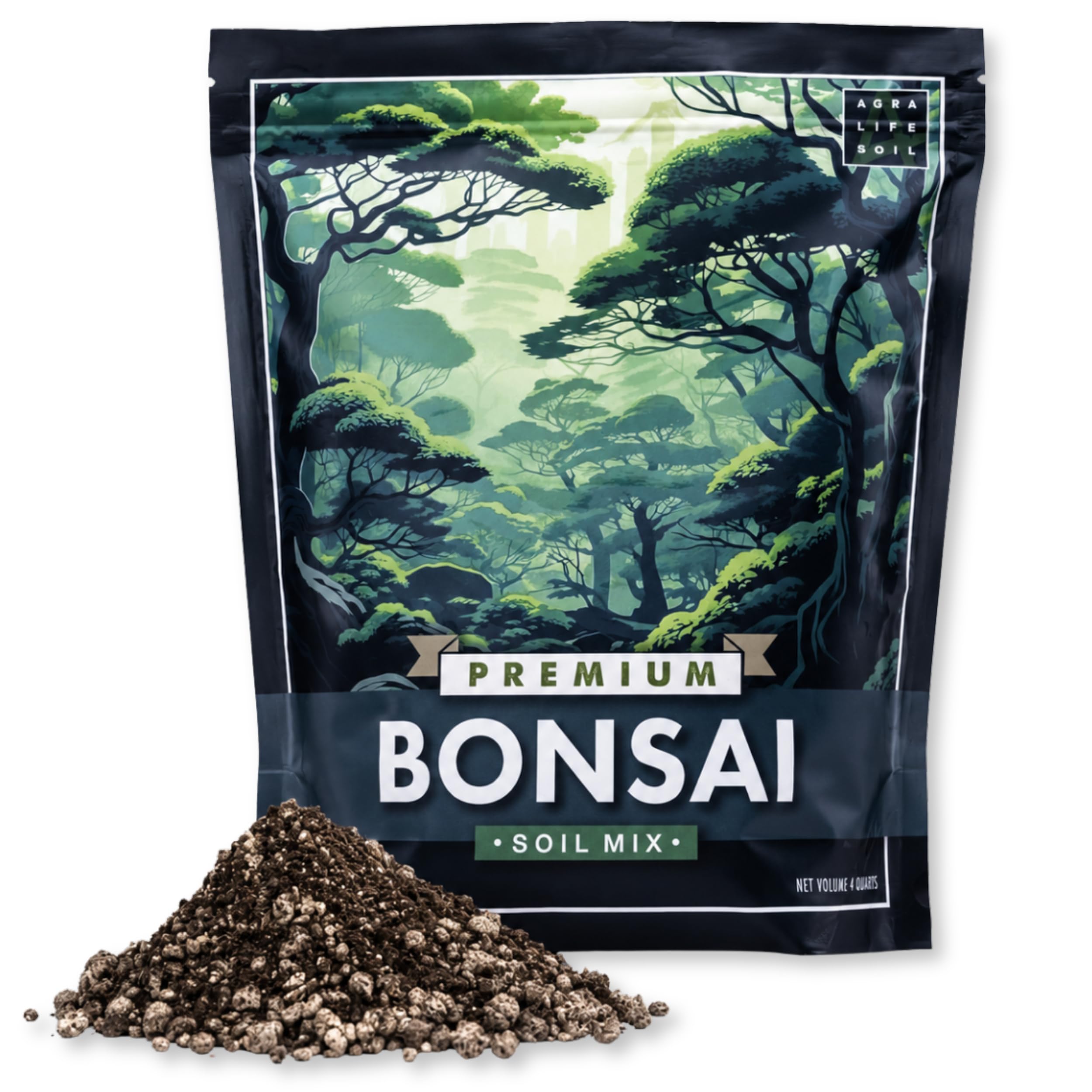
Twice the volume of a standard bag — perfect for multiple trees.
Most bonsai soil bags stop at 2 quarts. Agralife gives you 4 quarts, which means you can repot two decent-size Ficus trees or several smaller ones without buying a second bag. The mix is made from sustainably sourced organic ingredients and is free from harsh chemicals. One customer observed repotting an eight-year-old IKEA Ficus bonsai and seeing new leaf growth within two weeks. Another reviewer said they use it for a Fukien Tea, Chinese Elm, Juniper, Jade, and Ficus — all thriving.
The retention is slightly on the damp side, which is good for some trees but not all. If you are growing a Ficus in a humid indoor environment, you may want to add extra pumice or lava rock to speed up drainage. Agralife formulates and packages this in the USA, and the resealable bag keeps the large volume fresh across multiple uses.
What you get
- 4 quarts — double the volume of most competitors at a similar price.
- Organic, sustainably sourced ingredients with no harsh chemicals.
- Works across multiple bonsai species and revives struggling trees.
- Made in the USA.
A note on moisture
- Holds moisture well — may be too damp for very humid homes.
- Best to add pumice or lava rock if you want faster drainage.
Best for: Anyone with two or more Ficus trees who wants a single bag that covers multiple pots and prefers organic, American-made soil.
skip it if: Your indoor climate is already humid and you need a bone-dry mix to prevent mold or fungus.
7. The Soil Sage 2.5qt Premium Bonsai Mix — Akadama, Pumice, Lava Rock, Pine Bark
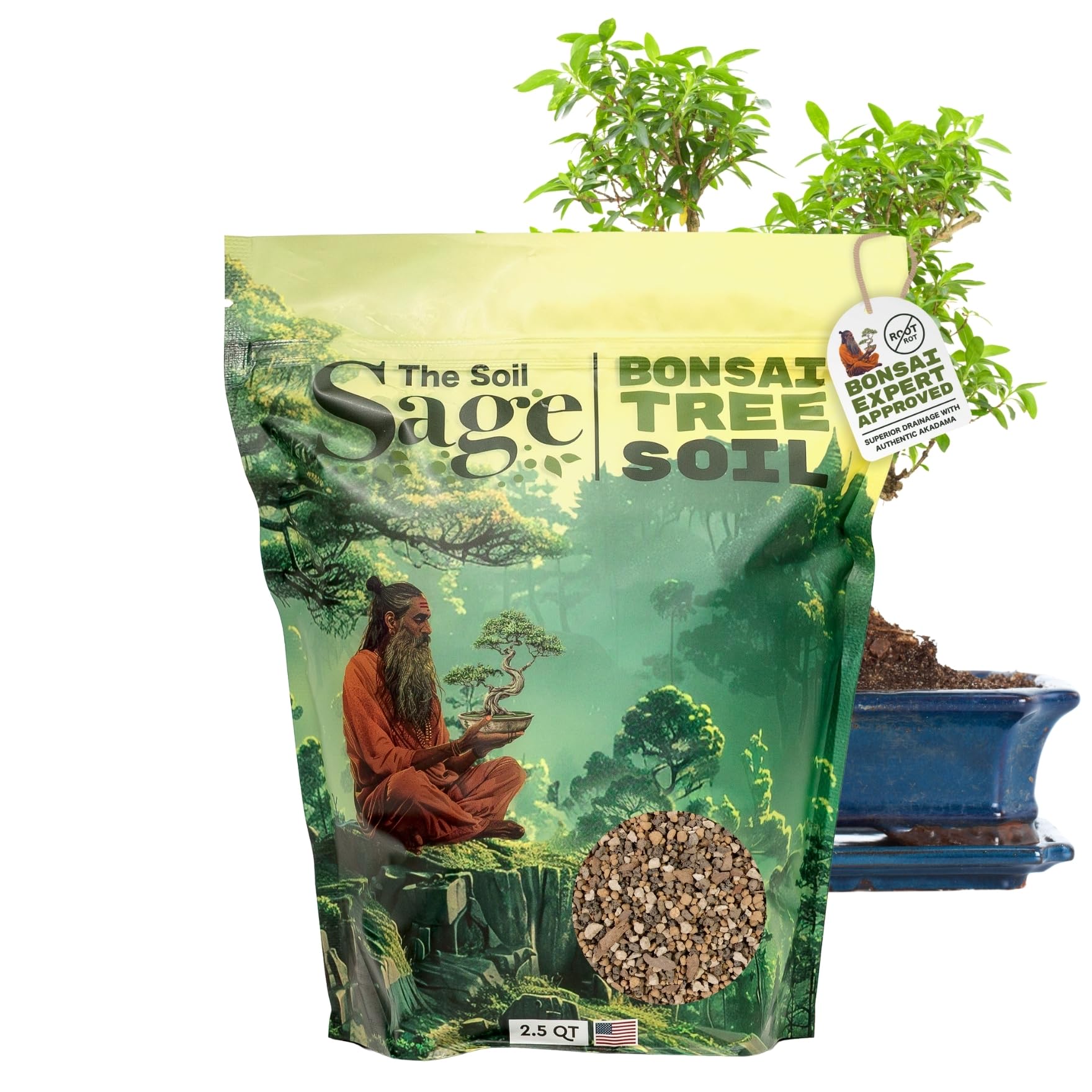
Akadama-based blend for hobbyists who want refined root structure.
The Soil Sage uses a four-ingredient formula that mimics classic Japanese bonsai soil: akadama for moisture retention, pumice for aeration, lava rock for drainage structure, and fine pine bark for slight acidity. That combination gives you a fast-draining mix that also holds enough moisture so you are not watering twice a day. One user highlighted the soil was “very airy and easy to use” and ended up buying five more bags. The mix also comes with small bonsai nets (mesh screens for pot drainage holes), which is a thoughtful inclusion that saves you from buying them separately.
At 2.5 quarts, the bag is slightly larger than the standard 2-quart size. The components are durable — lava rock and pumice do not break down over time — so you can expect the structure to hold for a year or more before needing to repot. A couple of buyers noted some inconsistency between bags: one was excellent, while another had larger pine bark chunks and less akadama. That variability is worth checking when you open a new bag.
What makes it special
- Classic akadama + pumice + lava rock + pine bark formula.
- Bonsai nets included — one less item to buy.
- Pumice and lava rock hold structure long-term without compaction.
- Airy texture promotes healthy root development.
Consistency gamble
- Some bags have less akadama and larger bark chunks — batch variability reported.
- Does not contain fertilizer — you will need to add slow-release granules.
Ideal for: The hobbyist who recognizes akadama and wants a ready-to-use mix that includes bonsai nets, and who is comfortable adding their own fertilizer.
Pass on this if: You expect every bag to be identical or you want a mix that already contains slow-release nutrients.
Understanding the Specs
Particle Size and Pre-Screening
A Ficus root system needs air gaps between soil particles. Bags labeled “pre-screened” or “pre-washed” have already removed the dust and fines that would otherwise settle into a paste at the bottom of your pot. If the bag does not say pre-screened, plan to run the mix through a mesh strainer before potting — it takes 30 seconds and makes a real difference in how freely water flows through.
Drainage vs. Water Retention
The single biggest mistake with Ficus soil is buying a mix that holds too much water. A fast-draining mix lets water pour out the bottom within seconds of watering. A moderate-draining mix holds a little moisture between the particles. Your choice depends on your environment: dry homes or full-sun windowsills favor moderate retention; humid rooms or covered patios need fast drainage. Read the ingredients — pumice and lava rock promote drainage, while peat moss and composted bark increase retention.
FAQ
Can I use regular potting soil for my Ficus bonsai?
What is akadama and does my Ficus need it?
How often should I water my Ficus in bonsai soil?
Should I add fertilizer to bonsai soil?
How much soil do I need for one Ficus bonsai?
Is pre-screened soil worth the extra money?
What is the difference between calcined clay and akadama?
Can I reuse old bonsai soil when repotting?
Why does my bonsai soil smell bad after watering?
What is the best soil pH for a Ficus bonsai?
Final Thoughts: The Verdict
For most Ficus owners, the clear winner for bonsai ficus soil is the Bonsai Jack #221 because it comes pre-screened, pre-washed, and pH-tune at 6.4, so you can pour it straight into the pot with zero prep and trust it to drain fast enough for a healthy tree. If you want a specialized tropical mix from a real bonsai nursery, the Tinyroots Tropical blend is the next best pick — it uses calcined clay, pumice, and lava rock for excellent aeration. And for the budget-conscious beginner who needs a forgiving mix that holds moisture a little longer, the Harris All Purpose delivers steady results without breaking your wallet.
How We Picked
We do not accept paid placement. Every pick is matched to a real buyer and a real use-case; we do not hands-on test units.
Sources & Methodology
Specifications: manufacturer listings and product documentation. Review insights: verified customer reviews, as of July 2026. Pricing: not shown on this page (it changes often); check the current price via the retailer link.
As an Amazon Associate, Lawn Gear Lab earns from qualifying purchases. This does not affect which products we feature.