
Specs are compiled from manufacturer listings and verified buyer reviews and can change over time — please confirm the key details on the product page before buying.
You want a raised bed that saves your back and lasts more than a couple of seasons, not one that leaves you bending over until your knees ache or replacing rusty panels every year. The three specs that decide that are soil depth (how deep roots can grow), side height (how much you have to bend), and build quality (whether the panels can hold several hundred pounds of wet soil without bowing or rusting).
I’m Rikta — the founder and writer behind Lawn Gear Lab. This guide is built by comparing the manufacturers’ published specifications and the patterns across verified customer reviews, so you get each pick’s real strengths and trade-offs instead of marketing spin.
Whether you are replacing old wooden beds that are starting to rot or setting up your very first vegetable patch, knowing which material and depth actually suit your yard makes all the difference. This breakdown of the best containers for raised beds is built around real-world data and honest buyer feedback, not just the product descriptions.
Our Picks at a Glance
How To Choose The Best Containers For Raised Beds
The three factors that separate a great raised bed from a frustrating one are height, material, and reinforcement. Height determines how much you need to bend or kneel. Material dictates how many seasons the bed will last before it warps, rusts, or rots. Reinforcement — bracing rods, corner brackets, or thick-gauge metal — decides whether the sides bulge outwards after the first big rain.
Soil Depth for Root Growth
A bed that is only one foot deep is fine for leafy greens and strawberries but will restrict carrots, potatoes, and tomatoes. Look for at least 18 to 24 inches of soil depth if you want to grow medium-to-deep root vegetables. The depth is listed as the “H” dimension in the product specs. Deeper beds also hold more moisture between waterings, which means less work during a dry spell.
Material Longevity
Galvanized steel with a powder-coated finish is the current best balance of weight and lifespan. Wood, especially cedar with a water-based seal, looks natural but will eventually split and rot over several years. The real problem with thin metal is that it can bend under the weight of wet soil. Check the gauge thickness when possible. Thicker corrugated steel (typically 0.8mm or more) resists bowing much better than standard thin sheets.
Assembly and Bracing
Some beds claim tool-free assembly and deliver exactly that. Others use dozens of small screws or thin support rods that do not stop the sides from deforming. Read the reviews for the phrase “support brace” or “bowing.” A bed with multiple solid bracing rods and reinforced corner brackets will stay square for years. A bed that relies on a few long bolts is likely to need DIY reinforcement down the road.
Quick Comparison
| Model | Best For | Soil Depth | Material | Soil Capacity | Amazon |
|---|---|---|---|---|---|
| SoliWood Raised Bed with Legs★ Best Overall | No-bend improve gardening | 30 inches (legs) | Cedar Wood | 6 cu ft | Amazon |
| Ohuhu 8×3×1.9 FTAlso Great | Deep root vegetables | 22.8 inches | Galvanized Steel | 45.6 cu ft | Amazon |
| A ANLEOLIFE 8×4×2ft | Large gardens & back health | 24 inches | 22-Gauge Galvanized Steel | 478 gallons | Amazon |
| Land Guard 8×4×2ft | Budget large-area coverage | 24 inches | Galvanized Metal | 478 gallons | Amazon |
| ZFHgarden 4×2×1ft (2-Pack) | Herb & small-space starter beds | 12 inches | Galvanized Plate | 8 cu ft (total) | Amazon |
In‑Depth Reviews
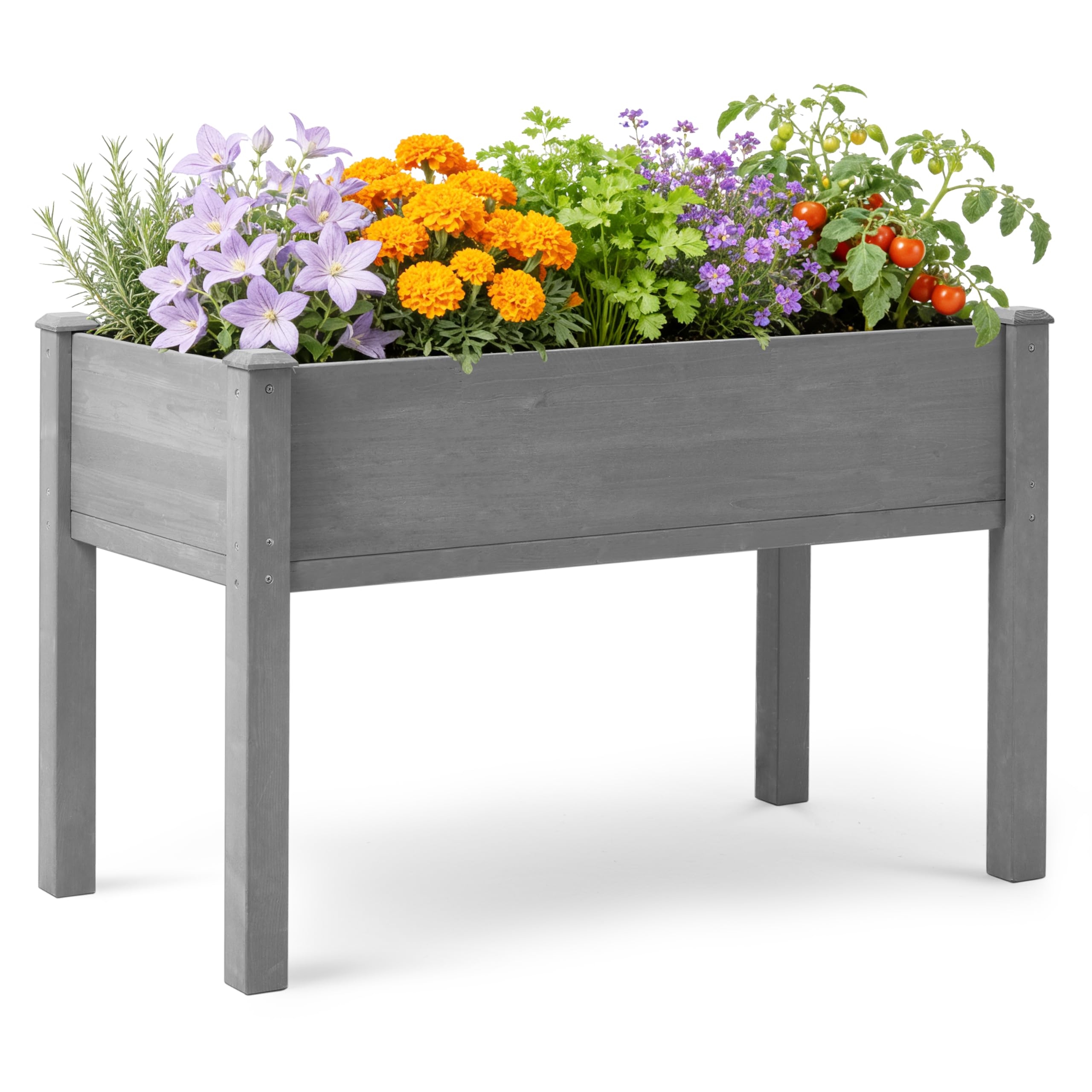
1. SoliWood Raised Garden Bed with Legs, 48x24x30
Our pick — over 4.5★ from 850+ verified ratings; the strongest balance of quality and price.
Stand-up gardening that spares your knees without looking like a farmyard.
This is the only improve bed on the list — the planting surface sits 30 inches off the ground, so you can tend your plants while standing or sitting comfortably on a stool. It holds 6 cubic feet of soil, which is a 7.6x smaller capacity than the Ohuhu above, but the trade-off is that you never have to bend down. The cedar wood frame has 2.4-inch thick pole legs and 0.7-inch frame panels, and the weight capacity is rated at 300 lbs. The water-based eco-finish means no toxic paint leaching into your fruits or herbs.
Buyers consistently say it is very easy to assemble. One buyer mentioned that a 76-year-old put it together without trouble because the holes aligned perfectly and the instructions were clear. The main caution from owners is that the wood can split slightly if you over-tighten the screws. Assembly takes about 30 minutes. The included liner helps contain the soil while still allowing drainage through the bottom.
At 38.9 pounds empty, it is light enough to be moved around the patio or yard, and the grey cedar color blends into most outdoor settings without being an eyesore.
Best for standing gardeners: If bending over to ground level hurts your back, this bed sits 30 inches off the ground — the tallest in this list — so you can stand upright while planting and harvesting.
Grab this if: You want an attractive, no-bend planting station on a deck or patio where a large ground bed would not fit.
Keep in mind: The soil capacity is limited to 6 cu ft, so it is best for herbs, flowers, and shallow-root vegetables rather than a full-scale vegetable patch.
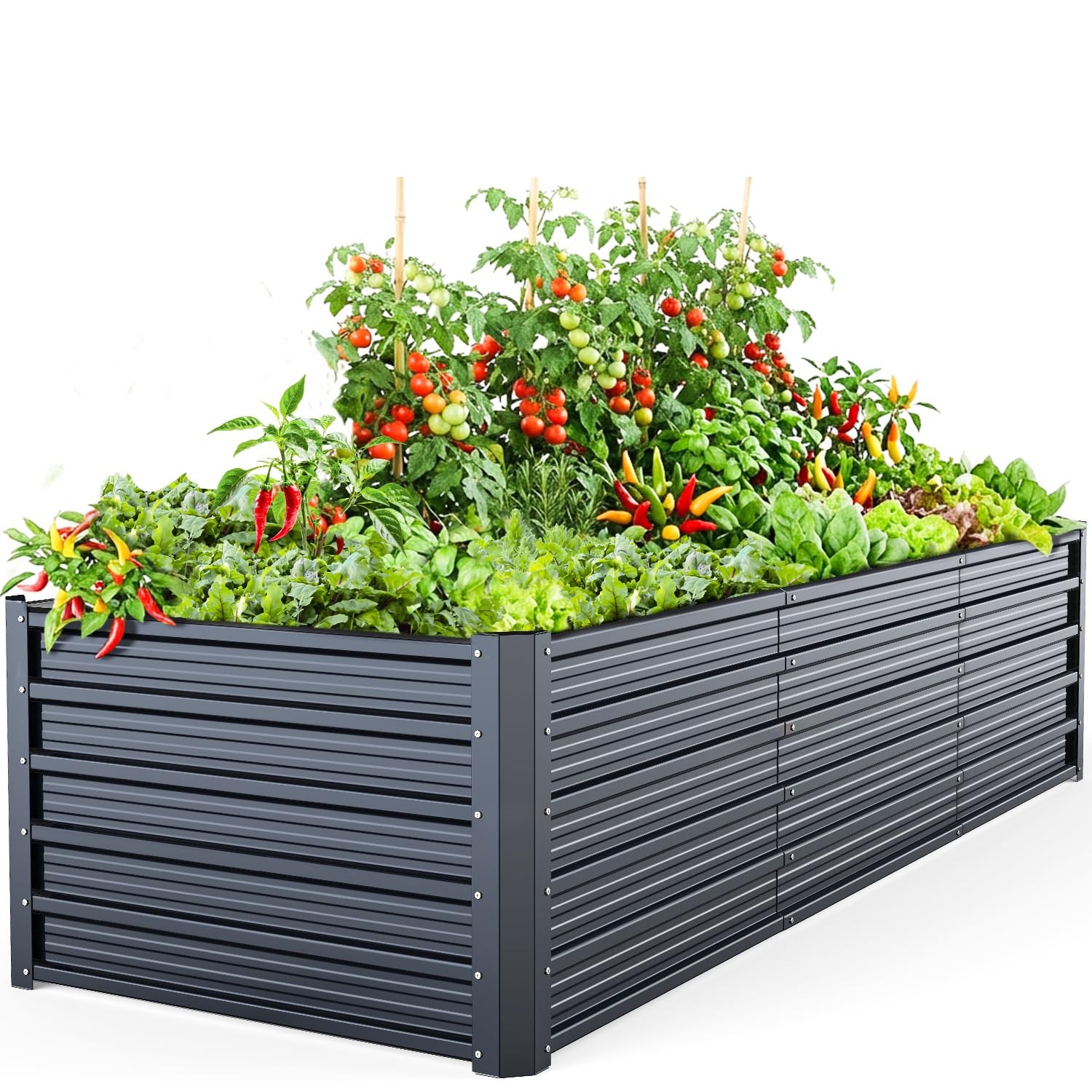
2. Ohuhu 8x3x1.9 FT Metal Raised Garden Bed
Deepest soil pocket in this list without going overboard on the footprint.
The headline number here is 45.6 cubic feet of growing space — that is 7.6 times more soil capacity than the SoliWood improve planter below, so you can plant a serious mixed vegetable garden in a single bed. The 22.8-inch depth (listed as 1.9 ft in the product name) is specifically designed for medium-to-deep root vegetables like potatoes and carrots, and it sits 0.9 ft higher than standard shallow beds. That extra few inches means you bend less when weeding or harvesting.
Ohuhu uses heavy-duty galvanized steel with a powder-coated finish, and the construction relies on 8 stable bracing rods plus 4 thickened corner brackets. Buyers report that after two years the paint still looks new and the bed held up well, though they also mention the metal feels thinner compared to some other brands. One owner noted that the edges are sharp, so garden gloves — which are included — are a real help during assembly. The tool-free, wing-nut system makes setup straightforward, though it is still a two-person job.
Unlike the cheaper Land Guard bed below, the Ohuhu has enough bracing to resist bowing under a full load of wet soil. The open base drains excess water, which prevents root rot and also lets you use the bed as a compost bin if you want.
What stands out: The 45.6 cu ft soil depth (22.8 inches) is the best in this lineup for root-heavy crops, and the 8 bracing rods keep the shape stable season after season.
Reach for this if: You want the most usable deep soil for the money and plan to grow potatoes, carrots, or tomatoes.
One honest caveat: The steel is thinner than premium-priced beds, so you need to avoid leaning or sitting on the edges.
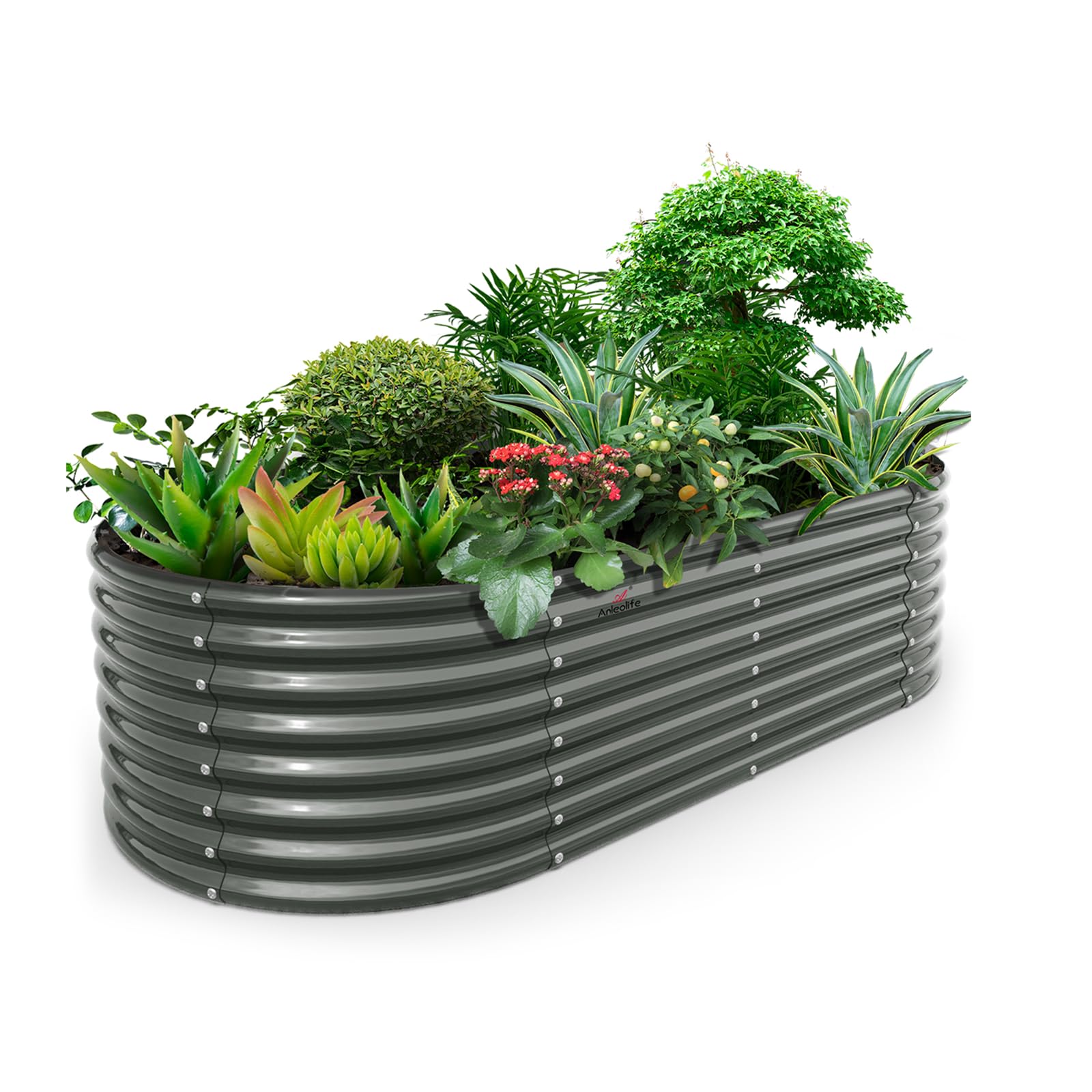
3. A ANLEOLIFE 8x4x2ft Galvanized Raised Garden Bed
Thickest, sturdiest steel in the round-up built to outlast the rest.
This bed is made from 22-gauge 0.8mm corrugated galvanized steel with a multi-layer eco-powder coating. That thickness is a significant step up from the thinner panels used on the Ohuhu and the Land Guard, which means the sides are much less likely to bulge under the weight of 478 gallons of wet soil. At 24 inches deep, it offers the same soil depth as the Land Guard but with noticeably better build quality. The oval round shape eliminates sharp corners, and the edges are curled and smooth — buyers specifically mention there are no sharp edges to catch on.
One 83-year-old reviewer said she could handle the box on her own and that the finish looks great. The kit includes garden gloves and a screwdriver, and the hole alignment is accurate. Assembly takes about 1.5 hours with a drill driver. The two included bracing supports stop the sides from bowing, and the manufacturer response on customer service has been positive — one reviewer noted that the company quickly credited her for missing parts.
The 24-inch height also keeps out rabbits and other small critters easily. At the premium end of the price spectrum, this is the bed that feels built to sit in the same spot for a decade or more without rusting out.
Why it leads
- 22-gauge 0.8mm steel is significantly thicker than budget alternatives
- Smooth rolled edges with no sharp metal corners
- 24-inch depth is ideal for deep-root plants and back-saving height
What to consider
- Higher upfront investment compared to similar-sized thin-metal beds
- Heavier box to move — 21.98 kg empty
Who should buy it: Gardeners who want a single, long-term raised bed made from genuinely thick steel that will not bow or rust quickly.
Who might look elsewhere: Anyone with a very tight budget who just needs a single-season starter bed.
4. Land Guard Galvanized Raised Garden Bed, 8x4x2ft

Massive 96-by-48-inch footprint that covers a lot of ground for the price.
At 96 x 48 x 24 inches, this Land Guard bed offers the same 24-inch depth and 478-gallon capacity as the A ANLEOLIFE premium pick, but at a more accessible price point. The material is stable thickened galvanized metal with a reinforced frame and corners, and the open-bottom design lets roots reach natural soil for nutrients and drainage. Assembly is advertised at around 15 minutes, though several owners mention it is more tedious than that because of the many screws and an instruction sheet that relies only on illustrations.
The biggest complaint from verified buyers is that the support braces are not strong enough. One owner described them as “thin rods with 3 long bolts, not enough, not strong.” This is the main trade-off — you get the same huge dimensions as a premium bed, but you might need to add your own bracing to prevent the long sides from bowing outward under wet soil. Another buyer said they combined two Land Guard beds to make a 12-foot box, finding the modular setup flexible even with the brace limitation.
The classic silver finish is simple and the metal feels thicker than the very cheapest beds, but it is not as rigid as the 22-gauge steel on the A ANLEOLIFE. If you are willing to add a couple of extra cross-braces, this is a very cost-effective way to get a large gardening area.
The value proposition: You get a 96-inch-long raised bed with 24-inch depth for a mid-range price, but the bracing system needs upgrading from the start.
This is the pick for: Gardeners on a budget who want maximum square footage and are comfortable adding a few DIY braces to prevent side bowing.
skip it if: You want a set-and-forget bed with no extra reinforcement work.
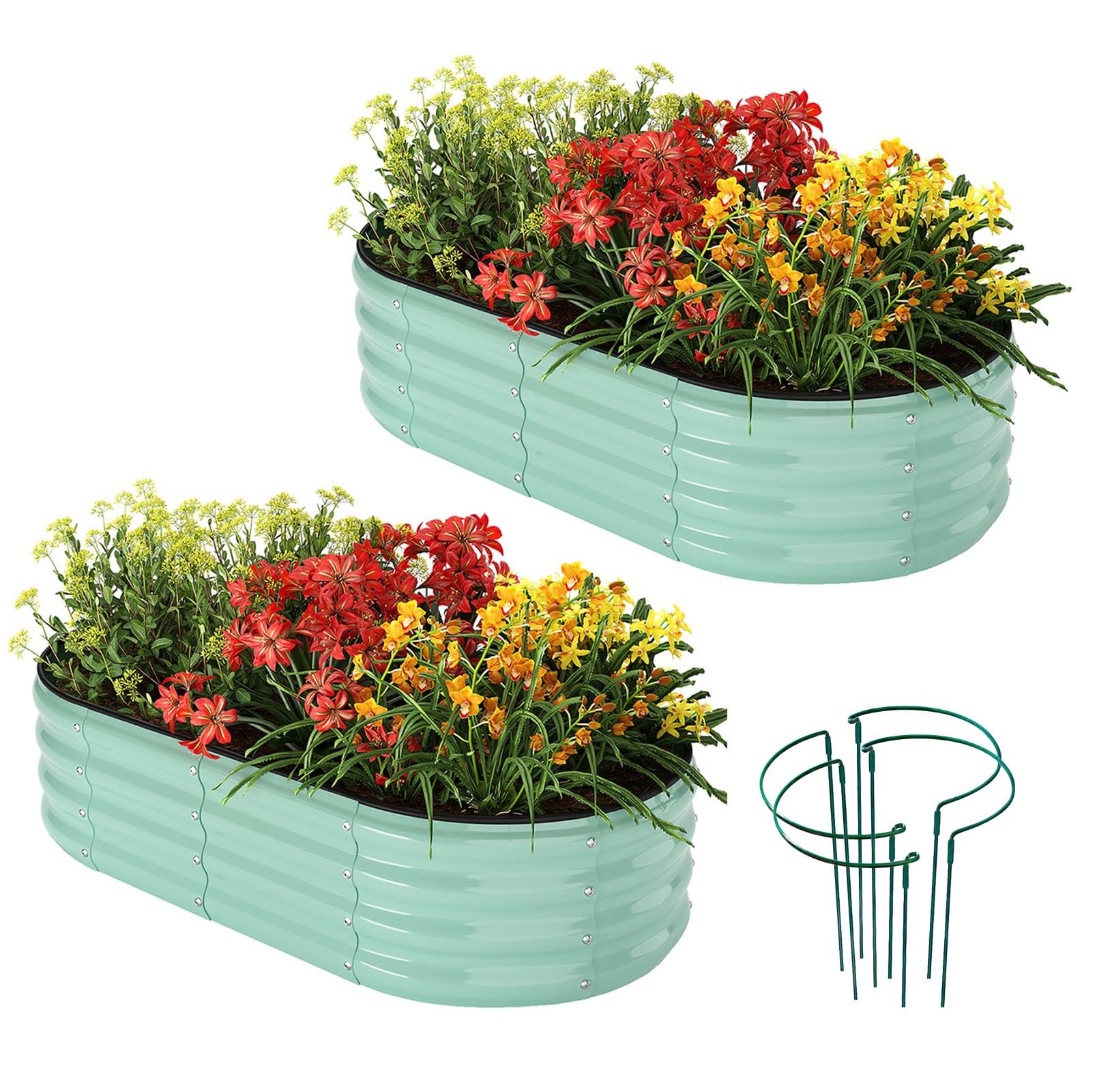
5. ZFHgarden Galvanized Metal Planter Raised Garden Bed Kit, 4x2x1ft 2-Pack
Two compact beds for the price of one, ideal for starter gardens and herbs.
This kit from ZFHgarden gives you two separate 4x2x1-foot planters with a combined total capacity of 8 cubic feet. At just 12 inches deep, it is not suitable for deep-root vegetables like carrots or potatoes, but it works perfectly for leafy greens, herbs, strawberries, and flowers. The galvanized plate construction is painted and comes with a rubber trim strip to cover the edges. The open-base design provides drainage and prevents waterlogged roots — a common issue in shallower containers.
Customers note that the assembly is easy but takes some time mainly because of peeling the protective plastic film off the metal panels. One reviewer found a workaround: using a butter knife to widen the gap when fitting the rubber trim over the joints. The kit includes a screwdriver, L-shaped wrench, and gardening gloves, so you do not need to buy extra tools. Several owners mentioned that having a second person speeds up the build considerably.
These beds are lightweight and easy to move around, which makes them a good choice if you are renting or plan to rearrange your garden layout. The green color blends naturally into a lawn setting.
Good points
- Two beds in one purchase for compartmentalized planting (e.g. cucumbers in one, strawberries in the other)
- Complete hardware and tools included — no extra store trip
- Open base prevents root rot in shallow soil
The limits
- 12-inch depth restricts what you can grow — no deep-root crops
- Rubber trim fitting was a common friction point for buyers
Ideal for: Someone starting their first garden who wants two separate beds for different plants without spending on a single large box.
Not for: Anyone planning to grow tall tomatoes, potatoes, or carrots — you need at least 18 inches of soil depth for those.
Understanding the Specs
Soil Capacity (Cubic Feet vs Gallons)
Manufacturers list capacity in either cubic feet or gallons. One cubic foot holds roughly 7.5 gallons. A bed with a capacity of 6 cubic feet (like the SoliWood) is best for a few plants or shallow herbs. A bed with 45.6 cubic feet (the Ohuhu) or 478 gallons (the Land Guard) can support a full vegetable garden with multiple rows. The real number to watch is the depth dimension — a large footprint with only 12 inches of depth will limit root growth even if the total capacity looks big on paper.
Material and Coating
Galvanized steel is the most common material because it resists rust better than untreated metal. The coating matters too. Powder-coated finishes (like on the Ohuhu) add a thick layer that prevents scratches and corrosion. Water-based eco-finishes are used on wooden beds like the SoliWood to prevent toxic chemicals from leaching into the soil. Thicker gauge steel, such as the 22-gauge 0.8mm used on the A ANLEOLIFE, physically resists bowing under heavy wet soil much better than standard thin-gauge sheets. Wood, especially cedar, looks natural and does not heat up as much in direct sun, but it will eventually split or rot.
FAQ
What depth of raised bed do I need for tomatoes?
Is galvanized steel safe for growing vegetables?
How do I stop the sides of a metal raised bed from bowing out?
Can I put a raised bed directly on top of grass or concrete?
How many bags of soil do I need to fill a 4x8x2ft raised bed?
How long do wooden raised beds last compared to metal ones?
Does a raised bed need to have a bottom?
What size raised bed is best for a beginner gardener?
Can I use a raised bed in a very rainy climate?
How hard is it to assemble a metal raised garden bed by myself?
Final Thoughts: The Verdict
For most people, the best containers for raised beds winner is the Ohuhu 8x3x1.9 FT because it delivers the deepest soil pocket (22.8 inches) and a massive 45.6 cubic foot capacity at a mid-range price without needing additional bracing. If you want thick, decade-lasting steel and are willing to pay for it, grab the A ANLEOLIFE 8x4x2ft. And for no-bend improve gardening on a deck or patio, the SoliWood Raised Garden Bed with Legs lets you stand fully upright while tending your plants.
How We Picked
We do not accept paid placement. Every pick is matched to a real buyer and a real use-case; we do not hands-on test units.
Sources & Methodology
Specifications: manufacturer listings and product documentation. Review insights: verified customer reviews, as of July 2026. Pricing: not shown on this page (it changes often); check the current price via the retailer link.
As an Amazon Associate, Lawn Gear Lab earns from qualifying purchases. This does not affect which products we feature.