
Specs are compiled from manufacturer listings and verified buyer reviews and can change over time — please confirm the key details on the product page before buying.
Turnips produce their crop underground, so they need different food than leafy greens or tomatoes. Too much nitrogen (the nutrient that pushes green growth) gives you huge tops with tiny, woody roots. The right fertilizer sends energy down into the bulb instead. You get firm, sweet turnips rather than a disappointing harvest of leaves.
I’m Rikta — the founder and writer behind Lawn Gear Lab. This guide is built by comparing the manufacturers’ published specifications and the patterns across verified customer reviews, so you get each pick’s real strengths and trade-offs instead of marketing spin.
To help you cut through the options, I matched seven different fertilizers against what turnips actually need — lower nitrogen, steady phosphorus (which fuels root growth), and potassium (which supports plant health) — to find the best fertilizer for turnips that will give you a full bin of quality bulbs this season.
Our Picks at a Glance


How To Choose The Best Fertilizer For Turnips
Picking the right turnip fertilizer is about matching the NPK numbers (the three big nutrient values on the bag) to what a root vegetable needs. Turnips are not heavy nitrogen feeders like corn or lettuce. If you feed them a fertilizer with a high first number (like a 10-10-10 or a 20-20-20), you push leaf growth at the expense of the bulb. The root may split or turn woody. Look for a lower first number and a higher second number.
Understand the NPK Ratio for Root Crops
On every fertilizer bag, you see three numbers separated by dashes — like 4-6-2 or 5-10-10. The first is nitrogen (N), which drives leafy green growth. The second is phosphorus (P), which promotes root development and flowering. The third is potassium (K), which supports overall plant health and disease resistance. For turnips, you want the first number to be the smallest — around 4 or 5 — and the second number equal to or higher than the third. A 5-10-10 is a classic root crop formula. A balanced 4-4-4 or a slightly lower 3-4-4 also works without a nitrogen overload.
Granular vs Liquid: Which Form Works for Turnips?
Granular fertilizers — like the Down To Earth or FoxFarm products — release nutrients slowly as soil microbes break them down. That is ideal for turnips. It provides a steady, gentle supply of phosphorus during the entire bulb development phase, which lasts about 60 days. Liquid fertilizers — like the TPS Plant Foods 5-10-10 — work faster and are easier to apply precisely around the plant base. You may need to reapply every two weeks. For most home gardeners, a granular option is the lower-maintenance path for a root crop that grows over many weeks.
Organic Certification and Soil Health
Many turnip growers prefer organic fertilizers because they improve the soil’s microbial life. That helps make phosphorus more available to the roots. Look for labels like OMRI (Organic Materials Review Institute) on the packaging — it means the product is approved for organic use. Products like Jobe’s Organics carry this certification. Organic fertilizers are also gentler and less likely to burn tender turnip roots if you apply slightly too much. They often have a distinct natural smell for a few days after application.
Quick Comparison
| Model | Best For | NPK Ratio | Item Weight | Form | Amazon |
|---|---|---|---|---|---|
| Down To Earth 4-6-2★ Best Overall | Root Health | 4:6:2 | 5 lbs | Granules | Amazon |
| FoxFarm Happy Frog 5-7-3Also Great | Premium | 5:7:3 | 4 lbs | Granules | Amazon |
| Espoma Garden-Tone 3-4-4 | Organic Value | 3:4:4 | 4 lbs (2 bags) | Granules | Amazon |
| 5-10-10 (Cz Garden) | Fruiting Boost | 5:10:10 | 4 lbs | Granules | Amazon |
| TPS Plant Foods 5-10-10 | Quick Absorption | 5:10:10 | 32 fl oz | Liquid | Amazon |
| Jobe’s Organics 4-4-4 | Budget-Friendly | 4:4:4 | 16 lbs | Granules | Amazon |
| GreenView 10-10-10 | Large Gardens | 10:10:10 | 33 lbs | Granules | Amazon |
In‑Depth Reviews
1. Down To Earth All Natural Fertilizers Organic All Purpose 4-6-2
Our pick — over 4.5★ from 900+ verified ratings; the strongest balance of quality and price.
A gentle, OMRI-listed organic formula that bulks up turnip roots without burning.
This five-pound box of granules has a 4:6:2 ratio. That means moderate phosphorus to push bulb size while keeping leaf growth in check. The nutrients come from fish bone meal, blood meal, feather meal, and rock phosphate (all natural sources). Because it is OMRI listed, it is approved for certified organic production — so if that matters to your garden standards, this one checks the box cleanly.
Owners mention that it “transformed pale, flimsy tomato plants to healthy ones in two weeks.” That speaks to how fast the nutrients become available despite being organic. A few customers note the fishy odor can attract raccoons if you do not water it in well — so give the soil a good soak after application. At 5 pounds, this bag is 1 pound heavier than the FoxFarm, giving you more coverage for about the same cost.
One trade-off: the 4:6-2 ratio is slightly lower in phosphorus than the FoxFarm’s 5:7:3. If your soil is especially phosphorus-poor, you might pair this with a light phosphorus booster mid-season. This is the pick for the organic grower who wants a slow-release granular that builds soil life without burning seedlings. Not ideal if you dislike natural fertilizer odors or garden near doors where the smell could linger.
Why gardeners like it
- OMRI listed for organic gardening
- 5 lb bag offers decent coverage per dollar
- Gentle, non-burning granules
Watch for this
- Fishy smell may attract animals if not watered in
- Phosphorus is moderate compared to 5-10-10 options
Best suited for: The organic grower who wants a safe, slow-release granular that builds soil life and roots without risk of burning seedlings.
Not ideal if: You dislike natural fertilizer odors or are gardening in a small space where the smell could linger near doors.
2. FoxFarm Happy Frog Tomato & Vegetable Fertilizer
The premium pick that feeds the bulb all season with a 5:7:3 mix and added calcium.
This 4-pound bag of granules has a 5:7:3 NPK ratio. That keeps nitrogen low and phosphorus high — exactly what pushes energy into root growth rather than leafy tops. Why does the phosphorus matter? It directly fuels bigger, firmer bulbs. The added calcium helps prevent internal browning and splits in the turnip (the root vegetable version of blossom end rot). The mix also includes mycorrhizal fungi (tiny beneficial organisms that attach to roots) to help the plant pull more water and phosphorus from the soil.
Buyers report that “it turned tiny cherry tomato sprig into a tomato-producing tree.” That tells you how strongly this formula drives fruiting and root development. Compared to the Down To Earth 4-6-2, the FoxFarm carries a higher phosphorus level — 7 versus 6 — making it the more aggressive root-boosting option for average soil. It also earns a 4.8 out of 5 rating from 625 buyers, the highest average in this lineup.
The main catch: it is a 4-pound bag. If you have a large fall turnip patch, you may need two bags. But for a solid harvest of smooth, well-formed bulbs, the extra spend is hard to argue with. This is the pick for the gardener who wants a single, high-performance feed from planting through harvest. skip it if you need to cover a very large area on a tight budget, or if you prefer a liquid formula for spot-feeding.
What makes it stand out
- 5:7:3 NPK is near-perfect for root development
- Calcium helps prevent blossom end rot and bulb cracking
- Mycorrhizal fungi improve nutrient and water uptake
- Highest rating (4.8/5) among the group
Things to consider
- 4 lb bag is small for large gardens
- Premium price point
Reach for this if: You want a single, high-performance fertilizer that gives turnips the phosphorus and calcium advantage from planting through harvest.
Look elsewhere if: You need to cover a very large area on a tight budget, or you prefer a liquid formula for precise spot-feeding.
3. Espoma Organic Garden-Tone 3-4-4

A two-pack of organic granular with 5% calcium and a trusted 3:4:4 ratio for turnips.
Espoma has been making organic fertilizers since 1929. This Garden-Tone formula gives you two 4-pound bags for the same price as many single-bag competitors. The 3:4:4 ratio is low enough in nitrogen that you will not accidentally push leaves over bulbs. The 5% calcium content is a notable extra — it helps prevent internal browning that can ruin a turnip’s texture. The Bio-tone formula (a proprietary mix of beneficial microbes) helps open up existing nutrients in the soil.
One reviewer noted that Espoma fertilizers “yielded 400lbs tomatoes and 100lbs carrots in urban setting.” That shows the real-world output potential when you apply this monthly through the growing season. Compared to the Down To Earth 4-6-2, the Espoma has a 3:4:4 ratio versus a 4:6:2. The phosphorus level is slightly lower, but the balanced potassium (4 versus 2) gives you better overall plant vigor and disease resistance. The monthly application schedule is straightforward — just sprinkle around the drip line and water.
Reviewers point out the fertilizer has a noticeable natural smell for a day or two, but it fades quickly. Because you get two bags in one purchase, you can feed a fall turnip patch and still have enough left for a spring crop. Choose this if you want a proven organic brand at a competitive two-pack price and you value extra calcium for firmer bulbs. pass on it if your soil test shows very low phosphorus — a 5-10-10 formula would be a stronger match.
What works well
- Two bags for the price — great value
- 5% calcium helps turnip bulb quality
- Bio-tone microbes enhance soil fertility
Before you buy
- Phosphorus is lower than root-specific formulas (3-4-4 vs 5-10-10)
- Smell is noticeable for a day
Choose this if: You want a proven organic brand at a competitive two-pack price, and you value extra calcium for firmer turnip bulbs.
it’s not for you if: Your soil test shows very low phosphorus — a 5-10-10 formula would be a stronger match.
4. 5-10-10 Tomato & Vegetable Fertilizer (Cz Garden Supply)

The classic 5:10:10 root-crop ratio with added iron, in a resealable pouch.
This Cz Garden Supply 5-10-10 is a textbook root vegetable formula. The high phosphorus (10) tells the plant to prioritize root development, and the moderate potassium (10) supports sugar production — which you want for sweet, dense turnip bulbs. It comes in a 4-pound resealable heavy-duty pouch. You pour out exactly what you need and store the rest without clumping or spilling. Each plant gets about 1 to 2 tablespoons applied around the drip line after watering.
Shoppers say this is an “effective late-season veggie fertilizer for fruiting” that produces “huge tomatoes.” The added 2% iron helps leaves stay dark and photosynthetically active, which in turn feeds the root below. The granules have visible colored beads so you can see where you have applied them. Compared to the FoxFarm’s 5:7:3, this Cz Garden 5:10:10 has more phosphorus (10 versus 7) and more potassium (10 versus 3). That makes it a more targeted root and sugar booster for mature plants. However, the FoxFarm has the mycorrhizae and calcium edge for soil health.
One thing to know: it is a granular that works best when applied every two weeks during the bulb-swelling stage. This is the pick for gardeners who want a straightforward, high-phosphorus granular for that phase, with the convenience of easy storage. Not for you if you prefer a single all-season feed with organic-certified ingredients and soil-building microbes.
Strong points
- Classic 5:10:10 ratio designed for root vegetables
- 2% iron supports leaf health and bulb energy
- Resealable pouch keeps granules fresh
Trade-offs
- Requires reapplication every 2 weeks
- No calcium or soil microbes included
Best for: Gardeners who want a straightforward, high-phosphorus granular for the bulb-swelling phase, with the convenience of easy storage.
Not for you if: You prefer a single all-season feed with organic-certified ingredients and soil-building microbes.
5. TPS Plant Foods 5-10-10 Fertilizer
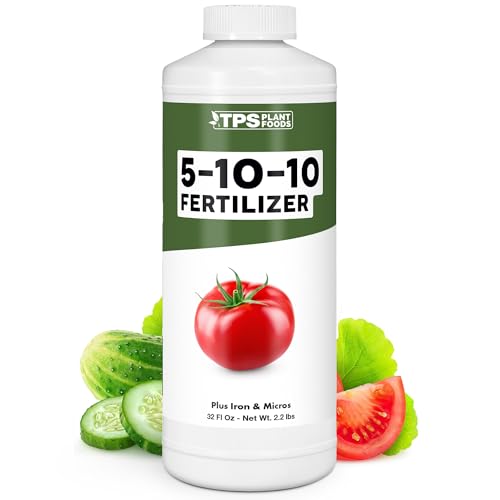
A liquid 5:10:10 that goes straight to work on turnip roots with no waiting.
Unlike all the granular options in this guide, the TPS Plant Foods 5-10-10 is a liquid concentrate. You get a 32-fluid-ounce bottle that you dilute in water and pour around the plant base. The 5:10:10 ratio is the same classic root formula as the Cz Garden granular, but the liquid form means the nutrients are immediately available to the roots within hours rather than days. That is a big help if you notice turnips stalling mid-season or if you are growing in cooler soil where microbial breakdown of granules slows down. A single bottle is small, but it is concentrated — a little goes a long way.
Buyers report that it “revived half-dead knockout roses in 3 weeks; vibrant flowers.” Another noted it “revived young bell pepper plant; from 1 pepper to 30+ buds after 2 applications.” For turnips, the fast-acting phosphorus and potassium are ideal during the bulb-swelling stage. The liquid also works well for container or raised-bed turnips where you want to control the exact dosage. One reviewer pointed out it is not organic-certified and the bottle lacks a measuring cup, so you will need a teaspoon on hand.
The main thing to know: you need to reapply every 1-2 weeks because liquid feeds flush through the soil faster than granules. Pick this if you want the fastest possible nutrient delivery to struggling turnips or if you grow in containers where precise liquid feeding is easier. look elsewhere if you prefer a set-and-forget organic granular and do not want to mix and reapply every week or two.
What makes it different
- Liquid form is absorbed immediately
- 5:10:10 ratio is ideal for bulking turnip roots
- Great for container or raised-bed gardens
Keep in mind
- Not organic-certified
- No measuring cup included
- Requires frequent reapplication
Pick this if: You want the fastest possible nutrient delivery to struggling turnips, or you grow in containers where precise liquid feeding is easier.
steer clear if: You prefer a set-and-forget organic granular and do not want to mix and reapply every week or two.
6. Jobe’s Organics Granular All Purpose Fertilizer 4-4-4

A massive 16-pound bag of OMRI-listed granules at a price that covers an entire garden.
The Jobe’s Organics 4-4-4 is the volume play — 16 pounds of organic granular fertilizer for roughly the same price as a 4-pound premium bag. The balanced 4:4:4 NPK ratio is not as targeted for root crops as the 5-10-10 options, but it is low enough in nitrogen to be safe for turnips. The balanced potassium and phosphorus support steady overall plant health without pushing leaves. This is also OMRI listed, so it is suitable for organic gardening. Application is simple: every 2-3 weeks during the growing season, sprinkle the granules around each plant and water them in.
One long-term buyer noted they “mixed the granular fertilizers in with the soil which helped but I also made liquid fertilizer from it which showed a quick boost for the plants” by mixing 1 cup of granules to 1 gallon of dechlorinated water. That DIY liquid option is a nice flexibility you do not get with most granulars. Reviewers consistently mention the strong smell (like chicken manure), but they also report that neighbors ask how they got such great results. The heavy 16-pound bag is ideal for gardeners with large vegetable plots or who want to use the same fertilizer on flowers, shrubs, and trees along with their turnips.
The catch is the 4:4:4 ratio. It will work for turnips, but it is not the tune root-crop formula that the 5-10-10 or 5:7:3 options are. If you have very sandy or phosphorus-deficient soil, you might need to supplement with a bone meal boost. Go with this if you need to cover a big vegetable plot on a budget and want an organic-certified all-purpose fertilizer. Consider another option if your primary goal is maxing out turnip bulb size — a higher-phosphorus formula will outperform it.
Why it is a good buy
- 16 lbs — huge value for large gardens
- OMRI listed for organic use
- Can be used as a DIY liquid feed
Drawbacks
- 4:4:4 is not root-tune
- Strong manure smell for a few days
Go with this if: You need to cover a big vegetable plot on a budget and want an organic-certified all-purpose fertilizer that will not burn plants.
Consider another option if: Your primary goal is maxing out turnip bulb size — a higher-phosphorus formula will outperform it.
7. GreenView Multi-Purpose Fertilizer 10-10-10

The big 33-pound bag with a balanced 10-10-10 that covers 10,000 square feet.
The GreenView 10-10-10 is a synthetic granular. You get a 33-pound bag that covers up to 10,000 square feet — more than enough for a serious vegetable patch. The 10:10:10 NPK is balanced, meaning equal parts nitrogen, phosphorus, and potassium. For turnips, the 10% nitrogen is higher than you would ideally choose for a root-specific fertilizer. But it works well on a large diversified garden where you are also feeding leafy greens, tomatoes, and flowers. The product label advises adjusting the coverage amount depending on the plant type, so you can apply a lighter rate around turnips to reduce the nitrogen impact.
Owners mention it “greens things up” and works “quickly” on a wide range of plants including vegetables, trees, and shrubs. One reviewer specifically switched from a 16-16-16 to this 10-10-10 and found it more affordable while delivering similar greening results. If you are managing a large garden, the cost-per-pound and the coverage area are class-leading by any organic product here. The granules have a good size, do not clump, and spread easily with a hand spreader or by hand.
The honest advice: if turnips are the centerpiece of your garden, a 10-10-10 is not the ideal ratio. You will get more leaf growth than you want, and the bulbs may stay smaller or become woody. Use this if you already have it for other crops and want to save money, but apply it at half the recommended rate around your turnip bed. This is best suited for a gardener with a large, mixed vegetable garden who needs an affordable all-purpose fertilizer and is willing to apply a lighter rate to turnips. Not the right pick if you are growing an entire bed of turnips and want a root-tune or organic-certified formula.
What stands out
- 33 lb bag at the best cost-per-pound
- Covers up to 10,000 sq. ft.
- Works fast and evenly on many plants
Important note
- 10-10-10 is not ideal for turnips — too much nitrogen
- Synthetic, not organic-certified
Best suited for: A gardener with a large, mixed vegetable garden who needs an affordable all-purpose fertilizer and is willing to apply a lighter rate to turnips.
Not the right pick if: You are growing an entire bed of turnips and want a root-tune or organic-certified formula.
Understanding the Specs
NPK Ratio — The Three Numbers
You will see three hyphenated numbers on every bag: Nitrogen (N), Phosphorus (P), and Potassium (K). Nitrogen drives green leaf growth — you want a low first number (around 3 or 4) for turnips so the plant does not waste energy on huge tops. Phosphorus is the second number and it is the key for root development; a higher second number (6 to 10) promotes bigger, more solid bulbs. Potassium is the third number, supporting overall plant health, stress resistance, and sugar movement into the root. For turnips, look for a ratio where the first number is the smallest, like 4-6-2, 3-4-4, or the classic 5-10-10.
Granular vs Liquid
Granular fertilizers are small dry pellets that release nutrients slowly as soil microbes break them down. They are easy to broadcast over a garden bed and provide a steady feed over weeks, which matches the slow growth cycle of a root crop. Liquid fertilizers are concentrates you mix with water and pour at the plant base. They work within hours, which makes them great for a mid-season boost if you see weak growth, but they require reapplication every one to two weeks because they wash through the soil. For a turnip patch, a granular organic at planting time plus a liquid boost at bulb-swelling stage can be a powerful combo.
FAQ
What NPK ratio is best for turnip growth?
When should I fertilize turnips during the growing season?
Can I use a tomato fertilizer on turnips?
Is organic or synthetic fertilizer better for turnips?
What happens if I use a high-nitrogen fertilizer on turnips?
How often should I apply fertilizer to my turnip patch?
What is the difference between 5-10-10 and 4-6-2 for turnips?
Does a liquid fertilizer work better for container turnips?
Can I mix granular and liquid fertilizers for turnips?
Will the smell of organic fertilizers attract animals?
Final Thoughts: The Verdict
For most turnip growers, the best fertilizer for turnips is the FoxFarm Happy Frog 5:7:3 because it delivers a near-ideal NPK balance for root crops, includes calcium to prevent bulb defects, and supports soil health with mycorrhizal fungi. If you want a high-phosphorus root-targeted formula at a better price, grab the Cz Garden 5-10-10. And for organic gardeners with large beds who need value, the Espoma Garden-Tone 3:4:4 two-pack is a smart, proven option that will keep your turnips growing strong all season.
How We Picked
We do not accept paid placement. Every pick is matched to a real buyer and a real use-case; we do not hands-on test units.
Sources & Methodology
Specifications: manufacturer listings and product documentation. Review insights: verified customer reviews, as of July 2026. Pricing: not shown on this page (it changes often); check the current price via the retailer link.
As an Amazon Associate, Lawn Gear Lab earns from qualifying purchases. This does not affect which products we feature.