
Specs are compiled from manufacturer listings and verified buyer reviews and can change over time — please confirm the key details on the product page before buying.
The quickest way to kill a potted rose is by using soil that holds water like a sponge in a container with no ground drainage. When you grow roses in pots, the soil needs to drain fast enough that roots never sit in a puddle, but it also needs to hold moisture long enough that you are not watering twice a day. The two options here take very different approaches to that balance.
I’m Rikta — the founder and writer behind Lawn Gear Lab. This guide is built by comparing the manufacturers’ published specifications and the patterns across verified customer reviews, so you get each pick’s real strengths and trade-offs instead of marketing spin.
Whether you are repotting a single miniature rose or refreshing several large containers, the right mix keeps roots healthy and blooms coming back. This breakdown of the best soil for roses in pots compares a premium bag that fills bigger pots with one compact organic option for small planters and top-dressing.
Quick Picks
- Coast of Maine Organic & Natural Planting — Best Overall
- Omitgoter Rose Potting Soil — Space Saver
How To Choose The Best Soil For Roses In Pots
Container roses depend entirely on the soil you put in the pot. Unlike garden beds, there is no earth underneath to pull excess water away. The right mix delivers air pockets for roots and holds just enough moisture between waterings.
Drainage and Aeration
Look for ingredients like perlite, coarse sand, or coconut coir that create physical gaps in the soil. These gaps let oxygen reach the roots and let water drain out fast. A soil that stays soggy after a heavy watering is the main cause of root rot in containers.
Organic Matter and Nutrients
Composted manure, humus, peat moss, and bark add slow-release food for the rose. In a pot, nutrients wash out faster than they do in the ground, so a mix with compost or peat gives the plant a steady supply without you having to fertilize every week.
Bag Volume and Pot Size
A 2-quart bag fills a small 6-inch pot or works as a top-dressing layer. A 20-quart bag handles a 14-inch pot or multiple smaller containers. Check the volume before you order so you are not short a few quarts halfway through the job.
Quick Comparison
| Model | Best For | Volume | Unit Count | Key Ingredients | Amazon |
|---|---|---|---|---|---|
| Coast of Maine Roses & Flowers | Filling larger pots and multiple containers | 20 Quarts | 740.0 Oz | Composted manure, sphagnum peat moss, bark | Amazon |
| Omitgoter Rose Potting Soil | Small pots, single mini roses, top-dressing | 2 Quarts | 64.0 Oz | Peat, coconut coir, perlite, bark, humus | Amazon |
In‑Depth Reviews
1. Coast of Maine Organic & Natural Planting Soil for Roses & Flowers

A premium organic mix that handles big containers without needing a second bag.
This bag holds 20 quarts, while the Omitgoter bag holds 2 quarts, so you can fill a 14-inch pot or multiple smaller planters from one purchase. The blend uses composted manure, sphagnum peat moss, and bark, which creates a dark, rich texture that buyers describe as high quality with good smell. Those ingredients also balance moisture retention and drainage specifically for roses and flowers.
One reviewer who had ordered Coast of Maine compost before noted that this particular roses-and-flowers blend had a strong smell that attracted dogs and flies, though they still considered the soil good quality and kept using it. That earthy manure scent is common with active compost mixes and usually fades after a few days of exposure to air and water. The OMRI listing means the mix meets organic standards, which matters if you avoid synthetic fertilizers in your container garden.
Buyers report that this soil revitalized stunted plants and produced new growth even in a single application. It works both in-ground and in containers, so if you later expand into garden beds, the same bag still fits that use.
Container Value
- 20 quarts fills large pots without needing a second bag
- Rich organic ingredients (composted manure, peat moss) feed plants steadily
- OMRI listed for organic gardening
- Good texture — dark, crumbly, no mold or pests according to buyers
Honest Trade-offs
- Fresh manure smell can be strong and attract pets or flies initially
- Too much volume for someone who only needs to top-dress a single small pot
The pick for: Any rose grower with multiple containers or large pots who wants an organic, ready-to-use mix with proven results.
Heads up: The smell is real for the first few days — plan to mix and water outdoors if you are sensitive to barnyard scents.
2. Omitgoter Rose Potting Soil
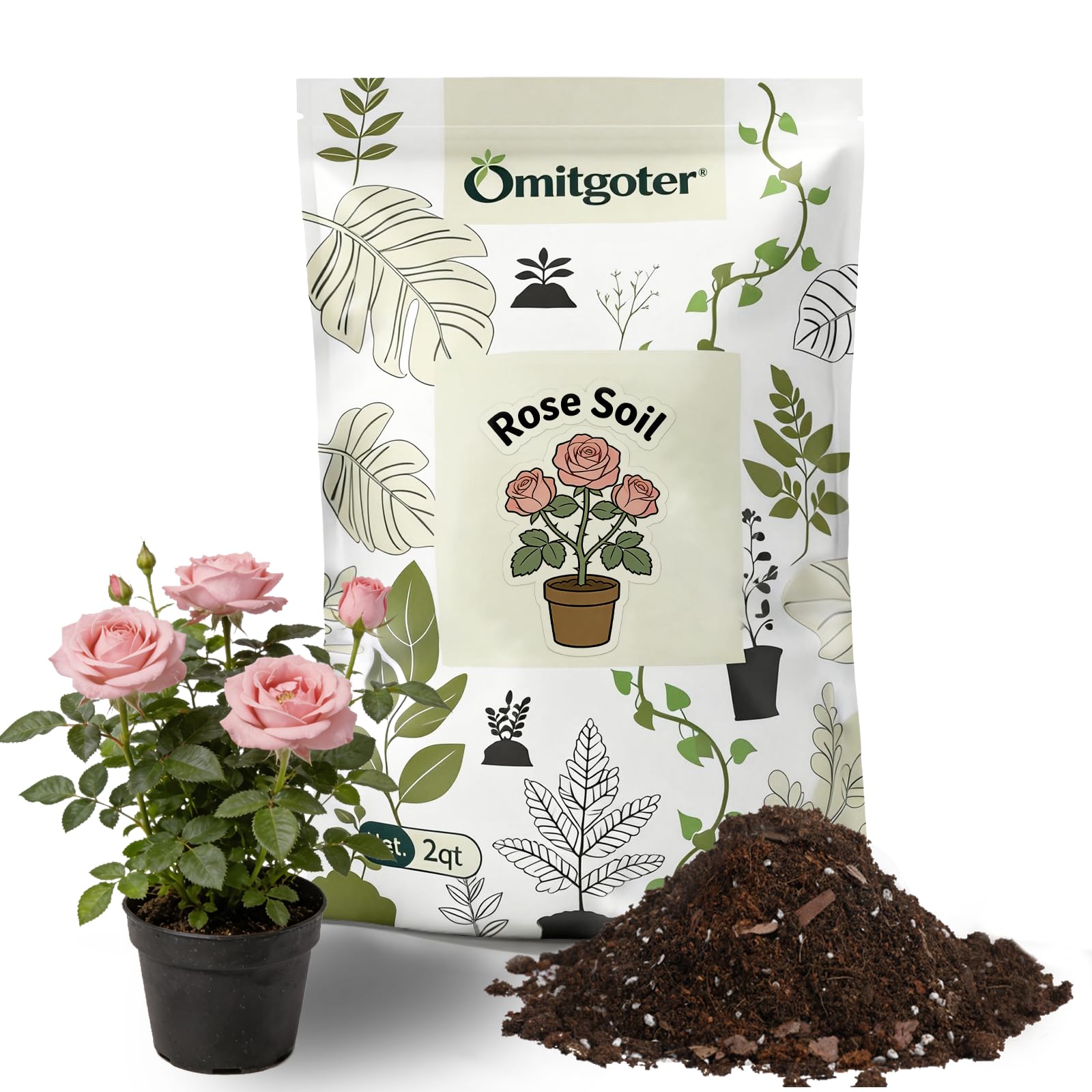
A compact bag for small roses and precise top-dressing jobs.
This 2-quart bag is smaller than the Coast of Maine 20-quart bag, and buyers confirm that “the quart size is as big a quart size baggie would be.” That makes it a practical fit for a single miniature rose in a 6-inch pot or for enriching the soil around one stunted in-ground plant. The formula combines peat, coconut coir, perlite, bark, and humus — all natural ingredients with no chemical additives — to give the roots both drainage and consistent nutrition.
One reviewer used this soil on a stunted rose and reported that the plant grew leaves again and produced a bud in late June, calling the results “wonderful.” Another buyer wished the bag were bigger, which is the honest knock against it: at 64 ounces total, you cannot fill more than one or two small pots without buying multiple bags. The perlite and coir create the loose, breathable structure that prevents waterlogging, which is the primary risk when roses sit in containers.
The soil is described as “not heavy” by one buyer, making it easy to handle for small repotting projects. It is ready to use straight from the bag — no mixing required — so it suits beginners who just want to swap out old soil without guessing at ratios.
Why It Works
- Light, loose texture with perlite and coir for fast drainage in small pots
- 100% natural formula with no synthetic chemicals
- Ready to use — no mixing step needed for beginners
- Proven results on stunted miniature roses per buyer reports
The Limitation
- Only 2 quarts — not enough for a large container or multiple pots
- Higher per-quart cost compared to larger bags, so buying multiple adds up
Reach for this when: You have one small rose or need a top-dressing layer to refresh an existing pot without repotting everything.
Look elsewhere if: You are filling a 10-inch or larger container — the Coast of Maine bag gives you ten times the volume for a better per-quart value.
Understanding the Specs
Volume (Quarts)
The total amount of soil in the bag, measured in quarts. One quart fills roughly a 6-inch diameter pot halfway. A 20-quart bag can fill a 14-inch pot, while a 2-quart bag is just enough for a single small container or a refresh layer on top of old soil.
Drainage Ingredients
Perlite, coconut coir, coarse sand, or bark create physical pockets in the mix so water flows out instead of pooling at the bottom. Without these, the soil compacts in a pot and suffocates roots. Check the ingredient list for at least one of these if you are planting in a container with no ground drainage underneath.
FAQ
Can I use regular garden soil for roses in pots?
How much soil do I need for a 12-inch rose pot?
Will this soil work for roses in pots indoors as well as outdoors?
Does Coast of Maine soil smell bad?
How often should I repot a rose in a container?
Can I mix these two soils together?
Is the Omitgoter soil organic?
What is the difference between 2 quarts and 20 quarts for a container rose?
Final Thoughts: The Verdict
For most people, the best soil for roses in pots winner is the Coast of Maine Organic & Natural Planting Soil for Roses & Flowers because its 20-quart volume fills large containers and multiple pots with a single purchase, and the composted manure and peat moss provide steady nutrients without needing frequent extra fertilizer. If you only have one small rose or need a top-dressing refresh, grab the Omitgoter Rose Potting Soil. And for anyone planning to repot several containers this season, the standout is the Coast of Maine bag on volume and verified organic ingredients.
How We Picked
We do not accept paid placement. Every pick is matched to a real buyer and a real use-case; we do not hands-on test units.
Sources & Methodology
Specifications: manufacturer listings and product documentation. Review insights: verified customer reviews, as of July 2026. Pricing: not shown on this page (it changes often); check the current price via the retailer link.
As an Amazon Associate, Lawn Gear Lab earns from qualifying purchases. This does not affect which products we feature.