
Specs are compiled from manufacturer listings and verified buyer reviews and can change over time — please confirm the key details on the product page before buying.
Fungal diseases can turn a thriving garden into a patch of wilted leaves and stunted growth seemingly overnight. You want a spray that stops the infection fast without dousing your soil in harsh chemicals, so your vegetables, ornamentals, and houseplants can bounce back and stay healthy.
I’m Rikta — the founder and writer behind Lawn Gear Lab. This guide is built by comparing the manufacturers’ published specifications and the patterns across verified customer reviews, so you get each pick’s real strengths and trade-offs instead of marketing spin.
After comparing seven different products, the best antifungal spray for plants balances a gentle formula with a proven track record against mildew, rust, and blight.
Our Picks at a Glance

How To Choose The Best Antifungal Spray For Plants
Picking the right fungicide is about matching the formula to your plant’s problem and your gardening style. Here is what to look for.
Active Ingredient
Most plant-friendly antifungals use citric acid, neem oil, mineral oil, or beneficial bacteria like Bacillus amyloliquefaciens. Each targets a slightly different set of diseases — citric acid works well on powdery mildew, while mineral oil smothers insects and fungal spores alike.
Concentrate vs. Ready-to-Use
A concentrate lasts longer because you mix it with water yourself, but a ready-to-use spray is easier if you just need to treat a few pots quickly. A 32-ounce concentrate might make 10 gallons of spray, which matters if you have a large garden.
Quick Comparison
| Model | Best For | Active Ingredient | Liquid Volume | Item Weight | Amazon |
|---|---|---|---|---|---|
| Earth’s Ally Disease Control★ Best Overall | All-in-one disease protection | Citric Acid | 32 fl oz (concentrate) | 2.26 lb | Amazon |
| Southern Ag Bio FungicideHydroponic Hero | Hydroponic setups | Bacillus amyloliquefaciens | 8 fl oz | — | Amazon |
| Grower’s Ally Crop Defender 3 | Spider mite control | Botanical oils blend | 24 fl oz (ready-to-use) | 1.7 lb | Amazon |
| Bonide All Seasons Spray Oil | Dormant & growing season | Mineral Oil | 32 fl oz | 32 oz | Amazon |
| Neem Oil Spray (Botanical Tradesman) | Concentrated neem power | 100% Cold-Pressed Neem Oil | 3.4 fl oz (concentrate) | — | Amazon |
| Monterey Complete Disease Control | Tomato & fruit disease | Biological fungicide | 16 fl oz | — | Amazon |
| Garden Safe Fungicide3 | Full-yard coverage | Neem Oil Extract | 128 fl oz (ready-to-use) | — | Amazon |
In‑Depth Reviews
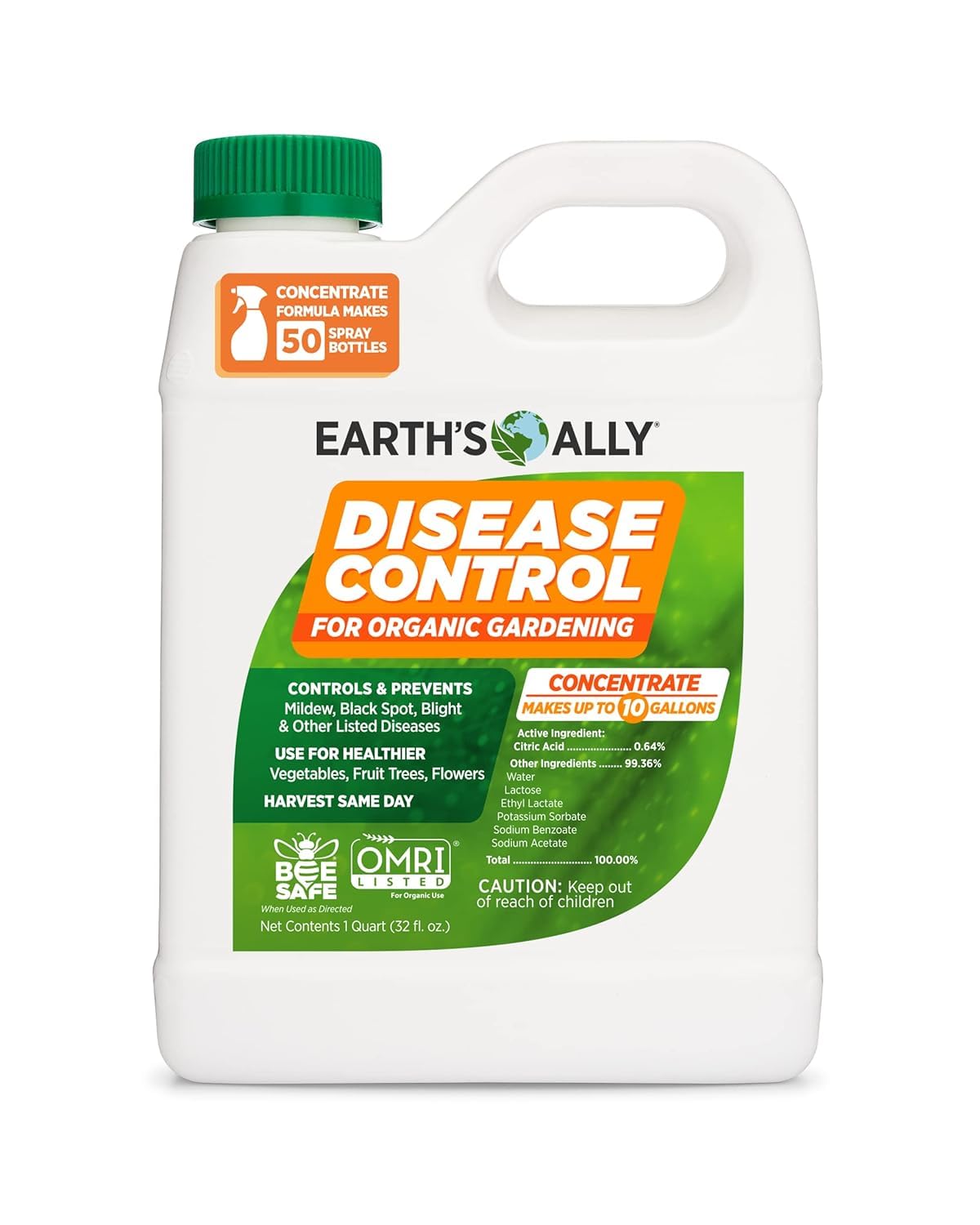
1. Earth’s Ally Disease Control Concentrate for Plants
Our pick — 4.5★ from 950+ verified ratings; the strongest balance of quality and price.
The concentrated citric-acid formula that tackles powdery mildew, blight, and black spot in one bottle.
Earth’s Ally uses citric acid as its active ingredient, which is a natural fungicide that is safe for people, pets, and the planet — it leaves no harsh chemical residues behind. The 32-ounce concentrate makes 10 gallons of ready-to-use spray, so you mix 6 tablespoons into each gallon of water and cover a lot of garden without buying multiple bottles.
Buyers report it “stopped root fungus in 2 applications” on a struggling Palo Verde tree that a certified arborist had already diagnosed with a soil fungus. It also works on roses with black spot, grapefruit trees, and general shrub diseases. Because it is OMRI Listed, you can use it on fruits and vegetables right up until the day you harvest.
Unlike some neem-based sprays that can burn leaves in direct sun, Earth’s Ally is gentle enough for regular use throughout the growing season. One reviewer noted they hoped their roses would thrive after starting this product, and early results looked promising. If you want one product that covers multiple fungal diseases without harsh chemicals, this is the smartest buy.
The Natural Powerhouse
- Citric acid formula is safe for edible plants up to harvest day.
- Concentrated liquid makes 10 gallons — great value for large gardens.
- Controls powdery mildew, blight, canker, black spot, and leaf spot.
A Couple of Notes
- You need to measure and mix it yourself — not as grab-and-go as a spray bottle.
- May require repeat applications for stubborn root fungus.
Best for most: Anyone looking for a single concentrated fungicide that works on many common diseases, from ornamentals to vegetables, without chemical worries.
Consider if: You are okay with mixing a concentrate and prefer not to use oil-based sprays on delicate leaves.
2. Southern Ag Garden Friendly Bio Fungicide Organic
The tiny 8-ounce bottle that packs a bacterial punch against root rot and algae in hydroponic tanks.
This product uses a living bacterium — Bacillus amyloliquefaciens strain D747 at 98.85% concentration — that colonizes root hairs and prevents disease-causing fungi and bacteria from getting established. It is a biological fungicide, meaning it works by outcompeting the bad organisms rather than killing them directly, which makes it incredibly safe for delicate root systems.
The 8-ounce bottle (4.0x less liquid than the Bonide 32-ounce spray oil) is small but potent — owners mention it “solved algae and root rot in hydroponic tanks” using just 2 milliliters per 5 gallons of water. One reviewer switched from expensive commercial products and found this cheaper alternative just as effective. It has a strong smell when mixed, but the odor does not linger after application. This is the go-to choice if you run a hydroponic setup or want a biological treatment that works from the roots up.
The root-level specialist: Unlike contact sprays that only treat leaves, this biofungicide works directly in the water or soil to prevent root rot and algae before they start.
A packaging reality: At just 8 fluid ounces, it looks small, but a little goes a very long way in reservoirs and soil drenches.
Reach for this if: You grow in hydroponics or want a biological preventative that protects roots from rot and algae.
Look elsewhere if: You need a leaf spray for immediate control of powdery mildew or rust — this is best applied as a root drench.
3. Grower’s Ally Crop Defender 3
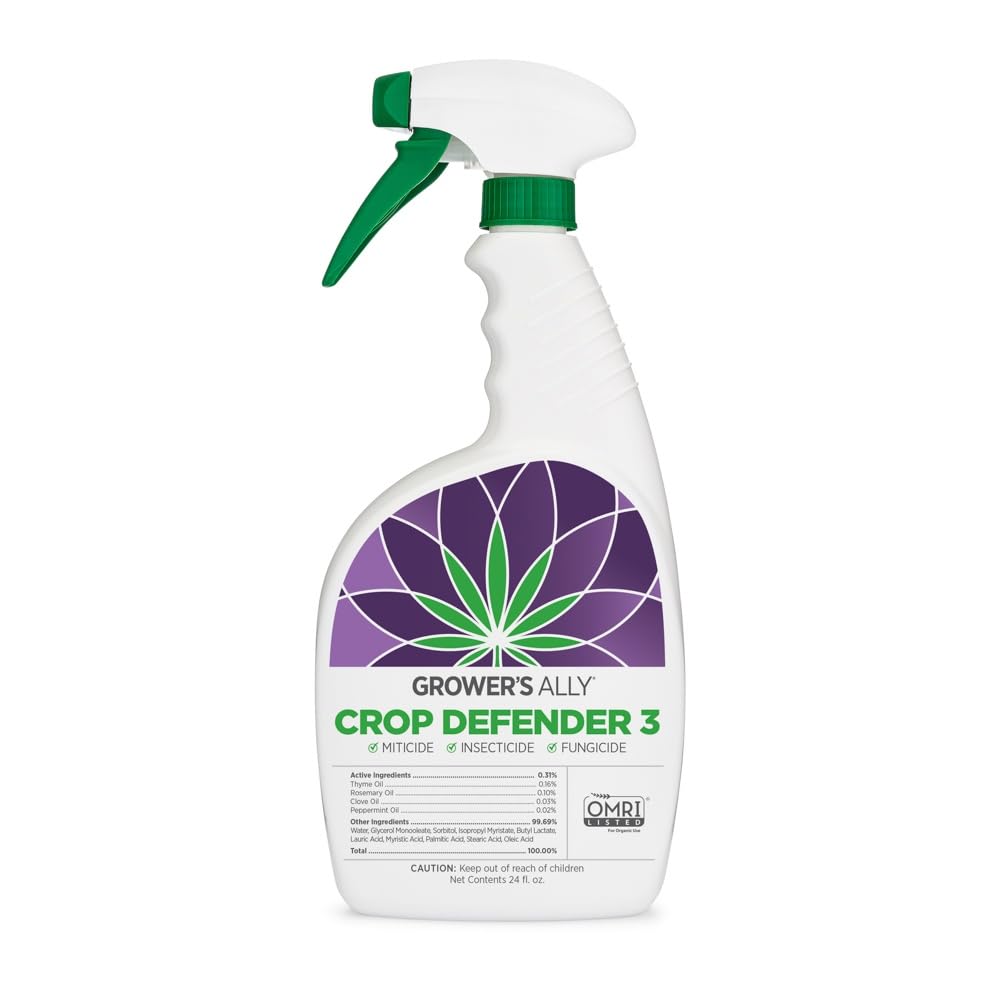
A ready-to-use spray that kills mites, mildew, and soft-bodied insects without burning your seedlings.
Grower’s Ally Crop Defender 3 combines botanical oils into a triple-action formula that works as a miticide, insecticide, and fungicide all at once. It is designed for weekly use to kill powdery mildew, spider mites, russet mites, thrips, and aphids on contact. The built-in surfactant helps the spray spread evenly across leaves without pooling.
Customers note that it “does not burn plants — works really well” even on tender seedlings, which is a common concern with oil-based sprays. One reviewer had been struggling with spider mites in an indoor garden and found this more effective than other organic or DIY solutions. It is FIFRA 25(b) exempt and OMRI Listed, so it tests clean with no residual solvents, synthetic pesticides, or heavy metals. The 24-ounce ready-to-use bottle is convenient for small to medium gardens, and the formula is bee-safe when dry.
The indoor garden favorite: Its gentle, burn-free formula makes it ideal for sensitive indoor plants and seedlings, while the triple-action coverage handles both fungal and insect problems in one pass.
Watch the bottle size: At 24 ounces ready-to-use, it covers less area than a concentrate — be prepared to reorder if you have a large outdoor garden.
Best for indoor growers: If you battle spider mites, aphids, and powdery mildew on houseplants or a small greenhouse, this is a safe, effective all-in-one spray.
Not ideal for: Large-scale outdoor gardens where a concentrate would be more cost-effective over the season.
4. Bonide All Seasons Horticultural & Dormant Spray Oil

The mineral-oil spray that wakes up in winter and stays effective through the entire growing season.
Bonide’s All Seasons Spray Oil uses mineral oil to smother insects, mites, and fungal diseases like powdery mildew, rust, greasy spot, and botrytis. It works at multiple stages — dormant, green tip, delayed dormant, and during active growth — so it is a year-round solution for ornamental trees, fruit trees, roses, and vegetable crops.
Reviewers point out it “took care of the black bean aphids on my Spanish Broom” and saved an azalea from bark scale with visible results in just a few days. The spray connects to your garden hose for easy application, though some shoppers say the hose-end sprayer itself is poorly calibrated and recommend using a pump sprayer instead. One gardener loved how it shined the leaves of their roses while also killing the disease. It leaves no toxic residues and is approved for organic gardening.
The Multi-Season Workhorse
- Can be used from dormant stage through summer for flexible pest control.
- Smothers aphids, scale, mites, and fungal spores without harsh chemicals.
- Attaches to a hose for fast coverage of large plants and trees.
A Couple of Frustrations
- The included hose-end sprayer is not very accurate — a pump sprayer works better.
- Oil-based sprays can harm some plants if applied in direct sunlight or extreme heat.
A versatile choice: Ideal for orchard owners or gardeners who want one product that handles both dormant and active-season issues on trees, shrubs, and roses.
skip it if: You only need a light fungicide for houseplants — the oil can be too heavy for delicate indoor leaves.
5. Neem Oil Spray for Plants (Botanical Tradesman)

The 100% cold-pressed neem oil concentrate that makes 320 fluid ounces of spray from a tiny 3.4-ounce bottle.
Botanical Tradesman’s neem oil is extracted directly from Indian neem nuts with no added water, vegetable oils, or diluents — it is pure cold-pressed concentrate. You mix it yourself with water and a mild liquid soap, so the 3.4-ounce bottle (at 3.4 ounces versus the 32-ounce Bonide) ends up being far more economical per gallon than a ready-to-use spray. It covers both indoor and outdoor ornamental plants.
Buyers report it “got rid of the thrips and scale that were killing my plant” in just two treatments. One buyer mentioned it works well against whiteflies on an herb garden but mentioned the oil is very thick and does not mix easily with water without soap. It has a strong neem scent, which is natural and fades. This is the best budget-friendly choice for anyone who already keeps neem oil in their gardening toolkit and wants the purest concentrate available.
The budget-concentrate star: A tiny bottle that goes incredibly far — perfect for the gardener who already knows how to dilute oil sprays and wants maximum value per ounce.
A mixing catch: The thick oil needs a little liquid soap to emulsify, and the strong smell may not suit everyone.
Best for seasoned neem users: If you already buy neem oil concentrate and want a pure, organic cold-pressed option at a great price per gallon, this is it.
Not for quick fixes: If you want a ready-to-use spray that works straight from the bottle, look at a premixed option instead.
6. Monterey Complete Disease Control
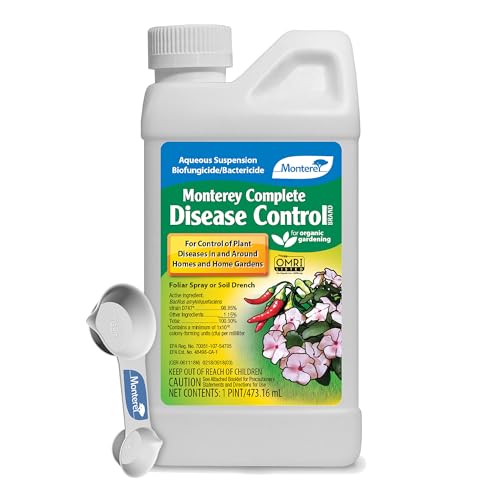
The biological fungicide that colonizes root hairs to protect tomatoes and fruit trees from the inside out.
Monterey Complete Disease Control is a biological product that prevents and stops powdery mildews, rust, leaf blight, brown rot, leaf spots, anthracnose, and gray mold. It works both as a foliar spray and as a soil drench — when applied to roots, it colonizes the root hairs to create a living barrier against disease-causing fungi and bacteria. The 16-ounce bottle is a concentrate you mix with water.
One buyer in the south calls it “life saver for tomato plants” during rainy summers, noting it helps control fungus and blight even when resistant varieties still get leaf spot. Another gardener in the Bay Area uses it for peach leaf curl every spring. A couple of reviewers mention it slows disease spread but does not always fully cure an established infection. It is OMRI Listed for organic gardening and works on vegetables, fruits, nuts, ornamental trees, shrubs, and houseplants.
The Root Colonizer
- Colonizes root hairs to prevent disease from the ground up.
- Controls a wide range of fungal and bacterial diseases on many plant types.
- Can be used as a foliar spray or root drench — two methods in one bottle.
Not a Miracle Cure
- May only slow, not stop, advanced infections — start early for best results.
- Needs multiple applications in spring to tackle peach leaf curl.
Reach for this if: You grow tomatoes, peaches, or other fruit in a humid climate and want a biological option that protects both leaves and roots.
Consider carefully if: You need a quick knockdown of an active, severe outbreak — this works best as a preventative or early treatment.
7. Garden Safe Brand Fungicide3
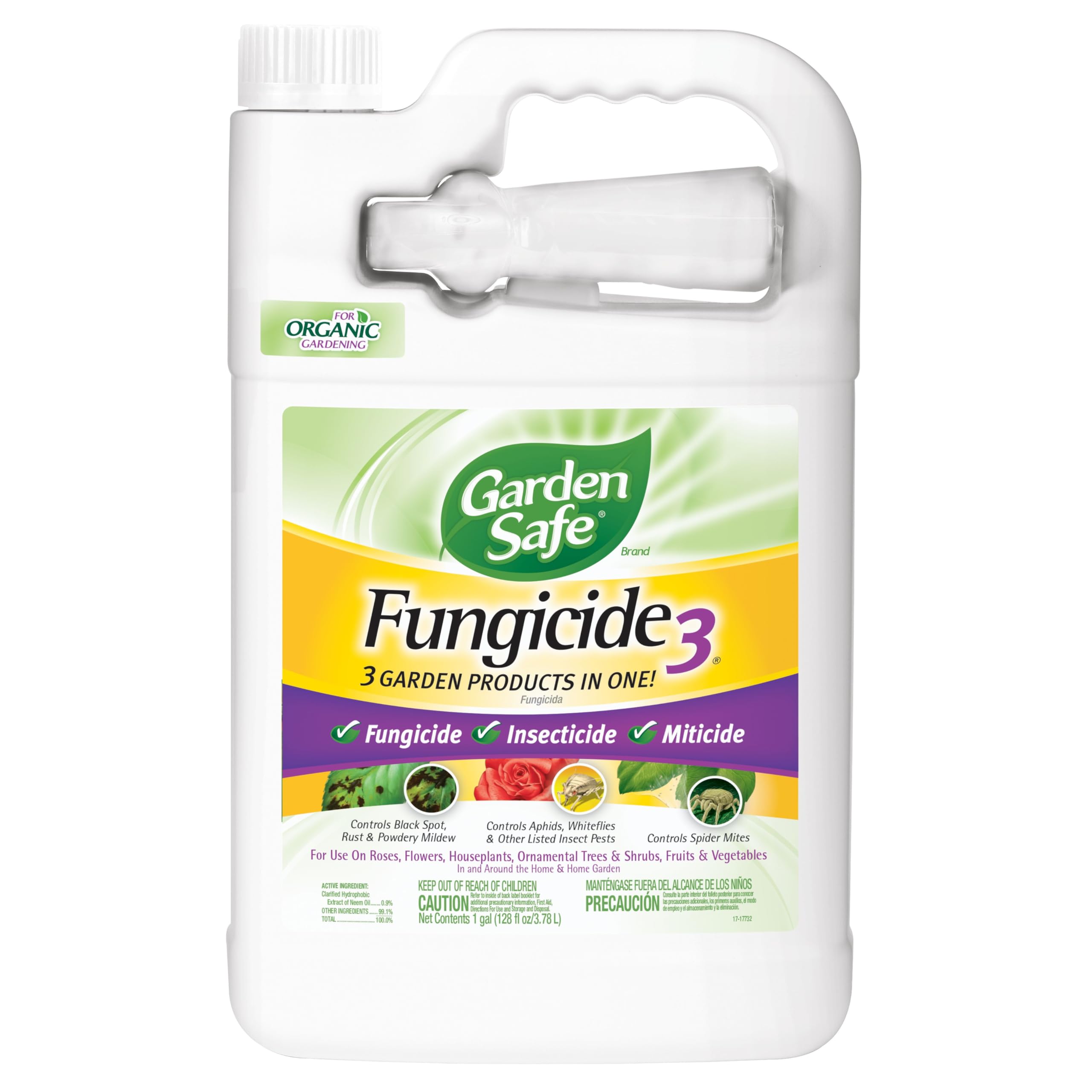
The giant 1-gallon sprayer that covers your whole rose bed, tomato patch, and ornamentals without refilling once.
Garden Safe Fungicide3 is a ready-to-use 128-ounce (1 gallon) spray that combines neem oil extract as a fungicide, insecticide, and miticide. It kills eggs, larvae, and adult stages of listed insects while preventing fungal attack on plant tissues. You just attach the sprayer, aim, and go — no mixing, no measuring. It works on black spot, rust, powdery mildew, aphids, whiteflies, and spider mites.
Owners mention it is “absolutely amazing” on mildew for hibiscus, roses, tomatoes, and blueberries. One reviewer applies it weekly and reports it eliminated mildew and improved foliage and yields. Another warns the included sprayer design is awkward — a short, coiled hose makes it hard to reach plants — and suggests using your own spray wand. A few users found it burned some plants when used at full strength in direct sun, so starting at a lower dose is wise.
The One-Gallon Solution
- Huge 128-ounce volume covers a large garden without multiple bottles.
- Ready-to-use — no mixing, no measuring, just spray.
- Kills fungal diseases plus insects and mites in one product.
Sprayer & Strength Issues
- The built-in sprayer has poor reach and design — many replace it with their own.
- Can burn leaves if used in direct sunlight or at too high a concentration.
Best for big gardens: If you have a large yard, multiple flower beds, or a vegetable patch and want one ready-to-use spray that covers everything, this gallon-sized bottle saves trips to the store.
pass on it if: You have a few houseplants — the large volume and potential for leaf burn in sun make it better suited for outdoor use with careful application.
Understanding the Specs
Active Ingredient
This is the chemical or biological agent that fights the fungus. Common ingredients include citric acid (a gentle acid that disrupts fungal cells), mineral oil (smothers spores and insects), neem oil (a natural oil that repels and kills a range of pests), and beneficial bacteria like Bacillus amyloliquefaciens (a living microbe that outcompetes harmful fungi). Pick the ingredient that matches your specific disease and safety needs.
Concentrate vs. Ready-to-Use
Concentrates require you to measure and mix with water before spraying. They are more economical per gallon and let you control the strength. Ready-to-use sprays come pre-mixed in a bottle, which is convenient for small jobs but costs more per application. A 32-ounce concentrate can make up to 10 gallons of spray, while a 128-ounce ready-to-use bottle treats the same area at a higher cost per ounce.
FAQ
Can I use an antifungal spray on my indoor houseplants?
How often should I apply a fungicide to my plants?
What is the difference between a contact fungicide and a systemic fungicide?
Will these sprays harm my flowers or burn the leaves?
Can I use a fungicide spray on vegetables right before harvest?
What is OMRI certification and why does it matter?
Will an antifungal spray also kill beneficial insects like bees?
How do I mix a concentrated fungicide correctly?
Can I use a fungicide to prevent root rot in hydroponics?
What is the shelf life of these fungicide sprays?
Final Thoughts: The Verdict
For most gardeners, the antifungal spray for plants winner is the Earth’s Ally Disease Control Concentrate because its citric-acid formula is safe enough for harvest-day use and concentrated enough to cover a large garden. If you battle spider mites indoors, grab the Grower’s Ally Crop Defender 3 for a ready-to-use triple-action spray that won’t burn seedlings. And for hydroponic growers or anyone wanting a biological root treatment, the standout is the Southern Ag Bio Fungicide for keeping root rot and algae at bay.
How We Picked
We do not accept paid placement. Every pick is matched to a real buyer and a real use-case; we do not hands-on test units.
Sources & Methodology
Specifications: manufacturer listings and product documentation. Review insights: verified customer reviews, as of July 2026. Pricing: not shown on this page (it changes often); check the current price via the retailer link.
As an Amazon Associate, Lawn Gear Lab earns from qualifying purchases. This does not affect which products we feature.