
Specs are compiled from manufacturer listings and verified buyer reviews and can change over time — please confirm the key details on the product page before buying.
Peach trees need a specific kind of blanket at their feet. The wrong mulch can trap too much moisture against the trunk, which invites rot, or rob the soil of nitrogen as it breaks down. A good layer keeps the root zone cool through hot summers, holds water so you water less often, and slowly feeds the soil without smothering the crown. This guide walks you through the top mulch options — from chunky coco chips that resist compaction to pine bark nuggets that let air reach shallow roots — so you pick one that matches your soil, your climate, and the time you have to maintain it.
I’m Rikta — the founder and writer behind Lawn Gear Lab. This guide is built by comparing the manufacturers’ published specifications and the patterns across verified customer reviews, so you get each pick’s real strengths and trade-offs instead of marketing spin.
The key is finding a mulch that drains well, does not acidify the soil too fast, and stays put through wind and rain. These options deliver on all those fronts, and this guide to the best mulch for peach trees will help you decide which one to put in your cart.
Our Picks at a Glance

How To Choose The Best Mulch For Peach Trees
Picking the right mulch for your peach tree depends on three things: how well the material handles moisture, whether it changes the soil pH, and how long it lasts before you need to replace it. Here is what to look for.
Moisture management and air flow
Peach tree roots are shallow and need steady moisture, but they also hate sitting in soggy soil that causes root rot. A mulch that holds water without turning into a dense, matted layer is ideal. Coco chips and pine bark nuggets create a loose, chunky cover that lets water drain through while still keeping the ground underneath damp for longer.
pH and soil impact
Most peach trees prefer a slightly acidic to neutral soil (around pH 6.0 to 7.0). Some mulches, like pine bark, can lower the pH over time as they break down. Coconut husk chips sit at a neutral pH, so they do not alter your soil chemistry much at all. If you are already managing acidic soil, a neutral mulch like coco coir is a safer bet.
Longevity and maintenance
Wood chips and bark nuggets can last a full season or longer before they start to decay. Coco chips also break down slowly, often lasting a couple of seasons. Finer mulches like aspen decompose faster, meaning you will need to top them up more often. Deeper mulch layers (around 3 to 4 inches) hold moisture better but always keep the mulch a few inches away from the trunk to prevent bark rot.
Quick Comparison
| Model | Best For | Volume | Weight (Item) | pH / Type | Amazon |
|---|---|---|---|---|---|
| Plantonix Organic Coco Chips★ Best Overall | Value Standard | 15 Gallons | 10 Pounds | Neutral Coco | Amazon |
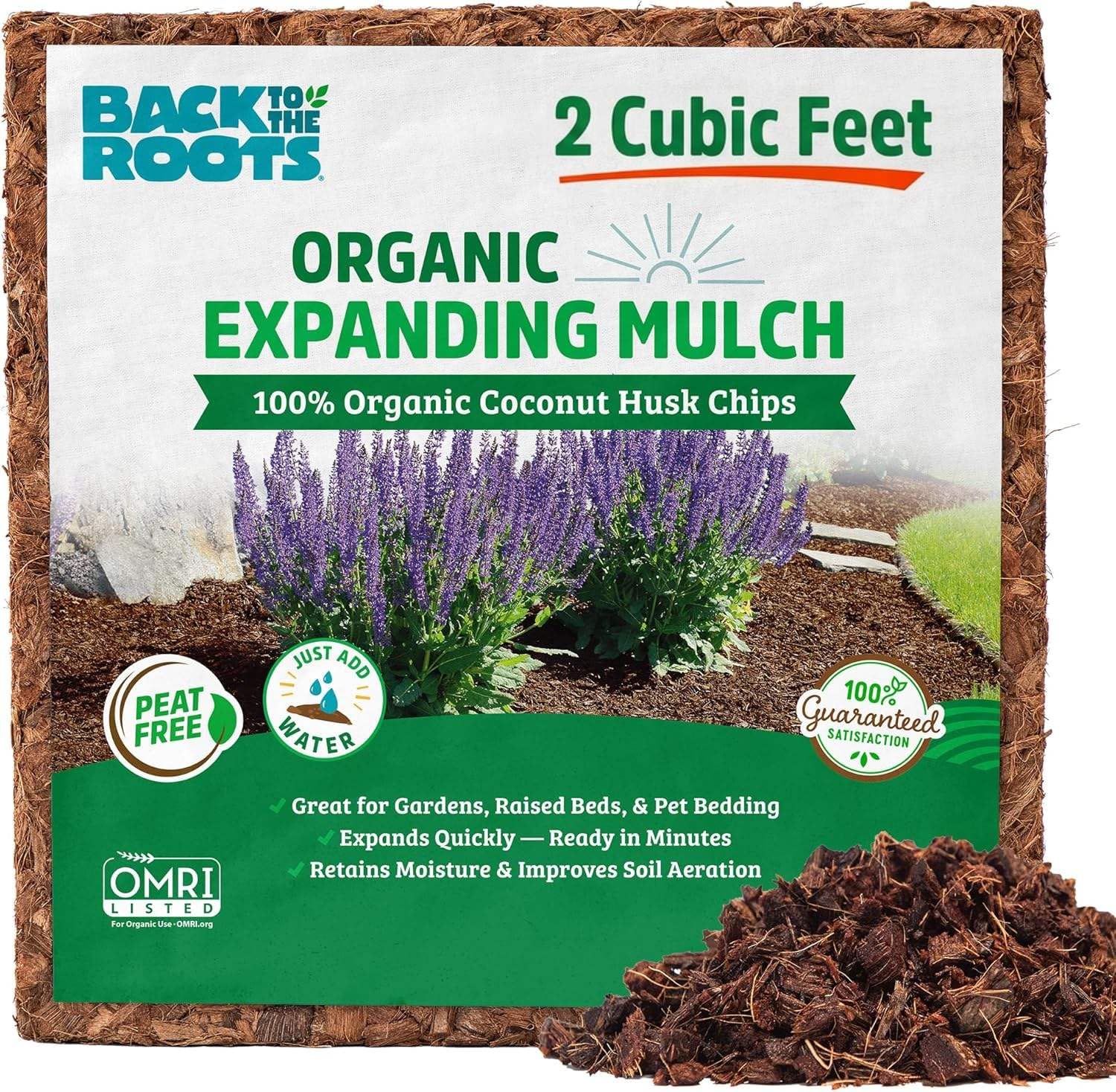
| Back to the Roots Coconut MulchAlso Great | Best Overall | 2 Cubic Feet | 10 Pounds | Neutral Coco | Amazon |
| MODELOR Coco Chips | Maximum Expansion | 18 Gallons | 11 Pounds | Low-Salt Coco | Amazon |
| Brut Organic Aspen Mulch | Fine Texture | 10 Quarts | — | OMRI Organic | Amazon |
| Soil Sunrise Pine Bark Nuggets | Container Trees | 12 Quarts | 2.32 Kilograms | Pine Bark | Amazon |
| Riare Coco Chips Substrate | Budget Expansion | 10 Liters | — | Low-EC Coco | Amazon |
| PlantBest Coco Mulch Block | Large Coverage | 2.5 Cubic Feet | 8.8 Pounds | Dye-Free Coco | Amazon |
In‑Depth Reviews
1. Plantonix Organic Coco Chips (10lbs)
Our pick — over 4.5★ from 350+ verified ratings; the strongest balance of quality and price.
The crowd-favorite 10-pound coco block that stretches your dollar while keeping soil aerated.
With a 4.7-star rating from 355 reviews, this is the most-tested coco chip block in the roundup. The 10-pound block expands to 15 gallons of loose chips — a solid amount for mulching a couple of young peach trees. It absorbs up to 10 times its weight in water, holding moisture in the soil so you water less often. The chips have a neutral pH and a high CEC (cation exchange capacity, the ability to hold onto fertilizer nutrients), which means they keep nutrients from washing away through the sandy soil peach trees often grow in.
Customers note the brick “breaks into good-sized chips when water added, no smell,” and that the natural color looks clean in garden beds. One buyer mentioned they mixed it with finer coir for a layered texture in raised beds, and the plants loved it. The chips are larger than standard coco coir, creating air pockets that improve drainage — exactly what peach tree roots need to avoid rot.
The catch is that 15 gallons is 20% less volume than the MODELLOR block, even though the blocks weigh about the same (10 pounds here vs 11 pounds there). If you have a large area to cover, you may need two blocks of this versus one of the MODELLOR. But at this price and with this many positive reviews, it is a safe, proven pick for the budget-conscious gardener.
What works
- Massive 4.7 stars from 355 reviews — reliable and well-liked
- Neutral pH won’t alter soil chemistry around peach trees
- Holds up to 10x its weight in water, reducing watering frequency
What is smaller
- 15-gallon yield is less than the MODELLOR’s 18 gallons for a similar weight
- Block form requires soaking and breaking apart before use
Best for: the gardener who wants a well-reviewed, neutral coco chip block at a fair price and does not need the absolute maximum expansion per block.
Not for: anyone needing to cover a very large area quickly — you will save time with a bigger-yield block like the MODELLOR.
2. Back to the Roots 100% Organic Mulch
The compressed block that explodes into heaps of clean, organic coco husk chips.
You get a single 10-pound block that expands to over 2 cubic feet of mulch when you add water. That is enough to cover a generous ring around a mature peach tree. The Back to the Roots block yields 2 cubic feet — noticeably more than the Plantonix block which yields 15 gallons (about 2 cubic feet). The chips are peat-free and OMRI-listed (the Organic Materials Review Institute has verified they meet organic standards) for organic gardening, so you know there are no synthetic additives hitting your soil.
Buyers report the block expands significantly with water, easily filling a wheelbarrow three-quarters full, and that it retains moisture well in full-sun spots. The chips are a nice size for fitting into small spaces around raised beds or containers. One reviewer noted the block is compressed and vacuum-sealed tight, making it a bit tough to break apart by hand — you will likely need a tool to chip the dry block before soaking.
The trade-off is that at this size and organic certification, it sits at a higher price point than loose-fill bark options. But if you want a single, easy-to-store block that turns into a season’s worth of clean, neutral-pH mulch for your peach tree, this is the most straightforward pick.
What stands out
- Expands to 2 cubic feet from a compact 10-pound block
- OMRI-listed organic, peat-free, and safe for vegetable gardens
- Holds moisture well in full sun, reducing watering frequency
The hard part
- Block is very tightly compressed and requires effort to break apart
- Premium price per block compared to standard wood chips
Reach for it if: you want an organic, neutral-pH mulch that stores compactly and expands into a large volume of chips perfect for keeping peach tree roots cool.
Think twice if: you need to cover a very large orchard area on a tight budget — the per-cubic-foot cost here is higher than bulk pine bark.
3. MODELLOR Premium Super Washed Coco Chips [10 lb]

The triple-washed, low-salt coco chip block that pushes volume further than standard bricks.
You want the most loose chips from a single block, so this 11-pound package expands to 18 gallons — a full 20% more than the Plantonix block’s 15 gallons. The extra weight (11 pounds vs 10 pounds) matches that bigger expansion, and owners mention the chips are “extra chunky,” making them ideal as a top-dressing that resists compaction around your peach tree’s root zone. The chips are triple-washed and low in salt (the label says “low-salt coco”), which is crucial: high-salt coco products (with high electrical conductivity, or EC) can pull moisture away from roots or cause leaf burn.
Buyers call these “the best Coco Chips I’ve ever used,” noting that the block expands “as it is supposed to” with no trash or filler mixed in. One reviewer warned that the block comes bone dry and very dense — you will need a metal tool to chip it apart before adding water. The chips are odor-absorbing and mold-resistant, which helps keep the area around the tree trunk clean and airy.
The main drawback is the block’s density: if you do not have a sturdy trowel or a hammer and chisel, breaking off the right portion takes some muscle. The price per block is slightly higher than the Plantonix option, though you are paying for that extra volume and the triple-washing process that cuts salt content. If maximum volume per package is your priority, this is the one.
Why it wins
- Yields 18 gallons from a single 11-pound block — more volume than competing 10-pound bricks
- Triple-washed and low-salt, safe for roots and sensitive plants
- Chunky pieces stay intact longer, improving aeration and drainage
What takes effort
- Dense, dry block is hard to chip apart without a metal tool
- Premium price for the washed process and extra volume
Grab this if: you want the biggest expansion from a single block and prefer chunky, low-salt coco chips for long-lasting moisture control around your peach tree.
skip it if: you are looking for a loose, ready-to-spread mulch that needs zero preparation — this block always needs manual breaking.
4. Brut Organic Aspen Mulch 10 QT
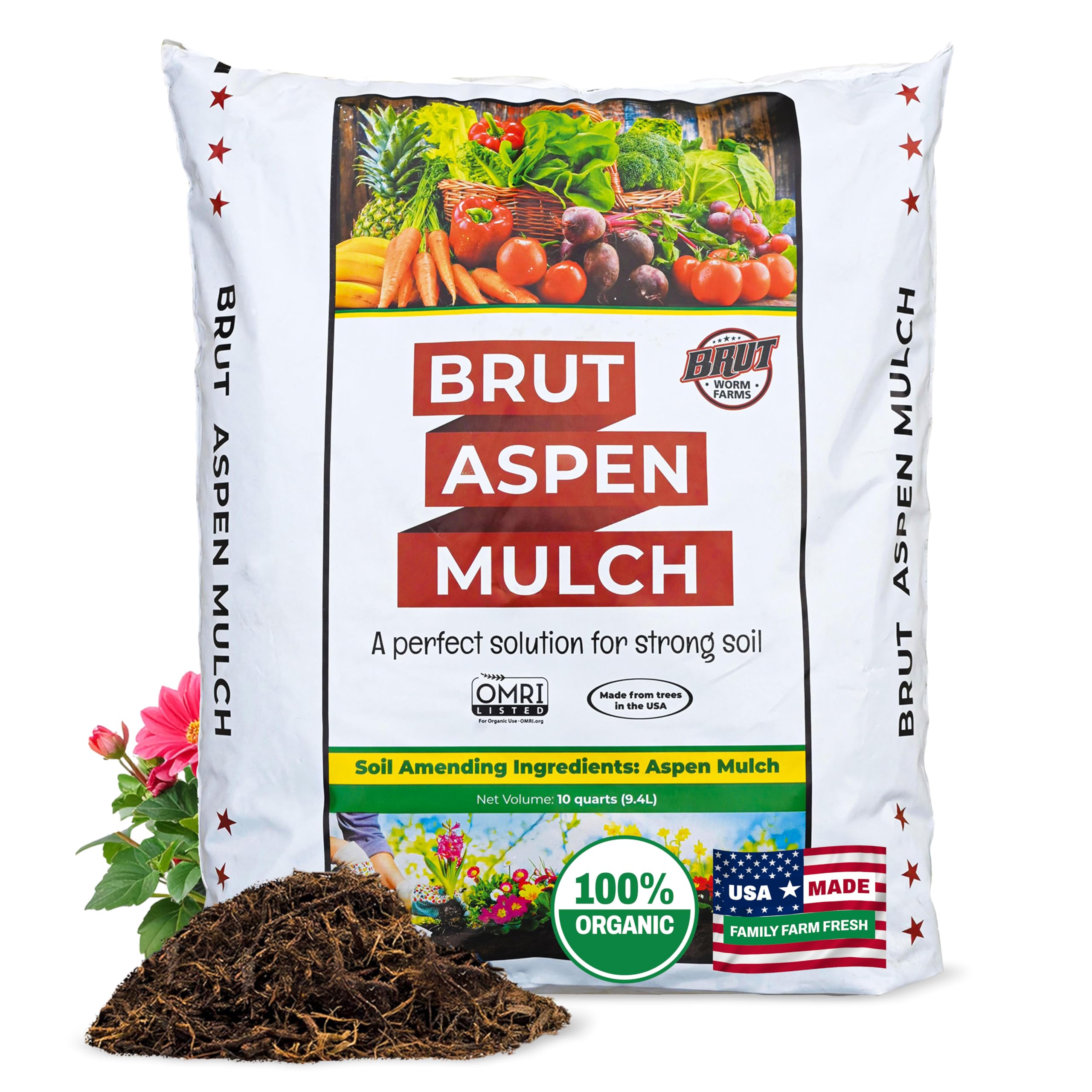
The lightweight, fine aspen bark that gives a polished look without the strong wood-chip smell.
This OMRI-listed (Organic Materials Review Institute approved) aspen mulch comes ready to use straight from the bag — no soaking or block-breaking. The texture is finer than coarse wood chips or coco husk pieces, so it settles neatly around the base of a peach tree and creates a clean surface that helps block weed growth. The manufacturer says it is formulated with 30% natural carbon, which feeds beneficial soil microbes as it breaks down.
Reviewers point out it “does wonders for my garden” and that the texture is perfect for city gardeners without access to bulk barn-floor materials. However, one owner reported finding artillery fungus in their bag — “I went outside and all these little dots of door and siding…not good” — and questioned whether the mulch is heat-treated. That is a real risk: artillery fungus can stain surfaces, and you rarely see it in coco-based mulches. The bag is also on the small side at 10 quarts (about 0.33 cubic feet), so covering even a modest tree ring will take a couple of bags.
The price is high per cubic volume compared to compressed coco blocks. For small, tidy garden beds or a single container peach tree, this is a pleasant, odor-free choice. For larger mulching jobs, the cost adds up fast.
Why it works
- Fine, lightweight texture that spreads easily and looks clean
- OMRI-listed organic with 30% carbon content to feed soil microbes
- Odor-free aspen bark — no strong or smoky smells
The concern
- Risk of artillery fungus reported by a buyer
- Small bag (10 quarts) means higher per-area cost for large mulching jobs
Pick this for: a neat, fine-textured organic mulch for a few potted peach trees or a small home-garden ring where appearance matters.
Avoid if: you need to cover a large area economically or are concerned about fungus spreading to your home’s siding.
5. Soil Sunrise 100% Natural Pine Bark Mulch Nuggets (12 Quarts)
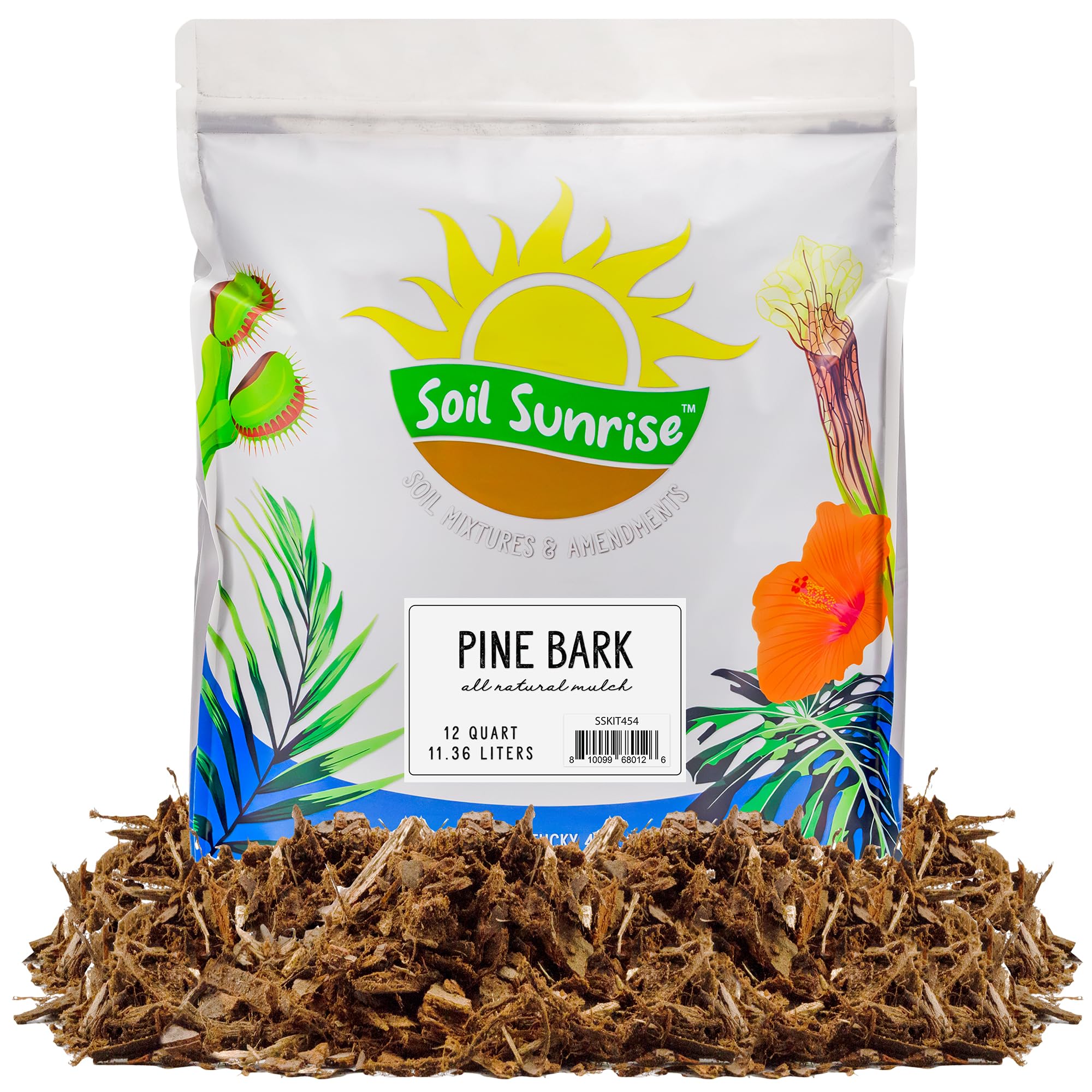
The consistent, small pine bark chips that keep container soil airy and well-drained.
These pine bark nuggets are a great fit for peach trees grown in pots or raised beds where drainage is critical. The chips are small and consistent in size, which means they mix evenly with potting soil and create air pockets that let oxygen reach the shallow roots of a dwarf peach tree. Unlike the coarser coco chips, pine bark is slightly acidic, which can be a bonus if your soil is too alkaline — it will gently nudge the pH toward the 6.0-6.5 range peach trees prefer.
Shoppers say the nuggets are “beautiful,” “nice and clean smelling,” and that the clear bag let them inspect the product for mold or pests before applying. One reviewer used it to make a mix for a dwarf orange tree and praised the drainage and consistent chunk size. The 12-quart bag is small — you will need at least two for a single large container tree — but the texture and drainage benefits are tough to top for potted specimens.
The cost per quart is higher than compressed coco blocks (which give you many more quarts for a similar price). For in-ground peach trees, a bigger-volume mulch like coco chips or aspen makes more sense. For container trees, this is the pick.
Strong points
- Small, uniform chips create excellent aeration for container soil
- Clear bag packaging lets you inspect quality before opening
- Natural pine bark scent and clean appearance
Limitations
- 12-quart bag is small — not cost-effective for large in-ground mulching
- Pine bark is slightly acidic, so monitor soil pH if your soil is already low
Great for: container-grown or dwarf peach trees where drainage and aeration in the potting mix matter more than covering a wide area.
Less ideal for: mulching a large orchard ring — you will save money and time with a compressed coco block instead.
6. Riare 10LBS Coco Chips Substrate for Plants

The solid budget coco block that delivers thick, coarse chunks for the price-conscious grower.
This 10-pound compressed brick expands to about 10 liters (roughly 2.6 gallons) of loose chips — a noticeably smaller yield than the Plantonix (15 gallons) or MODELLOR (18 gallons) blocks. The trade-off is a lower price point, making this a good entry-level option if you are testing coco chips for the first time or only have a single young peach tree to mulch. The chips are low in EC (electrical conductivity, meaning the salt levels are low), which is important for healthy root development.
Buyers report that when placed in a tub with over 3 gallons of water, the block “expanded to fill tub,” and the resulting chips are thick, coarse, and ideal for a DIY chunky soil mix. One reviewer who has used coconut coir for 30 years said it is a good product but wished it was cheaper. The chips are lightweight and breathable, providing oxygen to roots while retaining enough moisture to reduce watering frequency.
The limited expansion (10 liters is roughly 2.6 gallons) means you will need multiple blocks to cover a full tree ring. Compared to the MODELLOR block’s 18-gallon yield, the Riare gives you far less volume per pound. For a single season of mulching a few trees, the value is decent. For larger projects, the per-cubic-foot cost climbs above bigger blocks.
Reasons to buy
- Budget-friendly price for testing coco chips or mulching a small area
- Low-EC, pH-balanced chips safe for sensitive peach tree roots
- Thick, coarse pieces that improve aeration and drainage
Why it loses value
- Small expansion (10 liters) compared to bigger blocks — less coverage per block
- Price per cubic foot is not as competitive for large projects
Reach for this if: you are new to coco chips and want a low-cost sample to see how they work with your peach tree’s soil.
pass on it if: you need to cover a large area — the MODELLOR or Plantonix blocks give you far more volume for a similar price.
7. PlantBest Coco Mulch Compressed Block 9.1 lb
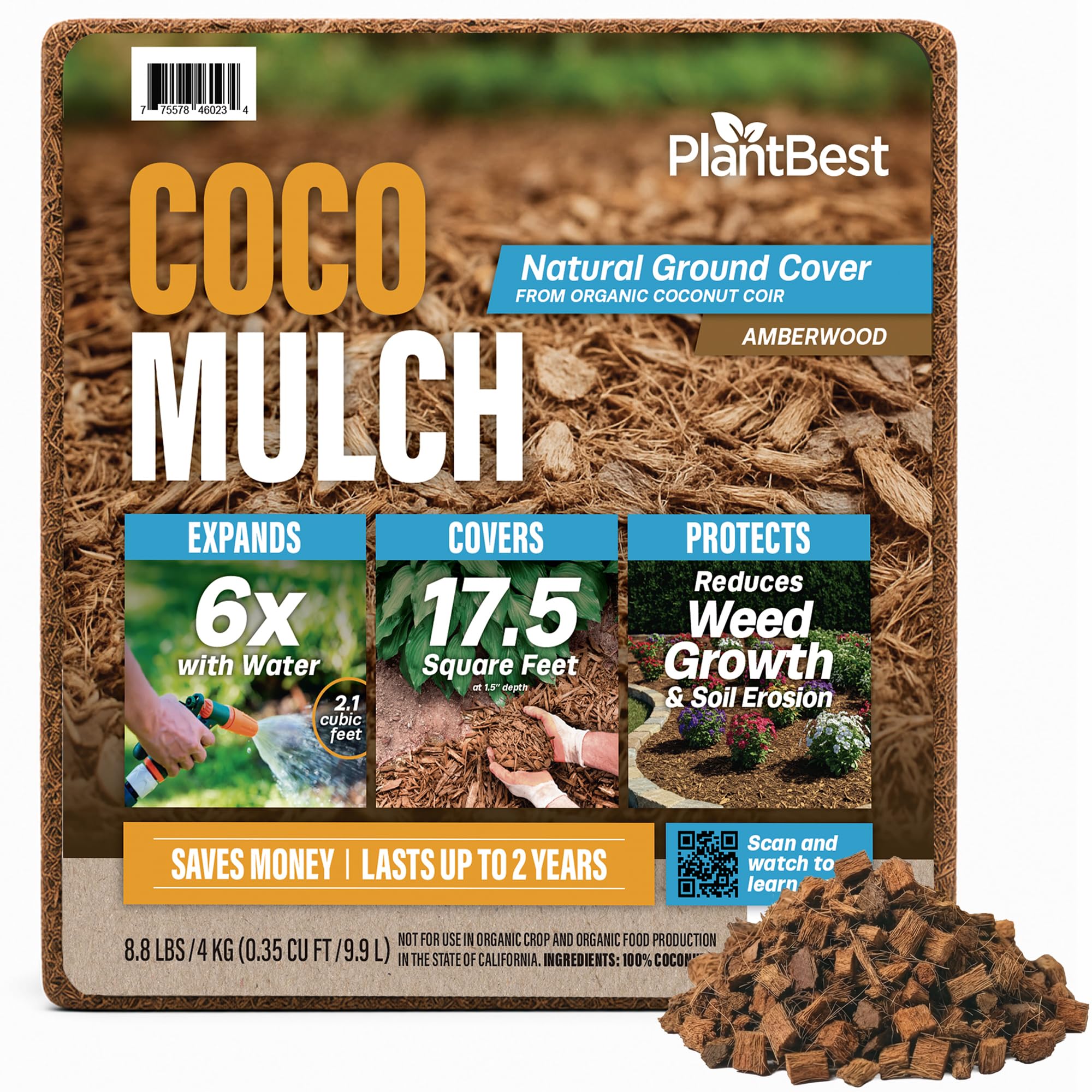
The 9.1-pound block that covers up to 17.5 square feet at a 1.5-inch depth.
This is the biggest single-block coverage in the list: 2.5 cubic feet that covers 17.5 square feet when spread 1.5 inches deep — about a 4-foot-by-4-foot ring around a standard peach tree. The manufacturer claims the mulch lasts up to 2 seasons, so you get a lot of use from one purchase. The coconut fibers and husk chips interlock as they settle, forming a stable layer that resists washing away on slopes or uneven ground.
Owners mention it “retards weed growth” and “reduces watering needs,” with one reviewer stating it lasted over 2 years in an area with 40 inches of annual precipitation. However, the reviews are mixed on ease of use: the block comes as hard, dense cubes that need to be broken apart and soaked. One customer observed the mulch “blows away in wind” despite claims it stays clicked together, and another found weeds grew through it (though they pulled out easily). The block is heavy for its size (8.8 pounds) and requires a wheelbarrow and some hand labor to spread.
At this price point, you are paying for the sheer coverage area. But the mixed reviews on wind resistance and the extra labor to break up the dense block mean it is not the most user-friendly option. If you need to cover a large area and do not mind some prep work, it delivers the most square footage per block.
What is big
- Covers up to 17.5 sq. ft. at 1.5-inch depth — excellent for large tree rings
- Lasts up to 2 seasons, reducing the frequency of re-mulching
- Free from dyes and chemicals, 100% renewable coconut coir
What is tricky
- Mixed reports of blowing away in wind despite manufacturer claims
- Dense cubes require effort to break apart and soak before spreading
Best for: gardeners with a large area to mulch who want maximum coverage from a single block and do not mind manual prep.
Not ideal for: windy locations — you may need to wet it down thoroughly or top it with a heavier material to keep it in place.
Understanding the Specs
Volume and coverage
Mulch volume is measured in gallons, quarts, or cubic feet. For a single peach tree, you want at least 2 to 3 cubic feet of mulch to create a 3- to 4-foot-wide ring that is 3 inches deep. Compressed coco blocks list their expanded volume (like 18 gallons or 2 cubic feet), which tells you how much loose mulch you get after soaking. Loose-fill bags like aspen or pine bark list volume in quarts — 10 quarts equals about 0.33 cubic feet, so you will need several bags for a tree ring.
pH and salt levels
Coconut husk chips have a neutral pH, so they will not make your soil more acidic or alkaline as they decompose. Pine bark is slightly acidic, which is fine for peach trees (they prefer pH 6.0-7.0) but can add up if your soil is already low. Coco chips also have an EC rating (electrical conductivity, which measures salt content). Low EC means low salt content. High-salt coco products can pull moisture away from roots and cause leaf burn, which is why triple-washed or low-EC chips are safer for fruit trees.
FAQ
How thick should I layer mulch around a peach tree?
Can I use regular wood chips from a tree service on peach trees?
Will coco chips blow away in the wind like other lightweight mulches?
How often should I replace mulch around my peach tree?
Does pine bark mulch acidify the soil too much for peach trees?
Should I use rubber mulch around fruit trees?
How much mulch does one compressed coco block cover?
Can I use cocoa bean hulls as mulch for peach trees?
Final Thoughts: The Verdict
If you want one dependable pick, the best mulch for peach trees winner is the Back to the Roots 100% Organic Mulch because it delivers the biggest expansion from a manageable 10-pound block with OMRI organic certification, giving you clean, neutral-pH coco chips that hold moisture and resist compaction. If you want maximum volume per block for the best value, grab the MODELLOR Premium Super Washed Coco Chips — its 18-gallon yield is 20% more than standard bricks. And for container or dwarf peach trees where aeration is the top priority, the standout is the Soil Sunrise Pine Bark Nuggets for their consistent, small chips that keep potted soil airy and well-drained.
How We Picked
We do not accept paid placement. Every pick is matched to a real buyer and a real use-case; we do not hands-on test units.
Sources & Methodology
Specifications: manufacturer listings and product documentation. Review insights: verified customer reviews, as of July 2026. Pricing: not shown on this page (it changes often); check the current price via the retailer link.
As an Amazon Associate, Lawn Gear Lab earns from qualifying purchases. This does not affect which products we feature.