
Specs are compiled from manufacturer listings and verified buyer reviews and can change over time — please confirm the key details on the product page before buying.
You want to compost meat, dairy, and cooked leftovers — the stuff a regular pile or worm bin cannot handle — without the smell or heavy lifting. A Bokashi system does exactly that: it pickles your food waste in an airtight bucket using a special bran full of microbes (tiny living organisms called effective microorganisms), so nothing rots, nothing stinks, and everything turns into rich compost for your garden or houseplants.
I’m Rikta — the founder and writer behind Lawn Gear Lab. This guide is built by comparing the manufacturers’ published specifications and the patterns across verified customer reviews, so you get each pick’s real strengths and trade-offs instead of marketing spin.
The right setup for your kitchen depends on one thing: a solid, leak-proof bucket with a working spigot (a small tap for draining liquid) that seals tight every time. Here is the honest breakdown of the best bokashi composting system for apartments, families, and everyone in between.
Our Picks at a Glance

How To Choose The Best Bokashi Composting System
A Bokashi system looks simple — a bucket, a lid, a spigot (a small tap for draining liquid), and a bag of bran. But the difference between a smooth, no-mess experience and a stinky, leaky headache depends on three things: the seal, the spigot quality, and the capacity that fits your household’s waste.
The Lid Seal Is Everything
Bokashi works because it is an anaerobic (air-free) fermentation (pickling) process. If the lid lets air in, the food rots instead of pickling, and you get smells and flies. Look for a bucket with a rubber gasket (a flexible ring that blocks air) or an airtight lid that clicks or snaps into place without wiggling. A loose lid is the number one complaint buyers report across every brand.
Spigot Quality and Mesh Filters
The spigot (the small tap for draining liquid) is where many budget bins fail. A loose or brittle faucet can leak or fall off entirely, flooding your cabinet with fermented liquid. The best systems use a thick plastic spigot you can tighten with a nut from inside the bucket. Several buyers also add a small stainless-steel mesh screen (often called a “cigar screen”) over the spigot hole to stop food chunks from clogging the drain.
Capacity and the Two-Bin Strategy
A standard bucket holds about 5 gallons, which is a good size for a household of two to four people. Most homes generate enough waste to fill a bin in two to three weeks. The smartest approach is to buy two bins: fill one, let it ferment for two weeks while you fill the second, then empty the first into your garden or compost pile (a heap where organic material breaks down into soil). If you stick with a single bin, you may need to store fermented waste in a bag or second container before it is ready.
Quick Comparison
| Model | Best For | Capacity | Dimensions | Bran Included | Amazon |
|---|---|---|---|---|---|
| Premium Bokashi Starter Kit (Bokashi Living)★ Best Overall | Starter Kit Value | — | 16.93″ x 12.2″ x 12.6″ | 2.2 lb | Amazon |
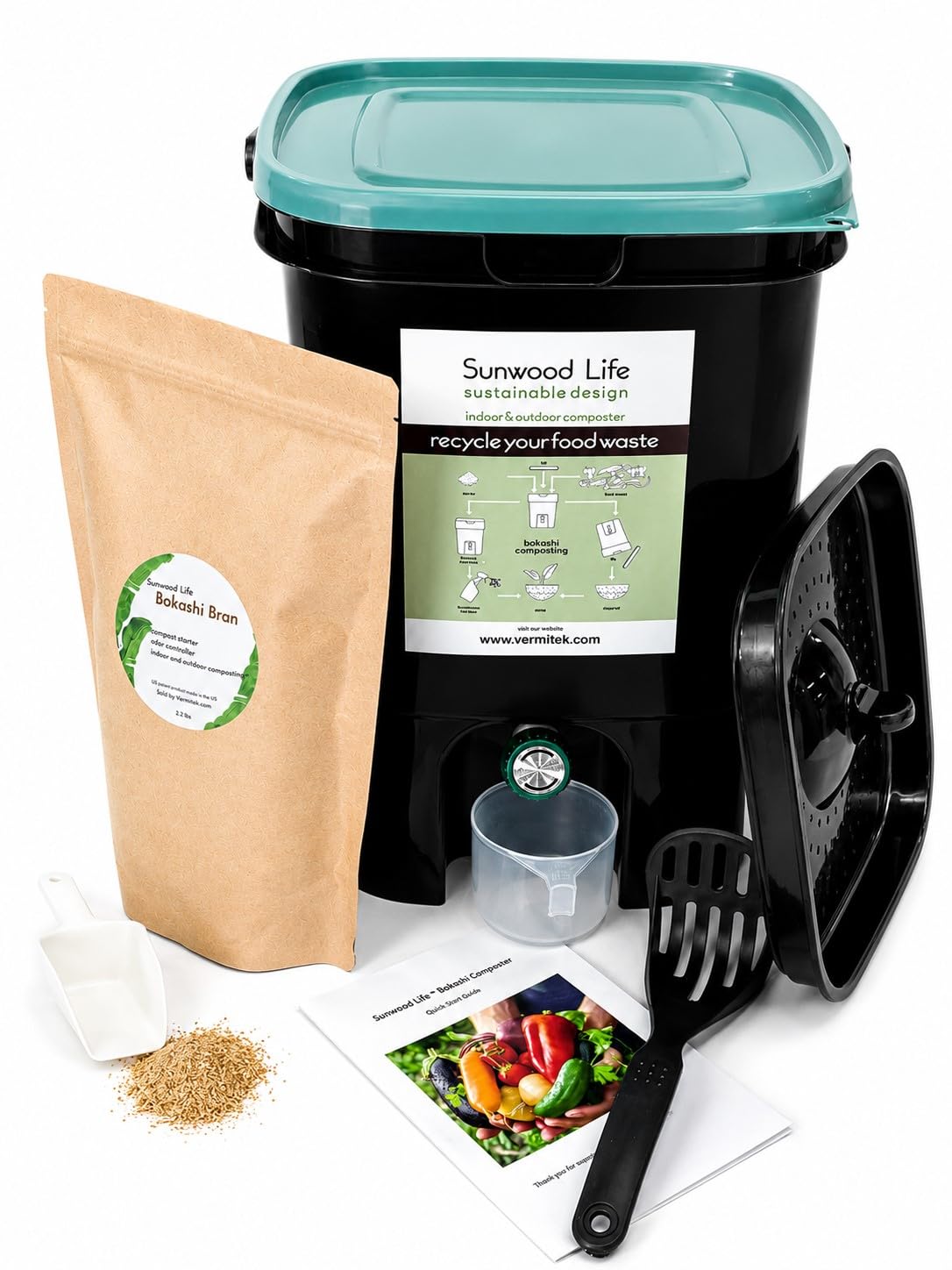
| Sunwood Life Bokashi Composting KitAlso Great | Best Overall | 20 L | 12″ x 12″ x 17″ | 2.2 lb | Amazon |
| TeraGanix Bokashi Compost Bin 2-Pack | Premium Duo | 2.5 gal each | — | 2 lb | Amazon |
| SCD Probiotics Indoor Composter Bucket | Budget-Friendly | 5 gal | 10″ x 10″ x 16″ | No (sold separately) | Amazon |
| ecocultivatify 20L Bokashi Compost Bin | Large Capacity | 20 L (5.28 gal) | 11.4″ x 11.4″ x 16.54″ | 500 g | Amazon |
In-Depth Reviews
1. Premium Bokashi Composting Starter Kit (Bokashi Living)
Our pick — over 4★ from 200+ verified ratings; the strongest balance of quality and price.
The complete starter package that leaves nothing to buy separately — bran, instructions, and a sturdy bin.
Bokashi Living designed this kit for absolute beginners: one bin measuring 16.93 x 12.2 x 12.6 inches, 2.2 pounds of their own premium bran, and a detailed printed guide. The manufacturer claims the bran alone supports at least six full bucket cycles, which for a small kitchen translates to about nine months of use. That bran represents real value compared to the SCD bucket below, which does not include any starter bran at all.
Buyers who gave it five stars praise the compact indoor design and the complete lack of smell when the lid is closed. Reviewers who got a second bin for continuous fermentation (pickling) found the system nearly perfect. However, one buyer mentioned that on the fourth use the bucket began leaking from the spigot — a recurring weak point the maker acknowledges. The lid and spigot are upgraded compared to generic copies, but the leak issue appears on a minority of units after repeated fermentation cycles.
Compared to the TeraGanix two-pack below, the Bokashi Living kit comes with more bran (2.2 lb versus 2 lb) and a single bin at a mid-range price. That makes it a lower-risk entry for households that generate moderate food waste and want a tested starter system with customer support behind it.
Premium build quality
- Comes with enough bran for roughly 9 months of use
- Sturdy rectangular bin fits under sinks well
- Complete printed instructions for beginners
Higher price
- Some units develop spigot leaks after a few uses
- Single bin means you need a second to avoid interruption
Verdict: An excellent starter bundle with more bran than any other single-bin kit — ideal if you want a single, no-fuss purchase and a brand that stands behind the product.
Keep in mind: Buy a second bucket if your household produces a lot of waste, and check the spigot tightness before every new fermentation cycle.
2. Sunwood Life Bokashi Composting Kit
The bucket that keeps its seal and delivers on the promise of zero odor.
The BPA-free (a type of plastic without bisphenol-A, a chemical some worry about) body feels solid, and the spigot (tap) works without clogging. One reviewer noted they added a small mesh cigar screen to the spigot as a precaution against food sludge.
At 12 x 12 x 17 inches, the square shape lets the Sunwood Life fit neatly under a standard sink. That is a noticeable improvement over the taller ecocultivatify 20L bin (11.4 x 11.4 x 16.54 inches). The Sunwood Life is slightly shorter and squatter, giving it a more stable footprint on a countertop or cabinet floor. Reviewers report the bin is two-thirds full after a week with no leaks, cracks, or smells. The main trade-off buyers mention: the spigot can be tricky to install tightly, and a few units leaked at the washer (a rubber ring inside the spigot) if not torqued down fully.
Bokashi leachate (the liquid byproduct, also called “Bokashi tea”) works as a houseplant fertilizer when diluted heavily — about one teaspoon per gallon of water, according to the manufacturer. The kit includes a small countertop bucket so you do not have to open the main bin every time you add scraps.
Complete starter kit
- Airtight lid keeps smells inside
- Large bag of bran (2.2 lb) included for months of use
- Spigot works well without clogging
- Includes small kitchen pail for daily scraps
Small bin size
- Spigot nut can be hard to tighten fully
- Occasional leak reports if washer is loose
Our pick: The all-around best entry point — reliable seal, large bran supply, and a proven track record across over 200 ratings.
One catch: You need to tighten the spigot carefully during setup, and a few buyers added a mesh filter to prevent future clogs.
3. TeraGanix Bokashi Compost Bin + 2 Lb Bokashi Bran (2-Pack)
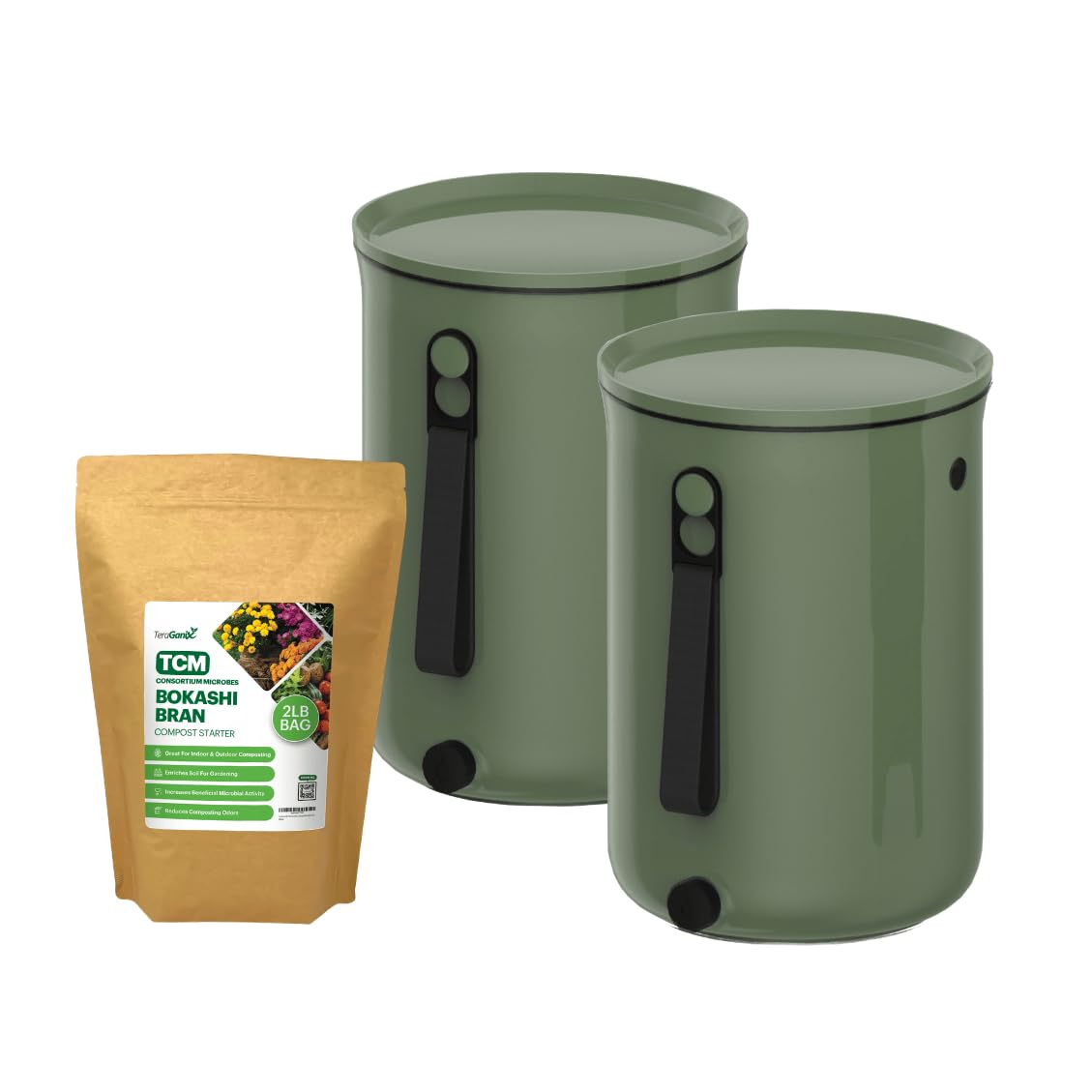
Two stackable buckets designed for continuous fermentation without odor.
TeraGanix takes a different approach with its Organko 2 system: each bin holds 2.5 gallons, smaller than the standard 5-gallon buckets from other brands. But paired together in a two-pack, you get the same total capacity with the advantage of a sequential system. The olive-colored bins stack neatly on top of each other when not in use, saving cabinet space — a design touch you will not find on the standard round buckets from SCD or ecocultivatify.
The bins feature an airtight lid with a folding plunger lid inside that compresses scraps and seals the anaerobic (air-free) chamber. Owners mention it produces 5 to 20 milliliters of fermented liquid per day when filled, and the liquid smells like acetone (nail polish remover), vinegar, or lactic acid — a normal sign of healthy fermentation. The biggest complaint: the top lid does not snap on firmly and can fall off when you lift the bucket. Despite that, most owners say the smell stays contained and the design is compact enough to hide on a countertop or under a sink.
Compared head-to-head with the Sunwood Life kit, the TeraGanix unit uses consortium microbes (a mix of different microorganisms) for a slightly different fermentation process. It includes two bins from the start, which is a key advantage if you want to fill one while the other ferments. The bran quantity (2 lb) is slightly lower than the 2.2 lb bag in the Bokashi Living kit, but it is still enough for several cycles. One owner noted that blending scraps into a liquid and leaving the bucket open with a fan solved early smell issues — a tip for anyone who struggles with the initial adjustment.
Two-bin value
- Two bins allow continuous filling and fermenting
- Stackable design saves storage space
- Airtight folding plunger compresses food waste effectively
Bulkier storage
- Top lid can fall off if lifted without care
- Smaller capacity (2.5 gal) may fill quickly for larger families
- Spigot produces only a small daily volume of liquid
Best for: Homes that want a start-to-finish dual-bucket system without buying a second bin later — the stackable design and small footprint are great for tight cabinets.
Not ideal if: You generate a lot of food waste quickly, as the smaller buckets will need more frequent emptying than a standard 5-gallon bin.
4. SCD Probiotics Indoor Composter Bucket – 5 Gallon

A bare-bones 5-gallon bucket that works if you already have a favorite bran brand.
This is the simplest system on the list: a tan, BPA-free 5-gallon bucket, a spigot (tap), and a plastic strainer grate that sits at the bottom to separate food waste from accumulating liquid. At 10 x 10 x 16 inches, the round bucket is narrower and taller than the rectangular Bokashi Living unit (16.93 x 12.2 x 12.6 inches). That means it takes up less counter width but may feel tippy if packed unevenly. It comes with zero bran — you have to buy that separately — so the total cost of entry is higher than it first appears unless you already own All Seasons Bokashi or make your own bran.
Customers note mixed experiences. Several owners who bought used or kept the bucket outside for three years love the durability and the liquid fertilizer output. But one disappointed customer wrote that the spigot fell off on first use, causing leaks, and that the bucket needs weight on the lid to seal properly (a bag of beans was suggested as a DIY fix). The strainer grate is a nice addition for liquid separation, but the lack of an airtight lid from the start is a glaring omission for a Bokashi system that relies on anaerobic (air-free) conditions.
Compared to the Sunwood Life kit, the SCD bucket saves you money upfront but forces you to buy bran separately and potentially jerry-rig the seal. For the price difference, the Sunwood Life kit delivers a better out-of-the-box experience with a proper gasket (a rubber ring for an airtight seal) and included bran.
Large capacity
- Large 5-gallon capacity without a high price tag
- Plastic strainer keeps food waste above liquid
- Simple design is easy to clean
Heavy when full
- No bran included — adds hidden cost
- Spigot may fall off or leak on first use (reviewers point out)
- Lid does not seal airtight without extra weight
Reach for this if: You are comfortable sourcing your own bokashi bran and do not mind adding a weight on the lid to keep odors down — you get a lot of capacity for the dollar.
Look elsewhere if: You want a no-fuss, ready-to-go system with a guaranteed seal and included starter materials. The Sunwood Life kit delivers a much smoother start for a moderate step up in cost.
5. ecocultivatify 20L Bokashi Compost Bin
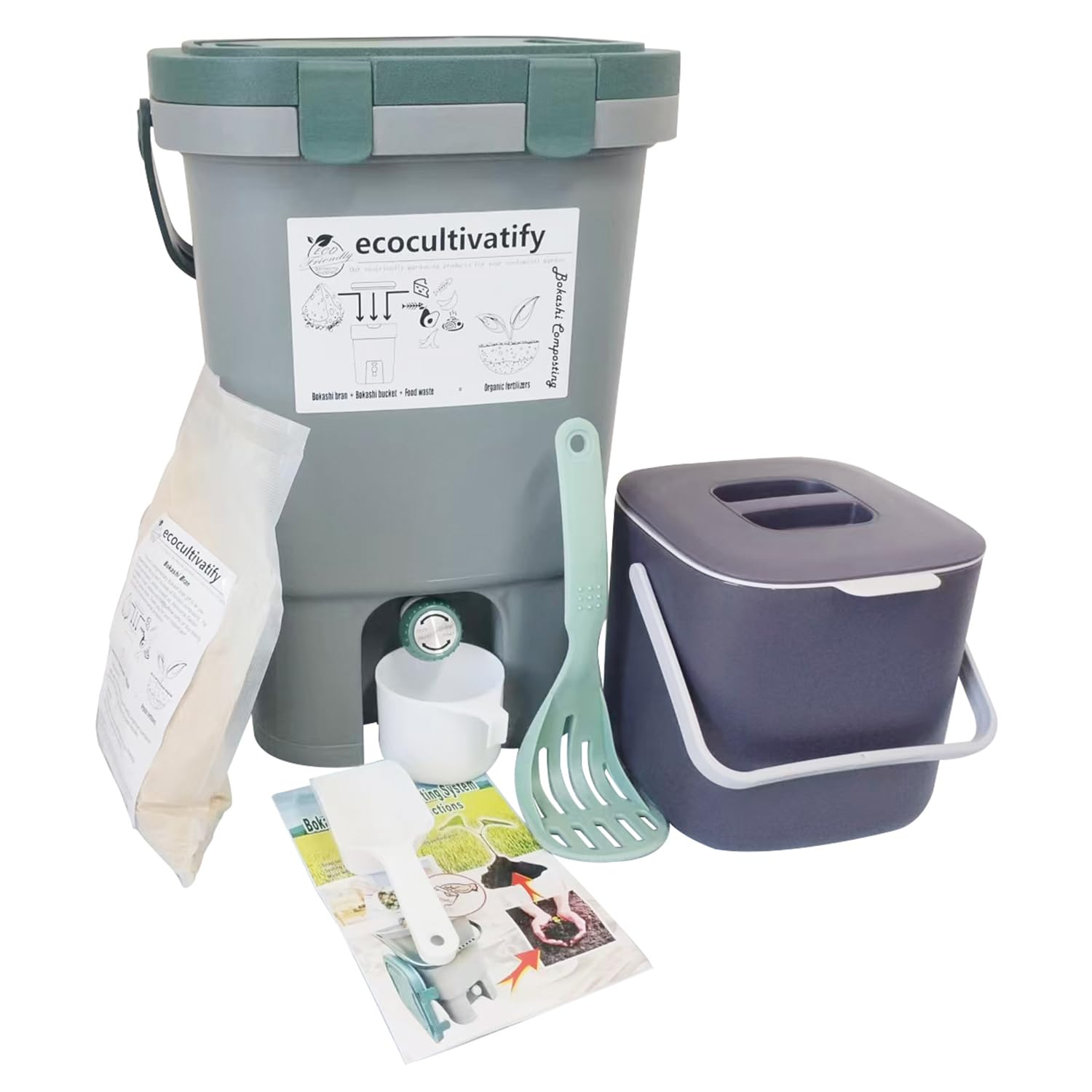
A tall, high-capacity bin with a full starter accessory set for the price-conscious composter.
This grey 20-liter bin (which the brand lists as both 18.8L and 20L depending on the variant) offers the same internal volume as the Sunwood Life bucket but in a noticeably taller package: 11.4 x 11.4 x 16.54 inches compared to the Sunwood’s 12 x 12 x 17 inches. The extra height makes it better suited for a countertop rather than a tight under-sink cabinet. It includes 500 grams of bokashi bran, plus a small kitchen pail, a presser tool, a bran shovel, and a measuring cup — a generous starter bundle that rivals the Bokashi Living kit for completeness.
Buyers are split. One reviewer called it “awesome” and said it works well with no need for assembly. Another noted that the lid broke as soon as they took it out of the container and opened it, suggesting the plastic hinge or locking mechanism is fragile on some units. A months-long user reported the container does not leak, but the lid is hard to get on and off — a potential problem for anyone with limited hand strength. The rubber ring gasket (a flexible ring that blocks air) is designed to prevent odor leaks, and most buyers confirm the system is odor-free when sealed properly.
Compared directly to the TeraGanix two-pack, this single bin offers twice the capacity per bin but half the flexibility of a two-bucket system. If you fill it completely, you have no backup bucket for the two-week fermentation period. The ecocultivatify bundle is a strong value for a single-bin starter, but the lid durability concerns (a broken lid on first use reported by one buyer) are a meaningful risk that the Sunwood Life kit generally avoids.
Budget-friendly
- Large 20-liter capacity handles heavy food waste volume
- Includes almost everything: bran, pail, presser, measuring cup
- Rubber gasket helps keep odors inside
Thinner plastic
- Some lids break on first use, indicating quality control issues
- Tough lid removal reported after long-term use
- No spare bucket for continuous fermentation
Verdict: A well-equipped single-bin bundle that is ready to go from the start — but check the lid immediately for cracks or stiffness, as this is the most common failure point reported.
Consider instead: The Sunwood Life kit if you want a tested lid seal and a lower risk of breakage; the TeraGanix two-pack if you need sequential fermentation without buying a second bucket later.
Understanding the Specs
Anaerobic Fermentation & the Airtight Seal
Bokashi is not “composting” in the traditional sense — it is a fermentation (pickling) process that happens without oxygen. For it to work, the bin must be completely airtight. A loose lid lets air in, and the food rots instead of pickling, producing foul smells and attracting flies. Every bin uses a rubber gasket (a flexible ring that blocks air) or a compression seal to block air exchange. This is why a sturdy lid that clicks or snaps firmly into place is the single most important spec — more important than size, color, or brand. If the seal fails, the system fails.
Bokashi Bran & the Role of Microbes
The bran is a dry, molasses-like material coated with effective microorganisms (tiny living organisms: lactic acid bacteria, yeast, and photosynthetic bacteria). You sprinkle a thin layer (about one tablespoon per inch of food waste) over every new addition of scraps. These microbes outcompete the rotting bacteria by producing lactic acid (a natural acid found in yogurt and sourdough), which pickles the food and prevents decay. A typical 2.2-pound bag lasts through 6 to 10 full bucket loads, depending on how heavily you sprinkle. Some brands sell bran by itself; others include it in the kit. If a kit does not come with bran, factor in an extra cost for your first supply.
FAQ
What can I put in a Bokashi bin that I cannot put in a regular compost pile?
Does a Bokashi bin smell bad inside the house?
How long does it take for Bokashi to turn into compost?
What do I do with the liquid that drains out of the spigot?
Can I use a Bokashi bin outdoors or in winter?
How often do I need to drain the liquid?
Is one bucket enough, or do I need two?
Can worms live in a Bokashi bin?
My bucket is leaking, what should I do?
Can I make my own Bokashi bran at home?
Final Thoughts: The Verdict
Across the board, the best bokashi composting system winner is the Sunwood Life Bokashi Composting Kit because it combines a 20-liter airtight bin with a large bag of bran and a track record of minimal leaks across hundreds of ratings. If you want a complete two-bucket system for continuous fermentation right from day one, grab the TeraGanix Bokashi Compost Bin 2-Pack. And for a budget-friendly starter kit that includes everything except a bran supply, the Premium Bokashi Starter Kit delivers a full beginner experience with enough bran to last nine months in a small kitchen.
How We Picked
We do not accept paid placement. Every pick is matched to a real buyer and a real use-case; we do not hands-on test units.
Sources & Methodology
Specifications: manufacturer listings and product documentation. Review insights: verified customer reviews, as of July 2026. Pricing: not shown on this page (it changes often); check the current price via the retailer link.
As an Amazon Associate, Lawn Gear Lab earns from qualifying purchases. This does not affect which products we feature.