
Specs are compiled from manufacturer listings and verified buyer reviews and can change over time — please confirm the key details on the product page before buying.
Centipede grass has a unique personality — give it too much nitrogen or phosphorus and it turns yellow, gets sick, or grows into a spongy mess you can’t mow cleanly. The trick to a dark green, weed-free centipede lawn is picking a fertilizer with the right N-P-K ratio and iron content, applied at the right time of year. This guide compares four formulations that actually fit centipede’s low-input needs, so you get the color and stress protection without the chemistry mistake.
I’m Rikta — the founder and writer behind Lawn Gear Lab. This guide is built by comparing the manufacturers’ published specifications and the patterns across verified customer reviews, so you get each pick’s real strengths and trade-offs instead of marketing spin.
The four fertilizers here are either labeled specifically for centipede or share the low-nitrogen, phosphorus-free, high-potassium profile centipede thrives on. If you are shopping for fertilizer for centipede lawn, the table below shows coverage, bag weight, and nutrient ratios side-by-side so you can match the product to your yard size quickly.
Our Picks at a Glance

How To Choose The Best Fertilizer For Centipede Lawn
Centipede grass is a low‑maintenance warm‑season grass that does not tolerate heavy feeding. Picking the wrong fertilizer can cause that yellow cast or rapid weak growth that makes centipede look thin and sickly. Focus on three things: the N-P-K ratio, the release type, and the iron content.
N-P-K Ratio: The Middle Number Must Be Zero
Phosphorus (the second number) is almost never needed for centipede lawns unless a soil test says otherwise. High phosphorus can actually trigger yellowing and root problems. Look for a ratio where the middle number is zero — something like 15-0-15 or 10-0-20. The first number (nitrogen) should stay moderate, typically 5 to 15 percent, to avoid excess top growth that requires mowing every few days.
Slow‑Release Nitrogen vs. Quick‑Release
Centipede grass responds best to slow‑release nitrogen because it gets a steady supply over weeks instead of a big rush that burns the leaf tips. Slow‑release also reduces the risk of that sudden green‑up followed by yellowing. Products that list a percentage of slow‑release (water‑insoluble nitrogen or polymer‑coated) are safer for centipede than straight urea fertilizers.
Iron and Potassium for Color and Toughness
Iron gives centipede that deep green without pushing rapid growth. A fertilizer with 2 to 4 percent iron can make a big visual difference. Potassium (the third number) helps the grass handle heat, drought, and foot traffic — centipede is already a low‑traffic grass, but a high potassium number like 20 percent helps it bounce back from summer stress.
Quick Comparison
| Model | Best For | N-P-K Ratio | Coverage | Weight | Amazon |
|---|---|---|---|---|---|
| Yard Mastery 7-0-20 Stress Blend★ Best Overall | Large‑area summer stress recovery | 7-0-20 | 15,000 sq ft | 45 lbs | Amazon |
| Fertilome Centipede Lawn Fertilizer | Centipede‑specific granular feed | 15-0-15 | 5,000 sq ft | 16 lbs | Amazon |
| Lawn Synergy 10-0-20 Emerald | Deep green without excess growth | 10-0-20 | 4,500 sq ft | 18 lbs | Amazon |
| Simple Lawn Solutions 15-0-15 Liquid | Quick‑absorbing spot treatment | 15-0-15 | Full (mix‑your‑own) | 32 fl oz | Amazon |
In‑Depth Reviews
1. Yard Mastery 7-0-20 Summer Lawn and Turf Stress Granular Fertilizer Blend (45 lb)
Our pick — over 4.5★ from 500+ verified ratings; the strongest balance of quality and price.
One bag covers 15,000 square feet with a low‑nitrogen, high‑iron formula that revives stressed centipede fast.
This is the coverage king of the group — a single 45‑pound bag blankets 15,000 square feet, which is three times the coverage of the Fertilome bag above. The N-P-K ratio is 7-0-20, meaning very low nitrogen (7%) and high potassium (20%), which is exactly what centipede needs during the hot summer months when you want to reduce stress and encourage deep roots without pushing a ton of top growth. It also contains 3% iron and Bio-Nite, a proprietary additive that helps the fertilizer release slowly so the grass gets a steady feed rather than a quick spike that burns the tips.
Buyers report that this mix works well on centipede and zoysia along the North Carolina coast (zone 8B), reviving centipede from summer stress and yellowing, and helping newly plugged zoysia establish. One reviewer noted the grass perked up within four days. Use it when temperatures are below 80°F and water it in for three to four days after application to get the best results.
Triple the coverage: At 15,000 sq ft, this bag covers 3.0x the area of the Fertilome 5,000 sq ft bag, making it the obvious choice for larger centipede lawns or multi‑lot properties.
Weight trade‑off: The 45‑pound bag is 2.8x heavier than the Fertilome 16‑pound bag, so expect a heavier carry from the garage to the spreader.
Best for big lawns: If you have half an acre or more of centipede and want one bag per feeding, this 15,000 sq ft coverage saves you from buying multiple smaller bags.
Skip if: You have a small yard (under 5,000 sq ft) — the 45‑pound bag is overkill and will take a long time to use up before it clumps.
2. Fertilome (13767) Centipede Lawn Fertilizer 15-0-15 (16 lbs.)
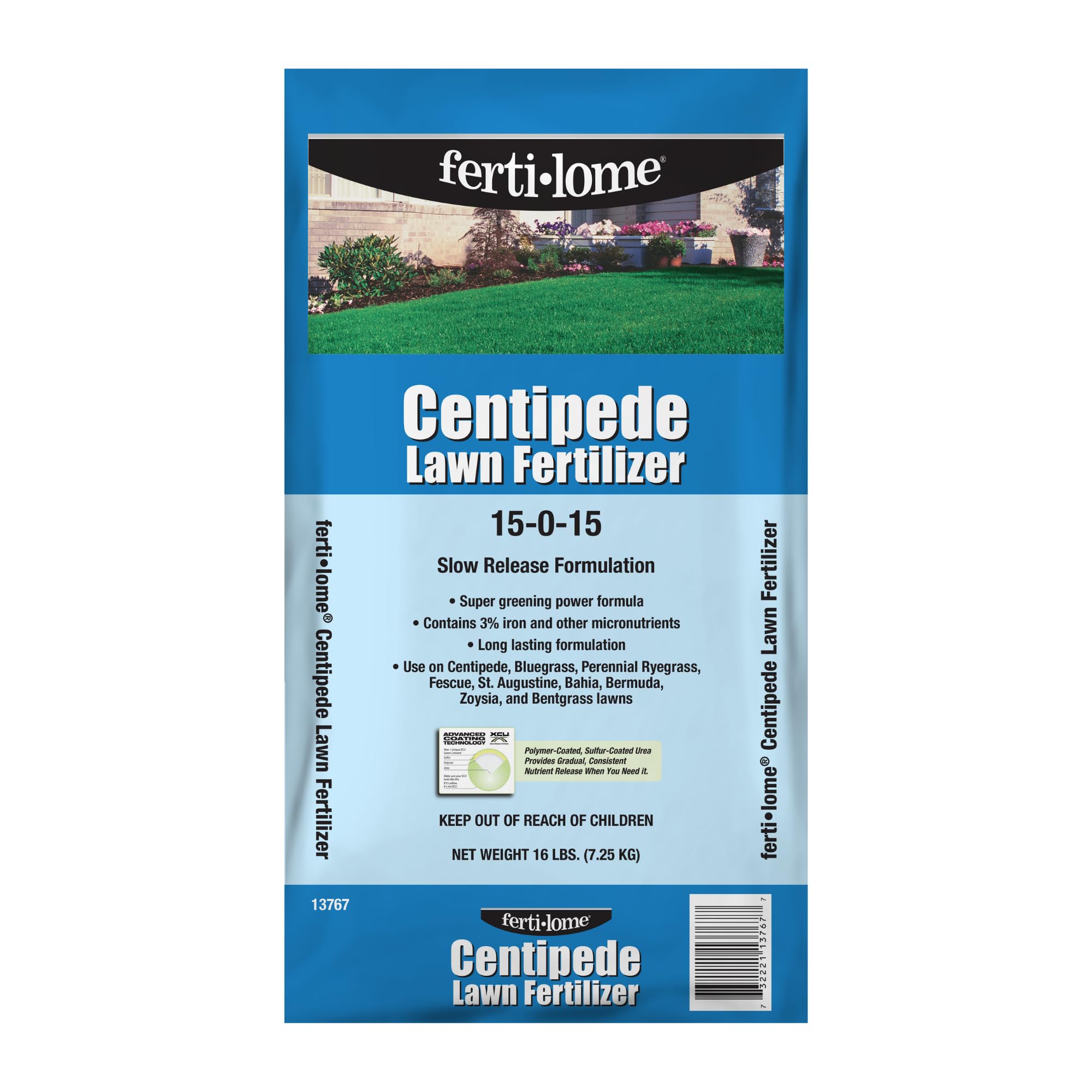
The go‑to granular formula designed only for centipede, proven in extreme Southern heat.
This 16‑pound bag is the only pick in this lineup that is literally named for centipede grass, and the N-P-K ratio of 15-0-15 tells you exactly why it works — zero phosphorus (the middle number) means no risk of the yellowing that high‑phosphate fertilizers trigger on centipede. The slow‑release nitrogen reduces the chance of fertilizer burn, which is a real worry when summer temperatures climb and the grass is already stressed. It covers up to 5,000 square feet, so it fits a typical ¼‑acre lot with one bag, and the granular form lets you use a standard spreader for even application.
Buyers in hot climates report impressive results — one reviewer in North Carolina during July noted the grass stayed thick and deep green even through extreme heat, filling in bare spots and building a strong root system. The same person said the lawn outperformed the neighbor’s fertilizer regimen, which is a solid real‑world test against other brands. A second reviewer simply wrote “be ready to mow,” meaning the grass responds fast once the nutrients hit. The catch is coverage — at 5,000 sq ft, this bag covers only a third of what the Yard Mastery 7-0-20 covers (5,000 vs. 15,000 sq ft), so if you have a larger lawn you will need multiple bags or pick the larger‑coverage product.
Labeled‑for‑centipede: This fertilizer literally says “Centipede Lawn Fertilizer on the bag, so there is zero guesswork about whether the ratios fit your grass type.
Coverage gap vs. larger bags: At 5,000 sq ft, it covers only a third of the ground the Yard Mastery 7-0-20 covers (5,000 vs. 15,000 sq ft) — bigger lawns will need two or three bags.
Reach for this if: You want a no‑guesswork centipede‑specific granular fertilizer that has proven itself in hot, humid Southern summers.
Look elsewhere if: Your lawn is larger than 5,000 square feet and you prefer buying one bag per feeding instead of two or three.
3. Lawn Synergy 10-0-20 Emerald Lawn Fertilizer 18 lbs
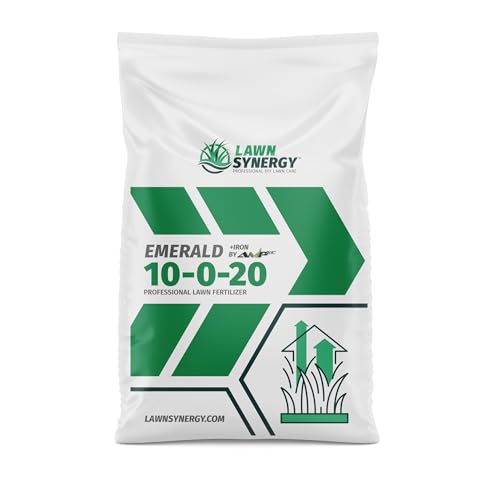
A slow‑release blend with micronutrients that turns centipede a dark green within a week without forcing rapid growth.
This 18‑pound bag covers up to 4,500 square feet with a ratio of 10-0-20. The 10% nitrogen is moderate enough for centipede — not as low as the Yard Mastery 7% but still safe — and the 0% phosphorus keeps the grass from yellowing. The big selling point here is the 45% slow‑release nitrogen: nearly half the nitrogen is coated to release over roughly 8 weeks, which means the grass gets steady color without a sudden surge that forces you to mow every few days. It also includes an iron and micronutrient package for that deep green look without added top growth.
One buyer mentioned that the lawn turned a deep green within a week after application and said they would definitely purchase again. Another reviewer noted that it is a great product if a soil test shows too much phosphorus in the soil — the zero‑phosphorus formula means you are not adding to the problem. Apply it between May and August every six weeks for warm‑season centipede. The 18‑pound weight is manageable to carry, but coverage is the smallest of the granular options (4,500 sq ft), so larger lawns will need multiple bags.
What stands out
- 45% of nitrogen is slow‑release, giving you up to eight weeks of steady feeding without a growth spike
- Iron and micronutrient package delivers fast visual greening (owners mention results within one week)
- Zero phosphorus, so it is safe for centipede even if your soil test shows high phosphorus already
The trade‑off
- Coverage is 4,500 sq ft, which is the smallest of the granular options — large lawns need two or more bags
Perfect for small-to-medium yards: If you have under 5,000 sq ft of centipede and want a slow‑release formula that greens up fast without requiring constant mowing, this is a strong match.
Not for big acreage: With only 4,500 sq ft per bag, a half‑acre lawn (21,780 sq ft) would need four to five bags, making it less convenient than the 15,000 sq ft Yard Mastery bag.
4. Simple Lawn Solutions 15-0-15 Liquid Fertilizer (1 Quart)

A concentrated liquid you mix yourself for quick‑acting nitrogen and potassium on centipede that needs a fast color boost.
This quart (32 fluid ounces) is a liquid concentrate with a 15-0-15 ratio, plus humic acid (a soil conditioner derived from leonardite that helps roots absorb nutrients). It is phosphorus‑free, which is critical for centipede, and the liquid form means the nitrogen and potassium become available to the grass almost immediately — useful if your centipede is pale from a summer stress period and you want a quick green‑up between granular feedings. The maker suggests using it with a hose‑end sprayer, backpack sprayer, or watering can, which gives you flexibility for spot‑treating thin areas or applying to a whole small lawn.
Buyers using it on centipede in hot climates have applied 10 ounces every two weeks (slightly above the recommended rate) to address low nitrogen and potassium from a soil test, and reported a green, healthy lawn. Another reviewer in South Texas with days over 100°F combined it with aeration, proper mowing, and fungicide to turn the ugliest lawn on the block into one of the best. The liquid form does require more frequent applications — it does not have the slow‑release coating of a granular — so plan to reapply every two to four weeks during the growing season. The 32‑ounce bottle covers a full lawn if mixed correctly, so it is economical for small to medium spots.
Why choose liquid
- Concentrated liquid delivers nitrogen and potassium to the grass immediately — you see color changes within days
- Phosphorus‑free and includes humic acid for better root uptake
- Versatile application (sprayer or watering can) makes spot‑treating easy
Consider this
- Needs reapplication every two to four weeks — no single‑application slow‑release convenience like granular options
- Liquid must be mixed each time, so it is less set‑and‑forget than spreading granules
Good for fast fixes: If your centipede is pale from summer stress and you want a quick green‑up between granular feeding cycles, this liquid concentrate works fast.
Not for hands‑off feeding: You must mix and spray every couple of weeks, so if you prefer broadcasting a bag once and forgetting it, a granular option will suit you better.
Understanding the Specs
N-P-K Numbers (What the Three Hyphenated Numbers Mean)
The three numbers on a fertilizer bag — for example 15-0-15 — stand for Nitrogen, Phosphorus, and Potassium (in that order). Centipede grass needs the middle number to be zero (0) because phosphorus can build up in the soil and actually cause centipede to yellow and struggle. The first number (nitrogen) fuels green growth, but too much nitrogen (above about 15 percent) pushes the grass too fast and forces you to mow every few days. The third number (potassium) helps the grass handle heat, drought, and disease. For centipede, look for a ratio like 15-0-15, 10-0-20, or 7-0-20 — always zero in the middle.
Slow-Release Nitrogen vs. Quick-Release
Slow-release nitrogen is coated or in a form that the lawn absorbs gradually over weeks rather than all at once. For centipede, slow-release is safer because it reduces the risk of fertilizer burn — that brown or yellow leaf tip you see after a heavy quick‑release dose. Some bags list a percentage of slow‑release nitrogen (like “45% slow‑release” on the Lawn Synergy bag). Granules are generally slower than liquids, but even among granules, a product with a higher slow‑release percentage means fewer applications and less risk of surge growth.
FAQ
Can I use a general lawn fertilizer on centipede grass?
How often should I fertilize centipede grass?
What N-P-K ratio is best for centipede grass?
Will fertilizer with iron make centipede grass darker green?
Should I use liquid or granular fertilizer for centipede?
Can I apply centipede fertilizer when it is hot outside?
How much fertilizer do I need per square foot for centipede?
Is it okay to fertilize centipede grass in the fall?
What happens if I accidentally use a fertilizer with phosphorus on centipede?
Can I fertilize centipede right after seeding?
Final Thoughts: The Verdict
If you want one dependable pick, the fertilizer for centipede lawn winner is the Fertilome Centipede Lawn Fertilizer because it is specifically labeled for centipede with the right 15-0-15 ratio, proven in extreme Southern heat, and costs less per bag than the larger‑coverage options while still covering 5,000 sq ft. If you want deep greens without pushing excess growth, grab the Lawn Synergy 10-0-20 Emerald with its 45% slow‑release nitrogen. And for the largest centipede lawns where one bag per feeding matters, the standout is the Yard Mastery 7-0-20 Stress Blend with 15,000 sq ft coverage per bag.
How We Picked
We do not accept paid placement. Every pick is matched to a real buyer and a real use-case; we do not hands-on test units.
Sources & Methodology
Specifications: manufacturer listings and product documentation. Review insights: verified customer reviews, as of July 2026. Pricing: not shown on this page (it changes often); check the current price via the retailer link.
As an Amazon Associate, Lawn Gear Lab earns from qualifying purchases. This does not affect which products we feature.