
Specs are compiled from manufacturer listings and verified buyer reviews and can change over time — please confirm the key details on the product page before buying.
If your tomato plants are all leaves and no fruit, or worse — you spot black sunken spots on the bottom of your first ripe tomatoes — you have a nutrient mismatch, not bad luck. The challenge is that different brands push growth, roots, or blossoms in completely different ways, and the three-number ratio on the bag (called N-P-K) changes everything about what happens underground and on the vine.
I’m Rikta — the founder and writer behind Lawn Gear Lab. This guide is built by comparing the manufacturers’ published specifications and the patterns across verified customer reviews, so you get each pick’s real strengths and trade-offs instead of marketing spin.
These seven picks cover powders, granules, liquid supplements, and spikes so you can match the feeding method to your specific growing style with nutrients for tomato plants that solve real problems like yellowing leaves, blossom end rot, and low yields.
Our Picks at a Glance


How To Choose The Best Nutrients For Tomato Plants
Tomatoes are heavy feeders, meaning they pull a lot from the soil over a single season. Without the right balance, you end up with bushy plants that never set fruit or with fruit that rots on the vine before it ripens.
N-P-K Ratio — The Three Numbers That Matter
The first number is Nitrogen (N) for green leafy growth, the second is Phosphorus (P) for flowers and fruit set, and the third is Potassium (K) for strong roots and overall plant health. A tomato-specific formula usually has a higher middle number to push fruit production. A balanced 8-8-8 works well for general feeding, while a 4-18-38 sends a strong signal for blooming.
Granule, Spike, or Powder — How It Reaches the Roots
Granules sit on the soil surface and release nutrients as you water. Spikes go directly into the root zone and feed for weeks. Powders dissolve in water and deliver food immediately to the roots. Your watering habits and whether you grow in soil, hydroponics, or raised beds determine which form works best.
Organic vs Synthetic Sources
Organic fertilizers (like fish bone meal or kelp) feed the soil microbes, which in turn feed the plant. They release slowly and improve soil structure over time. Synthetic formulas (like MasterBlend) are water-soluble and give the plant an immediate hit of exact nutrients — ideal for hydroponics and for correcting a specific deficiency fast.
Quick Comparison
| Model | Best For | N-P-K Ratio | Form | Weight | Amazon |
|---|---|---|---|---|---|
| Down To Earth All Natural★ Best Overall | Certified organic all-purpose feeding | 4-6-2 | Granules | 5 lb | Amazon |
| FoxFarm Happy FrogAlso Great | Premium organic with calcium & fungi | 5-7-3 | Granules | 4 lb | Amazon |
| Jobe’s Tomato Spikes | Set-and-forget root zone feeding | 6-18-6 | Spikes | 8.8 oz | Amazon |
| MasterBlend 4-18-38 | Hydroponics & high-phosphorus blooms | 12-6-12 | Powder | 1 lb | Amazon |
| Lilly Miller Morcrop | Reliable granular for greenhouse tomatoes | 5-10-10 | Granules | 4 lb | Amazon |
| Purely Organic 8-8-8 | Budget-friendly balanced feeding | 8-8-8 | Granules | 2.3 lb | Amazon |
| ENVY CalMag+ | Blossom end rot prevention & supplement | 4-0-0 | Liquid | 32 fl oz | Amazon |
In‑Depth Reviews
1. Down To Earth All Natural Fertilizers Organic All Purpose Tomato & Vegetable Mix
Our pick — over 4.5★ from 900+ verified ratings; the strongest balance of quality and price.
A 5-pound box of gentle organic granules that revived plants in two weeks.
This is the one buyers point to when their tomato plants look pale and flimsy. One verified reviewer said it “transformed” their plants within two weeks after application. The 4-6-2 ratio is mild — it will not burn roots — and it delivers a steady supply of nutrients over time rather than a sudden spike.
The ingredient list reads like a soil builder’s pantry: fish bone meal, blood meal, feather meal, rock phosphate, langbeinite, greensand, humates, and kelp meal. It is OMRI-listed for organic production, which matters if you are growing for a farmers market or just prefer zero synthetic inputs. At 5 pounds, it is the heaviest box here and goes further than most. One reviewer noted the 5-pound box lasted half a year for an avid gardener. Unlike the MasterBlend above at a 12:6:12 mixing ratio, this is a 4:6:2 ratio — much gentler and designed for soil, not water.
Honest trade-off: Several owners mention a fishy odor after application. It fades within a few days but can attract raccoons if not watered in well.
Reach for this if: You want a single organic blend that feeds both the plant and the soil life without any synthetic chemicals.
Look elsewhere if: You are growing indoors or in hydroponics — this is a soil-only granule.
2. FoxFarm Happy Frog Tomato & Vegetable Fertilizer
A premium organic granule that builds root efficiency while feeding fruit development.
The 5-7-3 mix gives you a phosphorus edge to push flowers and fruit, which matters when you want more than just bushy stems. FoxFarm built this for vigorous feeders, and the 4-pound bag goes a decent distance in a raised bed or large container.
Two standout extras you do not get with basic vegetable food: calcium to prevent blossom end rot, and mycorrhizal fungi to help roots absorb water and nutrients more efficiently. That fungi component is a real plus for soil that has been used a few seasons and needs a microbial boost. Buyers report the granular form is easy to work into the top layer of soil around each plant.
What gives it an edge
- Calcium in the formula tackles blossom end rot before it starts
- Mycorrhizal fungi improves root function for better water uptake
- Top-rated with 4.8 stars from over 600 ratings
Where it holds back
- At 5-7-3, the potassium number is modest compared to higher-K bloom boosters
- Bag weight is only 4 lb versus the 5 lb organic option below
Best for organic growers: If you want a single granule that feeds the fruit, the roots, and the soil microbes at the same time.
Watch the bag size: A large in-ground garden may need more than one bag per season.
3. Jobe’s Tomato Fertilizer Spikes 6-18-6 Time Release Fertilizer, 18 Spikes per Pouch (2-Pack)

Pre-measured spikes that deliver phosphorus right to the roots with zero mess.
For anyone who hates measuring powder and dealing with runoff, this is the simplest setup in the list. You push a spike into the soil near the root zone and it slowly releases a 6-18-6 mix over 8 weeks. One buyer mentioned they simply stick one in with each pepper plant and get bumper crops every year.
The phosphorus number (the 18 in 6-18-6) is high, which strongly supports flower and fruit development. The spikes also eliminate the smell problem some granular organic options have. Each 2-pack gives you 18 spikes in a resealable waterproof pouch, and buyers confirm a single feeding lasts a full greenhouse season. One reviewer wrote: “These tomato spikes are the best! They saved my tomato plants.”
Best for casual and busy growers: You want to set feeding once and not think about it again for two months.
Not ideal for hydroponics or soil-less mixes: Spikes require firm soil to hold them in place.
4. MasterBlend 4-18-38 Tomato & Vegetable Fertilizer (1 Pound)
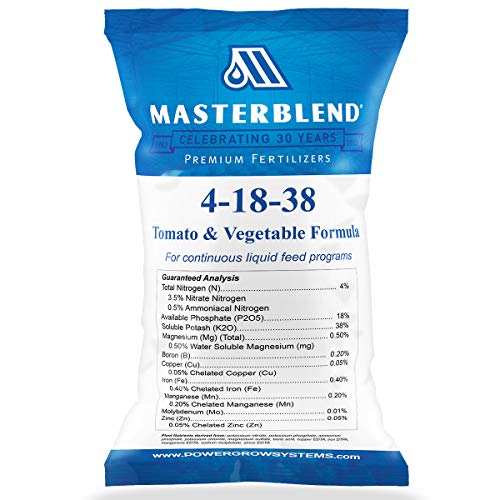
A concentrated powder that delivers a high-phosphorus punch for hydroponic tomatoes.
This is the go-to for growers using Kratky or other soilless methods. The 4-18-38 ratio is extremely high in phosphorus (the middle number) and potassium (the last number), which drives heavy flowering and fruit set. However, note the mixing ratio in the spec sheet is listed as 12:6:12 — meaning the final solution you feed your plants has a different balance than the raw bag label suggests.
It is 100% water soluble and includes all trace minerals your plants need. One owner reported the 1-pound bag lasted them over a year and was “super effective for lush and hefty vegetables.” Unlike the Down To Earth granules above at 4:6:2, this is a 12:6:12 mixing ratio, making it much more concentrated and targeted at the bloom phase. Buyers also note its popularity among Kratky method growers for producing lettuce and tiny tomatoes under grow lights through winter.
Heads up: The powder dissolves best when mixed with calcium nitrate and Epsom salts in a three-part system — not a solo dump-and-water product.
Best for hydroponic and soilless growers: If you are running a bucket or NFT system, this is the highest efficacy option here.
5. Lilly Miller Morcrop Tomato & Vegetable Food 5-10-10 4lb

A straightforward 5-10-10 granule that greenhouse growers count on season after season.
The 5-10-10 formula puts the emphasis on phosphorus for fruit and potassium for roots, with just enough nitrogen for steady green growth. One customer observed it is “perfect for making sure I’ll realize a good crop of tomatoes in my greenhouse” and has worked reliably every year.
Fortified with essential plant minerals, it is a simple, no-fuss granule. Some customers note they could not find this specific formula at local big box stores, so Amazon is the reliable source. A few reviewers also mention a noticeable smell, similar to the organic options, but accept it for the results. At 4 pounds, it is a middleweight option that handles a medium-sized garden or several large containers.
Reach for this if: You want a proven product for greenhouse tomatoes that does not require mixing or complex schedules.
Watch for: A few buyers felt the odor is strong for the first few days after application.
6. Purely Organic Products LLC 8-8-8 Triple Play Tomato & Vegetable Plant Food

A balanced 8-8-8 granule that one buyer says grew tomatoes larger than a competitor.
The equal N-P-K ratio makes this a safe all-purpose choice for tomatoes, peppers, herbs, and berries. It feeds for 6-8 weeks per application, and the pouch covers up to 250 square feet. One buyer claims their tomato plants were “5x bigger than friend’s using different brand” and produced larger tomatoes with higher yield.
It is a protein and plant-based formula, so it leans synthetic in composition but still works well for both indoor and outdoor use. The resealable pouch is a small but appreciated detail for keeping granules dry between uses. Like the 5-10-10 Morcrop, this is a straightforward granule — no mixing, no special equipment. It is one of the lighter bags here at 2.3 pounds, but the coverage is generous.
Why it works
- Balanced 8-8-8 is easy to apply across multiple crops without overdoing one nutrient
- Resealable packaging keeps the product fresh between uses
What to know
- 2.3-pound bag is smaller than the 5-pound organic option for large gardens
- Fast-acting formula may require reapplication more often than slow-release spikes
Best for new gardeners: The balanced ratio is forgiving and works for most vegetables, not just tomatoes.
Skip if you want organic certification: This is a plant-based synthetic, not OMRI-listed organic.
7. ENVY CalMag+ (4-0-0) Professional Grade Calcium, Magnesium and Iron Liquid (Quart)
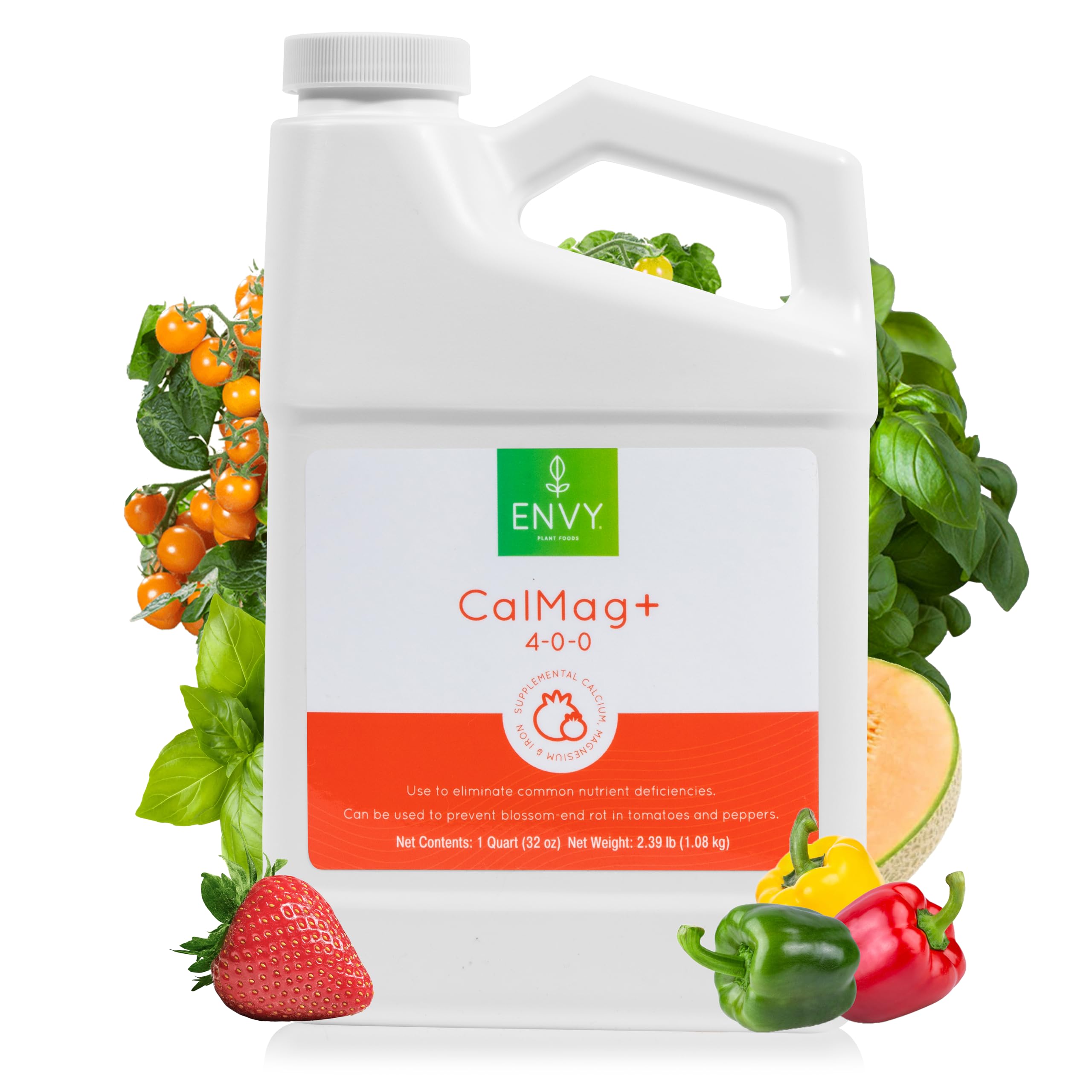
A liquid calcium magnesium supplement that stops blossom end rot in its tracks.
If the bottom of your tomatoes has turned black and leathery, that is blossom end rot — a calcium deficiency, not a disease. This 4-0-0 liquid from ENVY delivers calcium, magnesium, and iron in a form plants can absorb immediately. One user highlighted that after a couple of doses, the blossom end rot on their tomatoes “is gone.”
It is formulated for reverse osmosis water systems that strip minerals, and it also corrects nutrient lock-up in coco coir growing media. The brand uses calcium nitrate instead of calcium chloride, which is friendlier for both plants and hydro systems. At 32 fluid ounces, a little goes a long way. This is not a standalone fertilizer — it is a targeted supplement to pair with a base nutrient, making it perfect for the hydroponic gardener running MasterBlend or for the soil grower noticing early signs of rot.
The honest limit: With a 4-0-0 N-P-K, there is zero phosphorus or potassium, so this must be used alongside a complete fertilizer — it fixes a deficiency, not a full feeding.
Reach for this if: You see blossom end rot on your tomatoes or peppers and need a fast-acting calcium fix.
Not for full-season feeding: This is a supplement, not a replacement for a balanced fertilizer.
Understanding the Specs
N-P-K Ratio
Every fertilizer bag lists three numbers separated by dashes, like 5-10-10. The first is Nitrogen (N) for leaf and stem growth. The second is Phosphorus (P) for flowers and fruit development — this is the most important number for tomato fruit size. The third is Potassium (K) for root strength and disease resistance. A tomato food usually has a higher middle number than a lawn or all-purpose feed.
Organic vs Synthetic
Organic formulas (like Down To Earth and FoxFarm) are derived from plant and animal matter and feed the soil food web. They release slowly and improve soil structure. Synthetic formulas (like MasterBlend) are chemically manufactured for precise ratios and instant availability. Neither is inherently better — soil growers often prefer organic for long-term health, while hydroponic systems require synthetic for solubility.
Delivery Form: Granules, Spikes, and Liquids
Granules are sprinkled on the soil and watered in — they work for in-ground and container gardens. Spikes are pushed into the root zone and release nutrients over 8 weeks, perfect for hands-off feeding. Liquids like the ENVY CalMag+ are mixed with water and absorbed immediately, making them ideal for correcting a specific deficiency fast. Powders dissolve completely and are essential for hydroponic systems where solids clog pumps.
Calcium and Blossom End Rot
Blossom end rot shows up as a dark sunken patch on the bottom of the tomato. It is caused by uneven watering or a calcium deficiency in the fruit, not a pest or disease. Adding a calcium supplement like ENVY CalMag+ or choosing a fertilizer that already contains calcium (like FoxFarm Happy Frog) is the best prevention. Consistent watering matters just as much — calcium moves through the plant with water.
FAQ
What N-P-K ratio is best for tomatoes during fruiting?
Can I use a balanced 8-8-8 fertilizer on tomatoes?
How often should I feed my tomato plants?
What causes blossom end rot and how do I fix it?
Do I need a special fertilizer for hydroponic tomatoes?
Can I mix multiple fertilizers together?
Is organic fertilizer better than synthetic for tomatoes?
How do I know if my tomato plant has too much nitrogen?
What is the difference between granular and liquid fertilizer for tomatoes?
Final Thoughts: The Verdict
If you want one dependable pick, the nutrients for tomato plants winner is the FoxFarm Happy Frog because it combines a fruit-focused 5-7-3 ratio with calcium for rot prevention and mycorrhizal fungi for root health in one premium organic granule. If you want a set-and-forget solution with no measuring, grab the Jobe’s Tomato Spikes for eight weeks of easy feeding. And for hydroponic growers targeting maximum fruit yield with a soluble powder, the standout is the MasterBlend 4-18-38 for its concentrated phosphorus and potassium profile.
How We Picked
We do not accept paid placement. Every pick is matched to a real buyer and a real use-case; we do not hands-on test units.
Sources & Methodology
Specifications: manufacturer listings and product documentation. Review insights: verified customer reviews, as of July 2026. Pricing: not shown on this page (it changes often); check the current price via the retailer link.
As an Amazon Associate, Lawn Gear Lab earns from qualifying purchases. This does not affect which products we feature.