
Specs are compiled from manufacturer listings and verified buyer reviews and can change over time — please confirm the key details on the product page before buying.
Alocasias are heavy feeders that hate wet feet. Get the soil wrong — too dense, too much peat, not enough chunk — and you will watch those beautiful leaves yellow and drop while the roots rot below the surface. The secret is a mix that drains fast but holds enough moisture between waterings, with plenty of air pockets so those thick rhizomes can breathe.
I’m Rikta — the founder and writer behind Lawn Gear Lab. This guide is built by comparing the manufacturers’ published specifications and the patterns across verified customer reviews, so you get each pick’s real strengths and trade-offs instead of marketing spin.
Finding the right alocasia soil mix means looking past the bag label at the actual ingredients, chunk size, and moisture balance — here is what the top contenders deliver for your fussy tropical plants.
Our Picks at a Glance
How To Choose The Best Alocasia Soil Mix
Alocasia roots are thick and fleshy, built to store water. They rot fast if the soil around them stays soggy for more than a day or two. The right mix feels rough in your hand — you want bark chunks, pumice, or perlite that create air channels, not a uniform mud-like texture.
Drainage and Aeration Are Non-Negotiable
The single most important quality in any Alocasia mix is how fast water runs through it. Look for ingredients like fir bark, pumice, lava rock, or perlite that create big air pockets. If the bag feels heavy and looks like peat, it will likely choke your roots. A chunky mix lets you water deeply without fear of waterlogging.
Moisture Retention — The Balancing Act
While drainage is king, Alocasias do need consistent moisture. Coco coir is the top choice here: it holds water like a sponge but releases it evenly, unlike peat moss which can repel water when dry. A good mix uses coco coir and bark together — the bark drains, the coir stores what the roots can drink later.
Organic Additives That Matter
Worm castings feed your Alocasia naturally over weeks, not hours. Biochar (charcoal) holds onto nutrients and makes them available longer. Gypsum adds calcium and balances pH. Skip mixes with synthetic fertilizer pellets — they can burn sensitive aroid roots and last only a short time.
Quick Comparison
| Model | Best For | Volume | Key Ingredients | Peat-Free | Amazon |
|---|---|---|---|---|---|
| Craft Aroid★ Best Overall | Peat & perlite-free option | 1 QT | Pumice, lava rock, tree fern | Yes | Amazon |
| Forbidden CerealTop Performance | Root growth & premium chunkiness | 6.5 QT | 8 organic ingredients | Yes | Amazon |
| Top Tier Genetics | High-nutrient aroids | 2 QT | Biochar, worm castings, pumice | — | Amazon |
| DUSPRO | Versatile 7-in-1 blend | 2 QT | 7 premium ingredients | No | Amazon |
| Gardenera | Budget-friendly aroids | 1 QT | Biochar, bark, coco coir | No | Amazon |
In‑Depth Reviews
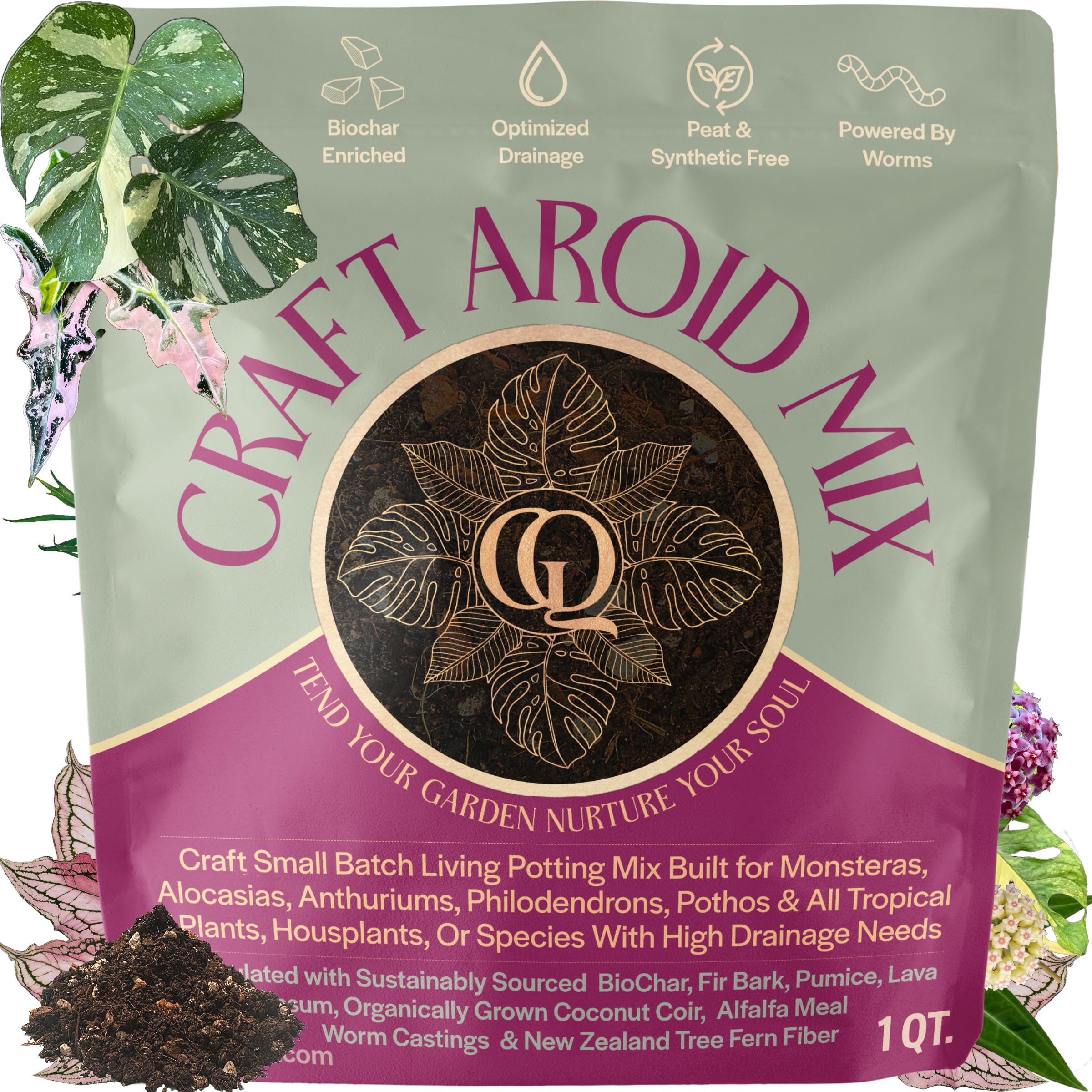
1. Craft Aroid Potting Mix by Grow Queen
Our pick — over 4.5★ from 950+ verified ratings; the strongest balance of quality and price.
Peat-free, perlite-free, and packed with sustainable volcanic rock — for Alocasias that thrive without the guilt.
Grow Queen’s Craft Aroid Mix swaps peat and perlite for eco-friendly pumice and lava rock, which drain instantly and add zero carbon footprint. It also includes New Zealand tree fern fiber, which acts as a soil conditioner and neutralizes pH down to 6.0 — exactly the slightly acidic environment Alocasias love. The result is a mix that one buyer called “almost impossible to overwater,” with large Douglas fir bark fines creating air pockets that keep roots healthy.
Customers note that their indoor plants adjusted beautifully after repotting, with no bugs or mildew. One long-time customer said it became their “forever soil” after ordering it five times. The bag is 1 QT, which is enough for a single medium pot — compare that to the DUSPRO 2 QT or the Forbidden Cereal 6.5 QT if you need more volume.
There is one honest caveat here. A reviewer noted their large Alocasia and Philodendron never fully dried out after the first watering, leading to root rot after two months. They recommend this mix for pots 6 inches or smaller. So if your Alocasia is in a big pot, you might need to add extra pumice — but for smaller containers, this is a 4.6-star winner.
What stands out
- Certified organic coco coir with low salt levels — washed more times than competitors
- New Zealand tree fern fiber neutralizes pH naturally to 6.0
- No perlite or peat means a lighter carbon footprint and cleaner ingredients
Real note from buyers
- Holds too much moisture for larger pots above 6 inches — root rot risk increases
- Only 1 QT per bag, so a big collection requires multiple bags
Best for small pots: this is the ideal mix for Alocasias in 6-inch or smaller containers — the texture and pH are spot-on if you match the pot size right.
Not for giant plants: if your Alocasia is pushing 8 inches or more, pick a chunkier mix or add extra pumice to avoid soggy roots.
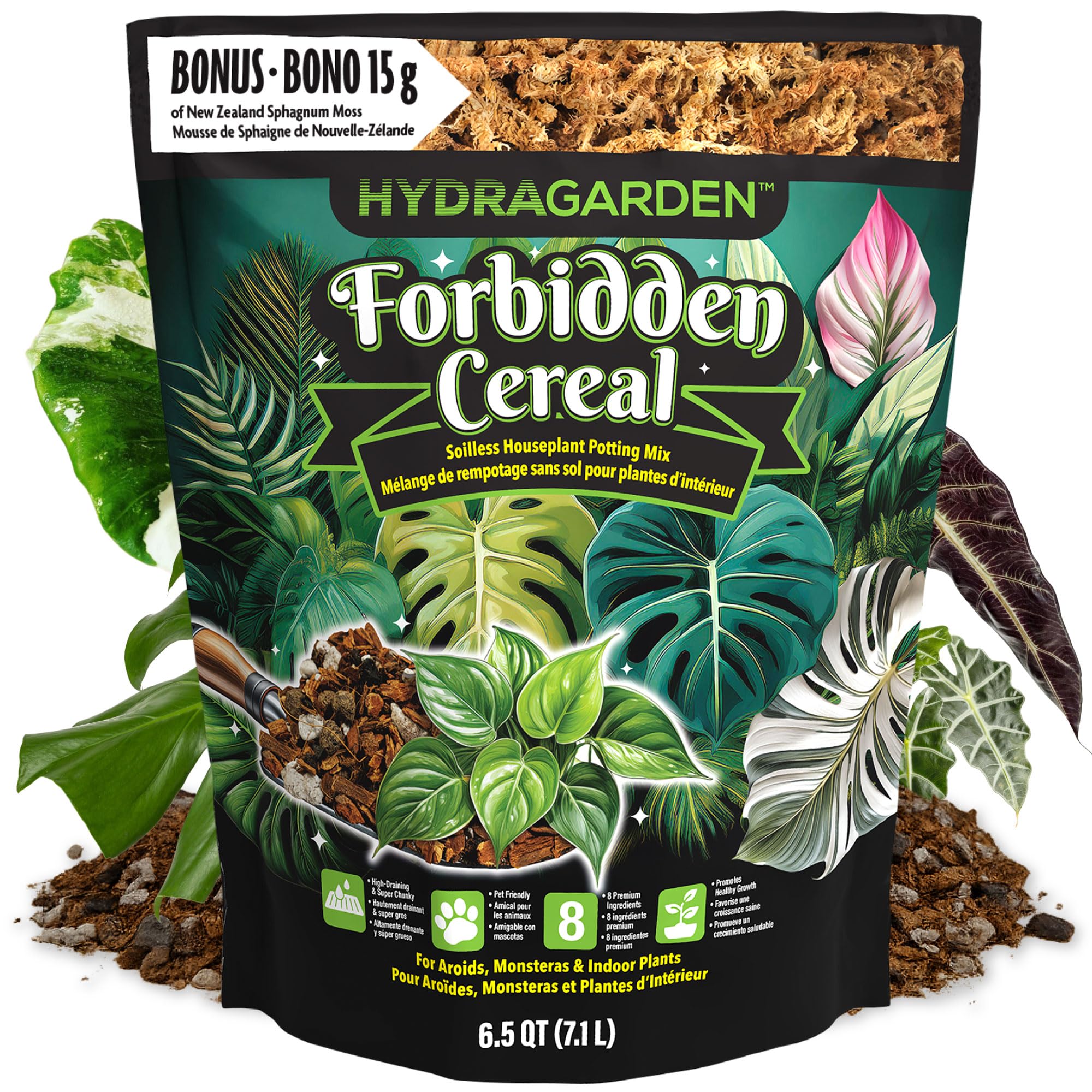
2. Forbidden Cereal Aroid Potting Mix
The chunk itself defines this mix — it looks exactly like breakfast cereal and drains like a sieve.
This premium bag is built with 8 organic ingredients, including hand-sorted Douglas fir bark, triple-washed coco coir, and New Zealand sphagnum moss that arrives in a separate layer on top so you decide where to use it. The idea is water flows freely and roots get maximum air — buyers report that after 6 months, a Monstera tripled in size with thick, healthy roots. Overwatering really is forbidden here.
Unlike the smaller 1 QT and 2 QT bags from Gardenera and Craft Aroid, this gives you 6.5 QT of ready-to-use mix, enough for multiple pots at once. One reviewer who called it the “GOAT of potting mixes” noted no amendments were needed — the chunkiness already balances drainage and moisture retention perfectly.
The catch? This is a premium product at a higher price point. One buyer called it pricey for the bag size, and the separated sphagnum topper takes a moment to understand if you are used to fully pre-mixed bags. But for collectors with rare Alocasias who want explosive root growth in a week, this is the bag to grab.
Why collectors love it
- Hand-sorted ingredients with visible bark chunks for maximum drainage
- Separated sphagnum moss layer lets you customize moisture retention at the root level or as a topper
- Rated 4.7/5 from over 200 reviews, with multiple mentions of rapid root growth
The trade-off
- Premium price point with a smaller volume-to-cost ratio than budget blends
- Separated moss layer adds an extra step if you prefer fully pre-mixed soil
Worth the splurge for: serious plant collectors who want a chunky, peat-free mix that fuels rapid root growth with zero amendments needed.
Probably too much for: casual owners of a single Alocasia who are fine with a mid-range bag they can supplement with extra perlite.
3. Top Tier Genetics Premium AROID Soil Blend
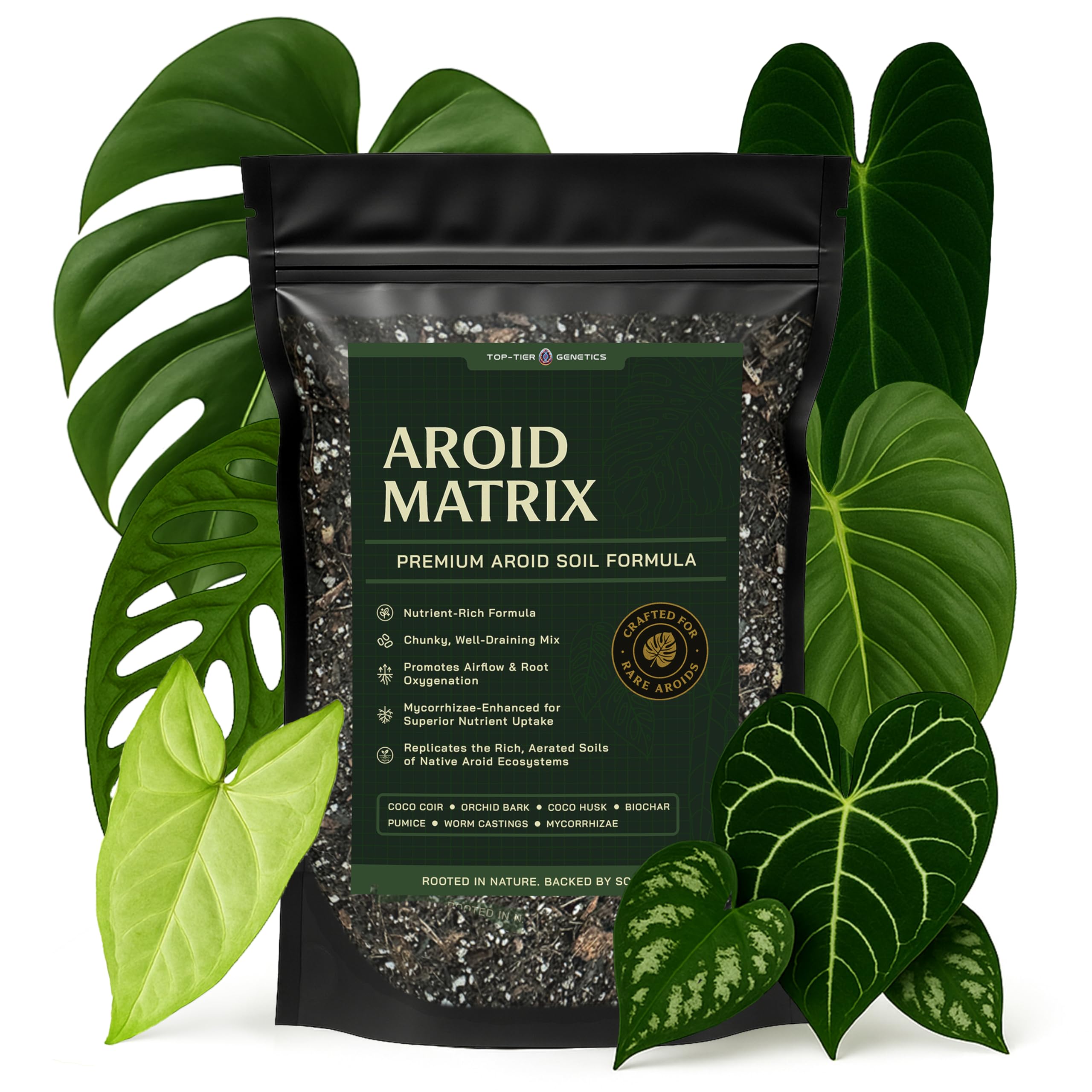
A 4.7-star blend that supercharges both roots and leaves — and really is ready to use out of the bag.
This 2 QT mix from Top Tier Genetics is formulated specifically for Monstera, Philodendron, Alocasia, and Anthurium, with orchid bark, coco husk, and pumice delivering the drainage Alocasia roots need. It also includes biochar, which increases microbial life and locks in nutrients so your plant gets fed longer between fertilizing. With a 4.7/5 rating from 246 reviews, buyers consistently say plants “perk up in a couple days.”
Unlike the Craft Aroid mix which uses both pumice and lava rock, this blend sticks with pumice and bark for a more traditional chunky texture. One reviewer specifically noted “explosive root growth and healthier foliage” after repotting. At 64 ounces (2 quarts), it offers more volume than the Craft Aroid 1 QT bag, making it a solid mid-range step up.
It costs more than the Gardenera and DUSPRO options, but owners mention it is “worth the price” for the consistent quality and visible growth results. If you want a balanced mix that does not need any extra amendments, this is among the most reliable bags you can find.
Root rocket: the biochar and worm castings give your Alocasia a steady nutrient supply, while bark and pumice keep the mix from turning into mud. One reviewer called it “the good stuff” and said it is pricey but worth every bit for healthy plant growth.
Reach for this if: you have several aroids and want a mid-range, high-nutrient mix that comes ready to use — no measuring, no mixing.
skip it if: you need a peat-free option, as this bag does not advertise being peat-free, and the price per quart is higher than budget blends.
4. DUSPRO 2QRT Pre-Mixed House Plant Soil Aroid Potting Mix
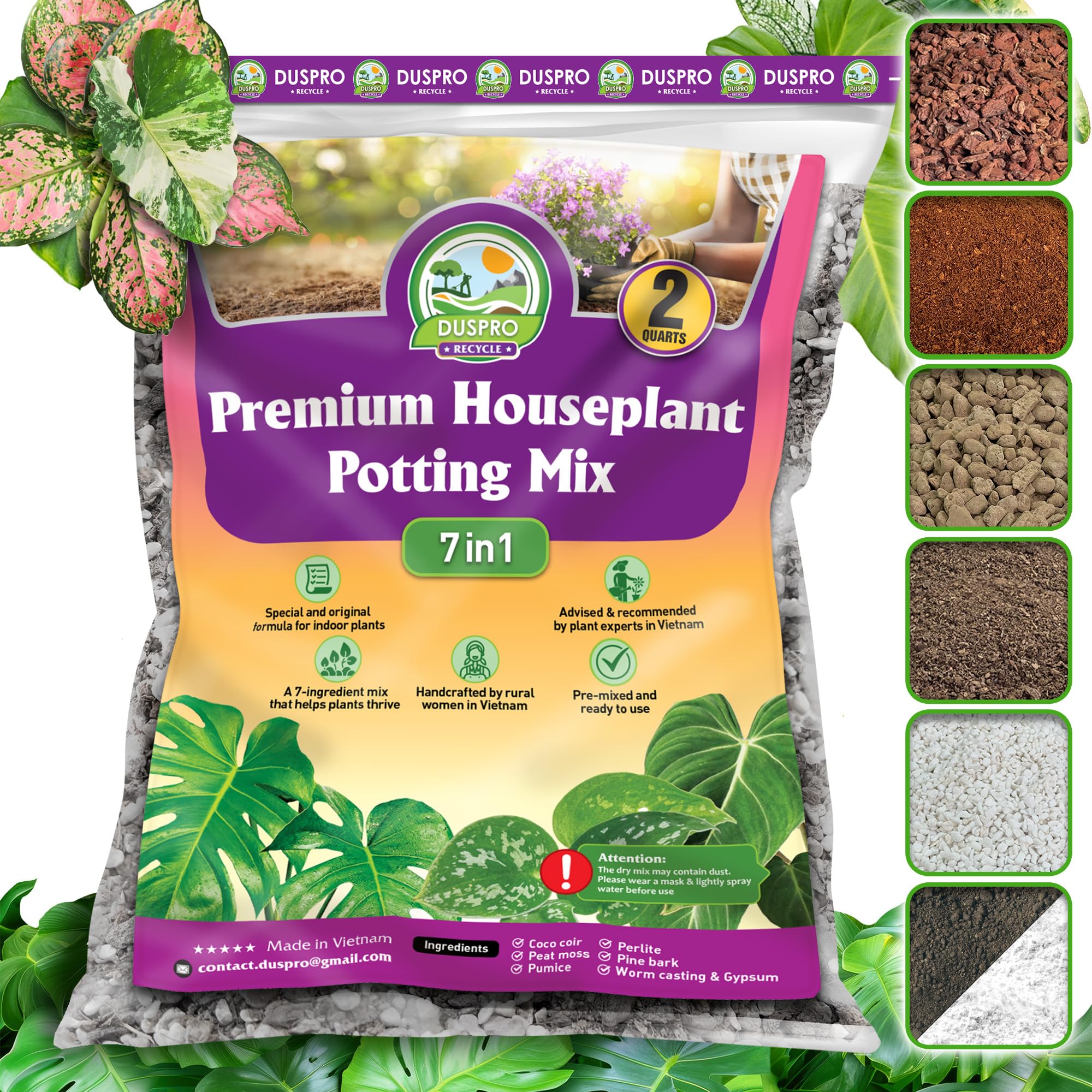
Hand-blended in Vietnam with 7 premium ingredients — and a real buyer said no mold or mildew appeared in half a year.
DUSPRO combines coco coir, peat moss, perlite, pumice, worm castings, pine bark, and gypsum into a single bag. That is a more complex blend than the Gardenera or Craft Aroid mixes, which use fewer base ingredients. The addition of gypsum helps pH balance and adds calcium, while the pine bark and pumice create the chunky texture Alocasias need. One reviewer noted they filled an 8-inch pot, a 6-inch pot, and four 4-inch pots from a single 4 QT bag.
Buyers consistently praise the moisture balance — one person waters their Monstera every 2 weeks with no issues. Another specifically reported “no mold/mildew in 6 months,” which is a strong sign for those worried about fungal problems. The mix is hand-crafted by skilled rural women in Vietnam, which adds a quality assurance layer that mass-produced soils often lack.
The main downside is that it can be dusty when dry — several reviews mention shaking the bag before use to redistribute settled rock and bark. A buyer also noted the price felt high for the volume, though the 2 QT bag is actually quite affordable compared to the Forbidden Cereal. If you want a well-rounded, hand-crafted mix that covers all the bases, this is the most versatile bag on this list.
Smart blend
- 7 ingredients cover drainage, pH, and nutrition in one bag — no mixing needed
- Hand-crafted consistency with fewer fines and more evenly sized bark chunks
- No mold or mildew reported by long-term users over 6 months
Watch for
- Can be dusty before the first watering — misting helps settle it
- Contains peat moss, so it is not a peat-free option
Best bang for your buck: if you want a 7-ingredient blend that is ready to use and works for Alocasias plus dozens of other plants, this is the most versatile bag on the list.
Not for peat-free purists: contains peat moss, which is a deal-breaker if you prioritize sustainable, peat-free growing.
5. Gardenera Premium Monstera Potting Soil

A sterilized, non-toxic mix with biochar — and it fits a 5-inch pot with room to spare.
Gardenera’s 1 QT bag is formulated with peat moss, perlite, coco coir, biochar, worm castings, and bark. The standout here is the sterilization process: every bag is sterilized to kill pests and pathogens, which is a huge relief if you have ever dealt with fungus gnats or spider mites from a contaminated soil bag. The resealable bag also makes storage easy for small spaces.
One reviewer called it a “chunky mix, enough for a 5-inch pot” and said their Thai Constellation Monstera “thrives; holds moisture without waterlogging.” The addition of IBI-certified biochar (a charcoal-like material that holds nutrients) helps retain nitrogen and phosphorus, giving your Alocasia a steady nutrient supply. With a 4.6 rating from 763 reviews, it is the most-reviewed product on this list and widely trusted.
Compared to the Craft Aroid mix, Gardenera includes perlite (which Craft Aroid deliberately avoids) and uses peat moss, so it holds more moisture overall. It is also the most affordable option here, making it a great entry point for someone with one or two plants. If your Alocasia is in a small container and you want a sterile, budget-friendly mix, this is a safe call.
Sterile start: every bag is sterilized to kill pests, and the biochar boosts nutrient retention. Not as chunky as the Forbidden Cereal or Craft Aroid mixes, making it better for smaller pots where you want a little more moisture buffer.
Ideal for beginners: small pots, simple ingredients, guaranteed sterile — this is the lowest-risk entry point for a first-time Alocasia owner.
Too compact for big roots: if your Alocasia is in a pot larger than 6 inches, the higher peat content can hold too much water and lead to root rot.
Understanding the Specs
Chunk Size and Drainage
Alocasia roots need large air pockets to breathe. A chunky mix (look for fir bark or pumice pieces at least 1/4 inch across) lets water flow through in seconds instead of pooling in the pot. If the bag feels like fine powder or dense mud, skip it. The ideal mix drains within 30 seconds of watering, holding only what the roots can soak up immediately.
Peat Moss vs. Coco Coir
Peat moss holds water but can become hydrophobic (water-repellent) when dry, forcing you to soak it. Coco coir stays moist evenly and rewets easily. Peat is also harvested from endangered bog ecosystems. Many premium mixes (like Craft Aroid and Forbidden Cereal) are peat-free for both plant health and environmental reasons — a solid choice if you want a mix that stays consistent from the first watering to the last.
Biochar and Worm Castings
Biochar (horticultural charcoal) acts like a sponge for nutrients, holding onto nitrogen and phosphorus so they do not wash out with the first few waterings. Worm castings add a slow-release nutrient source that feeds your Alocasia for weeks. Both are signs of a well-formulated mix. Avoid bags with synthetic chemical fertilizers, which can burn sensitive aroid roots and produce a short, intense nutrient spike followed by nothing.
pH Balance
Alocasias grow best in slightly acidic soil, around pH 6.0 to 6.5. Ingredients like gypsum (in DUSPRO) or New Zealand tree fern fiber (in Craft Aroid) naturally help maintain that range. Peat moss is naturally acidic, which is why many mixes include it, but it can make the soil too acidic over time. Coco coir is pH-neutral and pairs well with a pH buffer like gypsum or dolomite lime.
FAQ
Can I use regular potting soil for my Alocasia?
How do I know if my Alocasia soil is too wet?
Is peat-free soil better for Alocasias?
How much soil do I need for one Alocasia?
Why does my Alocasia get yellow leaves after repotting?
Can I add fertilizer to an Alocasia soil mix?
How often should I repot my Alocasia?
What is the difference between an aroid mix and regular potting soil?
Can I mix my own Alocasia soil at home?
Final Thoughts: The Verdict
For most buyers, the alocasia soil mix winner is the Craft Aroid Potting Mix by Grow Queen because it delivers great drainage with sustainable peat-free and perlite-free ingredients, plus NZ tree fern fiber for perfect pH balance — just keep it in pots 6 inches or smaller. If you want maximum chunkiness and explosive root growth, grab the Forbidden Cereal Aroid Potting Mix. And for a versatile, budget-friendly option with 7 hand-crafted ingredients, the DUSPRO 2QRT blend is a strong choice.
How We Picked
We do not accept paid placement. Every pick is matched to a real buyer and a real use-case; we do not hands-on test units.
Sources & Methodology
Specifications: manufacturer listings and product documentation. Review insights: verified customer reviews, as of July 2026. Pricing: not shown on this page (it changes often); check the current price via the retailer link.
As an Amazon Associate, Lawn Gear Lab earns from qualifying purchases. This does not affect which products we feature.