
Specs are compiled from manufacturer listings and verified buyer reviews and can change over time — please confirm the key details on the product page before buying.
You water them. You give them light. But your indoor plants still look a little sad — leaves turning yellow, growth stalling, or just not thriving the way you hoped. The missing piece is almost always nutrition, and choosing the wrong food can lead to burned roots, no results, or a complicated routine you drop after a week. This guide cuts through the confusion to show you which products actually deliver greener leaves, stronger stems, and visible growth — without a chemistry degree or a messy schedule.
I’m Rikta — the founder and writer behind Lawn Gear Lab. This guide is built by comparing the manufacturers’ published specifications and the patterns across verified customer reviews, so you get each pick’s real strengths and trade-offs instead of marketing spin.
Whether you have a single pothos or a whole collection, the right food for indoor plants makes the difference between a plant that just survives and one that truly thrives with lush, vibrant leaves.
Our Picks at a Glance
How To Choose The Best Food For Indoor Plants
Not all plant food is created equal. The right choice depends on your plant type, your willingness to measure, and how often you want to feed. Here is what to look for before you buy.
Understand the N-P-K Ratio
Every fertilizer label shows three numbers, like 3-1-2 or 5-5-5. These stand for Nitrogen (N), Phosphorus (P), and Potassium (K). Nitrogen fuels leafy green growth, phosphorus supports roots and blooms, and potassium boosts overall plant health and stress resistance. A balanced formula like 5-5-5 works well for general use, while a higher first number (like 6-2-4) pushes more foliage growth.
Pick Your Form: Liquid, Powder, Tablet, or Capsule
Liquid fertilizers mix instantly with water and feed right away, ideal if you water weekly. Powders are economical and concentrated but require measuring and dissolving. Tablets and capsules offer a mess-free slow-release option — you drop them in water or push them into the soil. Your choice should match how much effort you want to put into each feeding session.
Check for Organic Ingredients
Organic plant foods use natural sources like sea kelp, worm castings, or rock minerals instead of synthetic chemicals. They feed the soil microbes along with the plant, leading to healthier roots over time. They are usually gentler and reduce the risk of burning your plants, making them a strong choice for sensitive species or beginners.
Quick Comparison
| Model | Best For | Form | N-P-K Ratio | Total Feedings | Amazon |
|---|---|---|---|---|---|
| Instant Biologics Tablets★ Best Overall | No-mess convenience | Tablets | 4-3-6 | 4 tablets (feeds up to 3 months each) | Amazon |
| Grow Queen Organic LiquidAlso Great | All-purpose organic care | Liquid | 5-5-5 | 50 gallons | Amazon |
| Jack’s Classic 15-30-15 | Blooming houseplants | Powder | 15-30-15 | Multiple gallons (mix per use) | Amazon |
| Houseplant Resource Center | Gentle sensitive-root care | Liquid | 3-1-2 | Dilute per watering | Amazon |
| HiThrive Monstera Food | Monstera-specific growth | Liquid | 6-2-4 | 96 gallons | Amazon |
| EarthPods Capsules | Slow-release set-and-forget | Capsules | Not listed (organic bio-complex) | 100 feedings | Amazon |
In‑Depth Reviews
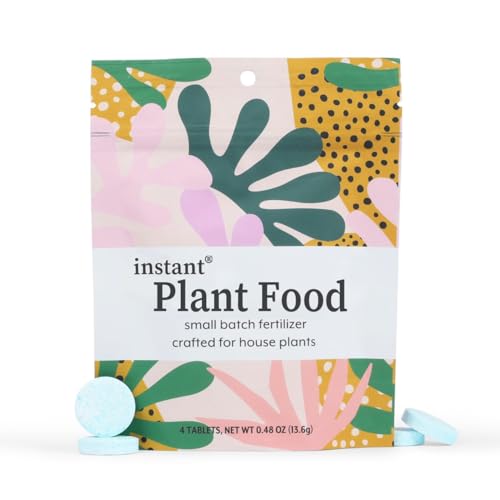
1. Instant Biologics Self-Dissolving Tablets
Our pick — over 4.5★ from 900+ verified ratings; the strongest balance of quality and price.
Drop a tablet in water and walk away — no measuring at all.
These 4-3-6 N-P-K (nitrogen-phosphorus-potassium) tablets dissolve completely in a glass of water or watering can with zero mixing, zero mess, and zero odor. Each tablet feeds a large houseplant or several small ones for up to 3 months, making it one of the lowest-maintenance options in this guide. The formula uses naturally occurring minerals and a live fermentation process, and the company is certified vegan and cruelty-free with 1% of sales going to environmental organizations.
Owners mention that the tablets revived withering plants within days — leaves greened, stems strengthened — and one reviewer noted they just drop one tablet per pitcher monthly and their plants thrive for two months without reapplication. A single pack contains 4 tablets, so it works best for smaller collections or if you want to test the method. For larger plant families, you will need multiple packs or a different form factor.
Self-dissolving convenience
- No measuring or mixing required — drop and go
- Single tablet lasts up to 3 months per large plant
- Derived from natural minerals, vegan and cruelty-free
Small tablet count
- Only 4 tablets per pack — not enough for bigger collections
- Can be broken to avoid root burn on small plants
Forgetful owners: If you want to feed your plants but hate measuring and mixing, these tablets are your easiest path.
Small quantity: The 4-tablet count means you need to buy multiple packs for more than a couple of plants.
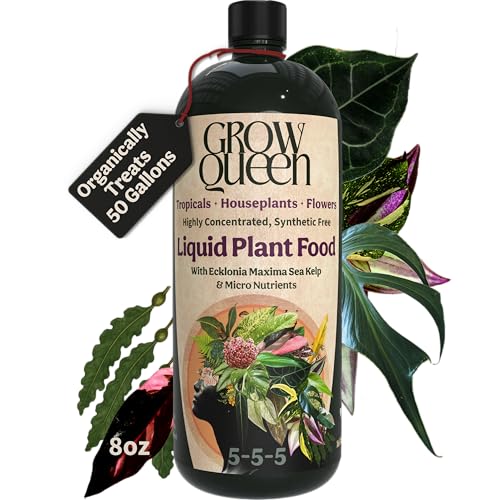
2. Grow Queen Organic Liquid Indoor Plant Food
The one liquid that works across your whole collection without the guesswork.
This is the only true 5-5-5 organic liquid fertilizer on the market, and that balanced N-P-K ratio means you can use it on everything from monsteras to snake plants to herbs without worrying about burning or imbalance. Each 8-ounce bottle treats up to 50 gallons of water, so even if you have a big indoor garden, one bottle covers weeks of weekly feeding. The formula is powered by cold-processed Ecklonia maxima sea kelp, which delivers auxins and trace minerals that fuel root expansion and thicker stems.
Buyers report that within just a few weeks of using it, they noticed faster growth, healthier leaves, and much more vibrant color across all their plants — even finicky ones responded beautifully. Unlike some organic fertilizers, this one is odor-free, which matters when you are feeding plants inside your living space. It is also 100% biodegradable and safe around pets and kids when used as directed, making it a solid pick for eco-conscious households.
Organic liquid growth
- True 5-5-5 balanced organic formula works for nearly all houseplants
- 50-gallon yield per bottle offers strong value for the price
- Odor-free and safe to use around pets when diluted
Strict feeding schedule
- Requires mixing with water each time you feed
- Organic formula may show slightly slower results than synthetic alternatives
Whole collection: If you want one clean, organic food that feeds everything from pothos to peace lilies without a complicated routine, this is your pick.
Watch schedule: You do need to mix fresh each watering — not a low-maintenance product.
3. Jack’s Classic 15-30-15 Houseplant Special

The powder that pushes flowering plants to put on a real show.
If you own blooming houseplants like peace lilies, African violets, or orchids, the 15-30-15 analysis is what you want — the higher phosphorus number (the middle one) directly supports more and larger blooms, not just green leaves. Unlike the balanced 5-5-5 of the Grow Queen, Jack’s Classic is a water-soluble powder concentrate, which means you get multiple gallons of fertilizer from one small 8-ounce container. The included measuring spoon makes mixing simple at a rate of one teaspoon per gallon of water.
Buyers mention this product has been their go-to for years, using it every watering during summer and monthly in winter, and they report noticeable growth improvement across their houseplants. One reviewer notes they avoid leaf contact to prevent burns, which is a smart practice with higher-analysis synthetic formulas — apply it to the soil, not the foliage. It is pricier per container than some options, but the concentration means it lasts a long time.
High phosphorus boost
- High-phosphorus 15-30-15 formula boosts bloom quality and quantity
- Powder concentrate goes much further per dollar than pre-mixed liquids
- Comes with a measuring spoon for easy, repeatable mixing
Advanced users only
- Not organic — synthetic formula, so careful measuring is essential
- Stronger formula means higher risk of root burn if over-applied
Flowering plants: If your goal is more blooms from your peace lily or African violet, this is the most targeted pick here.
Not beginners: The higher concentration requires careful measuring — you will need a measuring spoon or syringe, not a simple dropper bottle.
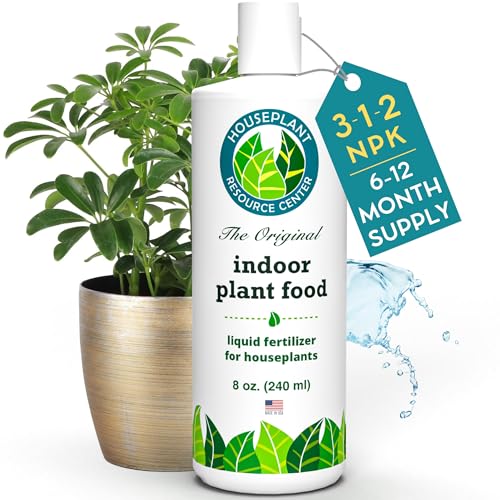
4. Houseplant Resource Center Indoor Plant Food
Designed for sensitive roots that burn easily with stronger feeds.
With a 3-1-2 N-P-K ratio and chelated micronutrients, this liquid fertilizer delivers steady nutrition that is gentle enough for peace lilies, ferns, and even delicate seedlings without the risk of salt buildup. The urea-free formula means it will not burn roots even if you are a little generous with the dosage. It is a liquid concentrate, so you simply dilute a few drops into your watering can and feed as you water — no measuring spoons, no mixing fuss.
One long-time buyer noted that their 29-year-old dracaena looked great again after switching to this food, and reviewers consistently mention seeing new growth and stronger roots within weeks. It costs more per bottle than other liquid options, but the compact bottle stores easily under the sink and a little goes a long way. The family-owned business uses third-party testing and zero-waste production, which adds confidence.
Gentle nutrient mix
- Urea-free and non-burning formula is safe for sensitive roots
- 3-1-2 NPK ratio supports steady foliage growth without forcing blooms
- Third-party tested with zero-waste production from a small US business
Higher per-gallon cost
- Higher price per ounce compared to other liquid concentrates
- Small 8-ounce bottle may need frequent reordering for large collections
Sensitive plants: If you have ferns, peace lilies, or a history of overfeeding, this gentle formula protects your roots.
Cost per gallon: The premium price means it is less economical for a large collection than the Grow Queen or Jack’s Classic.
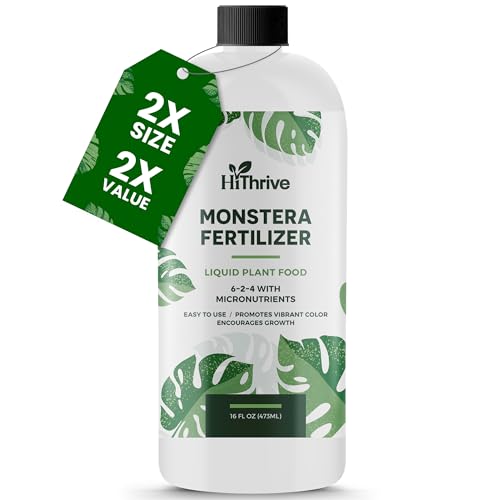
5. HiThrive Monstera Plant Food
Built for monsteras, but strong enough to wake up your whole tropical collection.
This liquid fertilizer uses a 6-2-4 N-P-K (nitrogen-phosphorus-potassium) ratio that is heavy on nitrogen — exactly what monsteras need for bigger, greener leaves and that signature fenestrated (split-leaf) look. A single 16-ounce bottle makes 96 gallons of fertilizer at standard strength. The formula also supports climbing habit and stress resilience through potassium and a sturdy root system through phosphorus.
It works for Adansonii, Deliciosa, Borsigiana, and many more monstera varieties, plus it can be used on other tropical plants. The simple dosing — one teaspoon per gallon of water — is easy to remember, and the liquid has no odor, unlike some organic options.
Specialized monstera formula
- 96-gallon yield from one 16-oz bottle is outstanding value
- 6-2-4 ratio pushes vigorous leaf growth and climbing habit
- No odor and easy teaspoon-per-gallon dosing
Limited to one plant
- Formulated specifically for monsteras, not a general all-purpose feed
- Liquid requires mixing each watering session
Monstera owners: If you have monsteras and want dramatic leaf size and growth, this is the most targeted and economical choice.
Limited scope: If you have a mixed collection of different plant types, a broad-spectrum formula serves you better.
6. EarthPods Organic Indoor Plant Food Capsules
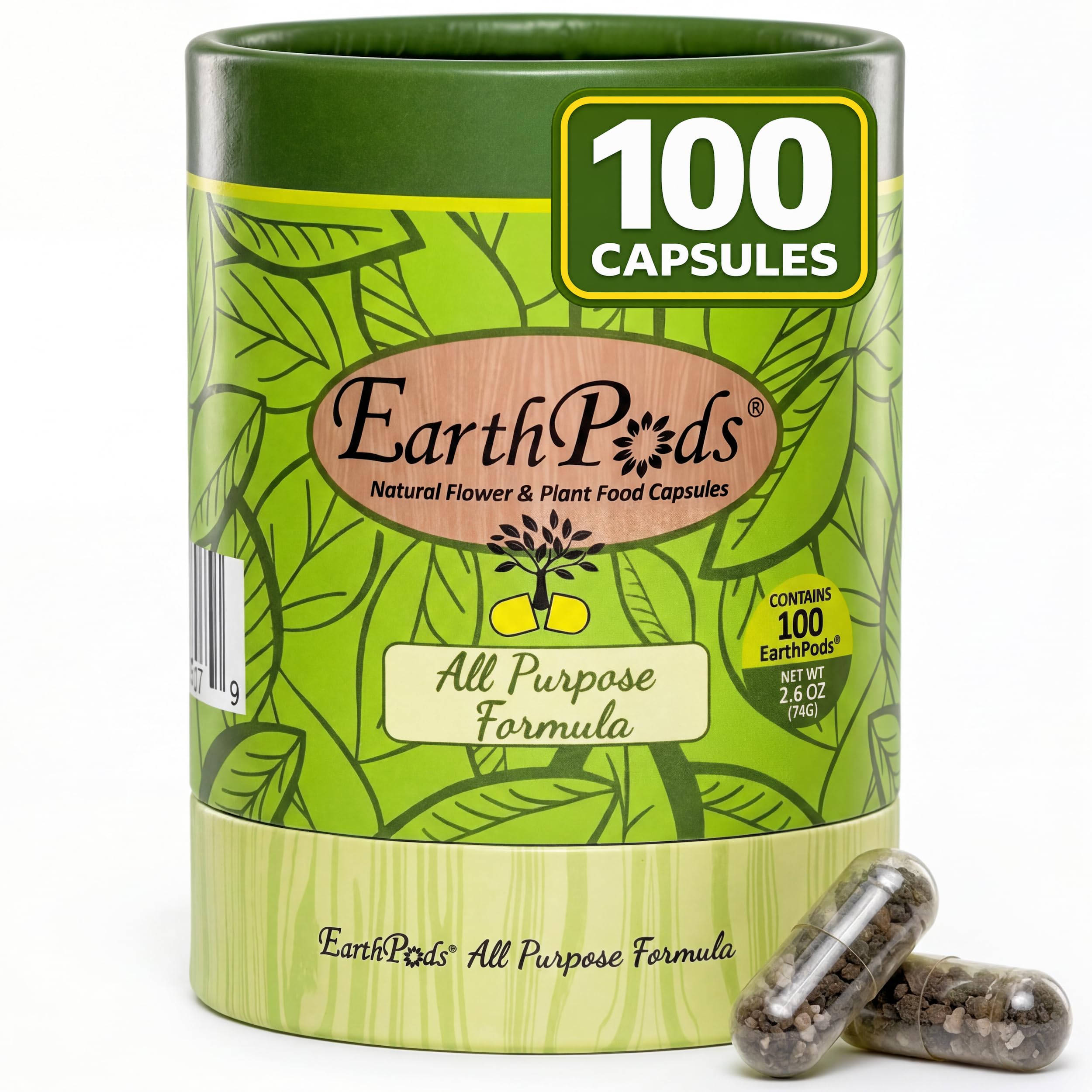
Push a capsule into the soil and let it feed your plant for weeks — no liquids involved.
These capsules deliver slow-release organic nutrition straight to the root zone using premium worm castings, humic acids, kelp, and rock minerals. You just push one capsule all the way into the soil near the stem and water normally. Small plants get 1-2 capsules, medium plants get 2-4, and large plants get 4-8, reapplied every 2-4 weeks. A single tube gives you 100 feedings, which covers a substantial collection for months.
Customers note the capsules are mess-free with zero smell — ideal for home use. One buyer mentioned the capsules work great for reviving overwintered plants and producing new leaves within days. Since they are made from organic ingredients with no harsh salts, there is virtually no risk of root burn when used as directed. The formula is vegan and packaged in a recyclable paperboard tube with zero single-use plastic.
Lowest maintenance capsules
- No mixing or measuring — push into soil and water
- 100 capsules feed a large collection for a very long time
- Organic with zero risk of root burn when used correctly
Slow initial results
- Slow-release means results take slightly longer than liquid fertilizers
- Upfront cost is higher than liquid options
Lowest maintenance: If you want to feed your plants without touching a measuring spoon or mixing bottle, these capsules are the easiest system.
Patience required: The slow-release nature means you wait a bit longer for visible results compared to instant liquid feeds.
Understanding the Specs
N-P-K Ratio
The three numbers on a fertilizer label — for example 4-3-6 or 5-5-5 — stand for the percentage of Nitrogen (N), Phosphorus (P), and Potassium (K) in the mix. Nitrogen drives green leafy growth, which is why foliage-heavy plants like pothos and monsteras need a higher first number. Phosphorus supports root development and flower production, so blooming plants benefit from a higher middle number. Potassium strengthens the plant’s overall health and ability to handle stress. A balanced ratio like 5-5-5 works well as a general-purpose food for a mixed collection.
Liquid vs. Slow-Release
Liquid fertilizers mix with water and feed your plant immediately, making them great for weekly routines and fast results. Slow-release forms like tablets, capsules, and spikes break down over weeks, feeding your plant gradually with less effort from you. Liquids give you more control over dosage but require consistent mixing. Slow-release forms are forgiving if you forget a feeding but take longer to correct a deficiency. Your schedule and plant count usually decide which works better for your home.
FAQ
How often should I feed my indoor plants?
What does the N-P-K ratio mean for houseplants?
Can I use outdoor plant food on indoor plants?
What is the difference between organic and synthetic plant food?
How do I know if I am overfeeding my plant?
Is liquid fertilizer better than slow-release capsules?
Can I use the same plant food for succulents and tropical plants?
What is the best way to apply liquid plant food to avoid burning roots?
How long does a bottle of liquid plant food last for a typical houseplant collection?
Do I need to feed my plants in winter?
Final Thoughts: The Verdict
Across the board, the best food for indoor plants is the Grow Queen Organic Liquid Indoor Plant Food because its balanced 5-5-5 formula works across all houseplant types with clean, odor-free organic nutrition. If you want a concentrated powder that pushes your blooming plants to their full potential, grab the Jack’s Classic 15-30-15 Houseplant Special. And for the lowest-maintenance option where you simply push a capsule into the soil and forget it, choose the EarthPods Organic Indoor Plant Food Capsules.
How We Picked
We do not accept paid placement. Every pick is matched to a real buyer and a real use-case; we do not hands-on test units.
Sources & Methodology
Specifications: manufacturer listings and product documentation. Review insights: verified customer reviews, as of July 2026. Pricing: not shown on this page (it changes often); check the current price via the retailer link.
As an Amazon Associate, Lawn Gear Lab earns from qualifying purchases. This does not affect which products we feature.