
Specs are compiled from manufacturer listings and verified buyer reviews and can change over time — please confirm the key details on the product page before buying.
Buying the wrong bag for a raised bed costs you harvest, not just dollars. The difference between a good crop and a great one depends on whether you add pure organic matter that feeds the soil life or just filler that washes away in a month. You need a mix that holds moisture, aerates the roots, and releases nutrients slowly.
I’m Rikta — the founder and writer behind Lawn Gear Lab. This guide is built by comparing the manufacturers’ published specifications and the patterns across verified customer reviews, so you get each pick’s real strengths and trade-offs instead of marketing spin.
Starting new beds in spring or amending tired soil in fall changes nothing about the basics. Here is the best compost for raised beds broken down by what each option actually delivers for your garden.
Our Picks at a Glance

How To Choose The Best Compost for Raised Beds
Raised beds drain faster than ground soil, which means you need organic matter that holds onto water and releases nutrients without burning tender roots. You also want something that feeds the microbes in the soil, because a healthy microbe population is what actually makes nutrients available to your plants.
Worm Castings vs Composted Manure
Worm castings are gentle enough to use at any concentration — they won’t burn your plants and they contain beneficial bacteria that protect seedlings from disease. Composted manure, especially cow manure, is great for building soil structure and adding organic mass, but it needs to be fully composted so it doesn’t burn roots or carry weed seeds.
Bag Weight and Actual Volume
Compost is heavy because of moisture. A 40-pound bag of worm castings holds significantly more active material than a 5-pound bag, but you want to check the unit count in ounces or quarts to understand how much area it truly covers. A dense, high-quality product is often a better value even if the bag is smaller.
Certifications
If you are growing vegetables, an OMRI (Organic Materials Review Institute) certification on the bag means the product has been independently verified to meet organic standards. That is a concrete guarantee that you aren’t adding synthetic chemicals or sewage sludge to your raised beds.
Quick Comparison
| Model | Best For | Item Weight | Unit Count | Form | Amazon |
|---|---|---|---|---|---|
| Back to the Roots Worm Castings★ Best Overall | Indoor & Outdoor Plants | 5 Pounds | 80 oz | Granules | Amazon |
| Wiggle Worm Pure Worm CastingsAlso Great | Best Overall / Living Soil | 40 Pounds | 640 oz | Granules | Amazon |
| Old Potters Organic Compost | Plant-Based / Heavy Feeders | ~25 lbs | 768 fl oz | Compost | Amazon |
| Ribbon Organics OMRI Compost | Premium / Certified Organic | 32-35 lbs | 7.48 Gallons | Amendments | Amazon |
| Black Kow Composted Manure | Value / Soil Structure | 6 Pounds | 8 qt | Compost | Amazon |
| Michigan Peat Wholly Cow | Odor-Free / Bulk Beds | 34 Pounds | 40 Quart | Peat & Manure | Amazon |
| Earth Science Earthworm Castings | Seedlings & Indoor Pots | 3 Pounds | 48 oz | Granules | Amazon |
In‑Depth Reviews
1. Back to the Roots Organic Worm Castings, 5lb
Our pick — over 4.5★ from 900+ verified ratings; the strongest balance of quality and price.
Pint-sized bag packed with concentrated castings for indoor and small raised beds.
Not everyone needs a 40-pound bag of worm castings. If you maintain a single raised bed that is 3 feet by 6 feet, or you have a mix of indoor houseplants alongside your garden, the Back to the Roots 5lb bag (80 oz) is much more practical to handle and store. It comes in a resealable bag, which is a small but significant detail — you don’t want a pile of castings drying out between uses. It is advertised as pure USA vermicompost with no burn or odor, and the 4.8 rating from 909 buyers backs that claim up.
Compare this to the Earth Science 3 lb bag: the Back to the Roots 5lb bag holds 80 oz versus 48 oz, a 67% more gap in volume. That is a real difference if you are amending several pots. The granules are easy to sprinkle over a raised bed and water in, and it works for “all species” according to the label — vegetables, herbs, flowers, or houseplants. It is also a feel-good purchase because of the #GrowOneGiveOne program with STEM education.
For serious raised-bed gardeners, this bag is a better value per dollar of microbial activity than a larger bag of manure, but you will need several bags to fill a big bed. It is ideal for top-dressing established beds rather than building soil from scratch.
Easy to Use
- Resealable bag keeps castings fresh between uses.
- Odor-free and won’t burn plants — safe for all plant types.
- 5 lb bag is easy to carry and store.
Limited Volume
- 80 oz is good for a small bed or a few pots, not a big garden.
- Better as a top-dress than a primary bed filler.
Great for: Beginners or urban gardeners with small raised beds who want an easy, odor-free way to add microbial life to soil.
Consider something bigger if: You need to fill a large bed from scratch — a 40 lb bag of castings will be far more economical.
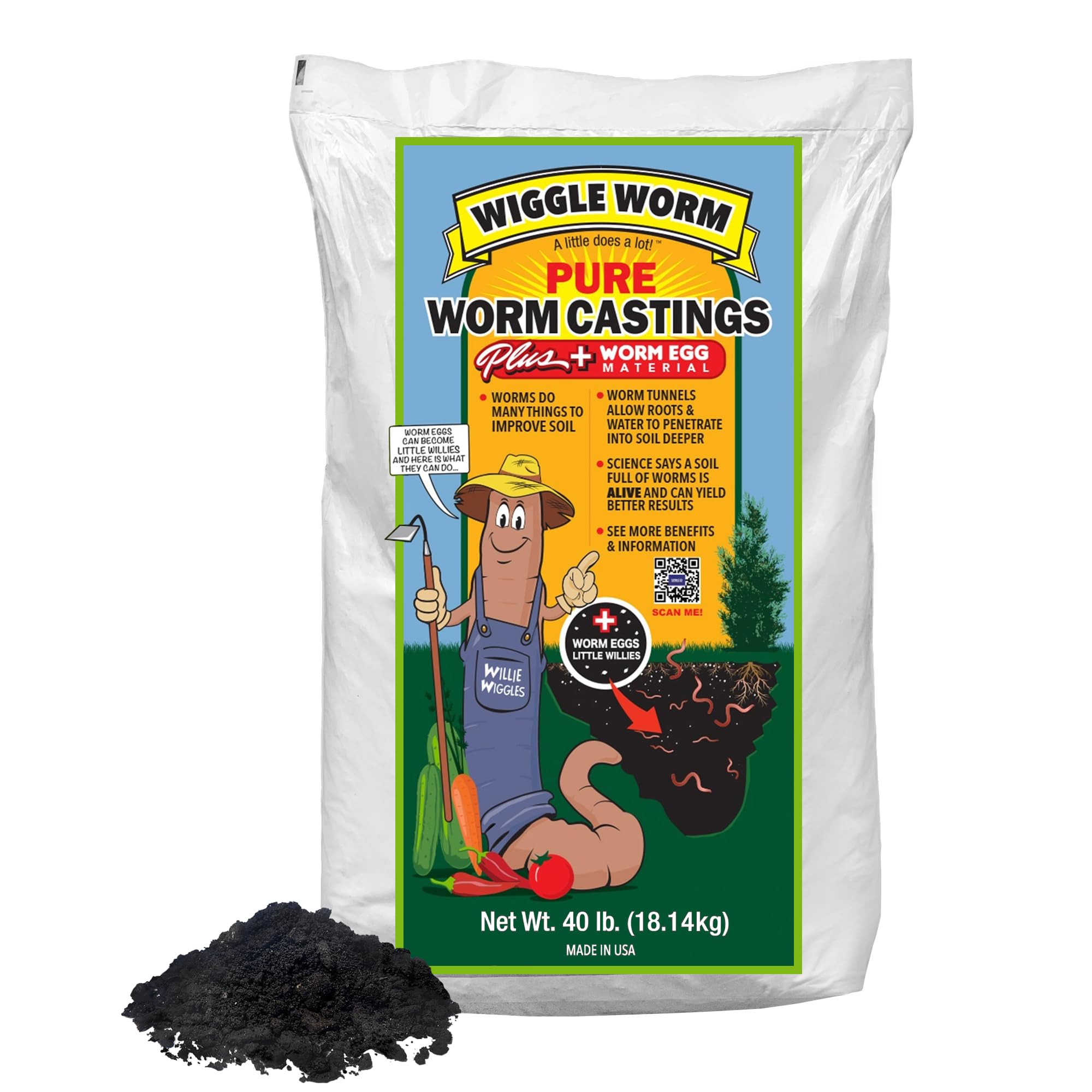
2. Wiggle Worm 100% Pure Worm Castings Plus Worm Egg Material, 40lbs
The heavy lifter that turns tired raised-bed soil into living, breathing ground.
The single biggest upgrade you can make to raised beds is adding pure worm castings. This bag weighs 40 Pounds — that is 640 oz of concentrated microbial activity, compared to the 48 oz you get in a typical 3-pound bag of castings (a 13.3x gap in volume). It includes actual worm egg material, meaning those cocoons (the small capsules that protect baby worms) can hatch inside your raised bed and produce worms that tunnel, aerate, and generate fresh castings on their own. You get ongoing soil improvement instead of a one-time nutrient dose, which is especially useful if your raised beds sit in a harsh climate — buyers report that gardenias, hibiscus, and strawberries survive triple-digit summer temperatures and winter freezes when planted with this product.
Unlike straight manure that can be heavy and clumpy, this product has a soft velvety texture — owners mention it is finely screened with no visible filler. It is also advertised as odor-free, so you can work with it without the strong smell that some composts carry. You could top-dress perennials or mix it fully into a new raised bed, and the slow-release nutrients feed plants without risk of burning roots.
The only real catch is the bag size. At 40 Pounds, it is not something you want to carry far, and the bag itself is simple black-and-white printing rather than a resealable bucket. But for anyone serious about a living soil approach in raised beds, this is the most productive single investment.
Living Soil Boost
- Worm egg material creates ongoing worms and castings in your bed.
- Odor-free and finely screened — no trash or filler.
- Supports heavy feeders and desert gardens without burning.
Heavy Bag
- 40 lbs is cumbersome to carry; a wheelbarrow helps.
- Plain bag packaging — no resealable bucket.
Best for: Gardeners who want a single bag that builds living soil for years, especially in challenging climates with extreme heat or cold.
skip it if: You need a smaller bag for a few pots — a 5 lb option will be more practical to handle.
3. Ribbon Organics OMRI Certified Organic Compost, 7.9 Gallons

Black gold in a bag — rich, clean, and certified organic for food beds.
Raised beds that grow vegetables need a compost you can trust down to the last ingredient. This Ribbon Organics compost carries OMRI (Organic Materials Review Institute) certification, which means an independent third party has verified it meets strict organic standards — something that matters a lot when you are putting food directly into a bed you eat from every week. Customers note it is “black, rich, earthy smell, no contaminants” — no sticks, plastic, metal, or glass, which is not something you can say about every bag of garden compost.
At 5.0 out of 5 stars from buyers, it is widely praised as some of the best compost available for container gardens and raised beds. A reviewer noted that it is “very expensive but worth it,” and that mixing it with worm castings was ideal. And this sentiment is common because the texture is rich and easily moistened, unlike cheaper alternatives that can become hydrophobic (resistant to water). The bag weighs roughly 32-35 lbs, so it is easier to move than a 40-lb bag, but still provides enough volume to amend several small raised beds.
The downside is the cost per bag. It is a premium product, and for larger beds, you might find it cheaper to buy bulk from a local landscape yard. However, for a single bed or a few special containers, the quality difference is noticeable — reviewers point out it is “hands down the best compost I’ve ever used.” If you want to supplement this with worm castings, that is exactly what many organic gardeners do.
Certified quality: OMRI certification means no synthetic chemicals, verified by an outside group — not just a label on the bag.
One caveat: The cost is higher per bag than bulk options or big-box store alternatives, so it suits small-to-medium raised beds best.
Reach for this if: You are growing food in a raised bed and want the cleanest, richest compost that won’t introduce contaminants or weed seeds.
Look elsewhere if: You need to fill several large raised beds on a budget — a mix of bagged cow manure and peat will cost less.
4. Black Kow Nitrogen Phosphate Composted Cow Manure Fertilizer, 8 qt

The workhorse amendment that fixes sandy and clay soil without spending a lot.
If your raised bed is filled with sandy soil that water runs right through, or hard clay that turns into brick, Black Kow cow manure is the classic fix. It is advertised as providing moisture-holding capacity to sandy soils and aeration to clay-type soils, both of which are exact problems raised beds face. Unlike synthetic fertilizers that feed the plant but not the soil, composted cow manure contains millions of beneficial bacteria that convert nitrogen and other nutrients into forms your plants can actually use — and it does this slowly, without burning tender roots.
At a 4.5-star rating from 407 buyers, the reviews are consistent: “It really helped my garden veggies,” one says. Another buyer noted that it has a noticeable smell — “it smell terrible but for the value she can get over the smell” — which is the trade-off with any manure-based product. At just 6 Pounds for 8 qt, the bag is easy to carry, and the mixing ratio is 1:1, so you can blend it straight with your existing garden soil.
Compared to the Wiggle Worm castings above, Black Kow offers a bulkier dose of organic matter at a lower price per volume. It does not have the microbial diversity of worm castings or the worm-egg component, but for adding structure to poor soil fast, it is tough to top for the price. Buyers recommend it for new beds and for giving established beds a yearly top-up.
Soil Fixer
- Helps sandy soil hold moisture and clay soil drain better — two opposite problems solved.
- Contains beneficial bacteria that convert nutrients slowly without burning roots.
Smelly
- Strong manure odor — you want to open this bag outside.
- Smaller bag size means you need more bags for a big raised bed.
Ideal for: Improving the physical texture of poor soil on a budget, especially in sandy or clay-based raised beds.
Avoid if: You need an odor-free product for indoor use or if smell sensitivity is a concern.
5. Michigan Peat Baccto Wholly Cow Horticultural Compost and Manure, 40 Quart
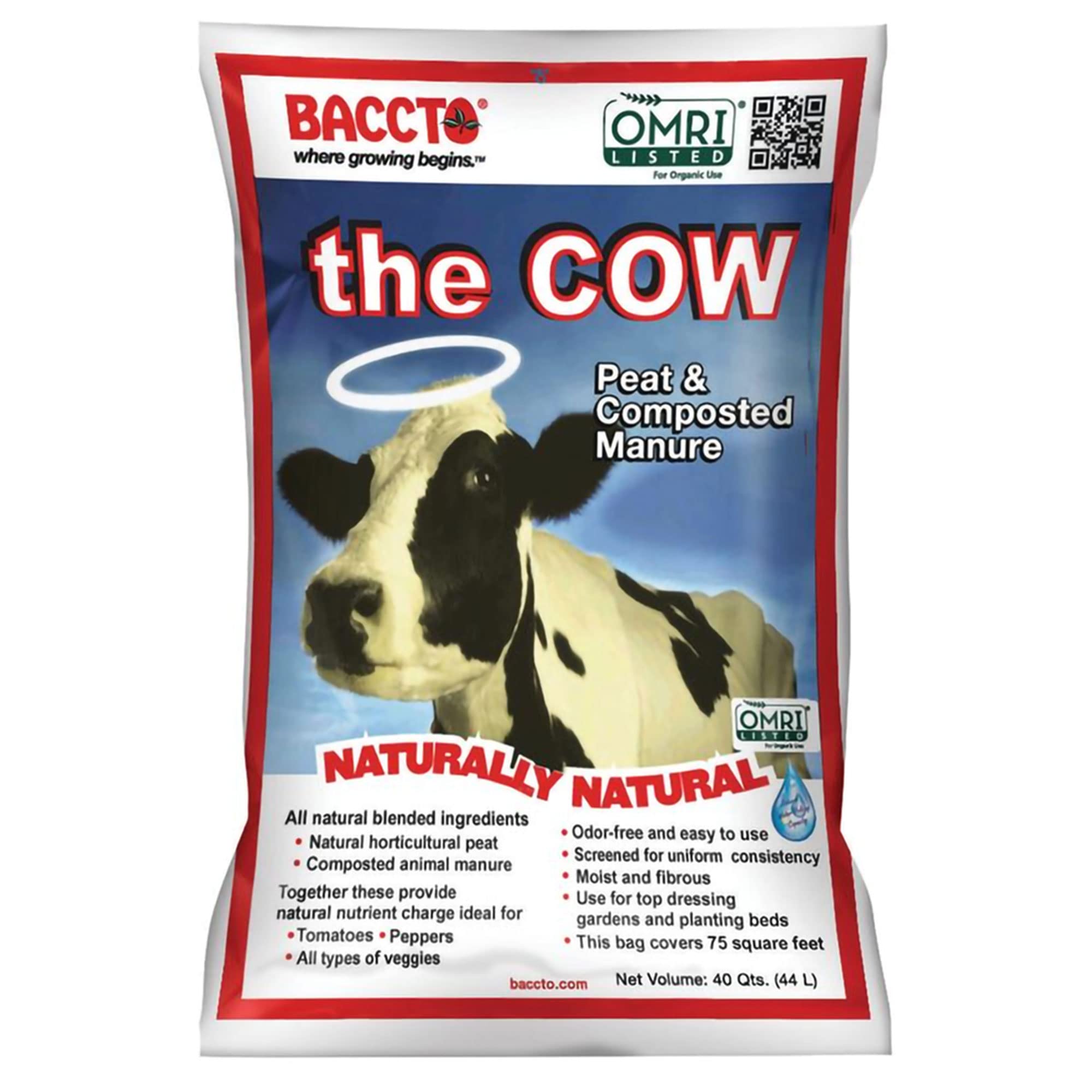
Manure-rich compost that finally doesn’t smell like manure — screened and ready to use.
Odor is a genuine barrier for many gardeners when choosing compost, especially if your raised bed is near a patio or a neighbor’s fence. Michigan Peat’s Wholly Cow is odor-free — dried down and composted so it doesn’t have the sharp ammonia or manure smell that Black Kow or Old Potters can carry. This matters because it means you can lay a top-dress before guests arrive, or work with the bag in a garage without driving everyone out. It is advertised as a natural and organic blend of peat and composted animal manure, giving it a high nutrient content.
At 34 Pounds for 40 quarts, this is one of the larger volume options in the list. Buyers love it for building raised bed soil and for mushroom substrates — one reviewer noted that the 35lb bag yields 12-15 5lb substrates at around each compared to for premixed. That kind of math makes it a strong value pick if you are filling beds. The texture is uniform because it is screened, so there are minimal sticks or clumps. Another buyer, age 78, said he uses it mixed with coco coir and perlite for sandy river-bottom soil — and it works.
The main difference from Black Kow is that Wholly Cow blends peat with the manure, which improves moisture retention further but also means a slightly different nutrient profile. It is not pure manure; it is a manufactured soil medium. That makes it excellent for starting beds from scratch.
No Smell
- Odor-free formula — you can work with it indoors or near your house.
- Large 40-quart volume at 34 lbs — good value for filling beds.
- Screened for uniform texture, minimal waste.
Mixed Materials
- Blend of peat and manure — not a pure compost.
- Not as microbially rich as pure worm castings.
Best suited for: Gardeners who want a large, odor-free batch of organic material to mix into raised beds, especially if smell is a concern.
Not for: Anyone seeking pure worm castings or the highest microbial content — this is a blended soil builder, not a straight biological inoculant.
6. Old Potters Organic Compost, Plant Based, ~25 lbs (24 qt)
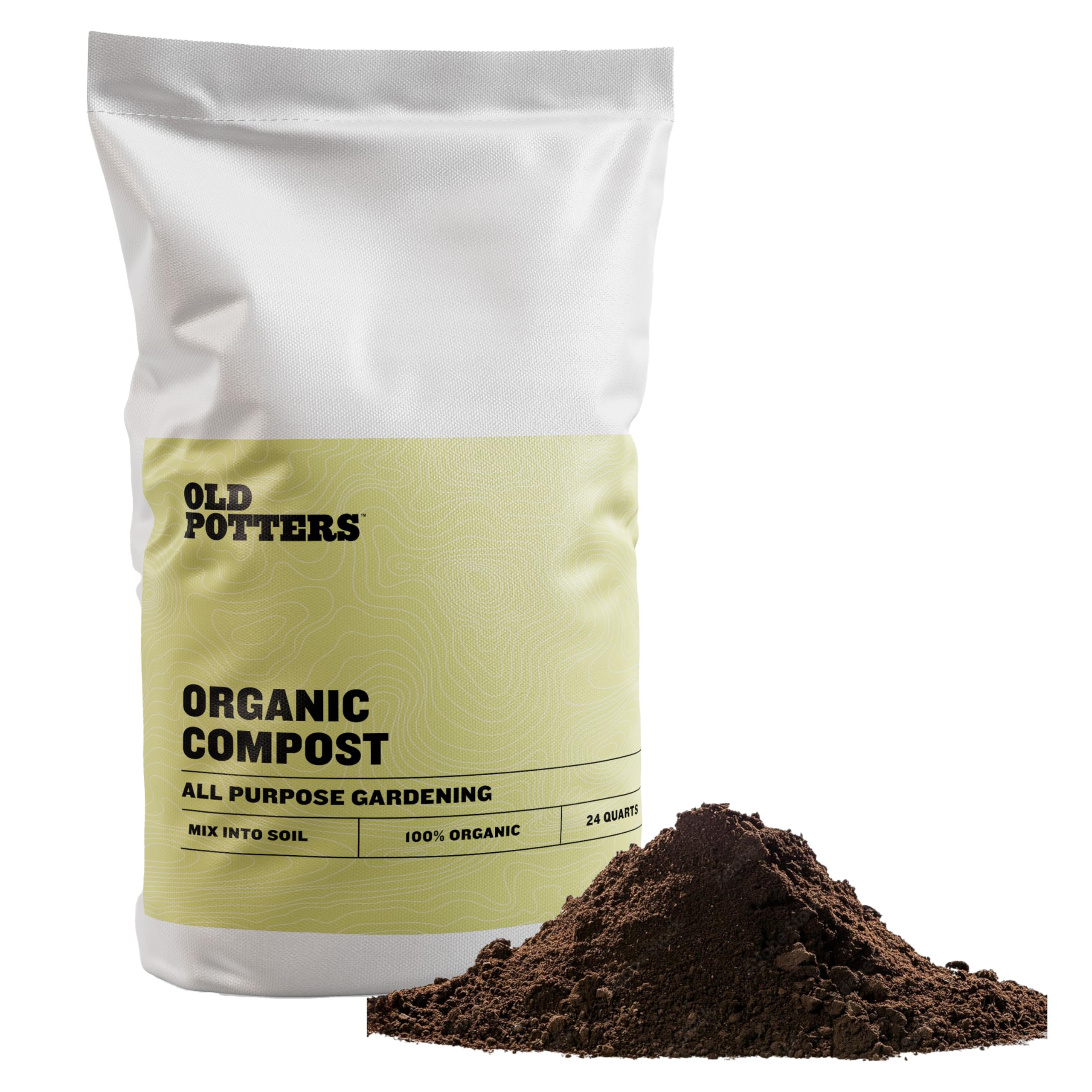
The plant-based compost that heavy feeders like roses and bananas devour.
Most composts are a mix of manure and green waste, but Old Potters is made from plant-based materials only — advertised as 100% organic and chemical-free. For raised beds where you want a completely vegan source of organic matter, this is a clean option. It is advertised as improving aeration and water retention, which is what your roots need. Shoppers say that it is so effective that one gardener saw a dormant indoor banana plant grow three new leaves, and an outdoor banana plant grew a new pup after using this compost. Another purchased 10 bare-root Walmart climbing roses in March, mixed this with worm castings and mycorrhizae (a type of beneficial root fungus), and saw them “grow vigorously and bloom early” — even in harsh clay soil in zone 7a.
The bag advertises a weight of ~25 lbs with 768 fluid ounces of volume, so it is lighter to handle than a 40 lb bag while still covering a fair amount of bed space. It is not odor-free, however. Buyers warn of a strong manure-like smell — one says “awful smell but absolutely amazing product.” You need to open this bag outdoors. It also has a clumpy texture, according to some reviewers, who had to manually crumble clayish clumps.
This compost is best for heavy feeders — the plants that need a lot of nutrition quickly. Roses, bananas, tomatoes, and squash will respond well. For plants with pre-existing root issues, one buyer saw poor reactions, so it is best used in a healthy bed.
Plant-Based Nutrient
- 100% plant-based materials — no animal manure involved.
- Proven for heavy feeders like roses and banana plants.
- Aids aeration and water retention in soil.
Strong Smell & Clumps
- Strong manure-like scent — open outdoors only.
- Can contain clayish clumps that need manual crumbling.
Pick this for: Heavy-feeding vegetables and flowering plants in raised beds where you want a plant-based organic source of nutrients.
Steer clear if: You are sensitive to strong smells or need a fine, clump-free texture for seedlings and indoor pots.
7. Earth Science Earthworm Castings – 3 lb
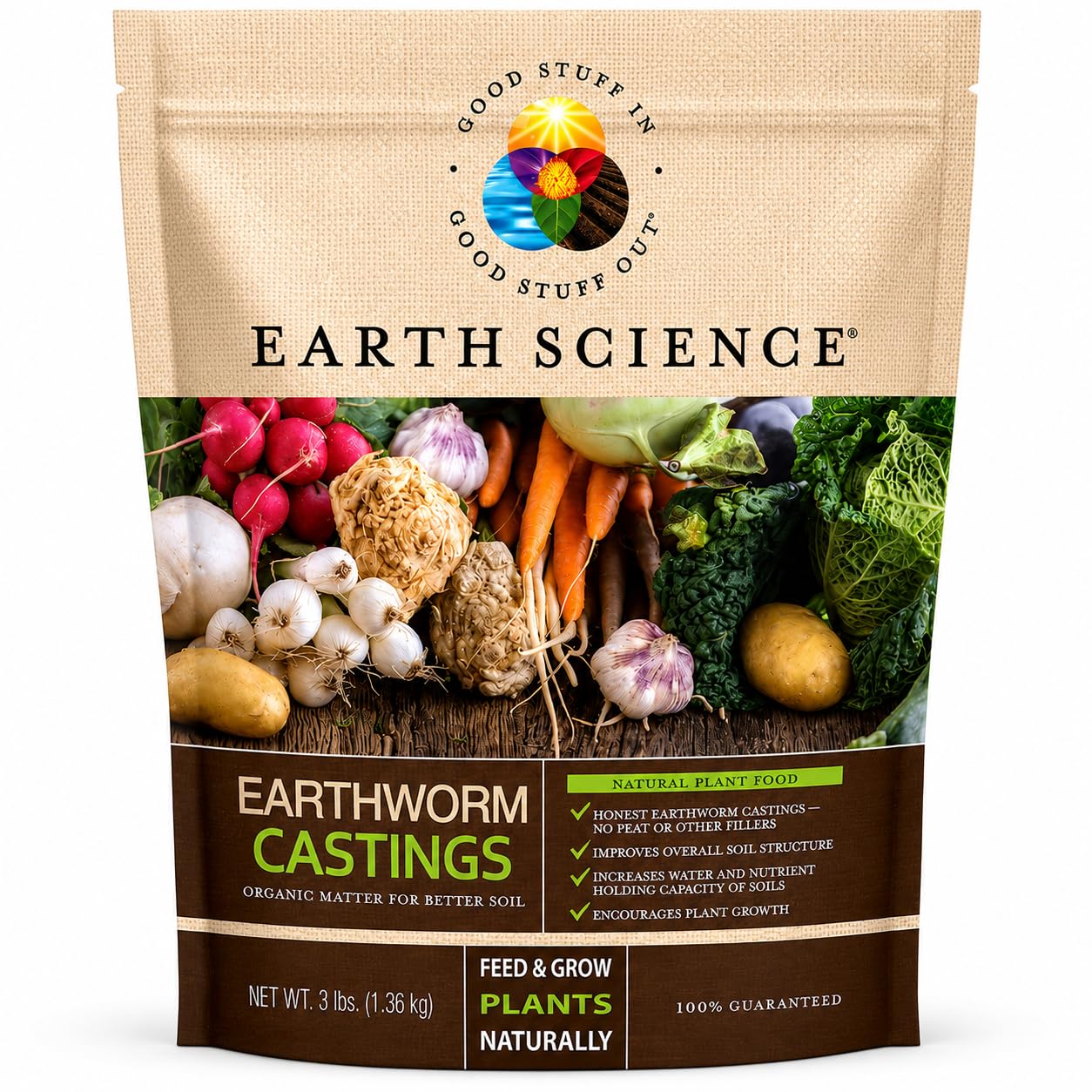
The tiny bag with a turbocharged punch for seed-starting and potted soil.
Seed-starting is where this product truly shines. One reviewer specifically noted: “Mixing 20-25% earthworm castings into coco coir seed-starting mix yields stronger, faster-sprouting seedlings with less transplant shock.” If you start your own vegetable seedlings for your raised beds, this is a specific, data-backed use case that fits the bag size perfectly. At 3 Pounds (48 oz), it is the smallest bag on the list, but it has a 4.9 rating from 186 buyers — the highest average score in the group.
The bag from Earth Science advertises that it increases water retention, reduces soil compaction, and acts as a natural deterrent for critters. It is advertised as 100% vermicompost with no fillers, and the mixing ratio is 1:4. That means one bag can be stretched by mixing it with four parts of your existing soil or other amendments. For small raised beds, that is a very economical way to get high-quality castings without buying a huge bag. Buyers report it is a great size for indoor plants and that it “helps mitigate the hardening of soil.”
Compared to the Back to the Roots bag above, this one is smaller and costs less upfront. But per ounce, the larger bag offers better value if you are buying for an entire bed rather than a seed tray. This is best used as a precision amendment.
Seedling Power
- Ideal for mixing into seed-starting media at a 20-25% ratio.
- Highest buyer rating at 4.9/5 from 186 reviews.
- Helps prevent soil compaction and increases water retention.
Small Volume
- 3 lb bag is very small — not enough for a large raised bed without buying multiple.
- Higher cost per ounce than bulk options.
Grab this for: Starting your own seedlings in a seed tray, or for small indoor plants and a single potted raised bed vegetable.
Opt for a larger bag if: You are amending an entire raised bed — the 5 lb Back to the Roots bag or the 40 lb Wiggle Worm will save you money and trips to the garden center.
Understanding the Specs
Worm Castings vs Composted Manure
Worm castings are the pure excrement of earthworms, full of beneficial bacteria and micronutrients that plants absorb easily without risk of burning. Composted manure (usually cow, chicken, or mushroom compost) is decomposed animal waste and bedding. It is cheaper per volume and builds the bulk of your soil, but it has a stronger odor and can carry weed seeds if not fully composted.
Unit Count Meaning
Unit count is listed in ounces or fluid ounces on many bags. It tells you the actual volume of material inside, not just the weight. A bag that weighs 5 pounds but has 80 oz of castings is denser than a bag that weighs the same but has fewer ounces — you are getting more active material per pound. For raised beds, you want a product with a high unit count relative to its weight.
Item Weight vs Bag Size
Weight (in pounds) tells you how heavy the bag is, but compost can contain moisture weight that does nothing for your soil. A 40 lb bag of castings is nearly all pure material, while a 34 lb bag of peat and manure may have lighter consistency. Look for bag reviews that mention how much “filler” or wet weight was present before deciding.
Mixing Ratios
Some products list a mixing ratio like 1:1 or 1:4. This tells you how many parts of other soil or amendments to mix with one part of this product. A 1:4 ratio means you mix one scoop of compost with four scoops of your existing soil, which stretches your bag further. A 1:1 ratio means you use equal amounts — better for poor soil but faster to run out.
FAQ
Can I use worm castings straight out of the bag without mixing?
Is it safe to use composted cow manure in a raised bed vegetable garden?
How often should I add compost to my raised beds?
What is the difference between OMRI certified and organic listed?
Can worm castings expire or go bad in the bag?
Will worm castings attract flies or pests to my raised bed?
How much compost do I need for a 4×8 raised bed?
What does “odor-free” mean for a manure compost?
Is there a difference between bagged compost and bulk compost from a landscape yard?
What is the best compost for starting seeds indoors to transplant into raised beds?
Final Thoughts: The Verdict
For most people, the best compost for raised beds winner is the Wiggle Worm 40lb Pure Worm Castings because it delivers the highest density of microbial life, worm egg material for ongoing soil improvement, and enough volume to cover multiple beds without needing to buy again immediately. If you want a certified organic option for a smaller vegetable bed, grab the Ribbon Organics OMRI Certified Compost. And for building soil structure affordably with proven reliability, the standout is the Black Kow Composted Cow Manure.
How We Picked
We do not accept paid placement. Every pick is matched to a real buyer and a real use-case; we do not hands-on test units.
Sources & Methodology
Specifications: manufacturer listings and product documentation. Review insights: verified customer reviews, as of July 2026. Pricing: not shown on this page (it changes often); check the current price via the retailer link.
As an Amazon Associate, Lawn Gear Lab earns from qualifying purchases. This does not affect which products we feature.