
Specs are compiled from manufacturer listings and verified buyer reviews and can change over time — please confirm the key details on the product page before buying.
Putting the wrong planting fertilizer on your garden can scorch the roots or leave you with tall, wispy plants that never fruit. The right one feeds the soil microbes first, so your plants pull what they need without you having to mix chemicals every weekend.
I’m Rikta, the writer behind Lawn Gear Lab. This guide compares the published specs from each brand plus patterns from verified customer reviews. You get each pick’s real strengths and trade-offs, not marketing spin.
The lineup ranges from slow-release granules and instant-dissolving tablets to microbe-rich soil amendments. Picking the right planting fertilizer depends on matching the N-P-K ratio (the three numbers for nitrogen, phosphorus, and potassium) to what you grow and if you want quick green growth or steady feeding all season.
Our Picks at a Glance


How To Choose The Best Planting Fertilizer
A fertilizer bag label tells you everything once you know what the three numbers mean and how fast the nutrients release. Here are the three factors to get right before you buy.
N-P-K Ratios: Matching Numbers to What You Grow
Every fertilizer shows three numbers, like 4-4-4 or 4-6-2. These stand for nitrogen (N), phosphorus (P), and potassium (K). Nitrogen drives leaf and stem growth — that helps lettuce, kale, and spinach produce lots of greens. Phosphorus supports root growth and flower/fruit production, so it is critical for tomatoes and peppers. Potassium boosts overall plant health and disease resistance. For a mixed vegetable garden, a balanced ratio like 4-4-4 or a slightly phosphorus-forward blend like 4-6-2 works without guesswork.
Organic vs. Synthetic: Feeding the Soil vs. Feeding the Plant
Organic fertilizers come from plant, animal, or mineral sources — bone meal, fish meal, kelp, or worm castings. They release nutrients slowly as soil microbes break them down, which builds long-term soil structure but takes a few weeks to show results. Synthetic fertilizers deliver nutrients in a salt form that plants absorb right away, but they can wash away and, if you apply too much, burn tender roots. For a low-maintenance garden, organic granules reduce the risk of overdoing it.
Form and Frequency: Granules, Powders, or Tablets
Granular fertilizers are the most common for outdoor beds and containers. You sprinkle them on the soil surface and water in, and they feed for several weeks. Powders dissolve in water for a fast-acting liquid feed, ideal for potted plants that need a quick boost. Tablets offer pre-measured convenience with no scoop required, perfect for indoor houseplant owners who want a no-mess solution. Match the form to how often you want to reapply.
Quick Comparison
| Model | Best For | N-P-K Ratio | Weight | Form | Amazon |
|---|---|---|---|---|---|
| Back to the Roots Worm Castings★ Best Overall | Soil amendment and seedling safety | — | 5 lb | Granules | Amazon |
| Down To Earth Tomato & VegAlso Great | All-purpose organic gardens | 4-6-2 | 5 lb | Granules | Amazon |
| FoxFarm Happy Frog All Purpose | Soil microbes and gentle feeding | — | 4 lb | Granules | Amazon |
| Jobe’s Organics All Purpose | Large gardens and high volume | 4-4-4 | 16 lb | Granules | Amazon |
| Espoma Garden-Tone 3-4-4 | Vegetables and herbs | 3-4-4 | 4 lb (per bag) | Granules | Amazon |
| Big A Tomato Premium | Tomato-specific feeding | — | 12 oz | Powder | Amazon |
| Instant Plant Food Tablets | Indoor houseplants | 4-3-6 | 0.48 oz | Tablets | Amazon |
In‑Depth Reviews
1. Back to the Roots Organic Worm Castings for Plants, Natural Fertilizer and Soil Enhancer, 5 lb
Our pick — over 4.5★ from 900+ verified ratings; the strongest balance of quality and price.
Pure worm castings that improve soil structure without any risk of burning tender roots — the safest option for seedlings.
Unlike concentrated fertilizer blends that can scorch seedlings if you apply too much, worm castings are a gentle soil amendment you cannot overdo. They contain beneficial microbes that protect seedlings from harmful pathogens and improve the soil’s ability to hold moisture and nutrients. The 80 oz (5 lb) resealable bag, at 80 oz versus the Espoma Garden-Tone 64 oz. Customers note using “a ton of this for my garden” and that it is “safe for monarchs” on milkweed plants.
This is not a complete fertilizer with a printed N-P-K — it is a soil conditioner that reduces the need for synthetic fertilizers over time as the biology in your soil builds up. The granules have no odor and no burn risk, making it the safest option for starting seeds or top-dressing established houseplants. One owner reported it is “better than what I usually get at Costco” and called it “high quality worm castings for the money.”
Why It Is a Good Move
- Zero burn risk — safe for seedlings, houseplants, and delicate root systems
- 80 oz bag; Espoma Garden-Tone is 64 oz
- Odorless and easy to mix into potting soil or sprinkle on top
What It Won’t Do
- No measurable N-P-K ratio — not a standalone complete fertilizer for heavy feeders
- Works best as a soil amendment alongside a balanced granular feed
Reach for this if: you are starting seeds, growing sensitive plants like milkweed, or want a no-risk organic soil builder that improves the entire root zone.
Pair it with something else if: your tomatoes or squash need a higher-nutrient complete feed — worm castings condition the soil but are not a full fertilizer by themselves.
2. Down To Earth All Natural Fertilizers Organic All Purpose Tomato & Vegetable Mix 4-6-2, 5 lb
One box covers all your edibles with a phosphorus-forward punch, no chemistry degree needed.
The 4-6-2 N-P-K ratio pushes toward fruit and flower production — exactly what tomatoes, peppers, and squash need during their main growth phase. (N is nitrogen for leaves, P is phosphorus for fruit, K is potassium for overall health.) The higher middle number means more phosphorus for blooms and fruit set, instead of just leafy growth. Ingredients like fish bone meal, blood meal, kelp meal, and rock phosphate release nutrients slowly over weeks. The OMRI listing (Organic Materials Review Institute, which confirms it meets USDA organic standards) means it is approved for certified organic gardens.
Buyers report it “revived pale, flimsy tomato plants in two weeks after application.” One reviewer noted it simplifies organic gardening by “replacing mixing 15 products” and that a single 5 lb box lasts over a year for an avid gardener. They also mention a fishy odor that fades in days and, if not worked into the soil, may attract raccoons. The 5 lb box gives you 25% more product than the 4 lb Espoma Garden-Tone.
What Makes It the Top Pick
- Phosphorus-forward 4-6-2 ratio targets fruiting crops like tomatoes and peppers
- OMRI listed for organic production — no synthetic chemicals
- 5 lb box is 25% heavier than the 4 lb Espoma Garden-Tone bag
What to Know Before You Buy
- Fishy odor after application until you water it in
- May attract raccoons if granules sit on the soil surface
Reach for this if: you want a single organic granular fertilizer that covers vegetables, herbs, flowers, and containers without needing multiple products.
Look elsewhere if: the smell of fish-based ingredients in the bag bothers you or you are planting in a small indoor-only setup where a strong odor would be an issue.
3. FoxFarm Happy Frog All Purpose Fertilizer – Slow Release with Soil Microbes & Mycorrhizal Fungi – OMRI Listed, 4 lb

This granular feed adds living microbes to the root zone, building long-term soil health instead of just dumping nutrients.
Most granular fertilizers are just nutrients — Happy Frog adds beneficial soil microbes and mycorrhizal fungi (fungi that form a partnership with plant roots to increase water and nutrient intake). These microbes can help the plant pull more from whatever is already in your soil. The slow-release form feeds gently over time, with no risk of salt burn from synthetic liquids. This makes it a safe choice for new transplants and established ornamentals.
The bag is OMRI listed for organic use. It works for flowers, vegetables, and ornamentals. The 4 lb size is the same as the Espoma Garden-Tone, but unlike the Down To Earth mix (which has a fishy odor), Happy Frog is generally reported as less pungent, though scent is subjective. There is no printed N-P-K ratio on this label — the focus is microbial activity rather than a specific nutrient number.
Why This Stands Out
- Contains live soil microbes and mycorrhizal fungi for root-level benefits
- OMRI listed — suitable for organic gardening
- Gentle slow-release granules reduce the chance of over-fertilizing
Consider This First
- No N-P-K ratio printed on bag — less useful if you need a specific nutrient balance
- 4 lb bag vs. 5 lb Down To Earth option
This is your pick if: you are rebuilding tired soil and want living microbes working in the root zone rather than just adding N-P-K numbers.
skip it if: you need a precise N-P-K ratio for a specific crop — this bag does not publish one.
4. Jobe’s Organics Granular All Purpose Fertilizer, 16 lbs Bag, 4-4-4

A 16 lb bag that covers a big vegetable garden, trees, and shrubs without breaking the budget — more than triple the weight of the 5 lb Down To Earth option.
The 4-4-4 N-P-K ratio is a perfectly balanced feed for general garden use. You apply it every 2-3 weeks during the growing season. Owners mention it works as a top dressing or steeped as a liquid tea (1 cup to 1 gallon of dechlorinated water, steeped 24 hours). The OMRI listing means it is approved for organic gardening by USDA standards.
One buyer mentioned that “neighbors kept asking us how we did it” after using this on vegetables. Another reviewer mentioned the strong smell — “it smells like the inside of a chicken house” — but said the odor fades after a couple of days. The white fuzz that appears after watering is beneficial mycorrhizal fungi, not mold. The resealable bag design helps keep it dry between uses, which matters given the 16 lb size.
Why the Bulk Works
- 16 lb bag is the largest in the lineup — covers extensive garden beds and shrubs
- Balanced 4-4-4 N-P-K works for vegetables, flowers, trees, and ornamentals
- OMRI listed for organic production
What Might Surprise You
- Strong manure-like smell for a few days after application
- Can develop white fungal fuzz on granules (harmless mycorrhizae) that may alarm new users
The best bet for: anyone with a large vegetable garden, multiple raised beds, or several trees and shrubs who wants one bag to feed everything for the season.
Not the right call if: you garden on a balcony or patio where a 16 lb bag is awkward to store and the smell could be an issue for close neighbors.
5. Espoma Organic Garden-Tone 3-4-4 Organic Fertilizer for Vegetables and Herbs, 4 lb Bag (Pack of 2)

Two 4 lb bags with a lower-nitrogen ratio tailor-made for leafy greens and warm-season crops without the fishy smell of the Down To Earth mix.
The 3-4-4 blend is lower in nitrogen than the Down To Earth 4-6-2, so it is a smarter choice for lettuce, kale, and cabbage where you want steady leaf production without excessive top growth that can taste bitter. It also contains 5% calcium, which helps prevent blossom-end rot (a common disorder where tomato bottoms turn black) in tomatoes and peppers. The exclusive Bio-tone formula is a proprietary mix of beneficial microbes that Espoma has been developing since 1929.
This pack ships as two 4 lb bags, giving you 8 lb total — less overall weight than the single 16 lb Jobe’s bag but in a more manageable format. Reviewers generally report clean, consistent results with no strong fishy odor. Compared to the Down To Earth mix, the Espoma ratio is gentler for herbs and cool-season greens.
What Works Well
- Lower nitrogen 3-4-4 ratio is tailored for leafy vegetables and herbs
- Contains 5% calcium to reduce blossom-end rot in fruiting crops
- Two separate bags make handling and storage easier than one large bag
One Thing to Know
- 4 lb per bag is a 25% smaller unit than the 5 lb Down To Earth option
- Not ideal for heavy feeders like corn or squash that prefer a higher nitrogen ratio
Choose this when: you grow a mix of leafy greens, herbs, and a few tomato plants and want a calcium boost to prevent blossom-end rot without over-feeding nitrogen.
Skip this if: you are feeding heavy-fruiting crops like melons or pumpkins that need a higher first number in the N-P-K ratio.
6. Big A Tomato Premium Organic Fertilizer with Kelp, 13.5 oz Indoor/Outdoor Plant Fertilizer

A water-soluble powder that pushes tomatoes and peppers toward bigger fruit fast — weekly mixing required.
This powder dissolves instantly in water and delivers nutrients directly to the root zone for rapid uptake. It is enriched with North Atlantic sea kelp, amino acids, humic acid, and a full set of micronutrients including iron, copper, boron, and zinc. Unlike the granular slow-release options that feed over weeks, this gives you more control over timing and strength. One customer observed starting tomatoes from seed in July and pulling “monsters” by October with weekly feeding, calling it “the best stuff I’ve used so far.”
The 12 oz bag is small — several reviewers noted that. You mix one scoop at the base of each plant once a week. The smell is not great but manageable, and you may need to transfer the powder to a jar for storage. It works on all vegetables, not just tomatoes, though the brand name targets tomato growers specifically.
Why Tomato Growers Like It
- Water-soluble powder provides rapid nutrient delivery for a quick growth response
- North Atlantic sea kelp and amino acids support fruit size and flavor
- Includes secondary nutrients (calcium, magnesium) plus micronutrients (iron, boron, zinc)
The One Trade-Off
- 12 oz bag is small — one user highlighted “it’s a very small bag” for the price
- Requires weekly mixing and application, unlike a set-and-forget granular feed
Buy this if: you grow tomatoes or peppers and want a fast-acting water-soluble boost that you can control week by week for maximum fruit production.
Pass on this if: you prefer a low-effort granular feed that you sprinkle once and forget — this needs weekly mixing and a smaller bag runs out faster.
7. Houseplant Fertilizer & Indoor Plant Food | Self-Dissolving Tablets | Instant Plant Food (4 Tablets)
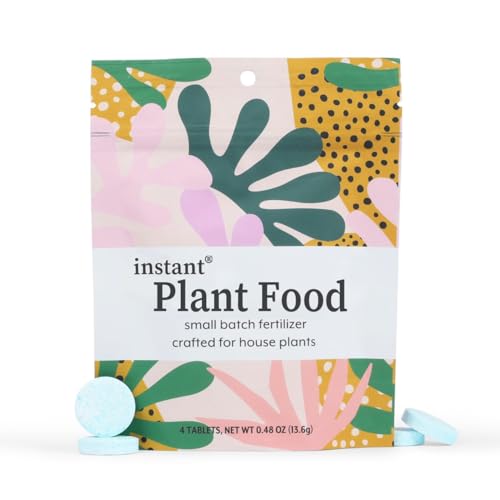
Drop a tablet in water and walk away — no measuring, no scoop, no mess for your indoor houseplants.
Each tablet dissolves completely in a watering can, delivering a 4-3-6 N-P-K formula that is slightly potassium-heavy. Potassium helps with overall plant health and root strength in houseplants. One tablet feeds a large houseplant or several small ones for up to 3 months. The ingredients come from naturally occurring minerals and a live fermentation process — no synthetic salts. The company is certified vegan and cruelty-free, and 1% of sales go to environmental organizations.
Reviewers point out it “revived withering plants within days; leaves greened, stems strengthened” and that one tablet per pitcher monthly lasted 2 months without reapplication. One self-described “beginner plant parent” called it “perfect.” Unlike every other product in this list, this one targets indoor potted plants and self-watering containers specifically, so if your planting is all indoors, this is the easiest option by far.
The Big Draw
- Pre-measured tablets eliminate measuring spoons and mess
- 4-3-6 N-P-K with trace micronutrients for a complete indoor plant diet
- One tablet lasts up to 3 months — low maintenance for busy owners
The Catch
- Only 4 tablets in the pack — you will need multiple packs for a full plant collection
- Designed for indoor houseplants, not outdoor vegetable gardens
Ideal for: anyone who keeps houseplants and wants a dead-simple feeding routine with no mixing, no smell, and no risk of root burn.
Not intended for: outdoor vegetable gardens, raised beds, or large-scale planting — the tablet form is too small for that scale.
Understanding the Specs
N-P-K Ratio — What the Three Numbers Actually Mean
The three numbers on the bag (like 4-6-2 or 3-4-4) represent the percentage by weight of nitrogen, phosphorus, and potassium. Nitrogen drives leaf and stem growth — good for lettuce and herbs but too much can delay fruiting. Phosphorus supports root development, flowering, and fruit set, which is why the Down To Earth mix at 4-6-2 is higher in that middle number. Potassium helps with disease resistance and overall plant hardiness. For a general vegetable garden, a balanced ratio like 4-4-4 or one with slightly higher phosphorus works without much guesswork.
OMRI Listing — What It Tells You About Organic Standards
The Organic Materials Review Institute (OMRI) evaluates products to confirm they meet USDA organic production standards. An OMRI-listed fertilizer contains no synthetic chemicals, sewage sludge, or prohibited additives. Products like the Jobe’s 4-4-4 and the Down To Earth 4-6-2 carry this listing, which matters if you are gardening for organic certification or simply want assurance that no hidden synthetic ingredients are in the bag. Not every organic fertilizer on the shelf is OMRI listed — check the label if certification is important to you.
FAQ
Can I use a tomato-specific fertilizer on all my vegetables?
How often should I apply granular organic fertilizer?
What does OMRI listed mean on a fertilizer bag?
Is it possible to over-fertilize with organic granular products?
Can worm castings replace regular fertilizer completely?
What is the difference between 4-4-4 and 4-6-2 fertilizer?
How do I know which N-P-K ratio my garden needs?
Can I use outdoor vegetable fertilizer on my houseplants?
Why does some organic fertilizer smell like manure or fish?
How should I store granular organic fertilizer?
Final Thoughts: The Verdict
If you want one dependable pick, the planting fertilizer winner is the Down To Earth All Natural 4-6-2 because its phosphorus-forward ratio targets fruiting vegetables while its OMRI listing and 5 lb bag give you more product per purchase than the Espoma Garden-Tone. If you want a bulk feed for a large garden, grab the Jobe’s Organics 16 lb bag — the 4-4-4 ratio covers everything from shrubs to squash without needing multiple bags. And for indoor houseplant care without measuring or mess, the standout is the Instant Plant Food Tablets.
How We Picked
We do not accept paid placement. Every pick is matched to a real buyer and a real use-case; we do not hands-on test units.
Sources & Methodology
Specifications: manufacturer listings and product documentation. Review insights: verified customer reviews, as of July 2026. Pricing: not shown on this page (it changes often); check the current price via the retailer link.
As an Amazon Associate, Lawn Gear Lab earns from qualifying purchases. This does not affect which products we feature.