
Specs are compiled from manufacturer listings and verified buyer reviews and can change over time — please confirm the key details on the product page before buying.
Reaching into a rose bush or a tangle of blackberry vines shouldn’t mean a dozen tiny, painful punctures. The real challenge is finding a pair of gardening gloves that stops thorns dead without turning your hands into stiff, clumsy clubs. The best options use dense, flexible materials that let you feel what you’re grabbing while keeping the spikes out.
I’m Rikta — the founder and writer behind Lawn Gear Lab. This guide is built by comparing the manufacturers’ published specifications and the patterns across verified customer reviews, so you get each pick’s real strengths and trade-offs instead of marketing spin.
These reviews focus on the materials, cuff lengths, and puncture resistance that separate a truly protective pair from one that lets thorns through, helping you find the right gardening gloves for thorns for your specific yard work.
Our Picks at a Glance

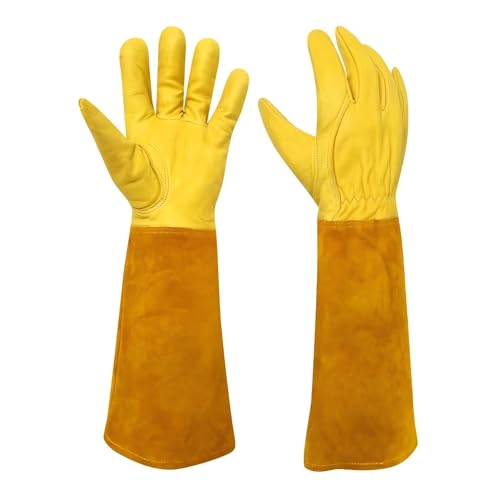
How To Choose The Best Gardening Gloves For Thorns
Not all thick gloves stop thorns. The real trick is picking a material and design that match the kind of plants you handle most. Three factors separate a glove that protects you from one that just gets in the way.
Leather Type and Density
Cowhide is the toughest for heavy work like clearing brambles and hawthorns, but it can feel stiff at first. Deerskin is much softer and more flexible, conforming to your hand quickly, but it may let very fine cactus needles or old dry thorns through. Some gloves combine a double layer of leather on the palm to get the best of both worlds.
Cuff Length and Coverage
Short cuffs leave your wrists and forearms exposed to scratches and punctures as you reach into dense bushes. Look for elbow-length gauntlets if you regularly prune roses, blackberries, or cactus. The extra length also keeps soil and debris from falling into the glove.
Fit and Dexterity
A loose glove makes it hard to grip pruning shears and pull weeds efficiently. A glove that fits snugly gives you more control but shouldn’t restrict your fingers. Check the sizing chart carefully, as each brand’s “medium” can fit differently.
Quick Comparison
| Model | Best For | Material | Weight | Coverage | Amazon |
|---|---|---|---|---|---|
| Rose Pruning Gloves with Embroidery★ Best Overall | Light deerskin comfort for rose care | Deerskin Leather | 5.29 ounces | Extra-long cuff | Amazon |
| luvaswel Cowhide LeatherTop Performer | Heavy-duty thorn clearing | 100% Cowhide | 200 Grams | Elbow-length sleeve | Amazon |
| FEISHDEK Deerskin Suede | Maximum flexibility with double layers | Deerskin + Goatskin | 9.6 ounces | Long gauntlet | Amazon |
| Nuo Wen Cowhide Gauntlet | Full forearm protection for rose pruning | Genuine Grain Cowhide | — | Elbow-length | Amazon |
| Professional Rose Pruning Gloves | Budget-conscious arm coverage | Synthetic Leather | — | Elbow-length gauntlet | Amazon |
| FEISHDEK Cactus Gloves | Soft deerskin for cactus handling | Deerskin Leather | — | Standard cuff | Amazon |
| COOLJOB Garden Gloves | Lightweight entry-level thorn protection | Faux Suede Leather | 3.2 ounces | Velcro wrist closure | Amazon |
In‑Depth Reviews
1. Rose Pruning Gloves with Embroidery
Our pick — over 4.5★ from 800+ verified ratings; the strongest balance of quality and price.
A featherlight deerskin glove with forearm coverage that disappears on your hands.
At just 5.29 ounces, this glove is significantly lighter than the luvaswel cowhide pick, making it ideal for long pruning sessions where fatigue sets in. The deerskin leather is breathable and flexible, while the extra-long cuff protects your forearms from scratches. The machine-washable design is a practical bonus for gardeners who hate dirty gloves.
Deerskin is naturally soft, but it won’t stop the same level of punishment that thick cowhide will. A few reviews mention that very sharp, dry thorns can still get through if you squeeze tightly. The 4.6-star rating from 842 reviews reflects strong satisfaction for rose and general pruning work.
It is a better choice for consistent comfort.
The trade-off: Not suited for heavy-duty clearing of hawthorns or cactus — stick to the luvaswel or Nuo Wen for that.
Grab these for: Daily rose pruning and general garden maintenance where you want thin, breathable protection with arm coverage.
Skip if: You need to wrestle with thick, woody brambles or cactus.
2. luvaswel Thorn Proof Gardening Gloves
The heavyweight champ that survived a full hawthorn tree takedown with almost no punctures.
If your garden work involves the kind of spiky overgrowth that shreds lesser gloves, this is the pair built for it. The 2-millimeter thick 100% cowhide leather is dense enough to stop hawthorn thorns, which are notoriously brutal. One buyer reports they took down an entire hawthorn tree over several months and were only pricked a couple of times during aggressive branch squeezing. The soft, flexible feel surprised reviewers — it arrives feeling already broken in, not stiff like many heavy cowhide gloves.
The pull-on closure and ambidextrous design keep things simple, though a few buyers report that very thin cactus spines can still find a way through. At 200 grams, these are noticeably denser than deerskin gloves, making them the right choice for heavy clearing over delicate rose trimming.
Real-world grit: This glove leads on pure puncture resistance with a cowhide thickness that beats the deerskin options above, and its long sleeve protects forearms from UV and scratches during prolonged yard work.
One honest trade-off: The heavyweight leather and lack of stretch mean your fingers won’t have the same nimble feel you get with a deerskin or synthetic pair.
Reach for this if: You are tackling overgrown brambles, thorn trees, or any job where you need maximum leather between your skin and the spikes.
Look elsewhere if: You only need basic protection for occasional rose pruning and want a lighter, more flexible glove.
3. FEISHDEK Deerskin Suede Gauntlet Gloves

Two layers of soft leather that give you dexterity without the usual sacrifice in protection.
You get double-layer puncture protection without losing the dexterity to grip pruners. The FEISHDEK Deerskin Suede Gauntlet Gloves use a double-layer palm with deerskin on the outside and goatskin underneath, which provides twice the thorn resistance compared to a single-layer glove. Reviewers confirm the leather is pliable right out of the package, making it easy to grip tools and handle delicate plants. One reviewer noted doing all their spring rose pruning without a single puncture, calling them a “standout” for their small hands.
The 9.6-ounce weight and long gauntlet provide solid arm coverage, but a few users note that old, dry blackberry thorns can still pierce the deerskin on the back of the hand and fingers. The pull-on closure is simple and effective.
top-tier feel: This glove beats the single-layer deerskin options (like the FEISHDEK Cactus Gloves) for puncture defense, while staying far more flexible than the luvaswel cowhide pick. The adjustable sleeve keeps debris out.
The catch: The goatskin is only on the palm side, leaving the back of the hand more exposed to tiny cactus spines.
Best for: Rose enthusiasts and cactus gardeners who want maximum dexterity and arm protection without the bulk of a heavy cowhide glove.
4. Nuo Wen Gardens Leather Gauntlet Gloves

Full elbow-length cowhide that buyers call genuinely thornproof against even the nastiest weeds.
Genuine grain cowhide offers superior abrasion and puncture resistance, and this glove delivers on that promise with a long gauntlet that covers up to your elbow. Buyers rave about its performance against razor-sharp holly leaves and multiflora roses, noting that thorns simply don’t get through. One reviewer who used them for chainsawing and clearing briers confirmed they work better than anything else they had tried. The Gunn cut and keystone thumb design (a shaped pattern that follows the natural curve of your hand) make them comfortable and flexible despite the tough leather.
A few users with small hands mention that the extra-small size is still a bit large, though the Velcro straps help adjust the fit. The right-hand orientation and pull-on closure keep things straightforward, but the 654 ratings averaging 4.7 stars speak to consistent quality.
Armor you can move in: Compared to the luvaswel cowhide gloves, these offer similar puncture protection with a slightly more refined fit and a longer cuff for full arm coverage. The leather quality is cited as top-notch.
One thing to note: They are not ideal for people with very small hands, as even the smallest size may feel loose.
Who it’s for: Gardeners who struggle with scratched forearms from briers and want a durable, comfortable glove that doesn’t make them feel like a clumsy bear.
5. Professional Rose Pruning Gloves

The affordable synthetic glove that one buyer used for over two years without a failure.
If you want elbow-length arm protection without paying for full leather, this synthetic option delivers surprising durability. Owners mention that it stops most thorns from roses and blackberries even during rough grabbing, and the reinforced fingertips add extra protection where you need it most. One review stands out: a gardener who works with mesquite trees and roses says they have had their first pair for over 2 years, and they have held up very well. The spandex back keeps the glove form-fitting and breathable.
The synthetic material won’t stop very small, sharp spikes like cactus glochids or fox tails, and it’s not designed for heavy work like moving rocks. Some feedback notes that brush bits tend to cling to the fabric, and there’s no grommet for hanging.
Value with a proven track record: At this budget tier, the elbow-length gauntlet and reinforced fingertips give you coverage that the lighter COOLJOB gloves can’t match. The 2-year durability report from a real buyer is a strong point.
The limitation: The synthetic leather is essentially a fabric with reinforced patches, so it won’t last as long under heavy abuse as real cowhide or deerskin.
Best for: Casual to moderate gardeners who need arm protection for roses and blackberries on a budget.
Not for: Anyone working with cactus or doing heavy landscaping.
6. FEISHDEK Cactus Gloves Soft Deerskin

The glove that finally tamed a barrel cactus that had been biting a gardener for years.
Handling cactus is a different challenge from roses — you need a glove that can stop fine, sharp needles without being too thick to grip a spiny pot. This deerskin option from FEISHDEK is built specifically for that job. One buyer with a notoriously painful barrel cactus said they couldn’t find anything to handle it until they got these gloves, praising them as amazing. The soft, comfortable leather conforms to your hand quickly, giving you good control during repotting and brushing.
There is a known limitation: the fine fuzzy thorns called “glochids” can still get through the seams of the glove. A practical workaround from one reviewer is to wear a larger pair of work gloves over these for extra protection. The standard cuff also means your forearms are more exposed compared to the gauntlet-style gloves on this list.
Perfect for its niche: This glove beats the synthetic and cowhide options for cactus work because it provides the softness and finger feel needed for delicate handling. It fits a specific need that the Rose Pruning Gloves with Embroidery and others don’t cover as well.
One warning: Glochids can penetrate the seams, so this isn’t a fully sealed solution for all cactus species.
Reach for these if: You regularly repot or handle cactus and need a soft, dexterous glove that stops larger spines.
Look elsewhere if: You need full forearm protection or are dealing with glochid-heavy cacti.
7. COOLJOB Gardening Work Gloves

A lightweight entry-level glove that customers note stops rose thorns while staying affordable.
If you are new to gardening or only face thorns occasionally, this faux suede glove offers a simple, affordable solution. The 3.2-ounce weight makes it the lightest option here, which is great for all-day comfort during light tasks like weeding and planting. Reviewers point out that rose thorns don’t go through the padded palm, and the material remains soft even when wet. The Velcro strap at the wrist keeps soil and debris out. One buyer mentioned that the size small fits a 3.25-inch hand snugly, which is helpful for those with smaller hands.
The top of the glove is made from a breathable mesh that is not thorn-proof, so you must keep the back of your hand away from spikes. It is also not designed for violent tests or heavy-duty bramble clearing. The padded palms reduce hand fatigue but are not a substitute for genuine leather protection.
Budget-friendly starter: This glove serves a different purpose than the heavy cowhide options — it’s for light protection where comfort and cost are the main concerns. It is lighter than (3.2 ounces vs. 5.29 ounces) the Rose Pruning Gloves with Embroidery, making it an easy grab for quick tasks.
The clear limit: The mesh top is a vulnerability that makes it unsuitable for reaching into dense thorn bushes or handling cactus.
Best for: Weekend gardeners who need basic thorn protection for roses and want a lightweight, washable glove.
Not for: Heavy brambles, cactus handling, or any work where thorns might reach the back of your hand.
Understanding the Specs
Leather Types and Puncture Resistance
Cowhide is the thickest and most puncture-resistant material, but it can be stiff until broken in. Deerskin is softer and more flexible but may not stop very fine or dry thorns. Some gloves combine a double layer (deerskin over goatskin) on the palm for better defense without sacrificing flexibility. Faux suede offers basic protection for light work but is not a substitute for real leather against heavy thorns.
Gauntlet Length and Coverage
Short cuffs leave your wrists and forearms exposed. An elbow-length gauntlet protects your arms from scratches and punctures when reaching into dense bushes. If you regularly prune roses or blackberries, a long cuff is a must-have. It also keeps dirt and debris from falling inside the glove.
Weight and Dexterity
Heavier gloves (200 grams or more) offer more protection but can cause hand fatigue over long periods. Lighter gloves (3 to 5 ounces) are more comfortable for extended wear but provide less puncture defense. Your choice depends on if you need all-day comfort or maximum protection for short, intense tasks.
Fit and Sizing
A snug fit gives you better control of tools and plants. If the glove is too loose, thorns can pinch the excess material and push it against your skin. Always check the manufacturer’s sizing chart, as “medium” can vary significantly between brands. Pay attention to reviews mentioning hand measurements for the most accurate fit.
FAQ
Can thorn-proof gloves stop cactus needles?
How long do these gloves last?
Can I wash my gardening gloves?
What size should I get if I have small hands?
What’s the difference between cowhide and deerskin?
Will these gloves protect my forearms?
Are synthetic gloves as good as leather for thorns?
Can I use these gloves for other tasks?
How do I make my gloves last longer?
Final Thoughts: The Verdict
For most people, the gardening gloves for thorns winner is the luvaswel Cowhide Leather Gloves because they offer the highest level of puncture resistance and a long sleeve for arm protection, backed by real-world reviews praising their performance against hawthorn trees. If you want maximum flexibility without giving up double-layer protection, grab the FEISHDEK Deerskin Suede Gauntlet Gloves. And for budget-conscious gardeners who need solid arm coverage for regular rose pruning, the Professional Rose Pruning Gloves are a proven value.
How We Picked
We do not accept paid placement. Every pick is matched to a real buyer and a real use-case; we do not hands-on test units.
Sources & Methodology
Specifications: manufacturer listings and product documentation. Review insights: verified customer reviews, as of July 2026. Pricing: not shown on this page (it changes often); check the current price via the retailer link.
As an Amazon Associate, Lawn Gear Lab earns from qualifying purchases. This does not affect which products we feature.