
Specs are compiled from manufacturer listings and verified buyer reviews and can change over time — please confirm the key details on the product page before buying.
If you have ever dumped a plant out of a plastic pot only to find a tangled, circling mess of roots, you already know the problem plastic creates. Cloth grow bags solve that by air-pruning the roots as they grow — when a root tip hits the fabric side, it dries out and stops, forcing the plant to branch out inside the bag instead of strangling itself. The result is a denser, healthier root ball and a plant that simply grows better.
I’m Rikta — the founder and writer behind Lawn Gear Lab. This guide is built by comparing the manufacturers’ published specifications and the patterns across verified customer reviews, so you get each pick’s real strengths and trade-offs instead of marketing spin.
Whether you are starting seedlings, moving tomatoes to the patio, or planting potatoes on a balcony, choosing the right cloth grow bags depends on fabric thickness, handle strength, and getting the size that fits your space and your plants.
Our Picks at a Glance


How To Choose The Best Cloth Grow Bags
Cloth grow bags look simple — basically a flexible pot made of fabric — but small differences in material weight, handle design, and size make a big difference in how long they last and how well your plants do. Here is what to check before you buy.
Fabric Thickness (300G vs 500G)
The number you see next to a “G” — like 300G or 500G — refers to the weight of the nonwoven fabric in grams per square meter. A 300G bag is sturdy enough for a season or two of normal use. A 500G bag is noticeably thicker, holds its shape better when filled, and can survive repeated washing and reuse over several years. If you plan to keep these bags around for more than one growing season, paying extra for the thicker material is worth it.
Handle Construction
This is the part that fails first on cheap bags. Some bags use handles cut from the same fabric as the pot — those tear under heavy, wet soil. Better bags use reinforced handles made from polypropylene webbing or nylon, often stitched in an X-pattern for extra strength. If you move your plants around to chase the sun or dodge a frost, reinforced handles matter.
Size and True Capacity
A “5 gallon” bag from one brand may hold slightly more or less than a “5 gallon” from another. A few brands list true tested capacity (like AC Infinity’s 5.39 gallons). For large plants like tomatoes or peppers, a 5-gallon bag is the minimum. For potatoes or deep-rooted vegetables, you may want 10 or even 20 gallons. Smaller 1 to 3-gallon bags are better for herbs, lettuce, and starting seedlings.
Quick Comparison
| Model | Best For | Capacity | Fabric Weight | Handles | Amazon |
|---|---|---|---|---|---|
| VIVOSUN 5-Pack 5 Gallon★ Best Overall | All‑around value for vegetables and flowers | 5 gallons | 300G | Serger-stitched fabric | Amazon |
| AC Infinity Square 5-PackAlso Great | Serious gardeners who want top durability | 5.39 gallons | 500G | Nylon reinforced | Amazon |
| LotFancy 5-Pack 20 Gallon | Oversized planting (potatoes, deep roots) | 20 gallons | 300G | PP belt reinforced | Amazon |
| Cavisoo 24-Pack 3 Gallon | Large volume in a compact size | 3 gallons | 300G | PP webbing X-stitched | Amazon |
| Sinimaka 7-Pack 10 Gallon | Colorful garden display and good value | 10 gallons | Standard fabric | Double-stitched fabric | Amazon |
| HealSmart 12-Pack 3 Gallon | Budget‑friendly bulk pack for small plants | 3 gallons | Standard nonwoven | Sturdy fabric | Amazon |
| iPower 24-Pack 1 Gallon | Seedlings, herbs, and small starts | 1 gallons | 300G | Nylon double-stitched | Amazon |
In‑Depth Reviews
1. VIVOSUN 5-Pack 5 Gallon Grow Bags Heavy Duty 300G Thickened Nonwoven Plant Fabric Pots
Our pick — over 4.5★ from 62,500+ verified ratings; the strongest balance of quality and price.
The 300G workhorse that over 62,000 gardeners trust for tomatoes, cucumbers, and patio gardens.
If you look up “reliable grow bag,” this is probably the one you find first. VIVOSUN uses 300G thickened nonwoven fabric that owners mention “feels strong and durable” and holds up under the weight of wet soil. The handles are stitched on with serger stitches — a sewing technique that wraps thread around the edge of the fabric — so they do not tear off when you haul a full bag across the patio. One buyer specifically called them “the perfect size” and noted how well the fabric held its shape through a season with cucumbers.
The 5-gallon capacity (listed as 20 liters) is the balance for most vegetables: tomatoes, peppers, cucumbers, and herbs all have enough room to develop strong root systems. Customers note healthier plants here than in plastic pots, and the drainage is exactly what you want — excess water runs right through the sides, so you cannot drown the roots. At over 62,000 ratings with a 4.6 average, this is the most-reviewed bag in this comparison by a wide margin.
The catch is that 300G fabric, while sturdy, will not last as many seasons as a 500G bag like the AC Infinity. If you leave it out in harsh sunlight all year, expect it to start degrading after two or three seasons. But for the price of a lunch out, you get five bags that work beautifully for the majority of home gardens.
Proven performer: Tens of thousands of buyers have put these through real seasons — the serger-stitched handles and dense 300G fabric hit the balance between cost and durability.
Trade-off to know: The fabric is black, which can heat up in direct summer sun; consider light-colored bags if you garden in a very hot climate.
Grab these if: you want a proven, affordable 5-gallon bag from a brand with a massive track record of happy customers.
Skip them if: you need a thicker fabric that will survive more than a few seasons or you want a square shape for tight spacing.
2. AC Infinity Square Heavy Duty Fabric Pots, 5 Gallon Aeration Reusable Grow Bags 5-Pack
The sturdy square pot that wears like iron and gives roots more surface area to breathe.
This is the bag that makes you wonder why you ever used round pots. The fabric is 500G thick (that is the heaviest in this lineup), so it holds its boxy shape when filled and does not slump over like thinner bags. The square design gives you more usable surface area for the roots to air-prune compared to a round bag of the same listed size. AC Infinity also lists a true tested capacity of 5.39 gallons rather than rounding up, so you are getting a genuinely roomier pot.
Buyers report these bags “wear like iron” and that the thick fabric solves the problem of threads disintegrating after one season — a common complaint with cheaper options. The nylon handles and reinforced stitching are built for moving a full load of wet soil. Unlike most fabric bags, this one also includes small fabric loops at the top for plant stakes, letting you set up tomato cages or support poles without puncturing the bag. One reviewer who switched from round grow bags after six years called them “better,” noting no side leakage and more durability.
The main trade-off is the price — you pay more upfront than you would for a standard 300G bag like the VIVOSUN. But for the gardener who wants these to survive multiple seasons without the handles ripping or the seams splitting, the extra dollars show up in the build.
Top performer: class-leading fabric thickness at 500G, square footprint, and plant-stake loops make this the most thoughtfully designed bag in the group for serious home gardeners.
Honest limit: The initial cost is higher than most 5-gallon bags, and you only get five in a pack — not ideal if you need dozens for a large garden.
Reach for this if: you want a bag that will hold its shape season after season and you grow in a square footprint (like a tent, shelf, or raised bed).
Look elsewhere if: you are on a tight budget and need more than five bags right now.
3. LotFancy 5-Pack 20 Gallon Grow Bags, 300G Thickened Nonwoven Fabric Pots with Reinforced Handles
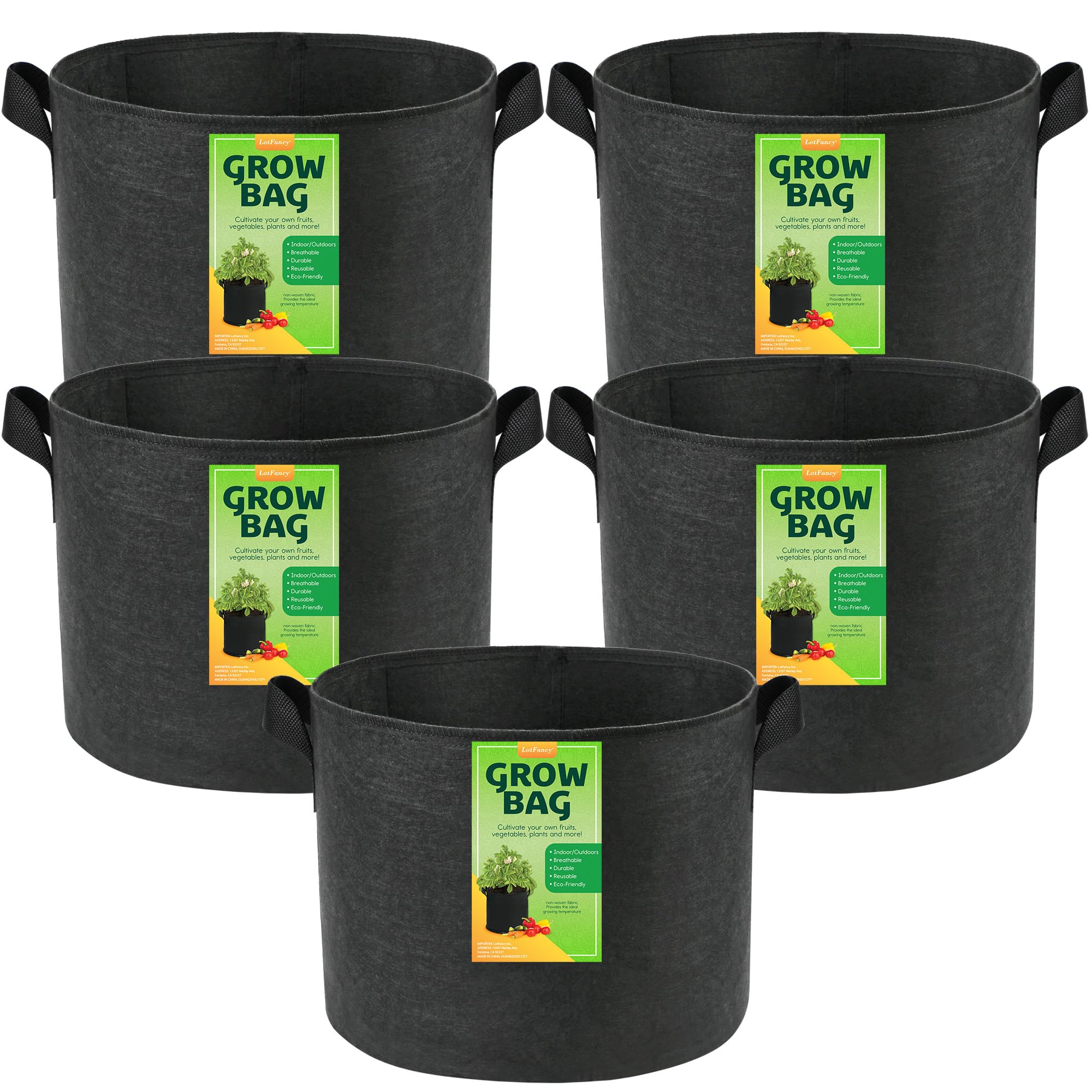
The bag that grows potatoes, melons, and any deep-rooting plant that needs serious soil depth.
Most grow bags top out at 10 gallons, but this one gives you a full 20 gallons — 19.7 inches across and 15.7 inches tall. That is enough soil for a sturdy potato crop, a single large tomato plant with deep roots, or even a small melon vine. The fabric is 300G thickened nonwoven, and what makes it stand out is the handle material. LotFancy uses heavy-duty PP belt handles — the same kind you might find on a duffel bag — with reinforced padding and double stitching. They are rated to support 78-100kg (roughly 172-220 pounds), far more than any standard fabric handle.
Buyers mention using these for potatoes and as a supplement to raised beds, noting that the porous black fabric dries out quickly in the sun. One reviewer gave a fair warning: because the material is both breathable and black, it attracts heat and loses moisture fast, so you need to stay on top of watering in warm weather. The bags fold flat for storage between seasons and the fabric is washable.
The real test for a 20-gallon bag is whether the handles can handle a full load of wet soil, and these do. Unlike the VIVOSUN’s fabric handles, the PP belt handles here are genuinely built to lift. The trade-off is you get only five bags, but each one is massive — so this is a buy for the gardener thinking in terms of volume, not plant count.
What stands out
- Massive 20-gallon capacity for deep-rooted vegetables like potatoes
- PP belt handles rated for heavy loads, far stronger than fabric handles
What to watch
- Black fabric absorbs heat and dries out fast — requires frequent watering in summer
- Only 5 bags in a pack, and each is bulky when filled
Get this for: potatoes, large single tomato plants, or any scenario where you need deep soil volume and reinforced handles to move it.
Think twice if: you grow mostly small plants like herbs or lettuce — the 20-gallon size is overkill for shallow-rooted crops.
4. Cavisoo 24-Pack 3 Gallon Grow Bags, Heavy Duty Thickened Non-Woven Plant Fabric Pots with Reinforced Handles
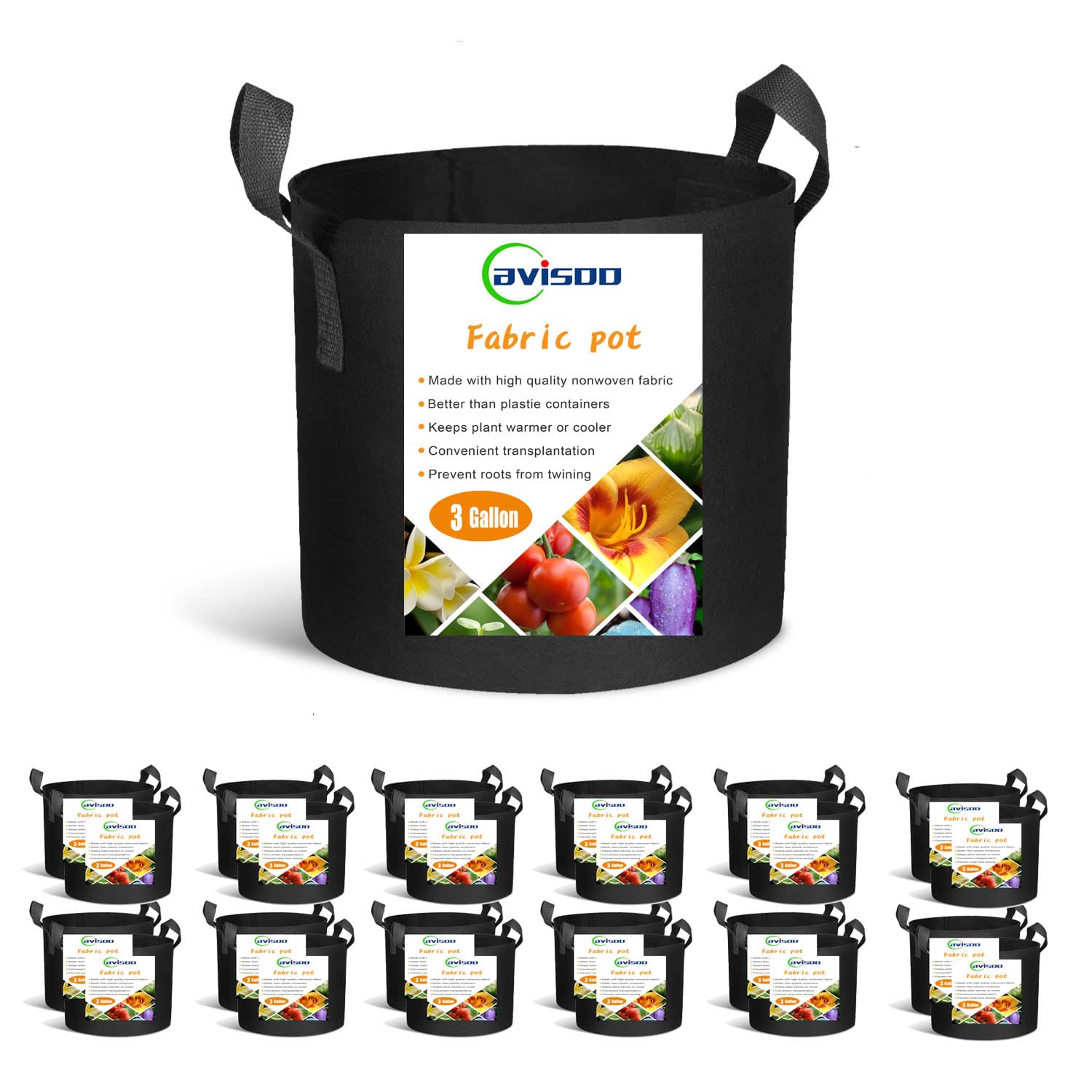
Two dozen 3-gallon bags with reinforced handles that fit a deck, a greenhouse, or a serious seed-starting setup.
When you need a lot of bags — for starting a big vegetable garden, running a small greenhouse, or planting peppers across a long balcony — this 24-pack delivers. Each bag is 3 gallons and 10 x 10 x 9 inches, which is the right size for peppers, eggplants, bush beans, and herbs. The material is 300G thick non-woven fabric, and the handles use strong polypropylene webbing stitched in an X-pattern for extra support. Cavisoo says these bags can be reused for more than 3 years, and buyers confirm they lasted a full season with no issues.
The key difference between this and the HealSmart 12-pack below is handle construction and the sheer number of bags. Cavisoo uses heavier webbing handles that hold up better under weight than standard fabric handles. One reviewer noted the bags dry out quickly in warm temperatures — they reported needing daily watering in the 80-90°F range, and 2-3 times a day when it gets hotter. That is a trade-off with any breathable fabric pot, but it is good to know before planting.
The price-to-quantity ratio is tough to top if you are covering a lot of ground. The small size also makes these a smart choice for indoor grow tents, where 3 gallons is a common volume for compact plants under lights.
High volume, good handles: 24 bags for under a dollar each with proper PP webbing handles — a smart buy for gardeners who need many pots at once.
Remember: 3 gallons is small; do not expect to grow large single tomato plants or potatoes in these. They are for medium-sized garden crops.
Best suited for: starting large seed batches, growing peppers and herbs in quantity, or outfitting a greenhouse with uniform pots.
Not right for: deep-rooted vegetables like tomatoes or potatoes that need 5 gallons or more.
5. Sinimaka 10 Gallon Grow Bags, 7 Pack Colorful Fabric Plant Pots with Handles for Garden and Outdoor Planting

The rainbow-colored bag set that turns a vegetable patch into a garden feature.
Most grow bags come in black, but this 7-pack gives you a different color for each bag: red, yellow, blue, green, purple, orange, and more. That is not just for looks — lighter colors reflect sunlight instead of absorbing it, so the soil inside stays cooler than it would in a black bag. Since the main complaint about black fabric pots is heat buildup, the multicolor approach here is actually functional. Each bag holds 10 gallons and measures 15 x 15 x 12 inches, making them deep enough for tomatoes, melons, and watermelons.
One buyer mentioned using these for watermelon and melons, praising the durability and the handles for transport. Another said they “held up really well through the spring, summer, and fall seasons” withstanding rain, wind, and even hail before being brought inside for winter. The double-stitched fabric feels sturdy, and the handles can support a full bag of soil. At 0.89 kilograms (about 2 pounds) each empty, they are light enough to move when empty but substantial when filled with soil.
The honest downside mentioned by a reviewer is color bleeding — the yellow bag in particular had dye running when it got wet, and the bags show water staining over time. That is cosmetic only, not structural, but if you are buying these to look nice on a deck, the staining may bother you. Still, for the price of a 7-pack of 10-gallon bags in distinct colors, this is a unique option in the category.
Why they stand out
- Seven different colors help manage heat and make the garden look intentional
- 10-gallon capacity is generous for large vegetables like melons
What to expect
- Some color bleeding and water staining reported — cosmetics, not durability
- Fabric is standard gauge, not the thicker 300G or 500G rated material
Pick these if: you want to brighten up your patio or balcony with colored bags that also reflect sunlight better than black.
Consider another option if: the potential for dye bleeding bothers you or you need a thicker fabric rated for heavy reuse.
6. HealSmart 12-Pack 3 Gallon Nonwoven Grow Bags, Aeration Fabric Pots with Handles

A dozen compact 3-gallon bags that are easy to move, store flat, and cost very little each.
If you are looking for a low-cost way to get started with fabric pots, this 12-pack of 3-gallon bags gives you a lot of bags for the money. Each bag is 10 inches in diameter and 9 inches tall — small enough to fit on a balcony railing or a windowsill, but deep enough for lettuce, strawberries, bush beans, and individual pepper plants. The nonwoven fabric is BPA-free and made to be breathable, so roots get air and water drains freely.
Reviewers point out these are “very well made” and have “held up beautifully,” with one reviewer specifically mentioning that they store flat when not in use and are easy to reuse. The handles are sturdy fabric strips, useful for moving bags around to catch the sun or dodge rain. Another buyer grew lettuce on a balcony and liked how the bags drained well and stayed light enough to move. The material thickness is standard nonwoven, not the 300G grade of the heavier bags in this list, so they are best suited for seasonal use rather than long-term repeated service.
The main limitation is size — 3 gallons is great for starting plants or growing small vegetables, but you will need larger bags for tomatoes, potatoes, or anything with a deep root system. And while the fabric feels good, one reviewer wished the seller also offered a tan color to reduce heat absorption in summer. For the budget-conscious gardener growing smaller crops, these are tough to top on value.
Budget-friendly starter set: 12 bags for a low price, good quality fabric, and the ability to store flat between seasons — perfect for new growers.
Size matters: At 3 gallons, these are for small-scale crops. Do not expect to grow a full-sized tomato plant in one.
Go for these if: you are starting seeds, growing herbs and lettuce, or need many small bags for a balcony setup on a budget.
Pass on these if: you plan to grow large vegetables or want a thicker fabric that will survive many seasons.
7. iPower 24-Pack 1 Gallon Grow Bags Heavy Duty Thickened Aeration Nonwoven Fabric Pots with Nylon Handles and 24 Labels
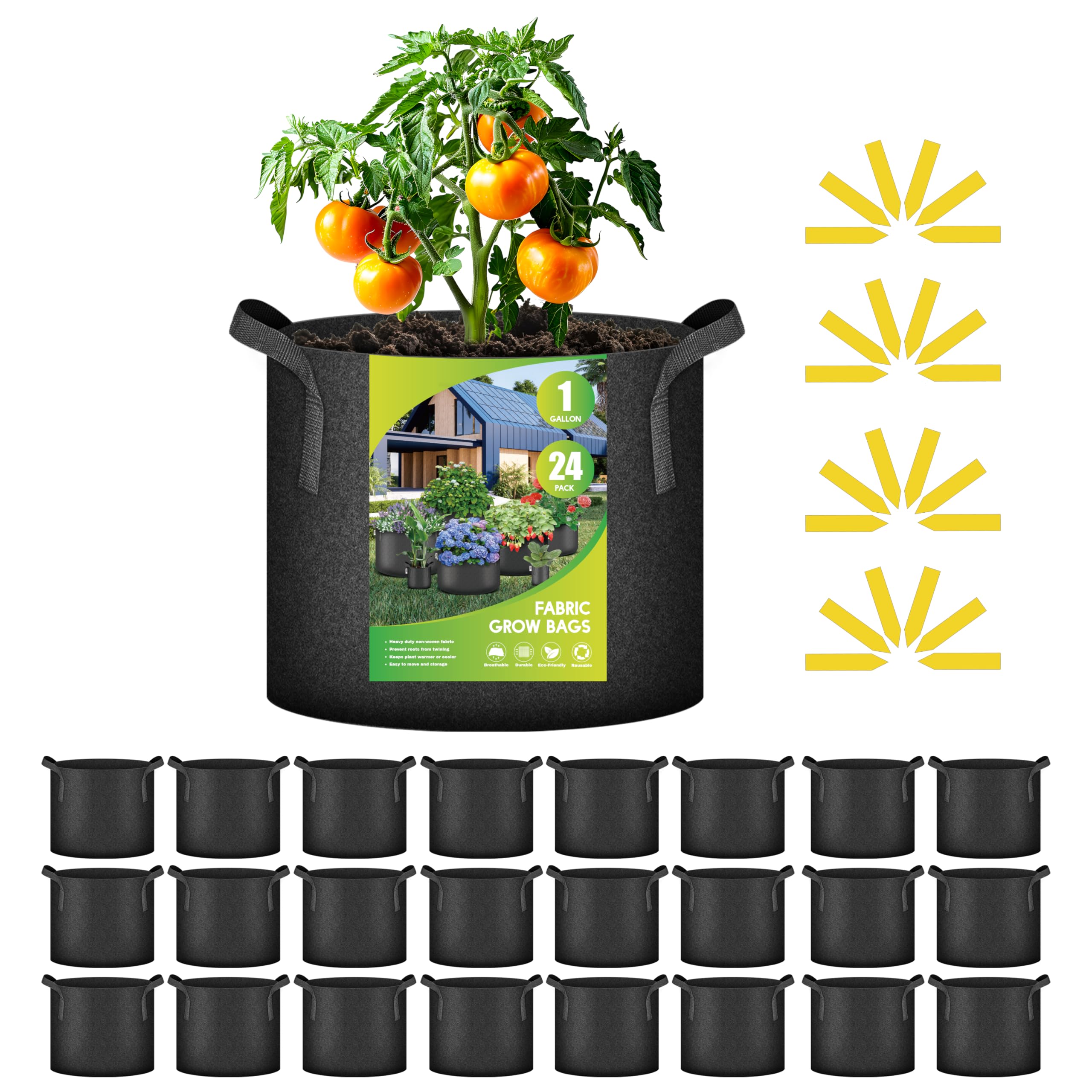
The 1-gallon starter bag that comes in a stack of 24 with nylon handles and matching plant labels.
This is the smallest bag in the lineup, but it is also the most specialized. Each bag holds 1 gallon and measures 7 x 7 x 6 inches — just right for starting seedlings, growing single herb plants, or rooting cuttings. The selling point here is the 300G thickened nonwoven fabric, which is unusually heavy for a bag this size. Most small grow bags use thin material, but iPower uses the same 300G fabric you would find in a 5-gallon bag, so these feel sturdy in hand. The nylon handles and double stitching mean they can handle being moved without tearing.
A really nice extra is the included set of 24 plant labels — a small touch that saves you from buying a separate pack. Buyers call the bags “thick, durable” and note that plants are thriving in them. One review mentioned using them on a deck and in a greenhouse, appreciating the heat retention and drainage. Because the bags are small and black, they warm up quickly, which helps in early spring but might be too hot for heat-sensitive plants in midsummer.
At 1 gallon, these are not for main-season vegetables — a single tomato would outgrow this bag fast. But for starting seeds, growing microgreens, or managing a collection of culinary herbs on a kitchen windowsill, the thickness and the included labels make this a better buy than a generic thin nursery bag. The 24-count pack gives you a full tray’s worth of starts.
Standout details
- 300G thickened fabric on a 1-gallon bag — unusually durable for this size
- 24 plant labels included, saving a separate purchase
Limitations
- 1 gallon is too small for larger vegetable plants
- Black color may overheat small plants in direct summer sun
Best for: seed starting, herb gardens, and propagation — especially if you want a thick, reusable bag rather than thin nursery containers.
Not for: main-season vegetables or any plant that needs more than a gallon of root space to reach full size.
Understanding the Specs
Fabric Weight
The “G” rating you see next to a bag’s description — 300G or 500G — refers to grams per square meter of the nonwoven fabric. A higher number means denser, thicker material. 300G is the most common standard and works well for a season or two. 500G is heavier, holds its shape better, and usually lasts longer. Thicker fabric also means less water seeps through the sides, so the soil stays moist a little longer between waterings.
Air Pruning
When a root tip in a plastic pot hits the wall of the container, it circles around and eventually strangles the plant. In a fabric bag, the root tip hits air at the surface and dries out — that “air pruning” tells the plant to branch out inside the bag instead. The result is a root ball with many more fine feeder roots, which means the plant can take up water and nutrients more efficiently.
Handle Construction
Handles are the first thing to fail on a grow bag. Low-end bags cut handles from the same fabric as the pot — those tear under weight. Better bags use separate materials like nylon webbing or polypropylene belt material, stitched on with reinforced patterns (sometimes X-stitched). If you plan to move bags when they are full of wet soil, look for reinforced handles specifically called out in the product description.
Square vs Round
Most grow bags are round. A square or rectangular bag, like the AC Infinity option, gives you more usable soil volume in the same footprint and fits together without wasted space between pots. Square bags also tend to stand up straighter when filled because the corners provide structure. The trade-off is that round bags are slightly easier to manufacture, so they are usually cheaper.
FAQ
How long do cloth grow bags last?
Do cloth grow bags need a tray or saucer underneath?
Can I use cloth grow bags indoors?
How do I clean and store cloth grow bags between seasons?
What size grow bag do I need for tomatoes?
Do cloth grow bags need holes in the bottom?
Will cloth grow bags stain a wood deck or patio?
Can I plant directly into a cloth grow bag with the nursery pot still on?
Are cloth grow bags better than plastic pots?
Do colored grow bags help with temperature control?
Final Thoughts: The Verdict
For the majority of shoppers, the best cloth grow bags are the cloth grow bags from AC Infinity because the 500G fabric and square shape offer the best long-term durability and root health. If you want a proven 5-gallon bag at a fair price with tens of thousands of happy reviews, grab the VIVOSUN 5-Pack. And for the gardener who needs massive 20-gallon capacity for potatoes or melons with handles strong enough to actually move them, the standout is the LotFancy 20-Gallon 5-Pack.
How We Picked
We do not accept paid placement. Every pick is matched to a real buyer and a real use-case; we do not hands-on test units.
Sources & Methodology
Specifications: manufacturer listings and product documentation. Review insights: verified customer reviews, as of July 2026. Pricing: not shown on this page (it changes often); check the current price via the retailer link.
As an Amazon Associate, Lawn Gear Lab earns from qualifying purchases. This does not affect which products we feature.