
Specs are compiled from manufacturer listings and verified buyer reviews and can change over time — please confirm the key details on the product page before buying.
Pulling weeds in a vegetable patch or flower bed never really ends. The wrong fabric can tear, block water, or break down in a single season. The real solution is a ground cover that blocks sunlight for weed control while letting air and moisture reach your soil. This guide is built by comparing the manufacturers’ published specifications and the patterns across verified customer reviews, so you get each pick’s real strengths and trade-offs instead of marketing spin. Whether you are covering a raised bed, a long pathway, or an entire garden, the right cloth for gardening can save hours of maintenance and keep your plants healthier without relying on chemicals.
Our Picks at a Glance


How To Choose The Best Cloth For Gardening
The right ground cover depends on fabric type, weight, and permeability. A lightweight cloth may work for a season, but a heavier one blocks more light and resists tearing under foot traffic or stone.
Fabric type: woven vs. non-woven
Woven fabric is made from polypropylene strips that create a grid. That grid makes it strong against tearing and good for pathways or under gravel. Non-woven fabric, which is needle-punched or heat-bonded, feels more like felt. It offers better water filtration — ideal for flower beds and vegetable gardens where soil contact and moisture movement matter most.
Weight and density
The weight, measured in ounces per square yard (oz), tells you how thick and durable the cloth is. A 3 oz fabric will stop many weeds, but a 5 oz or 8 oz sheet holds up under heavy mulch and repeated rain. Heavier fabric also reduces the chance of weeds pushing through seams or staples.
Water permeability and drainage
You want cloth that lets water pass through freely so puddles do not form on top. Excess pooling can drown plant roots and create mud. Most quality fabrics are designed to allow air and water exchange, but the rate varies — non-woven materials generally drain faster than tightly woven ones.
UV resistance and lifespan
Sunlight breaks down exposed fabric over time. Some products are treated to resist UV degradation, which extends their useful life when parts of the cloth are left uncovered. A fabric rated for several years or with an explicit UV treatment will save you from having to replace it every season.
Quick Comparison
| Model | Best For | Weight | Size | Fabric Type | Amazon |
|---|---|---|---|---|---|
| VIVOSUN Premium 5oz★ Best Overall | Large commercial gardens | 5 oz | 6ft x 300ft | Dual-layer (woven + non-woven) | Amazon |
| Dewitt 12-Year 3ozLong Life | Long-term flower beds | 3 oz | 3ft x 100ft | Non-woven | Amazon |
| VEVOR Geotextile 8oz | Drainage and French drains | 8 oz | 6ft x 50ft | Non-woven needle-punched | Amazon |
| TUFFIOM 3.7oz | Greenhouse and yard paths | 3.7 oz | 4ft x 300ft | Woven PP | Amazon |
| UWIOFF 3.2oz | Vegetable gardens | 3.2 oz | 4ft x 100ft | PE fabric | Amazon |
| Winisok 3.2oz | Mulched landscaping beds | 3.2 oz | 4ft x 100ft | Woven polypropylene | Amazon |
| GreatBuddy 3.2oz | Budget-friendly pathways | 3.2 oz | 3ft x 100ft | Woven PP | Amazon |
In‑Depth Reviews
1. VIVOSUN Premium Weed Barrier Landscape Fabric Heavy Duty, 6ftx300ft 5oz
Our pick — over 4.5★ from 900+ verified ratings; the strongest balance of quality and price.
The heavy-duty fabric that lets you walk on your garden beds every day without a tear.
This cloth uses a dual-layer design (a non-woven layer bonded to a woven layer) so water moves through faster. At 5 oz (ounces per square yard), it is thick enough to block sunlight and UV rays, giving weeds almost no chance to sprout underneath. The 6-foot by 300-foot size covers vast areas in one go. The green line guides at every foot help you align plants without measuring.
Buyers report the fabric is “excellent quality working great around garden beds” and holds up under daily foot traffic. One reviewer specifically mentioned it worked perfectly for a vegetable garden after cutting slots for tomatoes and peppers. The cloth resists fraying at cut edges because of its needle-punched construction, which is a real advantage over woven options that unravel quickly.
Unlike lighter 3.2 oz fabrics that shift or tear, this 5 oz cloth sits flat and stays put. The only honest caveat is the initial investment — it costs more upfront than a basic roll, but owners mention it lasts years longer than cheaper alternatives that barely survive a single season.
What stands out
- Dual-layer design lets water through much faster than standard woven cloth
- 5 oz (ounces per square yard) density blocks sunlight and UV rays effectively
- Green line guides at every foot simplify plant alignment
- Cut edges resist fraying and unraveling
Trade-offs to know
- Higher upfront cost than lighter-weight options
- Large 300-foot roll may be overkill for small gardens
The one to buy for serious gardens: Choose this if you want a thick, long-lasting barrier that handles foot traffic and heavy rain without breaking down. It beats thinner 3 oz fabrics like the Dewitt in both tear resistance and water flow.
Not ideal if: You only need a small patch of coverage and want to spend less — the sheer size and price make sense only for medium to large landscaping projects.
2. Dewitt 3-Foot by 100-Foot Non Woven 12-Year Landscape Fabric 12YR3100
A 12-year non-woven cloth that lets water and nutrients flow while starving weeds.
Dewitt treats this polypropylene fabric to resist UV light (ultraviolet rays from the sun), which is why it keeps working season after season. One reviewer noted it lasted over three years in Florida swamp conditions without weeds breaking through. At 3 oz it is not the thickest on this list, but the non-woven construction feels more like a durable felt than a plastic sheet. It is designed to minimize light penetration so weeds cannot germinate underneath. A hydrophilic treatment (a coating that attracts water) actively pulls water through instead of letting it pool on the surface.
A buyer who used it on a large planting bed project found it easy to work with and noted the price is fair for the quality. Another reviewer praised its performance in a pea gravel and fire pit area, saying it required no replacement after years of exposure. The 3-foot by 100-foot dimensions make it a practical choice for flower beds and narrow borders rather than sprawling fields.
Where it differs from the VIVOSUN dual-layer (5 oz) is in weight and structure. The Dewitt is lighter at 3 oz and uses a single non-woven layer, so it will not handle the same heavy foot traffic or large stone loads that the 5 oz or 8 oz fabrics manage. But for standard garden use, the simplicity and track record are hard to argue with.
A reliable workhorse: This cloth is a proven performer for flower beds and vegetable gardens where you want a simple, effective barrier that does not need replacing every year. The UV treatment gives it real staying power under the sun.
One honest limit: At 3 oz it is lighter than premium options, so do not rely on it to hold up under heavy gravel or daily foot traffic on pathways.
3. VEVOR Geotextile Landscape, 6ft x 50ft 8 oz, Non-Woven PP Drainage 350N

The thickest cloth on the list at 8 oz, built for drainage projects where nothing gets through.
Weighing in at a dense 8 oz per square yard, this is the heavy-duty specialist for French drains (trenches filled with gravel that redirect water away from a building), retaining walls, and erosion control rather than everyday flower beds. It has a 350N tensile strength rating (it can withstand 350 newtons of pull force before tearing), which means it resists tearing even when buried under stone or soil. The non-woven needle-punched construction (fibers are mechanically tangled together) filters gravel and soil while letting water drain freely. One buyer used it behind a retaining wall and said it was “perfect” for keeping the drainage area clean.
Reviewers consistently highlight its impressive thickness, with one calling it “the good stuff” and another noting nothing grows through it. The 6-foot by 50-foot size is shorter than a 100-foot roll, so you cover less ground per roll. But the sheer density means you rarely need to double-layer or worry about punctures. It is noticeably heavier than the 3.2 oz GreatBuddy fabric (8 oz vs 3.2 oz) and offers superior tear resistance for construction-grade tasks.
The catch is that this much cloth may be overkill for a simple vegetable patch or raised bed. For standard weed control, a 3 oz or 5 oz fabric will do the job with less bulk and easier handling. If your project involves heavy rocks, drainage ditches, or long-term ground stabilization, this is the one to grab.
Key strength
- 8 oz density with 350N tensile strength for tough, tear-resistant coverage
- Needle-punched non-woven fabric filters gravel while draining water
- Ideal for French drains, retaining walls, and erosion control
Considerations
- Heavier and shorter roll (6ft x 50ft) limits coverage per purchase
- More fabric than needed for simple garden weed control
Best for heavy-duty drainage: Reach for this if you are building a French drain or retaining wall and need a cloth that holds up under stone and soil without tearing.
Skip it for: Light garden beds where a standard 3 oz or 5 oz fabric works perfectly and costs less per foot.
4. TUFFIOM Weed Barrier 4 x 300 FT Garden Landscape Fabric, 3.7 oz

A 300-foot roll of heavy-duty woven cloth for covering sprawling yards and greenhouses on a budget.
At 3.7 oz per square yard, this fabric sits between the light 3 oz options and the 5 oz premium cloth, giving you a balance of thickness and affordability over a massive 4-foot by 300-foot area. It uses woven polypropylene (PP) with a UV-resistant treatment (designed to slow damage from sunlight). Customers note it holds up well through harsh winters — one buyer mentioned it survived the cold and still blocks weeds effectively. The woven construction makes it tear-resistant and easy to cut with scissors or a utility knife.
Reviewers mention it is an exceptional value compared to box store prices, with one calling it “S-tier quality at great price.” The cloth has green cutting lines to guide straight cuts. It works well as an under-layer for artificial grass, vegetable patches, and driveways. A buyer who installed it in garden paths said they only saw about 10% of weeds penetrating near seams or staples, which is a strong result for a cloth in this price tier.
The main difference between this and the VIVOSUN 5 oz fabric is the single-layer woven design — it drains well but does not match the dual-layer’s water permeability. You also need to stake it down thoroughly, as one reviewer warned that shifting can allow weeds to sneak through at the edges. For the coverage area and price, though, it is a solid mid-range pick.
Great for big spaces: If you need to cover a greenhouse, long pathway, or large yard, this 300-foot roll delivers heavy-duty woven protection at a competitive per-foot cost.
Watch out for: It can shift if not staked down well, and the woven edges may fray unless cut with a hot tool or sealed with tape.
5. UWIOFF 4ft x 100ft Garden Weed Barrier Landscape Fabric, 3.2 oz
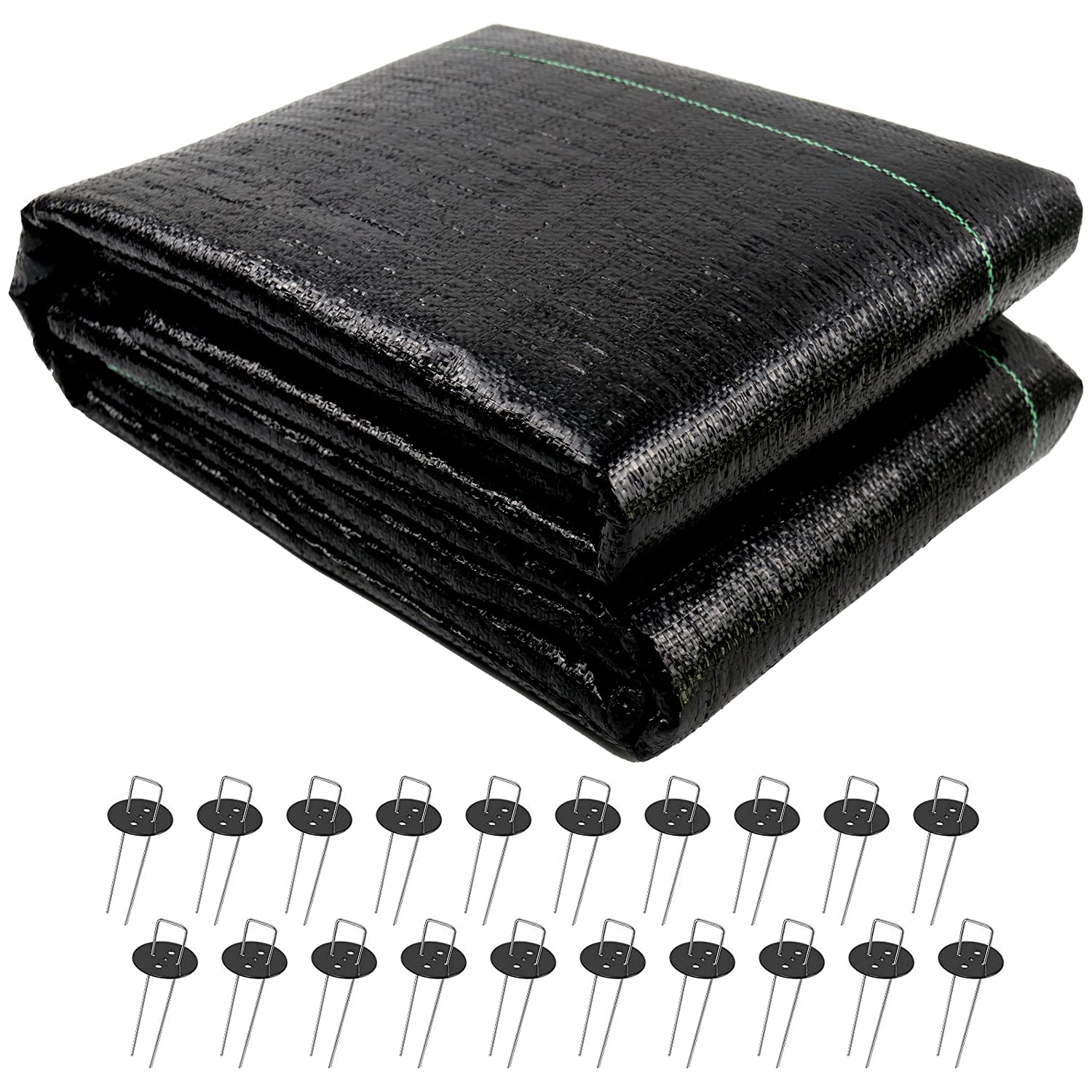
A flexible PE fabric that bends and shapes around garden beds without cracking in the sun.
UWIOFF uses polyethylene (PE) instead of the more common polypropylene (PP). The manufacturer says this makes it more flexible and aging-resistant than standard PP landscaping fabric. At 3.2 oz with UV resistance (treatment to protect against sunlight damage) built in, it is designed to hold up for more than 5 years of sun and bad weather. The 4-foot by 100-foot roll gives you plenty of material for a vegetable garden or flower bed, and the green stripes make alignment simple.
Reviewers point out that this cloth is an “excellent weed barrier for vegetable garden” with no breakthrough weeds. One owner reported it withstands daily foot traffic without showing wear. The water drains quickly through the fabric, which keeps the soil underneath from becoming waterlogged (soaked enough to drown plant roots). A reviewer who used it in a cut flower garden found the material durable, though cutting holes for plants can cause fraying at the edges — they suggested using a torch to burn holes instead for a cleaner finish.
Where it differs from the Winisok cloth (also 3.2 oz) is the material. The UWIOFF’s PE blend feels more pliable (flexible and easy to bend), which makes it easier to contour around curves and raised bed corners. The trade-off is that some buyers found it unravels at cut edges if not secured with tape, so plan for that during installation.
Why it works
- PE fabric resists aging and stays flexible in changing weather
- UV-resistant formulation lasts more than 5 years according to the maker
- Water drains quickly with no pooling on the surface
Installation notes
- Cut edges tend to unravel; use tape or a torch to seal them
- Need plenty of staples to keep it flat, especially in windy areas
A solid mid-range pick for raised beds: Choose this if you want a flexible, aging-resistant cloth that conforms to garden shapes and handles sun exposure well. It beats cheaper 3 oz fabrics on flexibility.
One real hassle: The fraying at cut edges is a genuine annoyance — budget time to seal each cut or plan to overlap sections generously.
6. Winisok 4FT x 100FT Weed Barrier Landscape Fabric, 3.2 oz (2 Pack 4FT x 50FT)

Comes as two long 50-foot sheets instead of a roll, so you skip the unrolling struggle.
Most garden cloth arrives tightly wound in a roll that fights back as you try to flatten it. Winisok sends the 4-foot by 100-foot total as two separate 50-foot sheets, which shoppers say makes installation noticeably easier — just lay them out side by side or end to end. The material is woven polypropylene (PP) at 3.2 oz (ounces per square yard) with tear-resistant properties. The manufacturer claims it provides more than 5 years of effective weed control.
Reviewers consistently call this cloth “very thick.” One noted it requires a sharp blade to cut and that the blade dulls quickly, causing shredding. For permanent installations where you do not plan to dig it up, that density is a bonus — it blocks weeds effectively and water still passes through. A buyer who used it in a vegetable garden said it kept the garden weed-free and let water through without issues.
The Winisok weighs 7.59 pounds compared to the GreatBuddy’s 5.15 pounds. That tells you it carries more material for the same 100-foot coverage. That extra bulk means it feels more substantial in hand, but it also makes it harder to cut cleanly with standard scissors. If you need a fabric that stays put under mulch and does not let light through, this is a strong value choice.
Design advantage
- Delivered as two 50-foot sheets for simpler handling than a bulky roll
- Thick 3.2 oz woven polypropylene blocks weeds effectively
- Heavier than similar 100-foot fabrics, offering more substance
Practical tips
- Very thick material dulls blades quickly and may shred during cutting
- Not ideal for temporary gardening use because it leaves plastic strands in soil if cut poorly
Best for permanent beds: Reach for this if you want a dense, stay-put fabric for mulched landscaping or perennial gardens and do not mind using a sharp blade to cut it.
Not for temporary use: The shredding issue makes it a poor choice for seasonal gardening where you might pull the fabric up at the end of the year.
7. GreatBuddy 3FT × 100FT Weed Barrier Landscape Fabric Heavy Duty, 3.2 oz
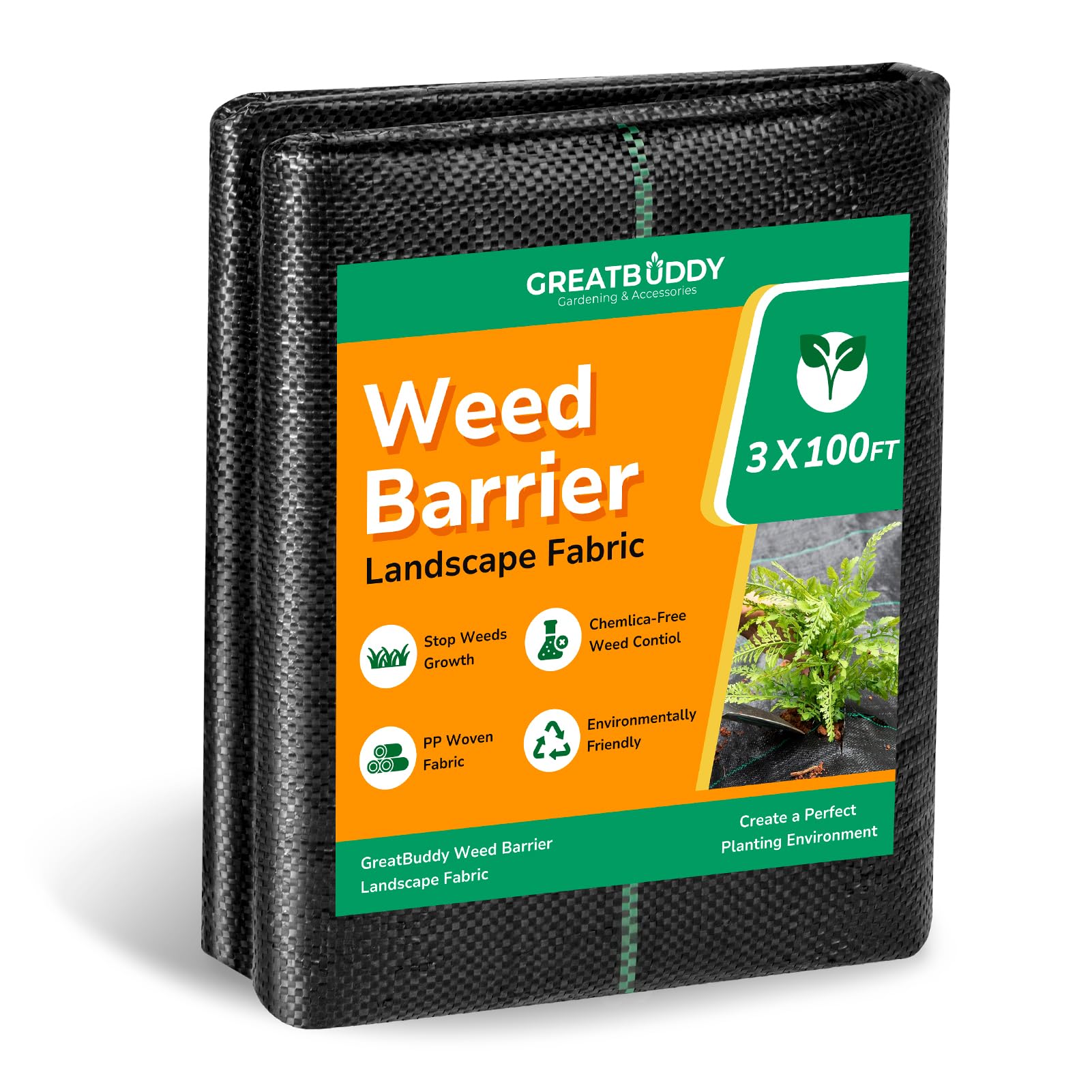
A narrow 3-foot-wide roll that keeps costs low while still blocking weeds in pathways and raised beds.
Sometimes you just need a straightforward, no-frills cloth for a smaller area. This 3-foot by 100-foot roll fits that brief. At 3.2 oz it is made from high-quality woven polypropylene (PP) that resists tearing and corrosion. Buyers confirm it is “heavy duty,” “nice and thick,” and beats store prices. One reviewer wrote that it is “heavy duty. beat all the stores on price. nice and thick.” The opaque fabric blocks sunlight effectively, and the woven structure lets water and air reach the soil beneath.
This cloth is noticeably lighter than the Winisok fabric — at 5.15 pounds it is 2.44 pounds lighter than the Winisok’s 7.59 pounds — so it is easier to carry and maneuver during installation. The 3-foot width works perfectly for standard raised garden beds and narrow pathways, though it may mean more seams if you need to cover a wide area. Buyers report it cuts easily with a utility knife, though one noted it shreds slightly along the cut edge — nothing a few landscape staples cannot hold down.
Compared to the premium VIVOSUN 5 oz fabric, the GreatBuddy is lighter and uses a simpler single-layer woven construction. It will not handle the same heavy traffic or last as long under intense sun, but for the price it gives you reliable weed control for moderate use. Great as a starter roll or for budget-conscious projects.
The entry-level winner: Grab this if you need a cost-effective, easy-to-cut cloth for a few garden beds or a pathway and do not want to spend on premium fabric. One reviewer called it “better than Vigoro brand” for the same job.
A reasonable limit: The 3-foot width means more seams for wide areas, and the lighter weight may not hold up as long under heavy sun exposure compared to heavier options.
Understanding the Specs
Fabric weight (oz per square yard)
This number tells you how dense the cloth is. A 3 oz fabric stops many weeds and allows good water flow, making it ideal for flower beds and vegetable gardens. An 8 oz fabric, like the VEVOR geotextile, is heavy enough for French drains, retaining walls, and erosion control where you need serious tear resistance and filtration. Heavier fabric also blocks more light, which directly reduces the chance of weeds pushing through.
Woven vs. non-woven construction
Woven fabric is made by weaving polypropylene strips into a grid — it is strong against tearing and works well under gravel or on pathways. Non-woven fabric is needle-punched or heat-bonded into a felt-like sheet. It filters water and soil better, making it the better choice for French drains and garden beds where you want drainage without losing soil. Both types block weeds, but the choice depends on whether you prioritize tear strength (woven) or filtration (non-woven).
FAQ
Can I put garden cloth directly over grass without removing it?
Will water still reach my plants through the fabric?
How do I cut weed barrier fabric without it unraveling?
How long does landscape fabric last in the garden?
Can I use landscape fabric for a French drain or drainage project?
Should I put mulch on top of the fabric or leave it exposed?
Do I need to overlap the fabric when covering a large area?
What is the difference between 3 oz and 5 oz weed barrier fabric?
Can I grow plants through landscape fabric?
Is landscape fabric safe for vegetable gardens?
Final Thoughts: The Verdict
For the majority of shoppers, the best cloth for gardening winner is the VIVOSUN Premium 5oz because its dual-layer design combines thick weed blocking with excellent water flow and a massive 300-foot roll. If you want long-term reliability in flower beds, grab the Dewitt 12-Year 3oz. And for heavy-duty drainage projects, the VEVOR Geotextile 8oz handles stone and soil without tearing.
How We Picked
We do not accept paid placement. Every pick is matched to a real buyer and a real use-case; we do not hands-on test units.
Sources & Methodology
Specifications: manufacturer listings and product documentation. Review insights: verified customer reviews, as of July 2026. Pricing: not shown on this page (it changes often); check the current price via the retailer link.
As an Amazon Associate, Lawn Gear Lab earns from qualifying purchases. This does not affect which products we feature.