
Specs are compiled from manufacturer listings and verified buyer reviews and can change over time — please confirm the key details on the product page before buying.
You walk into a garden center and see a bag labeled 10-10-10, another with 20-20-20, and a third that says 5-10-10 — but which one actually makes your tomatoes ripen or your fern turn dark green? Pick the wrong ratio and you get burned roots, yellow leaves, or weeks of zero growth. The right npk fertilizer depends on what you are growing and when. This guide matches each product to a real gardening situation using the manufacturer’s published specs and patterns from verified customer reviews — so you know which bag or bottle will deliver on its label promise.
I’m Rikta — the founder and writer behind Lawn Gear Lab. This guide is built by comparing the manufacturers’ published specifications and the patterns across verified customer reviews, so you get each pick’s real strengths and trade-offs instead of marketing spin.
These are the npk fertilizer options that actually deliver on their label promise based on what buyers and the spec sheet confirm.
Our Picks at a Glance
How To Choose The Best NPK Fertilizer
The three numbers on a fertilizer bag tell you the percentage by weight of Nitrogen (first number), Phosphorus (second), and Potassium (third). Nitrogen drives leafy green growth, phosphorus supports root and flower development, and potassium boosts overall plant health and disease resistance. A 20-20-20 is a high-dose balanced feed, while a 5-10-10 leans heavily into bloom and fruit support.
Match the Ratio to the Plant’s Stage
Leafy houseplants and lawns thrive on a higher first number (Nitrogen), like a 9-3-6 or a 20-20-20. Fruiting vegetables like tomatoes and peppers need a higher middle number (Phosphorus), making a 5-10-10 or a similar phosphorus-forward blend the smarter choice during the flowering and fruiting stage.
Consider the Form: Liquid vs. Granular vs. Tablets
Liquid fertilizers like the 32 oz. 9-3-6 feed instantly and are easy to mix into your watering routine, but require more frequent application. Granular options, from slow-release organic 4-4-4 to balanced 10-10-10, break down over weeks and need less hands-on effort. Self-dissolving tablets offer the ultimate convenience for indoor pots.
Quick Comparison
| Model | Best For | NPK Ratio | Form | Weight | Amazon |
|---|---|---|---|---|---|
| Instant Biologics 4-3-6 Tablets★ Best Overall | Beginner-friendly indoor feeding | 4-3-6 | Tablets | 0.48 oz | Amazon |
| 32 oz. 9-3-6 Plant FoodAlso Great | Quick green-up for foliage plants | 9-3-6 | Liquid | 32 oz | Amazon |
| FoxFarm Happy Frog 6-4-5 | Organic slow-release all-purpose | 6-4-5 | Granules | 4 lbs | Amazon |
| GS Plant Foods 20-20-20 | High-dose balanced feed | 20-20-20 | Water-soluble dry | 3 lbs | Amazon |
| GreenView 10-10-10 | Large-area lawns and gardens | 10-10-10 | Granules | 33 lbs | Amazon |
| Cz Garden 5-10-10 | Tomato and vegetable fruiting | 5-10-10 | Granules | 4 lbs | Amazon |
| Jobe’s Organics 4-4-4 | Organic vegetable and flower beds | 4-4-4 | Granules | 16 lbs | Amazon |
In‑Depth Reviews
1. Instant Biologics Houseplant Fertilizer Tablets (4-3-6)
Our pick — over 4.5★ from 900+ verified ratings; the strongest balance of quality and price.
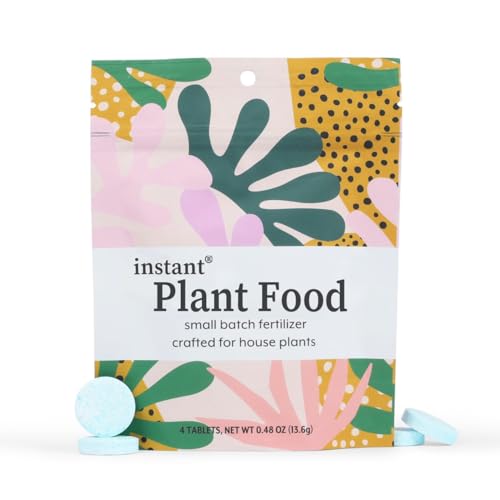
Drop one of these self-dissolving tablets into a watering can, and your indoor plants get a gentle 4-3-6 feed with zero measuring.
If measuring teaspoons of liquid 9-3-6 or spreading granules feels intimidating, these self-dissolving tablets eliminate every step. You drop one tablet into a watering can or glass of water, it dissolves quickly, and you pour. The 4-3-6 NPK ratio provides a gentle, balanced feed suitable for all types of houseplants — tropical, desert, air plants, or potted containers. According to the product data, each tablet feeds a large houseplant or several small ones for up to 3 months. One owner reported their plants that were losing “pep” came back to life after using the tablet water.
At just 0.48 ounces for 4 tablets, this is the lightest product on the list — the 32-ounce liquid 9-3-6 weighs 32 ounces. The trade-off is that one box covers far fewer plants than a bottle of liquid concentrate or a big bag of granules. For a few indoor pots, that is fine. For a greenhouse or outdoor garden, you will run out fast. The tablets are also certified vegan and cruelty-free, and 1% of sales go to environmental organizations.
The easy route
- No measuring, mixing, or mess — just drop and water
- 4-3-6 ratio is gentle enough to avoid root burn
- Certified vegan, cruelty-free, and made in the USA
Where it is limited
- 4 tablets feed a small number of plants — not for gardens
- Higher cost per feeding compared to liquid or granular concentrates
Best for: beginner plant parents or anyone with a handful of indoor pots who wants zero measuring and instant results.
Not for: outdoor gardens, large plant collections, or anyone who wants the lowest cost per feeding — this is a convenience product.
2. 32 oz. 9-3-6 Plant Food (Foliage-Pro)
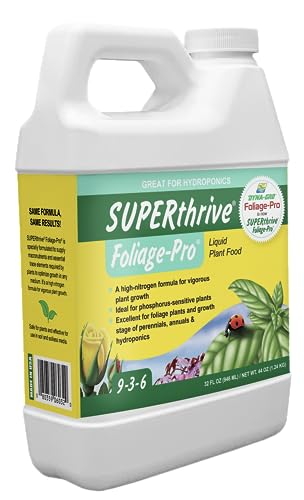
This liquid concentrate gives your sad foliage a fast green-up with a 9-3-6 ratio that pushes out new leaves.
You want the fastest visible results for your leafy houseplants — philodendrons, monsteras, ficus — and this 9-3-6 ratio delivers a nitrogen-first punch. The middle number (phosphorus) at 3 is low, so the plant puts its energy into leaves and stems rather than flowers or fruit. One reviewer noted that their 42-year-old bonsai banyan tree, which had never been fertilized, put out new leaves and branches within 3 weeks after a single dose. The mixing ratio is economical: you add only ¼ to ½ teaspoon per gallon of water. That 32-ounce bottle feeds a lot of plants before you need a refill.
Unlike the 20-20-20 from GS Plant Foods, this 9-3-6 is a liquid that you can use at every watering without the granular wait. Buyers report that it stopped yellowing on a monstera and promoted healthy growth faster than a balanced fertilizer. It is highly concentrated, so the upfront cost looks higher, but each use costs pennies. The biggest trade-off: this is formulated for foliage plants, so it is not your best bet for fruiting vegetables. For a pepper plant or tomato in the flowering stage, you want the phosphorus-forward 5-10-10 from Cz Garden instead.
Why it wins for leaves
- Nitrogen-rich 9-3-6 ratio drives fast leaf and stem growth
- Highly concentrated — just ¼-½ tsp per gallon makes it last
- Liquid form feeds immediately with no breakdown time
Where it falls short
- Not ideal for fruiting or flowering plants that need phosphorus
- Requires mixing at every watering, not a low-maintenance granule
Reach for this if: your houseplant collection needs a greens-up boost and you want visible results within three weeks.
Look elsewhere if: you are growing tomatoes or peppers and need a phosphorus-heavy formula for blooms and fruit set.
3. FoxFarm Happy Frog All Purpose Fertilizer (6-4-5)

This slow-release organic granule revived yellow tomato plants in under a week, owners mention, because of its 6-4-5 ratio and live soil microbes.
Want to feed your garden without synthetic chemicals? This 4-pound bag is packed with beneficial soil microbes and mycorrhizal fungi (tiny organisms that help roots absorb water and nutrients more efficiently). It carries the OMRI listing, which means the Organic Materials Review Institute has approved it for certified organic gardening. The 6-4-5 ratio provides a gentle, balanced feed that nurtures plants over time rather than hitting them with a synthetic shock. Customers note that it revived yellow tomato and zucchini plants within a week, and a monthly application led to the best garden they had ever grown.
Where this differs from the 20-20-20 from GS Plant Foods (a water-soluble synthetic) is its slow-release nature. You spread the granules, water them in, and let the soil life do the work. The downside is the smell — multiple buyers warn it smells “like poo big time” for a few days after application. But if you garden outdoors or don’t mind an earthy aroma for a day or two, the results speak for themselves. It is a clear upgrade from the budget 16-pound Jobe’s bag if you want active soil biology rather than just base nutrients.
Why it works
- Contains live soil microbes and mycorrhizae for root health
- OMRI listed for certified organic gardens
- Gentle slow-release feed that won’t burn roots
What to know
- Strong manure-like smell that lingers for days
- Granules take time to break down — not an instant fix
Best for: organic vegetable growers who want soil microbes working alongside the fertilizer for long-term plant health.
Skip if: the smell of organic fertilizer in your living space is a dealbreaker — this one is pungent for days after watering.
4. GS Plant Foods All Purpose 20-20-20
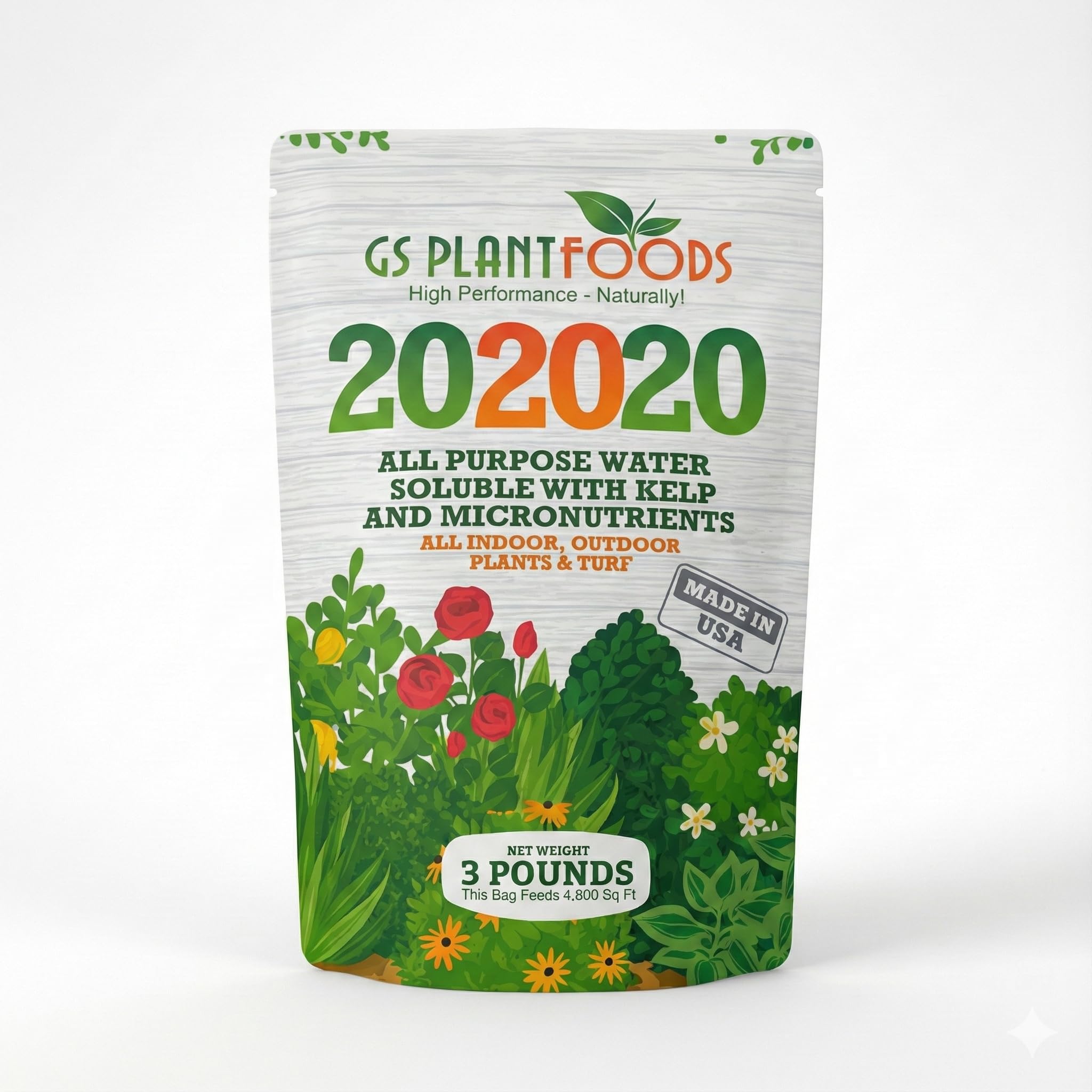
This even-ratio 20-20-20 powder turns struggling trees and lawns around in a single application, according to buyers who saw dark green leaves within a week.
With a 20-20-20 ratio, this delivers twice the nitrogen and potassium per pound compared to the GreenView 10-10-10. It dissolves completely in water, making it easy to apply with a watering can or hose-end sprayer. It includes kelp (a sea plant extract used in many nutrient programs). Reviewers point out that unhealthy purple orchid trees developed dark green leaves and shoots within a week of application, while untreated trees stayed yellow and brown. The 3-pound bag covers up to 4,800 sq ft of turf when used at the recommended rate.
The catch is that this is not an organic product. It is a mix of kelp and industrially produced fertilizer, so it does not carry an organic certification. If you need OMRI-listed organic feed, the FoxFarm Happy Frog is the better fit. But for a fast-acting, high-potency feed that can correct deficiencies on a large lawn or in a big vegetable patch, the 20-20-20 is impressively effective. Unlike the 9-3-6 liquid food, this is a dry powder that stays shelf-stable for years if kept dry.
What it brings
- High 20-20-20 ratio delivers a strong, quick correction for nutrient-deficient plants
- Full water solubility for easy application through sprayers
- Includes kelp for trace micronutrients like iron, zinc, and boron
What it lacks
- Not organic — contains synthetic fertilizer components
- Easy to over-feed if you mis-measure the powder, risking root burn
Reach for this if: you need a quick, powerful correction for yellowing plants or a large lawn area and do not require organic certification.
Look elsewhere if: you are growing an organic garden under certification — this is not OMRI-listed and contains synthetic inputs.
5. GreenView Multi-Purpose Fertilizer 10-10-10 (33 lb)

This 33-pound bag of 10-10-10 granules handles your entire yard, garden, and flower beds with one formula, covering up to 10,000 sq ft.
At 33 pounds, this is by far the largest bag in the list — the FoxFarm Happy Frog weighs only 4 pounds, so GreenView gives you 33 pounds compared to 4 pounds for the FoxFarm Happy Frog for a moderate step up in price. The 10-10-10 balanced ratio makes it a true all-purpose feed suitable for vegetables, flowers, trees, shrubs, and ornamental gardens. Buyers confirm that it greens up plants quickly and works as well as more expensive specialty fertilizers. The bag covers up to 10,000 sq. ft., which makes it ideal for a large suburban lawn or a big vegetable patch.
The trade-off is that 10-10-10 is a middle-road ratio. It does not provide the nitrogen punch of the 20-20-20 feed or the phosphorus boost of the 5-10-10 formula for fruiting plants. If your garden has specific needs, you will end up supplementing. But for a one-bag solution that does not require measuring small amounts of a liquid concentrate like the 9-3-6, the convenience of these pre-measured granules is tough to top. One buyer mentioned that as an older person, having it delivered directly with no heavy lifting at the store is a major plus.
The big bag advantage
- 33 lbs covers up to 10,000 sq ft — the best value per square foot here
- Balanced 10-10-10 works on nearly any plant type
- Granules are well-formed with no clumping, buyer reports
The trade-off
- Not tailored for specific growth stages — no phosphorus or nitrogen spike
- Takes time to break down; not an immediate correction
Ideal for: anyone with a large yard or garden who wants one affordable bag to cover trees, shrubs, vegetables, and lawn without buying separate formulas.
Not ideal if: you need a targeted high-phosphorus feed for tomato fruiting or a high-nitrogen formula for indoor foliage — this is a generalist, not a specialist.
6. Cz Garden 5-10-10 Tomato & Vegetable Fertilizer

This 5-10-10 granule pushes tomatoes and peppers into heavy fruiting mode with a phosphorus-rich ratio that is double its nitrogen.
When your tomato plants are covered in flowers and you want those flowers to turn into fruit, a balanced 10-10-10 or high-nitrogen 9-3-6 will give you more leaves rather than more tomatoes. This 5-10-10 granule flips the ratio: the middle number (available phosphate) is double the nitrogen, which signals the plant to set fruit and develop strong roots. It also includes 2% iron plus other micronutrients to prevent yellowing between the veins of young leaves. Shoppers say huge tomatoes, healthy peppers, and yellow squash after switching to this formula, and one gardener mentioned using only one bag per year alongside homemade fertilizers before fruiting.
This is a more precise tool than the all-purpose GreenView 10-10-10 bag for fruiting vegetables. The 4-pound bag is resealable, which matters because you use only a tablespoon or two per plant every two weeks during the fruiting stage. That makes it more economical than it first appears. It is heavier than the 0.48-ounce tablet product from Instant Biologics by a wide margin, but that weight is the volume you need for a real outdoor garden.
Why it works for fruit
- Phosphorus-heavy 5-10-10 ratio supports bloom and fruit set
- Includes 2% iron plus micronutrients for deep green leaves
- Resealable pouch keeps granules dry between uses
What to consider
- Too low in nitrogen for leafy greens or lawns
- Granules need watering in; not a fast liquid feed
Buy this for: tomatoes, peppers, squash, and any fruiting vegetable once flowers appear — it delivers bigger harvests than balanced fertilizers.
Buy the GreenView 10-10-10 instead if: you grow a mix of leafy greens and fruiting plants and want one bag for everything.
7. Jobe’s Organics Granular All Purpose Fertilizer (4-4-4)

This OMRI-listed 4-4-4 granule sent one gardener’s squash harvest into overdrive, buyers report, at a lighter 4-4-4 ratio that is safe for frequent use.
At 16 pounds, this is a mid-weight organic option that sits between the tiny 4-pound FoxFarm bag and the massive 33-pound GreenView bag. The 4-4-4 ratio is lower than the 6-4-5 on the FoxFarm bag, meaning it provides a lighter, gentler feed — good for sensitive plants and for mixing into potting soil without worrying about burn. It is OMRI listed for organic gardening by the USDA, and it contains no synthetic chemicals. Buyers have reported massive harvests of squash, cucumbers, and eggplant after using it as a liquid feed (soaking one cup of granules in one gallon of dechlorinated water for 24 hours).
One customer observed that the granules smell “like a chicken house for days after application,” but also said that the smell fades and the granules break down into humus (decomposed organic matter that feeds soil) in about a week. The biggest difference between this and the FoxFarm Happy Frog is that Jobe’s does not include the same level of active soil microbes and mycorrhizal fungi. It is a simpler organic feed. For an organic gardener on a budget who wants to cover a medium-sized vegetable bed and flower border, this hits the balance between cost, weight, and certification.
Why it is a solid choice
- OMRI listed for organic gardening with no synthetic chemicals
- Lighter 4-4-4 ratio is safe for frequent application
- Can be used as a dry top-dress or soaked for liquid feed
The downsides
- Strong manure smell for a few days after application
- No added soil microbes or mycorrhizae like the FoxFarm option
Ideal for: organic gardeners who need a large bag for a vegetable bed and want USDA organic certification without spending premium money.
Skip if: you want a biologically active fertilizer with added microbes — the FoxFarm Happy Frog is a better choice for soil life.
Understanding the Specs
NPK Ratio (Nitrogen-Phosphorus-Potassium)
The three numbers on every fertilizer label represent the percentage by weight of each macronutrient. The first number (Nitrogen) drives green leaf and stem growth — a high number like 20 or 9 is good for lawns and foliage plants. The second number (Phosphorus) supports root development, flowers, and fruit — a 10 or 10 in the middle slot helps tomatoes and peppers set fruit. The third number (Potassium) improves overall plant health, disease resistance, and water regulation. A balanced 10-10-10 gives equal amounts of all three, while a 5-10-10 reduces nitrogen to push the plant toward fruiting.
Slow-Release vs. Water-Soluble vs. Tablets
The form of the fertilizer determines how fast the nutrients reach the roots. Granular slow-release products like the FoxFarm Happy Frog and GreenView 10-10-10 break down gradually over weeks, requiring less frequent application but taking time to show results. Water-soluble powders like the GS Plant Foods 20-20-20 dissolve instantly and feed the plant within hours, making them ideal for correcting a visible deficiency. Self-dissolving tablets like the Instant Biologics product sit in the middle — quick to use but with a gentler release. Liquid concentrates like the 9-3-6 offer immediate feeding and precise control over dosage.
FAQ
Can I use a 20-20-20 fertilizer on my indoor houseplants?
What does the mixing ratio ¼ ½ tsp per gallon actually mean?
How often should I apply a slow-release granular fertilizer like the 10-10-10?
Is a 5-10-10 fertilizer good for all vegetables?
Can I mix different NPK fertilizers together?
How long do self-dissolving fertilizer tablets last in the soil?
What does OMRI listed mean for a fertilizer?
Is the FoxFarm Happy Frog safe for sensitive plants like monstera?
Final Thoughts: The Verdict
For the majority of shoppers, the npk fertilizer winner is the 32 oz. 9-3-6 Plant Food because it delivers the fastest visible results for foliage plants at an economical dilution rate. If you want an organic slow-release feed with active soil biology, grab the FoxFarm Happy Frog. And for large-area vegetable gardens and lawns that need one balanced formula, the standout is the GreenView 10-10-10 in the 33-pound bag.
How We Picked
We do not accept paid placement. Every pick is matched to a real buyer and a real use-case; we do not hands-on test units.
Sources & Methodology
Specifications: manufacturer listings and product documentation. Review insights: verified customer reviews, as of July 2026. Pricing: not shown on this page (it changes often); check the current price via the retailer link.
As an Amazon Associate, Lawn Gear Lab earns from qualifying purchases. This does not affect which products we feature.