
Specs are compiled from manufacturer listings and verified buyer reviews and can change over time — please confirm the key details on the product page before buying.
Those big, lush peony blooms you waited all year for don’t stand a chance against powdery mildew, botrytis blight, or leaf spot — unless you hit them with the right stuff. A good fungicide for peonies stops the white coating and black spots before they ruin the show, and the best ones keep your flowers healthy through a rainy spring without burning the petals or harming the pollinators working your garden.
I’m Rikta — the founder and writer behind Lawn Gear Lab. This guide is built by comparing the manufacturers’ published specifications and the patterns across verified customer reviews, so you get each pick’s real strengths and trade-offs instead of marketing spin.
Whether you are growing tree peonies, herbaceous types, or intersectional hybrids, the right fungicide for peonies depends on if you need an organic preventive, a systemic cure for an active outbreak, or a broad-spectrum concentrate that tackles blight and rust across your entire flower bed.
Our Picks at a Glance

How To Choose The Best Fungicide For Peonies
Picking the right bottle depends on three things: what disease you are fighting, how you want to apply it, and if you want a synthetic chemical or an organic option. Peonies are susceptible to botrytis blight (gray mold that rots buds and stems), powdery mildew (the white dust on leaves), and leaf spot (brown or purple blotches). A broad-spectrum product that covers all three saves you from buying multiple bottles mid-season.
Systemic vs. Contact: Which reaches the problem?
A systemic fungicide gets absorbed into the plant’s tissues and moves through the sap, so it protects new growth and fights infections from the inside. This is the better choice if you already see signs of disease on your peonies. A contact fungicide stays on the surface and must coat every leaf and stem to work — it is a strong preventive but gets washed off by rain. For established peony clumps that had mildew last year, a systemic option gives you more lasting coverage.
Organic or synthetic: What fits your garden?
Organic formulas like biofungicides (based on beneficial bacteria or plant extracts) are gentler on soil life and safe around kids and pets, but they often require more frequent applications, especially during wet weather. Synthetic fungicides (like propiconazole or chlorothalonil) are usually more potent and last longer between sprays — but you need to follow the re-entry intervals and avoid spraying open flowers if bees are active. Both types work on peonies; the right one depends on your tolerance for reapplication.
Ready-to-use, concentrate, or powder: What format saves you time?
Ready-to-use (RTS) bottles connect to your hose and require no mixing — ideal if you have a large peony bed and want to cover ground fast. Liquid concentrates let you adjust the strength and are more economical per gallon. Wettable powders like Captan have a long shelf life but need thorough mixing and a good sprayer. For peonies, a concentrate gives you the best balance of cost and control for spot-treating affected foliage.
Quick Comparison
| Model | Best For | Active Ingredient | Liquid Volume | Item Form | Amazon |
|---|---|---|---|---|---|
| Bonide Revitalize Biofungicide★ Best Overall | Organic Prevention | Bacillus amyloliquefaciens | 16 oz | Concentrate | Amazon |
| Fertilome Liquid Systemic II RTSAlso Great | Best Overall for Peonies | Propiconazole | 32 oz | Liquid RTS | Amazon |
| Atticus Gunner 14.3 MEC | Long-Lasting Systemic | Propiconazole | 32 fl oz | Liquid | Amazon |
| Bonide Fung-onil MP Fungicide | Broad-Spectrum Control | Chlorothalonil | 16 oz | Concentrate | Amazon |
| Organic Biofungicide (Arber) | Organic Rescue | Bacillus amyloliquefaciens | 16 oz | Concentrate | Amazon |
| Atticus Eliminator Natural | Insect+Fungus Combo | Natural Enzymes | 32 oz | Concentrate | Amazon |
| Southern Ag Captan Fungicide | Specialty Blight Control | Captan | 8 oz | Powder | Amazon |
In‑Depth Reviews
1. Bonide Revitalize Biofungicide, 16 oz Concentrate
Our pick — over 4.5★ from 700+ verified ratings; the strongest balance of quality and price.
It stops mildew without harming the good bugs — a live bacteria does the work for you.
This concentrate uses a beneficial bacterium called Bacillus amyloliquefaciens (a biofungicide, meaning a living microbe that fights disease) instead of a synthetic chemical. It triggers the plant’s own immune system to resist disease. For peonies, that means you can spray it as a soil drench (pouring it onto the soil around the roots) or a foliar spray (onto the leaves) and still feel confident about bees and pollinators visiting the blooms. One reviewer noted that after a month of applying it every 3-4 days as a soil drench, their trees showed “new leaves, no more black leaves.” The 16-ounce bottle is smaller than the Fertilome RTS, but this is a concentrate — you mix it with water, so it goes further per ounce.
Unlike a synthetic systemic that stays in the plant for weeks, a biofungicide works best as a preventive — start early in spring before peony shoots emerge. If you already see botrytis (gray mold) covering the buds, this may need more frequent reapplication than a chemical like chlorothalonil (found in the Bonide Fung-onil). It is approved for organic gardening and safe to use right up to the day you cut the flowers for a vase.
Smart prevention: If your peonies tend to get powdery mildew late in the season and you want to keep your garden organic, this is the best preventive start. Use it as a soil drench in early spring before the stems are 6 inches tall.
Be patient: It is not a fast knockdown — it works with the plant’s immune system, so you need consistent weekly applications when conditions favor disease.
Best for: The organic gardener who wants an immune-boosting preventive that is safe for bees and can be used until harvest day — the organic-certified biological formula is unique in this lineup.
Skip if: You need to stop an active, full-blown peony botrytis outbreak fast; the Fertilome systemic propiconazole will work faster.
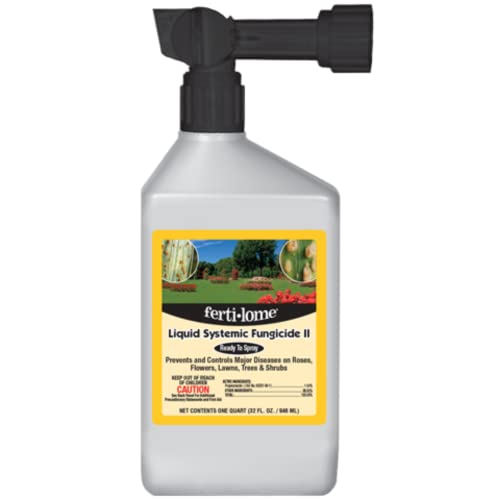
2. Fertilome (11380) Liquid Systemic Fungicide II RTS (32oz)
It stops peony blight without you touching a measuring cup — just screw it onto your hose and spray.
The Fertilome is the bottle you grab when you want to stop powdery mildew (the white dust on peony leaves) and leaf spot (brown blotches) without mixing anything. It comes as a 32-ounce ready-to-spray (RTS) bottle — you attach it to a garden hose and spray. That is twice the liquid volume of the 16-ounce Bonide Revitalize concentrate, so you cover more ground per bottle without mixing. Its active ingredient is propiconazole, a systemic fungicide (it gets absorbed into the plant’s sap). That means the plant fights the fungus from the inside for up to 28 days, even if it rains.
Buyers report it made a “huge improvement” on yellowing tree leaves after just one treatment, and multiple reviewers mention it cleared up rust and powdery mildew faster than granular alternatives. The big advantage here is the hose-end convenience — no mixing, no measuring, no cleanup. For a large peony border that takes hours to hand-spray, this saves real time. The trade-off: since it is ready-to-use, you cannot adjust the concentration for heavier outbreaks the way you can with a concentrate like the Bonide Fung-onil.
A true workhorse: The Fertilome gives you systemic protection (propiconazole working inside the plant) with zero mixing, and the 32-ounce bottle goes twice as far as the 16-ounce concentrates — it is the simplest effective option on the shelf.
One limit: The hose-end dial is less precise than a hand-pump sprayer, so keep the nozzle close to the foliage to avoid drift onto non-target plants.
Reach for this if: You have a large peony patch and want a systemic spray you can apply in minutes without mixing — the 32-ounce RTS format and the propiconazole systemic action make it the strongest all-rounder here.
Look elsewhere if: You need an organic-certified product for an edible garden or you want to mix custom-strength batches for different diseases.
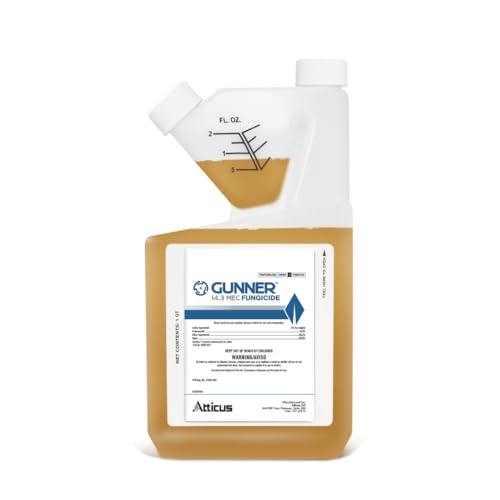
3. Atticus Gunner 14.3 MEC Propiconazole Fungicide (32 OZ)
It sticks to peony leaves through a downpour — the microemulsion formula does not wash off easily.
Atticus Gunner contains 14.3% propiconazole — the same active ingredient as the Fertilome RTS, but in a concentrated microemulsion (MEC) formula. A microemulsion uses tiny particles that mix easily with water and do not separate in the tank, so you do not have to keep shaking your sprayer. Once it dries, it resists washing away in heavy rain. If your peonies get hit by a week of rain right when the buds are forming, this is the fungicide that stays put. One buyer mentioned it “eliminated persistent black spot on roses in one application” with no recurrence in 3 weeks — exactly the kind of one-and-done result peony growers want.
The 32-fluid-ounce bottle is a concentrate, meaning you mix it with water. At the same liquid volume as the Fertilome RTS, the concentrate goes much further per bottle. It also has a very low odor — a nice detail when you are spraying a bed near a patio or open window. The downside: it is a synthetic systemic, so you must follow the re-entry interval (the time you must wait before walking through the treated area) and avoid spraying fully open peony blooms when bees are actively foraging.
Rain-proof performance: Unlike the organic options that need reapplication after heavy rain, this microemulsion formula dries and stays on the foliage, giving you up to 28 days of protection through wet weather.
One catch: The instructions are printed very small on the label — several buyers mentioned this — so have a magnifier or look up the PDF online before mixing.
Reach for this if: Your peonies always seem to get powdery mildew or leaf spot right after a rainy stretch — the rain-resistant MEC formula and 28-day systemic protection are exactly what you need.
Look elsewhere if: You prefer ready-to-use convenience (the Fertilome is easier) or you need an organic solution for an edible garden.
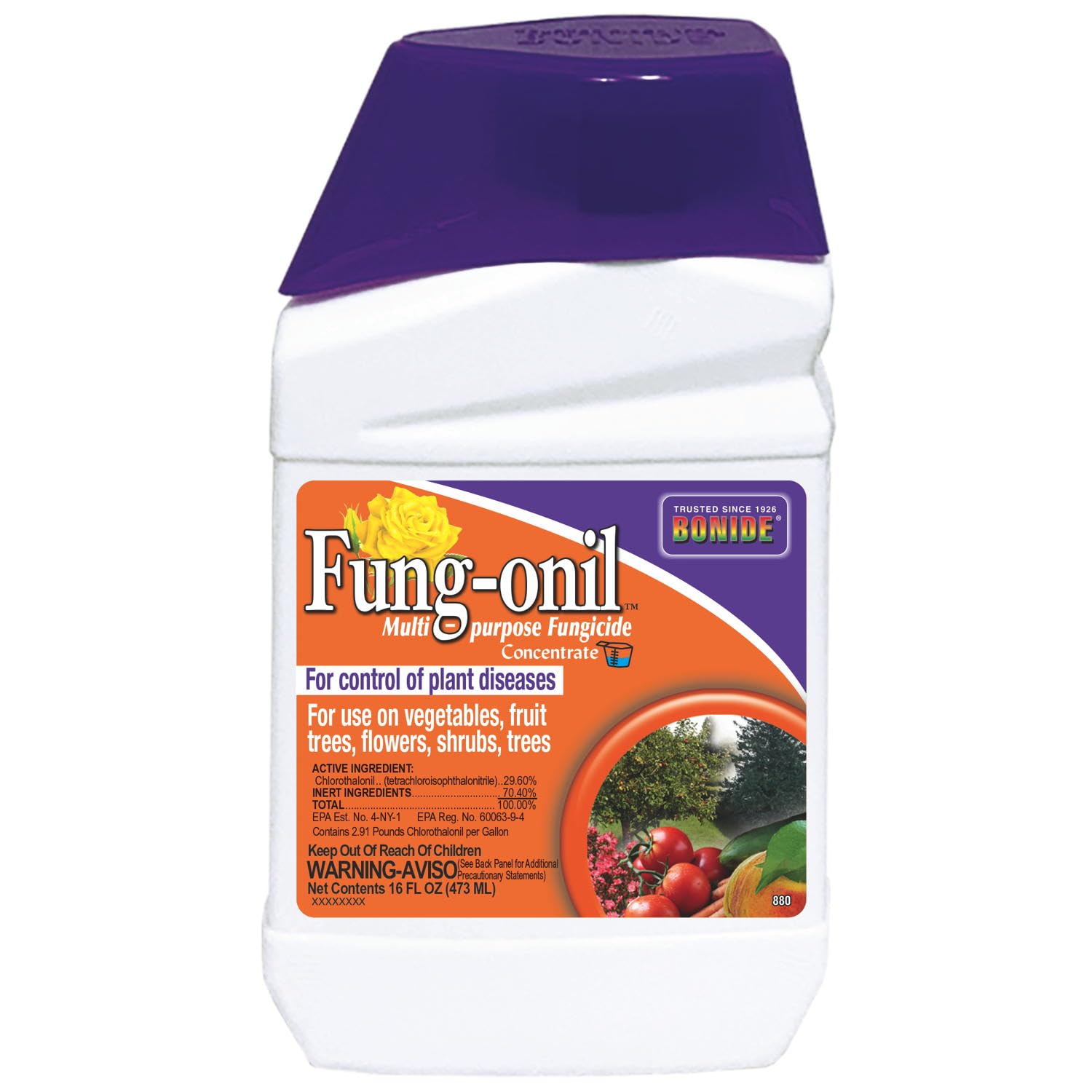
4. Bonide Fung-onil Multi-Purpose Fungicide, 16 oz Concentrate
It stops active mildew and blight on contact — no burning, just a milky-white protective layer.
If you have already spotted the fuzzy gray of botrytis (gray mold) on your peony buds or the yellow blotches of leaf spot spreading up the stems, Fung-onil’s active ingredient — chlorothalonil — is among the most effective broad-spectrum contact fungicides available. It forms a protective milky-white layer on the leaf surface that clings through light rain. Owners mention that “fungus caused yellow leaves” and “Bonide applied twice (10 days apart) plus mulch stopped the spread.” The 16-ounce concentrate mixes with water; at 1 pound total weight, it is lighter than the 1.1-pound organic Arber bottle, but the difference is negligible for home use.
Unlike the systemic propiconazole products (Fertilome and Atticus), this stays on the outside of the plant and does not move through the sap. That means excellent surface protection, but any new growth that emerges after spraying is unprotected until you reapply. The white residue washes off the flowers at harvest and does not affect flavor, as several tomato growers confirmed. For peonies, the best strategy is to start applying when the stems are about 4-6 inches tall and repeat every 7-10 days through bloom time.
Tough on active infections: Where the biofungicides prevent, this one cures — it stops existing mildew and leaf spot from spreading, which is exactly what you want when you see the first signs of trouble on your peonies.
Plan for residue: The milky texture leaves a visible white film on leaves and blooms; it washes off but may bother you if you are cutting a bouquet to bring inside immediately.
Best for: The gardener who catches disease early and wants a contact killer that stops the spread fast — controls leaf spot, rust, blight, and scab all from one bottle.
Skip if: You want a systemic that protects new growth between sprays (the Fertilome or Atticus do that better), or you dislike visible white residue on peony petals.
5. Organic Fungicide for Plants – Liquid Concentrate (Arber)

It rescued a peach tree that others could not — the certified-organic concentrate works on peonies the same way.
This Arber formula uses certified-organic biologicals and plant-derived actives to create a protective barrier on leaves and roots while supporting the soil’s microbiome (the community of beneficial microbes in the soil). One reviewer described a severe case of bacterial leaf blight on peach trees that other fungicides failed to stop — after spraying this “very thoroughly every 5 days for a total of 4 applications,” the disease stopped completely and the fruit crop was saved. For peonies prone to powdery mildew in humid weather, that kind of turnaround is exactly what you want. The concentrate mixes easily in a 1-quart spray bottle and has no harsh smell.
Compared to the Bonide Revitalize (also a biofungicide using the same bacterium, Bacillus amyloliquefaciens), this Arber product adds root rot and lawn fungi to the list of controlled diseases, making it a more versatile pick if you treat multiple plants. The label states it is safe around kids, pets, and beneficial insects when used as directed. The catch — also true for the Bonide Revitalize — is that it works best as a preventive or early treatment. If peony botrytis has already turned the buds to mush, you may need a stronger systemic like the Fertilome or Atticus to stop the spread.
Impressive organic power: The string of 5-star reviews calling it a “miracle brew” for roses and fruit trees is rare for an organic fungicide — one buyer whose local extension service said “there was nothing I could do” credits it with genuinely stopping the disease.
Early use matters: Like all biofungicides, its performance drops if the infection is already severe; start spraying as soon as you see the first white dust on lower peony leaves.
Reach for this if: You want a powerful organic option that is pollinator-safe and has proven it can rescue plants that other fungicides could not — the biological active ingredient works differently from synthetic chemicals.
Look elsewhere if: You need a fast, one-spray knockdown for a severe peony botrytis outbreak that has already covered the buds; the Bonide Fung-onil contact fungicide acts faster.
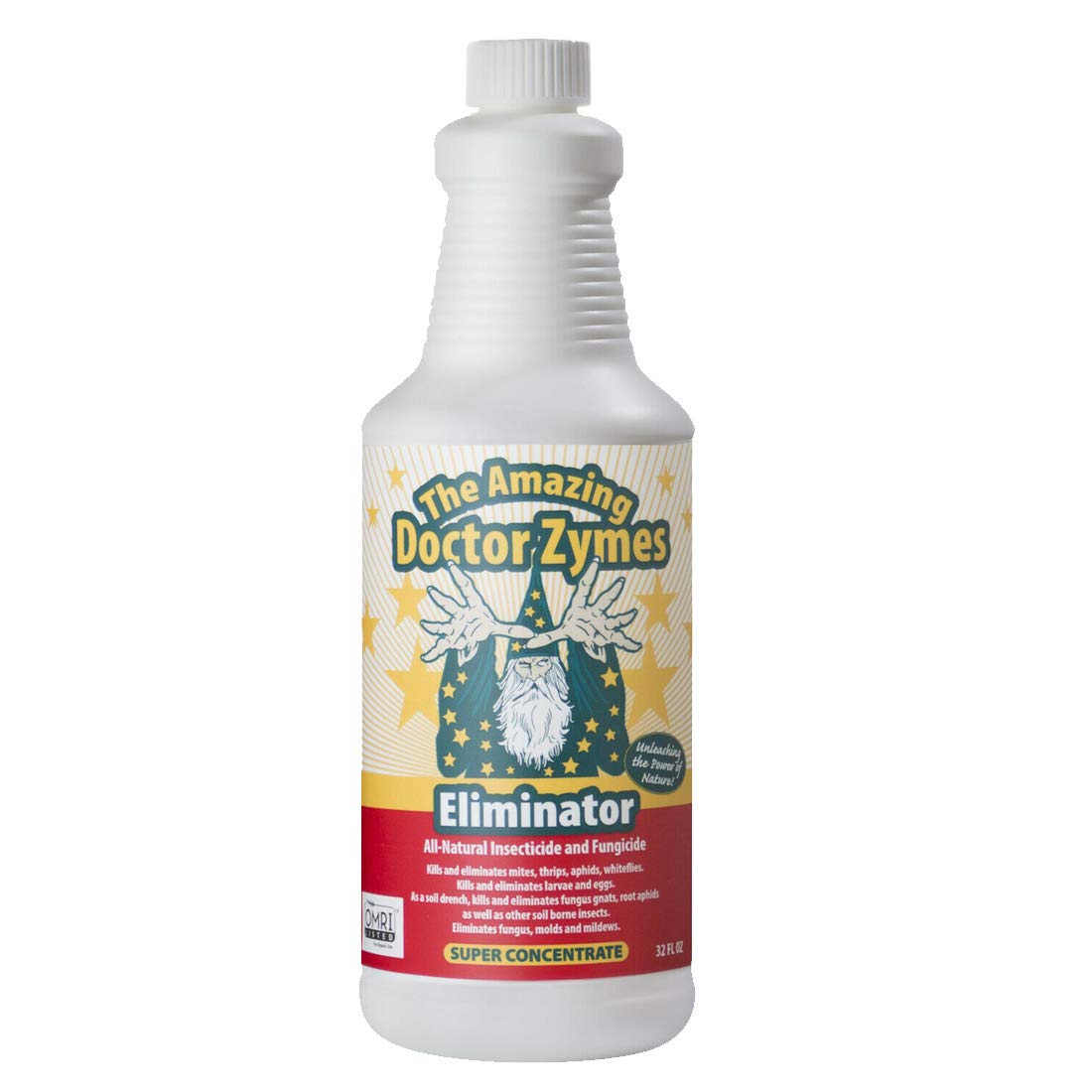
6. Eliminator Natural Insecticide & Fungicide (Dr Zymes)
It kills both the bugs eating your peonies and the fungus spotting the leaves — one bottle does two jobs.
This is the only product on the list that combines insect and disease control in one bottle. Made with natural enzymes and OMRI-listed for organic use, Eliminator is oil-free and leaves no visible residue — a real advantage if you are spraying peonies in full bud and do not want a white film on the petals. It targets powdery mildew, aphids (small, soft-bodied insects that suck sap), spider mites, thrips, and fungus gnats on contact, and it breaks the pest lifecycle by hitting eggs, larvae, and adults. One long-time user said “I’ve used it for years and nothing works as good,” and another buyer noted it knocked out aphids in 24 hours with a foliar spray followed by a soil drench.
Because it is a contact product (both for insects and fungi), complete coverage is critical — you must spray the undersides of every peony leaf and hit every stem joint where aphids hide. The concentrate is strong: one bottle makes multiple gallons, so even though the upfront cost is higher than the synthetic options, the per-gallon cost is competitive. Be careful with the mixing ratio — one reviewer accidentally used a 10:1 ratio instead of 32:1 and burned their plant, so follow the label exactly.
Solves two problems at once: If your peonies get both powdery mildew and aphids or thrips every season, this eliminates the need for a separate fungicide and insecticide — one tank mix covers everything.
Watch the mix: It is a concentrate and requires careful measurement; a too-strong solution can burn foliage, as one buyer learned.
Best for: The gardener who battles both insects (aphids on peony buds, thrips on petals) and fungal disease every year — the dual-action enzyme formula saves a whole extra spray round.
Skip if: You only need a fungicide and none of your peonies ever see insect pressure — you will pay for the insect-killing capability you do not need.
7. Southern Ag Captan Fungicide – 8oz Powder

It stops botrytis rot on peony buds — the old-school powder is still the most targeted tool for gray mold.
Captan is a classic broad-spectrum contact fungicide that has been used for decades specifically against botrytis blight (gray mold) — the #1 disease that ruins peony buds before they open. This 8-ounce powder form (a wettable powder, meaning you mix it with water to make a spray) stays shelf-stable for years if you keep it dry. One buyer with a Montmorency tart cherry tree said it does “a terrific job helping us control the fungus,” and another reported it “kept away most of the peach mummy brown rot” when applied according to the seasonal timing. For peonies, you would start mixing Captan as a spray when the shoots break ground and continue every 7 days through the bloom period.
The powder mixes into a suspension that sprays on easily and dries to a protective coating. Unlike the liquid concentrates, it does not separate in the tank. The trade-off: an 8-ounce bottle is much less product than the 32-ounce Fertilome or Atticus options, so you will need to reorder sooner if you have a large peony bed. Also, note that one owner reported the product may no longer be in production, so check availability — if it is gone, the Bonide Fung-onil (chlorothalonil) covers botrytis as a good substitute.
Proven against botrytis: Captan is one of the few fungicides specifically labeled for gray mold control on ornamentals, making it a targeted choice if your peonies always get mushy buds in damp springs.
Small quantity: At 8 ounces, this is a small bottle — you get 0.5 pounds of powder compared to 2 pounds of liquid for the larger products, so it suits a small peony collection best.
Reach for this if: Botrytis blight (the fuzzy gray mold that rots peony buds before they open) is the specific problem you face each spring — the Captan powder is targeted and effective.
Look elsewhere if: You need a large quantity for a big garden or prefer a ready-to-mix liquid concentrate over measuring and mixing powder.
Understanding the Specs
Active Ingredient
This is the chemical or biological agent that actually kills the fungus. Synthetic ingredients like propiconazole (found in Fertilome and Atticus) and chlorothalonil (in Bonide Fung-onil) work systemically or on contact with fast knockdown. Bio-based ingredients like Bacillus amyloliquefaciens (in Bonide Revitalize and Arber) boost the plant’s immune system and are organic-safe, but need more frequent application. Pick the ingredient based on if you want prevention or cure.
Liquid Volume & Concentrate vs RTS
Liquid volume tells you how much product you are buying, but the real story is whether it is a concentrate or ready-to-spray. A 16-ounce concentrate like the Bonide Revitalize makes multiple gallons of finished spray when mixed with water. A 32-ounce RTS like the Fertilome already has water in the bottle — it is less product per gallon but saves you the mixing step. Concentrates are more economical for large gardens; RTS is better for quick, small-area applications on a few peony clumps.
Systemic vs Contact
A systemic fungicide (propiconazole products) is absorbed into the plant’s tissue and moves upward through the sap. It protects new growth that emerges after spraying and is rain-fast once dry. A contact fungicide (chlorothalonil in Bonide Fung-onil, Captan in Southern Ag) stays on the leaf surface and must be reapplied after heavy rain or as new leaves expand. For peonies that grow quickly in spring, a systemic gives longer coverage between sprays.
Organic Certification
If the bottle says OMRI Listed (like the Bonide Revitalize, Arber, and Eliminator), it complies with organic gardening standards. That means you can use it on peonies planted near vegetables or herbs without worrying about synthetic residue, and it is generally safe for pollinators when the spray has dried. Non-organic products with synthetic actives are more potent but carry re-entry intervals — the time you must wait before walking through the treated area — that you must respect.
FAQ
When should I start spraying fungicide on my peonies in the spring?
Can I use the same fungicide on peonies and my vegetable garden?
What is the difference between powdery mildew and botrytis blight on peonies?
Should I spray the soil around my peonies or just the leaves?
How often should I reapply fungicide to my peonies during a rainy spring?
Is it safe to spray fungicide on peonies when they are blooming?
Can I mix fungicide with insecticidal soap or neem oil for peonies?
Why do my peonies get powdery mildew every year even when I spray?
Will fungicide hurt the ants that visit my peony buds?
How do I store leftover mixed fungicide after treating my peonies?
Final Thoughts: The Verdict
If you want one dependable pick, the best fungicide for peonies is the Fertilome Liquid Systemic II RTS because it combines a systemic active ingredient with zero-mixing hose-end convenience and a 32-ounce bottle that covers twice the ground of the 16-ounce concentrates. If you want an organic preventive that is safe for pollinators and vegetables, grab the Bonide Revitalize Biofungicide. And for beating back a stubborn botrytis outbreak on peony buds before they rot, the standout is the targeted power of the Southern Ag Captan powder.
How We Picked
We do not accept paid placement. Every pick is matched to a real buyer and a real use-case; we do not hands-on test units.
Sources & Methodology
Specifications: manufacturer listings and product documentation. Review insights: verified customer reviews, as of July 2026. Pricing: not shown on this page (it changes often); check the current price via the retailer link.
As an Amazon Associate, Lawn Gear Lab earns from qualifying purchases. This does not affect which products we feature.