
Specs are compiled from manufacturer listings and verified buyer reviews and can change over time — please confirm the key details on the product page before buying.
Evergreens look great in every season, but keeping them that rich dark green takes the right food. Dry needles, slow growth, and pale color are all signs your tree is hungry for something it isn’t getting from the soil. The best fertilizer for the job fixes that without guesswork or risk of burning the roots.
I’m Rikta — the founder and writer behind Lawn Gear Lab. This guide is built by comparing the manufacturers’ published specifications and the patterns across verified customer reviews, so you get each pick’s real strengths and trade-offs instead of marketing spin.
Whether you are feeding a long-row privacy hedge or a single specimen pine, the right evergreen tree fertilizer delivers deep root development and vibrant color without complicated mixing schedules.
Our Picks at a Glance

How To Choose The Best Evergreen Tree Fertilizer
Evergreens need a steady supply of nitrogen to keep their needles dense and green, plus a touch of sulfur to maintain the slightly acidic soil they love. The right formula delivers those nutrients slowly so you avoid a growth spike that leaves the tree weak heading into winter.
NPK Ratio: What Your Evergreen Actually Needs
The three numbers on the bag tell you the balance of nitrogen (the first number), phosphorus (second), and potassium (third). Evergreens want a higher first number — something like a 4-3-4 or 8-4-8 or even a 12-3-3 — because needles demand more nitrogen than flowers or fruit do. A balanced 10-10-10 can push leafy growth at the expense of root structure.
Slow-Release Granules vs. Liquid Feed
Granules break down gradually over weeks or months, which matches how trees actually eat. Liquid feeds give a fast green-up but need repeat applications every couple of weeks. For a large established tree, granules are the hands-off choice. For a stressed or newly planted small tree, a liquid dose can provide a quicker visible response.
Organic vs. Synthetic Ingredients
Organic formulas rely on natural components like feather meal or composted manure, which feed the soil microbes as well as the tree. Synthetics deliver nutrients in a more immediately available salt form, which can burn roots if over-applied. If your soil is already rich in organic matter, a synthetic spike or granular feed works efficiently with a lower chance of runoff.
Quick Comparison
| Model | Best For | NPK Ratio | Form | Unit Count | Amazon |
|---|---|---|---|---|---|
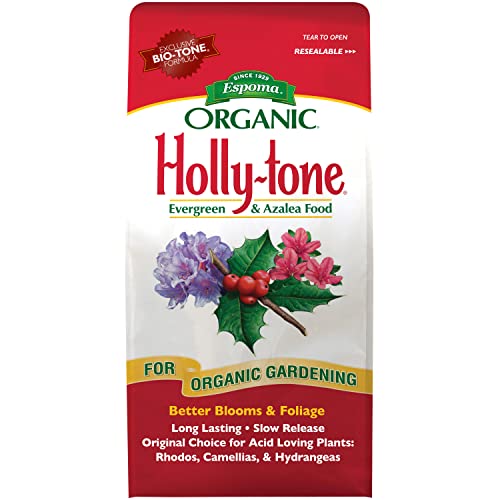
| Espoma Organic Holly-Tone 4-3-4★ Best Overall | Acid-loving shrubs & trees | 4-3-4 | Granules | 128 oz (2 x 4 lb) | Amazon |
| Espoma Evergreen-Tone 4-3-4Also Great | Large established evergreens | 4-3-4 | Granules | 18 lb | Amazon |
| SimplyGro 12-3-3 Spikes | No-mess seasonal feeding | 12-3-3 | Spikes | 24 Count | Amazon |
| GARDENWISE 8-4-8 | Vibrant blooms on acid-lovers | 8-4-8 | Granules | 32 oz | Amazon |
| TPS Arborvitae Liquid | Arborvitae hedges & rows | — | Liquid | 32 oz | Amazon |
| TPS Evergreen Liquid | Young & small evergreens | — | Liquid | 32 oz | Amazon |
In‑Depth Reviews
1. Espoma Organic Holly-Tone 4-3-4 (2-Pack)
Our pick — over 4.5★ from 700+ verified ratings; the strongest balance of quality and price.
Two 4-pound bags let you treat separate planting zones at a lower per-pound cost.
Holly-Tone has been the original organic plant food for acid-loving plants since 1929, and the formula works on evergreens just as well as it does on hydrangeas and blueberries. You get the same 4-3-4 analysis with 5% sulfur as the Evergreen-Tone, but in a pair of smaller bags that are easier to handle for targeted feeding. The Bio-tone formula enhances microbial activity in the soil.
Buyers report good results on their evergreens and azaleas. One noted that blueberry bushes and azaleas improved after using it, though they did not see a color change on hydrangeas after two weeks. Several reviewers mention the bag has a strong smell before watering, but they say that dissipates once the granules are watered in thoroughly.
This pack of two provides a total of 128 ounces of fertilizer, which is a 4.0x gap compared to a typical 32-ounce bag of a competing granular brand. It is ready to use straight from the bag with no mixing, making it simple to sprinkle around the base of a tree or shrub in spring and fall. The 2-pack also gives you the flexibility to treat a front-yard and back-yard area separately.
The Perks
- Two 4-lb bags for versatile application across different beds
- Approved for organic gardening, no mixing needed
- Trusted brand since 1929 with a proven acid-loving formula
The Catch
- Strong odor from the bag for a few days after application
- No color change on hydrangeas in two weeks according to one reviewer
Who it works for: Gardeners with a mix of acid-loving shrubs and smaller evergreens who want a cost-effective organic option that comes in manageable bag sizes.
skip it if: You need a single large bag for a long row of mature pines or prefer a no-odor synthetic formula.
2. Espoma Organic Evergreen-Tone 4-3-4
The 18-pound bag feeds a whole row of pines or spruces with zero mixing required.
This granular fertilizer is built specifically for needle-leaf evergreens like pine, fir, and spruce, plus broadleaf evergreens such as azaleas and rhododendrons. The 4-3-4 NPK ratio delivers balanced nutrition, and the 5% sulfur helps keep the soil acidic where evergreens thrive. Since it requires no mixing, you simply sprinkle it around the drip line and water it in.
Reviewers report seeing bright green color on their trees just a couple of weeks after applying it. One long-time user said they have used it for years and get consistent results with rich color and abundant growth every time. The organic ingredients feed the soil microbes too, which builds healthier root structure over the long term.
One trade-off is the smell — buyers mention a barnyard odor during and right after application, which comes from the chicken manure ingredient. That fades once you water it in. This bag is designed for twice-a-year feeding in early spring and late fall, so a single purchase covers a full season of care for multiple trees.
What Makes It Stand Out
- Targeted 4-3-4 formula with 5% sulfur for acid-loving evergreens
- Approved for organic gardening, no synthetic sludges
- 18 lb bag provides extended coverage for large landscapes
What To Keep In Mind
- Strong farmyard odor for a few days after watering
- Requires two applications per year for best results
Best suited for: Homeowners with a row of mature evergreens or multiple specimen trees who want a low-effort organic feed that builds long-term soil health.
Avoid if: You need a fast-acting liquid for a single small tree or cannot tolerate a temporary barnyard smell around your yard.
3. SimplyGro Fertilizer Spikes 12-3-3 (24 Count)
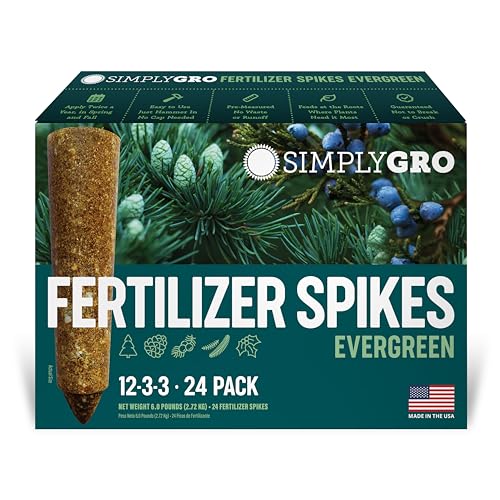
Hammer a spike into the ground and it feeds the roots for a full three months.
These pre-measured spikes deliver a 12-3-3 formula that is high in nitrogen — exactly what evergreens need to keep their needles dense and dark. Each 5-inch spike sits below the soil surface so the nutrients go straight to the root zone without runoff or mess. The slow-release design means you apply them just twice a year, once in spring and once in fall, for continuous feeding.
Reviewers report dramatic results. One reviewer noted their pine trees were on the verge of dying, and these spikes brought them back to life within two weeks — two months later, the trees were alive and well. Another noted that the spikes work especially well in sandy soil, which loses nitrogen quickly; after applying to fruit trees, the trees became lush and green after dozens of waterings. The spikes do not break or crumble as you hammer them in, which makes the job feel solid and reliable.
One thing to note is the high nitrogen content: at 12-3-3, this is a stronger concentration than the granular 4-3-4 options above. That makes it very effective, but you need to space the spikes correctly around the drip line to avoid over-concentrating the nutrients in one spot.
Why It’s Convenient
- low-maintenance feeding for up to 3 months per spike
- High 12-3-3 nitrogen ratio tailored for evergreens
- No mixing, no measuring, no runoff mess
What To Watch
- Higher nitrogen concentration may be too strong for very small or newly planted trees
- Must be spaced correctly around the drip line to avoid root burn
Ideal for: Busy homeowners who want a reliable “hammer and forget” method to keep their evergreens and shrubs healthy all season without hauling bags or mixing liquids.
Not for: Gardeners who prefer to adjust the dosage per tree or who have very small seedlings that need a gentler feed.
4. GARDENWISE 8-4-8 Acidic Fertilizer (32 oz)
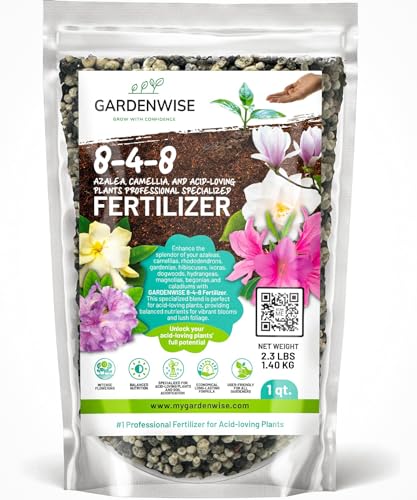
A higher-potency granular feed that also works as a soil acidifier for gardenias and hydrangeas.
This 8-4-8 formula delivers a stronger nutrient concentration than the typical 4-3-4, which means you use less product per feeding — it requires just three feedings per year thanks to its slow-release granules. The blend includes magnesium, iron, and manganese to help prevent chlorosis, the yellowing of leaves that happens when soil pH goes too alkaline for acid-loving plants.
Owners mention impressive results. One reviewer purchased it for a newly planted rhododendron and says the shrub has doubled in size since applying it. Another gardener whose rhododendron had looked dead says the plant came back to life, with greener leaves and a large number of beautiful blooms the following season. The granules also get a nod for being easy to sprinkle and water in without dust.
Since this is a more potent 8-4-8 mix, it sits in a different performance tier than the standard 4-3-4 formulas from Espoma. It is a good choice if you want to apply less bulk per tree but still get strong results. The 32-ounce bag covers a smaller area than the 18-pound Evergreen-Tone, so you may need multiple bags for a large planting.
Strengths
- Higher NPK ratio means less product needed per application
- Includes iron, magnesium, and manganese to prevent leaf yellowing
- Only three feedings per year required
Limitations
- 32 oz bag covers less ground than larger granular bags
- Specifically formulated for acid-soil plants, not a general-purpose feed
Reach for this if: You have a small group of acid-loving evergreens mixed with flowering shrubs and want a single product that supports both needle health and bloom vibrancy.
Look elsewhere if: You need a massive bag to feed a long hedge row or prefer a milder organic formula for a sensitive planting bed.
5. TPS Arborvitae Tree Fertilizer Liquid (32 oz)
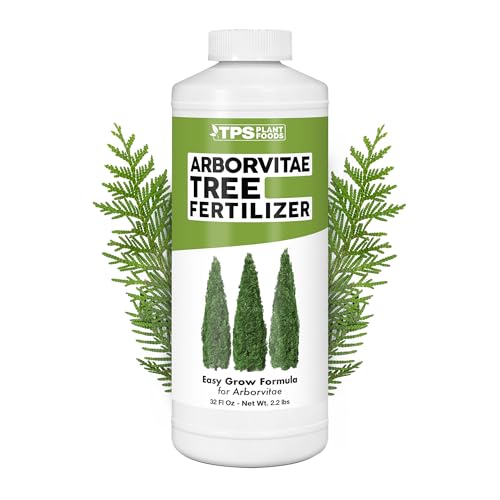
A liquid formula that brings struggling arborvitae hedges back to dense green growth.
This liquid feed is formulated specifically for arborvitae trees and evergreen hedges, which makes it a targeted choice if you are trying to thicken up a privacy row. You mix 2 tablespoons per gallon of water and apply it every two weeks during the growing season. The liquid format hits the roots quickly, which matters when you need to save a tree that is dropping needles or losing color.
Buyers share strong results. One buyer mentioned that their neighbor planted the same arborvitae trees but did not fertilize — and those neighbor’s trees all died. Another gardener who lives in sandy soil says spike fertilizers barely kept their trees alive, but switching to this liquid and feeding every two weeks produced fantastic growth with green branches covering areas where branches were previously dying.
The main trade-off is that liquid requires more frequent application than granular or spike options. You are committing to a biweekly watering schedule through the active growing months. For a few specimen hedges that is manageable, but if you have a long row of mature trees, the convenience of spikes or slow-release granules might win out over the quicker green-up that liquid provides.
The Edge
- Formulated specifically for arborvitae and evergreen hedges
- Liquid delivery provides fast nutrient absorption for stressed trees
- Easy mixing ratio at 2 tablespoons per gallon
The Catch
- Requires biweekly application during the growing season
- 32 oz bottle covers fewer trees than a granular bag if you have a long hedge
Best for: Homeowners with a small to medium arborvitae hedge who want a fast-acting solution to bring weak or yellowing trees back to health.
Avoid if: You want a low-maintenance solution or have a large landscaping project that would need gallons of liquid per feeding.
6. TPS Evergreen Tree Fertilizer Liquid (32 oz)
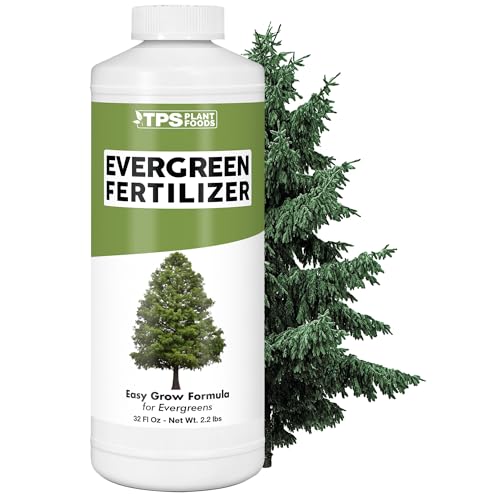
A gentle liquid feed that gives small pine and spruce seedlings a visible boost.
This liquid fertilizer is made specifically for evergreen and conifer trees, with a mixing ratio of 1 teaspoon per quart of water. That dose is lighter than many liquid feeds, which can make it a better starting point for younger or smaller trees. It is designed for landscape and yard trees, applied directly to the soil around the base where the roots can access it quickly.
Customers note mixed but useful feedback. One gardener says this stuff gave their seedling trees a real boost. Another reviewer notes that it seemed to refresh their blue spruce, making it look healthier. However, a buyer with small trees between 2.5 to 7 feet tall reports that the recommended dose caused chemical burn on the needles. That same reviewer suggests halving the dosage for younger or smaller plants.
This is the only product in this list where a chunk of real reviews point to a risk of burn at the listed dose. If you choose this liquid, start with half the recommended amount on young trees and see how they respond before stepping up. Experienced gardeners who know their trees and want the fast liquid absorption will appreciate the control, but beginners may find a pre-measured spike or granular feed easier to manage without mistakes.
The Upside
- Fast-acting liquid formula for quick needle greening
- Light mixing ratio of 1 tsp per quart gives good dilution control
- Targeted for evergreens and conifers
The Downside
- Reported chemical burn on small trees at recommended dose
- Requires careful measurement and repeated applications
Who it fits: Attentive gardeners who want a liquid option for a few young pines or spruces and are comfortable adjusting the dose to their specific tree size.
Not for: Beginners or anyone who wants a no-measurement, low-risk method — spikes or granules are much more forgiving in that case.
Understanding the Specs
NPK Ratio: The Three Numbers
The first number is nitrogen, which drives needle and leaf growth — evergreens need a higher first number than most other trees do. The second is phosphorus for root and bloom development, and the third is potassium for overall plant health and disease resistance. A 4-3-4 or 8-4-8 or 12-3-3 all work well for evergreens because they prioritize nitrogen without totally neglecting the other two.
Sulfur Content & Soil pH
Your evergreens need slightly acidic soil (a pH between 5.0 and 6.5) to stay healthy. A fertilizer with sulfur gradually lowers the soil pH, so your evergreens can absorb iron and other micronutrients they need. Without enough sulfur, you may notice yellowing needles even when you are feeding regularly.
FAQ
How often should I fertilize my evergreen trees?
Can I use a standard lawn fertilizer on my evergreens?
What is the best NPK ratio for pine trees?
Should I use granular or liquid fertilizer for my evergreens?
Is it safe to fertilize my evergreens in the summer?
How do I know if I am over-fertilizing my evergreen?
Do I need to fertilize newly planted evergreen trees right away?
What is the difference between Holly-Tone and Evergreen-Tone?
Can I use fertilizer spikes on potted evergreen trees?
Will fertilizing help with winter browning on my arborvitae?
Final Thoughts: The Verdict
For the majority of shoppers, the evergreen tree fertilizer winner is the Espoma Organic Evergreen-Tone 4-3-4 because its large 18-pound bag and proven organic formula give you season-long feeding with minimal effort. If you want the no-mess convenience of a pre-measured spike, grab the SimplyGro 12-3-3 Spikes. And for a fast-acting liquid that brings struggling hedges back to life, the TPS Arborvitae Liquid is the best fit.
How We Picked
We do not accept paid placement. Every pick is matched to a real buyer and a real use-case; we do not hands-on test units.
Sources & Methodology
Specifications: manufacturer listings and product documentation. Review insights: verified customer reviews, as of July 2026. Pricing: not shown on this page (it changes often); check the current price via the retailer link.
As an Amazon Associate, Lawn Gear Lab earns from qualifying purchases. This does not affect which products we feature.