
Specs are compiled from manufacturer listings and verified buyer reviews and can change over time — please confirm the key details on the product page before buying.
The wrong scissors crush a flower stem, which slowly kills the bloom before it even hits the vase. That is the real frustration: you trim a rose from your garden, but the stem gets mashed instead of cleanly sliced, and the flower wilts a day or two later. The fix is a pair of snips that cuts — not squeezes — and the models here all prevent that crushing damage in different ways.
I’m Rikta — the founder and writer behind Lawn Gear Lab. This guide is built by comparing the manufacturers’ published specifications and the patterns across verified customer reviews, so you get each pick’s real strengths and trade-offs instead of marketing spin.
Whether you are deadheading petunias, cutting a bouquet for the kitchen counter, or harvesting herbs from a raised bed, you need a tool that hit clean and stays sharp. The best scissors for cutting flowers do one thing well: they leave the stem intact and the plant healthier for the next round of blooms.
Our Picks at a Glance

How To Choose The Best Scissors For Cutting Flowers
The right flower snip keeps your garden healthy and your cut arrangements lasting longer. Here are the four specs that matter most.
Bypass vs. Anvil Blades
A bypass blade (the sharp edge slides past a flat edge, like a pair of scissors) makes a clean slice that protects the plant’s vascular system. An anvil blade (one blade crushes down onto a flat surface) can mash soft flower stems. For live growth and delicate cut flowers, stick with a bypass design — every pick in this list uses a bypass or harvest-style blade.
Blade Material and Coatings
High-carbon steel and stainless steel hold a razor edge longest. Titanium or low-friction coatings reduce sap buildup and rust. A sap groove (a narrow channel carved into the blade) also helps keep sticky residue from gumming up the pivot point so the shears do not lock up mid-task.
Weight and Grip Comfort
Light snips in the 60-150 gram range prevent hand fatigue when you are deadheading dozens of stems. Look for ergonomic, non-slip handles made of rubber or thermoplastic (a soft, durable plastic) — they give you control even with damp or dirty hands. A spring-loaded action that gently re-opens the blades also cuts down on repetitive strain.
Cut Capacity and Reach
Most flower stems are under a half-inch thick, so a cut capacity of 0.5 to 0.75 inches covers everything from a rose to a woody lavender stem. Long, slim blades and fine tips help you reach deep inside a plant to snip a single stem without brushing against the surrounding foliage.
Quick Comparison
| Model | Best For | Cut Capacity | Weight | Blade Material | Amazon |
|---|---|---|---|---|---|
| Fiskars Bypass Pruning Shears★ Best Overall | General garden pruning | 0.63 in (5/8″) | 0.65 lb (295 g) | Alloy Steel | Amazon |
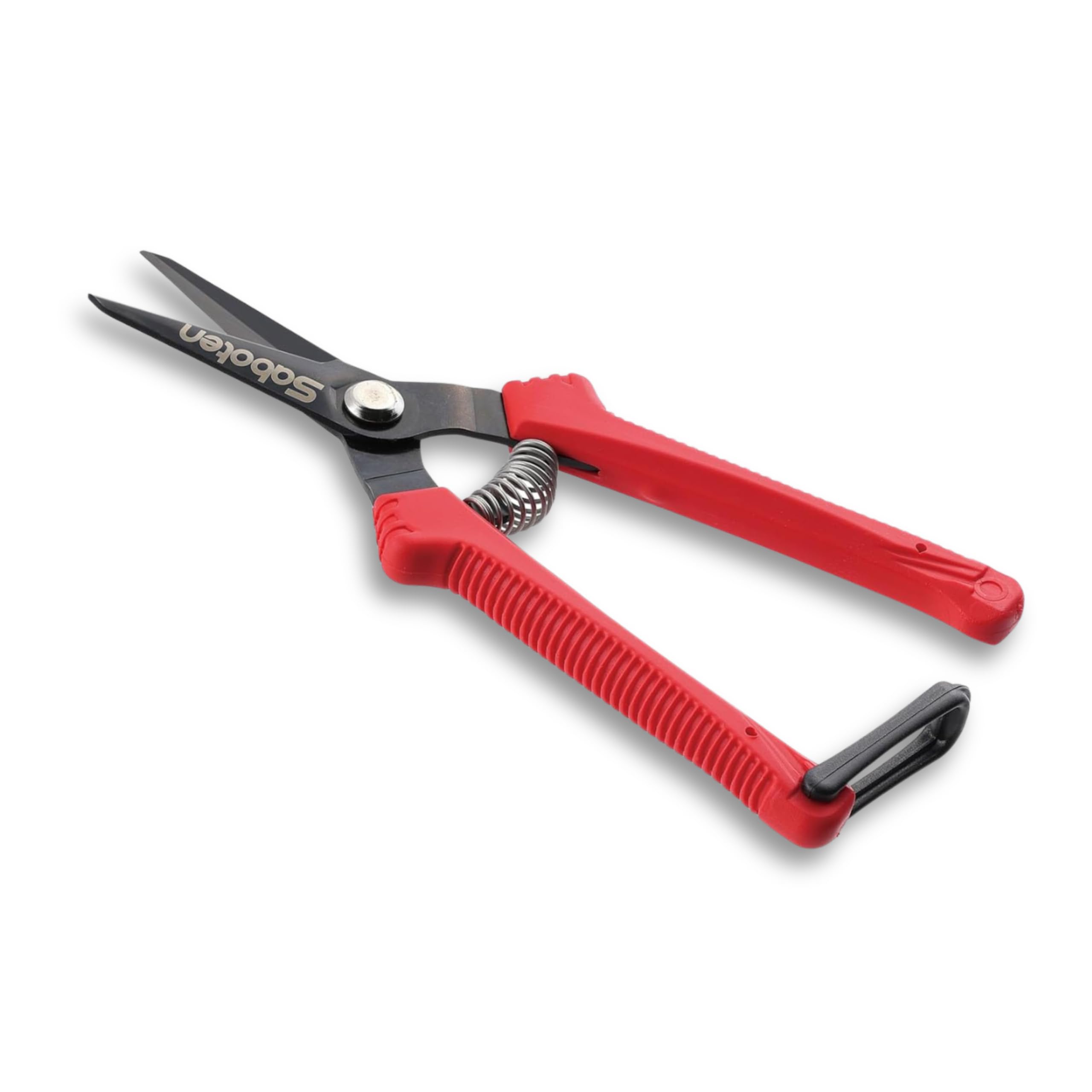
| Saboten SD-8 Micro Tip SnipsPrecision Pick | Ultra-light precision work | — | 65 g (2.3 oz) | Carbon Steel | Amazon |
| gonicc 8″ Titanium Pruning Shears | Heavy home gardening | 0.75 in (3/4″) | 150 g | SK-5 Steel + Titanium coating | Amazon |
| Fiskars Floral Pruner | Deadheading & arrangements | 0.5 in (1/2″) | 0.15 kg (150 g) | Ground Steel | Amazon |
| CYRUS Blue Floral Shears | Rose pruning & thorn removal | — | 170 g | Stainless Steel | Amazon |
| TABOR TOOLS K17A Floral Shears | Cut flower harvesting | — | 4.64 oz (132 g) | Stainless Steel | Amazon |
| Modern Sprout Pruning Shears | Herb snipping & fine stems | — | — | High Carbon Steel | Amazon |
In‑Depth Reviews
1. Fiskars Bypass Pruning Shears (5/8″ Cut Capacity)
Our pick — over 4.5★ from 51,500+ verified ratings; the strongest balance of quality and price.
The workhorse that lasts longer than most gardeners have owned their house.
This pair cuts stems and small branches up to 5/8 of an inch thick — thick enough for most woody rose canes and perennial stalks — without crushing the live tissue. The bypass blade design and low-friction coating on the alloy steel help the cut glide through instead of mashing. A built-in sap groove (a shallow channel along the blade) channels sticky residue away so the blades do not gum up mid-job. Buyers report that Fiskar shears lasted 15+ years with basic care, which is rare at any price.
You get brute durability that will last a decade, but you trade featherweight carry for it — this all-steel shears weighs 295 grams (0.65 lb), compared to just 65 grams for the Saboten snips. The ergonomic non-slip handle and easy-open safety lock keep it safe in a tool bag. Skip it for fine floral arranging (the blades are too broad for tight spaces inside a bouquet), but for general garden pruning and cutting flower stems at the base, this is the one that will still work a decade from now.
Built to Last
- Precision-ground alloy steel blades retain sharpness through heavy use
- Self-cleaning sap groove prevents sticking during repetitive cuts
- Full lifetime warranty — a rare guarantee in this price tier
The Trade-Offs
- At 0.65 lb (295 g) it is heavier than the Saboten micro snips (65 g)
- Blades are too wide for precise work in tight bouquet arrangements
Grab these if: you want one pair of shears that handles everything from deadheading flowers to trimming light branches, and you prefer a brand with a proven track record — buyers mention the lifetime warranty as real confidence.
Look elsewhere if: you need an ultra-light snip for fine floral design or one-handed use inside a crowded plant — the weight and blade size make that awkward.
2. Saboten SD-8 Japanese Micro Tip Harvesting Snips
A featherlight Japanese snip that disappears into a pocket and snips without fatigue.
At just 2.3 ounces (65 grams), this is the lightest pick on the list — over four times lighter than the gonicc pruning shears (which weigh 150 grams). The high-hardness blade is rated at HRC60 (a measure of blade hardness on the Rockwell scale), which means the carbon steel edge stays sharp through many cuts on soft stems. The ultra-slim micro tips slip between leaves to snip a single stem without bumping neighboring growth, making it ideal for harvesting herbs, deadheading spent blooms in a crowded pot, or snipping tomato vines. One reviewer noted it is “lighter than Corona shears; better quality than Fiskars and other cheap brands.”
The spring action gently re-opens the blades after each cut, which reduces hand strain during long garden sessions. The built-in safety lock clicks easily to keep the 6.7-inch body closed for pocket or pouch storage. Do not use this for thick woody stems — the fine tips and harvest-style blade are designed for delicate, precise cutting only, not for 3/4-inch branches. You want the gonicc or Fiskars bypass shears above for that job.
Designed for Detail
- Ultra-light 65 g body causes zero hand fatigue even after 50+ cuts
- HRC60 blade steel holds a sharp edge for fine-stemmed plants
- Compact size with a safety lock stores easily in an apron or tool pouch
Know Its Limits
- Not built for heavy pruning or branches over a quarter-inch thick
- Carbon steel requires wiping and occasional oiling to prevent rust
Reach for this if: you spend hours deadheading flowers or harvesting delicate herbs and want a tool you will not notice in your hand — the 65-gram weight makes it disappear.
skip it if: you routinely cut thicker, woody stems or rose canes that need a bypass shears’ stronger leverage.
3. gonicc 8″ Professional Premium Titanium Bypass Pruning Shears (GPPS-1003)

A titanium-coated brute that cuts cleanly through stems that would stop a lighter snip.
This pair handles branches up to 3/4 of an inch thick — the widest cut capacity of any pick here, beating the Fiskars Bypass Shears by over an eighth of an inch. The drop-forged construction gives the body extra strength, and the SK-5 steel blade (a high-carbon tool steel) wears a titanium coating that owners mention helps blades stay sharp after months of use and cut cleanly without tearing. The blade also carries an ultra-fine polish that reduces friction through green stems.
The downside is weight: at 150 grams, it is heavier than the Saboten micro snips (65 g). That heft translates into cutting leverage for thicker wood, but it can feel heavy for fast, repetitive deadheading on dozens of flowers. The PVC-wrapped aluminum handles are comfortable, though one buyer mentioned the rubber sleeve can slide off if you grip aggressively. The built-in sap groove channels away sticky residue, and the spring-loaded action helps reduce hand fatigue during long sessions. For mixed gardens where you prune both flowers and light branches, this delivers the most cutting power for the money.
Where It Excels
- 3/4-inch cut capacity handles rose canes and small branches that micro snips cannot
- Titanium-coated SK-5 steel resists rust and stays sharp through heavy use
- Drop-forged construction feels solid and durable for years of garden work
The Weigh-In
- 150 g body is noticeably heavier than the 65 g Saboten — not ideal for all-day snipping
- Rubber handle sleeve may slide off during hard use according to some owners
Best for: gardeners who cut thick flower stems and occasional light branches in the same session and want titanium-coated corrosion resistance.
Not for: precision floral arranging or featherweight carry — the Saboten is far lighter if you never cut wood.
4. Fiskars Floral Pruner (Spring Bloom)

A floral-specialist snip that strips thorns, cuts wire, and deadheads all with one tool.
This small bypass pruner has a 0.5-inch cut capacity — exactly half of what the gonicc shears can handle — but it was designed specifically for cut flower work and floral arrangements rather than yard-wide pruning. Two built-in extras set it apart: a stem stripper for cleaning the lower leaves off stems before arranging, and a wire cutter for snipping florist wire. One buyer shared: “Been using my Cutters all summer and have never been happier with a fiskar garden tool.” The low-friction coating on the ground steel blades prevents gumming from sap, and the Easy Action spring opens the blades after each cut to cut down on hand strain.
The thermoplastic rubber (TPR) handles provide a soft, non-slip grip even when wet. At 0.15 kg (150 grams), it matches the gonicc in weight but feels more nimble thanks to the smaller, contoured body. It is not the tool for thick garden pruners, but for anyone building bouquets from their own garden or deadheading daily, the extras (thorn stripper, wire cutter) make it the most versatile flower-specific tool here. The Spring Bloom light pink color is a nice detail if you want a garden tool that stands out on a potting bench.
Florist-Friendly Features
- Built-in stem stripper and wire cutter — two tools in one body
- Soft TPR handles reduce strain during hours of floral arranging
- Low-friction coating prevents sap from gumming up the pivot
Size Warning
- 0.5-inch cut capacity is too small for woody branches or thick canes
- Not ideal for heavy outdoor garden pruning — strictly for flowers
Perfect for: anyone who cuts and arranges flowers from their own garden — the stem stripper alone saves a step that other pruners skip.
Hold off if: you need a tool that also prunes woody shrubs or tree branches; the 1/2-inch limit means you will grab a second pair.
5. CYRUS Blue Stainless Steel Floral Shears

A blue-handled snip with a hidden hole that strips thorns off roses in one pass.
The defining feature here is the integrated thorn-removing hole — you slide a rose stem through it and pull, and the thorns come off without cutting into your fingers. The 7.5-inch body uses stainless steel blades with an electroplating treatment (a thin metal coating applied electrically) that resists corrosion and rust. The TPR (thermoplastic rubber) and PP (polypropylene) resin handles are shaped with an index finger notch, which gives you a more natural grip for extended snipping. One buyer with arthritic hands said these were ergonomically correct and caused no pain during use.
At 170 grams, it is the heaviest pick in the list — 20 grams heavier than the gonicc shears and over 100 grams heavier than the Saboten micro snips. That weight gives it a sturdy feel for cutting through multiple stems, but it is not the best choice for an all-day carry in a pocket. The one-piece molding process means the main body is less likely to crack at the hinge over time. The brushed finish looks clean but requires occasional oiling to keep the pivot smooth. For anyone who grows roses or works with thorny berry canes, this is the most practical single tool.
Thorn-Taming Design
- Integrated thorn-removing hole strips rose stems without extra tools
- Stainless steel blades with electroplating resist rust in damp gardens
- Ergonomic index finger notch reduces hand strain during long trims
Weight Consideration
- At 170 g it is the heaviest pick — less suited for extended daily carry
- Thorn remover adds a step; not useful for non-thorny plants
Grab these for: rose gardens, berry patches, or any thorny plant — the built-in stripper saves your fingers and speeds up bouquet prep.
Pass if: you never deal with thorns; the extra feature adds weight and complexity you will not use.
6. TABOR TOOLS K17A Stainless Steel Floral Shears
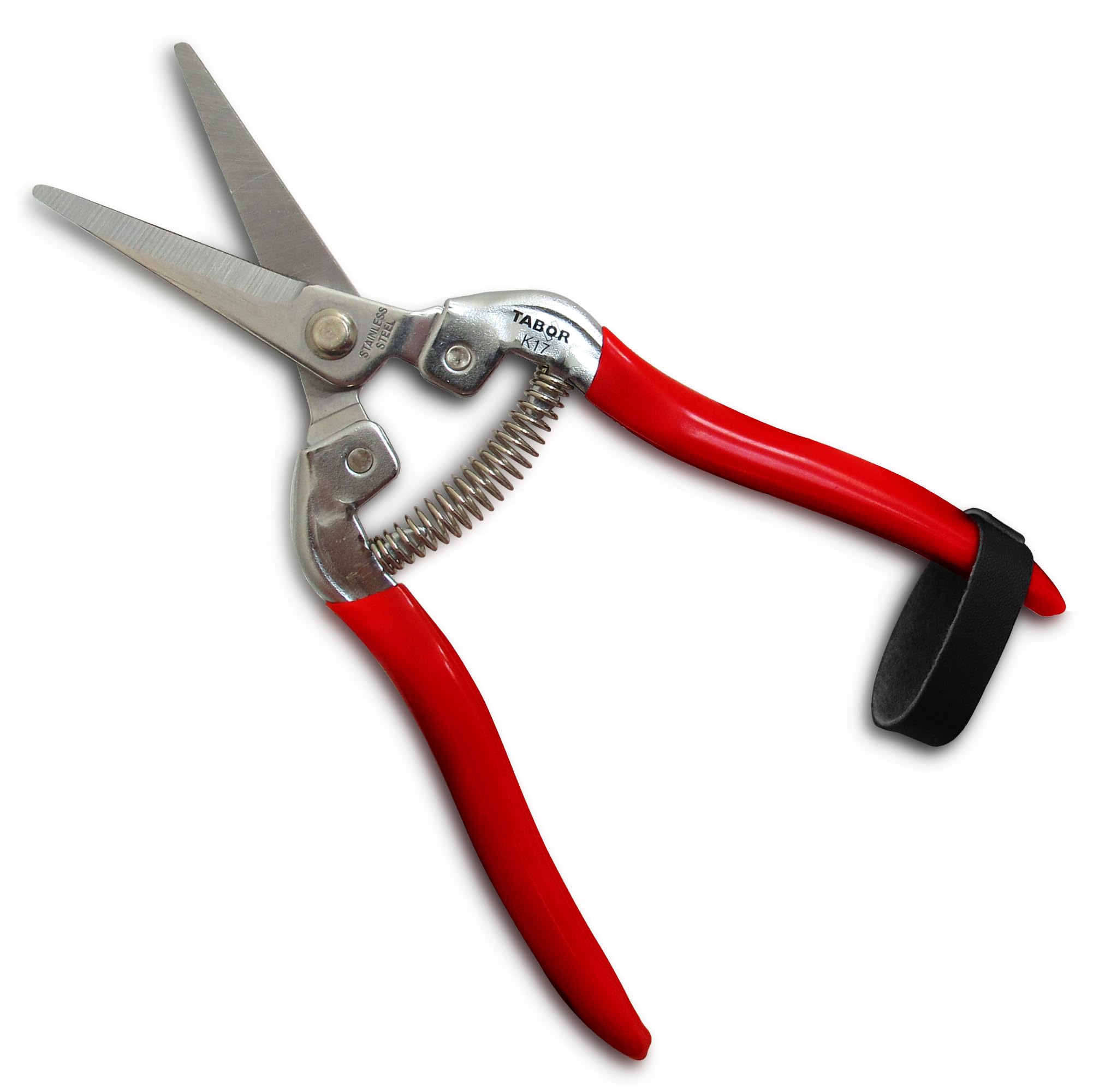
Long, thin blades that reach deep into a bouquet without disturbing the rest of the arrangement.
The 7.87-inch body has a narrow, rounded tip that customers note helps get into tight spaces when snipping stems deep inside a bundle or pinching new growth on fragile plants. The stainless steel blades resist rust and corrosion, which makes these snips a good fit for greenhouses and hydroponic setups where moisture is constant. A non-stick coating on the blades glides through stems and resists sap buildup, so you do not have to wipe the blades after every few cuts.
At 4.64 oz (132 grams), it is lighter than both the gonicc (150 g) and CYRUS (170 g) picks, making it a middle-weight option that balances reach with carry comfort. The shock-absorbing spring gently re-opens the blades, which helps if you have arthritis or limited hand strength. One caveat: this is not suitable for cutting hard, woody stems — the long, thin blades can bend or chip on thick branches. A flower farmer who uses these for harvesting several hours at a time says they are very comfortable and easy to clean, though the fabric strap used to keep the blades closed requires two hands to operate.
Designed for Deep Reach
- Long, pointed blades reach deep into flower bundles without disturbing neighbors
- Stainless steel resists rust in damp greenhouse or hydroponic environments
- Non-stick coating reduces sap buildup and keeps cuts clean
The Catch
- Not for woody stems — the fine tips can bend under thick branch pressure
- Fabric storage strap is less convenient than a one-hand safety lock
Ideal for: flower farmers, greenhouse growers, and anyone who cuts stems inside a dense plant — the long, slim blade reaches where bulkier shears cannot.
Choose something else if: you prune woody shrubs or branches; the thin blade is not built for that kind of force.
7. Modern Sprout Pruning Shears (Sage)
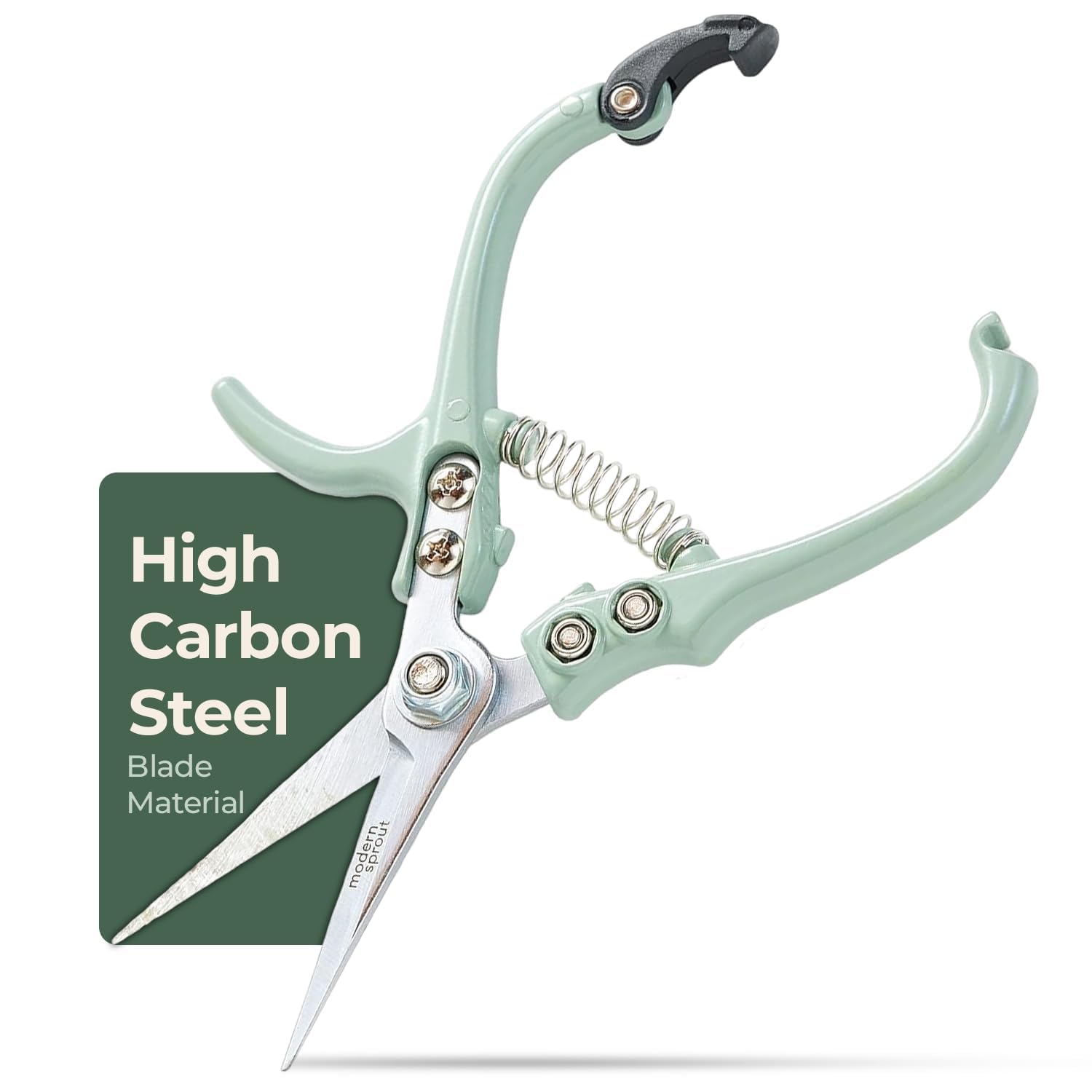
A slim sage-colored snip that comes with a holster so it is always within arm’s reach.
The needle-nose carbon steel blades are narrow enough to reach into tight spots without damaging nearby leaves — perfect for snipping basil, mint, or bonsai shoots. High-carbon steel holds a sharper edge than basic stainless steel and resists rust with proper care. The 6-inch body with an aluminum handle keeps the weight low, and the ergonomic shape fits naturally in the palm, making it easy on your hand during extended trimming. One owner reported it is “precise, easy to use — perfect for herb snipping and deadheading slender-stemmed spent blooms.”
A reusable holster is included, so the shears stay protected and ready on a belt loop or garden bag strap, a thoughtful touch that most other picks skip. The easy-lock safety latch clicks closed securely for drawer or kit storage. On the downside, the 6-inch length and fine tip mean it is strictly for slender stems — do not push it against thick cuttings. Buyers who bought it for general pruning of larger plants were disappointed, but for home herb gardens, indoor pots, and delicate flower stems, it is a refined little tool that looks and feels premium.
Smart for Small Jobs
- High-carbon steel needle-nose tips make precise cuts on fine stems
- Reusable holster keeps the snips accessible on a belt or bag strap
- Ergonomic aluminum handle reduces strain during long sessions
Know Its Size
- Designed only for slender, fine stems — thick branches will not cut cleanly
- Premium feel comes at a higher price point than basic utility snips
Grab this for: indoor herb gardens, bonsai trimming, or snipping a few blooms from pots on the patio — the holster keeps it very handy.
pass on it if: you need a heavy-duty pruner for thick outdoor garden stems; this is strictly a fine-stem specialist.
Understanding the Specs
Bypass vs. Anvil Blades
A bypass blade works like a pair of scissors: the sharp edge slides past a flat edge to make a clean slice. That is the right choice for live flower stems because it does not crush the plant’s water and nutrient channels. An anvil blade, where one edge smashes down onto a flat surface, is better for dead wood but will mash soft green stems and shorten your bouquet life.
Cut Capacity in Inches
This is the maximum stem thickness the blade can cleanly cut in one snip. For flower stems, 0.5 inches (1/2″) covers most roses, zinnias, and dahlias. Thicker stems like woody lavender or small branches need a capacity of 0.63 to 0.75 inches. Never exceed the rated cut capacity — it will damage the blade alignment and cause ragged cuts.
Sap Grooves and Blade Coatings
Many pruners include a shallow channel called a sap groove that runs along the blade. It directs sticky plant sap away from the pivot point so the blades do not gum up and become hard to open. Low-friction or non-stick coatings (often titanium or Teflon-style finishes) also help the blade glide through stems and resist rust. Without these, you will need to wipe the blade after every few cuts.
Blade Hardness (HRC Rating)
The Rockwell Hardness scale (HRC) measures how hard a steel blade is. A rating around HRC60 (like the Saboten snips) means the blade will stay sharp for many cuts but requires careful cleaning to avoid rust. Softer steel is easier to sharpen but dulls faster. Flower stems are not very tough, so mid-hardness steel works fine — the more important factor is the blade’s corrosion resistance.
FAQ
Should I use bypass or anvil pruners for cutting flowers?
How often should I sharpen flower scissors?
Can I use kitchen scissors for cutting flowers?
How do I clean sap off pruning shears?
What does cut capacity mean on pruning shears?
Are titanium-coated blades worth it for flower cutting?
How do I store floral snips so they last?
What is the difference between pruning shears and floral snips?
Can left-handed people use these flower scissors?
How do I know if my shears need replacing?
Final Thoughts: The Verdict
For most buyers, the best scissors for cutting flowers is the Saboten SD-8 Japanese Micro Tip Snips because its 65-gram weight and HRC60 carbon steel blade make precision snipping easy all day. If you need one pair that also handles light woody branches, grab the gonicc 8″ Titanium Bypass Shears with its 3/4-inch cut capacity and corrosion-resistant titanium coating. And for building bouquets from a rose garden, the CYRUS Blue Floral Shears with its built-in thorn remover is the most thoughtful single tool for thorny stems.
How We Picked
We do not accept paid placement. Every pick is matched to a real buyer and a real use-case; we do not hands-on test units.
Sources & Methodology
Specifications: manufacturer listings and product documentation. Review insights: verified customer reviews, as of July 2026. Pricing: not shown on this page (it changes often); check the current price via the retailer link.
As an Amazon Associate, Lawn Gear Lab earns from qualifying purchases. This does not affect which products we feature.