
Specs are compiled from manufacturer listings and verified buyer reviews and can change over time — please confirm the key details on the product page before buying.
If your lawn tilts, rolls, or rises into a hill, a standard front-wheel-drive mower turns into a pushing nightmare — the front wheels lose grip and you end up wrestling the machine. That is exactly where a rear wheel drive self-propelled mower shoves from behind, keeping weight on the drive wheels so you walk alongside instead of fighting the slope.: it shoves from behind, keeping weight on the drive wheels so you walk alongside instead of fighting the slope. This guide compares specs and verified customer feedback to find the six most capable RWD mowers for hillside performance., leaning on the specs and the real-world feedback from hundreds of owners to separate the true hillside performers from the pretenders..
I’m Rikta — the founder and writer behind Lawn Gear Lab. This guide is built by comparing the manufacturers’ published specifications and the patterns across verified customer reviews, so you get each pick’s real strengths and trade-offs instead of marketing spin.
If you manage a bumpy half-acre or a gentle suburban lot with one tricky incline, finding the best rear wheel drive self-propelled lawn mower means balancing raw engine torque against weight, cutting width, and the kind of traction that actually keeps you moving when the ground tilts.
Our Picks at a Glance
How To Choose The Best Rear Wheel Drive Self-Propelled Lawn Mower
Picking the right RWD mower is less about brand names and more about how the machine’s weight, engine, and deck size work together on your specific terrain. Here are the three specs that matter most.
Engine Power and Torque
Engine displacement, measured in cubic centimeters (cc), is your main clue to how well the mower chews through tall, damp grass without bogging down. Most RWD mowers in this range carry a 140cc to 201cc engine. More cc usually means more torque, measured here as foot-pounds (ft-lb), which is the twisting force that keeps the blade spinning when the grass gets thick. A 201cc motor like the SENIX 3-in-1 delivers 8.8 ft-lb of torque, while smaller 140cc units are lighter but may struggle in heavy growth.
Cutting Deck Width and Height Range
A wider deck covers more ground per pass, saving time on larger lawns. Most mowers here span 21 to 22 inches, with one 24-inch model for the biggest yards. The cutting height range — shown in inches — tells you how short you can scalp in summer or how high you can leave the grass in hot weather. Look for at least six positions across a range of about 1.5 to 4 inches for seasonal versatility. A single-lever adjustment that moves all four wheels at once, rather than one corner at a time, is a major convenience.
Weight and Traction
RWD mowers are heavier than their front-drive cousins because the drivetrain components sit at the back. That weight is an advantage on hills — more mass over the drive wheels means better grip. The trade-off is maneuverability: a 73-pound mower is harder to pivot around flower beds than a 59-pound model. Look at the wheel size too: larger rear wheels (10 or 11 inches) roll over bumps more easily than smaller ones, and buyers consistently report that RWD traction makes a noticeable difference on uneven or sloping ground.
Quick Comparison
| Model | Best For | Engine (cc) | Cutting Width | Weight | Amazon |
|---|---|---|---|---|---|
| SENIX 22″ 201cc★ Best Overall | Best Overall Power | 201cc | 22 Inches | 72 Pounds | Amazon |
| PowerSmart 22″ 150cc B&SPremium Engine | Premium Brand Engine | 150cc | 22 Inches | 72 Pounds | Amazon |
| YARDMAX 24″ 201cc | Wide Deck / Electric Start | 201cc | 24 Inches | 103.5 Pounds | Amazon |
| PowerSmart 21″ 170cc | Lightweight & Nimble | 170cc | 21 Inches | 59 Pounds | Amazon |
| SENIX 22″ 170cc | Budget-Friendly RWD | 170cc | 22 Inches | 72.8 Pounds | Amazon |
In‑Depth Reviews
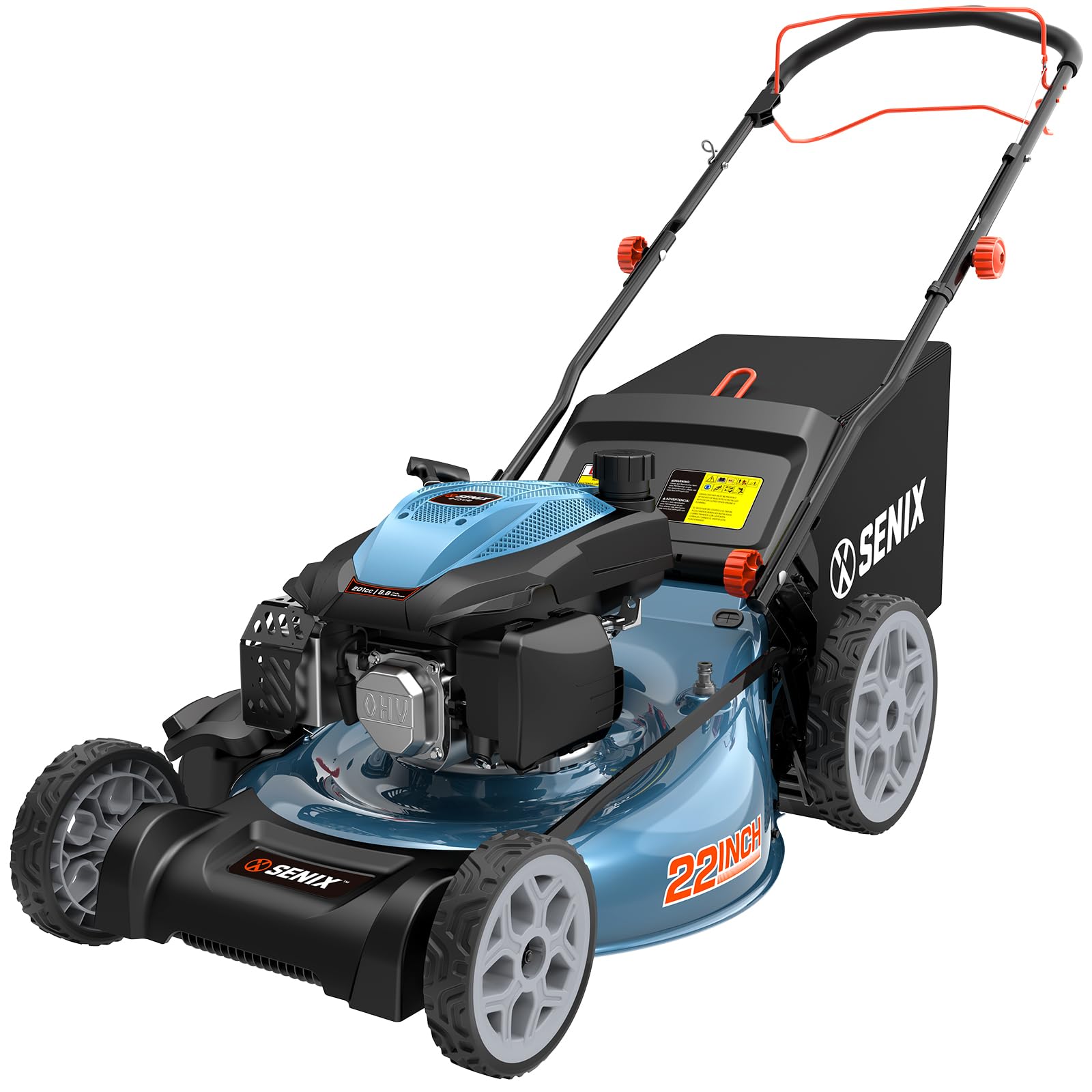
1. SENIX 22 Inch 3-in-1 Gas Lawn Mower, 201cc Rear Wheel Single Speed Self-Propelled
Our pick — over 4★ from 350+ verified ratings; the strongest balance of quality and price.
The 201cc engine delivers 8.8 ft-lb of torque, making thick, wet grass feel like a formality..
This is the model you grab when you want to stop worrying about engine bog-down. The 201cc OHV engine (an overhead-valve four-cycle motor) pushes 8.8 ft-lb of torque, which gives you 44% more cubic centimeters of displacement than the PowerSmart 21” 140cc unit — on a slope that extra grunt keeps the blade speed up when the grass is damp. The single-speed rear-wheel drive clicks along at up to 2.9 mph, and buyers report that “rear wheel drive works well on uneven terrain,” which matches the traction-focused design of the 22-inch steel deck.
The cutting height range runs from a low 1.25 inches to a tall 4 inches across six positions, giving you 20% more top-end range than the PowerSmart 170cc model, so you can leave the grass higher in summer heat. At 72 pounds it is not a lightweight, but the folding handle makes garage storage simpler. The 3-in-1 system covers mulching, bagging, and side discharge, and the compact 37.4-inch depth helps it fit in tighter sheds.
Why the 201cc Matters
- 201cc engine delivers 4.7HP and 8.8 ft-lb of torque — the strongest motor in this lineup for tough grass and hillsides.
- 22-inch cutting deck with manganese steel blades (45-50 HRC hardness) stays sharp longer than standard steel.
- Single-speed drive reaches 2.9 mph, which owners mention is enough pace for most medium-to-large lawns.
A Couple of Buyer Notes
- A few owners had wheel retention issues after a few uses, so checking wheel bolts during assembly is wise.
- At 72 pounds it is on the heavier side — maneuvering around tight flower beds takes more effort than with a lighter 59-pound mower.
The verdict for the home-steader: If you have a hilly, medium-to-large lawn and want the most powerful RWD single-speed mower available, this SENIX is your pick — the torque gap over smaller 140cc engines is significant enough to feel in tall grass.
Who might prefer a lighter option: If your yard is flat or small and you need to maneuver around tight obstructions, the lighter PowerSmart 170cc at 59 pounds may handle better.
2. PowerSmart 22-Inch Gas Lawn Mower, 150cc B&S Engine, Self-Propelled
A USA-built engine that pairs brand reliability with RWD hill grip.
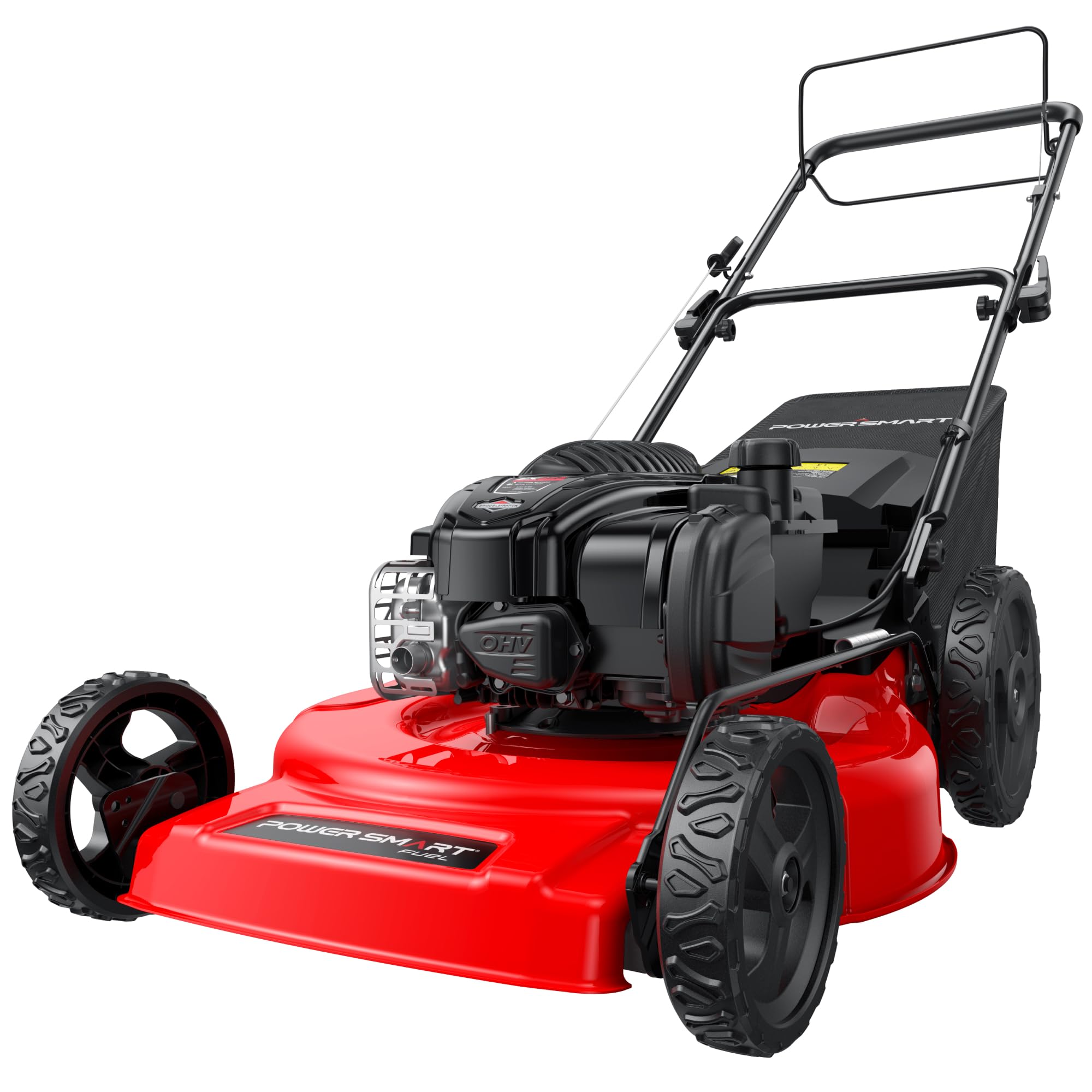
The Briggs & Stratton EX625 150cc engine is made in the USA and comes with ReadyStart technology, which means you prime the bulb and pull — no choke fumbling. The self-propel system is rear-wheel drive, and customers note that “rear-wheel self-propel differs from front-wheel when turning,” meaning you feel the pull from behind rather than the front wheels dragging you around corners. The 22-inch steel deck with a heavy-duty blade is designed for fine mulching, and the single-lever height adjustment offers six positions from 1.5 to 3.9 inches.
At 72 pounds it matches the heft of the SENIX 201cc model, but the 150cc motor is 51cc smaller — you trade some raw torque for the easier-starting, quieter Briggs & Stratton reputation. The 1.4-bushel bagger is the same capacity as the PowerSmart 21-inch 140cc model’s bag, but that unit weighs 73 pounds versus this one’s 72 pounds. One reviewer with a wheel damage issue reported that customer service sent a replacement immediately, which is a decent warranty safety net.
Who this engine suits: If you prioritize a well-known, USA-made small engine brand and are willing to trade 51cc of displacement for ReadyStart convenience and potentially quieter operation, this PowerSmart is a strong mid-premium pick.
The trade-off in torque: With 150cc, this mower will handle normal home lawns easily, but if you regularly cut damp, 8-inch-tall grass, the 201cc SENIX with 8.8 ft-lb of torque will maintain blade speed better.
Best suited for the Briggs loyalist: This is for buyers who know and trust the Briggs & Stratton name, want a brand with widespread parts availability, and do not need the top displacement in this group.
skip it if power is your priority: If you have a large, steep lot with heavy grass, the 44% cc advantage of the 201cc SENIX makes it the better investment.
3. YARDMAX 24 in. 201cc Electric Start Select PACE 6 Speed CVT High Wheel RWD 3-in-1
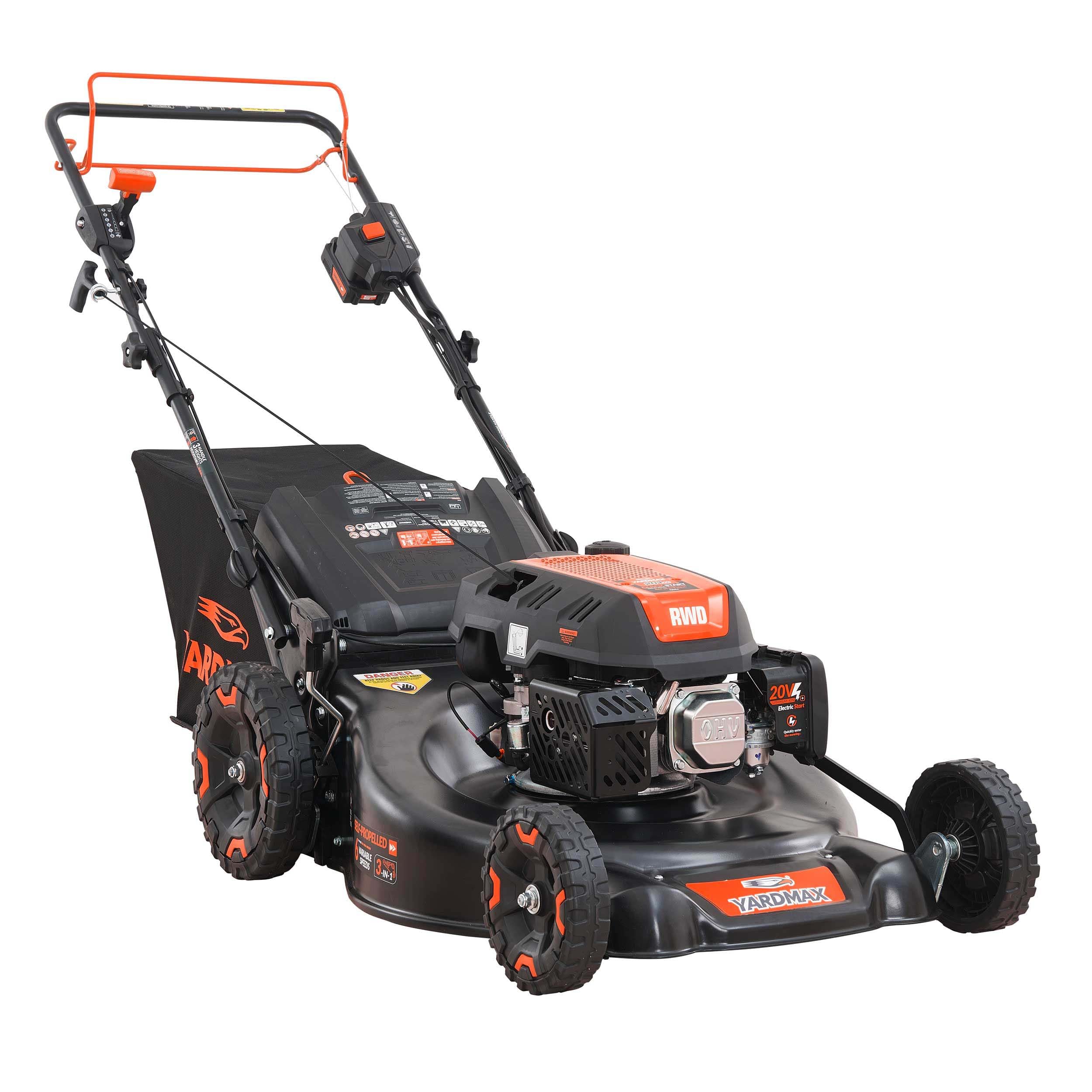
The 24-inch deck and electric start make this wide-body workhorse a push-button pace-setter for large lawns..
A 24-inch cutting deck covers 2 inches more grass per pass than the 22-inch models, which saves noticeable time on larger lawns. This YARDMAX is the only mower here with an electric start — you press a button rather than pull a cord — and the first in this group with a CVT (continuously variable transmission) offering six speed selections so the mower’s pace matches your natural walking stride. Rear-wheel drive and high rear wheels (likely 11-inch or larger based on the “High Wheel” name) keep traction on slopes.
The trade-off is weight: at 103.5 pounds, this is 31.5 pounds heavier than the PowerSmart 170cc mower, making it harder to push up a ramp into a truck bed or pivot in tight corners. The seven-position height adjustment runs from 1.57 to 3.74 inches, so you lose a bit of top-end height compared to the SENIX 4-inch max cut, but the range still covers seasonal needs. The one-piece smooth steel deck and MAXFlow Deck Technology (a volute spiral design) are both aimed at improving airflow for better mulching.
Standout Features
- Electric start eliminates pull-cord strain — especially welcome for older users or anyone with shoulder issues.
- CVT with 6 speeds lets you dial in the exact self-propel pace, from slow trimming to faster straightaways.
- 24-inch deck is the widest here, cutting mowing time on acre-plus lawns.
Consider These Trade-offs
- At 103.5 pounds it is easily the heaviest model — not ideal for carrying over stairs or up inclines when the engine is off.
- The top cutting height of 3.74 inches is slightly less than the 4-inch max on the SENIX and some PowerSmart models.
For the large-lot buyer who wants ease: If you are mowing over an acre, hate pulling a starter cord, and want the fastest ground speed adjustment, the YARDMAX is the premium comfort pick.
Not for tight storage or flat, small yards: Its size and weight make it a poor fit for small garages or low-maneuverability spaces; a lighter 59-pound model will feel much more agile.
4. PowerSmart 21-Inch Self Propelled Gas Lawn Mower, 170cc OHV Engine, Rear-Wheel Drive
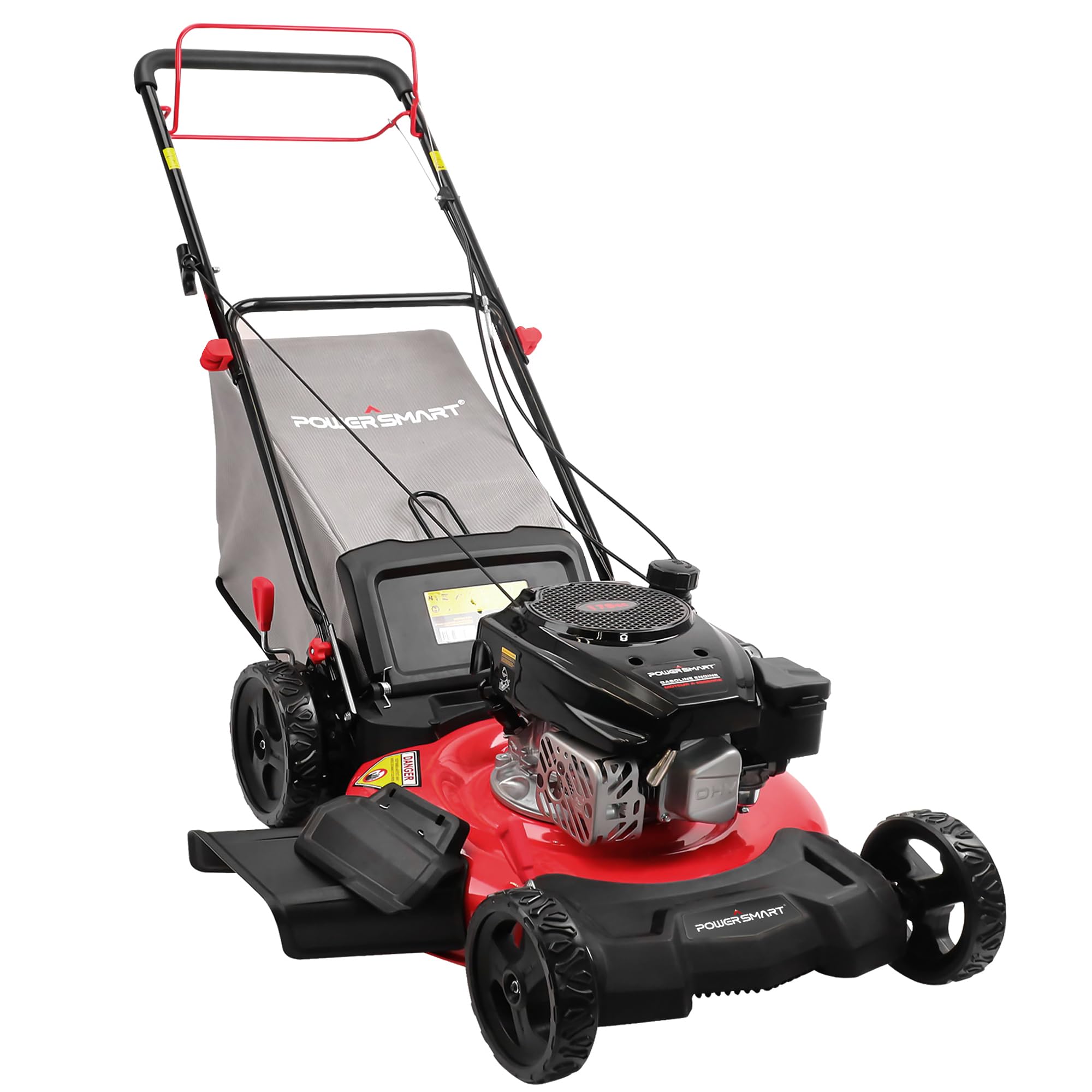
At 59 pounds, this is the lightest RWD mower in the lineup, making slopes less of a chore to manage..
At 59 pounds, this PowerSmart is 24% lighter than the 73-pound 140cc model from the same brand, yet it carries a bigger 170cc OHV engine. That combination — more power with less weight — makes it an unusual RWD value pick because RWD mowers are typically heavier machines. The rear-wheel drive provides the traction you need on inclines, while the low weight means you can pivot around shrubs and trees without fighting the machine. Reviewers point out that “it’s fast and light” and appreciate the single-lever height adjustment that moves all four wheels at once across a range of 1.5 to 3.9 inches.
The 21-inch cutting width is standard, and the 3-in-1 system covers mulching, bagging, and side discharge. The foldable handle reduces storage dimensions further. The catch? Reviewers describe a significant reliability issue: one reviewer noted having to pull the starter cord “about 60 times to get it to start,” followed by a locked-up starter cord. While other shoppers say happy use — “it cranks good and cuts even” — the pattern of starter problems appears more often in this 170cc model’s feedback than in the larger SENIX units.
Why the weight matters: For a buyer with a moderately sloped lawn who also has to navigate tight gates or store the mower in a second-floor shed, dropping 14 to 44 pounds off the competition is a real ease-of-use advantage.
Best for the maneuverability-first buyer: If you have a sloped but not massive lawn, and every pound of carry weight counts for storage or transport, this is your RWD balance.
Watch the starter quality: Multiple reports of cord lock-up suggest that you should verify the warranty and be prepared to address a potential starter assembly issue within the first few months.
5. SENIX Gas Lawn Mower, 22″ Self Propelled Gas Powered Lawnmower with 170cc OHV 4-Cycle Engine
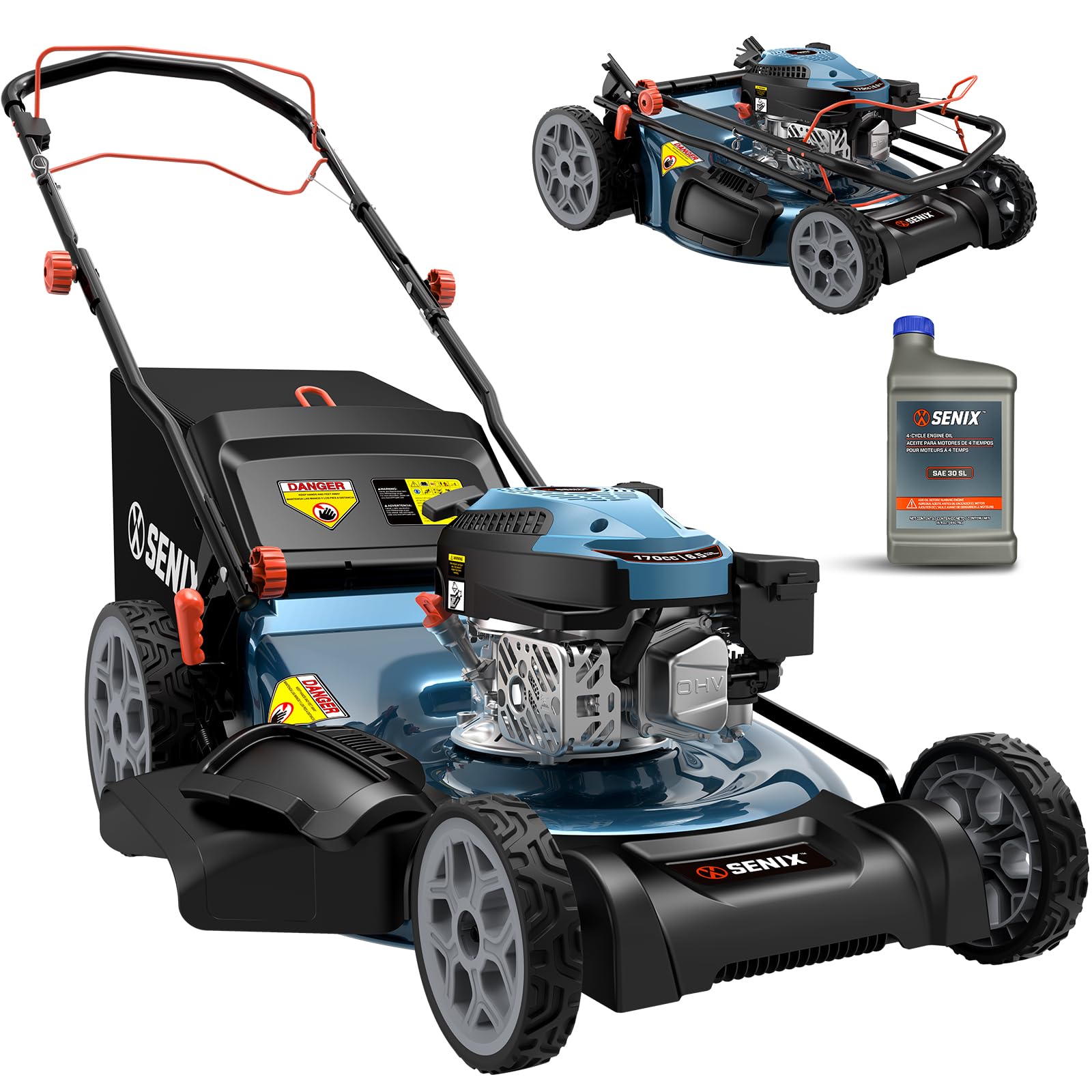
A full 22-inch RWD deck with a 170cc engine at a price that undercuts most of the competition..
This SENIX shares the same 22-inch cutting width as the top-ranked 201cc model but drops to a 170cc engine, which saves money while still delivering RWD self-propulsion. The single-lever height adjustment offers six positions from 1.25 to 4 inches — the same wide range as the pricier SENIX — and the 8-inch front and 11-inch rear wheels handle rough terrain well. The 19-gallon bagger is the largest included bag in this lineup, meaning you make fewer trips to the compost pile.
Buyers report a quick 10-minute assembly and that it starts on the first pull. The trade-off is apparent in the engine power: without the extra 31cc and the 8.8 ft-lb torque of its big brother, this mower will slow down more noticeably in thick, wet grass. One buyer had trouble finding gas and oil fill points due to unlabeled ports, so first-timers should read the manual carefully. It carries a 2-year limited warranty and includes oil, a mulch plug, and a discharge chute in the box.
Value Highlights
- 22-inch deck plus RWD at a budget-tier price point is rare — most budget RWD mowers stop at 21 inches.
- 19-gallon bagger capacity means fewer stops during mowing than the 1.4-bushel bags on PowerSmart models.
- 11-inch rear wheels roll over bumps and ruts more smoothly than smaller 10-inch rear wheels.
The Power Trade-off
- 170cc motor lacks the torque of the 201cc SENIX (8.8 ft-lb not available here), so tall wet grass will slow the blade more.
- Some assembly confusion over unlabeled oil and gas points may frustrate less experienced users.
For the budget-conscious slope owner: If you have a medium lawn with moderate slopes and want a proper 22-inch RWD deck without paying premium prices, this SENIX is the strongest value play in the group.
Choose the 201cc version instead if… Your yard has thick, damp, or overgrown patches where you absolutely cannot afford the blade to bog down — the 31cc gap and 8.8 ft-lb torque make a real difference in heavy cutting.
Understanding the Specs
Engine Displacement (cc)
Measured in cubic centimeters (cc), this tells you the size of the engine’s cylinders. More cc generally means more power and torque, which translates to better performance in tall, wet, or thick grass without the engine slowing down or stalling. In this group, engines range from 140cc to 201cc — a 201cc motor like the SENIX delivers 8.8 ft-lb of torque, while a 140cc unit offers less grunt but uses less fuel.
Cutting Deck Width
This is the width of the blade’s cutting path, usually measured in inches. A 22-inch deck covers 1 inch more grass per pass than a 21-inch deck, which over a half-acre lawn saves you about 10 passes. The widest model here is the 24-inch YARDMAX, which cuts down total mowing time on larger properties but makes the machine heavier and harder to turn in tight spaces.
Self-Propelled Drive System
Rear wheel drive (RWD) means the drivetrain powers the rear wheels, pushing the mower from behind. This gives you much better traction on slopes because your body weight and the engine weight sit over the drive wheels. RWD mowers are generally heavier than front-wheel drive models, but that extra weight is what keeps you climbing hills instead of slipping.
Cutting Height Adjustment
Shown as a range (for example, 1.25 to 4 inches), this is how low or high you can set the blade. A wider range gives you more seasonal flexibility: cut low in spring to remove winter debris and let sun reach new growth, then raise the blade in summer to leave more leaf surface so the grass retains moisture. Single-lever adjustments that move all four wheels at once are much faster than four separate corner adjustments.
FAQ
Is a rear wheel drive self-propelled mower better for hills than a front wheel drive?
What size engine do I need for my lawn?
Will a 22-inch deck mower fit through a standard garden gate?
How much maintenance does a gas RWD mower need?
Is a heavier mower better for traction?
Can I use a RWD mower on wet grass?
What does 3-in-1 mean on a lawn mower?
How long does a gas mower engine typically last?
Do I need a self-propelled mower if my lawn is flat?
Final Thoughts: The Verdict
For most people, the rear wheel drive self-propelled lawn mower winner is the SENIX 22″ 201cc because its 44% engine displacement advantage over 140cc models, combined with 8.8 ft-lb of torque and a 22-inch steel deck, gives you the muscle to handle steep slopes and thick grass without a second thought. If you want a USA-made engine brand with easier starts, grab the PowerSmart 22″ 150cc B&S model. And for the largest lawns where every minute counts, the electric-start, 24-inch-deck YARDMAX 24″ 201cc CVT cuts the widest path and matches your walking speed with its six-speed CVT — just be ready for its 103.5-pound heft.
How We Picked
We do not accept paid placement. Every pick is matched to a real buyer and a real use-case; we do not hands-on test units.
Sources & Methodology
Specifications: manufacturer listings and product documentation. Review insights: verified customer reviews, as of July 2026. Pricing: not shown on this page (it changes often); check the current price via the retailer link.
As an Amazon Associate, Lawn Gear Lab earns from qualifying purchases. This does not affect which products we feature.