
Specs are compiled from manufacturer listings and verified buyer reviews and can change over time — please confirm the key details on the product page before buying.
If you have ever spent a weekend fighting a gravel driveway with a flimsy garden rake — watching the tines bend and the stones scatter unevenly — you know the real frustration is not the work, it is the wrong tool. A proper gravel rake changes everything: one pass, one direction, one smooth surface. This guide cuts through the options to the seven rakes that actually pull, level, and spread gravel without wearing you out before the job is half done.
I’m Rikta — the founder and writer behind Lawn Gear Lab. This guide is built by comparing the manufacturers’ published specifications and the patterns across verified customer reviews, so you get each pick’s real strengths and trade-offs instead of marketing spin.
The honest truth is that the best gravel rake for your yard depends on one thing — how much ground you need to cover and how heavy the material is.
Our Picks at a Glance
How To Choose The Best Gravel Rake
Picking the right gravel rake is about matching the tool’s head width, tine design, and handle strength to the size of the area and the type of stone you are moving. A rake that excels at spreading pea gravel on a small path will struggle on a long driveway with crushed stone, and vice versa.
Head Width and Tine Design
A wider head (30 to 48 inches) covers more ground faster — ideal for large lawns, golf course bunkers, or long gravel driveways. Narrower heads (16 inches) dig deeper into compacted soil or stone, giving you more control when you are prying out rocks or leveling a tight garden bed. Tine count matters too: 14 to 18 tines spaced widely move material without clogging, while a solid grading edge (on screening rakes) lets you drag and smooth in one pass.
Handle Material and Length
Fiberglass handles are tough, weather-resistant, and won’t splinter like wood — they are the standard for heavy yard work. Aluminum handles keep the overall weight low, which helps when you are making multiple passes across a long driveway. An adjustable handle (range of 33 to 77 inches) lets you stand upright rather than hunch over, saving your lower back during long sessions.
Build Quality and Weight
Heavier steel heads (over 5 kg) provide the momentum to dig into compacted gravel and move it without the rake bouncing off the surface. Lighter aluminum heads (under 4.4 pounds) are easier to lift and maneuver, but they rely on the tine design to stay stiff. Look for reinforced welds at the connection points — that joint is the first thing to fail on a cheap rake.
Quick Comparison
| Model | Best For | Head Width | Weight | Handle Length | Amazon |
|---|---|---|---|---|---|
| Bully Tools Bow Rake★ Best Overall | Heavy rock & debris | 16 in | 3.45 lb | 58 in | Amazon |
| Extreme Max Screening RakeAlso Great | Large driveways & beach | 48 in | 6 lb | 66 in | Amazon |
| Oris Garden Lawn Leveler | Precision soil & gravel | 30 in | 14 lb | 78 in | Amazon |
| Structron Landscape Rake | Professional gravel grading | 36 in | 4.4 lb | 66 in | Amazon |
| Bully Tools Level Head Rake | All-purpose leveling & spreading | 16 in | 3.4 lb | 60 in | Amazon |
| 30″x10″ Lawn Leveling Rake | Large lawn & golf course | 30 in | 11 lb | 33″–77″ adj. | Amazon |
| Jardineer Bow Rake | Budget stone & soil work | 16 in | 5.8 lb | 59 in | Amazon |
In‑Depth Reviews
1. Bully Tools Bow Rake 16″ Tines
Our pick — over 4.5★ from 950+ verified ratings; the strongest balance of quality and price.
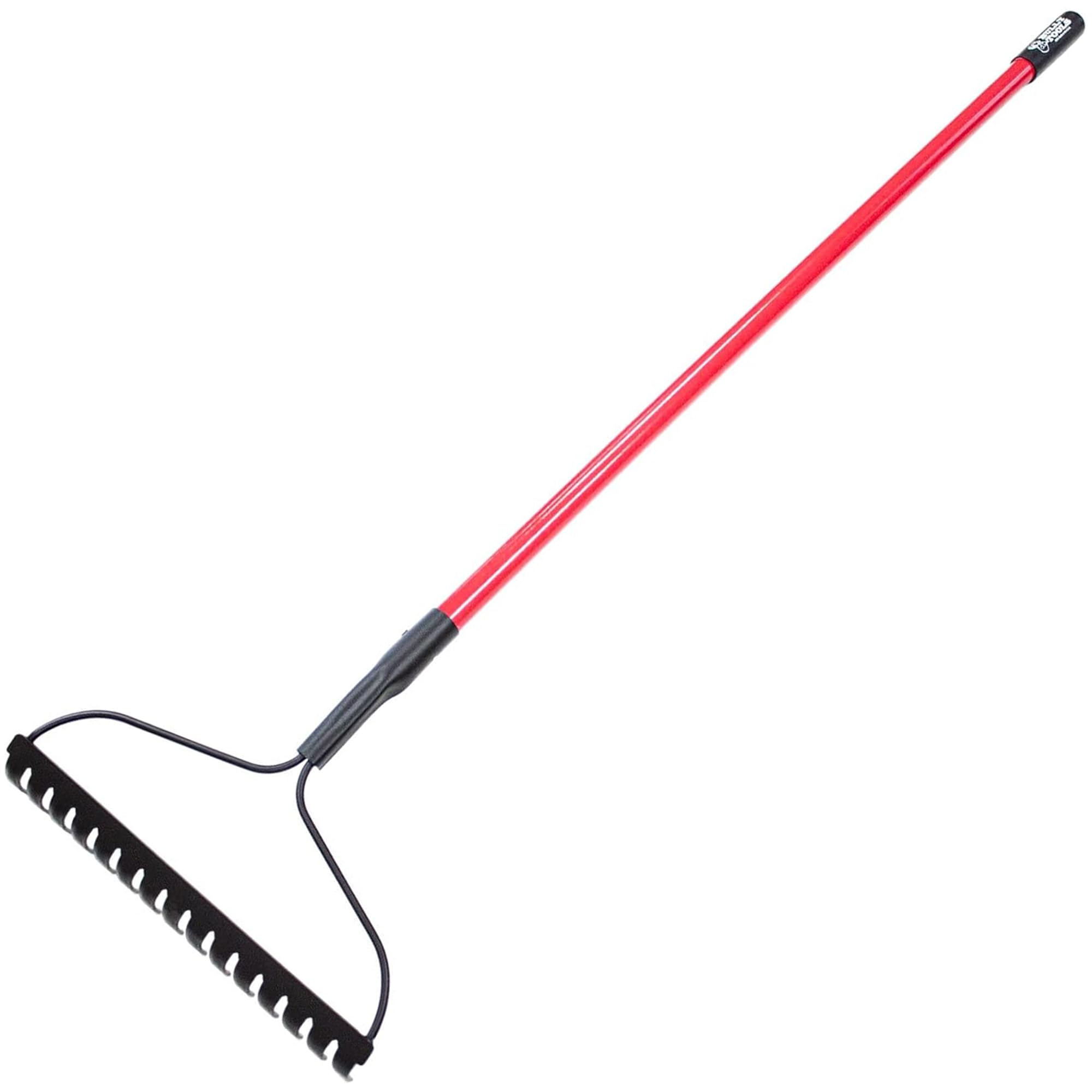
The classic bow rake from Bully Tools — a 10-gauge steel head that customers note is faster than any older rake they have used.
The bow rake shape — where the tines curve slightly under a bow-shaped frame — gives you leverage to pull gravel and rocks without the head flipping over. The head is made from true 10-gauge American steel, meaning it is thicker and more resistant to bending than most imported rakes. A buyer who reviewed it said it was faster than their older bow rake, durable enough to handle rocks easily, and the teeth dig into compacted areas well. The head measures 16 inches wide with 16 ribbed tines, and the fiberglass handle is 58 inches long with a rubber grip to keep your hands comfortable during heavy pulling.
This rake weighs 3.45 pounds — a bit lighter than the Jardineer bow rake (5.8 pounds) — but the 10-gauge steel and robotically overwelded connections make it a stiff competitor for gravel work. Buyers consistently call it “rock solid” and note the head stays secure even after repeated drops and weather exposure.
Brewed for abuse
- 10-gauge steel head
- 16 ribbed tines with reinforced ridges for digging into compacted gravel
- Fiberglass handle with rubber grip reduces fatigue during long sessions
Note for tall users
- A buyer over 6 feet mentioned the 58-inch handle felt short — consider a longer-handled rake like the Extreme Max (66 inches) if you are taller
Grab this for: Breaking up hard-packed gravel or prying out stones in a small to medium area — the 16-inch head gives you precise control that wide heads cannot match.
pass on it if: You are over 6 feet tall and plan to work for hours, or you want a level head instead of a curved bow shape for spreading material.
2. Extreme Max 3005.4236 48″ Commercial-Grade Screening Rake
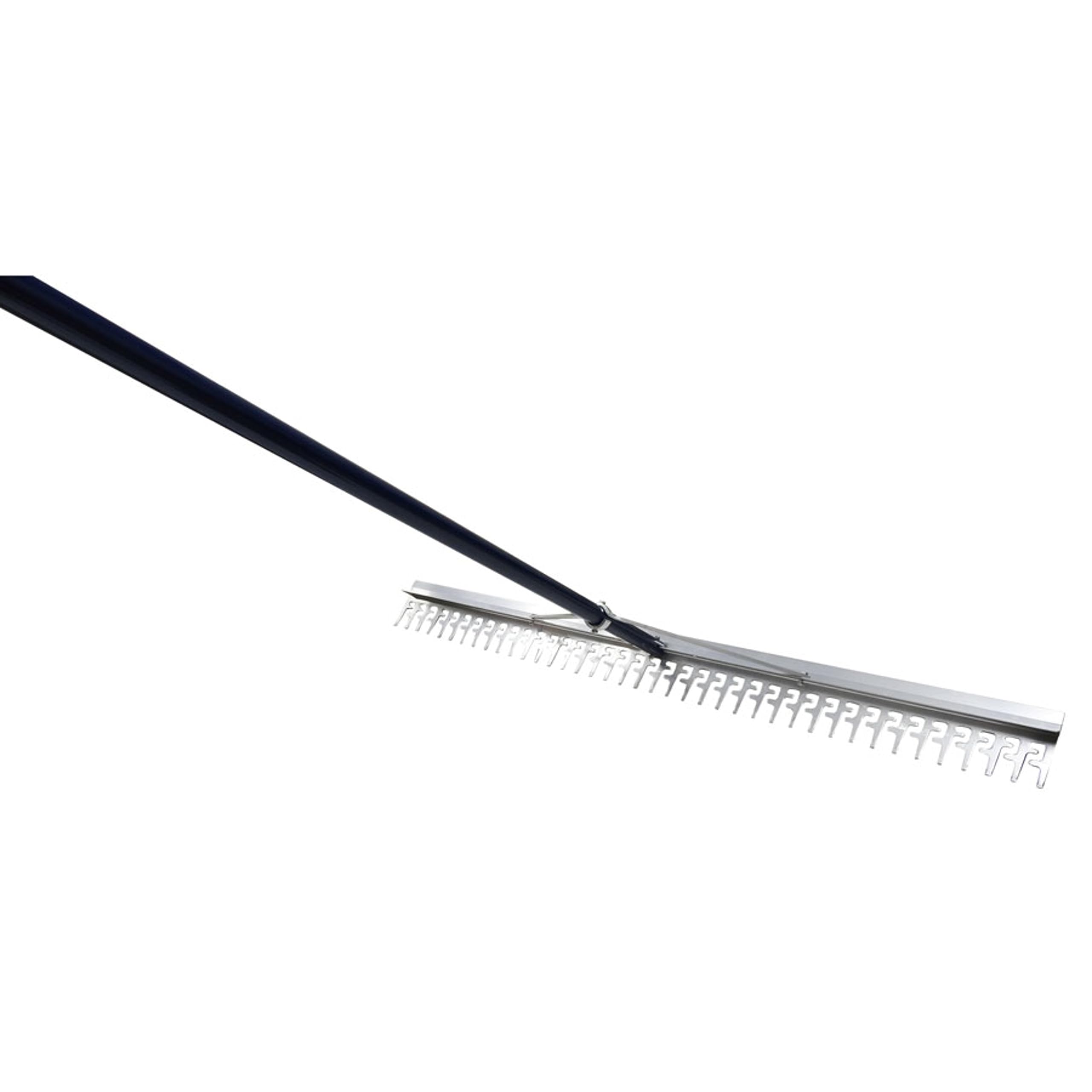
The wide-body champ that chews through gravel with a screening edge and a grading blade in one tool.
The head stretches 48 inches across — more than twice the width of a standard bow rake — so you cover a driveway in half the passes. It pairs that width with a grading edge on one side and screening teeth on the other: buyers report using the rake side to drag rocks to the surface, then flipping it over to drag the smooth edge back for a clean finish. Weighing 6 pounds with a stainless steel head, it is noticeably lighter than the steel leveling rakes in this list (the 30″x10″ CJYMMFAN weighs 11 pounds), so you can work longer without your arms tiring.
The commercial-grade build is backed by a two-year warranty, and a buyer mentioned the 66-inch handle, combined with the wrap-around bracing at the head, keeps the rake stable even when pulling through deep stone. It is a versatile tool for ball fields, long driveways, or beach cleanup — any job where you want one pass to do both the picking and the smoothing. Unlike the Bully Tools bow rake at 16 inches, this extreme width means you trade some precision for raw speed, but for massive areas, speed wins.
Speed over precision: If you need to re-grade a large gravel driveway quickly and want fewer passes, this is the rake to grab. The dual-sided head lets you screen out debris and level in one tool.
Not for tight beds: The 48-inch head is too wide to maneuver around flower beds or narrow garden paths — it is built for open space.
Best for large spaces: Grabs this rake for wide-open driveways, beach areas, or ball fields where coverage speed matters more than control.
Look elsewhere if: Your work is limited to a small path or detailed garden beds — the 48-inch head will feel clumsy in tight corners.
3. Oris Garden Lawn Leveling Rake 30 inch
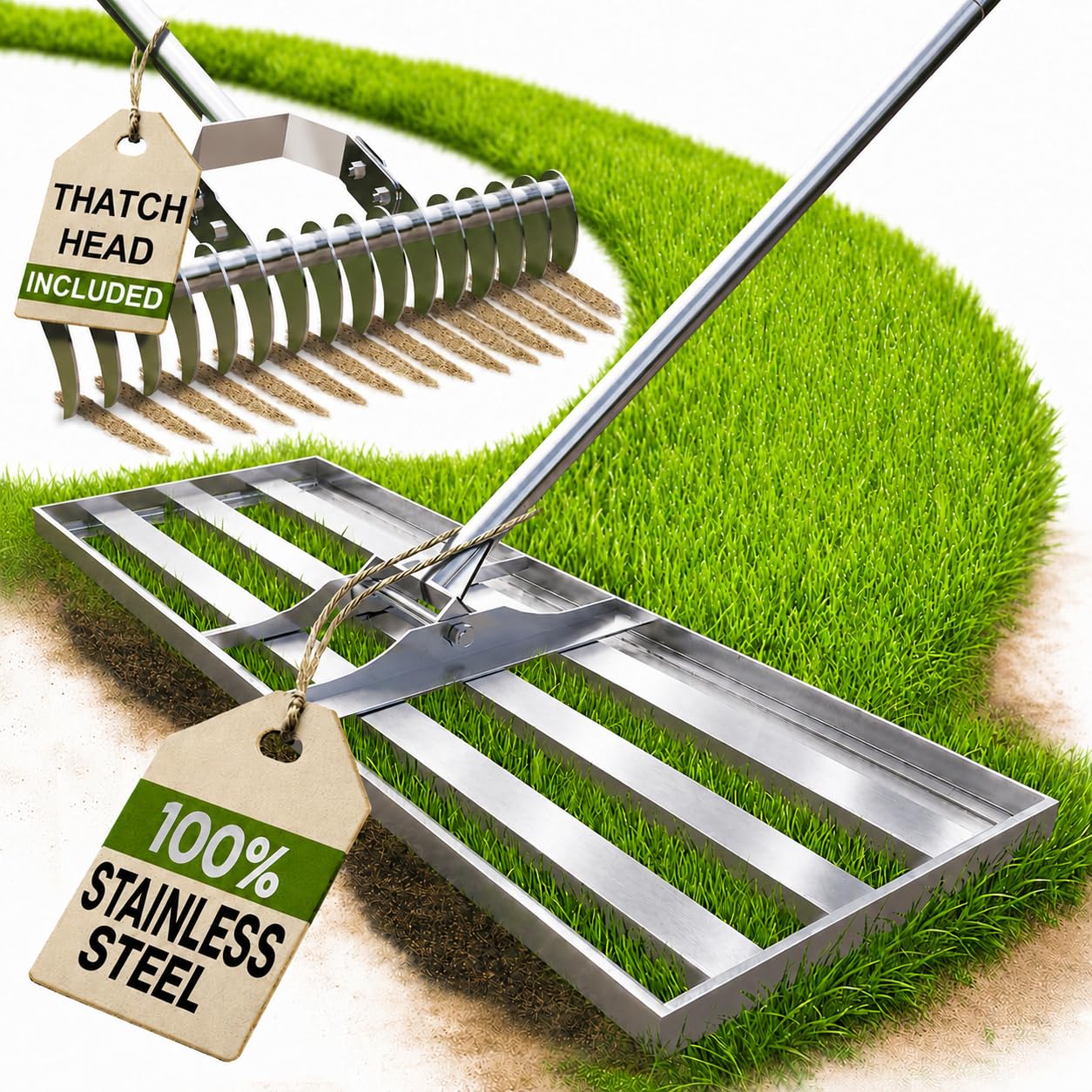
A 14-pound stainless steel workhorse that combines a leveler and a thatching head for year-round yard duty.
At 14 pounds, this is the heaviest rake on this list — that substantial weight gives it the momentum to bite into compacted gravel and pull it flat without the head skating over the top. The head is 30 inches wide and made entirely from stainless steel, including the 78-inch adjustable handle. Unlike the other heavy leveler here (the 30″x10″ CJYMMFAN, which uses a foldable iron head), the Oris uses a patented two-in-one design: a dethatching head on one side and a leveling head on the other, adding a second function you do not get from a standard gravel rake.
The handle adjusts up to 78 inches — 2 inches longer than the structron rake’s 66-inch handle — so tall users stand upright rather than hunch over. A buyer reported assembling it in nine minutes and said it did “the best job ever” leveling dirt. The smooth-edged leveling head glides without catching grass, so you can grade gravel driveways and top-dress lawns without tearing the turf. If you want a tool that pulls double duty between gravel work and lawn renovation, this is the one.
Standout strengths
- 14-pound stainless steel head sinks into gravel and pulls it flat without bouncing
- Adjustable 78-inch handle lets tall users stand upright
- Two heads in one — dethatcher on one side, leveler on the other
Trade-offs
- The dual-head design adds width, making storage a bit bulkier than a single-headed rake
- Metal construction is heavy for extended overhead or awkward-angle work
Ideal for the multi-tasker: If you want one tool that levels gravel and dethatches the lawn, this two-in-one saves you a trip to the shed.
skip it if: You only need a straight gravel rake and would rather not pay for a thatching function you will not use.
4. Structron 12102 (LR36) 36″ Head Landscape Rake
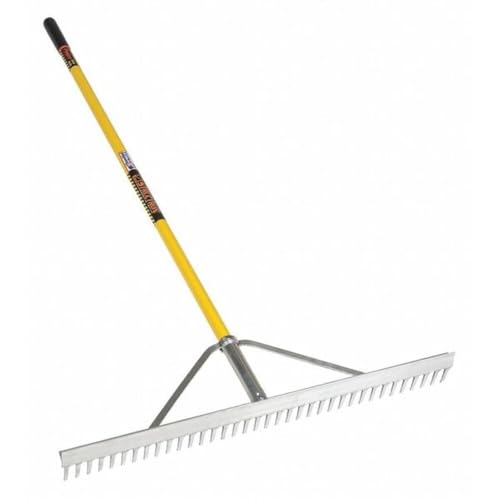
A lightweight 36-inch aluminum head with a commercial-grade fiberglass handle — built in the USA for serious driveway work.
This is the lightest of the large-head rakes at 4.4 pounds, yet it carries a 36-inch wide aluminum head that is rigid enough for heavy gravel grading. That combination matters when you are dragging a rake across a 300-foot gravel driveway — one reviewer noted it saves a lot of time and described the build quality as “way better than anything you will find in the big box stores.” The fiberglass handle (66 inches) with a rubber cushion grip reduces vibration, so you keep a comfortable hold even on rough stone.
The head uses a heavy-duty aluminum construction with wrap-around bracing, and the manufacturer makes a replacement handle available (part SA20400) if you ever need it — a sign the tool is designed to be repaired, not replaced. Unlike the 48-inch Extreme Max, the Structron’s 36-inch head gives you a good middle ground: wide enough to cover ground quickly but nimble enough for a standard driveway. A buyer did note that one bolt hole on their unit needed drilling out, but the overall verdict was that for the money, this is a sturdy landscape rake.
Farm and driveway ready: Buyers specifically praise it for spreading topsoil and leveling gravel, and one noted the aluminum teeth stayed strong and durable even on a 5/8-minus gravel pad for a 20-foot cargo container.
Minor assembly hiccup: Some buyers reported a bolt hole requiring a quick drill-out — a fix for the mechanically inclined, but worth knowing before you start.
Pick this for: A long gravel driveway or farm lane where you want a wide head without a heavy steel handle — the 4.4-pound aluminum structure is noticeably easier to pull for extended sessions.
Not for you if: You need extreme head width (48 inches) or a heavier steel head for breaking through heavily compacted stone.
5. Bully Tools 14-Tine Level Head Rake

The American-made level-head rake that turns a 16-inch head into a digging and dragging monster for gravel.
Unlike a bow rake with curved tines, this level head rake has 14 straight steel tines spaced widely to move gravel, dirt, and thatch without clogging. At 16 inches wide and 3.4 pounds, the head is narrower than the wide levelers on this list (the Oris Garden rake offers a 30-inch head), but the straight tine design gives you better control when you are scraping gravel into a level surface — you can work right up to landscape edging without dragging stone into the wrong area. The head is alloy steel and the fiberglass handle is 60 inches long, which keeps you upright without the extra reach of the Structron’s 66-inch handle.
One buyer called this rake “a monster” and described using it all summer to remove several tons of crushed rock from a front yard — the rake never bent, never broke, even when snagged on tree roots. The tine spacing also makes it suitable for thatch removal, so it pulls triple duty as a gravel rake, mulch rake, and lawn rake. With a 4.7/5 rating from 431 reviews, it has the highest average score in this list alongside the Bully Tools bow rake.
Built to survive
- 14 straight tines spaced wide for clog-free gravel movement
- 100% Made in USA with a limited lifetime warranty
- Weighs only 3.4 pounds for easy, repetitive passes
One limitation
- At 16 inches, the head covers the same width as a standard bow rake — it will not speed up coverage on a massive driveway like a 36- or 48-inch head would
Reach for this if: You want a versatile level-head rake that can handle gravel, topsoil, and thatch — and you want the confidence of a USA-made tool with a limited lifetime warranty.
Look elsewhere if: Your number-one priority is covering the most ground per pass on a long driveway — you will want a 30-inch or wider head for that.
6. 30″x10″ Lawn Leveling Rake, Heavy Duty Lawn Leveler
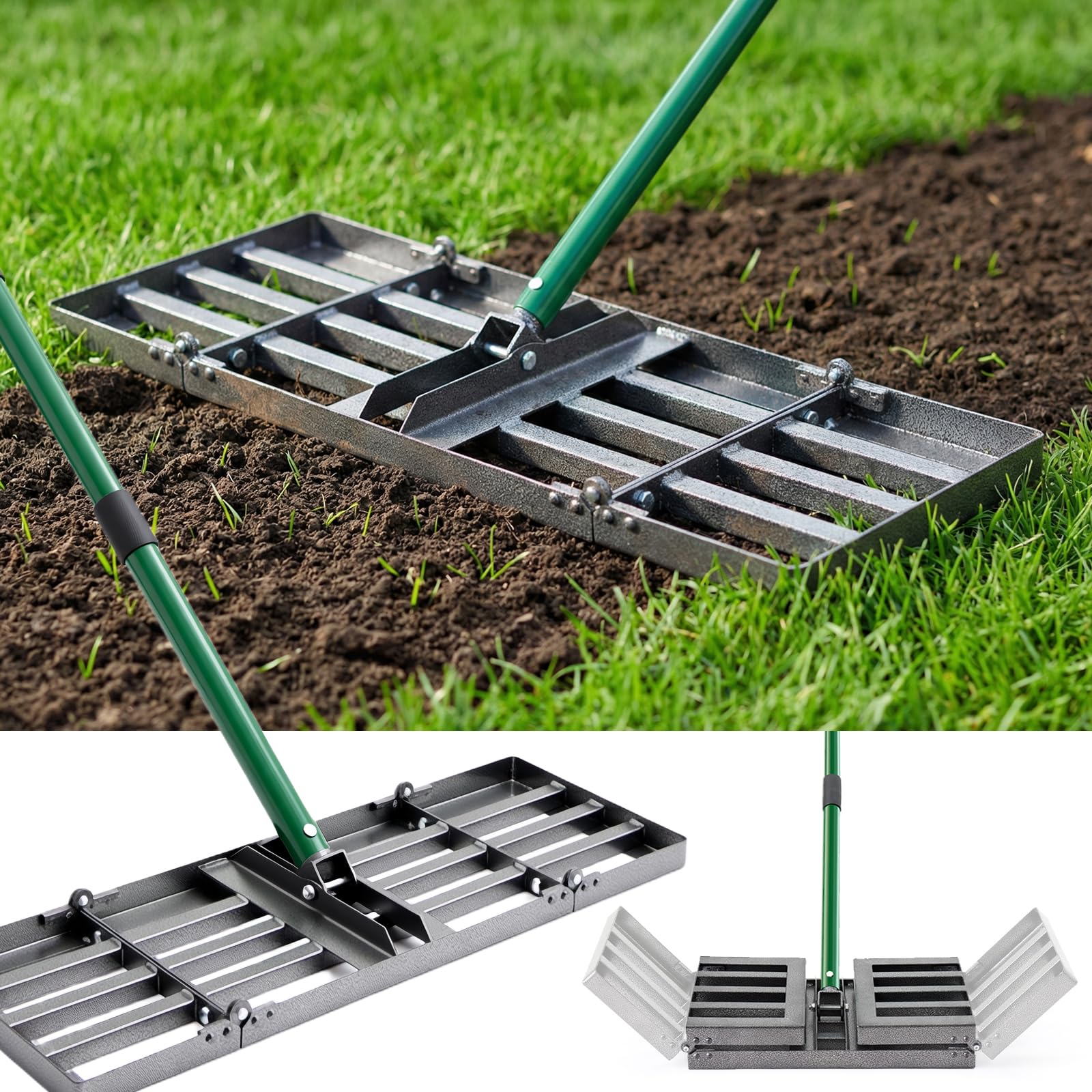
A foldable 30-inch iron head that adjusts from 33 to 77 inches — big coverage in a packable body.
This leveling rake hits the balance between width and weight: the 30-inch iron head is wide enough to level a large area quickly (at 30 inches, it covers more ground than a 17-inch rake), and the 5-section handle extends from 33 to 77 inches so a shorter or taller user can both work comfortably. Unlike the Bully Tools level head rake (16 inches), this rake spans nearly double the width, so you finish a driveway patch in fewer trips. The head folds down to fit in a car trunk or tight shed corner, which the Structron and Extreme Max rakes do not.
One buyer mentioned they needed it to level dirt after tilling and found it worked well both pushing and pulling — the wide iron base adds weight (11 pounds) so it smooths gravel without bouncing. The head is weld-reinforced and coated to resist rust, and the rubberized grip stays comfortable during long sessions. Owners mention the quality is “100% there” and the rake did exactly what they expected, though one mentioned the tool is “no miracle quick work” on gravel and requires some elbow grease.
Fold and go: Unlike the larger steel heads (Structron at 36 inches, Extreme Max at 48 inches), this rake folds to 15×10 inches for storage — ideal for homeowners with limited space or contractors who need a portable solution.
Heavy enough to work: At 11 pounds, it is lighter than the Oris Garden rake (14 pounds) but heavier than the aluminum heads — a good middle ground for gravel that is not fully compacted.
Best for: Homeowners who need a wide leveling head for their lawn or gravel yard but have limited storage space — the foldable design makes this rake easy to stow.
Not ideal for: Professional daily use on commercial sites, where the foldable joints might wear faster than a one-piece welded handle.
7. Jardineer Bow Rake Heavy Duty
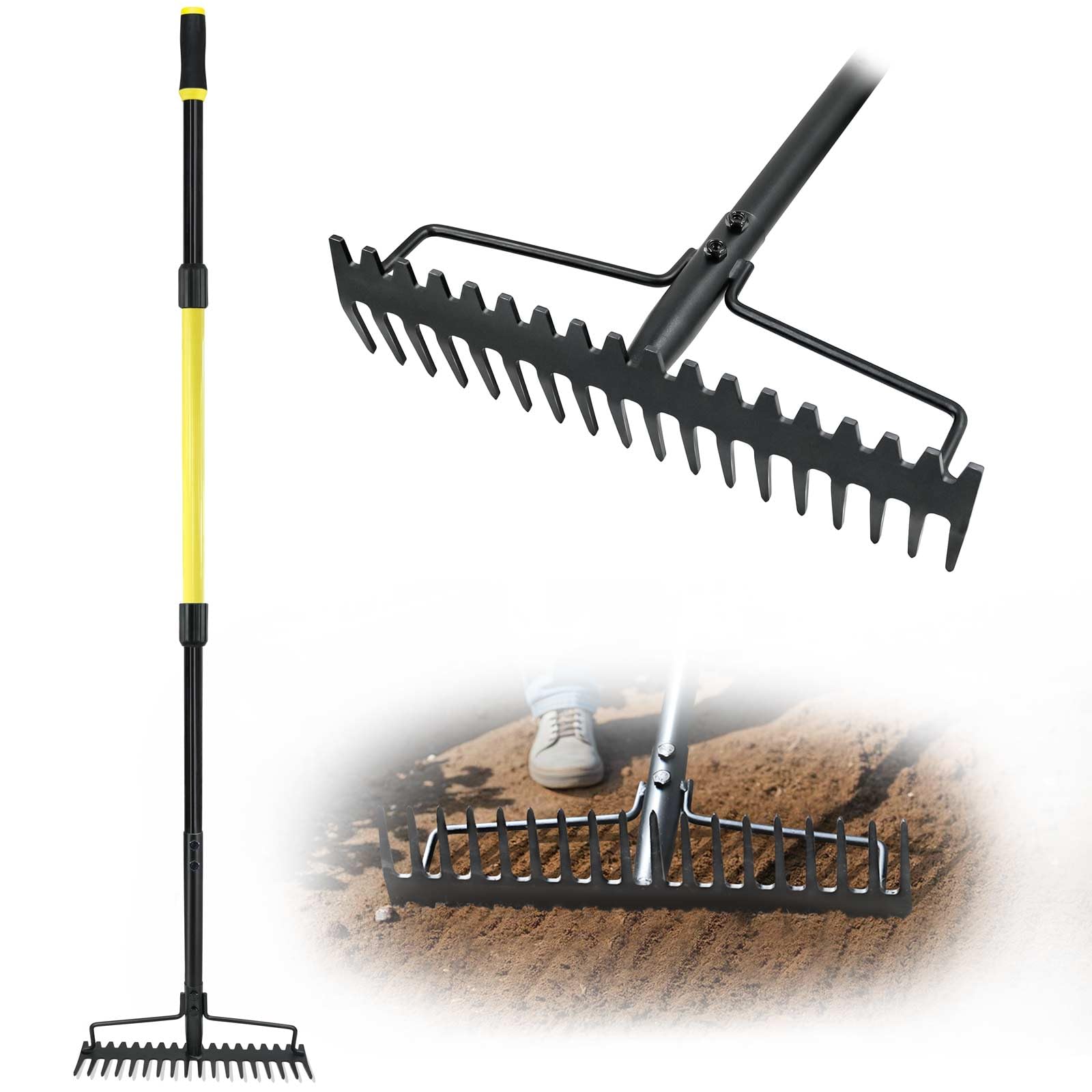
A budget bow rake with 18 steel tines and an aluminum handle that assembles in minutes for gravel and rock work.
This rake carries 18 tines on a 16-inch wide head — two more tines than the Bully Tools bow rake (16 tines) — so each pull engages more gravel at once. The tines are 4mm thick with a triple-welded joint, designed to resist bending during heavy-duty soil leveling and rock removal. The handle is made of aluminum rather than fiberglass, which brings the total weight to 2.64 kilograms (about 5.8 pounds) — noticeably heavier than the Bully Tools bow rake’s 3.45 pounds, but the aluminum shaft is less likely to splinter if you put it down on rough ground.
The head is dual-sided: one set of longer tines for raking and spreading loose gravel, and a shorter set for fracturing compacted ground. An extra nut, bolt, and wrenches are included for assembly, and reviewers point out it takes about five minutes to put together. One owner reported the included bolts were too short and required a trip to the hardware store, but the overall consensus is that for the money, this is a sturdy, heavy-duty rake for gravel and soil work. It also breaks down for compact storage, which the Bully Tools rake does not.
More tines, more pull: The 18-tine head (versus 14 to 16 on most rakes) helps move larger volumes of loose gravel per pass, though the wider spacing between tines means it clears debris without clogging.
Assembly bolt issue: At least one customer observed that the two bolts supplied were too short to secure the head to the handle — a minor hardware fix, but worth checking before you start a big job.
Budget-friendly for beginners: If you are new to gravel maintenance and want a solid bow rake with a detachable handle for easy storage, this is a cost-effective start.
Not for you if: You want a level head for grading, or you prefer a fiberglass handle over aluminum for maximum shock absorption on rough stone.
Understanding the Specs
Head Width: Coverage vs. Control
The head width is the single most important decision a gravel rake buyer makes. A 30- to 48-inch head (like the Extreme Max at 48 inches) covers a driveway in fewer passes but is harder to maneuver in tight spaces. A 16-inch head (like the Bully Tools bow rake) gives you precise control for breaking up compacted gravel next to edging, but you will make more trips across a large area. Match the width to your job — wide for open drives, narrow for beds and borders.
Handle Material & Length
Fiberglass handles (Bully Tools, Structron) are tough, weather-resistant, and transmit less vibration than aluminum or steel — good for long sessions on rough stone. Aluminum handles (Jardineer) keep assembly weight down but can feel harder on your hands on large projects. Length matters too: adjustable handles (33 to 77 inches, like the 30″x10″ CJYMMFAN) let you stand upright at any height, while fixed-length handles (58 to 66 inches) save weight but may force a tall user to hunch.
Weight and Build
Heavier rakes (14 pounds for the Oris Garden rake) provide the mass to bite into compacted gravel and pull it flat — they do the work for you. Lighter rakes (3.4 pounds for the Bully Tools level head) are easier to maneuver but may bounce off hard surfaces if you do not apply enough downward force. Look for reinforced welds at the head-to-handle connection; this is the most common failure point on budget rakes.
Tine Design: Bow vs. Level Head
A bow rake has curved tines that grab and pull debris — ideal for breaking up gravel, prying out rocks, and raking leaves. A level head rake (also called a level head or grading rake) has straight tines set perpendicular to the handle — it is designed to scrape and level gravel or soil in one smooth pass. For driveway maintenance, the level head is usually the better choice; for digging stones out of a garden bed, the bow shape gives you more leverage.
FAQ
Can I use a regular garden rake for gravel?
What is the difference between a bow rake and a level head rake?
How wide should a gravel rake head be?
Is a heavier rake better for gravel?
Can I use a gravel rake to dethatch my lawn?
How do I maintain a gravel rake to prevent rust?
What is the advantage of an adjustable handle on a gravel rake?
How hard is it to assemble a gravel rake?
Is a fiberglass handle better than aluminum for a gravel rake?
Final Thoughts: The Verdict
Across the board, the best gravel rake is the Extreme Max 48″ Screening Rake because its dual-sided head (screening teeth and grading edge) works both sides of the job in one tool — pulling stones up and smoothing the surface back down. If you want a heavy-duty precision tool that handles gravel and dethatching, grab the Oris Garden Lawn Leveling Rake. And for a classic, tough bow rake that tackles compacted gravel and rocks while staying affordable, the Bully Tools Bow Rake is a 10-gauge American-made workhorse you can count on for years.
How We Picked
We do not accept paid placement. Every pick is matched to a real buyer and a real use-case; we do not hands-on test units.
Sources & Methodology
Specifications: manufacturer listings and product documentation. Review insights: verified customer reviews, as of July 2026. Pricing: not shown on this page (it changes often); check the current price via the retailer link.
As an Amazon Associate, Lawn Gear Lab earns from qualifying purchases. This does not affect which products we feature.