
Specs are compiled from manufacturer listings and verified buyer reviews and can change over time — please confirm the key details on the product page before buying.
Tomatoes are heavy feeders with deep root systems — a root bound (cramped) plant means smaller harvests and more watering stress. You need a raised bed that is at least 12 inches deep so the roots stretch freely, and the structure itself must handle years of wet soil, rain, and sun without collapsing. This guide covers five raised garden beds built for tomatoes, with a sharp focus on real soil depth, material durability, and the honest trade-offs each one carries.
I’m Rikta — the founder and writer behind Lawn Gear Lab. This guide is built by comparing the manufacturers’ published specifications and the patterns across verified customer reviews, so you get each pick’s real strengths and trade-offs instead of marketing spin.
Every bed on this list meets the 12-inch minimum tomato roots demand. But the differences in capacity, steel thickness, and included supports matter more than you would guess. Here is our researched guide to the best raised garden beds for tomatoes this season.
Our Picks at a Glance
How To Choose The Best Raised Garden Beds For Tomatoes
Tomatoes are not like shallow-rooted lettuce or radishes — they can send roots down two feet or more. A bed that looks big on top but is only a few inches deep will starve your plants of space and moisture. The most important thing you can do for a tomato plant in a raised bed is give it the vertical room for its roots to stretch. That means you should look past the length and width and check the actual soil depth.
Soil Depth and Root Space
For indeterminate tomato varieties (the vining ones that keep growing all season), the deeper the bed, the better. A 12-inch bed is the absolute minimum, but 18 to 24 inches is where your plants really take off. Deeper soil also stays more consistent in temperature and moisture, which means fewer cracked fruits and less stress on the plant during heat waves.
Material and Durability
Galvanized steel is the most popular choice here because it resists rust and holds up to weather without warping. The thickness is measured in gauge — lower numbers mean thicker, stronger steel. A 22-gauge (about 0.8mm) panel is a solid benchmark. Cheaper beds use thinner metal that can bow outward when filled with wet soil, so look for powder-coated or multi-layer eco-friendly coatings that add another layer of weather protection.
Drainage and Open Bottom Design
An open bottom lets excess water drain out naturally and allows plant roots to grow into the native soil below. This is critical for tomatoes because standing water leads to root rot. A bed with a solid bottom needs drainage holes, but an open-bottom design (no floor) is almost always better for deep-rooted crops.
Assembly and Safety Edges
Some beds require extensive screwing with dozens of fasteners, while others click together in under an hour. Look for rolled or curled edges — these protect your hands and arms when you lean over to tend your plants. A few kits include work gloves and assembly tools, which is a nice bonus.
Quick Comparison
| Model | Best For | Soil Depth | Capacity | Material | Amazon |
|---|---|---|---|---|---|
| A ANLEOLIFE 8x4x2ft★ Best Overall | Best Overall | 24 inches | 478 gallons | 22-gauge galvanized steel | Amazon |
| Quictent 6x3x2ftPremium Pick | Premium Pick | 22.4 inches | — | Powder-coated galvanized steel | Amazon |
| BUTUNITA 8x4x1.5ft | Mid-Range Value | 18 inches | — | Thickened painted steel | Amazon |
| Land Guard 4x2x2ft | Compact Value | 24 inches | 144 gallons | 1.0mm galvanized sheet | Amazon |
| Pattiumo 8x2x1.5ft | Narrow Space | 18 inches | 24 cubic feet | Galvanized painted steel | Amazon |
In‑Depth Reviews
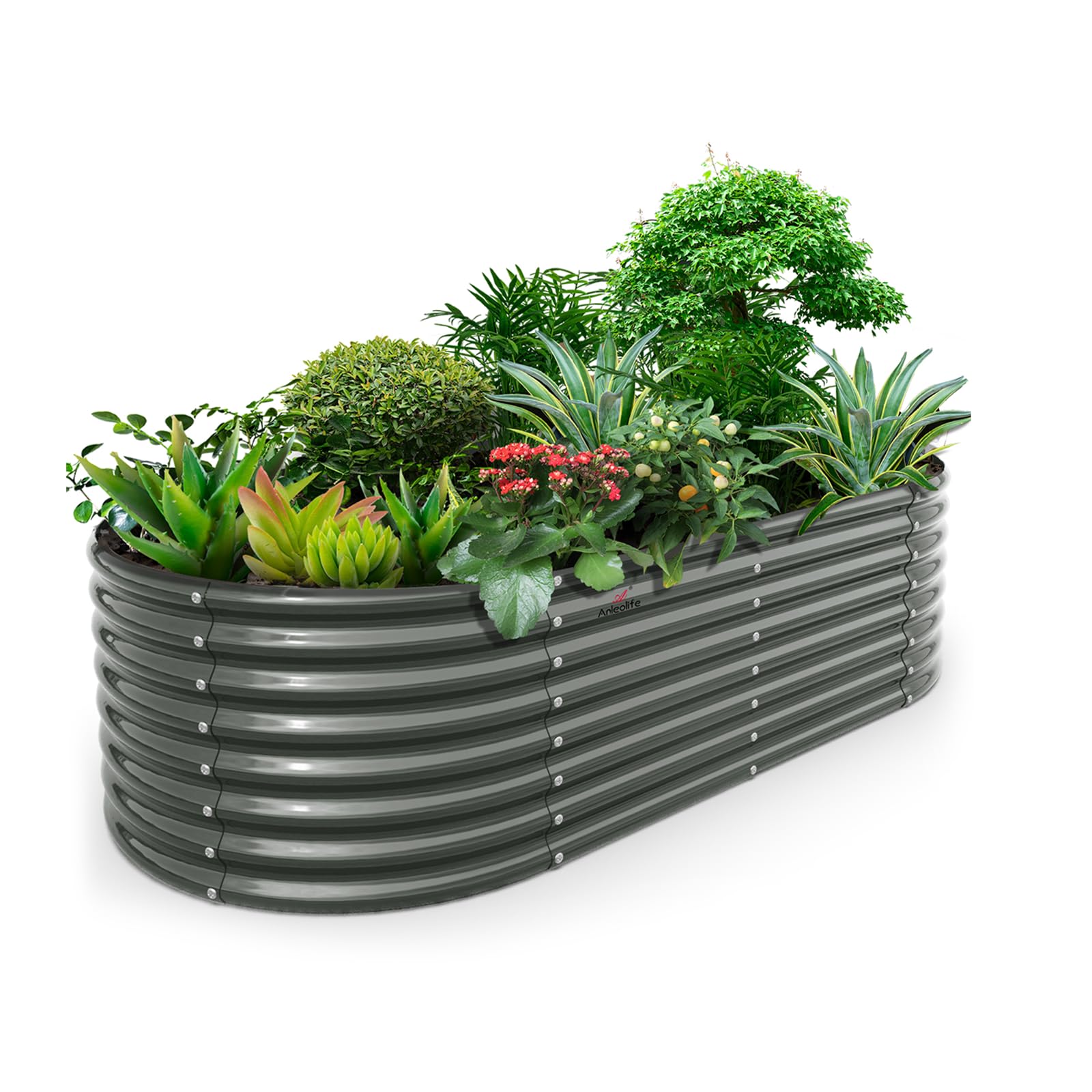
1. A ANLEOLIFE 8x4x2ft Galvanized Raised Garden Bed Kit
Our pick — over 4.5★ from 750+ verified ratings; the strongest balance of quality and price.
The deep-root champion that swallows 478 gallons of soil without a buckle.
What matters most for tomatoes is root depth, and this oval bed gives you a full 24 inches of soil column — twice the depth of standard 12-inch beds, so your indeterminate varieties have room to stretch below ground. The 22-gauge (0.8mm thickness) galvanized steel walls are reinforced with a multi-layer eco-friendly powder coating. Buyers report it is “sturdy metal, great finish, rolled safe edges” that protect your hands when you lean over the rim. At 48 x 96 x 24 inches, the oval footprint fits neatly into a corner of your yard while holding enough soil for a serious vegetable patch.
The open bottom lets roots grow into the native ground beneath, which improves drainage and prevents waterlogged soil that causes blossom end rot. Assembly took one reviewer about 1.5 hours with a drill, and the kit includes extra hardware, gloves, and a screwdriver. The company shipped center support rods for longer beds after one reviewer noted theirs lacked them. At 478 gallons, this bed holds a 3.3x larger volume than the Land Guard 144-gallon option, so you can plant multiple tomato varieties plus peppers and basil in a single bed.
Why it leads
- 24-inch soil depth is ideal for deep-rooted tomatoes and peppers
- 478-gallon capacity — 3.3x more than the Land Guard 144-gallon bed
- Rolled safe edges and included gloves reduce assembly risk
One real trade-off
- Large oval shape requires a dedicated space — not for tight patios
- At 21.98 kg (about 48 pounds) it is heavy to move once assembled
Tomato grower’s choice: The deepest bed in this lineup with the biggest soil volume — reach for it if you want to plant a full garden plot in one container without upgrading later.
Consider something smaller if: You have a balcony or narrow side yard where the 4-foot width will crowd your walking path.
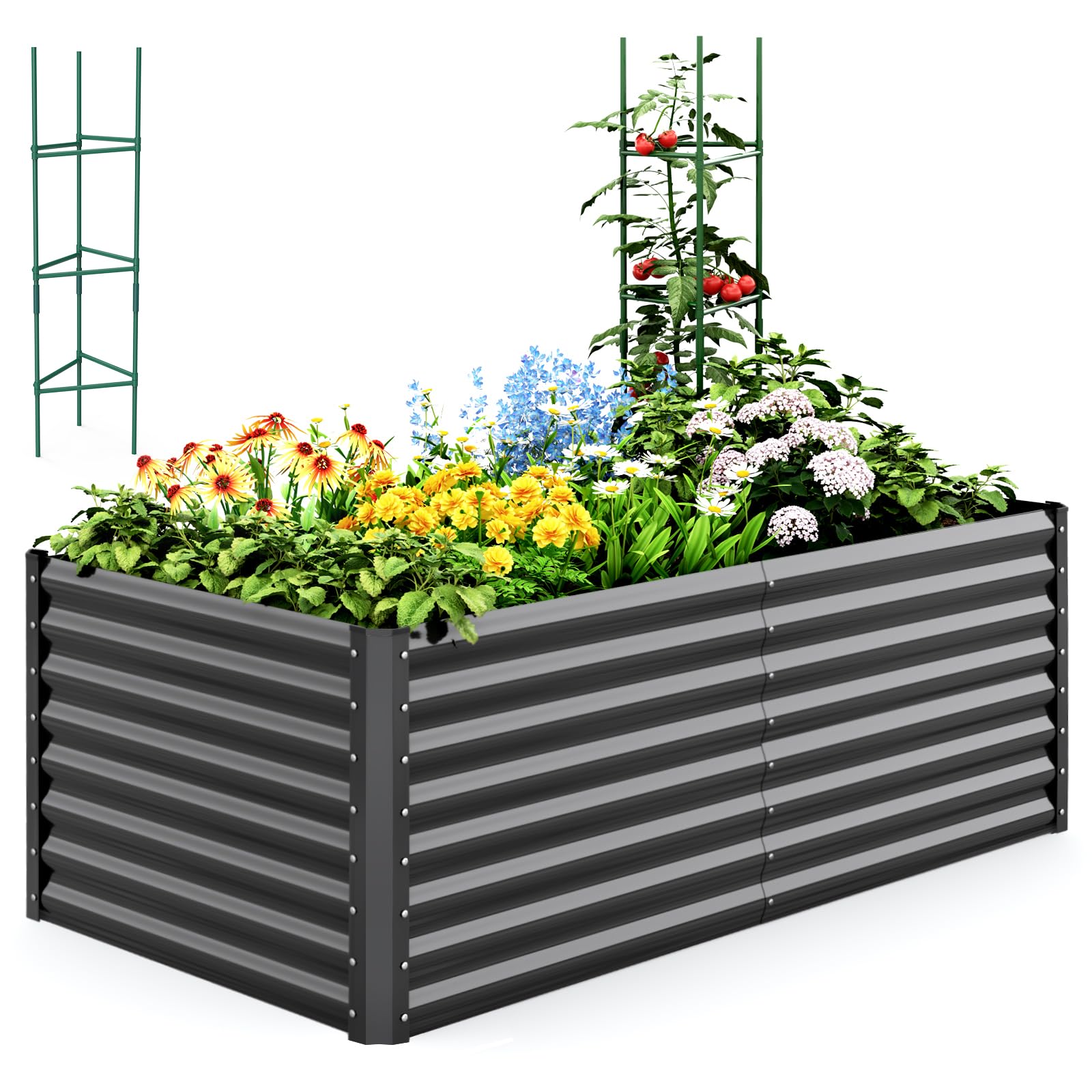
2. Quictent Galvanized Raised Garden Bed 6x3x2ft
A 22.4-inch high bed that comes with its own tomato support cage.
This is the only bed in this guide that ships with a tomato cage included — a convenience that saves you an extra trip to the garden center. At 22.4 inches tall, the Quictent gives your tomatoes the same deep root space as the ANLEOLIFE. But the footprint is 6×3 feet instead of 8×4, so it fits a smaller spot. The powder-coated galvanized steel panels are designed to handle harsh weather, and four cylindrical stabilizing bars across the middle keep the long side walls from bowing under wet soil weight.
Owners mention that assembly is “a bit tedious” but manageable with an impact wrench in about 30 minutes. One buyer mentioned the crossbars are “fragile and prone to bending during assembly,” so take your time squaring the corners. Once filled with soil, the bed becomes very stable — though several reviewers warn you cannot sit on the edges. The open base allows natural drainage. A reviewer who used it for a full season reported the bed “looks new after one year” and estimated a lifespan of around 10 years.
what separates it
- Includes one tomato support cage — a real convenience
- 22.4-inch height rivals the ANLEOLIFE in depth
- Four stabilizing bars prevent wall bowing at 6-foot length
What to watch
- Crossbars can bend if handled roughly during assembly
- 6×3-foot size holds less total volume than the 8×4 ANLEOLIFE
Smart built-in accessory: If the included tomato cage and the 22.4-inch depth are the two boxes you want checked, this is your bed.
Look elsewhere if: You want the absolute maximum growing space — the 8×4 ANLEOLIFE offers nearly double the footprint.
3. BUTUNITA 8x4x1.5ft Galvanized Raised Garden Bed
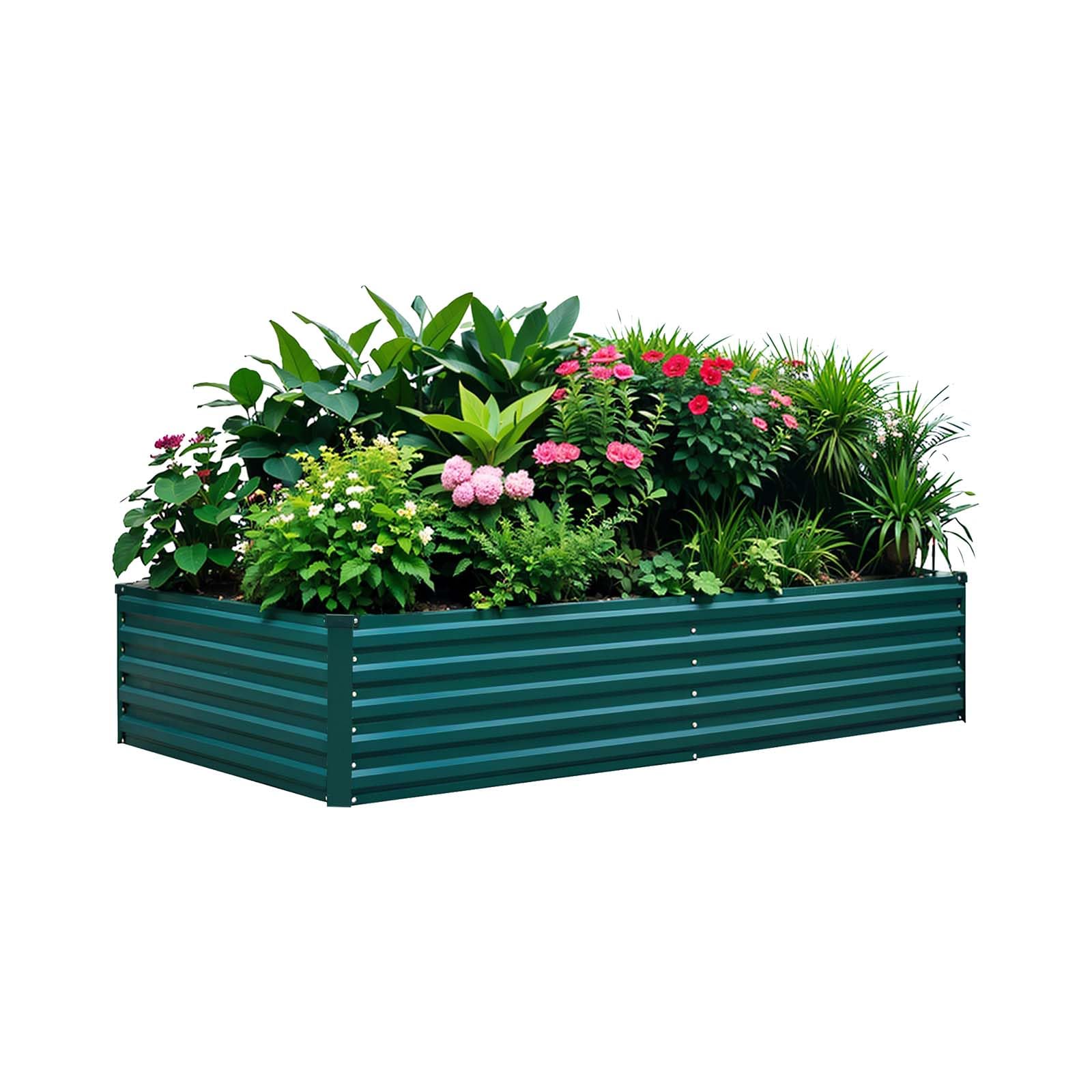
Eighteen inches deep with a three-year track record that buyers trust.
At 18 inches deep, the BUTUNITA sits right in the middle of this list — deeper than the 12-inch minimum but shallower than the 24-inch monsters above. That is plenty of room for most determinate and semi-determinate tomato varieties (bush types that stop growing at a set height). The 8×4-foot footprint (96 x 48 x 18 inches) gives you an 8-foot-long planting row for a big harvest. The thickened painted steel is designed to resist rust, and one buyer who has owned the bed for “over three years” says it is “still in great condition.”
The kit includes a 3×30-foot weed barrier fabric, a useful add-on that blocks weeds from pushing up through the open bottom while still letting water drain. Solo assembly is manageable, though a few reviews mention sharp edges — wear the included gloves. The green color blends into a garden landscape better than bare silver metal. The bottomless design keeps your tomato roots from hitting a solid floor. For the price, you get the same footprint as the pricier ANLEOLIFE but with 6 inches less depth and a painted finish instead of powder coating.
Why it holds up
- 18-inch depth is enough for most tomato types
- 3+ year buyer reviews confirm the paint and steel endure
- Comes with weed barrier fabric — small but welcome addition
Where it gives ground
- 18 inches is 6 inches shallower than the 24-inch ANLEOLIFE
- Painted steel may not resist corrosion as long as powder-coated or multi-layer coated options
Solid mid-ground choice: The combination of 18-inch depth and 8×4 footprint hits a balance for backyard tomato growers who want a lot of space without going to the deepest beds.
Not the best if: You grow sprawling indeterminate tomatoes that really benefit from a full 24 inches of root room — step up to the ANLEOLIFE or Quictent.
4. Land Guard 24″ Tall Galvanized Raised Garden Bed Kit

A compact 4×2-foot bed that still packs a full 24 inches of growing depth.
The 48 x 24-inch footprint is small, but this Land Guard bed matches the ANLEOLIFE’s 24-inch soil depth in a much tighter package. That makes it a strong option for patios, balconies, or anyone who only needs a few tomato plants. The capacity is 144 gallons versus the ANLEOLIFE’s 478 gallons (a 3.3x gap), but if you are growing for yourself rather than the whole block, the smaller size is easier to fill, manage, and reach across. One reviewer says they are “using it for tomatoes and peppers, and some flowers too,” which is a realistic mix for a 4×2 space.
The 1.0mm thickened galvanized sheet is coated with a powder finish that resists rust even in heavy rain. The tool-free assembly uses upgraded screws and heavy-duty center bars that one buyer described as “easy to put together although there are lots of screws.” It takes patience to align all the holes solo — a helper speeds things up — but the thicker metal gives the walls a satisfying rigidity once filled. Like every bed here, the open base prevents water buildup and lets roots grow into the ground below.
Compact strengths
- 24-inch depth equals the deepest beds in this guide
- Thicker 1.0mm galvanized sheet resists deformation
- Small footprint fits tight outdoor spaces
Space limits
- 144-gallon capacity limits you to a few tomato plants
- Assembly involves many screws — prepare for some repetition
Best for tight spaces: If you only have a small patio or deck but still want the deep root zone that tomatoes need, this is the most compact way to get 24 inches of soil.
Pass it up if: You want to plant a dozen tomato plants plus peppers and herbs — the ANLEOLIFE’s 478-gallon capacity is 3.3x larger.
5. Pattiumo Galvanized Raised Garden Bed 8×2×1.5 FT
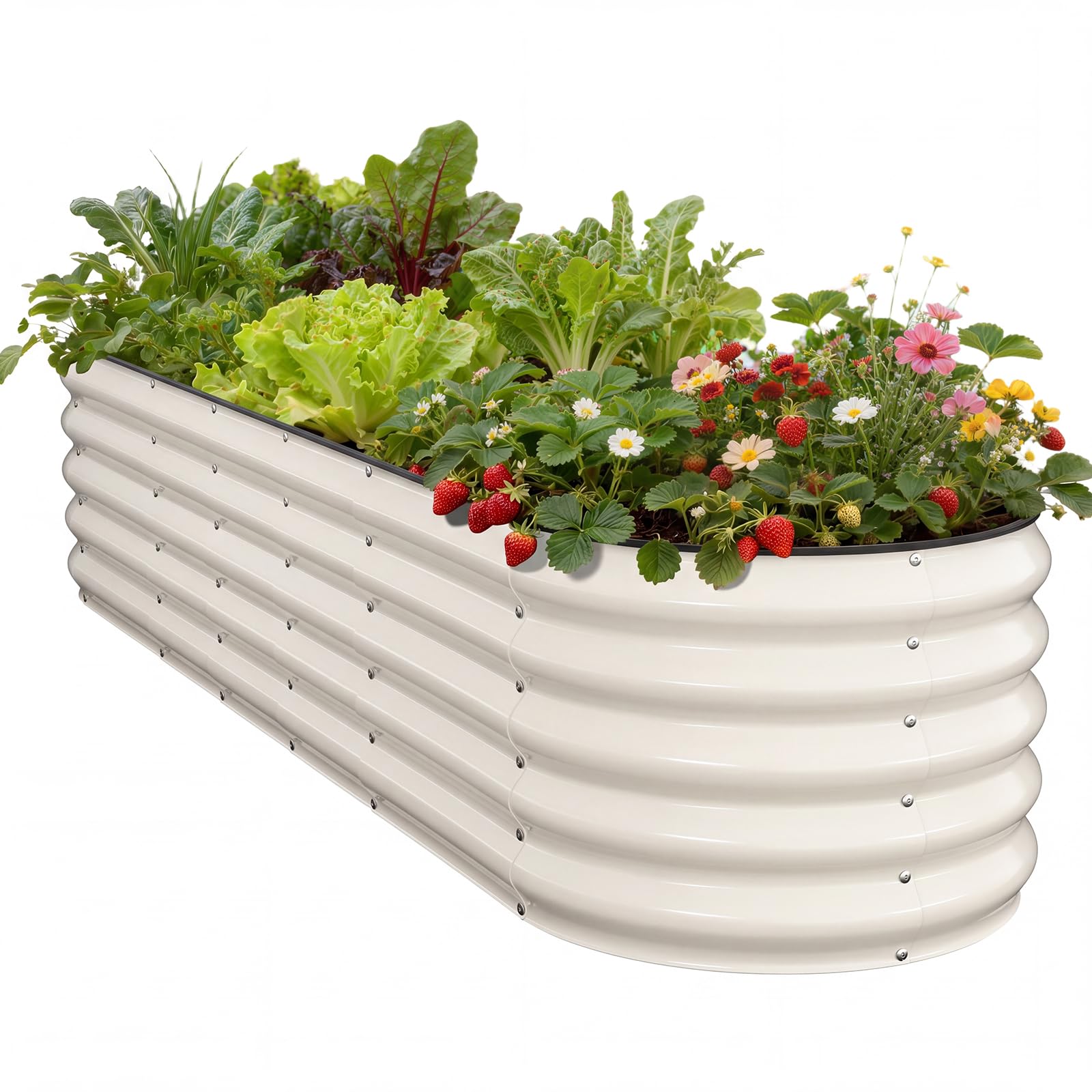
An 8-foot-long narrow planter that is half the width of the other big beds.
Where most raised beds stretch 4 feet wide, the Pattiumo is just 2 feet wide (24 x 18 x 96 inches). That means you can reach every plant from the side without stepping into the soil. It is a real advantage if you have back issues or just hate compressing the ground around your tomato roots. The 18-inch depth is adequate for determinate tomatoes (bush types). One reviewer confirmed they are using it for “Tomato, Basil and Calendular plants” with a single plant plus companion flowers fitting comfortably.
The galvanized steel panels are heavy gauge — one buyer called it “2 to 4 times stronger than I thought it would be.” The kit includes protective edging that slides over the top rim to reduce sharp edges. Assembly is straightforward, though you need to peel the protective plastic film off each panel before connecting them (a step a few reviews say is easy to miss, but becomes time-consuming if done after assembly). The 2-foot width is also a problem solver for narrow side yards or along a fence line where a 4-foot bed would block your path.
Narrow-bed benefits
- 2-foot width means no stepping into the bed — easy reach from both sides
- Heavy gauge steel resists bowing and dents
- Includes protective edge trim and cut-resistant gloves
The width trade-off
- 8×2-foot footprint holds a fraction of the soil of an 8×4 bed
- 18-inch depth is good but not ideal for the deepest-rooted tomato varieties
Great for narrow yards: The 2-foot width is a perfect fit for side gardens, pool fences, or anywhere a 4-foot bed would feel overwhelming.
Not the right choice if: You want a massive soil reservoir for multiple heavy-feeding tomato plants — the 8×4 beds offer four times the planting area.
Understanding the Specs
Soil Depth
Tomatoes can send roots 24 inches or deeper into the soil, so a bed’s height is not just for looks — it directly determines how much root space your plant gets. Deeper beds also hold more moisture and buffer temperature swings better, which reduces blossom drop and fruit cracking during hot spells. Look for at least 18 inches for most tomatoes, and 24 inches if you grow indeterminate varieties that keep climbing all season.
Steel Gauge and Coating
Galvanized steel is dipped in zinc to resist rust, but the thickness — measured in gauge — matters. A lower gauge number means thicker metal: 22-gauge (about 0.8mm) is a common benchmark for sturdy beds. Thinner metal can bow outward under wet soil weight, which eventually pulls the corner joints loose. A powder-coated or multi-layer eco-powder coating adds weather resistance and prevents the zinc from leaching into your soil over time.
Capacity
Listed in gallons, this tells you roughly how much soil you need to fill the bed. A 478-gallon bed (like the ANLEOLIFE) requires a serious amount of bagged soil or a truckload delivery, while a 144-gallon bed (like the Land Guard) is easier to fill with a few rounds of bags from the garden center. Know your capacity before you buy, because filling a giant bed with premium potting mix can cost more than the bed itself.
Open Bottom vs Solid Base
An open-bottom bed sits directly on the ground without a floor, allowing plant roots to grow into the native soil below. This is almost always better for tomatoes because it provides natural drainage and gives roots unlimited vertical space. Solid-bottom beds can cause water pooling and root circling (roots growing in a tight loop), so unless you are growing on concrete, choose an open-bottom design.
FAQ
How deep should a raised garden bed be for tomatoes?
Is galvanized steel safe for growing tomatoes?
Can I use a raised bed with a solid bottom for tomatoes?
How many tomato plants can I fit in an 8×4 raised bed?
Do I need to add a bottom layer to a raised garden bed for tomatoes?
How long will a galvanized steel raised garden bed last?
Will a raised garden bed keep out rabbits and squirrels?
Can I assemble a raised garden bed by myself?
Should I put a weed barrier under my raised tomato bed?
What is the difference between a round and oval raised garden bed for tomatoes?
Final Thoughts: The Verdict
If you want one dependable pick, the best raised garden beds for tomatoes winner is the A ANLEOLIFE 8x4x2ft because its 24-inch depth, 478-gallon capacity, and rolled steel edges give you the deepest root space and the most growing room for a big harvest. If you want a bed that includes a tomato cage from the start, grab the Quictent 6x3x2ft. And for a narrow side yard or a couple of plants on a patio, the Land Guard 4x2x2ft packs that same 24-inch depth into a footprint that fits almost anywhere.
How We Picked
We do not accept paid placement. Every pick is matched to a real buyer and a real use-case; we do not hands-on test units.
Sources & Methodology
Specifications: manufacturer listings and product documentation. Review insights: verified customer reviews, as of July 2026. Pricing: not shown on this page (it changes often); check the current price via the retailer link.
As an Amazon Associate, Lawn Gear Lab earns from qualifying purchases. This does not affect which products we feature.