
Specs are compiled from manufacturer listings and verified buyer reviews and can change over time — please confirm the key details on the product page before buying.
The difference between a lush, productive tomato plant and a spindly, disappointing one often depends on what you put in the pot before you even plant the seed. You need a mix that stays light enough for roots to spread, holds moisture without turning into mud, and delivers real nutrition — not just filler that looks like dirt.
I’m Rikta — the founder and writer behind Lawn Gear Lab. This guide is built by comparing the manufacturers’ published specifications and the patterns across verified customer reviews, so you get each pick’s real strengths and trade-offs instead of marketing spin.
Choosing a potting soil for container vegetables is the most important step for a successful harvest, whether you are setting up a balcony crop of peppers or a full deck of tomato plants.
Our Picks at a Glance

How To Choose The Best Potting Soil For Container Vegetables
Not every bag of brown stuff is built for a pot. You need a mix that is physically light enough for roots to grow freely and chemically balanced to feed your vegetables without burning them. Here are the key things to look for.
Drainage and Aeration
Roots need air as much as they need water. A good container mix includes perlite (those little white volcanic rocks) or coarse sand to create air pockets so water runs through freely and roots can breathe. Without it, your soil turns to cement and your plants drown.
Organic vs. Synthetic Fertilizer
For vegetables you plan to eat, organic ingredients like compost, worm castings, or kelp meal are a safer bet — they release nutrients slowly and build soil life. Some mixes include synthetic time-release fertilizer, which works fine but is less natural. Look for OMRI-listed (Organic Materials Review Institute) bags if certified organic matters to you.
Moisture Retention
Containers dry out faster than garden beds, especially in summer heat. Ingredients like sphagnum peat moss, coco coir, and wetting agents help the soil hold water longer. Some bags also feature a moisture-control formula that absorbs extra water and releases it slowly — a great feature if you sometimes forget to water.
Quick Comparison
| Model | Best For | Volume | Key Ingredients | Organic | Amazon |
|---|---|---|---|---|---|
| Miracle-Gro Potting Mix 3-Pack★ Best Overall | Convenient multi-bag value | 8 qt. each (24 qt. total) | Peat moss, fertilizer | No | Amazon |
| Coast of Maine Bar Harbor BlendAlso Great | Premium all-around growth | 16 Quarts | Peat moss, perlite, lobster shell meal | Yes | Amazon |
| Coast of Maine Veg & Tomato | Targeted tomato/vegetable feeding | 20 Quarts | Composted manure, peat moss | Yes | Amazon |
| Espoma Organic Potting Mix | Indoor/outdoor container versatility | 8 qt. each (16 qt. total) | Peat moss, perlite, worm castings | Yes | Amazon |
| Black Gold Organic Potting Soil | Budget-friendly organic option | 16 Quarts (2 x 8 Quarts) | Peat moss, perlite | Yes | Amazon |
| Miracle-Gro Moisture Control | Large pots and forgetful watering | 2 Cubic Feet | AquaCoir formula | No | Amazon |
In‑Depth Reviews
1. Miracle-Gro Potting Mix 3-Pack
Our pick — over 4.5★ from 850+ verified ratings; the strongest balance of quality and price.
Three bags in one order, so you do not have to haul the big sacks yourself.
This is the convenience king. The three 8-quart bags together give you 24 quarts of mix that the maker says feeds plants for up to 6 months. Each individual bag fills about two 8-inch pots, so you can spread the three bags across a variety of containers without committing to one massive open bag that goes stale.
Buyers consistently praise how well it drains. One reviewer who uses it for both outdoor and indoor planting said, “I love this soil for both outdoor and indoor planting. It is well draining and doesn’t tend to pack down.” That loose, fluffy texture is exactly what vegetable roots need in a confined pot — and the smaller bags make it easy to carry from the car to the balcony.
Smart multi-pack: Perfect for the gardener who wants the proven Miracle-Gro brand but prefers manageable bag sizes and a pre-paid bundle price.
Catch to know: It is not OMRI-listed organic, so if growing completely chemical-free is a must, the organic picks below are a better fit.
Reach for this: if you want a reliable, nutrient-charged mix in handy portions that keep the rest of the bag fresh for your next planting project.
Look elsewhere: if certified organic ingredients are non-negotiable for your edible crops.
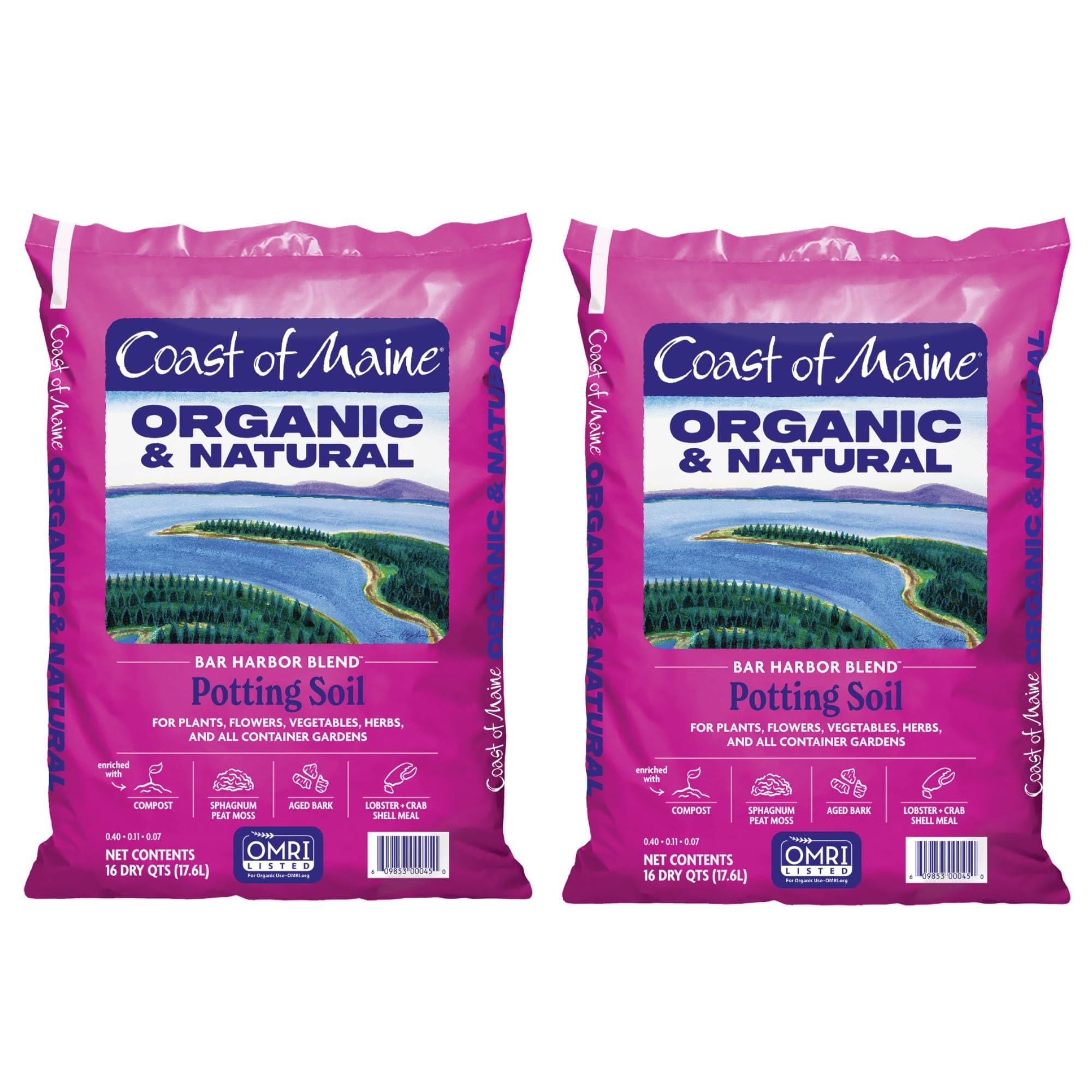
2. Coast of Maine Bar Harbor Blend Potting Soil
The maritime-inspired blend that turns containers into miniature farms.
This is the bag that container-garden enthusiasts talk about. Buyers report “super nice feeling soil, planted containers with potatoes and also peas and tomato plants, everything is growing more than I even expected.” The secret is the ingredient list: sphagnum peat moss, compost, perlite, plus lobster and crab shell meal and kelp meal — all natural slow-release nitrogen sources that feed roots steadily without a synthetic spike.
At 16 quarts per 2-pack, it gives you roughly double the unit count of the Coast of Maine Veg & Tomato single bag, making it the go-to choice if you are planting several large containers. Owners mention the dark, rich texture has fewer sticks than other organic brands and “no funky smell,” so it works just as well for indoor herbs as it does for outdoor tomato pots.
Container champ: This is the most versatile premium organic mix on this list — skip it only if your budget absolutely demands a cheaper filler.
One real trade-off: It is a step up in cost, but one owner summed it up simply: “well worth the price.”
Grab it for: serious container vegetable growers who want organic ingredients and proven results without hunting for multiple additives.
Not your bag if: you need to fill a huge raised bed on a strict budget — the premium price is better for the pots that matter most.
3. Coast of Maine Organic Vegetable & Tomato Planting Soil

A lightweight organic mix that targets the heavy feeders — tomatoes and peppers.
While the Bar Harbor blend is the all-star, this mix is the specialist built specifically for tomatoes and other hungry vegetables. It blends composted manure and sphagnum peat moss into a 20-quart bag that is both OMRI-listed for organic use and formulated for “multi use ground and containers.” Buyers mention it is a “lightweight, high-quality soil for potting” — one bag fills a 5-gallon pot perfectly, and they report “plants thriving with no stress.”
Reviewers do note a minor trade-off: the mix “may contain undecomposed twigs,” so if you are starting fine seeds like carrots, you will want to pick out the larger bits first. Still, the moisture retention and drainage balance get high marks from owners of heirloom tomatoes who say it is “best for heirloom tomatoes needing good drainage,” and some even noticed aromatic wood material that seemed to deter insects.
Targeted feed: The composted manure gives your tomatoes, peppers, and squash a rich organic kick that general potting soils do not match.
Real trade-off: The 20-quart volume is a single bag — unlike the 2-pack of Bar Harbor, you only get one bag per purchase.
Best for: the gardener who wants a dedicated organic mix for a handful of heavy-feeding vegetables and prefers a larger single bag over several small ones.
Skip if: you need volume across many pots — the 20-quart bag goes fast if you have a dozen containers.
4. Espoma Organic Potting Soil Mix (2-Pack)

The bag that treats indoor herbs and outdoor bell peppers as equals.
Espoma brings a rich organic recipe that works across the board: vegetables, herbs, flowers, and houseplants. The blend contains sphagnum peat moss, humus, and perlite, plus a boost of earthworm castings, alfalfa meal, kelp meal, and feather meal. It also includes Myco-Tone — a mix of endo and ecto mycorrhizae (beneficial fungi that help roots absorb more water and nutrients).
Each 8-quart bag in the 2-pack is manageable for a few pots, and customers note “the plants took to it immediately and are growing great.” One reviewer did note the soil can arrive “too dry to actually absorb water on a new plant” — a quick pre-moisten in a bucket solves that. Compared to the bulkier Coast of Maine Veg & Tomato at 20 quarts, the Espoma pack gives you two smaller bags that are easier to store and use one at a time.
Versatile organic: The mycorrhizae and worm castings set this apart for gardeners who want biological activity in their pots, not just NPK.
What to watch: The 8-quart bags are a smaller volume, so filling deep 14-inch pots takes nearly a whole bag per pot.
Reach for this: if you want a single organic mix that can move between your kitchen herb pots and your deck tomato containers without a second thought.
Look elsewhere: if you need a massive single bag to fill large planters — the 2-pack adds up to 16 quarts total.
5. Black Gold 1302040 All Organic Potting Soil (2-Pack)

An organic bag that arrived with no fungus gnats — a rare clean bill of health.
Anyone who has opened a bag of moist potting soil only to be swarmed by tiny flying insects knows the dread. One buyer of Black Gold specifically mentioned: “I tried this potting soil while keeping my fingers crossed that it wouldn’t introduce fungus gnats to my houseplants. Guess what? It didn’t. Not one fungus gnat!” That is a real win for indoor container growers who bring pots inside during winter.
The 2-pack of 8-quart bags gives you 16 quarts of OMRI-listed organic mix that reviewers point out “does not compact or cause standing water.” While it lacks the specialized additives (lobster meal, Myco-Tone) of the premium picks above, it is a solid, clean organic base that works for vegetables and flowers alike.
Clean organic: A no-fuss, no-gnat organic mix that does the job without surprises — great for gardeners switching to organic for the first time.
Trade-off: It is a “plain” organic mix — no extra boosters like worm castings or kelp meal, so heavy feeders may need supplemental fertilizer later.
Best for: the budget-conscious organic gardener who values a clean, insect-free bag and simple, reliable performance.
Not ideal for: gardeners who want a single bag with built-in growth boosters — you may need to add your own amendments.
6. Miracle-Gro Moisture Control Potting Mix

The big bag that saves your plants from your busy schedule.
This is the largest volume in the lineup — a single 2 cubic foot bag that weighs 40.51 pounds and fills two 14-inch containers. The big story here is the AquaCoir formula, which protects against both over- and under-watering. That buffer is a lifesaver if you have ever come home to drooping pepper plants on a hot July afternoon.
Buyers who use this mix for starting seeds and seedlings appreciate that it “never had a lot of sticks in it” — a common complaint with other brands. One long-time user said they have used it “for the last ten years or so,” starting as many as 700 baby plants each season. Like the standard Miracle-Gro mix, it feeds plants for up to 6 months.
Forgiving formula: The moisture-control feature makes it the best choice for beginners or anyone who struggles to keep pots evenly watered.
The caveat: It is the heaviest bag here and not organic — if you want OMRI certification or natural slow-release ingredients, the Coast of Maine bags are a better match.
Reach for this: if you fill large pots and want a bag that is huge, feeds for months, and forgives the occasional missed watering day.
Look elsewhere: if you need organic certification or prefer lighter bags you can carry easily — this one is a beast to move.
Understanding the Specs
Perlite
You will see these little white pebbles in nearly every good potting mix. Perlite (a form of volcanic glass heated until it pops like popcorn) creates air pockets in the soil so water drains quickly and roots get oxygen. Without it, soil in a container can compact into a soggy brick that suffocates roots.
OMRI Listed
This seal from the Organic Materials Review Institute means the product has been reviewed and approved for use in certified organic production. If you are growing vegetables that you plan to eat, choosing an OMRI-listed mix gives you confidence that no synthetic chemicals or prohibited substances were used.
FAQ
Can I use garden soil instead of potting mix for containers?
How often should I replace potting soil in containers?
Is organic potting soil better for vegetables?
Does potting soil expire?
Can I use the same potting soil for herbs and tomatoes?
What does “feeds up to 6 months” mean?
How much potting soil do I need for a 10-inch pot?
Why does my potting soil have white fuzzy mold on top?
Final Thoughts: The Verdict
Across the board, the potting soil for container vegetables winner is the Coast of Maine Bar Harbor Blend because it combines organic certification, premium ingredients like lobster shell meal, and proven results in potted vegetables. If you want a more budget-friendly organic option, grab the Black Gold Organic Potting Soil. For large pots and forgiving moisture control, the Miracle-Gro Moisture Control Potting Mix stands apart with its 2 cubic foot bag and AquaCoir formula that shoppers say forgives missed watering.
How We Picked
We do not accept paid placement. Every pick is matched to a real buyer and a real use-case; we do not hands-on test units.
Sources & Methodology
Specifications: manufacturer listings and product documentation. Review insights: verified customer reviews, as of July 2026. Pricing: not shown on this page (it changes often); check the current price via the retailer link.
As an Amazon Associate, Lawn Gear Lab earns from qualifying purchases. This does not affect which products we feature.