
Specs are compiled from manufacturer listings and verified buyer reviews and can change over time — please confirm the key details on the product page before buying.
You spent hours seeding that slope, and one heavy rain turned it into a muddy mess. Erosion control products are the armor your soil needs, but picking the wrong one — a blanket that floats away, a fabric that shreds — just burns time and money. This guide cuts through those options to the seven picks that actually lock your landscape down, with the exact specs that matter.
I’m Rikta — the founder and writer behind Lawn Gear Lab. This guide is built by comparing the manufacturers’ published specifications and the patterns across verified customer reviews, so you get each pick’s real strengths and trade-offs instead of marketing spin.
erosion control is not just about covering dirt — it is about choosing the right material (a woven geotextile fabric, which is a strong cloth that separates soil from gravel; a straw blanket, a biodegradable mat that holds seed; a jute mesh, a natural open-weave net that rots away; or a cellular grid, a honeycomb of plastic that locks fill in place) for the job, from driveway stabilization to hillside revegetation, so your ground stays put through every storm.
Our Picks at a Glance


How To Choose The Best Erosion Control
The right erosion control starts with understanding your specific problem — a steep slope needs a different approach than a flat driveway or a creek bank. Focus on three core factors.
Material Type: Fabric, Blanket, or Grid?
Woven geotextile fabrics (made from plastic like polypropylene or polyethylene) are heavy-duty barriers for driveways, roads, and construction — they separate gravel from soil and let water drain through. Straw or excelsior blankets (curled wood fiber mats) are lightweight, biodegradable covers that hold seed and soil on slopes while grass establishes. Jute mesh is a natural, open-weave option for gentle slopes and revegetation. Cellular geocell grids (2-inch tall honeycomb-shaped plastic cells) lock gravel or soil in place for pedestrian paths and light vehicle pads, preventing sideways washout.
Tensile Strength and Fabric Weight
The fabric weight (measured in ounces per square yard, like 3.5 oz or 4 oz) directly tells you how much abuse it can take. Heavier fabrics (3.5 oz and up) resist tearing under gravel and stone for driveways. Tensile strength (how much pulling force it can handle before ripping, such as 800 lbs or 1885 lbs per square foot) is critical for road stabilization — the higher the number, the more weight and stress the material handles without ripping. For simple slope coverage, a lighter blanket is fine.
Biodegradable vs. Permanent
If you are planting grass or ground cover on a slope, a biodegradable blanket (straw, jute, or wood fiber) is the smart choice — it holds the soil for one to three seasons, then rots away as the plants take over. For permanent separation under gravel, pavers, or roads, go with a synthetic geotextile fabric designed to last many years or decades when buried. Mixing these up leads to the wrong product degrading too soon or never breaking down when it should.
Quick Comparison
| Model | Best For | Material Type | Coverage | Weight / Thickness | Amazon |
|---|---|---|---|---|---|
| Driveway Fabric 6×300 ft★ Best Overall | Large gravel driveways | Woven Polyethylene | 1800 sq ft | 3.5 oz | Amazon |
| Super Geotextile 4×100Premium Pick | Long-term road stabilization | Woven Polypropylene | 400 sq ft | 4 oz | Amazon |
| Vodaland GeoCell | Patios & light pads | Geocell Grid | 160 sq ft | 2-inch thick | Amazon |
| Jute Erosion Control 48″x20 yd | Gentle slopes & revegetation | Natural Jute | 240 sq ft | 12.63 kg roll | Amazon |
| Dewitt Excelsior Blanket 4×112.5 ft | Long slope coverage | Aspen Wood Fiber | 450 sq ft | 40 lbs roll | Amazon |
| EZ Straw Blanket 4×50 ft | Grass seeding on slopes | Natural Straw | 200 sq ft | 15 stakes included | Amazon |
| American Excelsior QuickGrass Pro | Budget slope seeding | Straw in plastic net | 125 sq ft | 11 lbs roll | Amazon |
In‑Depth Reviews
1. Driveway Fabric 6×300 ft – Commercial Weed Barrier, Heavy Duty 3.5OZ
Our pick — over 4★ from 850+ verified ratings; the strongest balance of quality and price.
This single roll covers 1800 square feet — enough to line a long gravel driveway or multiple french drains without splicing two pieces together.
You get a massive 6 ft by 300 ft roll — covering approximately 1800 square feet — so this single piece handles a long driveway or multiple french drain runs without splicing. The 3.5 oz woven polyethylene construction gives it an 800 lbs tensile strength (the force it can take before tearing), which means it holds up under heavy gravel and stone so your driveway base does not sink into the mud. One buyer used it as a gravel-pad barrier and found it easy to cut, noting loose woven threads as expected.
Unlike lighter weed barriers, this fabric is designed to separate soil from aggregate — you lay it, spread gravel on top, and it keeps the rock from sinking into mud while still letting water drain through. The length here is the standout advantage: at 300 ft, it dwarfs the 100 ft rolls of the Super Geotextile (a 3x gap in length). Reviewers mention it lasts for years when covered, with one citing a 10-year warranty when buried under mulch or gravel.
Why It Works for Driveways
- Massive 300 ft length covers large areas in one piece
- 800 lbs tensile strength withstands heavy gravel and stone
- Permeable woven fabric prevents water pooling
The Practical Downsides
- Woven threads can fray at cut edges
- Folded packaging means it arrives folded (not rolled), requiring extra time to spread flat
The long-haul choice: If you are stabilizing a long gravel driveway or a large construction area and want a single continuous barrier, this is the most coverage you will find at this weight.
Watch for: The frayed edges on cuts mean you should use sharp shears and consider sealing ends with a flame or tape to prevent unraveling.
2. Super Geotextile Woven Geotextile Fabric for Driveway and Road Stabilization (4×100)
At 4 oz per square yard, this is the densest woven fabric here — it is designed to sit under a gravel road or paver patio for decades without failing.
This is the densest woven option in the lineup, a true 4 oz polypropylene fabric designed for permanent road stabilization and construction underlayment. One reviewer called it “absolutely the cat’s meow” for erosion and weed control under a roadway surface.
Buyers report it is “thick” and “zero permeable” — meaning water does not pass through, which is ideal when you need to direct rainwater to a French drain rather than letting it soak into the gravel base. The manufacturer claims a 50-year lifespan when properly buried. Two people are recommended for installation because the fabric is heavy and stiff. Unlike the DWALE fabric, this one has a plain weave that resists fraying better, though you still need sharp shears to cut it cleanly.
Built for Long-Term Loads
- True 4 oz weight is heavier than the 3.5 oz DWALE fabric
- Zero-permeable option helps direct water to drains
The Practical Pitfall
- Stiff and heavy — definitely a two-person job to lay flat
- Covers less area per roll than the 300 ft alternative
For permanent installations: Reach for this if you are laying a paver patio, a gravel road, or a shed base and want a single fabric that will outlast the structure.
skip it if: You need to seed grass through it — the zero-permeable weave blocks water and roots, so this is strictly for separation, not revegetation.
3. Vodaland – 2″ GeoCell – 100% Permeable for Walking Paths, Patios and Erosion Control (9 ft x 17 ft)

This honeycomb-shaped grid of 2-inch cells locks gravel or soil in place — even on a sloped path, the fill stays put instead of washing downhill.
This is not a fabric or blanket — it is a 2-inch thick cellular grid made from perforated polyethylene, designed to contain fill material (gravel, soil, sand, or grass) within its cells. The section is 9 ft wide by 17 ft long, covering 160 square feet. One reviewer noted the geogrid saved money vs. pavers for a camper van parking pad, installing it over a 6-inch angular limestone base with 12-inch rebar stakes. The tensile strength is rated at 1885 lbs per square foot, so it holds significant weight without deforming.
Compared to the 11-pound QuickGrass Pro blanket, the Vodaland GeoCell weighs 15 pounds — a 36% difference — because the plastic grid structure is inherently heavier. It is 9 ft wide versus the 4 ft width of the EZ Straw blanket (a 2.2x gap), so it covers a wider path in a single run. Reviewers emphasize that while installation is straightforward (spread, anchor, fill), the seller’s instructions on gravel type, stake count, and base layer are inconsistent — buyers recommend doing your own research on base prep.
Grid Lock for Loose Soil
- 1885 lbs tensile strength per square foot handles vehicle and foot traffic
- Easy to cut with tin snips and join with zip ties
- 100% permeable — water drains freely through perforations
The Installation Frustration
- Missing detailed instructions from the seller — you need to plan your base and anchor strategy
- Only 160 sq ft per section, so large embankments require multiple units
Ideal for uneven or sloped ground: If you have a hillside walkway, a camper pad, or a horse pasture that keeps washing out, the cellular design keeps fill material exactly where you put it.
Budget note: This is a project investment — the grid itself works, but you will also need J-hooks or rebar stakes, gravel, and potentially a geo-textile base layer for the best results.
4. Dewitt Single Net Excelsior Soil Erosion Control Blanket Roll (4 x 112.5 ft)
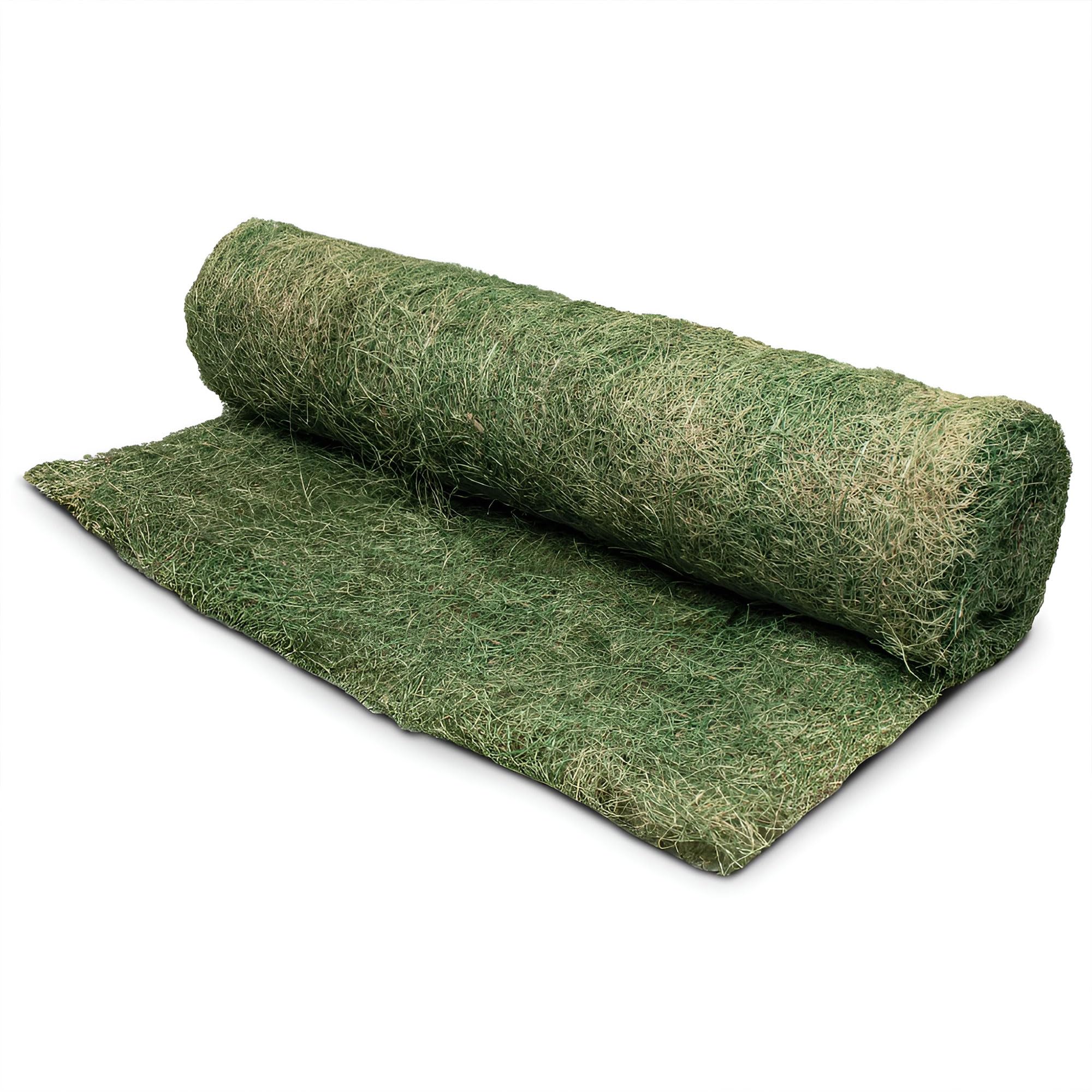
At 450 square feet per roll, this excelsior blanket covers more ground than any other biodegradable option here — one roll stretches 112.5 feet down a slope.
This blanket is made from curled aspen wood excelsior fibers held in place by a single photodegradable net. The fiber layer is uneven in places, as some reviewers noted, but it is thick and breathable enough for grass to grow through while holding seed and topsoil in place. One buyer mentioned it effectively held seed and fertilizer on slopes, reducing watering to 15 minutes daily.
Unlike the straw blankets, the aspen wood excelsior fibers are longer and interlock better, so they cling to each other and the soil. The green dye helps it blend into the landscape, which matters if you are working on a visible slope near a road or house. The main drawback reported is occasional factory rolling issues — one reviewer’s first roll unrolled easily but the second was tangled and took 45 minutes to straighten. At 40 lbs, the roll is heavy, so you will want a second person for large installations.
Excellent for Long Slopes
- Covers 450 sq ft — the largest blanket coverage in this list
- Curled aspen fibers interlock for better soil grip than straw
- Green dye blends in visually compared to natural tan
The Heavy Roll Problem
- 40 lbs roll is heavy to maneuver alone on steep slopes
- Quality control varies — some rolls unroll smoothly, others are tangled
Go for this if: You have a long roadside embankment, drainage channel, or stream bank and want one continuous blanket rather than stitching multiple shorter rolls together.
Leave it if: You are covering a small slope — the 112.5 ft length will leave you with significant waste on a short 20 ft section.
5. Jute Erosion Control, Soil Saver Mesh Blanket – 48″ Wide x 20 Yards (60 ft Long)

This open-weave jute mesh holds bare soil on a slope while letting light and rain reach the ground — it is built to rot away in 2-3 seasons as grass takes over.
Jute is a natural fiber that forms a loose, breathable mat with roughly 2-inch openings — not a solid cover like the geotextile fabrics. It is designed for revegetation projects where you want the soil held in place for one to three seasons while ground cover establishes. The roll measures 48 inches wide by 20 yards (60 ft) long, covering 240 square feet. One reviewer doubted it on a steep hillside due to the loose weave but found it survived days of heavy rain when installed with 6-inch pins every 12 to 18 inches.
Unlike the straw or excelsior blankets, jute is more open, so it does not smother existing vegetation — it lets light and water reach the soil. It is also 100% biodegradable, eventually breaking down and enriching the soil without leaving netting or fibers behind (though owners mention that in 2-3 seasons it starts breaking, which is the intended timeline). The 48-inch width is narrower than the 9 ft wide Vodaland GeoCell (a 2.2x gap in width), making it easier to handle alone but requiring more parallel runs to cover a wide slope. At 12.63 kg per roll, it is manageable for one person.
Nature-Friendly Stabilizer
- 100% natural jute — biodegradable, no plastic netting to remove
- Open weave lets light and rain through for growing plants
- Proven on steep slopes with proper pin spacing
The Time Limit
- Jute breaks down in 2-3 seasons, so it is only temporary cover
- Open weave (2-inch holes) means it is not for loose sandy soil — smaller particles may pass through
Choose jute when: You are restoring a natural slope, culvert bank, or garden bed and want a temporary soil blanket that disappears as your plants take over.
Skip jute for: Driveways, paths, or any area needing permanent erosion control — it will decay and leave the soil exposed again.
6. EZ Straw Grass Seed Germination and Erosion Control Blanket (4 ft x 50 ft)
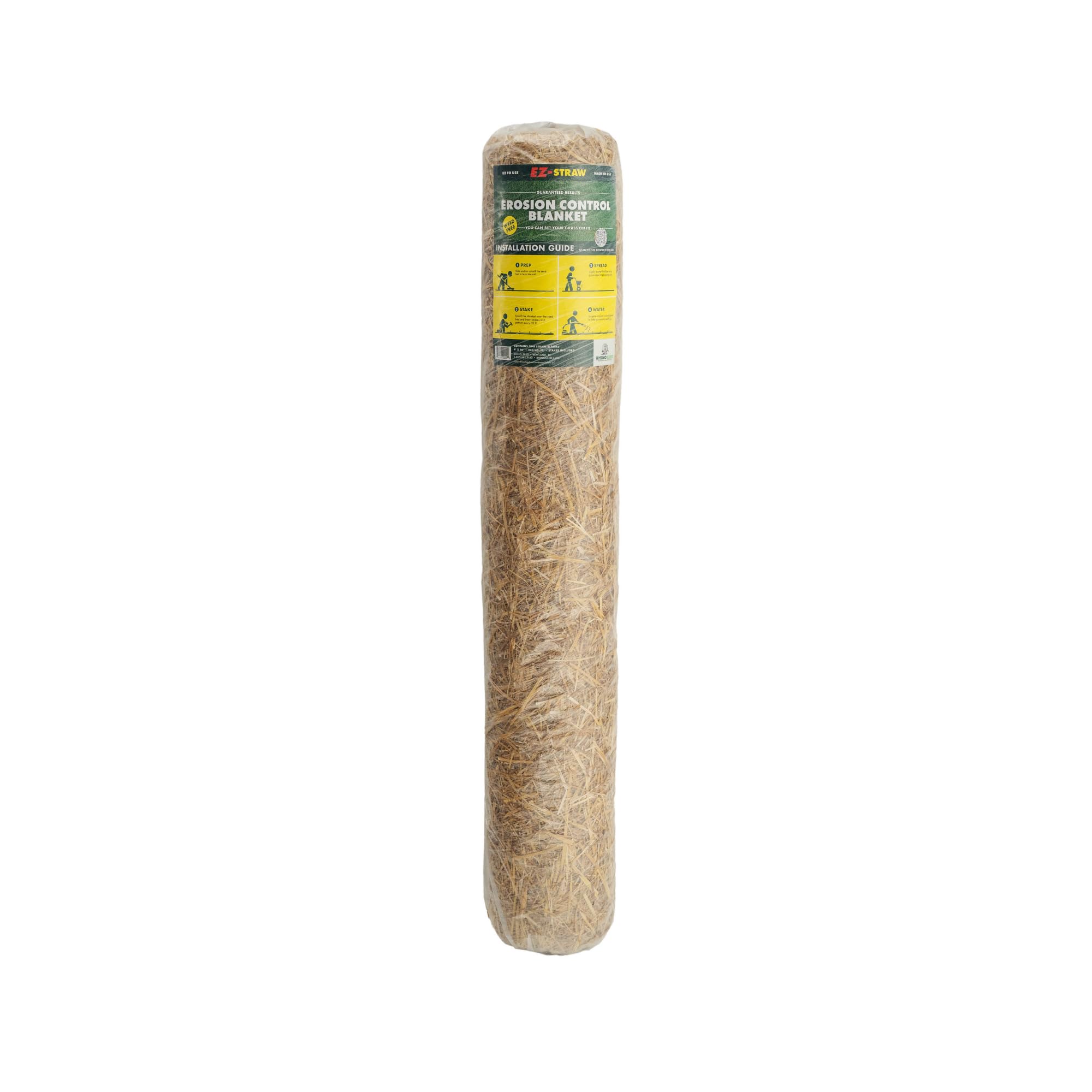
At 200 square feet, this straw blanket gives you 25% more coverage than the QuickGrass Pro for a similar price — enough to handle a moderate 30-foot slope.
This is a 4 ft by 50 ft roll of natural straw fibers woven into a mat with a plastic netting top layer. It covers 200 square feet and comes with 15 biodegradable stakes for anchoring. Compared to the 125 sq ft QuickGrass Pro blanket, it gives you 25% more coverage, so you are buying fewer rolls for a given slope. One owner reported the straw was less dense than pictured but effective for slope erosion control, with grass sprouting after a week of diligent watering. The straw itself does not contain grass seed — you seed the soil first, then lay the blanket.
The main issue buyers flag is that the included wooden stakes are insufficient for the full roll — many recommend buying extra steel landscape staples separately, especially on steeper slopes. The plastic netting is also a point of frustration: some customers note it does not biodegrade quickly and is “hard to remove after sprouting,” taking time to cut away without pulling up young grass. If you are covering a moderate 20-30 ft slope, this roll works well, but for longer runs you will need to overlap multiple rolls.
Solid Starter Blanket
- 200 sq ft coverage is 25% more than the QuickGrass Pro for a similar price tier
- Biodegradable straw feeds soil as it decomposes
- Lightweight enough for one person to manage
The Netting Headache
- Plastic top net does not biodegrade — you may need to remove it after grass sprouts
- 15 stakes are not enough for a full slope installation
Grab this if: You have a small-to-medium slope (up to 40 ft) you are reseeding and want a simple, affordable solution that includes basic stakes.
Be ready for: Buying extra landscape staples and potentially removing the plastic netting by hand a few weeks after seeding — budget that labor time.
7. American Excelsior QuickGrass Pro Erosion Control Blanket Landscape Roll (2-1/2′ x 50′)

At only 11 lbs, this is the lightest roll here — easy to carry up a slope alone, but at 125 sq ft, it is the smallest coverage in the lineup.
American Excelsior has been in the erosion game since 1888, and this is their entry-level blanket: a 2.5 ft wide by 50 ft long straw roll encased in a single plastic net. It covers 125 square feet — the smallest coverage in the list, which means you will need more rolls for a given area compared to the 200 sq ft EZ Straw blanket. The blanket does not contain grass seed, so you seed the soil first. One customer observed it “prevents birds from eating seeds” and “keeps grass seed moist with regular watering,” but also noted a key limitation: “poor water retention; topsoil dries out quickly after rain, requiring daily or twice-daily watering in dry weather.”
At 11 lbs, this is the lightest roll in the lineup — the Vodaland GeoCell weighs 15 lbs (36% more), so the QuickGrass Pro is easy to carry up a slope alone. The straw fibers are less tightly packed than the EZ Straw blanket according to some buyers, and unrolling can be tricky because the netting is fragile. Several reviewers described it as “messy” and said the netting “breaks constantly” when trying to find the start. But once installed, it does stop erosion from heavy rain and degrades over time, leaving no mess for established grass.
Light and Affordable
- 11 lb roll is easy to handle and carry uphill alone
- Straw degrades naturally, leaving no cleanup for established grass
- Effective at stopping seed washout and bird predation
The Water Retention Issue
- Topsoil dries out quickly after rain — expect daily watering in dry weather
- Only 2.5 ft wide means more parallel runs to cover a slope
- Netting is fragile and can break during unrolling
Consider this for: A small, accessible slope where you can water daily and want the lowest entry cost per roll.
Look elsewhere if: You need wide coverage (the 2.5 ft width means lots of seams) or you cannot commit to daily watering during the germination period.
Understanding the Specs
Fabric Weight (Ounces per Square Yard)
This spec tells you how dense and durable a woven geotextile is. A 3.5 oz fabric is heavy-duty and suitable for driveways and gravel roads, while lighter fabrics (around 1 oz) are more for basic weed barriers. Heavier fabric resists tearing better under sharp gravel and heavy loads. For permanent road stabilization, aim for 4 oz or more.
Tensile Strength (lbs per Square Foot or Total lbs)
Tensile strength measures how much pulling force the material can take before ripping. For example, the Vodaland GeoCell has a tensile strength of 1885 lbs per square foot — meaning each square foot of the grid can hold nearly a ton of force without breaking. Higher tensile strength is critical under vehicle traffic or on steep slopes where gravity pulls the fill downhill.
FAQ
Do erosion control blankets contain grass seed?
How long does jute erosion control mesh last?
Can I drive a vehicle over a geocell grid?
Will geotextile fabric stop all weeds?
How do I install an erosion control blanket on a steep slope?
What is the difference between a straw blanket and an excelsior blanket?
Is geotextile fabric permeable or does it block water?
How do I cut heavy geotextile fabric without it fraying?
Final Thoughts: The Verdict
For most people, the erosion control winner is the Driveway Fabric 6×300 ft because its massive length and 3.5 oz weight handle the widest range of permanent stabilization projects — from gravel driveways to french drains — in one continuous roll. If you need a biodegradable blanket for a sloped reseeding job, the Dewitt Excelsior Blanket offers the most coverage per roll at 450 square feet and its wood fibers grip steep slopes better than straw. And for pedestrian paths, camper pads, or any area where loose soil or gravel keeps washing sideways, the Vodaland GeoCell cellular grid locks your fill material in place with a tensile strength of 1885 lbs per square foot.
How We Picked
We do not accept paid placement. Every pick is matched to a real buyer and a real use-case; we do not hands-on test units.
Sources & Methodology
Specifications: manufacturer listings and product documentation. Review insights: verified customer reviews, as of July 2026. Pricing: not shown on this page (it changes often); check the current price via the retailer link.
As an Amazon Associate, Lawn Gear Lab earns from qualifying purchases. This does not affect which products we feature.