
Specs are compiled from manufacturer listings and verified buyer reviews and can change over time — please confirm the key details on the product page before buying.
You planted, watered, and watched those tomatoes climb — then the aphids showed up. They cluster on new growth, sucking sap, and suddenly your garden looks defeated. The right organic spray stops them without harming your veggies, your soil, or the bees you actually want around. The trick is picking a formula that kills on contact, matches your garden’s size, and doesn’t cost a fortune to keep applying.
I’m Rikta — the founder and writer behind Lawn Gear Lab. This guide is built by comparing the manufacturers’ published specifications and the patterns across verified customer reviews, so you get each pick’s real strengths and trade-offs instead of marketing spin.
If you want a single product that tackles aphids, mites, and fungus with one trigger pull, these are the most reliable picks on the shelf. Here is the complete breakdown to help you pick the right organic spray for aphids for your garden this season.
Our Picks at a Glance
How To Choose The Best Organic Spray For Aphids
Not every organic spray works the same way. Some smother aphids with oil, while others use botanical enzymes to break the pest’s life cycle. Here is what to check before you buy.
Active ingredient: Neem oil vs Mineral oil vs Enzymes
Neem oil (clarified hydrophobic extract of neem oil) kills eggs, larvae, and adult insects by coating them and stopping feeding. It also fights powdery mildew. Mineral oils smother pests on contact and leave no toxic residue. Enzyme-based formulas break down the pest’s outer shell without leaving any oily film on leaves. All three are organic, but neem oil is the most versatile for ongoing garden protection.
Ready-to-use vs Concentrate
Ready-to-use sprays come with a sprayer attached — you pull the trigger and go. They are perfect for small gardens or quick spot treatments. Concentrates require you to mix the product with water in a pump sprayer or hose-end sprayer. They yield many more gallons per bottle and cost less per application over time, but they need a little setup.
How fast it works and how often you need to apply
Some sprays knock down aphids overnight, while others take a few weeks to show a noticeable reduction. Buyer reviews are the best clue here. If you see an active infestation spreading fast, you want a spray that buyers report worked on the first application. For prevention or light pressure, a slower-acting oil that you reapply every 7 to 14 days is perfectly fine.
Quick Comparison
| Model | Best For | Active Ingredient | Liquid Volume | Type | Amazon |
|---|---|---|---|---|---|
| Bonide Captain Jack’s Neem Oil★ Best Overall | All-around garden defender | Clarified Neem Oil | 128 fl oz | Ready-to-Use | Amazon |
| Eliminator by Dr ZymesPremium Pick | Residue-free indoor use | Natural Enzymes | Concentrate (makes gallons) | Concentrate | Amazon |
| Grower’s Ally Crop Defender 3 | Gentle on seedlings | Botanical Oils blend | 24 fl oz | Ready-to-Use | Amazon |
| Bonide All Seasons Horticultural Oil | Dormant & growing season | Mineral Oil | 32 fl oz | Hose-end Ready-to-Spray | Amazon |
| Summit Year-Round Spray Oil | Quick knock-down on contact | Mineral Oil | 32 fl oz concentrate | Concentrate | Amazon |
| Organic Insecticide & Fungicide Concentrate | Budget concentrate for large gardens | Bio-based blend | 16 fl oz concentrate | Concentrate | Amazon |
In‑Depth Reviews
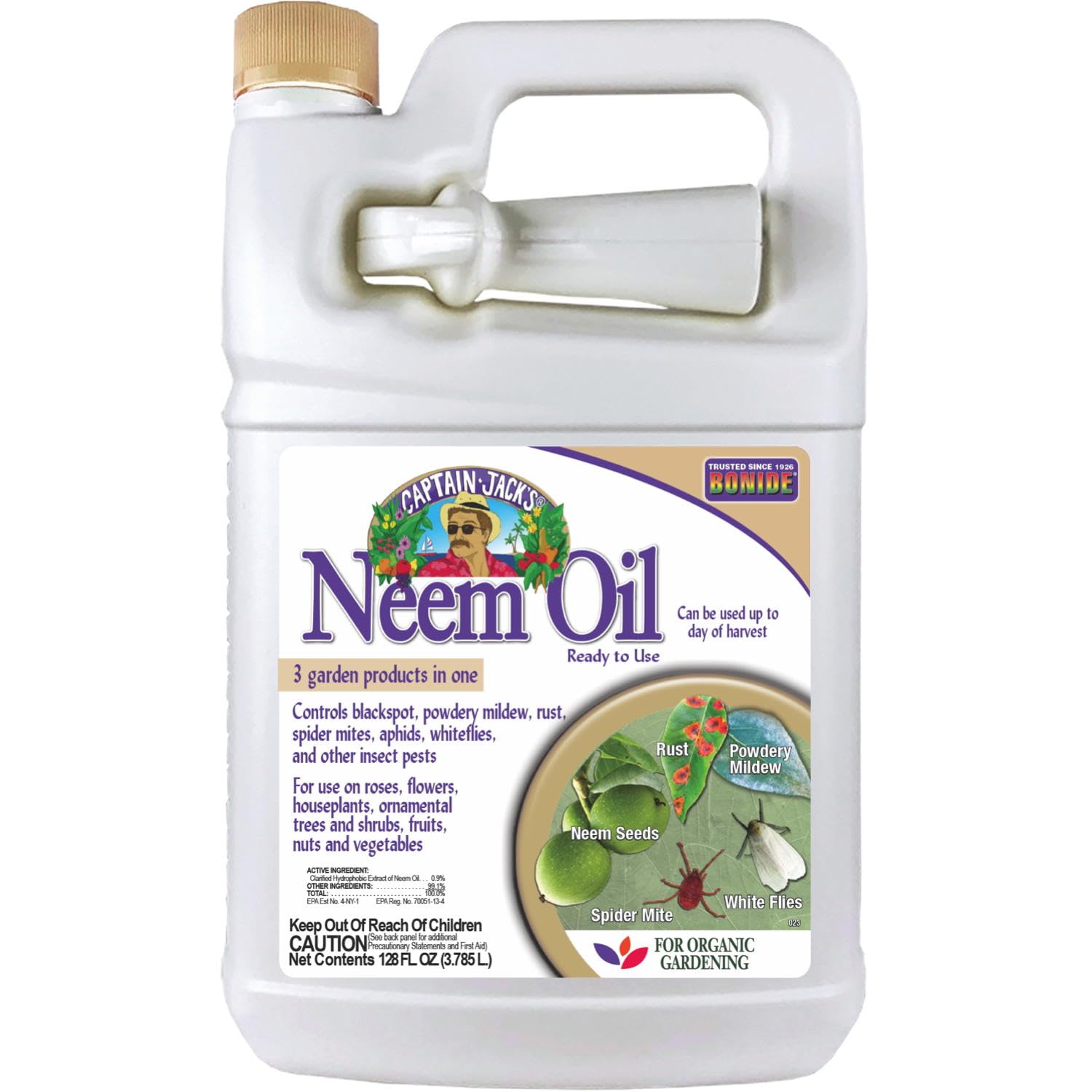
1. Bonide Captain Jack’s Neem Oil 128 oz
Our pick — over 4★ from 48,500+ verified ratings; the strongest balance of quality and price.
One jug that does three jobs and covers your whole garden for months.
This is the low-maintenance jug for anyone tired of mixing bottles. Clarified hydrophobic extract of neem oil (the active ingredient) kills eggs, larvae, and adult stages of aphids, spider mites, and whiteflies — while also knocking down rust and powdery mildew. You get 128 fluid ounces in a single ready-to-use container with a spray nozzle already attached, so there is zero mixing or measuring. Just shake, aim, and cover the whole plant.
At 8.98 pounds, this is a heavy bottle — it stays put on a shelf rather than following you around the garden. The coverage is enormous compared to the Bonide All Seasons Horticultural Oil (which comes in 32 fluid ounces and is a 4.0x smaller volume). Owners mention it does not work overnight. One reviewer noted, “It didn’t work right away, but slowly after a month I’ve noticed many flies, spiders and worms are much less.” Patience pays off here.
The formula is approved for organic gardening and can be used right up to the day of harvest. You reapply every 7 to 14 days as needed. For a large vegetable garden or a yard full of ornamentals, this one jug replaces separate fungicide and insecticide bottles.
Heavy hitter with a slow fuse: If you have a big garden and do not mind waiting a few weeks for full control, this gallon jug saves you trips to the store. The weight may be awkward if you plan to carry it far.
Reach for this if: you have a large garden (or several) and want a single ready-to-use spray that handles aphids, fungus, and mites without mixing anything.
Look elsewhere if: you need instant results this afternoon — this one takes repeated applications over weeks to show its full effect.
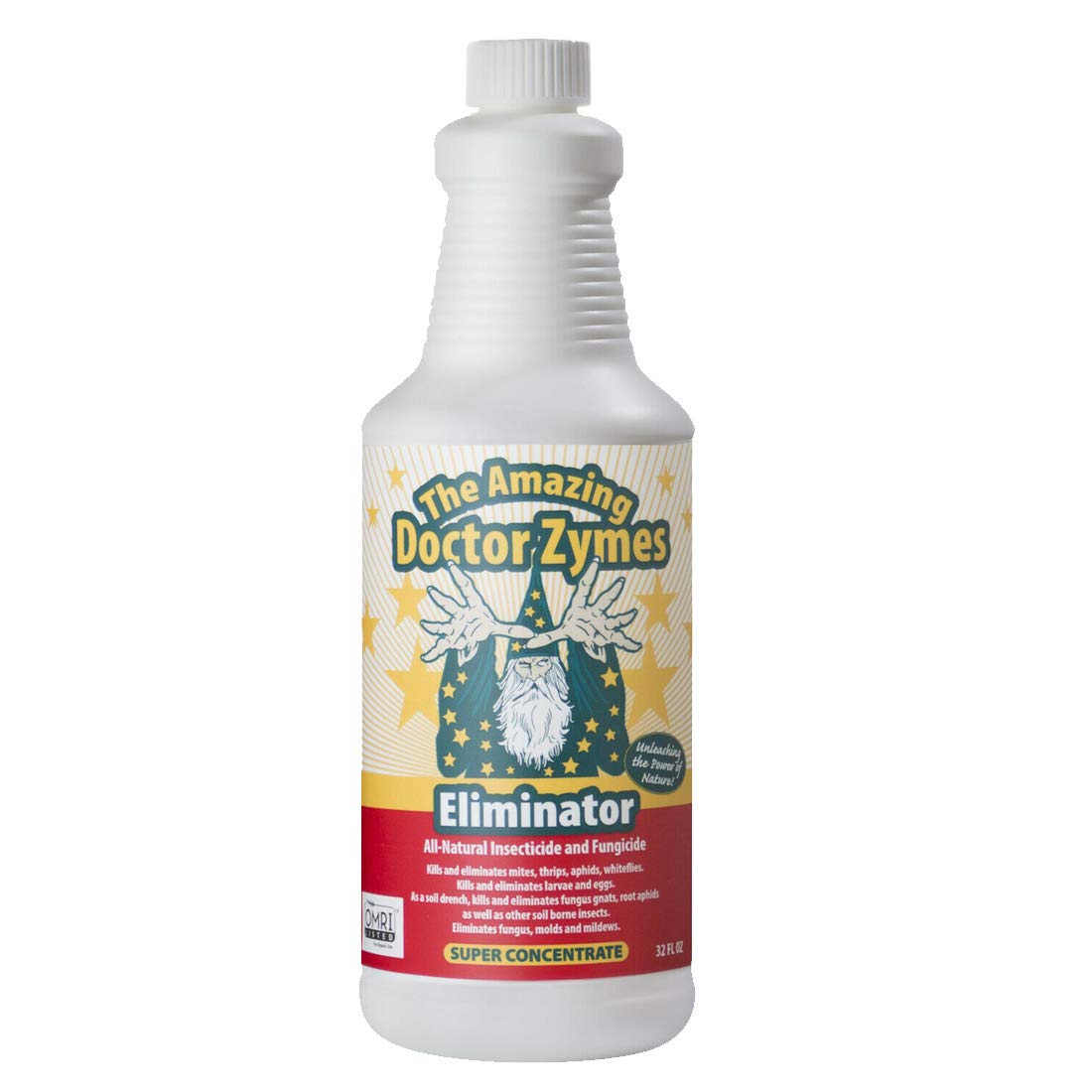
2. Eliminator Natural Insecticide (Dr Zymes)
Enzyme-based pest control that leaves zero oily residue on leaves.
If the oily film left by neem or mineral sprays bothers you — especially on indoor plants or during flower cycles — this concentrated formula uses natural enzymes instead. It kills aphids, spider mites, whiteflies, thrips, and fungus gnats on contact and also breaks the life cycle by targeting eggs and larvae. The manufacturer states one bottle makes multiple gallons of ready-to-use spray, so the upfront cost covers a lot of ground.
It is OMRI Listed for organic use, biodegradable, and non-toxic around people and pets when used as directed. One long-time buyer said, “nothing works as good” and noted they have bought it for years. Another reviewer with an aphid problem reported a visible decrease in the pest population within 24 hours of a foliage spray. The catch is the concentration ratio — one reviewer accidentally used a 10:1 ratio instead of 32:1 and burned their plants. Follow the label carefully.
At 2.27 pounds, the bottle is compact and easy to store. This is the best pick for indoor grow rooms, greenhouses, or anyone who wants a clean, oil-free finish on their plants.
Professional feel, strict mixing: Excellent for controlled environments like grow tents or greenhouses where residue matters. You must measure the dilution accurately — too strong and you burn foliage.
Your pick if: you grow indoors or in a greenhouse and need an organic spray that leaves leaves looking clean, not greasy.
skip it if: you prefer grab-and-go ready-to-use sprays — this is a concentrate that requires measuring and mixing every time.
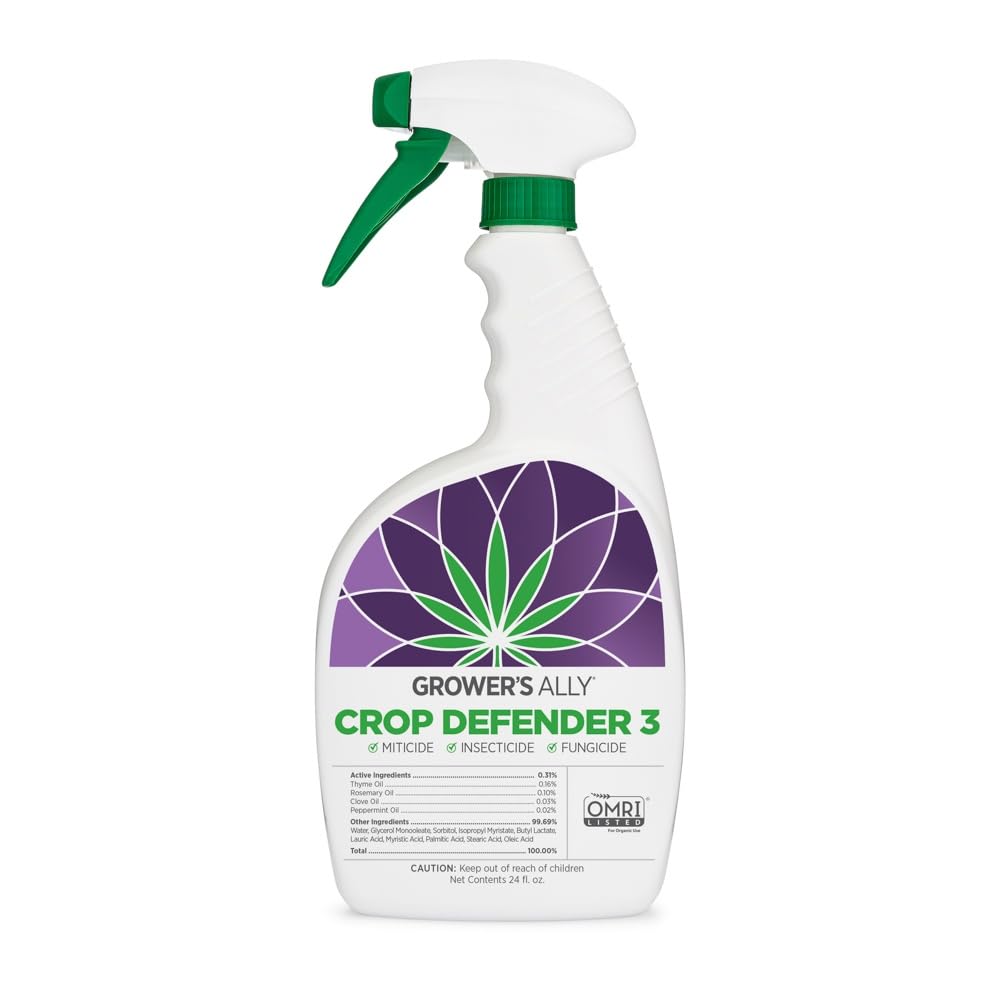
3. Grower’s Ally Crop Defender 3, 24 oz
A gentle botanical mist that kills aphids without burning young leaves.
If you have ever sprayed a harsh oil on tender seedlings only to watch them wilt, this one solves that. The triple-action formula uses a blend of botanical oils with a built-in surfactant (a wetting agent that helps the spray spread evenly across leaves) to kill aphids, spider mites, and powdery mildew on contact. It is designed for weekly use through all growth stages, including the flowering cycle.
One reviewer called it “the best spray for aphids and mites” and noted it did not burn leaves even on seedlings. Another said it “works well as intended” when applied with a fog sprayer (a machine that turns liquid into a fine mist). The 24-ounce bottle is ready-to-use — no mixing, just spray. The only trade-off is the smaller volume compared to the Bonide Captain Jack’s: at 1.7 pounds, this bottle is a 5.3x weight gap lighter, so you will go through it faster on a large garden.
It is OMRI Listed for organic gardening, FIFRA 25(b) exempt (meaning the EPA exempts it from routine pesticide registration because the ingredients are generally recognized as safe), and formulated to be bee-safe when used as directed.
Gentle, effective, small bottle: Perfect for delicate plants and seedlings where other oils cause leaf burn. The 24 oz size is ideal for containers and small raised beds but runs out fast on full vegetable patches.
Grab this for: indoor seedlings, tender ornamentals, or any situation where leaf burn is a real worry.
Pass if: you have a large outdoor garden going — you will need to buy multiple bottles or switch to a concentrate.
4. Bonide All Seasons Horticultural & Dormant Spray Oil, 32 oz

The hose-end spray that goes from dormant trees to summer flowers.
Unlike most organic sprays that you use only during the growing season, this one is labeled for dormant, green tip, delayed dormant, and full growing season application. The active ingredient is mineral oil (not neem), which smothers insects by coating them rather than poisoning them. It controls adelgids, aphids, scale insects, mealybugs, and mites, and also helps prevent powdery mildew and rust.
It hooks directly to your garden hose via a ready-to-spray attachment. One buyer mentioned it “worked overnight on cherry aphids.” Another noted the product itself is excellent but advised skipping the included hose-end sprayer because of poor calibration, recommending a pump sprayer instead for better control. The 32 fluid ounce bottle is much smaller than the 128 fluid ounce Bonide Captain Jack’s jug, but this one is designed for seasonal flexibility.
It is approved for organic gardening and the mineral oil leaves no toxic residues. Use on fruit trees, roses, ornamentals, peppers, corn, and asparagus.
What works
- Can be used in all four growth stages (dormant through active season)
- Customers note it works overnight on aphids
The catch
- Multiple user reviews say the hose-end sprayer is poorly calibrated and wasteful
Best for: fruit tree owners who want a single spray that works from winter dormancy through summer.
Check this for: the sprayer quality — many buyers toss it and use a separate pump sprayer instead.
5. Summit Year-Round Spray Oil, 32 oz Concentrate

One spraying wiped out a whitefly infestation, according to buyers.
If you need results fast, this mineral oil concentrate has a strong track record among reviewers. The product kills and repels aphids, spider mites, fungus gnats, scale, and whitefly on a wide variety of plants. It also prevents and cures powdery mildew, and adds a shiny luster to leaves. The concentrate format means you mix a small amount with water — one bottle makes several gallons of spray.
One reviewer stated flatly, “Killed the bugs on the first spraying” for a whitefly infestation, calling it far superior to everything else they tried. Another said they had armoured scale on lemon trees, treated once, and did not need to reapply. The product is marked with the “organic” special feature and is suitable for use up to the day of harvest. It weighs 2 pounds, making it easy to handle.
The downside: packaging can be an issue. One owner reported the bottle leaked inside the shipping bag, losing about a tenth of the product. Buy a pump sprayer separately if you do not already own one.
Fast-acting concentrate: Reviewers consistently praise first-spray results on tough pests like whiteflies and scale. The concentrate stretches the value, but packaging during shipping is hit-or-miss.
Choose this when: you have an active infestation on fruit trees or ornamentals and want one treatment to knock it down.
Be ready for: possibly leaky packaging and the need to supply your own pump sprayer.
6. Organic Insecticide & Fungicide Concentrate, 16 oz

A two-in-one concentrate that stops bugs and leaf disease in one bottle.
This is for the budget-conscious gardener who wants one product to handle both insects and fungus without buying separate bottles. The bio-based formula is a concentrate: you mix 2 tablespoons per gallon as an insecticide, or 1 tablespoon per gallon as a fungicide. The 16-ounce bottle yields about 8 gallons of insecticide or 16 gallons of fungicide. It tackles aphids, caterpillars, gnats, whiteflies, and powdery mildew.
One buyer using it on raised beds confirmed the insecticide “eliminated aphids, caterpillars, gnats” with no leaf burn. Another said 10 drops in 32 ounces of water killed bugs on contact within 5 to 10 seconds. It is odorless, making it comfortable to use around the house. The product dimensions are compact at 6.3 x 1.8 x 6.3 inches and it weighs 1.1 pounds.
The catch: the fungicide concentrate smells worse than the insecticide, according to one reviewer. And the active ingredient is not as potent on Japanese beetles — same reviewer noted it does not kill them. For common garden aphids, however, it works fast and affordably.
Solid value, dual use: Covers insect and fungus control in one small bottle that goes a long way. Not the strongest option for heavy infestations of tough beetles.
Reach for this if: you need an affordable concentrate for a medium garden and want to keep just one product on the shelf.
Look elsewhere if: you are dealing with Japanese beetles or need a zero-mix ready-to-use spray for quick spot treatments.
Understanding the Specs
Neem Oil vs Mineral Oil vs Enzymes
The active ingredient decides how the spray kills aphids. Neem oil (clarified hydrophobic extract of neem oil) disrupts feeding and reproduction, and it also works as a fungicide. Mineral oil smothers pests on contact with no lingering residue. Enzyme-based formulas (like those in the Eliminator by Dr Zymes) break down the pest’s outer layer without leaving any oily sheen. For ongoing garden protection, neem oil offers the most versatility. For a clean look on indoor plants, enzymes win. For a targeted quick kill on dormant trees, mineral oil works fast.
Ready-to-Use vs Concentrate
Ready-to-use means the spray comes pre-diluted in a bottle with a trigger sprayer — you shake and spray. This is convenient but you pay for the water weight and run out faster. Concentrate means you mix a small amount of product with water in your own sprayer. A 16-ounce concentrate can make 8 gallons of spray, which is far more economical for large gardens. The trade-off is you need a separate pump sprayer or hose-end sprayer and you have to measure the mix ratio accurately every time to avoid burning your plants.
OMRI Listing and Organic Certification
If you grow food you plan to eat, you want a spray that is genuinely organic, not just labeled that way. OMRI (Organic Materials Review Institute) Listed means an independent reviewer has checked and approved the product for certified organic production. Every spray in this guide carries that OMRI label or is explicitly labeled for organic gardening, so you can trust it on your vegetables.
Contact Kill Speed and Reapplication Interval
Some organic sprays knock aphids down within hours (mineral oil and enzyme formulas tend to be fastest). Others, particularly neem oil, work slowly over several weeks as they disrupt the pest life cycle. Check the product label for reapplication intervals — most recommend every 7 to 14 days. If you have a fast-moving infestation, pick a spray where reviewers point out first-spray results. For prevention, a slower-acting neem oil works fine.
FAQ
Can I use organic aphid spray on vegetables I plan to eat?
Will organic spray hurt bees or other pollinators?
How often should I reapply organic aphid spray?
What is the difference between clarified neem oil and cold-pressed neem oil?
Can I mix organic insecticide and fungicide together in one spray?
Will spraying neem oil burn my plants in direct sunlight?
How do I apply a concentrate spray if I don’t own a garden sprayer?
Do organic sprays expire or lose effectiveness over time?
Which organic spray works fastest on an active aphid infestation?
Is it safe to use organic aphid spray on houseplants indoors?
Final Thoughts: The Verdict
For the majority of shoppers, the organic spray for aphids winner is the Bonide Captain Jack’s Neem Oil because it delivers 128 ounces of ready-to-use coverage that kills aphids, mites, and fungus with one product, saving you from buying separate bottles. If you grow indoors and want a residue-free finish, grab the Eliminator by Dr Zymes. And for quick knock-down on a heavy outdoor infestation, the Summit Year-Round Spray Oil delivers the fastest first-spray results, according to reviewers.
How We Picked
We do not accept paid placement. Every pick is matched to a real buyer and a real use-case; we do not hands-on test units.
Sources & Methodology
Specifications: manufacturer listings and product documentation. Review insights: verified customer reviews, as of July 2026. Pricing: not shown on this page (it changes often); check the current price via the retailer link.
As an Amazon Associate, Lawn Gear Lab earns from qualifying purchases. This does not affect which products we feature.