
Specs are compiled from manufacturer listings and verified buyer reviews and can change over time — please confirm the key details on the product page before buying.
You want cardinals and blue jays at your feeder, not just house sparrows poking through a mess. The trick is to skip blends loaded with milo and millet—those cheap fillers that these two species ignore, leaving you with waste on the ground. The best bird seed for cardinals and blue jays goes heavy on sunflower seeds, safflower, and peanuts, which these birds actually eat. This guide names the top mixes so you know which bag brings the action and which leaves the mess.
I’m Rikta — the founder and writer behind Lawn Gear Lab. This guide is built by comparing the manufacturers’ published specifications and the patterns across verified customer reviews, so you get each pick’s real strengths and trade-offs instead of marketing spin.
Choosing the right bird seed for cardinals and blue jays turns an ordinary yard into a daily wildlife show—without the mess of unwanted leftovers.
Our Picks at a Glance
How To Choose The Best Bird Seed For Cardinals And Blue Jays
Not all bird seed bags are created equal. If you want cardinals and blue jays—not just house sparrows and doves—you need the right ingredient list and the right bag size. Here is what matters most.
Look for Black Oil Sunflower and Safflower First
Cardinals and blue jays are attracted to high-oil (high-fat) and high-protein seeds. Black oil sunflower seeds are the top choice for both species because they have thin shells and a high fat content that birds crack open easily. Safflower (a small white seed) is the second essential ingredient—it is a favorite of cardinals, but squirrels tend to avoid its bitter taste, which gives you a natural advantage against furry raiders.
Avoid Cheaper Fillers
Many economy bird seed blends are packed with white millet, red milo, and cracked corn. These ingredients add bulk and lower the price, but cardinals and blue jays typically ignore them. The birds push them aside to find sunflower seeds, and those fillers end up on the ground, attracting rodents and making a mess. A high-quality mix labeled “no fillers” or “no corn, milo, or millet” is a strong starting point.
Pick a Bag Size That Fits Your Feeder Traffic
If you have a busy feeder, a 5 lb bag can empty fast—some buyers report refilling every other day during peak winter feeding. A 10 lb bag offers longer staying power and usually a better cost per pound, though it requires dry storage to keep the seed fresh. Match the bag size to how quickly the birds in your yard clear a feeder to avoid stale seed.
Quick Comparison
| Model | Best For | Bag Weight | Key Ingredients | No Fillers | Amazon |
|---|---|---|---|---|---|
| Audubon Park Cardinal★ Best Overall | Top Rated | 8 lb | Sunflower, Safflower | Yes | Amazon |
| Cool Birds Cardinal & CrewAlso Great | Best Overall | 10 lb | Black Oil Sunflower, Sunflower Hearts, Safflower | Yes | Amazon |
| Cool Birds All Birds | Best Value | 10 lb | Sunflower, Safflower, Peanuts, Millet | Yes | Amazon |
| Kaytee Cardinal Blend | Premium Seeds | 7 lb | Sunflower, Safflower | Yes | Amazon |
| Freebird Songbird Blend | Diverse Birds | 5 lb | Sunflower, Safflower, Millet, Peanuts | No | Amazon |
| Flockin’ Cardinal Blend | Premium Ingredients | 5 lb | Sunflower, Safflower, Peanuts, Mealworms, Cranberries | Yes | Amazon |
In‑Depth Reviews
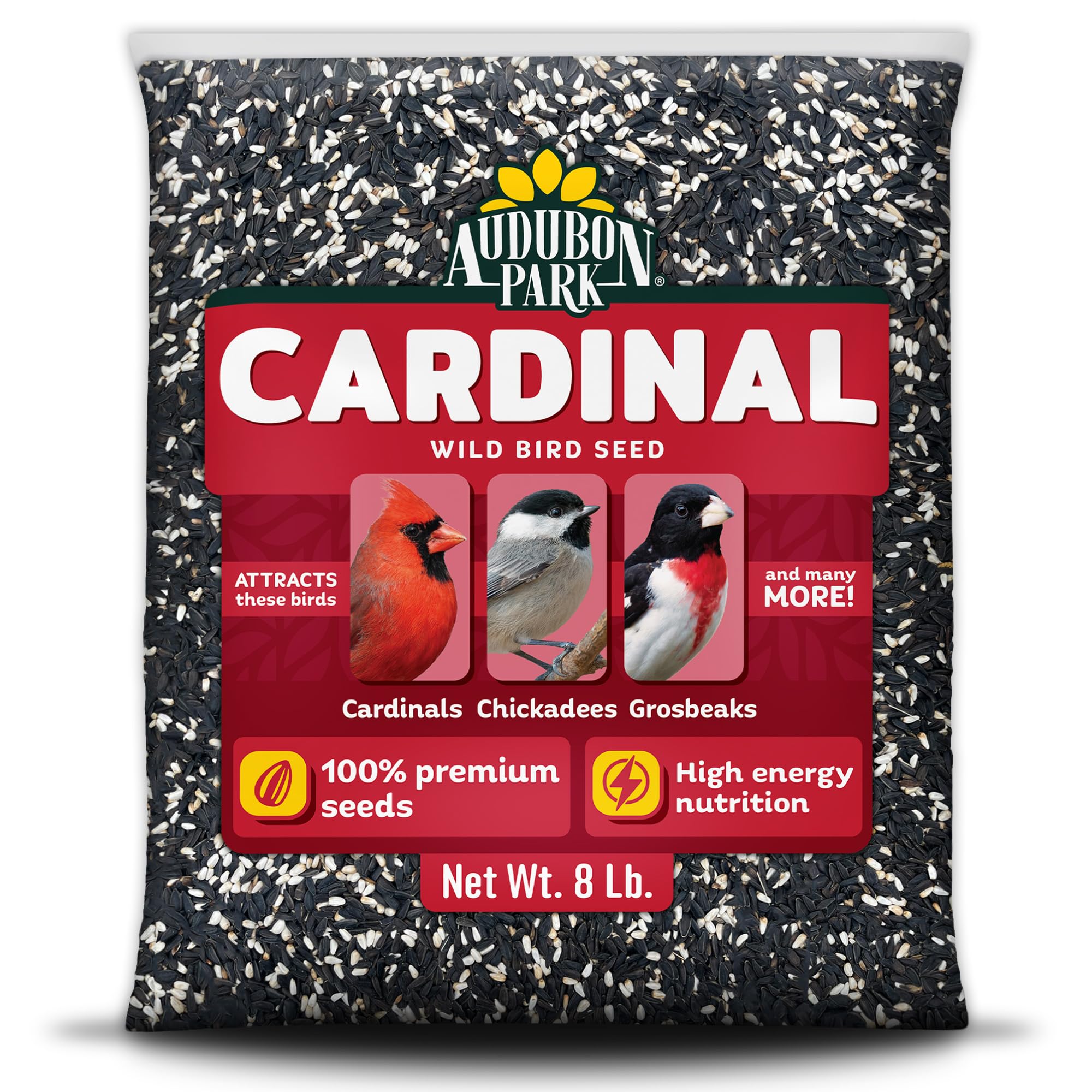
1. Audubon Park Cardinal Wild Bird Seed, 8 lb
Our pick — over 4.5★ from 7,500+ verified ratings; the strongest balance of quality and price.
A simple sunflower-safflower duo with 7,647 ratings and a 4.7-star average—cardinals love it.
This mix sticks to just black oil sunflower seeds and safflower, a lean combination that cardinals, chickadees, finches, and nuthatches all enjoy. Owners mention it is “clean, no bugs or added oils; minimal debris”—and “no corn, milo, or millet” is printed right in the formula, so you know exactly what the birds are getting.
The safflower content works as a natural squirrel-resistant deterrent while still attracting the birds you want. One reviewer did note that squirrels and chipmunks also came for this blend, so the defense is not absolute.
A few buyers mention the price has crept up over time, and that is worth watching if you feed heavy flocks. But for a clean, two-ingredient strategy proven by thousands of positive experiences, this one is tough to top.
What birders love
- Simple sunflower + safflower formula—no filler waste
- Squirrels find safflower less appealing
- Works with tube, tray, hopper, platform, or smart feeders
One honest limit
- Some squirrels and chipmunks still show up for the sunflower seeds
Top pick for… anyone who wants a proven, high-rated blend that attracts cardinals and keeps feeder cleanup minimal.
Skip if… you need a bulk-size bag to last through heavy winter feeding; 8 lb may refill faster than you expect.
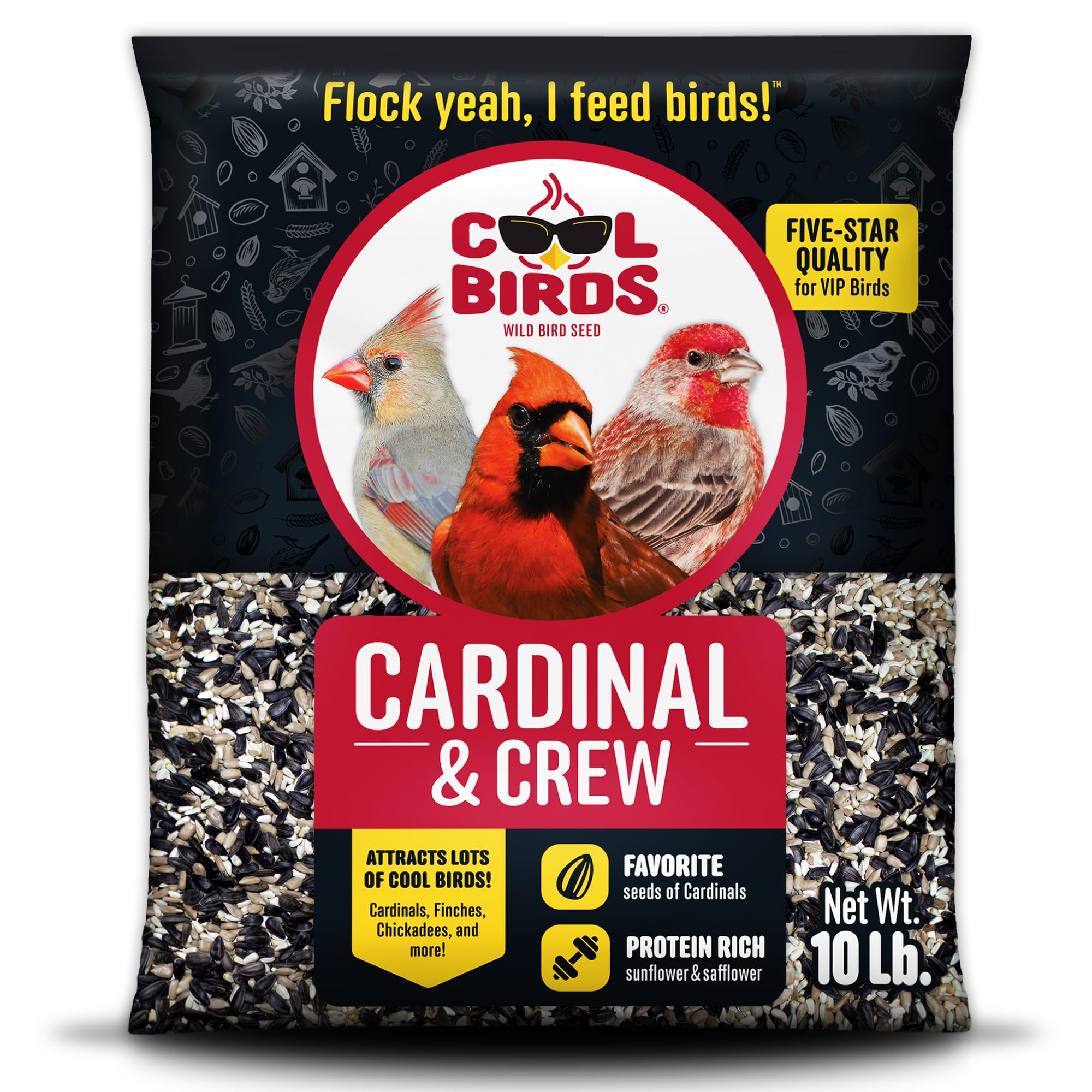
2. Cool Birds Cardinal & Crew Wild Bird Seed, 10 lb
Three ingredients, zero filler waste, and a 10 lb bag that keeps your feeder busy.
This blend makes it simple to attract cardinals and blue jays: black oil sunflower seeds, sunflower hearts (the shelled inner kernel), and safflower. No corn, milo, or millet ends up under your feeder. Sunflower hearts let birds eat instantly without cracking the shell, meaning more time feeding and less time picking. One buyer reports it was the “best quality seeds among 6 brands tested,” which suggests a clean batch compared to other bags.
At 10 lb, it offers 25% more weight than the Audubon Park 8 lb bag while holding the same no-filler promise. Safflower in the mix also helps keep squirrels from dominating the feeder, though some ground-feeding doves will still show up for the leftovers. The bag fits tube, tray, hopper, and platform feeders.
A small trade-off noted by one reviewer: their specific flock did not prefer the sunflower and safflower hearts, sticking to whole black oil seeds instead. If your birds are used to whole seeds, expect a short adjustment period. For anyone wanting a clean, efficient seed that targets cardinals directly, this is the most focused option.
Three-ingredient focus: No synthetic additives or artificial colors—just raw, high-protein seeds that cardinals naturally crave.
Reach for this if… you want a bag with zero filler waste and a target on cardinals and grosbeaks, backed by 10 lb of staying power.
Look elsewhere if… your local birds ignore shelled hearts and only take whole seeds—you might see more picking than eating at first.
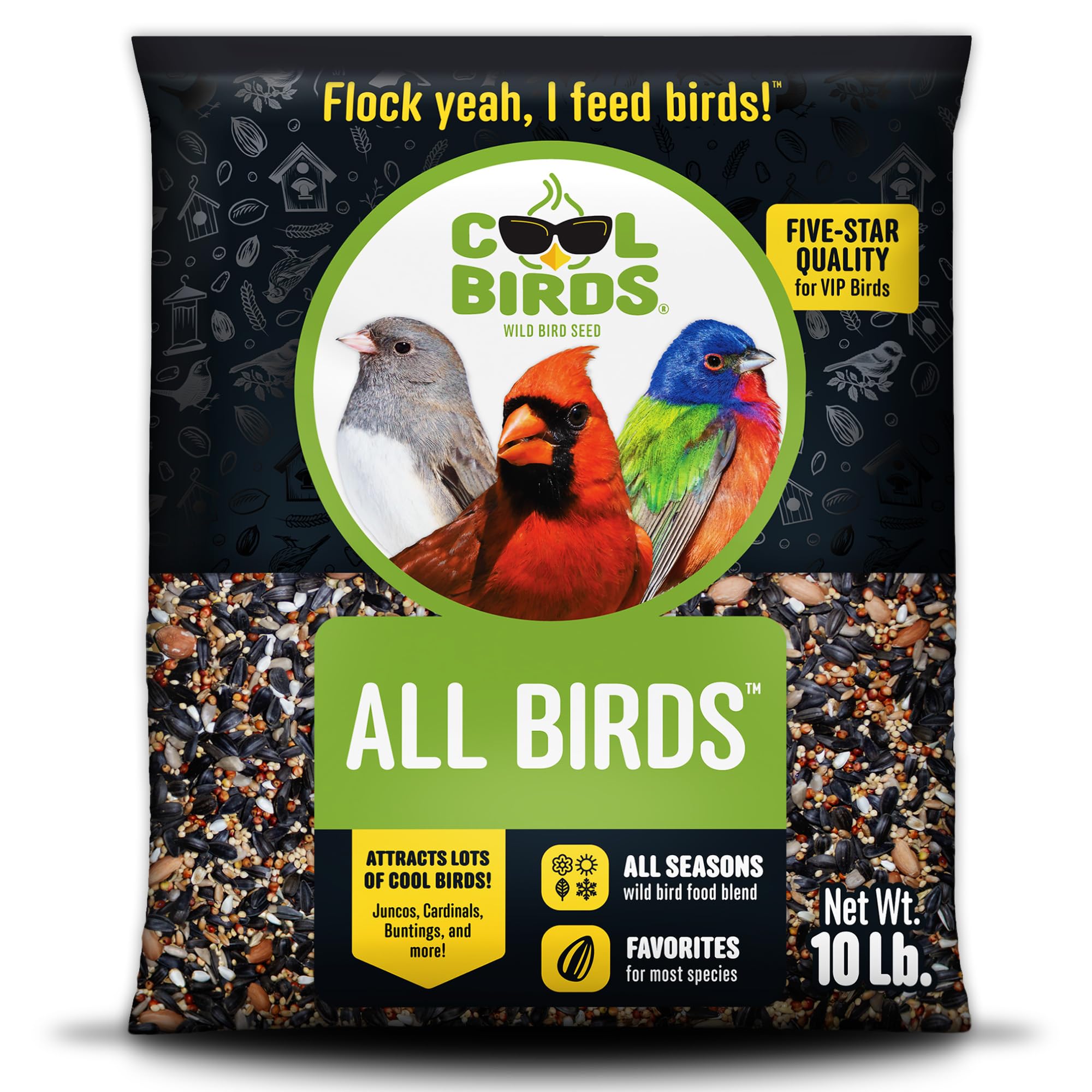
3. Cool Birds All Birds Wild Bird Seed, 10 lb
A 10-pound bag that feeds cardinals, jays, sparrows, and finches—while staying affordable.
This “All Birds” blend brings a wider roster of seeds than the Cardinal & Crew—black oil sunflower, white millet, safflower, peanuts, and sunflower hearts—so it attracts not just cardinals and blue jays, but also doves, sparrows, and finches. One buyer notes the “10lb bag lasts a while, good value and quality,” and the lack of artificial colors keeps it clean and natural at the feeder.
The inclusion of whole peanuts and sunflower hearts gives blue jays the high-energy payload they prefer. Safflower still offers the squirrel-deterring edge, and millet is present for ground-feeding birds, though cardinals may ignore it in favor of the bigger seeds. At 10 lb with a 4.7-star average from 713 ratings, it is a well-rounded bag especially for someone with a mixed flock.
If you are purely targeting cardinals and hate any leftover waste, the Cardinal & Crew blend above is a tighter fit. But for the price-to-volume ratio, this bag beats the smaller 7 lb Kaytee option, delivering more weight and broader appeal to keep the whole yard busy.
Smart yard-wide choice: One bag fills a standard feeder up to 10 times, reducing how often you need to restock between refills.
Go with this if… you want a big bag that brings cardinals, blue jays, and all the smaller songbirds together without breaking the budget.
Choose something else if… you cannot stand millet on the ground—cardinals will bypass it, extra cleanup required.
4. Kaytee Cardinal Wild Bird Seed, 7 lb

A trusted sunflower-safflower blend from an established brand—birds finish it fast.
Kaytee’s Cardinal Blend sticks with the sunflower-safflower duo, and birds clearly approve. One buyer reports “they love it so much that I have to refill the feeder every other day,” also noting that cardinals, blue jays, and woodpeckers all stop by. The 7 lb bag is smaller than the Cool Birds and Audubon options, but it is an easy size to store and handle.
Safflower’s bitter taste is the main tool against squirrels here, though some reviewers admit furry visitors still manage to get a share. The bag also works well in tube, tray, and hopper feeders. A few buyers mention finding a larger bag at a different retailer for less money, so for bulk feeding you might land a better value elsewhere. For convenience and a quality mix with no artificial additives, though, this fits the bill.
Compared to the Audubon Park 8 lb bag, Kaytee is 1 lb lighter and has far fewer ratings (855 vs 7,647), but the sentiment from actual users is equally strong—consistent 4.7 stars.
Fresh-batch confidence: Customers note the seed smells fresh with no musty odor, indicating good rotation and storage handling from the brand.
Ideal for… smaller households or first-time cardinal feeders who want a proven brand without committing to a 10 lb bag.
Maybe not if… you have a large, hungry flock—you might run through 7 lb in a few days and wish you had a bigger bag.
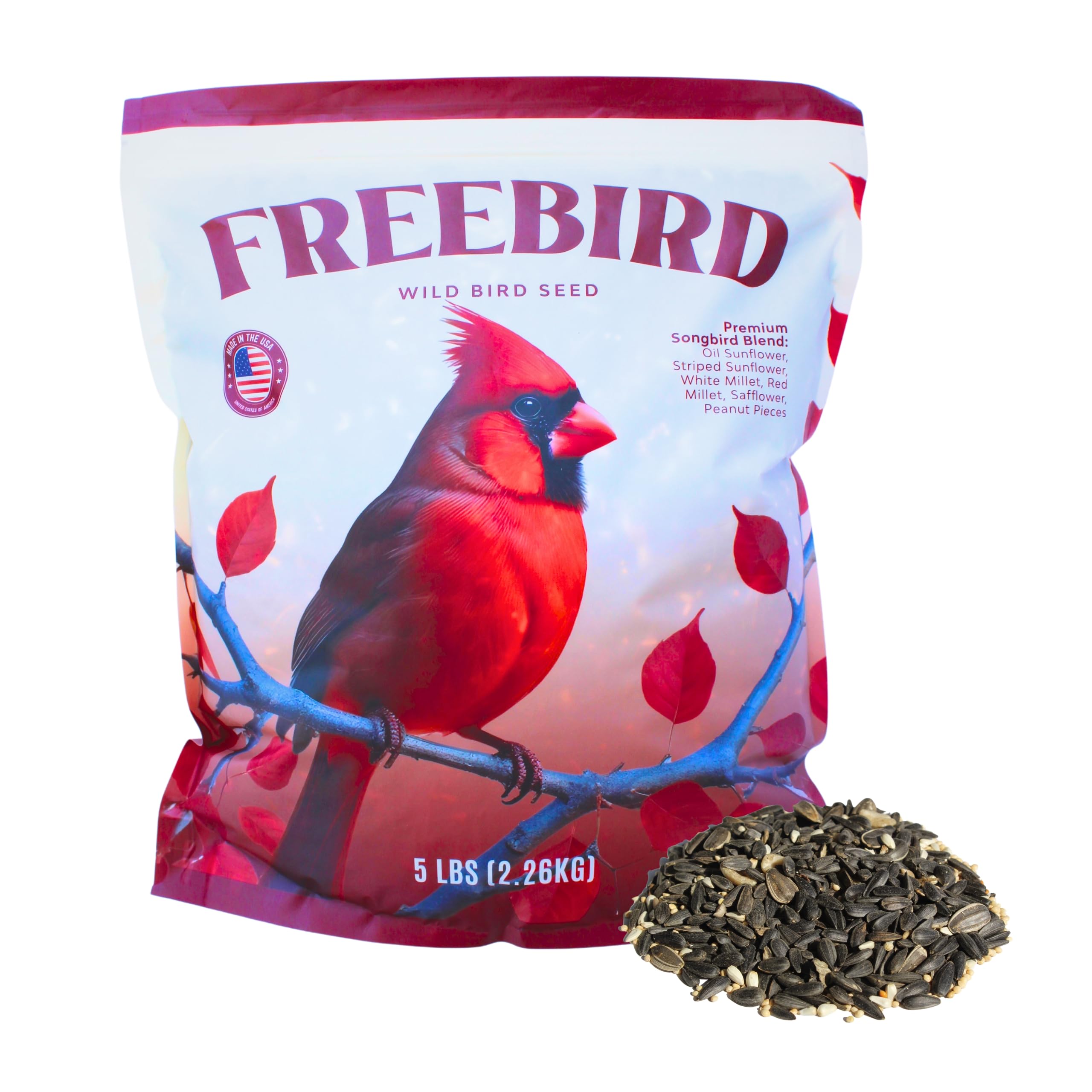
5. Freebird Songbird Blend, 5 lb
A resealable, additive-free blend that one birder says tripled their cardinal visits in a week.
Freebird goes broader than the sunflower-safflower-only mixes: black oil sunflower, striped sunflower, safflower, peanut pieces, white millet, and red millet are all in the bag. That range means cardinals and blue jays get the high-oil sunflower and peanuts they want, while sparrows, finches, chickadees, and even tufted titmice find something worth eating. One reviewer noted switching to this blend “my number of visiting Cardinals tripled (at least).”
The bag itself is heavy-duty with a resealable zipper, which helps keep the seed fresh if you are not feeding a whole 5 lb rapidly. All ingredients are sourced from local US farms with no additives, non-GMO, and high oil content. The catch is that the 5 lb size is small next to the 10 lb Cool Birds and Audubon 8 lb bags, so heavy feeders will order often.
Millet is present here (cardinals ignore it), so some ground waste is expected. But if you want to attract the widest variety of birds while still keeping cardinals and jays front and center, this is a strong contender.
Heavy-duty storage: The strong reseal zipper keeps the seed fresh and prevents mess, a nice detail for a 5 lb bag that may sit a bit longer between refills.
Best for… backyard birders who enjoy seeing multiple species—cardinals, jays, finches, and sparrows—from a single resealable bag.
Consider another if… you hate sweeping up millet shells; cardinals do not eat it and it will collect under the feeder.
6. Flockin’ Cardinal Bird Seed, 5 lb
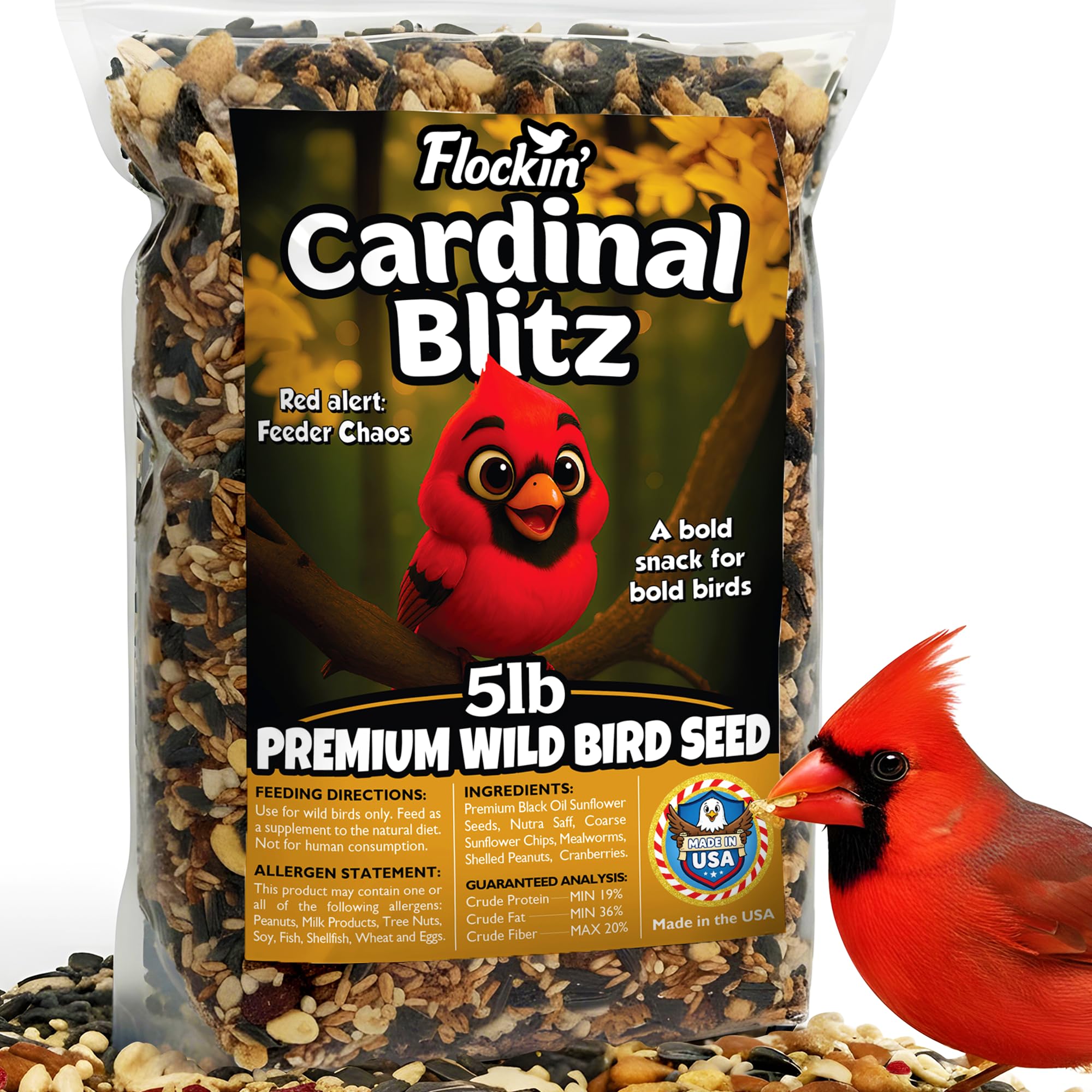
Mealworms and cranberries join sunflower and safflower—one buyer went from 6 to 25 daily visitors.
Flockin’ goes a step beyond the standard sunflower-safflower formula by adding Nutra Saff (a hulled safflower seed), coarse sunflower chips, shelled peanuts, mealworms, and dried cranberries. Mealworms are a high-protein bonus that blue jays in particular go wild for, and cranberries add a natural sweetness that attracts a range of songbirds. One buyer reports “I went from seeing 5-6 birds visiting to over 25 visits daily” after switching to this blend.
The bag is 5 lb with a resealable top, which is manageable for lighter feeders. All ingredients are USA made with no filler listed. However, at 5 lb, it is the most expensive of the group by weight, matching the Freebird price for a similar-size bag. Some reviewers point out that “very expensive but well made” is a common first reaction, though the loyalty from the birds offsets the cost for many.
Since it contains no corn, milo, or millet, you get zero ground waste from filler—a clear advantage over blends that include millet. If you want a treat-style mix that goes above basic seeds to keep cardinals and jays coming back all year, this is a premium option worth the trade-off.
Seasonless choice: Recommended for fall, spring, summer, and winter—the mealworms and peanuts provide high-calorie energy across breeding and cold months.
Go for it if… you want a no-filler, high-protein mix that includes mealworms and cranberries to entice cardinals and blue jays with something different.
Think twice if… you feed a large flock—the 5 lb bag vanishes fast, and the per-pound cost adds up quickly.
Understanding the Specs
Black Oil Sunflower Seeds
This is the single most important ingredient for attracting cardinals and blue jays. Black oil sunflower seeds have a thin shell that is easy for birds to crack, and the seed inside is rich in fat and protein. It provides the quick energy a bird needs on a cold morning or during nesting season. Most high-quality cardinal blends list black oil sunflower as the first ingredient.
Safflower
Safflower is a small white seed that cardinals and chickadees love but squirrels often avoid due to its bitter taste. Not every bag of safflower will stop every squirrel—some determined critters still eat it—but it is the closest you get to a natural squirrel deterrent. Blends that include both black oil sunflower and safflower give cardinals two of the foods they seek most.
FAQ
Will cardinals and blue jays eat the same seed mix?
How can I keep squirrels away from my cardinal feeder?
Does a larger bag go stale before the birds finish it?
Why do some seed blends have millet if cardinals do not eat it?
Can I feed cardinals peanuts?
How often should I clean my bird feeder?
Do cardinals prefer a certain type of feeder?
What is the best time of year to feed cardinals?
Is a seed mix with mealworms better for cardinals?
Should I avoid seed blends with corn?
Final Thoughts: The Verdict
For most people, the bird seed for cardinals and blue jays winner is the Cool Birds Cardinal & Crew because it delivers a focused, no-filler blend of sunflower seeds, sunflower hearts, and safflower in a generous 10 lb bag that lasts. If you want a broader yard mix that still brings cardinals and jays, grab the Cool Birds All Birds for its excellent value and multi-species attraction. And for a premium treat-style bag with mealworms and cranberries that makes every feeding feel special, the standout is the Flockin’ Cardinal Bird Seed.
How We Picked
We do not accept paid placement. Every pick is matched to a real buyer and a real use-case; we do not hands-on test units.
Sources & Methodology
Specifications: manufacturer listings and product documentation. Review insights: verified customer reviews, as of July 2026. Pricing: not shown on this page (it changes often); check the current price via the retailer link.
As an Amazon Associate, Lawn Gear Lab earns from qualifying purchases. This does not affect which products we feature.